
Grant County Jail
Grant County Jail
Jail Phone Number
541-575-1134Grant County, Oregon Inmate Search: Locating Someone Held in Canyon City
All arrests made in this county lead to the Grant County Jail, 205 S. Humbolt Street, Canyon City, OR 97820. The Sheriff's Office runs this 41-bed lockup beside the courthouse, and on a typical day it holds no more than about 20 adults. Below: tracking someone down, release, visits, money, mail, warrants and which agency made the arrest.
Begin with the official custody lookup. Jail staff have the final word on who is inside, so a short call confirms a new booking, a release or a move to some other jail.
Phone 541-575-1134 and ask to speak with the on-shift sergeant. Find out if your relative was booked, the charges, and the time of the first court appearance. Getting them home is the subject of our release and security page, and the case itself is on our court guide.
Read inmate search answers
 Read inmate search answers
1. Grant County Jail: how do I confirm someone is there?
With so few beds, the jail can usually answer by phone in a minute or two. Work down this list:
- Dial 541-575-1134. The jail sergeant on shift fields custody questions.
- Spell out the legal first and last name, then give a date of birth. Nicknames slow the search.
- Tell staff the town, the day of the arrest and the arresting agency, if known.
- Ask: Was a booking made? Which charges? Has security been set? What day is court?
- Try the official custody lookup as well, and VISOR, which the state says can show custody status in county and state facilities.
Staff will not relay messages, so stick to facts on the call. The Sheriff's Office front line, 541-575-1131, can help too.
↑ Back to the question list2. What if the jail has no record of them?
A "not here" answer can have several causes:
- Still on the road. A drive from Monument or Seneca to the jail takes a while, and booking adds more. Try again in a couple of hours.
- Already out. Under the local release order, plenty of people on lower-level charges walk out soon after booking on a signed promise.
- Another jail. Someone picked up in a neighboring county, or wanted there, may be sitting in that county's jail.
- Federal custody. Federal agents sometimes take a person directly to a federal hold.
- Under 18. Youth cases belong to the county Juvenile Department, 530 East Main, Suite 1, John Day, OR 97845, 541-575-1722.
The Sheriff's Office, 205 S. Humbolt Street, Canyon City, OR 97820, 541-575-1131, knows which agency handled an arrest. When a case has been filed, the OJD Records and Calendar Search may list it under the person's name.
↑ Back to the question list3. Neighboring jails worth calling
Adults booked in this county are kept in the Canyon City jail. A person arrested over a county line, or wanted on a warrant from elsewhere, may be in one of these:
- Harney County Jail, 485 N Court Ave, Burns, OR 97720, 541-573-6056. Harney and this county share judges.
- Baker County Jail, 3410 K Street, Baker City, OR 97814, 541-523-8011.
- Union County Correctional Facility, 1109 K Ave., La Grande, OR 97850, 541-963-1020.
- Umatilla County Jail, 4700 NW Pioneer Place, Pendleton, OR 97801, 541-966-3632. Morrow County sends its people here too.
- Crook County Jail, 308 NE 2nd Street, Prineville, OR 97754, 541-416-3620.
- Malheur County Jail: call the Malheur County Sheriff's Office, 151 B Street W., Vale, OR 97918, 541-473-5126.
Wheeler County, to the west, runs no jail, and some of its arrestees are lodged in the Canyon City jail. For a Wheeler arrest, reach that county's Sheriff's Office, 701 Adams St., Fossil, OR 97830, 541-763-4101.
↑ Back to the question list4. Will a booking photo be released?
Usually not. HB 3273 (2021) bars Oregon law enforcement, as a rule, from giving out booking photos. The exceptions are narrow:
- the person pictured asks for it
- another police agency needs it for police work
- police are hunting a fugitive or suspect and want public help
- a victim, a prosecutor or the defense asks
- the arrest ends in a conviction
So no lookup here will show you a mugshot. The person can ask the Sheriff's Office for their own photo at 541-575-1131. Reporters can ask that office too.
A pay-to-remove mugshot website must pull a photo within a month of being asked, and its fee is capped at $50. When the case was dismissed, set aside or never filed, the site must act within a week and charge nothing. To get a photo ICE took, file through ICE's FOIA page. Federal agencies keep booking photos private. Only when hunting a fugitive might the U.S. Marshals Service release one.
↑ Back to the question list5. Getting a VISOR text or call when someone leaves
Sign up with VISOR, a free notice service from the Oregon Department of Corrections and the state's stand-in for VINE. Its records reveal if someone is currently held by a county or by the state. It can also call, text or email you if they are released, transferred or escape.
- Look a person up by name, part of a name, State ID or county ID number.
- No account is required to sign up, and VISOR keeps your name from the person in custody.
- Staff answer at 855-691-6246, day or night.
Oregon reminds users that VISOR should never be their only safety plan. Crime victims can also ask the District Attorney's victim assistance program, 201 S. Humbolt Street, Suite 100, Canyon City, OR 97820, 541-575-0146, for release notice.
↑ Back to the question list6. Release rules after a Grant County arrest
Oregon says "security" where most states say bail. A standing order shared by Grant and Harney counties sorts each charge into three groups:
- Promise to appear: most charges where nobody was hurt, such as theft or driving while suspended
- Release with rules: DUII and some person misdemeanors and felonies
- Wait for a judge: domestic violence, sex crimes, violent felonies, failure to appear and others
If a judge or the schedule sets security, the family typically puts down a tenth of it at the jail. The jail page names PayPal, cash, cashier's checks and money orders. At the end of the case, the clerk keeps 15 percent, no more than $750, and pays the rest to the name on the receipt. Oregon has no bail bond companies. Read the full steps on our bail and security page.
↑ Back to the question list7. What are they charged with, officially?
Booking charges are available from the jail at 541-575-1134. They are a first draft. The District Attorney's Office picks the charges it actually files, and the court file is what counts.
After filing, look the person up using the state court website's free OJD Records and Calendar Search, where no sign-up is required. Charges are also read out at arraignment. For help, call the circuit court clerk, 201 S. Humbolt Street, Canyon City, OR 97820, 541-575-1438, or the District Attorney's Office, 201 S. Humbolt Street, Suite 100, Canyon City, OR 97820, 541-575-0146. Neither office can give legal advice.
↑ Back to the question list8. How will they get a lawyer from jail?
At arraignment, often held over a video link from the jail, the person tells the judge they need an appointed lawyer. A court screener reviews a brief form on income and property. Expect a $20 fee, which can be waived. The appointed lawyer is paid by the Oregon Public Defense Commission (OPDC), the state's public defense agency.
Oregon has a shortage of public defenders. If seven days pass after that hearing with no lawyer assigned to a jailed defendant, Betschart, a federal court order, generally requires release on conditions. Prosecution of the case continues.
Family can call the circuit court at 541-575-1438 to learn who was appointed. Defense lawyers have their own visiting rules at the jail, so a lawyer should call the jail at 541-575-1134 to set a time.
↑ Back to the question list9. What are the Grant County Jail visiting rules?
Visits happen at the jail, 205 S. Humbolt Street, Canyon City, OR 97820, and every visit needs an appointment. The main rules:
- Days and hours: Friday through Monday, 8:00 a.m. to 8:00 p.m., except mealtimes.
- Time allowed: one hour each weekend, as one visit or two 30-minute visits. Unused time carries over, up to 4 hours saved.
- Booking: call 541-575-1134 at least 1 hour ahead and no more than 7 days ahead. Slots go first come, first served.
- ID: every visitor shows a photo ID. First-timers arrive 10 minutes early to fill out a visitor form.
- Kids: a parent or guardian must bring anyone younger than 18.
- Leave in the car: purses, bags and phones.
- Who may not visit: anyone released from this jail in the past 30 days, and victims or witnesses in the case.
Dress modestly. Shorts and skirts must reach mid-thigh when seated, shoes are required, and gang colors are not allowed. Visitors may not hand over items or carry messages. Video visits from home use the jail's phone company. See our visiting page for more.
↑ Back to the question list10. Putting cash on a jail account
Account funds buy snack food, soap and other hygiene items, envelopes, postage and phone data. The jail accepts:
- cash, money orders or bank cashier's checks, dropped off or mailed, $1,000 at most per deposit
- personal checks, capped at $20.00 per week
- PayPal, with the person's name typed in the notes
Never send cash by mail. The jail's visitor sheet gives the PayPal address and the other details, and the on-duty sergeant at 541-575-1134 can answer questions. Each option is laid out on our jail money page. For the store itself, see our commissary page. A small markup on store items funds recreation and programs in the jail.
↑ Back to the question list11. Phone calls, messages and video visits
People inside make calls from phones in the housing areas. They can call collect, use prepaid time, or use prepaid phone cards sold at the Sheriff's Office, 205 S. Humbolt Street, Canyon City, OR 97820, 541-575-1131. Inside, they request phone data at a kiosk in the dayroom. That data covers calls, messages and video visits.
Families set up an account on the jail phone company's website, linked from the jail's visitor sheet. That account handles messages and video visits from home. Staff will not pass along messages or let anyone use the county's phones.
By state law, the most a phone provider may hand a jail as a commission is five cents per completed minute (ORS 169.681). For setup help, use our jail calls page for phones and our inmate email page for messages.
↑ Back to the question list12. How do I send mail to the Grant County Jail?
Line one is the person's full name. The jail's street address goes under it:
205 S Humbolt St, Canyon City, OR 97820
Your own name and return address belong on the envelope's upper left. Keep these rules in mind:
- No packages.
- Magazines, newspapers and books must arrive straight from the publisher or a commercial bookstore.
- Get a jail sergeant's approval for a publication before ordering it.
Oregon jail standards say outgoing letters from people in custody are sent on without being read (ORS 169.076). Our jail mail page has more tips.
↑ Back to the question list13. Picking up property from the jail
Things a person carried when booked are kept by the jail during the stay. Call 541-575-1134 to learn how property is returned on release, and whether a relative may collect it earlier.
Before you drive to Canyon City, ask these questions:
- Must the person sign a form so you can collect their things?
- What ID should you bring?
- What times can you come?
- How is money left on the jail account paid back?
14. Medical care when someone is sick or injured
Oregon law requires jails to give needed medical care. That covers emergency medical and dental care, plus a staff walk-through to look in on each person every hour (ORS 169.076, 169.140). Charging inmates for health care is allowed, but only at jails that treat everyone who needs it, money or not (ORS 169.150).
Know of a health condition or a prescription? Phone the on-duty sergeant at 541-575-1134 and ask how to pass it to the medical staff.
For a family funeral or a gravely ill relative, the Sheriff may now and then grant a short pass. The jail also has a zero-tolerance policy on sexual abuse, and its page explains how to report it.
↑ Back to the question list15. Is a warrant out in Grant County?
Deputies with the Sheriff's Office, 205 S. Humbolt Street, Canyon City, OR 97820, serve warrants anywhere in the county. Dial 541-575-1131 and ask for Records/warrants. On the state level, check Oregon DOC Most Wanted (tip line 877-831-0389). Federal fugitives appear on a Marshals Service list called the 15 Most Wanted, plus the FBI's Portland field office. Any court case behind a warrant may surface in the OJD Records and Calendar Search once you enter a name. Safest fix: a supervised surrender, lawyer present, at the court whose judge issued the warrant. Calling that court about a new date also works. The circuit court clerk is at 201 S. Humbolt Street, Canyon City, OR 97820, 541-575-1438.
↑ Back to the question list16. Their next hearing: where is it listed?
Look up the name in the state's circuit court calendars or the OJD Records and Calendar Search. Release papers for a person let go on a promise usually show a court date 25 to 30 days later.
For a sure answer, reach the circuit court clerk at 541-575-1438 between 8:00 a.m. and 5:00 p.m. on weekdays. Justice Court dates come from that court directly, at 541-575-1076, Monday through Thursday. What each hearing means is on our criminal court page.
↑ Back to the question list17. Locating someone in federal custody
Federal charges here belong to the Pendleton Division of the U.S. District Court for the District of Oregon. Its building is at 104 SW Dorion Avenue, Pendleton, OR 97801, but the clerk's office is in Portland, 1000 SW Third Avenue, Suite 740, Portland, OR 97204, 503-326-8000.
Soon after a federal arrest comes a detention hearing under 18 U.S.C. 3142. A defendant kept in custody is under the Marshals, and their Portland district office, 1000 SW 3rd Avenue, Room 401, Portland, OR 97204, 503-326-2209, can tell family where. The answer may be a county jail or FCI Sheridan, 27072 Ballston Road, Sheridan, OR 97378, 503-843-4442.
After sentencing, search the Federal Bureau of Prisons inmate locator by name or by eight-digit register number.
↑ Back to the question list18. What if ICE wants the person?
The federal form is I-247A. With it, ICE asks a jail to hold someone up to 48 hours after they would otherwise be released (8 CFR 287.7(d)). Once ICE has the person, the ICE Online Detainee Locator can show where.
Oregon's sanctuary laws (ORS 181A.820 to 181A.829; HB 3265, 2021) shape what the Canyon City jail may do. No Oregon police agency or jail may honor an immigration hold or request unless a judge has signed that paper. As a general rule, the detainer alone will not stretch someone's stay, and the jail will not give ICE release information for enforcement.
The ICE office for this county is in Portland, 4310 S Macadam Ave, Suite 300, Portland, OR 97239, 503-326-4165, under the Seattle Field Office. Oregon's Sanctuary Promise hotline is 844-924-7829.
↑ Back to the question list19. Has a prison sentence moved them to DOC?
A prison sentence starts with about 30 days of intake at a state reception center. Staff then assign a prison based on the person's needs and custody level. During intake, family can write and take calls, but in-person visits wait.
To find them:
- Open the Oregon Offender Search.
- Enter the last and first name.
- Note the State ID (SID) number. Mail and money need it.
- Check the facility listed, which changes after intake.
The Oregon Department of Corrections answers questions at 503-945-9090. Our Oregon state prisons page lists each facility.
↑ Back to the question list20. A teenager was arrested: now what?
Nobody younger than 18 is booked into the adult jail. A teen's case runs through the county Juvenile Department, 530 East Main, Suite 1, John Day, OR 97845, 541-575-1722, which serves youth from 12 to 17. Call it to find out where your child is, the hearing time and visiting steps. Youth cases are left out of Oregon's online court records.
A teen committed to state custody goes to the Oregon Youth Authority. Its central office is at 530 Center Street NE, Salem, OR 97301, 503-373-7205.
↑ Back to the question list21. Which police agencies make arrests in Grant County?
- Sheriff's Office: 205 S. Humbolt Street, Canyon City, OR 97820, 541-575-1131. Deputies patrol the whole county and run the jail.
- John Day Police Department: city police for John Day. For a non-emergency matter, ask the Sheriff's Office to connect you, or call the county's Emergency Communications Agency, 316 S Canyon Blvd, John Day, OR 97845, 541-575-0195, which dispatches John Day officers.
- Oregon State Police: John Day Worksite, 545 E. Main Street, John Day, OR 97845, 541-575-1363. From a cell phone, dial *OSP (*677).
Towns without their own police rely on Sheriff's deputies and state troopers:
- Canyon City and Mt. Vernon
- Prairie City and Seneca
- Dayville, Monument and Long Creek
- Granite and the county's part of Greenhorn
In an emergency, always call 9-1-1.
↑ Back to the question listGrant County Bail and Security Release
Arrests anywhere in this county, from John Day to Dayville, end at the Grant County Jail, 205 S. Humbolt Street, Canyon City, OR 97820. The Sheriff's Office runs it, next door to the courthouse. Below you will learn who decides release, what security (the Oregon word for bail) costs here, how to pay it and how the money comes back.
Phoning the jail is the surest way to learn who is in custody. You can also try the official custody lookup. Our Jail Roster page centers on custody after an arrest: the people now held in Canyon City, the newest bookings, open warrants, filed charges, Oregon's mugshot law, appointed defenders and reclaiming property.
Call the jail at 541-575-1134 and ask for the sergeant on duty. Find out if a security amount is set, whether the person can leave on a signed promise, and the date of the first hearing. After release, the case itself is laid out on our criminal court page, from arraignment to sentencing.
1. After a Grant County arrest, who rules on release?
Many people here never wait for a judge. Grant and Harney counties share one standing pretrial release order from their circuit court. It tells jail staff who may walk out soon after booking, as Oregon's statewide release guidelines require (ORS 135.233). Each charge lands in one of three groups:
- Out on a promise. Charges such as theft, second-degree burglary, driving while suspended and most other crimes where no person was hurt or threatened.
- Out with rules. DUII, person misdemeanors that are not domestic violence, and some Class B and C felonies. These people must see a judge within 96 hours.
- Held for a judge. Violent felonies, Class A felonies, sex crimes, domestic violence, strangulation, felony stalking, failure to appear, escape, and some drug and gun crimes.
People let out on a promise get a court date roughly 25 to 30 days away. A moderate or high score on a risk check can push someone into a stricter group. Anyone held is arraigned within 36 hours of being jailed, not counting weekends and holidays (ORS 135.010), often by video. A delayed ruling on release must come within 48 hours of that hearing, and five days is the outside limit (ORS 135.245). That judge sits at the circuit court, 201 S. Humbolt Street, Canyon City, OR 97820, 541-575-1438.
↑ Back to the question list2. Promise, rules or money: Oregon's release types
In Oregon statutes the money is called security, though nearly everyone says bail. A judge picks from three kinds of release (ORS 135.230):
- Personal recognizance. The person signs, pledging to appear at every hearing, and nobody pays a cent.
- Conditional release. Still no money, but there are rules. They can include no contact with the alleged victim, staying in Oregon unless the court agrees, and reporting to a release officer.
- Security release. Money, stocks, bonds or real estate stand behind the promise. Most families pay 10 percent of the amount set.
Recognizance comes first under the law. Rules come next and money last. Each step up has to be needed, and the judge goes with the gentlest step that still guards the victim and the neighbors (ORS 135.245). A release officer with the circuit court, 201 S. Humbolt Street, Canyon City, OR 97820, 541-575-1438, keeps track of people let out on rules. A pretrial worker may also interview the person in jail soon after booking, and that talk helps shape the decision (ORS 135.235).
↑ Back to the question list3. What does security cost on common Grant County charges?
The circuit court's money schedule, shared by Grant and Harney counties, took effect January 5, 2026. Jail staff use it unless a judge wrote a different amount on a warrant or order. Some examples:
- Murder in the first or second degree, or treason: no amount; a judge decides
- Manslaughter in the first degree: $250,000
- Assault I, Robbery I, Rape I or Sodomy I: $100,000 ($375,000 for rape or sodomy of a child under 12)
- Assault II or Robbery II: $50,000
- Domestic violence Assault IV, strangulation, or breaking a stalking or restraining order: $20,000
- Breaking a no-contact rule of release: $5,000
- Probation violation with a new crime or victim contact: no amount
- Felonies not named on the list: Class A $25,000, Class B $15,000, Class C $10,000
- Misdemeanors not named on the list: Class A $5,000, Class B $2,500, Class C $1,000
Amounts can add up, since each victim and each incident counts. The deposit is usually 10 percent, so a $10,000 Class C felony means $1,000 down (ORS 135.265). Read the whole security release schedule, or ask the jail at 541-575-1134 for the figure in one case.
↑ Back to the question list4. Paying security at the Canyon City jail, step by step
The Sheriff's Office and the jail sit together at 205 S. Humbolt Street, Canyon City, OR 97820. The Sheriff's main line is 541-575-1131. Under the release schedule, corrections deputies, sergeants and command staff may take the money and let the person go (ORS 135.270). Do these in order on the day you pay:
- Call the jail at 541-575-1134 and ask for the on-duty sergeant.
- Share the legal name, plus birthday. Next, ask for the full security figure, the 10 percent piece, and which charge each amount covers.
- Ask if the charge is one that must go before a judge. Domestic violence and other hold charges wait.
- Ask which kind of payment staff can take today and when you may come in.
- Bring photo ID and the exact amount.
- Get a receipt in your own name. Whoever is named on it gets the refund later.
Staff try to check a PayPal payment, cashier's check or money order with its issuer before release, so the wait can stretch a bit. Call before you drive in.
↑ Back to the question list5. Is a courthouse window another place to pay?
State law says the clerk of the court receives a deposit, unless the court chooses some other person to take it (ORS 135.265). For a person sitting in the jail, the local schedule picks jail staff, so the jail is usually where the money goes. The courts can still help with an amount, a receipt or a later change:
- Circuit court: 201 S. Humbolt Street, Canyon City, OR 97820, 541-575-1438. Open Monday to Friday, 8:00 a.m. to 5:00 p.m., except holidays. It hears felonies and most misdemeanors.
- Justice Court: 201 S. Humbolt Street, Suite 320, Canyon City, OR 97820, 541-575-1076. Open Monday to Thursday, 8:00 a.m. to noon and 12:30 to 4:30 p.m., and closed on Fridays. It hears violations, traffic tickets and some misdemeanors.
Before paying at either window, call that court. Ask if it can take security for this case, and if the jail will open the door once that court has the money.
↑ Back to the question list6. Cash, PayPal or money order: what works?
The Sheriff's jail page names four ways to post security: PayPal, cash, money orders and cashier's checks. The person in custody can pay, or a friend or relative can pay for them.
PayPal is an online payment service, and it is the one way to pay from home. The official jail page lists how to pay. Before you send money, call the jail at 541-575-1134. Staff can confirm the exact amount and tell you how to mark the payment with the person's full name.
Ask on that same call about debit or credit cards, since the jail page names only those four methods. Never mail cash. Save every receipt and PayPal confirmation. Police may not seize money you bring to post security unless they have a search warrant or a court order for forfeiture (ORS 135.275).
↑ Back to the question list7. Should we hire a bondsman to post it?
No. Commercial bail bonds and bail bondsmen are not part of Oregon's system. Here, the family hands the deposit to the jail or the court with no middleman. No business takes a cut, and the bigger share of the deposit is returned after the case closes.
A family with more to offer can also post the full amount in cash, stocks, bonds or Oregon property. Property must have paid-off value worth double the amount set, and each item needs a sworn statement (ORS 135.265).
Be careful with strangers who call offering to "bond out" your relative for a fee. Pay only the jail or the court. Hang up on anyone who wants gift cards or crypto, then call the jail at 541-575-1134 to check.
↑ Back to the question list8. Paid in full, yet still not released?
Paying does not always open the door. Here are the usual reasons a person stays inside:
- A judge's warrant. The standing release order skips judge-signed warrants, so the amount written on the warrant applies, or the person waits for that judge.
- A second case. Each case can carry its own amount.
- Another county or state. A hold from somewhere else keeps the person here until that agency acts.
- Probation or parole. A violation can mean a hold. Community corrections, 201 S. Humbolt Street, Canyon City, OR 97820, 541-575-1743, supervises probation and parole. That office works apart from the jail.
- A hold charge. Strangulation, sex abuse and the other charges in the stricter group wait for a judge's release decision.
- A federal hold. Federal agents decide those, not the county.
Before paying, ask jail staff at 541-575-1134 whether another agency has a hold waiting.
↑ Back to the question list9. When is release flatly denied in Oregon?
Oregon's constitution allows a judge to refuse release when the charge is murder, aggravated murder or treason and the proof is evident (Or. Const. art. I, § 14 and § 43; ORS 135.240). In a violent felony case, a hearing can be held. After it, the judge may keep the person locked up if they are likely to hurt the victim or others, physically or sexually.
By law, a no-contact order attaches to any sex crime, bias crime or domestic violence charge. The accused may not get in touch with the victim at all, whether from a jail phone, in a letter or through a friend (ORS 135.247, 135.250). Do not carry messages for them. Breaking a no-contact rule has its own $5,000 amount on the local schedule.
The prosecutor who argues these hearings works at the District Attorney's Office, 201 S. Humbolt Street, Suite 100, Canyon City, OR 97820, 541-575-0146.
↑ Back to the question list10. Can the amount be lowered, and who asks?
The defense lawyer makes the request. A judge can cut the amount, trade money for rules, or change the release agreement when facts change (ORS 135.285). For hold charges, the judge must rule at the first appearance or within 48 hours after it (ORS 135.245).
Help the lawyer build the case for release. Useful facts include:
- a steady job or school
- a home address and family nearby
- children or others who depend on the person
- past court dates that were kept
Under the Chief Justice's statewide guidelines, release rules should never depend on the size of someone's bank account. Tell the lawyer if the family cannot raise the deposit. Questions about a hearing date go to the circuit court clerk at 201 S. Humbolt Street, Canyon City, OR 97820, 541-575-1438.
↑ Back to the question list11. How does someone in Grant County get a free lawyer?
Under ORS 151.485, a court-appointed lawyer is available to a defendant who can't afford one. The Oregon Public Defense Commission (OPDC) pays for public defense. It took that name on January 1, 2024, and became part of the state's executive branch a year later. The steps are simple:
- Request a lawyer when first brought before the judge.
- Fill out a money form about income and assets. A screener at the court reviews it.
- The fee is usually $20, and the court can drop it. Later, the judge might set a contribution amount.
Being unable to pay never means going without a lawyer. Oregon is short of public defenders, though. Statewide, the count of people still waiting for a public defender stood near 2,500 on the last day of 2025, and close to 160 were behind bars. Betschart, a federal court ruling, generally requires release on conditions for anyone in jail who still lacks a lawyer a week past their first appearance. The charges stay. Ask the circuit court, 201 S. Humbolt Street, Canyon City, OR 97820, 541-575-1438, who was appointed.
↑ Back to the question list12. Which courthouses hear Grant County cases?
- Circuit court: in the county courthouse, 201 S. Humbolt Street, Canyon City, OR 97820, 541-575-1438. Weekdays 8:00 a.m. to 5:00 p.m. It hears every felony, most misdemeanors and youth cases.
- Justice Court: 201 S. Humbolt Street, Suite 320, Canyon City, OR 97820, 541-575-1076. Monday to Thursday, closed Fridays. Violations, traffic and some misdemeanors.
- Harney County Circuit Court: 450 N. Buena Vista, Burns, OR 97720, 541-573-5207. Grant and Harney form Oregon's 24th Judicial District (ORS 3.012), so the same judges serve both counties.
- Federal court (Pendleton Division): the federal building at 104 SW Dorion Avenue, Pendleton, OR 97801. This building has no clerk staff. Filings go to the Portland clerk's office, 1000 SW Third Avenue, Suite 740, Portland, OR 97204, 503-326-8000.
13. Refunds, forfeits and the 15 percent fee
When the judge closes the case and no condition was broken, the court clerk returns the deposit to the person named on the receipt. That person might be a parent or friend instead of the defendant. A 15 percent fee comes off the top, with a $5 floor and a $750 cap, and the court also keeps the interest (ORS 135.265). So on a $1,000 deposit, $150 stays with the court and $850 comes back. Part of it can also go toward unpaid child support (ORS 135.280).
Missing court is expensive. A missed date brings a warrant, and the court can order every dollar of the security amount forfeited, which is far more than the deposit (ORS 135.280). Failure to appear is a new crime too. Skipping court on a misdemeanor brings its own Class A misdemeanor count. For a felony case, the skipped date turns into a Class C felony charge (ORS 162.195, 162.205).
Ask about a refund at the circuit court clerk's office, 201 S. Humbolt Street, Canyon City, OR 97820, 541-575-1438. Keep your receipt until the money is back in your hands.
↑ Back to the question list14. How do they get back cash and personal items?
Cash on a jail account and the items taken at booking still belong to the person. Call the jail at 541-575-1134 and ask how both are handed back at release. Good questions to ask:
- Is the account balance paid out in cash, by check or another way?
- Can the person sign belongings over to a relative while still inside?
- What ID does a relative need to collect them?
The jail sits at 205 S. Humbolt Street, Canyon City, OR 97820. To learn how money goes onto an account in the first place, read our jail money page. Items bought inside come from the commissary.
↑ Back to the question list15. Federal arrest near John Day: who sets release?
Eastern Oregon federal cases, this county's included, fall under the Pendleton Division of the U.S. District Court for the District of Oregon. Its courthouse is at 104 SW Dorion Avenue, Pendleton, OR 97801, but it has no clerk staff, so paperwork runs through Portland at 1000 SW Third Avenue, Suite 740, Portland, OR 97204, 503-326-8000.
A federal judge holds a detention hearing under 18 U.S.C. 3142. There, the judge weighs whether the defendant may go home until trial and on what terms. Oregon's county deposit rules do not control it. If the judge orders detention, federal marshals take charge of the person. Their Oregon headquarters is at 1000 SW 3rd Avenue, Room 401, Portland, OR 97204, 503-326-2209. Some wait in a county jail that has a Marshals agreement. Others go to FCI Sheridan, 27072 Ballston Road, Sheridan, OR 97378, 503-843-4442.
For a federal defender, the nearest office is in Portland: 101 SW Main, Suite 1700, Portland, OR 97204, 503-326-2123. After a federal sentence, use the Federal Bureau of Prisons inmate locator.
↑ Back to the question list16. Does paying security end an immigration hold?
No. A state deposit does nothing about an immigration case. Agents may send the Canyon City jail a Form I-247A detainer, which seeks a hold of up to 48 hours after they would otherwise be released (8 CFR 287.7(d)). Agents could then take custody. To find someone ICE has picked up, use the ICE Online Detainee Locator.
Oregon adds its own limits. Under the state's sanctuary laws (ORS 181A.820 to 181A.829; HB 3265 of 2021), no police agency or jail in the state may honor an immigration request unless it bears a judge's signature. A detainer by itself generally will not keep anyone in an Oregon jail, and jail staff will not pass release dates to ICE for immigration enforcement.
ICE covers Oregon from its Seattle Field Office, 12500 Tukwila International Boulevard, Seattle, WA 98168, 206-277-2000. Its Portland office serves this county: 4310 S Macadam Ave, Suite 300, Portland, OR 97239, 503-326-4165.
↑ Back to the question list17. Where is a long Oregon sentence served?
A prison sentence hands custody from the Sheriff to the Oregon Department of Corrections. Intake for everyone happens at Coffee Creek Correctional Facility, 24499 SW Grahams Ferry Road, Wilsonville, OR 97070, and lasts about 30 days. When intake ends, Coffee Creek stays home for women, and men move to the prison chosen for them.
Search for them with the Oregon Offender Search, or call the department at 503-945-9090. Our Oregon state prisons page has each one in a single place.
Probation and parole are run locally by community corrections, 201 S. Humbolt Street, Canyon City, OR 97820, 541-575-1743. That office is not part of the jail.
↑ Back to the question list18. What if the person jailed is a Grant County teenager?
The county Juvenile Department, 530 East Main, Suite 1, John Day, OR 97845, 541-575-1722, handles arrests of youth ages 12 to 17. If a teen has to stay in custody, it happens at a juvenile detention facility rather than the Canyon City jail. Phone the department to find out where your child is being held and the hearing time.
SB 1008 (2019) changed Measure 11 cases for 15, 16 and 17 year olds. Adult court is no longer automatic for them, and a judge decides at a waiver hearing first. Youth placed in state custody go to facilities run by the Oregon Youth Authority. Juvenile cases are kept out of the court's online record search, so parents should ask the department or their child's lawyer for updates.
↑ Back to the question listArrange a visit at Grant County Jail
Call the jail at 541-575-1134 to book a visit at 205 S Humbolt, Canyon City. The jail’s family visiting rules list on-site visits Friday through Monday, 8 a.m.–8 p.m. Pacific, except during meals. Call at least one hour ahead and up to seven days in advance. The usual weekend allowance is one hour per person in custody, which can be split into two 30-minute visits.
Bring photo ID. If it is your first visit, arrive about ten minutes early to fill out the public visitor form, or bring it completed. Anyone under 18 must come with a parent or guardian. Leave phones and bags behind.
For a visit from home, the jail’s rules direct families to Encartele (CIDNET). Check available times and any charges in the CIDNET account; the on-site hours above do not set the remote schedule.

CIDNET Video Visitation allows families to conduct live, face-to-face video visits with incarcerated loved ones from home. Using an internet-connected smartphone, tablet, or personal computer equipped with a webcam, visitors connect directly through housing-unit video stations or handheld tablets without traveling to the facility or waiting in jail visitor lobbies.
Important: Advance Registration and Visitor Clearance Required
Detention centers do not permit unscheduled or unverified video sessions. Correctional facilities require prospective visitors to submit government-issued photo identification and receive administrative clearance before booking an appointment, an approval process that can take up to 48 hours depending on facility staffing. You should verify your visitor approval status with the facility prior to scheduling. If you do not register well in advance, you will miss your loved one's scheduled visiting window for the week.
Step-by-Step Instructions to Register and Schedule a Video Visit
- Visit customer.cidnet.net or launch the CIDNET app.
- Register your visitor profile and upload a clear photograph of your government-issued ID and a verification photo.
- Wait for email notification confirming institutional visitor approval.
- Ensure your account has sufficient Data Points to cover the duration of the visit.
- Select Video Visitation, select the detention facility, and pick an available calendar time slot.
- Log into the website or mobile app 10 minutes prior to the start time on a device with a functioning camera, microphone, and stable high-speed internet connection.
What the Inmate Needs to Do
The inmate receives a schedule notification on their housing unit video kiosk or tablet. At the appointed time, they log in with their PIN and sit before the screen. Inmates and visitors must strictly observe jail dress and conduct rules; sessions are monitored by staff and will terminate immediately upon any violation.
Official Provider: CIDNET Customer Portal | Encartele Corporate
Customer Service Telephone: 1-888-984-1903
Support Hours: Monday – Friday, 8:00 AM – 5:00 PM CST
Supported Languages: English and Spanish
Other Services Provided by CIDNET
In addition to Remote Video Visitation, CIDNET provides several other communication channels:
- Data Points (Unified Funding): Purchase the central credits that power video visitation, calling, and messaging.
• Learn more on our website: CIDNET Data Points Guide | • Visit official vendor page: Buy CIDNET Data - Inmate Messaging & Digital Mail: Send electronic text messages and digital photo attachments directly to an inmate's terminal.
• Learn more on our website: CIDNET Messaging Guide | • Visit official vendor page: CIDNET Messaging Portal - Phone PINs & Voice Calling: Fund prepaid telephone calling so your loved one can call your mobile device.
• Learn more on our website: CIDNET Phone Calling Guide | • Visit official vendor page: CIDNET Voice Calling
Grant County Criminal Court Guide
Each criminal case filed in this county is handled in Canyon City. The circuit court and the Justice Court both use the courthouse at 201 S. Humbolt Street, Canyon City, OR 97820, and anyone held stays next door at the Grant County Jail, 205 S. Humbolt Street, Canyon City, OR 97820. This guide explains which court takes a case, the stages, the lawyers, lookups, warrants, and federal, immigration and youth cases.
Is the person still in jail? Check the official custody lookup, then phone the jail. Our Recent Arrests page is where we cover the arrest and the time behind bars. It shows who is held in Canyon City today, new bookings, active warrants, criminal charges, Oregon's mugshot law, public defenders and property pickup.
Before anything else, dial the circuit court clerk at 541-575-1438. Get the case number, the list of charges, and the next hearing's date and time. If the person still sits in jail, our security and bail guide shows how the deposit works.
1. Misdemeanor versus felony: whose courtroom?
The circuit court is the county's main trial court. It takes every felony, plus most misdemeanors and youth cases. Find it at 201 S. Humbolt Street, Canyon City, OR 97820, 541-575-1438. Statewide there are 36 circuit courts, one for each county, sorted into 27 judicial districts (ORS 3.012). Harney County and this county together make up District 24, so one bench of judges rides between Canyon City and Burns.
The Justice Court, 201 S. Humbolt Street, Suite 320, Canyon City, OR 97820, 541-575-1076, may also take misdemeanors committed in the county, along with violations and traffic tickets. The county runs it, and a locally elected justice of the peace presides. It stands apart from the state court system.
Oregon's crime classes, from lightest to heaviest:
- Violation: money only, never a cell
- Class C misdemeanor: 30 days or less in jail
- Class B misdemeanor: 6 months or less
- Class A misdemeanor: 364 days or less
- Class C felony: prison for 5 years at the most
- Class B felony: a 10-year maximum
- Class A felony: a 20-year maximum
About 7,075 people live in the county, says the Census estimate for July 1, 2025.
↑ Back to the question list2. Grant County court buildings, hours and phones
- Circuit court: Grant County Courthouse, 201 S. Humbolt Street, Canyon City, OR 97820, 541-575-1438. The clerk works Monday through Friday, 8:00 a.m. to 5:00 p.m., except holidays. Letters go to Suite 300 at that street address. A small law library sits in the second-floor lobby. For relay calls, dial 711.
- Justice Court: 201 S. Humbolt Street, Suite 320, Canyon City, OR 97820, 541-575-1076. Monday through Thursday, 8:00 a.m. to noon and 12:30 to 4:30 p.m. The office is closed Fridays.
- Harney County Circuit Court: 450 N. Buena Vista, Burns, OR 97720, 541-573-5207. It is the other half of District 24, and the two courts share one court web page.
- Federal court, Pendleton Division: John F. Kilkenny U.S. Post Office and Courthouse, 104 SW Dorion Avenue, Pendleton, OR 97801. Nobody staffs a clerk's window there, so filings go through Portland, at 1000 SW Third Avenue, Suite 740, Portland, OR 97204, 503-326-8000.
3. Do John Day or Prairie City run their own courts?
Most local cases land in the circuit court or the Justice Court. The Justice Court's criminal reach covers the whole county and overlaps with any city court that exists. The county's towns, with Portland State University's certified counts for July 1, 2025, are:
- John Day, 1,643
- Prairie City, 846
- Canyon City, 681
- Mt. Vernon, 547
- Long Creek, 173
- Seneca, 168
- Dayville, 141
- Monument, 113
- Granite, 32
- Greenhorn, 3 (most of it lies in Baker County)
Read the ticket or release paper closely. If it names a city court, call that town's city hall. If it names no court, or you are unsure, ring the Justice Court at 201 S. Humbolt Street, Suite 320, Canyon City, OR 97820, 541-575-1076, or the circuit court clerk at 541-575-1438.
↑ Back to the question list4. The first hearing, start to finish
A person kept in jail must be arraigned within 36 hours, leaving out Saturdays, Sundays and holidays (ORS 135.010). Someone not in custody is arraigned within 96 hours of arrest. Many of these first hearings happen by video, with the defendant in the jail and the judge at the courthouse, 201 S. Humbolt Street, Canyon City, OR 97820, 541-575-1438.
Here is what usually happens:
- The judge or clerk reads each charge aloud, then asks for a plea (ORS 135.020).
- On a felony charge, the defendant must appear personally. On a misdemeanor, counsel can handle it without the client (ORS 135.030).
- Next comes the right to counsel, along with requests for an appointed lawyer (ORS 135.040).
- Then the judge rules on release. If the ruling waits, the release hearing must follow within 48 hours (ORS 135.245).
- For a felony, a preliminary hearing is also explained. Anyone still locked up is owed that hearing within five court days (ORS 135.070).
Before this hearing, a release officer may have interviewed the person at the jail. Family members can come and watch, but they should not try to speak to the defendant in the courtroom.
↑ Back to the question list5. DUII, theft or drug possession: how the case moves
Often a misdemeanor begins with a citation. That is a slip from the officer naming a day to appear in court, most often less than 30 days away (ORS 133.055, 133.060). Others start with an arrest. Theft and second-degree burglary usually mean release on a promise. A DUII arrest usually means release with conditions.
After arraignment come more hearings. From there the case may settle with a plea bargain, be dismissed, or reach a trial in front of a judge or jury. Any jury verdict of guilty must be unanimous (Ramos v. Louisiana, 2020).
Drug possession changed on September 1, 2024 (HB 4002). Having a small amount is again a crime, called an unclassified drug enforcement misdemeanor, and it carries a jail cap of 180 days. Even so, treatment is the normal road. In most cases the district attorney must offer what Oregon calls a conditional discharge. That is 12 months of probation that starts before any plea. Finish it and the charge goes away. Some areas also run deflection programs that steer people to treatment before a charge is filed.
Justice Court misdemeanors follow similar steps. Questions on one go to that court at 541-575-1076.
↑ Back to the question list6. From charge to verdict in an Oregon felony
- Charges filed. The district attorney files a complaint, and the defendant is arraigned in circuit court.
- Probable cause. To go forward, a felony needs a grand jury indictment, or else a judge must find enough evidence at a preliminary hearing. The judge dismisses unless the evidence shows probable cause (ORS 135.175, 135.185).
- Pretrial work. Lawyers trade evidence, file motions and often talk about a plea deal.
- Trial. Twelve neighbors on a jury must all agree before anyone is found guilty.
- Sentencing. Judges use Oregon's sentencing grid. The crime's seriousness runs down one edge and the person's record runs across the top. A shaded square points to prison, measured in months.
The longest possible prison terms run 5 years on a Class C felony, 10 on a Class B and 20 on a Class A. Felony hearings take place at the circuit court, 201 S. Humbolt Street, Canyon City, OR 97820, 541-575-1438.
↑ Back to the question list7. What makes a Measure 11 case different?
Voters passed Measure 11 in 1994. It locks in minimum prison sentences for serious person crimes, and good behavior cannot shorten them. A few minimums from the state's list: 300 months for murder, 120 months for first-degree manslaughter, and 90 months each for first-degree assault and first-degree robbery.
These charges usually mean the person waits in the Canyon City jail until a judge rules. On the local money schedule, first-degree assault or robbery is set at $100,000. In a violent felony, prosecutors can request a hearing to hold the accused without release. Release is denied if the judge finds the accused likely to injure, or sexually abuse, any victim or other person (ORS 135.240).
Victims in these cases have a strong voice. They may address the judge on release and at sentencing, and prosecutors must consult them about plea offers in violent felony cases (Or. Const. art. I, § 42). The prosecutor is the District Attorney's Office, 201 S. Humbolt Street, Suite 100, Canyon City, OR 97820, 541-575-0146.
↑ Back to the question list8. Who prosecutes and defends Grant County cases?
Prosecutor. Oregon voters pick a district attorney in every one of the 36 counties, for four years at a time (ORS 8.610). Here that office is at 201 S. Humbolt Street, Suite 100, Canyon City, OR 97820, 541-575-0146. Its hours are Monday to Thursday, 7:30 a.m. to noon and 12:30 to 5:00 p.m., and Friday, 8:00 a.m. to noon. The victim assistance program uses the same phone.
Defense. The Oregon Public Defense Commission (OPDC) funds lawyers for people who qualify. The request is made at arraignment, on a form listing income and assets that a court screener reviews. A $20 application fee is typical, though the court can waive it and may later set a contribution. No one is denied a defender for being broke.
Oregon still has too few public defenders. Under the Betschart order from federal court, a person held in jail who is still unrepresented seven days past the first appearance generally gets released on conditions. The prosecution keeps moving. For the name of the appointed lawyer, ask the circuit court clerk at 541-575-1438.
↑ Back to the question list9. Looking up a Canyon City case online
The state's free tool is the OJD Records and Calendar Search, and you can use it without signing up. Search the defendant's first and last name to see basic case facts, events and outcomes. Court papers themselves cannot be opened there, and youth cases never appear.
For upcoming hearings, open the circuit court calendars. The official register of actions is in OJCIN OnLine, a paid, low-cost subscription.
If the state site will not load, try the free public computer at the courthouse, 201 S. Humbolt Street, Canyon City, OR 97820, or call the clerk at 541-575-1438. Staff can read you case details but cannot give legal advice. Justice Court cases are handled outside the state search, so call that court at 541-575-1076.
↑ Back to the question list10. Checking for a Grant County warrant
Sheriff's deputies, based at 205 S. Humbolt Street, Canyon City, OR 97820, handle warrant arrests in the county. Phone 541-575-1131 and ask for Records/warrants. Wanted-person pages worth a look: the U.S. Marshals 15 Most Wanted (national), the FBI Portland office, and Oregon DOC Most Wanted (tips 877-831-0389). A missed court date often shows in the OJD case search. Clearing one means surrender, with a lawyer at your side, at the court that signed it. Another route is asking that court by phone to reset the date. Reach the circuit court clerk at 201 S. Humbolt Street, Canyon City, OR 97820, 541-575-1438.
↑ Back to the question list11. Charged by federal agents: what next?
Federal cases from this corner of Oregon belong to the Pendleton Division of the U.S. District Court for the District of Oregon. The Pendleton courthouse, 104 SW Dorion Avenue, Pendleton, OR 97801, has nobody at a clerk's counter, so paperwork is handled in Portland, 1000 SW Third Avenue, Suite 740, Portland, OR 97204, 503-326-8000.
- Prosecutor: U.S. Attorney's Office, 1000 SW Third Ave, Suite 600, Portland, OR 97204, 503-727-1000.
- Defense: Federal Public Defender, 101 SW Main, Suite 1700, Portland, OR 97204, 503-326-2123.
- Pretrial Services: 1000 Southwest Third Avenue, Suite 440, Portland, OR 97204, 503-326-8500.
At a detention hearing under 18 U.S.C. 3142, a federal magistrate weighs home release with conditions against jail until trial. If detention is ordered, the Marshals take charge from their office at 1000 SW 3rd Avenue, Room 401, Portland, OR 97204, 503-326-2209, and may use FCI Sheridan, 27072 Ballston Road, Sheridan, OR 97378, 503-843-4442. After sentencing, track the person with the Federal Bureau of Prisons inmate locator.
↑ Back to the question list12. How does an ICE request affect a case here?
The state case keeps going either way. Federal rules let ICE file Form I-247A, a detainer that seeks to keep a person up to 48 hours after they would otherwise be released (8 CFR 287.7(d)). If ICE later takes the person, look them up in the ICE Online Detainee Locator.
Oregon's sanctuary laws (ORS 181A.820 to 181A.829; HB 3265, 2021) put strict limits on local help. Unless a judge has signed it, an immigration request must be ignored by Oregon police and jails. That means the county jail generally will not hold someone for ICE on a detainer alone, and it keeps release details from ICE when the aim is immigration enforcement. Civil immigration arrests inside a courthouse also require a judicial warrant or order.
A plea can carry immigration effects, so non-citizens should mention citizenship to the defense lawyer right away. ICE handles this county from its Portland office, 4310 S Macadam Ave, Suite 300, Portland, OR 97239, 503-326-4165, part of the agency's Seattle region.
↑ Back to the question list13. After a prison sentence, which prison holds them?
Local jail time is served in Canyon City. A prison sentence goes to the Oregon Department of Corrections, and its doorway for every new arrival is Coffee Creek Correctional Facility, 24499 SW Grahams Ferry Road, Wilsonville, OR 97070. Intake there lasts about 30 days. Family may write and take calls during that month, but in-person visits must wait.
Mail sent during intake should carry the State ID (SID) number. Find the SID, and later the prison assigned, in the Oregon Offender Search. The department answers general questions at 503-945-9090 and intake questions at 503-570-2259.
Our Oregon state prisons page gathers every prison. After release, supervision runs through community corrections, 201 S. Humbolt Street, Canyon City, OR 97820, 541-575-1743.
↑ Back to the question list14. How are Grant County youth cases handled?
When a child aged 12 through 17 is accused of a crime, the county Juvenile Department takes the referral: 530 East Main, Suite 1, John Day, OR 97845, 541-575-1722. Staff there do intake, decide how each referral is handled, and can ask the judge for formal probation. The circuit court hears these cases.
SB 1008 (2019) keeps Measure 11 cases of youths aged 15 to 17 in juvenile court unless the state asks for a waiver hearing and a judge agrees to move the case. A teen given a long sentence goes to the Oregon Youth Authority, not to an adult prison.
Youth court records are kept out of the online case search. Parents should speak with the department or the youth's lawyer for dates and updates.
↑ Back to the question list15. Rights and support when someone is a victim
The Oregon Constitution spells out victims' rights (Or. Const. art. I, § 42 and § 43). Some are automatic. A victim may speak up at a release hearing and again at sentencing. Others have to be requested in writing or by phone, like early word of key hearings and a heads-up when the defendant gets out.
- In Canyon City: the District Attorney's victim assistance program, 201 S. Humbolt Street, Suite 100, Canyon City, OR 97820, 541-575-0146.
- Release alerts: register with VISOR, a free and confidential state service, or call 855-691-6246, open 24 hours a day.
- Costs: the Crime Victims' Compensation program at the Oregon Department of Justice, 1162 Court St. NE, Salem, OR 97301, 800-503-7983. After a violent crime it may pay medical costs, counseling, lost income and funeral bills. Stolen or broken property is outside its reach.
A victim may also say no to a defense interview, and is owed quick repayment of losses by the person found guilty.
↑ Back to the question list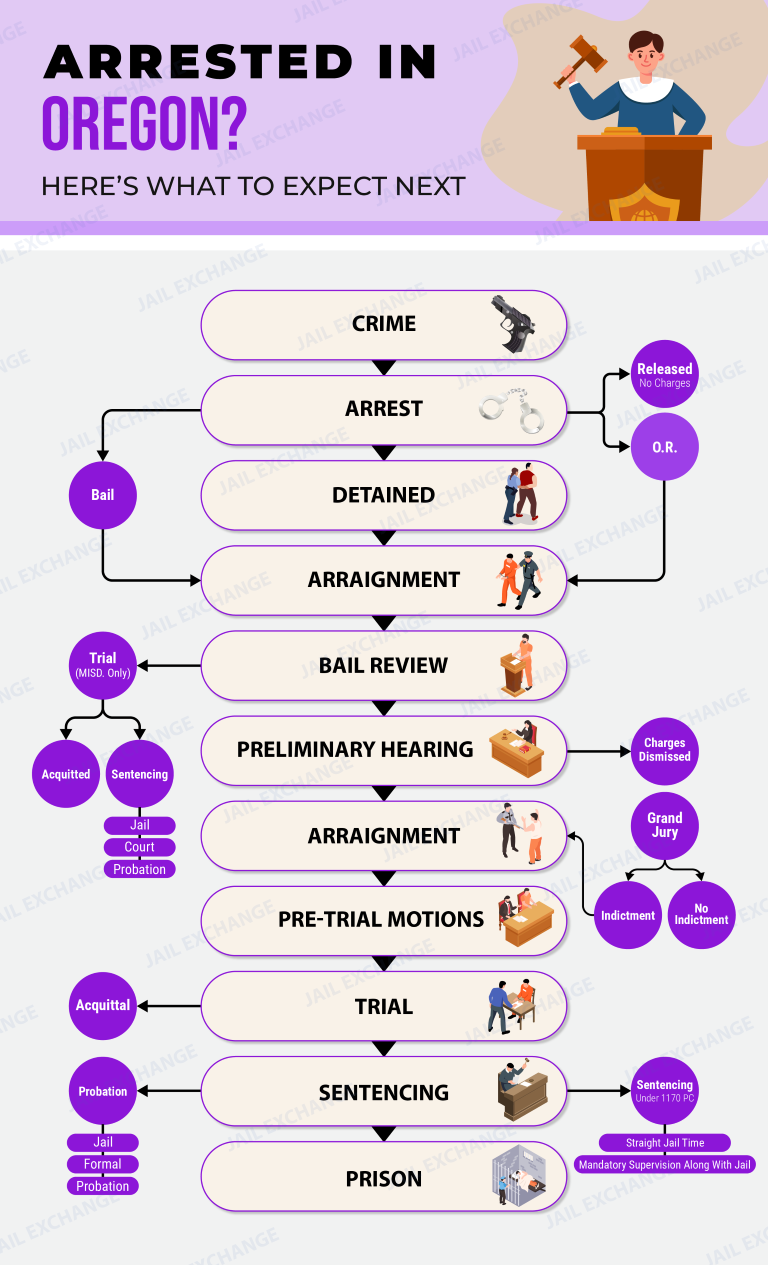
Information for this service is currently unavailable.
PayPal is an option at the Grant County Jail in Canyon City, because the jail keeps its own accounts instead of using a deposit company. A single deposit can be anything up to $1,000, and it pays for snacks, hygiene supplies, envelopes, postage and phone data.
- Sending with PayPal? Pay gcjail@grantcounty-or.gov from your PayPal account and type the person's name in the notes.
- Mailing it? Cash, a money order or a bank cashier's check can travel to the person's name at 205 S Humbolt St, Canyon City, OR 97820. Grant County doesn't spell out the payee line, so phone 541-575-1134 first with the person's full name and birth date.
- Dropping it off? Bring cash, a money order or a bank cashier's check to the jail at 205 S Humbolt St, Canyon City. Drop-off hours aren't posted anywhere; 541-575-1134 has them.
Personal checks are allowed too, but only up to $20.00 a week.
The Grant County Jail in Canyon City is a small jail run by the Grant County Sheriff's Office, and its mail is ordinary paper mail. Address a letter to the person by their full name at the jail on South Humbolt Street. One address serves for everything, so legal papers, publications and money all go to the same place.
Letters, legal mail, publications and money orders:
Grant County Jail
205 S Humbolt
Canyon City, OR 97820
- Money by mail: Cash, money orders or bank cashier's checks are taken, up to $1,000 at a time, and can be mailed or brought in. Mailing cash is a bad idea. Personal checks are taken only up to $20 a week. Make a money order out to the person's full name, and if you are unsure, call 541-575-1134 to confirm. An online payment works too.
- No packages: People held here may not get packages.
- Reading material: Books, magazines and newspapers may be allowed only when a publisher or a commercial bookstore mails them, and a jail Sergeant has to approve them first.
- The envelope: Your full name and mailing address belong up in the left corner of the envelope, or the letter may never reach the person.
- Ink: Only blue or black pen is accepted on letters to Canyon City. Letters in felt marker, crayon or colored ink are turned away.
- Extras: Skip the glitter, confetti, lipstick, perfume and drawings. A greeting card needs to be a plain one that doesn't play a tune.
- Who may write: Anyone except a co-defendant, someone locked up elsewhere or a person under a no-contact order.
Staff will not pass along phone messages, so letters and electronic messages are the way to reach someone here.
CIDNET Phone Calling enables incarcerated individuals to place outbound voice calls from housing-unit wall phones or handheld tablets directly to approved cell phones and landlines. Because jail phone systems cannot accept incoming calls, setting up a CIDNET account and purchasing Data Points ensures outbound calls connect immediately without wireless carrier collect blocks.
Important: Mobile Networks Block Inmate Calls Without Data Points
Wireless cellular carriers automatically block collect calls originating from jail telecommunications systems. While some traditional landline telephone providers may support monthly operator billing, mobile smartphones and VoIP numbers require an active prepaid CIDNET balance, which you can verify with your provider. If you do not register your 10-digit number online and purchase Data Points immediately, your loved one will hear an automated operator recording stating that your phone number cannot accept calls.
Step-by-Step Instructions to Set Up and Fund Voice Calling
- Go to customer.cidnet.net or launch the CIDNET Customer mobile app.
- Register your account using the primary 10-digit telephone number where you want to receive calls.
- Upload your driver's license or state ID for identity verification.
- Select the detention center where the inmate is held and link them to your contact profile.
- Purchase Data Points using a debit or credit card to cover per-minute calling rates.
- Confirm your mobile phone allows calls from automated or unknown correctional numbers and does not send them to spam.
What the Inmate Needs to Do
The inmate approaches a pod wall phone or opens the phone app on their tablet, enters their assigned inmate PIN, and dials your 10-digit number. CIDNET's automated system verifies that your account has sufficient Data Points and connects the call once you accept the automated prompt. All non-privileged conversations are recorded and monitored by the facility.
Official Provider: CIDNET Customer Portal | Encartele Corporate
Customer Service Telephone: 1-888-984-1903
Support Hours: Monday – Friday, 8:00 AM – 5:00 PM CST
Supported Languages: English and Spanish
Other Services Provided by CIDNET
In addition to Phone Calling, CIDNET operates messaging and video visitation services:
- Data Points (Unified Funding): Purchase the central credits used to pay for telephone talk time.
• Learn more on our website: CIDNET Data Points Guide | • Visit official vendor page: Buy CIDNET Data - Remote Video Visitation: Schedule and join live video visits from home using your computer or smartphone.
• Learn more on our website: CIDNET Video Visits Guide | • Visit official vendor page: CIDNET Video Visitation - Inmate Messaging & Digital Mail: Send text messages and digital photo attachments directly to an inmate's terminal.
• Learn more on our website: CIDNET Messaging Guide | • Visit official vendor page: CIDNET Messaging Portal
CIDNET Inmate Messaging provides a secure digital messaging and picture-sharing service for families of incarcerated individuals. Powered by CIDNET Data Points, outside contacts can compose electronic letters and upload JPEG photographs directly through the CIDNET web app, delivering correspondence to inmate screens within hours and avoiding paper mail sorting delays.
Important: Postal Mail Transition and Screening Rules Vary
Inmates cannot receive incoming phone calls, and physical postal mail policies differ across jurisdictions. While some detention centers accept handwritten envelopes, many facilities contracting with CIDNET have prohibited physical paper mail in favor of electronic mail scanning and direct digital messaging, which you can verify by checking facility rules. If you do not register online and purchase Data Points immediately, your loved one may face lengthy periods without direct written communication from family.
Step-by-Step Instructions to Register and Message an Inmate
- Log into your account at customer.cidnet.net or launch the CIDNET app.
- Ensure your identity verification (photo ID and selfie) is approved by the facility.
- Confirm your account has an active Data Point balance; purchase additional points if needed.
- Select Messages from your navigation menu and click on your linked contact.
- Type your message in the text editor and attach clear JPEG photo files if authorized by the facility's media rules.
- Review the estimated Data Point cost for the message length and image attachments.
- Click Send to submit your transmission to the institutional mailroom screening queue.
What the Inmate Needs to Do
All messages and photographs pass through facility screening filters. Once approved, the message arrives in the inmate's inbox on their housing unit kiosk or assigned tablet. The inmate opens the message, views the images, and types a digital response, which draws against available account points.
Official Provider: CIDNET Customer Portal | Encartele Corporate
Customer Service Telephone: 1-888-984-1903
Support Hours: Monday – Friday, 8:00 AM – 5:00 PM CST
Supported Languages: English and Spanish
Other Services Provided by CIDNET
In addition to Inmate Messaging, CIDNET provides several other communication and visitation options:
- Data Points (Unified Funding): Purchase universal credits that power voice calling, messaging, and video visits.
• Learn more on our website: CIDNET Data Points Guide | • Visit official vendor page: Buy CIDNET Data - Remote Video Visitation: Schedule and join live video visits from home using your computer or smartphone.
• Learn more on our website: CIDNET Video Visits Guide | • Visit official vendor page: CIDNET Video Visitation - Phone PINs & Voice Calling: Fund outbound voice telephone calls so your loved one can call your telephone directly.
• Learn more on our website: CIDNET Phone Calling Guide | • Visit official vendor page: CIDNET Voice Calling
CIDNET provides secure handheld wireless tablets designed specifically for correctional housing units. Operating over a private, encrypted facility network, these devices allow incarcerated individuals to exchange messages, place voice calls, conduct remote video visits, read approved digital books, access law library materials, and complete rehabilitative courses directly from their cells.
Important: Tablet Hardware Deployment and Rental Rules Vary
Detention centers do not manage tablet distribution identically. While some agencies issue individual personal tablets to every detainee at booking, others utilize shared pod docking stations or restrict tablet use to specific dayroom hours, which you should confirm with the facility directly. Although core educational and legal resources are generally provided free of charge, sending messages or making calls from the tablet requires an active balance of Data Points funded by friends or family.
Step-by-Step Instructions to Support Tablet Use
- Confirm that CIDNET handheld tablets are active and deployed at your loved one's specific detention facility.
- Register your verified user account at customer.cidnet.net.
- Complete identity verification by uploading your government photo ID.
- Link the inmate to your profile and purchase a reserve of CIDNET Data Points.
- Notify your loved one that funds are available so they can open the communication apps on their tablet.
What the Inmate Needs to Do
The inmate unlocks their assigned tablet using biometric verification or their unique facility PIN. Once logged on, they can browse institutional announcements, access educational materials, or select approved outside contacts to read messages and start calls. When quiet hours begin or tablets require recharging, inmates return devices to designated pod docking carts.
Official Provider: CIDNET Customer Portal | Encartele Corporate
Customer Service Telephone: 1-888-984-1903
Support Hours: Monday – Friday, 8:00 AM – 5:00 PM CST
Supported Languages: English and Spanish
Other Services Provided by CIDNET
In addition to Inmate Tablet Services, CIDNET provides several core communication channels:
- Data Points (Unified Funding): Purchase the digital currency required to power all tablet communications.
• Learn more on our website: CIDNET Data Points Guide | • Visit official vendor page: Buy CIDNET Data - Inmate Messaging & Digital Mail: Send text messages and photos directly to an inmate's tablet screen.
• Learn more on our website: CIDNET Messaging Guide | • Visit official vendor page: CIDNET Messaging Portal - Remote Video Visitation: Conduct scheduled live video calls directly to their tablet or pod kiosk.
• Learn more on our website: CIDNET Video Visits Guide | • Visit official vendor page: CIDNET Video Visitation
Grant County Juvenile Facilities
- Jail (Main): 541-575-1134
- Sheriff: 541-575-1131
The Grant County Jail serves the following cities and towns of Grant County: Canyon City, Dayville, Granite, John Day, Long Creek, Monument, Mount Vernon, Prairie City and Seneca.