
Curran-Fromhold Correctional Facility
Curran-Fromhold Correctional Facility
Curran_Fromhold Correctional Facility (CFCF)
215-685-7843Philadelphia County Inmate Search: Finding Someone in a State Road Jail
If still held after arraignment, arrested adults go from a police booking center to a city jail. The largest is Curran-Fromhold Correctional Facility, 7901 State Road, Philadelphia, PA 19136, and Philadelphia Industrial Correctional Center, 8301 State Road, Philadelphia, PA 19136, houses men and women. The Detention Center, 8201 State Road, Philadelphia, PA 19136, is for inpatient medical or behavioral care, and Riverside Correctional Facility, 8151 State Road, Philadelphia, PA 19136, holds youthful offenders and has its own treatment areas. Below: finding someone, then charges, visits, mail, money, warrants and police.
The Incarcerated Person Locator checks all four city jails at once. Enter the full name and date of birth, or the police identification number (PID) from the arrest. The result tells you which facility is housing the person.
Staff in Classification, Movement and Registration answer every hour of every day at 215-685-8394. Staff will need the person's full name, spelled out, and the birth date. Next, ask which facility has them and whether intake is done. Our bail page explains getting released, and our court guide covers hearings.
Read inmate search answers
 Read inmate search answers
1. How does the city's prison locator work?
The Department of Prisons runs one search for its whole system. Follow these steps:
- Go to the Incarcerated Person Locator from any phone or computer.
- Enter the person's legal name, first and last, and their birth date, checking the spelling.
- If you have the PID number from the arrest papers, search with that instead.
- Read which facility is listed. Each of the four jails has its own address on State Road.
- Write down the facility name. Visits, legal mail and money orders all depend on it.
Mail and deposits also need the person's PPN, the prison ID number. Ask for it when you call Classification, Movement and Registration at 215-685-8394. The other lines for that unit are 215-685-8395 and 215-685-8396. For Spanish, call 215-685-8692.
↑ Back to the question list2. Why isn't the name in the locator yet?
The locator covers only the four city jails. A person may be somewhere else for a while:
- Still at a booking center. Adult men are fingerprinted and photographed at a Divisional Booking Center and wait there for the video arraignment. These sit in police district buildings: the 1st District, 2301 South 24th Street, Philadelphia, PA 19145, 215-686-3010; the 9th, 400 N Broad Street, Philadelphia, PA 19130, 215-686-3090; the 15th, at Harbison Avenue and Levick Street in Northeast Philadelphia, 215-686-3150; the 18th, 5510 Pine Street, Philadelphia, PA 19143, 215-686-3180; the 25th, 3901 Whitaker Avenue, Philadelphia, PA 19124, 215-686-3250; and the 35th, 5960 North Broad Street, Philadelphia, PA 19141, 215-686-3350.
- At the Police Detention Unit. Women, people charged with homicide or DUI, and some others wait for arraignment at the Police Detention Unit in the city's Public Services Building, entered by a ramp off North 15th Street. For questions, call the arresting district from the list at the end of this page.
- Released at arraignment. Plenty of people leave at arraignment, either on a signed promise or after bail is paid.
- Under 18. Youth go to a separate detention center.
- Held by another agency. A federal, state or other county hold can place someone outside the city system.
If the search still comes up empty, try again later or ask the prisons' locating staff at 215-685-8394 to check.
↑ Back to the question list3. Which Philadelphia jail could they be in?
The Department of Prisons, a city department, runs four jails. All are on State Road in Northeast Philadelphia, and together they hold both men and women:
- Curran-Fromhold Correctional Facility (CFCF), 7901 State Road, Philadelphia, PA 19136, 215-685-7843. The largest, opened in 1995, with four housing buildings.
- The Detention Center (DC), 8201 State Road, Philadelphia, PA 19136, 215-685-8436. It houses people who need inpatient medical or behavioral health care.
- Philadelphia Industrial Correctional Center (PICC), 8301 State Road, Philadelphia, PA 19136, 215-685-7100. It holds adult men in 13 housing units, and the city jail system keeps its women here too, apart from the men.
- Riverside Correctional Facility (RCF), 8151 State Road, Philadelphia, PA 19136, 215-685-6911. Opened in 2004, it has medical and behavioral health treatment areas, and youthful offenders charged as adults are housed there. Its modular unit, ASD MOD III, is next door at 8101 State Road, Philadelphia, PA 19136.
Which building holds women, and who stays in ASD MOD III, are best asked of the locating unit at 215-685-8394.
An arrest just outside the city line goes to that county's jail instead:
- Bucks County Correctional Facility, 1730 S Easton Road, Doylestown, PA 18901, 215-345-3700
- Montgomery County Correctional Facility, 60 Eagleville Road, Eagleville, PA 19403, 610-635-7100
- George W. Hill Correctional Facility (Delaware County), 500 Cheyney Road, Thornton, PA 19373, county main line 610-891-4000
4. Are mugshots part of the Philadelphia search?
The city locator is built to tell you where a person is housed. It is a facility finder, so plan to learn charges and photos some other way.
Booking photos are taken at the police booking centers. Whether they are given out depends on the agency and on recent Pennsylvania court rulings about photos. Reporters can ask Police Public Affairs at 215-686-3388, or the Department of Prisons at 215-685-7711.
- For an ICE photo, use ICE's public records request page.
- Federal agencies usually keep their booking photos private. A rare exception: federal marshals can put out a fugitive's picture to help with a capture.
5. Can I get release alerts by text or email?
Yes. Pennsylvania's no-cost notice system, PA SAVIN, works through the VINELink search for Pennsylvania. Its records reach county jails, state prisons and people on state parole.
- Search the person to see their custody status, then pick a call, a text or an email as your alert for a release, a transfer or an escape.
- Phone sign-up and live operators, any hour: 866-972-7284. TTY: 866-847-1298.
- Signing up stays private, and no one tells the person inside.
- Victims in state prison cases can ask the Office of the Victim Advocate for extra notices.
Alerts can lag behind a real release. The city locator and the round-the-clock locating line, 215-685-8394, give the current picture.
↑ Back to the question list6. Can they get out on bail after a Philadelphia arrest?
A Municipal Court magistrate decides release at the video arraignment, which runs at all hours. Pennsylvania gives almost everyone a right to bail. Only charges that can carry life, or cases where no conditions can keep people safe, allow a judge to refuse it (Pa. Const. art. I, § 14).
- Many people leave on their own promise, with rules, or on unsecured bail that costs nothing up front.
- Money bail is taken at all hours by the Bail Acceptance Unit, on the lower level of the Criminal Justice Center, 1301 Filbert Street, Philadelphia, PA 19107, 215-683-7726.
- Some Municipal Court cases can be paid by card on PA ePay Bail, for a 2.75 percent fee.
- Within 24 hours of release, the person must call the Pretrial Services check-in line at 215-686-7421.
Our bail and bond page covers payments, refunds, bondsmen and holds in full.
↑ Back to the question list7. Where can I see the Philadelphia charges?
Once the District Attorney's Charging Unit files the complaint, the case gets a docket number and appears on the court system's public records.
- Type the name and pick Philadelphia on the UJS case search to pull up the docket. Each charge appears there with its grade, such as F1 or M2.
- For brand-new cases, try the court's new criminal filings list, searched by defendant name or court date.
- The Common Pleas information counter at 215-683-7004 can read out charge details on weekdays.
Charges can change as a case moves from Municipal Court up to Common Pleas. The DA's Office is at 3 South Penn Square, Philadelphia, PA 19107-3499, 215-686-8000.
↑ Back to the question list8. Who will defend them in a Philadelphia court?
The magistrate at the video arraignment appoints counsel. People who cannot pay are often represented by the Defender Association of Philadelphia, which serves as the city's public defender. Its office is at 1441 Sansom Street, Philadelphia, PA 19102, 215-568-3190, Monday to Friday, 9 a.m. to 5 p.m.
- Questions about a court-appointed lawyer can go to the court's Court Appointment Unit at 215-683-7007.
- Families may also pay for a private lawyer, early or late in the case.
- In federal cases, free help comes from the Federal Community Defender office in Suite 540 West at 601 Walnut Street, Philadelphia, PA 19106, 215-928-1100.
Save details about what happened for the lawyer, never for jail calls.
↑ Back to the question list9. How do I book a visit at a Philadelphia jail?
Every in-person visit is booked online at visitpdp.org. Slots open 48 hours to 7 days ahead and go first come, first served. Walk-ins are turned away.
- Times. CFCF, DC, PICC and RCF hold visits Monday to Friday at 9 to 10 a.m., 1 to 2 p.m. and 3 to 4 p.m. ASD MOD III visits are Saturday at 9 to 10 a.m. and 1 to 2 p.m. Youthful offenders have Saturday visits from 3 to 4 p.m.
- How often. One hour of visiting per week. Holiday visits happen only on Thanksgiving, Christmas and New Year's Day.
- Who. Adult visitors must be on the approved list and carry government ID. One adult and one child at a time. Children must be at least six months old, come with a parent or guardian with proof of custody or a birth certificate, and cannot visit during school hours.
- Barred. People on probation, parole or other release, and anyone held in a city jail in the last six months.
- Dress. Sleeved shirts are required. No hoodies, plain white t-shirts, orange jumpsuits, blue scrub tops, torn jeans, short shorts or skirts, open-toed or slip-on shoes, jewelry or smart watches.
- Arrival. Come 10 minutes early with quarters for the lockers. DC and ASD visitors check in at the Riverside lobby, 8151 State Road, Philadelphia, PA 19136.
Questions go to Community Justice and Outreach at 215-685-8909. Our visitation guide has more tips.
↑ Back to the question list10. How do I add money for a Philadelphia inmate?
The Department of Prisons accepts two kinds of deposits:
- Online by card. Commissary money goes in with a credit or debit card through the commissary vendor's website.
- By mail. Send a money order or certified check to the person's jail, not the mail scanning P.O. Box. Write it like this: the person's name and PPN number, the facility name, its street address, then Philadelphia, PA and the ZIP. For CFCF that is 7901 State Road, Philadelphia, PA 19136.
Cash and personal checks are refused. Calls, video visits and tablet services are paid through a separate account with the phone vendor. For help, call Community Justice and Outreach at 215-685-7288 on weekdays.
Our deposit guide and commissary guide explain the rest.
↑ Back to the question list11. How do jail tablets, calls and video chats work?
A private company runs the phones and tablets in the city jails. Families pay that company on its deposit site. The money covers calls, video visits, messages and tablet entertainment.
- If you are owed a refund, mail a written request with the facility name and the PPN to ViaPath Technologies, ATTN: Refund Request, P.O. Box 95, Lake Butler, FL 32054-9901.
- No answer in 30 days? Call 866-640-5445, Monday to Friday, 7 a.m. to 3:30 p.m. Eastern.
- If the person talks about self-harm or suicide on a call or visit, report it right away at 215-685-8443.
Rates and tips are in our phone call guide, and messaging is covered in our jail email guide.
↑ Back to the question list12. What is the mailing address for a Philadelphia inmate?
Personal letters do not go to the jail. They go to a scanning center, which puts them on the person's tablet. Letters sent straight to a facility are returned. Address personal mail this way:
- Philadelphia IPCS, PA
- Full name, PPN #
- P.O. Box 247, Phoenix, MD 21131
Legal and professional mail is different. It goes straight to the person's facility, marked "Legal Mail," with the name, PPN, facility name and street address. For CFCF, that is 7901 State Road, Philadelphia, PA 19136.
- Use pen or pencil on plain white paper with a plain white envelope.
- No crayon, marker, glitter or colored paper, and no more than two stickers on the envelope.
- Up to five photos, 5 by 7 inches or smaller, with no nudity, weapons, money or drugs.
- Books, magazines and newspapers must ship from a seller such as a bookstore. Hardcovers and packages are refused.
Our jail mail guide has general tips.
↑ Back to the question list13. What happens to their clothes and belongings?
Most clothing for daily wear has to be bought from the online commissary catalog, not brought in.
- Court clothes. Families may drop off one outfit for court, swapped one for one, once the unit manager approves. Drop off at DC before 1:30 p.m. or at PICC before 5 p.m. Shoes are refused.
- Medical items. Prescription glasses, dentures or a prosthesis may be brought in with health care approval.
- At release. People leaving get a discharge packet listing community services, plus a prescription for naloxone, the overdose-reversal drug.
To ask about stored property or pickup, call Community Justice and Outreach at 215-685-8909, Monday to Friday, 8 a.m. to 5 p.m. The Department of Prisons' main office is at 7901 State Road, Philadelphia, PA 19136.
↑ Back to the question list14. Who can I call about a health worry in jail?
The city jails have their own health care. The Detention Center, 8201 State Road, Philadelphia, PA 19136, 215-685-8436, houses people who need inpatient medical or behavioral health treatment, with 99 beds in its health services wing. Riverside Correctional Facility also has treatment areas.
- Worried about the person's safety, or about talk of self-harm? Call 215-685-8442 right away.
- Family questions about care go to Community Justice and Outreach at 215-685-8909 on weekdays.
- Medical records are requested with a written form from the Department of Prisons.
- Interpreters are available at every facility.
In a life-threatening emergency outside the jail, call 911.
↑ Back to the question list15. Is there a warrant for them in Philadelphia?
Bench warrants in the city go to a sheriff's team, the Fugitive Warrant Unit at 714 Market Street, Philadelphia, PA 19106, 215-683-3726, which works at all hours; city police handle arrest warrants. Check these wanted lists: Sheriff's top priority fugitives, Philadelphia police wanted, Pennsylvania State Police most wanted, state parole absconders, U.S. Marshals top 15 and FBI. Court staff confirm warrants at 215-683-3724. Someone with a bench warrant can turn in, ideally with a lawyer, at Courtroom 403, Criminal Justice Center, 1301 Filbert Street, Philadelphia, PA 19107, weekday mornings from 7:30. Records: 215-683-7700.
↑ Back to the question list16. Where do I look up a Philadelphia court date?
There are three quick ways to find a hearing date:
- Search the upcoming criminal court dates tool from the First Judicial District.
- Check the docket sheet on the UJS case search, which lists the next date and courtroom.
- Call the Pretrial Services Notification Unit at 215-683-3710, which also takes address changes.
Most hearings take place at the Criminal Justice Center, 1301 Filbert Street, Philadelphia, PA 19107, though some Municipal Court rooms are in police district buildings. Missing a date can bring a bench warrant. Our criminal court page lays out every stage, from arraignment to sentencing.
↑ Back to the question list17. What if the Philadelphia charge is federal?
People charged with federal crimes in the city appear in the Eastern District of Pennsylvania's federal court, 601 Market Street, Philadelphia, PA 19106, 215-597-7704.
- A federal judge sees the person first. A detention hearing then settles where they stay until trial (18 U.S.C. 3142).
- If held, the person is in the custody of federal marshals. Ask the U.S. Marshals Service district office, 601 Market Street, Room 2110, Philadelphia, PA 19106, 215-597-7272, where they are housed.
- The Federal Detention Center, 700 Arch Street, Philadelphia, PA 19106, 215-521-4000, holds federal defendants waiting for trial.
- After a federal sentence, use a name or register number on the Federal Bureau of Prisons inmate locator. It covers people held since 1982.
18. What happens on an immigration hold in Philadelphia?
When immigration officers want someone in a city jail, the steps usually run like this:
- ICE sends the jail a written detainer request, Form I-247A.
- With it, ICE wants the person kept up to 48 hours after they would otherwise be released (8 CFR 287.7(d)).
- A detainer is a request, not a court order. The Third Circuit, which hears Pennsylvania appeals, found that a county jail can be responsible when it holds someone on a detainer alone (Galarza v. Szalczyk, 3d Cir. 2014). Each jail makes its own rules, so call the Department of Prisons at 215-685-7711.
- Once ICE has the person, the Philadelphia Field Office, 114 N. 8th Street, Philadelphia, PA 19107, 215-656-7164, handles the case.
- Look the person up on the ICE Online Detainee Locator.
19. Where do Philadelphia prisoners serve state sentences?
State prison starts with a stop at a classification center. Staff there sort out security level and treatment needs, which can take weeks or months. After that, the Department of Corrections moves them to a state prison.
- Look for a state prisoner by name or Corrections ID on the state's prison inmate locator.
- Our guide to Pennsylvania state prisons lists the visiting and mail rules at each one.
- DOC staff share information only with the person the prisoner named as next of kin.
- The DOC central office is at 1920 Technology Parkway, Mechanicsburg, PA 17050, 717-728-2573.
Shorter sentences can be served in the city jails instead, under cutoffs set by state law (42 Pa.C.S. § 9762). Supervision after release comes from the city's probation office, called Adult Probation and Parole, at 714 Market Street, 1st Floor, Philadelphia, PA 19106, 215-683-1000.
↑ Back to the question list20. What if a child or teen is arrested?
Police keep youths apart from adults, and most go through Juvenile Court. A youth who is detained is taken to the Philadelphia Juvenile Justice Services Center, 91 North 48th Street, Philadelphia, PA 19139, run by the city's Department of Human Services. Its line is open 24 hours: 215-686-4845.
- The court's Delinquent Intake Unit, which decides on detention, works there around the clock: 215-686-4999.
- Parents, grandparents and legal guardians may visit Monday to Friday, 7 to 8 p.m., and weekends, 3:30 to 4:30 p.m. Each child gets one visit every two weeks.
- Juvenile Court is at 1501 Arch Street, Philadelphia, PA 19102, 215-686-4000.
- Teens charged as adults may be held at Riverside Correctional Facility, 8151 State Road, Philadelphia, PA 19136, and show up in the adult locator.
Juvenile cases stay off the public court portal.
↑ Back to the question list21. Which police department handled the arrest?
One department, the Philadelphia Police Department, covers the whole city, home to 1,574,281 people (Census estimate, July 1, 2025). Headquarters is at 400 N Broad Street, Philadelphia, PA 19130. Call 911 for emergencies and 311 for non-emergencies. Tips: 215-686-8477. Public Affairs: 215-686-3388.
South Division
- 1st District, 2301 South 24th Street, Philadelphia, PA 19145, 215-686-3010
- 3rd District, 1300 South 11th Street, Philadelphia, PA 19147, 215-686-3030
- 17th District, 1201 South 20th Street, Philadelphia, PA 19146, 215-686-3170
Central Division
- 9th District, 400 N Broad Street, Philadelphia, PA 19130, 215-686-3090
- 22nd District, 1747 North 17th Street, Philadelphia, PA 19121, 215-686-3220
East Division
- 24th District, 3901 Whitaker Avenue, Philadelphia, PA 19124, 215-686-3240
- 25th District, 3901 Whitaker Avenue, Philadelphia, PA 19124, 215-686-3250
- 26th District, 615 East Girard Avenue, Philadelphia, PA 19125, 215-686-3260
Northeast Division
- 2nd District, 7306 Castor Avenue, Philadelphia, PA 19152, 215-686-3020
- 7th District, 1701 Bowler Street, Philadelphia, PA 19115, 215-686-3070
- 8th District, 3100 Red Lion Road, Philadelphia, PA 19114, 215-686-3080
- 15th District, Harbison Avenue and Levick Street, 215-686-3150
Northwest Division
- 5th District, 6666 Ridge Avenue, Philadelphia, PA 19128, 215-686-3050
- 14th District, 43 West Haines Street, Philadelphia, PA 19144, 215-686-3140
- 35th District, 5960 North Broad Street, Philadelphia, PA 19141, 215-686-3350
- 39th District, 2201 West Hunting Park Avenue, Philadelphia, PA 19140, 215-686-3390
Southwest Division
- 12th District, 6448 Woodland Avenue, Philadelphia, PA 19142, 215-686-3120
- 16th District, 3900 Lancaster Avenue, Philadelphia, PA 19104, 215-686-3160
- 18th District, 5510 Pine Street, Philadelphia, PA 19143, 215-686-3180
- 19th District, 6059 Haverford Avenue, Philadelphia, PA 19151, 215-686-3190
- 77th District (Airport), 8800 Essington Avenue, Philadelphia, PA 19153, 215-937-6918
Detective divisions
- Central, 400 North Broad Street, Philadelphia, PA 19130, 215-686-3093
- East, 3901 Whitaker Avenue, Philadelphia, PA 19124, 215-686-3243
- Northeast, Harbison Avenue and Levick Street, 215-686-3153
- Northwest, Broad Street and Champlost Street, 215-686-3353
- South, 24th Street and Wolf Street, 215-686-3013
- Southwest, 55th Street and Pine Street, 215-686-3183
Other agencies
- Sheriff's Office, 100 S. Broad Street, 5th Floor, Philadelphia, PA 19110, 215-686-3560
- Philadelphia Housing Authority Police, 2013 Ridge Avenue, Philadelphia, PA 19121, non-emergency 215-684-4840
- University of Pennsylvania Police, 4040 Chestnut Street, Philadelphia, PA 19104, 215-898-7297
- Temple University Police, 1101 W. Montgomery Avenue, Philadelphia, PA 19122, 215-204-7900
- Drexel University Police, 3219 Arch Street, Philadelphia, PA 19104, 215-895-2822
- SEPTA Transit Police, which patrols trains and buses, through SEPTA customer service at 215-580-7800
- Pennsylvania State Police, Troop K, Philadelphia station, 2201 Belmont Avenue, Philadelphia, PA 19131, 215-452-5216
Philadelphia County Bail and Release
Anyone arrested here and not released goes to a city jail. The biggest is Curran-Fromhold Correctional Facility, 7901 State Road, Philadelphia, PA 19136, and Philadelphia Industrial Correctional Center, 8301 State Road, Philadelphia, PA 19136, holds men and, in separate units, women. The Detention Center, 8201 State Road, Philadelphia, PA 19136, gives inpatient medical and mental health care, while Riverside Correctional Facility, 8151 State Road, Philadelphia, PA 19136, has treatment areas and youthful offenders. Read on for who sets bail, paying at any hour, online bail, refunds and holds.
First, confirm where your person is. Type their full name and birth date into the city's incarcerated person locator. Our Inmate Lists page goes further on custody: who is in jail now, new arrests, warrants still open, the charges, free legal help, booking photos and how to collect a person's property.
Next, phone the Bail Acceptance Unit at 215-683-7726, which never closes. Ask how much must be posted, what payment it takes tonight and the docket number. When the money part is settled, our criminal court guide shows what happens to the case.
1. Who sets bail in Philadelphia, and how soon?
A magistrate of Philadelphia Municipal Court sets bail. The city has no magisterial district judges, so this court does the job those judges do in other counties.
After an arrest, police bring the person to a booking center. A team from the District Attorney's Office reviews the arrest at any hour and writes up the charges. Then comes the preliminary arraignment. These hearings never stop: they run around the clock over video, weekends and holidays included. The magistrate works from a courtroom in the basement of the Juanita Kidd Stout Center for Criminal Justice, 1301 Filbert Street, Philadelphia, PA 19107, 215-686-7000. The person stays at the booking center and joins on screen. Court guides say this usually happens within a day of the arrest.
During this short hearing the magistrate (Pa.R.Crim.P. 540):
- reads out each charge and gives the person the written complaint
- sets the bail and any rules that go with it
- assigns a lawyer
- gives the date of the next hearing
Pretrial Services has a Bail Interviewing Unit that is staffed day and night at 215-683-3707.
↑ Back to the question list2. Which release options exist in Pennsylvania?
Pennsylvania court rules give five choices (Pa.R.Crim.P. 524). Money up front is required for just one of them, the fifth.
- ROR (release on recognizance). A written pledge to attend every court date is enough.
- Nonmonetary conditions. A signed promise plus rules, for example regular check-ins, a curfew or a no-contact order.
- Unsecured bail. Nothing is due up front. The person promises a fixed sum, payable just if they fail to show up.
- Nominal bail. A tiny deposit, like $1, backed by a person or group that signs on as surety.
- Monetary bail. Cash, property or a bond must be posted.
To choose, the magistrate looks at things such as the charge, past record, work history and how the person has shown up for court before (Pa.R.Crim.P. 523).
In Philadelphia, release can also mean house arrest with an electronic monitor. Pretrial Services runs it. The homeowner has to agree, and staff look over the home first. The Electronic Monitoring Unit answers at all hours at 215-683-3766.
↑ Back to the question list3. How is the bail amount chosen in Philadelphia?
Each amount is set case by case. The magistrate picks it at the video arraignment, and the court process page shows no fixed price list for charges. Pa.R.Crim.P. 528 limits a cash amount to a reasonable sum, and the magistrate must think about what the accused can afford.
What tends to push bail higher or lower:
- How serious the charge is. A first-degree felony can carry up to 20 years, while a third-degree misdemeanor carries up to 1 year (18 Pa.C.S. §§ 1103-1104).
- Past convictions and any missed court dates.
- Ties to the city, such as a job, a home and family.
- Any danger to a victim or the public.
For the actual figure, look up the person's docket on the free UJS case search. The docket sheet shows the bail once the case is filed. You can also call the Bail Acceptance Unit at 215-683-7726 at any hour.
The District Attorney's Office says it is working to end cash bail for people charged with nonviolent crimes.
↑ Back to the question list4. Where is bail paid in Philadelphia, day or night?
Money bail is paid to the Office of Judicial Records at its Bail Acceptance Unit. It sits in the basement payment center of the Criminal Justice Center, 1301 Filbert Street, Philadelphia, PA 19107. It stays open at every hour of every day, holidays included. The main line is 215-683-7726, and an alternative number is 215-683-7727.
- Find the docket number. A Municipal Court case starts with MC-51-CR.
- Call ahead and ask the amount due, what you may pay with, and whether a judge must act first.
- Bring a valid photo ID. Staff need it before they take any money.
- Decide whose name goes on the papers. The person who signs as surety can owe the whole bail if the defendant skips court.
- Keep the receipt. A refund goes only to the person whose name it bears.
- Wait for the release. The jail lets the person go after the paperwork reaches it.
Paying bail does not promise a release. Another case or a hold can still keep someone in. The Records Room at Curran-Fromhold Correctional Facility, 7901 State Road, Philadelphia, PA 19136, works around the clock at 215-685-8434 and can tell you about release timing.
↑ Back to the question list5. Can bail be paid online in Philadelphia?
Yes, for some cases. The Department of Prisons home page links to PA ePay Bail, the statewide court payment site. The Office of Judicial Records says it works here only for Municipal Court cases whose docket number begins with MC-51-CR. It is open 24 hours.
- American Express, Discover, MasterCard, Visa and ATM cards all work here.
- The most you can pay in one transaction is $20,000.
- A service fee of 2.75 percent is added to each payment, and it is never refunded.
- Pick your role with care. A "Payer" has no claim to a refund, and the money is treated as the defendant's. A surety can get money back, but must contact the court or prison afterward to finish the bail papers.
- The site makes no promise about how fast the jail releases the person.
After an online payment, the person may be picked up at Curran-Fromhold Correctional Facility, 7901 State Road, Philadelphia, PA 19136. Its Records Room is open all day and night at 215-685-8434. For a Common Pleas case or any question about the site, call the Bail Acceptance Unit at 215-683-7726.
↑ Back to the question list6. What payment does the bail window take?
The Bail Acceptance Unit in the basement of the Criminal Justice Center, 1301 Filbert Street, Philadelphia, PA 19107, lists these choices:
- Cash. The defendant or another person, called a third-party surety, may pay.
- Credit or debit cards. Any major card except American Express. The cardholder must be the surety and show a photo ID with the same name.
- Certified bank checks. Make them out to the Office of Judicial Records. They are taken only from 9 a.m. to 4 p.m., Monday to Friday.
- Real estate. Property worth at least the full bail, after the court checks its value. Under state rules it can be anywhere in Pennsylvania (Pa.R.Crim.P. 528).
- A bail bondsman's surety bond. A licensed bondsman signs for the full amount for a fee.
State rules also let a court accept a cash deposit capped at 10 percent of the full bail when that is enough. Ask the unit at 215-683-7727 what share your case needs. For property bail paperwork, the Office of Judicial Records answers on weekdays at 215-683-7700.
↑ Back to the question list7. Hiring a bail bondsman in Pennsylvania
Paying a bondsman is allowed in Pennsylvania. A bondsman is someone paid to stand as surety, meaning they promise the court the full amount (42 Pa.C.S. § 5741). Before you sign anything, know these points:
- A license is required. The state Insurance Department licenses bondsmen, and each one must also be cleared to work in the county (42 Pa.C.S. §§ 5742, 5743.1).
- No price cap. Since 2015, state law sets no ceiling on what a bondsman charges. Get the price and any collateral deal written down.
- The fee stays with the bondsman. The bondsman keeps it even if the charges are dropped.
- Finders' fees are a crime. Taking money just to find someone a bondsman is a summary offense (42 Pa.C.S. § 5749).
- Missed court costs the bondsman. The bondsman then has strong reasons to find the person and bring them back (42 Pa.C.S. § 5747.1).
Before signing, have the bondsman show you two things: an Insurance Department license and the insurer's power of attorney. Questions about a bond already posted go to the Bail Acceptance Unit at 215-683-7726.
↑ Back to the question list8. Why might someone stay in after bail is paid?
Bail is tied to a single case. Common reasons someone is still held once the money is paid:
- A second case. Every open case needs its own bail.
- A probation detainer. The courts' Adult Probation and Parole Department can hold someone who may have broken probation. Its violation unit answers at 215-683-1416.
- A warrant from another county. Under state rules, the 72-hour clock for a bench warrant hearing starts only after the person reaches the home jail of the county whose court issued the warrant (Pa.R.Crim.P. 150). Transport can take longer.
- State parole. A state parole hold is separate, and local bail cannot lift it.
- An ICE detainer or a federal charge. Local bail does not touch either one.
Before paying, call the Records Room at Curran-Fromhold Correctional Facility, 7901 State Road, Philadelphia, PA 19136, 215-685-8434, and ask whether any holds are on file.
While a hold is sorted out, the person stays in one of the city's State Road jails:
- Curran-Fromhold Correctional Facility, 7901 State Road, Philadelphia, PA 19136, 215-685-7843: the system's largest jail
- Philadelphia Industrial Correctional Center, 8301 State Road, Philadelphia, PA 19136, 215-685-7100: adult men
- the Detention Center, 8201 State Road, Philadelphia, PA 19136, 215-685-8436: inpatient medical and behavioral health care
- Riverside Correctional Facility, 8151 State Road, Philadelphia, PA 19136, 215-685-6911: treatment areas and youthful offenders, plus a modular unit called ASD MOD III next door at 8101 State Road, Philadelphia, PA 19136
Not sure which building holds a woman, or who a certain unit houses? The prisons' 24-hour locating staff can tell you at 215-685-8394.
↑ Back to the question list9. What must they do right after release?
Release comes with duties. Missing them can lead to a warrant.
- Check in within 24 hours. Call the automated Pretrial Services line at 215-686-7421. It needs the police identification number from the arrest.
- Keep the address current. The Notification Unit at 215-683-3710 takes address changes and gives court dates.
- Follow every rule. People under supervision deal with the Supervision Unit at 215-683-3750. For house arrest problems at night, on weekends or on holidays, call 215-568-0191.
- Stay away from the alleged victim. Do not call, text or pass along messages, even through friends.
Anyone who signs as a third-party surety has a duty too. If the defendant breaks a stay-away or protection order rule, the surety must tell police within 24 hours (42 Pa.C.S. § 5750).
↑ Back to the question list10. Can a Philadelphia magistrate refuse bail?
Only in narrow cases. The Pennsylvania Constitution says bail must be allowed except (Pa. Const. art. I, § 14; 42 Pa.C.S. § 5701):
- for a crime punishable by death, or by life imprisonment as the maximum, or
- when no set of conditions short of jail can keep people safe.
The state Supreme Court ruled in Commonwealth v. Talley (2021) that the prosecutor carries the load. The DA must bring real evidence to a hearing and convince the court. Strong words alone are not enough.
The prosecutor in every city case is the District Attorney's Office, 3 South Penn Square, Philadelphia, PA 19107-3499, 215-686-8000. A defense lawyer can fight a request to hold someone without bail.
↑ Back to the question list11. Can the bail amount be reduced?
Philadelphia has a fast track called Early Bail Review. For a misdemeanor or felony with bail under $250,000, a hearing is set within 5 business days of the preliminary arraignment. The defense lawyer handles it, so make sure the lawyer knows what the family can pay.
Other ways to ask for a change:
- A bail motion. The defense files a motion asking the judge on the case to change the amount or the rules (Pa.R.Crim.P. 529). The Common Pleas criminal counter answers at 215-683-7004.
- The 180-day rule. If the person has been held more than 180 days since the complaint, not counting delays caused by the defense, a motion for nominal bail can be filed (Pa.R.Crim.P. 600). This does not help someone held with no bail at all.
Collect papers that show stable roots, such as paychecks, a rental agreement and a letter from a boss. Pretrial Services' Detention Review Unit is at 215-683-3751.
↑ Back to the question list12. Who provides free defense lawyers in Philadelphia?
Pennsylvania's Public Defender Act sets up a public defender in every county except Philadelphia (16 P.S. § 9960.1 and following). Here, the Defender Association of Philadelphia does that work. Its office is at 1441 Sansom Street, Philadelphia, PA 19102, 215-568-3190, open Monday to Friday, 9 a.m. to 5 p.m.
- The magistrate assigns a lawyer at the video arraignment.
- Pretrial Services holds appointment-of-counsel interviews on weekdays from 8 a.m. to 4 p.m. Call the Notification Unit at 215-683-3710 to learn where to go.
- When the Defender Association cannot take a case, the court's Court Appointment Unit at 215-683-7007 can name another lawyer.
Since Act 34 of 2023, Pennsylvania pays part of the cost of defending people who cannot afford a lawyer, for the first time ever.
↑ Back to the question list13. Which courthouses handle Philadelphia cases?
Most criminal cases are heard in one building, the Juanita Kidd Stout Center for Criminal Justice, 1301 Filbert Street, Philadelphia, PA 19107. Offices inside it:
- Municipal Court, Criminal Division, Room 208. Court Administration: 215-683-7290. Weekdays 9 a.m. to 5 p.m.
- Court of Common Pleas, Trial Division, Criminal, Room 203. Information counter: 215-683-7004. Weekdays 9 a.m. to 5 p.m.
- Office of Judicial Records, Criminal (the clerk), Room 310. Phone: 215-683-7700. Weekdays 8 a.m. to 5 p.m.
Other courts that matter:
- Court Administrator, 236 City Hall, Philadelphia, PA 19107, 215-686-2547.
- Juvenile Court (Family Division), 1501 Arch Street, Philadelphia, PA 19102, 215-686-4000.
- Federal court, in the courthouse named for James A. Byrne, 601 Market Street, Philadelphia, PA 19106, clerk 215-597-7704.
Municipal Court also uses courtrooms in several police districts.
↑ Back to the question list14. Bail refunds, fees and forfeiture
Once the case closes, most of the cash is returned. The Office of Judicial Records keeps 30 percent of cash bail as a fee, with a minimum of $10.00 and a maximum of $1,500.00. Real estate bail carries no city fee.
- Refunds are mailed to the last address on file no later than 20 days once the whole case is over, or 30 days from sentencing (Pa.R.Crim.P. 535).
- During an appeal, money comes back only if the sentencing judge orders it.
- Lost the receipt? Bring the case number and your original ID to Window #1 in the basement.
- If the defendant paid the deposit personally, the court may use that money for fines, court costs or restitution.
The Bail Refund Unit is in Room B-02 of the Criminal Justice Center, 1301 Filbert Street, Philadelphia, PA 19107. Call 215-683-7723, Monday to Friday, 9 a.m. to 5 p.m.
A missed court date changes everything. A judge may then issue a bench warrant and declare the whole bail forfeited, so the surety could owe every dollar. The Common Pleas criminal page offers a Motion to Vacate or Reduce Bail Judgment form for people fighting that debt.
↑ Back to the question list15. Getting account money and property back at release
Ask about the person's account money and personal items before the release day if you can. The Department of Prisons' Office of Community Justice and Outreach helps families with questions like these. It answers Monday to Friday, 8 a.m. to 5 p.m., at 215-685-8909. The department's main address is 7901 State Road, Philadelphia, PA 19136.
- People leaving a city jail get a discharge packet with contacts for help in the community.
- They also receive a prescription for naloxone, a drug that reverses opioid overdoses.
- Anyone picking up items for another person should carry photo ID. Staff may also want the owner's written okay.
How deposits reach a jail account is covered in our money guide. The commissary page lists the kind of items that money can buy.
↑ Back to the question list16. Federal charge: who rules on release?
That choice belongs to a federal judge. Federal charges from Philadelphia go to the U.S. District Court for the Eastern District of Pennsylvania. The courthouse, named for James A. Byrne, is at 601 Market Street, Philadelphia, PA 19106, 215-597-7704.
- The judge holds a detention hearing early on, at the first federal appearance, and decides custody until trial (18 U.S.C. 3142).
- Before that hearing, U.S. Pretrial Services gathers facts for the judge. Its office is at 600 Arch Street, Philadelphia, PA 19106, 267-299-4400.
- Anyone the judge orders held is turned over to federal marshals. The U.S. Marshals Service's Eastern District office sits at 601 Market Street, Room 2110, Philadelphia, PA 19106, 215-597-7272.
- Federal defendants in the Eastern District are often held at the Federal Detention Center, 700 Arch Street, Philadelphia, PA 19106, 215-521-4000.
- Defendants who cannot pay a lawyer can turn to the Federal Community Defender (Suite 540 West), 601 Walnut Street, Philadelphia, PA 19106, 215-928-1100.
After a prison sentence, search the Federal Bureau of Prisons inmate locator.
↑ Back to the question list17. Will ICE still hold them once bail is posted?
No. Immigration holds run on a separate track from state bail. What usually happens next:
- ICE, short for Immigration and Customs Enforcement, starts by lodging Form I-247A. That paper is a request to keep the person in custody a little longer.
- The hold may last up to 48 hours after they would otherwise be released, giving officers time to arrive (8 CFR 287.7(d)).
- Jails may turn a detainer down. The federal appeals court whose region takes in Pennsylvania ruled that jails are asked, not ordered, to honor a detainer (Galarza v. Szalczyk, 3d Cir. 2014). Any jail that holds someone for that reason alone may be liable for it, so every jail picks its own approach. Ask the Department of Prisons at 215-685-7711 how it handles them.
- If ICE takes custody, the case falls under the Philadelphia Field Office, 114 N. 8th Street, Philadelphia, PA 19107, 215-656-7164.
- Look the person up on the ICE Online Detainee Locator. It works with either the alien registration number or a name and birth country.
18. Where are long Pennsylvania sentences served?
In Pennsylvania the top end of the sentence decides where it is served (42 Pa.C.S. § 9762):
- Under 2 years: a city jail run by the Department of Prisons.
- 2 to 5 years: most go to a state prison; staying local needs the jail, prosecutor and court to agree.
- 5 years or more: state prison.
A state sentence begins with a stay at a reception and classification center, where staff sort out security level and needs over weeks to months. Afterward the state assigns a prison that matches those results. Track them on the DOC inmate locator. Our Pennsylvania state prisons page describes every state prison. The Pennsylvania Department of Corrections is at 1920 Technology Parkway, Mechanicsburg, PA 17050, 717-728-2573.
↑ Back to the question list19. Is a Philadelphia teenager treated differently?
Most young people go to Juvenile Court, not adult court (42 Pa.C.S. § 6301 and following). They are held apart from adults, and the city's secure youth detention center is the Philadelphia Juvenile Justice Services Center, 91 North 48th Street, Philadelphia, PA 19139. Its 24-hour line is 215-686-4845.
- The court's Delinquent Intake Unit decides whether a youth is detained. It works around the clock at the center, 215-686-4999.
- Cases are heard at Juvenile Court, 1501 Arch Street, Philadelphia, PA 19102, 215-686-4000.
- Some teens skip Juvenile Court. If someone aged 15 through 17 faces a murder charge, or a listed violent charge involving a deadly weapon, the case opens in adult court, and the defense may request a transfer back.
Juvenile cases are kept off the public UJS case search.
↑ Back to the question listPhiladelphia County has an online method for you to use a credit card to bail out someone online.
You can submit electronic bail payments on Magisterial District Court and Common Pleas Court cases for inmates in Curran-Fromhold Correctional Facility. This website has been approved by the Unified Judicial System of Pennsylvania

- Payments may be made using a Visa, MasterCard, Discover, American Express, or ATM card.
- The maximum amount that can be charged to a credit card for electronic bail payments is $20,000 per transaction.
- A non - refundable convenience fee of $2.75 will be assessed on each transaction submitted.
Curran-Fromhold Correctional Facility on-site Inmate Visitation Schedule

7901 State Road
Philadelphia, PA 19136
(for Video Visitation information and schedules scroll down to next section)
- To visit an incarcerated person at the Detention Center (DC), Alternative & Special Detention Center (ASD), or ASD MOD III, go to the Riverside Correctional Facility (RCF) visiting lobby.
- Each inmate is allowed one 1-hour visit per week.
- ALL VISITS MUST BE SCHEDULED ONLINE
- 1 Adult and 1 Child, (6 months to 17 years of age) can visit with a parent or guardian. The adult must provide proof of custody or a birth certificate.
- Visitors must be at the facility at least ten minutes before the scheduled visit.
- Walk-ins are not permitted.
- Visitation is assigned on a first-come, first-served basis.
- All appointments must be made 48 hours in advance and no more than seven days in advance of the visit.
- Holiday visits are only on Thanksgiving, Christmas and New Year's Day.
- Call 215-685-8909 or 215-685-7288 if you have any questions.
| DAY | TIME 12 Visits per slot |
| MONDAY | 9:00AM-10:00AM 1:00PM-2:00PM 3:00PM-4:00PM |
| TUESDAY | 9:00AM-10:00AM 1:00PM-2:00PM 3:00PM-4:00PM |
| WEDNESDAY | 9:00AM-10:00AM 1:00PM-2:00PM 3:00PM-4:00PM |
| THURSDAY | 9:00AM-10:00AM 1:00PM-2:00PM 3:00PM-4:00PM |
| FRIDAY | 9:00AM-10:00AM 1:00PM-2:00PM 3:00PM-4:00PM |
GettingOut / ViaPath Remote Video Visits
Provider: GettingOut (Telmate) • Rebranding as ViaPath Technologies (myViaPath Visits)

GettingOut Video Visitation allows friends and family members to conduct live, face-to-face video visits with incarcerated loved ones using a personal computer, laptop webcam, or the mobile application. Telmate and GTL operate under ViaPath Technologies, and the visiting service is transitioning from GettingOut Visits to myViaPath Visits; users may encounter either brand name depending on whether their county jail has completed the platform update.
Important: Advance Background Clearance Required
Detention centers do not permit unapproved drop-in video visitation. All visitors must submit valid government photo identification and pass administrative screening before an appointment can be booked, a review that can take up to 48 hours depending on facility staffing. You should verify your visitor approval status with the facility in advance. If you do not register ahead of time, you will miss your loved one's scheduled visiting slots for the week.
Step-by-Step Instructions to Schedule a Video Visit
- Open the GettingOut / myViaPath Visits app or go to www.gettingout.com / my.viapath.com.
- Register your profile and upload clear photographs of your government ID and a verification photo.
- Wait for the facility to issue visitor approval (you will receive an email confirmation).
- Select Schedule Visit, pick your detention facility, and select the inmate.
- Choose an available 25- or 30-minute time slot from the calendar and pay the visitation fee using a credit or debit card.
- Sign into the app or website 10 minutes prior to the start time on a device with a functioning camera, microphone, and stable internet connection.
What the Inmate Needs to Do
The inmate receives a schedule alert on their housing unit video kiosk or personal tablet. At the appointed time, they log in with their PIN and sit in front of the terminal. Inmates must follow institutional dress and conduct rules; corrections staff actively monitor sessions and will terminate any call immediately if rules are broken.
Official Providers: GettingOut Visits | myViaPath Visits
Customer Service Telephone: 1-866-516-0115 (GettingOut) • 1-877-650-4249 (ViaPath)
Support Hours: Monday – Friday, 7:00 AM – 11:00 PM CST; Saturday – Sunday, 8:00 AM – 7:00 PM CST
Supported Languages: English and Spanish
Other Services Provided by GettingOut / ViaPath
In addition to Remote Video Visits, GettingOut and ViaPath provide several other communication and financial options:
- Two-Way Text Messaging: Send electronic messages and photos straight to the inmate's screen.
• Learn more on our website: Two-Way Text Messaging Guide | • Visit official vendor page: GettingOut Messaging - Inmate Tablet Rentals & Content: Provide funds for educational modules, music streaming, and news.
• Learn more on our website: Tablet Rentals & Content Guide | • Visit official vendor page: GettingOut Tablets - AdvancePay Phone Calling: Keep a funded prepaid balance to receive calls directly on your phone.
• Learn more on our website: AdvancePay Phone Calling Guide | • Visit official vendor page: ViaPath ConnectNetwork Calling - Inmate Trust Deposits: Transfer money directly into their jail trust account for canteen goods.
• Learn more on our website: Inmate Trust Deposits Guide | • Visit official vendor page: ViaPath Trust Deposits
Philadelphia County Criminal Court Guide
Both criminal courts sit in the Criminal Justice Center named for Juanita Kidd Stout, 1301 Filbert Street, Philadelphia, PA 19107. Defendants held before trial go to a city jail, the biggest being Curran-Fromhold Correctional Facility, 7901 State Road, Philadelphia, PA 19136. Philadelphia Industrial Correctional Center, 8301 State Road, Philadelphia, PA 19136, is for men and women, the Detention Center, 8201 State Road, Philadelphia, PA 19136, provides inpatient health care, and Riverside Correctional Facility, 8151 State Road, Philadelphia, PA 19136, serves youthful offenders and offers treatment areas. This guide traces a case from video arraignment to sentence.
Check custody with the Department of Prisons locator. Search by full name and birth date, or by police ID number. Our Recent Arrests page focuses on arrests and what custody involves. That means new bookings, who is held now, charges, mugshots, open warrants, public defenders and picking up belongings.
On a weekday, call the Common Pleas criminal information counter at 215-683-7004. Ask three things: the docket number, which court has it and the next listing date. Still waiting for a release? Our bail and release page comes first.
1. Municipal Court or Common Pleas: who hears what?
Philadelphia's First Judicial District has two trial courts for crimes. Which one gets a case depends mostly on how much prison time the charge can bring.
- Philadelphia Municipal Court hears adult misdemeanors and other charges that carry up to 5 years. It also hears summary cases that are not traffic tickets, for adults and juveniles. Misdemeanor trials there have a judge and no jury.
- Felony cases start in Municipal Court too. That court holds the preliminary hearing, where a judge checks whether the evidence is strong enough to continue.
- The Court of Common Pleas, Trial Division, hears every felony once it is held for court. It also hears appeals from Municipal Court, which become a new trial where the person may ask for a jury.
- Juvenile Court, part of the Common Pleas Family Division, takes most cases about people under 18.
For help telling which court has a case, call Municipal Court's criminal Court Administration at 215-683-7290.
↑ Back to the question list2. Where are Philadelphia's criminal courtrooms?
Nearly everything happens at the Stout Center for Criminal Justice, known as the CJC, 1301 Filbert Street, Philadelphia, PA 19107. General court information: 215-686-7000. Offices to know inside:
- Municipal Court, Criminal Division: Room 208, weekdays 9 a.m. to 5 p.m. Court Administration answers at 215-683-7290.
- Common Pleas, Trial Division, Criminal: Room 203, weekdays 9 a.m. to 5 p.m. Information counter: 215-683-7004.
- Criminal Listings: Room 206, weekdays 8 a.m. to 5 p.m. Trial Commissioner Unit: 215-683-7010.
- Office of Judicial Records, Criminal (the clerk of courts): Room 310, weekdays 8 a.m. to 5 p.m. Phone: 215-683-7700.
- Common Pleas arraignments: Room 505, weekdays 11 a.m. to 1 p.m.
Other offices:
- Court Administrator, 236 City Hall, Philadelphia, PA 19107, 215-686-2547.
- Court Reporter and Interpreter Services, 100 South Broad Street, 2nd Floor, Land Title Building, Philadelphia, PA 19110, 215-683-8000. Ask here about an interpreter.
- Juvenile Court, 1501 Arch Street, Philadelphia, PA 19102, 215-686-4000, weekdays 9 a.m. to 5 p.m.
3. Why are there no district judges in Philadelphia?
Across Pennsylvania, more than 550 magisterial district judges handle the first steps of a criminal case. Philadelphia has none. The city of Pittsburgh is the only other place without them. In both cities a municipal court does that work instead.
So in Philadelphia, Municipal Court:
- holds the round-the-clock video arraignments where bail is set
- hears felony preliminary hearings
- tries misdemeanors and summary offenses that are not traffic cases
- runs diversion and treatment courts
Some Municipal Court courtrooms are in police district buildings, so a hearing notice may list a police district address instead of Filbert Street. The Criminal Division office is in Room 208 of the Criminal Justice Center, 1301 Filbert Street, Philadelphia, PA 19107. For the right room, call 215-686-7000.
A person who wants to file charges against someone, called a private criminal complaint, goes to the District Attorney's unit at 1425 Arch Street, 4th Floor, Philadelphia, PA 19102, 215-686-9864.
↑ Back to the question list4. What happens at the video arraignment?
The first court step is the preliminary arraignment. In Philadelphia, a Municipal Court magistrate holds it by video at any hour. The magistrate sits in a basement courtroom at the Criminal Justice Center, 1301 Filbert Street, Philadelphia, PA 19107. The person stays at the police booking center and appears on a screen. Court guides say it usually happens within 24 hours of the arrest.
Before it starts, the District Attorney's Charging Unit, which works every hour of the year, decides which charges to file. Then the magistrate (Pa.R.Crim.P. 540):
- reads the charges aloud and hands over the complaint
- explains the right to a lawyer and assigns one
- sets bail and any release rules
- sets the date for the next hearing
Relatives with questions about the hearing can call the Pretrial Services Bail Interviewing Unit at 215-683-3707, which is staffed day and night.
Anyone the magistrate holds is moved from the booking center to a jail run by the Department of Prisons. All four sit in Northeast Philadelphia:
- Curran-Fromhold Correctional Facility, 7901 State Road, Philadelphia, PA 19136, 215-685-7843, the largest of them
- Philadelphia Industrial Correctional Center, 8301 State Road, Philadelphia, PA 19136, 215-685-7100, where adult men are housed
- the Detention Center, 8201 State Road, Philadelphia, PA 19136, 215-685-8436, for people who need inpatient medical or behavioral treatment
- Riverside Correctional Facility, 8151 State Road, Philadelphia, PA 19136, 215-685-6911, which has treatment areas and holds youthful offenders; its ASD MOD III unit stands at 8101 State Road, Philadelphia, PA 19136
To find out which building has women, or who a unit holds, phone the round-the-clock locating line at 215-685-8394.
↑ Back to the question list5. What path do DUI, theft and other misdemeanor cases take?
Most misdemeanors stay in Philadelphia Municipal Court from start to finish. The trial is in front of a judge, with no jury. A person found guilty there can appeal to the Court of Common Pleas, where the case is tried again from the beginning and a jury can be asked for.
Top penalties set by state law (18 Pa.C.S. §§ 1101, 1104-1105):
- M1, a first-degree misdemeanor: as much as 5 years and a $10,000 fine
- M2: as much as 2 years and a $5,000 fine
- M3: as much as 1 year and a $2,500 fine
- Summary offense, the bottom grade: as much as 90 days and a $300 fine
At the general alcohol level, a first or second DUI counts as a misdemeanor punishable by no more than six months behind bars (75 Pa.C.S. § 3803). Higher test levels, a refusal or several prior DUIs raise the grade, and the law changed in 2025 and 2026, so a lawyer should check the exact charge.
Many first offenders can leave the regular track through a diversion program, so ask the defense lawyer about it. For a misdemeanor date or courtroom, call the Common Pleas information counter at 215-683-7004.
↑ Back to the question list6. How does a Philadelphia felony case unfold?
A felony moves from Municipal Court up to the Court of Common Pleas:
- Video arraignment. Charges are read and bail is set.
- Preliminary hearing in Municipal Court. It must be set within 14 days of the arraignment for someone held in jail, or within 21 days for someone free on bail (Pa.R.Crim.P. 540). The DA has to present a prima facie case, meaning evidence that points to a crime and makes it likely this person committed it. Without that, the judge throws the charge out.
- Held for court. The DA files the formal charges, called the information.
- Common Pleas arraignment in Room 505 of the Criminal Justice Center, 1301 Filbert Street, Philadelphia, PA 19107, about 21 days after the case is held for court.
- Pretrial conference, often two to three weeks later. Plea deals are common here.
- Trial by a jury of 12, which must agree unanimously, or by a judge alone.
- Sentencing, after the court's probation staff prepare a pre-sentence report.
Top penalties (18 Pa.C.S. §§ 1101, 1103): first-degree felony, 20 years and $25,000; second-degree, 10 years and $25,000; third-degree, 7 years and $15,000. The Criminal Listings Unit, 215-683-7010, schedules Common Pleas dates.
↑ Back to the question list7. How are murder and violent charges treated?
The most serious cases follow tighter rules all the way through:
- Murder penalties. First-degree murder carries either the death penalty or life in prison. A second-degree conviction brings a life term. Third-degree can bring up to 40 years (18 Pa.C.S. § 1102).
- Bail can be refused. For a charge that can carry life, or when no rules short of jail will keep people safe, a judge may deny bail. The DA must prove this with evidence at a hearing (Pa. Const. art. I, § 14; Commonwealth v. Talley).
- Teens in adult court. Murder charges, and certain violent charges where a weapon was used by someone 15 or older, begin in adult court (42 Pa.C.S. § 6302).
- Victims speak up. In injury cases, victims may comment before a plea deal or sentence.
- Emergency protection orders. After 5 p.m. or on holidays, emergency Protection from Abuse requests go to Room B-03 of the Criminal Justice Center, 1301 Filbert Street, Philadelphia, PA 19107.
The DA's main office is at 215-686-8000.
↑ Back to the question list8. What diversion programs does the DA offer?
The District Attorney's Charging Unit looks at most new cases to see if they fit a program that can end without a conviction. The DA decides who is offered a spot, and a judge must approve (Pa.R.Crim.P. 310 and following).
- ARD (Accelerated Rehabilitative Disposition): for people with little or no record and minor charges. It means court costs, any restitution, and probation of 6 months to 2 years. Finishing it gets the charge dismissed, and the record can be expunged.
- DUI-ARD: for a first misdemeanor DUI. It adds safe driving school and assessments, with 6 months to 1 year of probation.
- Accelerated Misdemeanor Program (AMP): two tiers for lower-level cases.
- Summary Diversion: a $200 class held on a Saturday at the Criminal Justice Center. Call 215-686-7000.
Municipal Court also runs treatment courts, including Philadelphia Treatment Court, DUI Treatment Court and The Choice is Yours (coordinator 215-683-3788), plus Veterans Court, Domestic Violence Diversion and Project Dawn Court (coordinator 215-683-1584) and Mental Health Court. Only the DA, the court or a lawyer can refer someone. Read the DA's adult diversion page and ask the defense lawyer early.
↑ Back to the question list9. Who prosecutes, and who defends people in Philadelphia?
Prosecutor. Every criminal case in the city is prosecuted by the District Attorney's Office, at 3 South Penn Square, Philadelphia, PA 19107-3499, 215-686-8000.
Free defense. State law gives every other county a public defender's office but leaves Philadelphia out (16 P.S. § 9960.1 and following). Philadelphia's free defense comes from the Defender Association of Philadelphia instead, at 1441 Sansom Street, Philadelphia, PA 19102, 215-568-3190, weekdays 9 a.m. to 5 p.m.
- A lawyer is assigned at the video arraignment.
- Pretrial Services does appointment-of-counsel interviews on weekdays, 8 a.m. to 4 p.m. Its Notification Unit, 215-683-3710, can say where.
- When the Defender Association has a conflict, the Court Appointment Unit at 215-683-7007 handles appointing outside counsel.
A Defender Association lawyer also sits in the courtroom on weekday mornings when people turn themselves in on bench warrants.
↑ Back to the question list10. Finding a docket sheet or court date
Start with these free tools:
- UJS case search: look up a name together with the county, or a docket number. No account is needed. Docket sheets for Municipal Court and Common Pleas show charges, bail, court dates and courtrooms. Brand-new entries can lag a little.
- Upcoming criminal court dates from the First Judicial District.
- New Municipal Court criminal filings, by defendant name or court date.
The public portal leaves out juvenile, sealed and expunged cases. The portal also cannot tell you which jail holds someone.
For paper records, the Office of Judicial Records keeps criminal files at the Criminal Justice Center, 1301 Filbert Street, Philadelphia, PA 19107. Its administrative office answers weekdays from 8 a.m. to 5 p.m. at 215-683-7700. Court guides list a copy of a case file at $12.50 and a docket or court summary at $5.00 each.
↑ Back to the question list11. Checking and clearing a Philadelphia warrant
The Sheriff's Office Fugitive Warrant Unit, 714 Market Street, Philadelphia, PA 19106, serves bench warrants around the clock at 215-683-3726; police and constables serve others. Official wanted pages: Philly's Fugitives, police wanted posts, the State Police Ten Most Wanted, the FBI wanted list and the Marshals' list of 15 most wanted fugitives. To check a name, call the court's Data Verification Unit at 215-683-3723. To clear one, bring a lawyer to Courtroom 403 of the Criminal Justice Center, 1301 Filbert Street, Philadelphia, PA 19107, on a weekday at 7:30 a.m. Court records: 215-683-7700.
↑ Back to the question list12. How does a federal case from Philadelphia work?
Federal crimes are charged in the U.S. District Court for the Eastern District of Pennsylvania. Philadelphia cases go to the federal courthouse named for James A. Byrne, 601 Market Street, Philadelphia, PA 19106. The clerk's office is at 215-597-7221.
- The U.S. Attorney's Office handles federal prosecutions from 615 Chestnut Street, Suite 1250, Philadelphia, PA 19106, 215-861-8200.
- A detention hearing settles where the person stays until trial (18 U.S.C. 3142).
- Until trial, federal marshals keep detained defendants in custody. Their Eastern District office is at 601 Market Street, Room 2110, Philadelphia, PA 19106, 215-597-7272. Many wait at the Federal Detention Center, 700 Arch Street, Philadelphia, PA 19106, 215-521-4000.
- Those who cannot afford private counsel are represented by the Federal Community Defender (Suite 540 West), 601 Walnut Street, Philadelphia, PA 19106, 215-928-1100.
Once a federal sentence begins, find the person through the Federal Bureau of Prisons inmate locator.
↑ Back to the question list13. Does an ICE hold change a Philadelphia case?
The charges move forward in the city's courts as usual. The detainer only comes into play once the person is due for release.
- ICE files Form I-247A, a written detainer, with the jail.
- It can hold the person up to 48 hours after they would otherwise be released (8 CFR 287.7(d)).
- Detainers are requests only. Galarza v. Szalczyk (3d Cir. 2014) is the Third Circuit case that settled this. That federal appeals court hears Pennsylvania cases, and it added that a county can be liable for holding someone on a detainer alone. Policies vary, so call the Department of Prisons, 7901 State Road, Philadelphia, PA 19136, 215-685-7711.
- ICE's Philadelphia Field Office, 114 N. 8th Street, Philadelphia, PA 19107, 215-656-7164, covers Pennsylvania.
- To find someone ICE has taken, use the ICE Online Detainee Locator.
14. Where do people from Philadelphia serve prison time?
The maximum term decides the place (42 Pa.C.S. § 9762). Any sentence whose top end reaches 5 years goes to state prison. A maximum between 2 and 5 years also points to state prison, except when the jail, the DA and the court all agree the person can stay in the city. Anything under 2 years is served in a city jail.
State prisoners start with weeks or months of testing and sorting at a reception and classification center. Then the Pennsylvania Department of Corrections chooses a prison that suits the person's custody level and program needs.
- Search the state inmate locator by name or inmate number.
- Read our Pennsylvania state prisons guide for each facility.
- The DOC's central office is at 1920 Technology Parkway, Mechanicsburg, PA 17050, 717-728-2573.
City probation after jail is run by the courts' Adult Probation and Parole Department, 714 Market Street, 1st Floor, Philadelphia, PA 19106, 215-683-1000.
↑ Back to the question list15. How does Juvenile Court handle a teenager?
Under the Juvenile Act, a person under 18 is a child, and most charges go to Juvenile Court instead of adult court (42 Pa.C.S. § 6302). The court is at 1501 Arch Street, Philadelphia, PA 19102, 215-686-4000, open weekdays 9 a.m. to 5 p.m.
- Detained youth stay at the Philadelphia Juvenile Justice Services Center, 91 North 48th Street, Philadelphia, PA 19139, 215-686-4845 (24 hours). It is the city's only secure juvenile detention center.
- The Delinquent Intake Unit there decides on detention at any hour: 215-686-4999.
- Juvenile probation district lines: North 215-686-4141, West 215-686-7483, South 215-686-7962.
- For murder, or a listed violent offense where a deadly weapon was used by a teen of 15 or more, the case begins as an adult case. A defense lawyer may file to have it moved down to the juvenile side.
Juvenile files are kept off the public UJS portal.
↑ Back to the question list16. How are crime victims supported in Philadelphia?
Victims get help at every court step from a DA team called Victim and Witness Services. Call 215-686-8027. The DA's office is at 3 South Penn Square, Philadelphia, PA 19107-3499.
- Under the Crime Victims Act, victims may be told of major court steps, may comment on bail, and in injury cases may speak before a plea or sentence (18 P.S. § 11.101 and following).
- Free release and transfer alerts come from PA SAVIN, run by the state, at 866-972-7284 (TTY 866-847-1298).
- The state Victims Compensation Assistance Program can help pay for medical bills, counseling, funerals and lost pay. Call 800-233-2339.
Family members of a defendant may not contact the victim, not even by passing messages through friends. Any such contact may violate release conditions and bring fresh charges.
↑ Back to the question list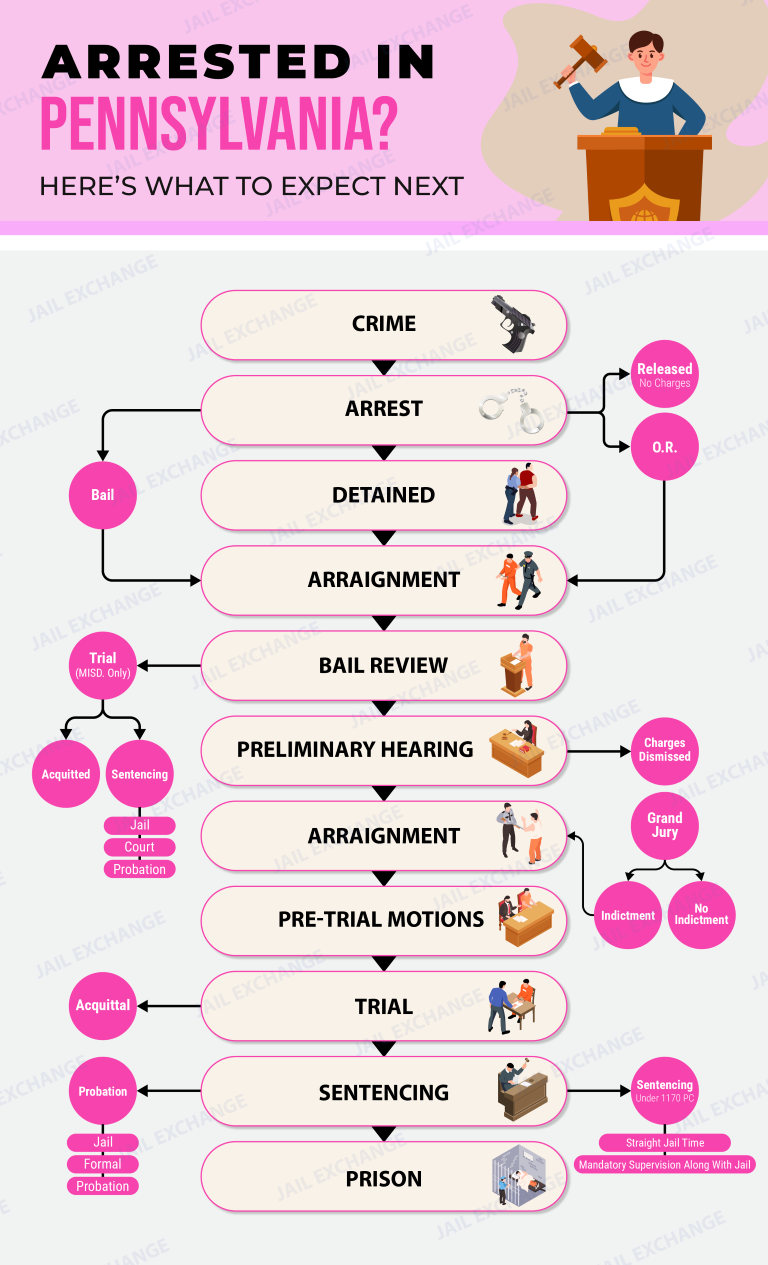

Access Securepak is an authorized correctional commissary care-package program that allows families to purchase customized food, snack, hygiene, apparel, and electronics packages sent directly to an incarcerated loved one. Every package is custom-packed to meet the strict security regulations of the specific jail or state prison.
Important: Delivery Schedules and Package Quotas
Jail package guidelines are not uniform across detention centers. Some facilities permit orders year-round, while others restrict deliveries to quarterly cycles or strict weekly deadlines that you should confirm with the facility directly. If you delay setting up your account, you risk missing the upcoming delivery cutoff, leaving your loved one waiting an extra cycle for fresh food, warm thermals, or personal toiletries.
Step-by-Step Instructions to Register and Access Service
- Visit the official Access Securepak online store at www.accesscatalog.com.
- Select the state and the specific jail or correctional institution from the dropdown menu.
- Enter the inmate's legal last name and inmate ID to verify their active housing and package eligibility.
- Browse the catalog of approved meats, cheeses, ramen soups, cookies, toiletries, and clothing.
- Add items to your cart up to the facility's maximum weight or dollar limit (usually $50 to $125 per order).
- Check out using your debit or credit card and save the order confirmation tracking number.
What the Inmate Needs to Do
The inmate does not need to order anything themselves. Securepak ships the sealed package directly to the correctional facility's commissary warehouse. Jail staff inspect the box and deliver it to the inmate during regular pod commissary distribution, where the inmate signs for the package.
Official Provider: Access Corrections / Keefe Group Official Website
Customer Service Telephone: 1-800-546-6283
Support Hours: Monday – Friday, 8:30 AM – 11:30 PM EST; Saturday, 11:00 AM – 5:00 PM EST
Supported Languages: English and Spanish
Other Services Provided by Access Corrections / Keefe Group
In addition to Access Securepak (Commissary & Gift Packages), Access Corrections / Keefe Group provides several other communication, financial, and visitation services at participating correctional facilities:
- Inmate Trust Money Deposits: Send cash directly to their personal account so they can buy items independently.
• Learn more on our website: Inmate Trust Money Deposits Guide | • Visit official vendor page: Access Corrections / Keefe Group Inmate Trust Money Deposits - Digital Messaging & Photos: Send fast electronic letters and digital pictures to their tablet.
• Learn more on our website: Digital Messaging & Photos Guide | • Visit official vendor page: Access Corrections / Keefe Group Digital Messaging & Photos
Buy Commissary for an Inmate in the Curran-Fromhold Correctional Facility
Curran-Fromhold Correctional Facility Inmate Commissary - Sending Money or Purchasing Commissary for an Inmate
Curran-Fromhold Correctional Facility allows inmates to purchase commissary. Ask the jail what its commissary sells; snacks and hygiene items are common.
You can buy commissary for an inmate using an online service called Access Securepak.

Call the facility at 215-685-7843 to ask whether there is a limit on how much an inmate can spend on commissary.
Access Securepak's site shows whether friends and family can order commissary for an inmate at this jail.
Scroll down for information on the Curran-Fromhold Correctional Facility's service they use for you being able to purchase commissary items online and have them shipped directly to the inmate.
You can also go to our Inmate Money page for information on how to send money to an inmate.
Access Secure Deposits (Smart Deposit) allows families and friends to securely transfer money directly into an incarcerated person's jail trust account using a debit or credit card. Deposited funds become immediately available for your loved one to purchase essential hygiene goods, over-the-counter medication, food items, and writing materials from the facility commissary.
Important: Inmate Banking Policies Vary by Facility
Once a person is booked and moved to a cell, facilities do not always allow cash drop-offs or phone payments directly to the jail. Some might and you should confirm this by calling the facility and asking. But if you do not register online and fund your loved one's trust account immediately, they may be forced to wait days or weeks for standard paper processing, leaving them without essential soap, clean undergarments, basic medical sundries or snacks.
Step-by-Step Instructions to Register and Access Service
- Obtain the inmate's legal first and last name, date of birth, and official six- to ten-digit Booking or Inmate ID number.
- Visit the official Access Corrections portal at www.accesscorrections.com or download the Access Corrections mobile app.
- Select the state and the exact detention facility or county jail where the inmate is currently housed.
- Add the inmate as a contact and confirm their identity from the facility roster.
- Enter your debit or credit card billing information, choose your deposit amount, review the facility processing fee, and submit your payment.
- Save and print your transaction confirmation number for verification.
What the Inmate Needs to Do
The inmate does not need internet access to receive your deposit. Once approved, the funds post directly to their facility account balance. The inmate can verify their balance at the dayroom kiosk or on their trust statement and start ordering items on the next designated commissary day.
Official Provider: Access Corrections / Keefe Group Official Website
Customer Service Telephone: 1-866-345-1884
Support Hours: 24/7/365
Supported Languages: English and Spanish
Other Services Provided by Access Corrections / Keefe Group
In addition to Access Secure Deposits (Trust Money), Access Corrections / Keefe Group provides several other communication, financial, and visitation services at participating correctional facilities:
- Digital Messaging & Photos: Send digital letters and pictures straight to the inmate's kiosk or tablet.
• Learn more on our website: Digital Messaging & Photos Guide | • Visit official vendor page: Access Corrections / Keefe Group Digital Messaging & Photos - Commissary Care Packages: Order pre-approved food boxes, thermal clothes, and snack bundles directly to the jail.
• Learn more on our website: Commissary Care Packages Guide | • Visit official vendor page: Access Corrections / Keefe Group Commissary Care Packages
Deposit Money for an Inmate in the Curran-Fromhold Correctional Facility
Get the person's PPN# before anything else; it goes on every money order sent to the Curran-Fromhold Correctional Facility (CFCF) in Philadelphia. Commissary money arrives one of two ways.
- Card: pay with credit or debit at Access Corrections.
- Mail: buy a money order or certified check and address it to the person's name and PPN#, CFCF, 7901 State Rd., Philadelphia, PA 19136. The city holds back the payee; the facility gives it out at 215-685-7843 once you name the person and their date of birth.
The P.O. Box 247 mail address in Phoenix, MD is not for money, and anything sent there is returned. Cash and personal checks are refused outright. Calls, video visits and tablets draw on a separate account. Stuck? The Office of Community Justice and Outreach picks up at 215-685-8909 or 215-685-7288.
Curran-Fromhold Correctional Facility, on State Road in Northeast Philadelphia, is the largest of the four jails run by the Philadelphia Department of Prisons. Personal letters are never delivered to the building. They go to a mail-scanning service that checks each page and sends a copy to the person's tablet, and a personal letter mailed straight to the jail is sent back to you. The city scans mail because some people have soaked paper in drugs, let it dry and mailed it in.
Personal letters, cards and photos (scanned):
Inmate's Full Name & PPN#
Philadelphia IPCS, PA
P.O. Box 247
Phoenix, MD 21131
Legal mail, books, magazines and money orders (to CFCF itself):
Inmate's Full Name & PPN#
CFCF
7901 State Road
Philadelphia, PA 19136
- The PPN: Every envelope needs the person's full name and their PPN, the ID number the city gives each person it holds. You can find it on the incarcerated person locator.
- Paper and pen: Write in pen or pencil on plain white paper and mail it in a plain white envelope. Crayon, marker, construction paper and colored or fancy paper are all refused.
- Decorations: No glitter anywhere, and no more than two decorative stickers on an envelope.
- Photos: Each print must be 5x7 inches or smaller and may not show nudity, weapons, cash or drug use. A person may keep up to five pictures.
- Lawyers: Legal mail skips the scanner. It goes to the State Road address with "Legal Mail" written clearly on the envelope.
- Books and magazines: They must ship from a publisher or a store to CFCF, never to the scanning box. A hardback book is turned away.
- Money orders: Mail a money order or certified check to the CFCF address. Make it out to the person's full name and put their PPN on it. If you are unsure, call 215-685-7843 to confirm. The scanning service returns any money sent to it, and cash or personal checks are never accepted.
- Packages: Not allowed.
- Your address: Write your own full name and mailing address in the top left corner of the envelope.
Family questions go to the Department of Prisons' Community Justice and Outreach office at 215-685-8909.
ViaPath AdvancePay Phone Calling Accounts
Provider: ViaPath Technologies • Formerly ConnectNetwork / Global Tel*Link (GTL)
AdvancePay is the primary prepaid telecommunications service operated by Global Tel*Link (GTL) and ConnectNetwork, which have unified under the corporate identity of ViaPath Technologies (and the myViaPath platform). By funding an AdvancePay account, telephone charges are deducted per minute whenever an incarcerated loved one calls your specific telephone number, preventing calls from being rejected by cellular carriers.
Important: Cell Carriers Automatically Block Jail Collect Calls
Inmate telephone networks do not permit incoming calls, and wireless cell providers automatically block traditional collect billing by default. While select traditional landlines may support operator billing, cell phones and internet-based lines require an active AdvancePay balance, which you can verify with your carrier. If you do not register your number online and add funds immediately, your loved one will hear an automated operator announcement stating your line is blocked from receiving correctional calls.
Step-by-Step Instructions to Open and Fund AdvancePay
- Visit web.connectnetwork.com or the updated my.viapath.com portal, or launch the ConnectNetwork / ViaPath mobile application.
- Click Sign Up and register using your primary 10-digit cellphone number and email address.
- Select Add Facility, pick your state, and choose the detention center or state prison where the inmate is held.
- Search for the inmate using their full legal name or facility booking ID number and link them to your contact directory.
- Select AdvancePay Phone and choose your deposit amount ($25, $50, or custom).
- Enter your debit or credit card billing details, accept the administrative transaction fee, and complete the payment.
- Check your phone settings to confirm that automated or unknown correctional numbers are not routed straight to spam.
What the Inmate Needs to Do
The inmate approaches any housing pod telephone, enters their assigned PIN and voice biometric recognition phrase, and dials your 10-digit number. ViaPath's automated operator confirms your active prepaid balance and connects the call. All personal telephone calls are subject to recording and monitoring by facility investigators.
Official Providers: ConnectNetwork Portal | myViaPath Portal
Customer Service Telephone: 1-877-650-4249 (Automated & Live Support)
Support Hours: Automated Service 24/7; Live Operators Monday – Friday, 8:00 AM – 10:00 PM EST
Supported Languages: English and Spanish
Other Services Provided by ViaPath Technologies (ConnectNetwork)
In addition to AdvancePay Phone Calling, ViaPath / ConnectNetwork provides several other communication, financial, and visitation services:
- ConnectNetwork Trust Fund Deposits: Transfer money directly into an inmate's jail trust account for commissary store purchases.
• Learn more on our website: Inmate Trust Deposits Guide | • Visit official vendor page: ConnectNetwork Trust Deposits - ViaPath PIN Debit Phone Calling: Give the inmate their own calling funds to contact any approved phone number independently.
• Learn more on our website: PIN Debit Phone Calling Guide | • Visit official vendor page: ViaPath PIN Debit Calling - ViaPath Messaging & Photo Sharing: Send digital messages, photos, and video attachments directly to their terminal.
• Learn more on our website: Digital Messaging Guide | • Visit official vendor page: ViaPath Messaging Services - GettingOut Video Visitation & Tablets: Schedule face-to-face remote video visits and manage handheld tablet communications.
• Learn more on our website: Remote Video Visitation Guide | • Visit official vendor page: GettingOut Video Visits
ViaPath PIN Debit Phone Calling Accounts
Provider: ViaPath Technologies • Formerly ConnectNetwork / Global Tel*Link (GTL)ViaPath PIN Debit (hosted on ConnectNetwork and myViaPath) provides incarcerated individuals with their own calling funds. Unlike AdvancePay (which only funds calls placed to your specific phone number), PIN Debit funds belong directly to the inmate, allowing them to call attorneys, bondsmen, employers, or extended family members across multiple approved telephone numbers.
Important: AdvancePay Only Funds a Single Phone Number
When someone is arrested, they often need to contact multiple people—including legal defense counsel, bail agents, employers, and relatives. If you only fund an AdvancePay account, your loved one will have no calling balance to dial anyone else, as rules and call authorizations vary by facility. Adding funds directly to ViaPath PIN Debit grants them the calling flexibility needed to handle critical legal and family arrangements without delay.
Step-by-Step Instructions to Fund a PIN Debit Account
- Sign into your account at web.connectnetwork.com or my.viapath.com.
- Click on PIN Debit under the communications menu.
- Select the state and facility, and link the inmate's booking identification number.
- Enter the deposit dollar amount and review the payment transaction fee.
- Enter your debit or credit card details and submit the payment.
- Notify your loved one that their personal PIN calling balance has been credited.
What the Inmate Needs to Do
The calling balance appears under the inmate's personal identification PIN. When they pick up any dayroom telephone or tablet, they select the 'PIN Debit' prompt from the automated menu to place calls to any approved number on their personal contact list.
Official Providers: ConnectNetwork Portal | myViaPath Portal
Customer Service Telephone: 1-877-650-4249
Support Hours: Automated Deposits 24/7/365; Live Agents Monday – Friday, 8:00 AM – 10:00 PM EST
Supported Languages: English and Spanish
Other Services Provided by ViaPath Technologies (ConnectNetwork)
In addition to PIN Debit Calling, ViaPath / ConnectNetwork provides several other communication, financial, and visitation services:
- AdvancePay Dedicated Phone Calling: Fund calls placed specifically to your personal phone number.
• Learn more on our website: AdvancePay Calling Guide | • Visit official vendor page: ConnectNetwork AdvancePay - ConnectNetwork Trust Fund Deposits: Deposit money for commissary food, hygiene supplies, and stationery.
• Learn more on our website: Inmate Trust Deposits Guide | • Visit official vendor page: ConnectNetwork Trust Deposits - ViaPath Messaging & Photo Sharing: Send digital messages and photos directly to their kiosk or tablet.
• Learn more on our website: Digital Messaging Guide | • Visit official vendor page: ViaPath Messaging Services - GettingOut Video Visitation & Tablets: Schedule face-to-face remote video visits from home.
• Learn more on our website: Remote Video Visitation Guide | • Visit official vendor page: GettingOut Video Visits

TextBehind enables you to communicate with your incarcerated loved ones located inside the United States from anywhere in the world using text letters, kids' drawings, and custom greeting cards. Unlimited inmate reply letters are processed for electronic delivery to your smartphone and email at no extra charge.
The cost to send an electronic letter is approximately $1.00.
Here’s how it works:
1. All offender mail (paper and electronic) is addressed and delivered to TextBehind. Electronic mail is sent through the apps (iphone, Google Play). Paper mail is sent to the address below:
Inmate Name and Inmate Number
Curran-Fromhold Correctional Facility Pennsylvania (note: please do not abbreviate the name)
P.O. Box 247
Phoenix, MD 21131
2. If it was sent via TextBehind's app (iphone, Google Play), TextBehind can process it within one business day.
3. An additional step is involved in processing mail that is sent using the U.S. Postal Service. TextBehind will use a scanner to make digital files of the contents of the mailing—including cards, photos or artwork.
4. All digital files are then forwarded to the offender’s assigned prison.
5. The jail or prison's mailroom staff print approved pages and then delivers them to the inmate.
IMPORTANT NOTES:
- TextBehind does not deliver any mail to the inmate directly, nor do they guarantee delivery of your letters to the inmates by the courier, jail or prison staff. Once they process your mail and ship them out on your behalf, they are out of the loop entirely. However, at times they may offer to resend your letters under certain strict conditions as a courtesy.
- Inmates do not receive any invites when you add them, and neither do they need to accept the use of TextBehind service. Once you add the inmate, you can create letters for them.
- There is NO guarantee that Curran-Fromhold Correctional Facility will cooperate and process TextBehind 'mail', and then deliver it to your inmate. Only when jails enroll directly with TextBehind, is your inmate most likely to get your TextBhind communications.
Here’s what happens when TextBehind receives a letter from an inmate:
- Upon receiving, TextBehind staff open their letters, scan, and upload high-quality images to your TextBehind account as a complimentary service. You are not required to have any money or credits balance in your TextBehind account to receive inmate letters.
- Next, you will receive a text and email alert to notify you of any new incoming reply letters. At that time, you can log into the TextBehind website or mobile app and view letters in your CONTACTS >> Click on Conversation Icon.
YOU NEED TO KNOW THIS...
- Inmates do require a stamp to send out their letters to TextBehind using Postal Service.
- The cash or credit balance from your TextBehind account will not be shared with inmates as a substitute for the stamps.
- All letters printed and shipped by TextBehind nationwide to virtually any jail or prison facility are delivered to the jails/prisons by couriers such as the USPS or FedEx as their standard process.
- After the shipments, TextBehind has no control over the process.
- The delivery of your letters depends on couriers and prison staff taking the necessary action, and on time.
IMPORTANT TextBehind LINKS:
Register / Log in with TextBehind
Contact TextBehind with Questions
Add an Inmate to your list of Contacts
TextBehind Volume Discount packages
** Address to Mail letters using TextBehind **
Inmate Name and Inmate Number
Curran-Fromhold Correctional Facility Pennsylvania (note: please do not abbreviate the name)
P.O. Box 247
Phoenix, MD 21131
RATES (subject to change):
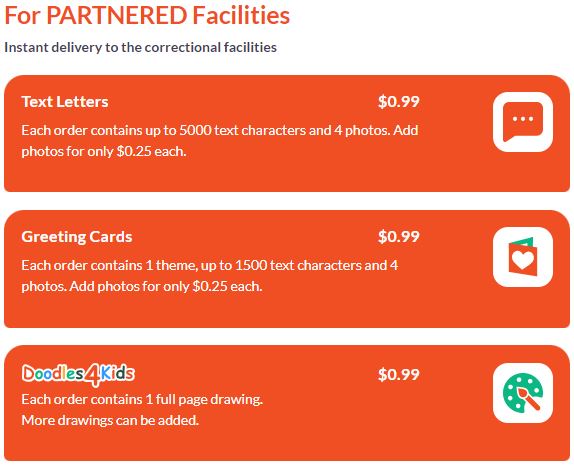
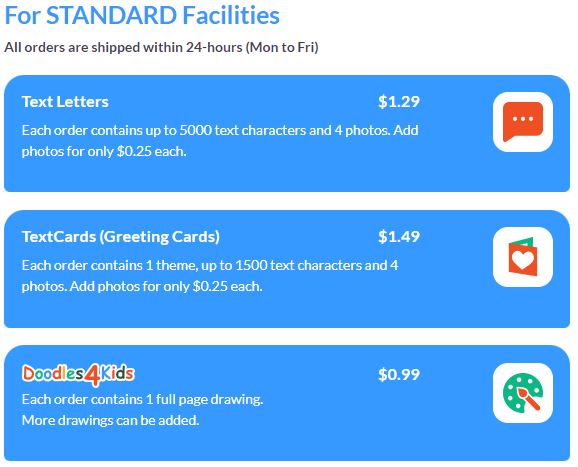
TextBehind is a digital texting and letter writing service used by jail and prison inmates and inmate’s friends and families all across America. Due to the problem of letters and postcards containing, or soaked in contraband (drugs), TextBehind electronic and physical letters replaced the former policy of allowing mail to be sent directly from inmate’s friends and family members, and vice versa.
GettingOut / ViaPath Inmate Tablets & Media
Provider: GettingOut (Telmate) • Rebranding as ViaPath Technologies (myViaPath)GettingOut provides specialized, secure handheld tablets for county jail inmates, offering access to messaging apps, telephone calling, legal research tools, eBooks, vocational training, and premium entertainment rentals. As part of GTL and Telmate's transition to ViaPath Technologies, tablet firmware and management platforms are moving to the myViaPath system.
Important: Tablet Feature Availability Varies by Facility
Jails manage tablet distribution according to individual facility contracts. While basic educational and legal materials are often provided without cost, access to music streaming, games, podcasts, and premium movies requires an active funded account. You should confirm the tablet rules with the facility directly. Registering and funding their media balance right away ensures your loved one has productive resources and recreation during their stay.
Step-by-Step Instructions to Fund Inmate Tablet Services
- Confirm that GettingOut / ViaPath handheld tablets are active at your loved one's specific detention facility.
- Navigate to www.gettingout.com or my.viapath.com.
- Sign into your verified user profile and link the inmate's legal name and booking ID number.
- Select Make a Deposit and choose either your Friends & Family Account (for messaging) or the inmate's personal Inmate Account (for entertainment and song rentals).
- Choose your deposit amount, review convenience fees, and complete payment with a credit or debit card.
- Notify your loved one that their tablet account balance has been funded.
What the Inmate Needs to Do
The inmate unlocks their assigned tablet or signs one out from the pod charging station using their biometric verification or PIN. Once logged in, their available balance appears on the screen, allowing them to download songs, stream educational content, and communicate with approved family members.
Official Providers: GettingOut Website | myViaPath Portal
Customer Service Telephone: 1-866-516-0115 (GettingOut) • 1-877-650-4249 (ViaPath)
Support Hours: Monday – Friday, 7:00 AM – 11:00 PM CST; Saturday – Sunday, 8:00 AM – 7:00 PM CST
Supported Languages: English and Spanish
Other Services Provided by GettingOut / ViaPath
In addition to Tablet Media & Rentals, GettingOut and ViaPath provide several other communication and account services:
- Two-Way Text Messaging: Send electronic letters and photos straight to the inmate's screen.
• Learn more on our website: Two-Way Text Messaging Guide | • Visit official vendor page: GettingOut Messaging - Remote Video Visits: Meet face-to-face over secure live video from home.
• Learn more on our website: Video Visitation Guide | • Visit official vendor page: GettingOut Video Visits - AdvancePay Phone Calling: Prepay for phone calling credits so your loved one can call your telephone directly.
• Learn more on our website: AdvancePay Phone Calling Guide | • Visit official vendor page: ViaPath ConnectNetwork Calling - Inmate Trust Deposits: Transfer cash directly into an inmate's jail ledger for commissary purchases.
• Learn more on our website: Inmate Trust Deposits Guide | • Visit official vendor page: ViaPath Trust Deposits
Philadelphia County County Jails
Philadelphia County Juvenile Facilities
- Curran_Fromhold Correctional Facility (CFCF): 215-685-7843
- Adult Court: 215-683-7004 | 215-683-7297
- Adult Probation: 215-683-7530
- Arrest Warrants: 215-683-7290
- Bail: 215-685-8394
- Booking: 215-685-7711
- Comissary: 215-685-8433
- Court: 215-683-7290
- District Attorney: 215-686-8000
- Help - Locating an Inmate: 215-685-8394
- Inmate Accounts: 215-685-8433
- Inmate Info: 215-685-7093
- Inmate Messages: 215-685-7788
- Juvenile: 215-686-4800
- Juvenile Court: 215-686-4050
- Juvenile Probation: 215-683-9183
- Philadelphia Sheriff's Office: 215-686-3560
- Police: 215-686-8477
- Records: 215-685-7080
- Visitation: 215-685-8394
The Curran-Fromhold Correctional Facility serves the following cities and towns of Philadelphia County: Philadelphia.