
Galveston County Jail
Galveston County Jail
Physical Address
5700 Avenue HGalveston, TX 77551-4137
Jail Phone Number
409-766-2315Galveston County Inmate Search: Tracking Someone Held on Avenue H
From Kemah down to Hitchcock, adults taken into custody end up at one address: the Sheriff's jail on Avenue H, 5700 Avenue H, Galveston, TX 77551, the county's lone adult jail. These answers walk a worried friend or parent through the search, mugshots, visits, mail, warrants, court dates and the many police agencies that bring people in.
Start with the Sheriff's Inmate Inquiry. Key in a surname, tack on a first name when you know it, and open the matching record. That portal also posts a daily bulletin and a roll of fresh arrests. Booking is slow, so someone picked up this morning might not be posted by lunch.
No match? Phone the jail at 409-766-2315. Spell out the name, add the birth date, then get answers to three points: was the person booked, which pod are they in, and is bond set yet? Our bail and release page covers getting someone out. What comes next in court is on our court page.
Read inmate search answers
 Read inmate search answers
1. Galveston County Inmate Inquiry: what are the search steps?
- Open the Sheriff's Inmate Inquiry.
- Fill in the surname box. A first name helps when many people share a surname.
- Press search, or pick "Filter Inmate List" to sift the full roster.
- Click a name to see what the record holds. Copy down any booking number shown.
- Nothing yet? The Daily Bulletin and the Arrests list live in that same portal and track recent bookings.
Odd spellings cause misses. Shorten the surname, or leave the first name blank. Web lists can trail the booking desk, so for anything urgent, ring the jail and have a clerk read the record to you.
↑ Back to the question list2. Searched and got nothing: is the person still in booking?
Maybe. A blank result has a handful of common causes:
- Booking isn't done. Staff check each officer's paperwork first. Paperwork with mistakes goes back to the officer. Only correct papers earn a place in line, and a person who refuses to cooperate is sent to the end. Questions, prints and photos follow.
- Released already. A money bond or a personal bond may have cleared.
- Someplace else. A youth case, a federal or immigration hold, or an arrest across the county line changes where they sit.
- Spelling. A typo in either name defeats the search.
Ring 409-766-2315. Jail clerks match records using the legal name plus birth date, so keep both handy. Know which town arrested them? That town's police can tell you where the person was driven.
↑ Back to the question list3. Avenue H, Harris or Brazoria: where is the person sitting?
Adults charged here almost always sit in the Sheriff's jail at 5700 Avenue H, Galveston, TX 77551, 409-766-2315. No other adult jail is run by the Sheriff. In 2022, state inspectors set its capacity at 1,187. Housing is split into pods named by letter: B, C, D, E, F, G, H, I, K and M. Which pod someone is in picks their visiting schedule.
Other places to check:
- Youths under 17 are detained apart from adults, at the Esmond juvenile center in Dickinson.
- Harris County, if the arrest happened over that line: the jail at 1200 Baker Street, Houston, TX 77002, 346-286-2211.
- Brazoria County, for an arrest made there: its detention center, 3602 CR 45, Angleton, TX 77515.
4. Are Galveston County mugshots public, and how do I request one?
Mugshots are taken at booking, along with fingerprints. Nobody has confirmed that the Inmate Inquiry displays them, so a photo may not be there.
Booking photos are sought in writing, as an open records request (Texas calls it the Public Information Act), sent to the Sheriff's Office, 601 54th Street, Galveston, TX 77551. The law makes agencies hand out "basic information" on an arrest (Gov't Code 552.108(c)). Photos aren't named in that section, so the office makes the call. When a reply needs over ten business days, the office has to tell you the date.
For mugshots taken by ICE, file an ICE FOIA request. Booking photos from federal arrests are normally not shared. The U.S. Marshals Service is the exception, since it can publish a photo of a wanted fugitive.
Paid mugshot websites have rules as well. Texas Business and Commerce Code chapter 109 bars them from charging money to remove a photo that is wrong or incomplete.
↑ Back to the question list5. Release alerts by text or phone: how does IVSS-Counties work?
Texas IVSS-Counties took over custody alerts in September 2025. On ivss-counties.tdcj.texas.gov, type all or part of the name, then request notices about custody changes. An account is optional. Help by phone runs around the clock, in Spanish too: 866-268-8959.
If the person is later sent to TDCJ, ask TDCJ Victim Services about notices at 800-848-4284.
↑ Back to the question list6. Bond, cash or a personal bond: what gets them out?
Here is the short version:
- A magistrate meets with the person inside the jail, usually within 24 hours. Hearings run there in the morning and again in the afternoon.
- The magistrate names a bond amount. Payment can't happen until then.
- Release then comes one of three ways: a bail bond company, the full bond in cash, or a personal bond through Pretrial Court Services. That office never closes: 409-766-2404.
- Once money and paperwork clear, staff confirm who the person is again and move them to the release line.
A person still stuck because they can't pay gets a fresh review within 12 hours of that first hearing. Our bail page lays out every choice, plus the holds that keep people inside after bond.
↑ Back to the question list7. Which offense is listed, and where is the case file?
Try these, in order:
- The person's entry on the Inmate Inquiry, in case it names the offense.
- The county's public case portal. Choose "Criminal Case Records" and search the name. A brand-new arrest may not appear right away.
- Felony files: the District Clerk, 409-766-2424, weekdays 8 to 5.
- Bond and first-hearing questions: Magistrate Court staff, 409-766-2556, from 5 a.m. to 10 p.m. all week.
A grand jury or a prosecutor can change the charge later. The newest filing is the one that counts.
↑ Back to the question list8. Public defender or hired counsel: how does the defense get started?
Each magistrate hearing at the jail has a public defender in the room. The magistrate also explains the right to appointed counsel, and the person can say yes to that on the spot. Judges then rule on the appointment.
On a misdemeanor, the court may give a 30-day reset so the person can hire someone. They can also ask for a free lawyer or choose to go without one. The county's plan for paying appointed lawyers is posted by the Texas Indigent Defense Commission.
Relatives are free to retain private counsel whenever they like. A hired attorney can meet the client at the jail and argue at bond hearings.
↑ Back to the question list9. Galveston County jail visits: sign-up, hours and dress code?
Sign up first through the jail's visit vendor at gettingout.com. Choose the schedule for the person's pod. One list covers Pods B, D, E and I. The other covers Pods C, F, G, H, K and M.
Visits run every day in three blocks: 8:00 to 10:30 a.m., 1:15 to 4:25 p.m., and 6:30 to 11:40 p.m.
- Each person inside gets 1 visit a day and 2 a week.
- Two visitors can come at once. Each adult may bring one child.
- A visitor sees only one inmate a day.
- Anyone 16 or older must show ID.
- Coming more than 240 miles? Ask for a longer visit, at most once every 3 months. Family emergencies, like a death, can also qualify.
Leave phones, smart watches, tablets, laptops, game players and cameras behind. Recording a visit gets a visitor banned for good. Kids must stay with their adult. Visitors can't trade places partway. Clothes must cover shoulders, back, belly, chest and thighs. Shorts and skirts can't sit more than three inches above mid-knee. See-through clothes, rude pictures or words, sandals, flip-flops, slippers and open toes are all refused. Don't use the gated lot. Cars parked outside marked spaces may be ticketed or towed. For general visiting advice, open our visitation page.
↑ Back to the question list10. Commissary deposits: what should I ask before sending cash?
Call 409-766-2315 first. Find out which deposit methods work right now, what each one costs and how soon the funds land. Keep the person's legal name and booking number nearby.
For background on inmate accounts, read our money deposit page. Store items and ordering are covered on our commissary page.
↑ Back to the question list11. Free booking calls, then what: phones, tablets and messages?
Right after booking, each person gets two free calls of two minutes each. Most use them to set up bond, warn family or reach a lawyer. Pick up unknown numbers that day.
Later calls go through a phone vendor. Ask the jail at 409-766-2315 which company handles calls, tablets and messages. Want an account? Our jail phone page walks through it. Electronic notes are on our inmate email page.
↑ Back to the question list12. Since the 2023 switch, how does Galveston County jail mail work?
Personal mail went digital on November 1, 2023. Letters sent to the Avenue H building are no longer accepted. Anything postmarked after that date goes back to the sender. Envelopes missing a return address end up with the postal service instead.
Before writing, get the current address from the Sheriff's Office at 409-766-2300 or the jail. Put your full return address on every piece.
State rules still apply. People inside may get and send as many letters as they want. Letters from a lawyer get opened in front of the person they're for, and only to search for contraband. Our jail mail page has general tips on what to send.
↑ Back to the question list13. Wallet, keys and clothes: how do relatives collect them?
Before driving over for a wallet, keys or clothes, call 409-766-2315 and ask:
- if the person signed a release letting you collect their things;
- what ID to bring;
- which hours the property window is open.
Also check whether any item is being kept as evidence, and how unspent account money is returned when the person leaves.
↑ Back to the question list14. A sick or injured inmate: who do relatives alert?
Phone the jail at 409-766-2315. Give the person's name and the concern, for example seizures, insulin needs or a missing blood pressure pill. Ask that the message reach the medical staff. They may not share health details with you, but they can still take the information.
Texas jails have to give inmates written steps for complaints and post them in the housing areas. When a serious problem gets no answer, families may reach the Texas Commission on Jail Standards. File through its online complaint page or phone 512-463-5505.
State law also keeps a person in emergency mental health custody apart from people facing criminal charges.
↑ Back to the question list15. Is there a Galveston County warrant out for them?
The Sheriff's Fugitive Apprehension Division chases warrants from district and county courts. It also serves some precinct and out-of-county warrants. Ask for that unit at 409-766-2300. In the cities, local police pick up warrants too. You can browse:
- the county's case records portal, searched by name;
- the Texas 10 Most Wanted fugitive list kept by DPS;
- local names on the Sheriff's Wanted list.
Not listed doesn't mean clear. Ask the clerk for whichever court might have signed one. To resolve it, surrender at that court with your lawyer along, or ask its clerk by phone for a fresh setting. Felony files sit with the District Clerk, 600 59th Street, Room 4001, Galveston, TX 77551, 409-766-2424.
↑ Back to the question list16. Hearing dates and resets: where are they posted?
On the case portal, open the case and check "Events and Orders of the Court." Settings, resets and orders show there.
Once bond posts, the clerk mails a notice with the first court date. Watch the mailbox at the address given at booking. North county folks can visit the District Clerk's League City office, 174 Calder Road, League City, TX 77573, 281-316-8729, weekdays 7:30 to 5:30. Our criminal court page explains each hearing.
↑ Back to the question list17. Federal arrest: which courthouse, and who holds the prisoner?
The Southern District of Texas hears federal cases from this area at its Galveston Division. That clerk's office is Room 411 of the federal post office and courthouse building, 601 Rosenberg, Galveston, TX 77550, 409-766-3530.
- Early on, there is a detention hearing. A federal magistrate judge weighs flight risk and danger, then orders release on conditions or detention pending trial (18 U.S.C. 3142).
- Before any sentence, deputy U.S. marshals guard and transport federal defendants. Their office: 601 Rosenberg Street, Suite 502, Galveston, TX 77550, 409-766-3771. Deputy marshals there know which jail has each prisoner.
- A sentence sends the person into Bureau of Prisons custody. Follow that move on the BOP inmate locator.
18. Immigration hold: how long, and where does ICE take people?
- It begins with paper. The detainer, Form I-247A, reaches the Avenue H staff from ICE. It asks for a hold of up to 48 hours after they would otherwise be released (8 CFR 287.7(d)).
- Under CCP art. 2A.060, Texas jails must follow detainers and inform the person. Proof of citizenship or lawful immigration status ends that duty.
- Next, ICE agents collect the person. The Houston Field Office covers this area: 126 Northpoint Drive, Houston, TX 77060, 281-774-4816.
- ICE may transfer them to a site like the Montgomery Processing Center, 806 Hilbig Road, Conroe, TX 77301, 936-521-4900.
- Search the ICE Online Detainee Locator by A-number. No A-number? Use the person's full name plus birth country.
One more state law matters. S.B. 8 (2025) gave sheriffs who keep jails a deadline, December 1, 2026, to have sought a 287(g) partnership. Ask the Sheriff's Office whether a local deal has been signed.
↑ Back to the question list19. Sentenced to TDCJ: how do I trace the transfer?
After a felony sentence, people often stay on Avenue H until a state bed opens. TDCJ then does intake, classifies them and assigns a unit.
The state's TDCJ inmate search is the tool. A TDCJ number or SID works best. Without one, use the surname plus at least one initial. Results refresh on working days and lag by a day or more. People still in county jail won't appear. Unit-by-unit visiting and mail facts are on our Texas prisons page.
↑ Back to the question list20. Teenager arrested in Galveston County: where are they taken?
Children 10 through 16 are handled by juvenile court and kept out of the adult jail. A 17-year-old, though, is an adult under Texas criminal law and can be booked on Avenue H.
Detained youth are housed at the Jerry J. Esmond center in Dickinson, which has 29 single rooms. Call 409-770-5935 or see the county's detention services page. No later than two working days in, the child appears before a judge on whether to stay locked up, and counsel is appointed ahead of that. Juvenile records stay off the adult roster.
↑ Back to the question list21. Galveston County police agencies: which one made the arrest?
The District Attorney's office keeps this list of local agencies and their numbers. Some may be main office lines. For an emergency, dial 911.
On the island
- Galveston Police Department: 409-765-3702
- Jamaica Beach Police Department: 409-737-1800
- Port of Galveston Police Department: 409-766-6172
- Texas A&M University police, island campus: 409-740-4545
- UTMB Police Department: 409-772-1503
Mainland south
- Bayou Vista Police Department: 409-935-0449
- Tiki Island Police Department: 409-935-6579
- Hitchcock Police Department: 409-986-5559
- La Marque Police Department: 409-938-9269
- Texas City Police Department: 409-948-2525
- Santa Fe Police Department: 409-925-2000
Mainland north
- Dickinson Police Department: 281-337-4700
- League City Police Department: 281-332-2566
- Friendswood Police Department: 281-996-3300
- Kemah Police Department: 281-334-6092
- Clear Lake Shores Police Department: 281-334-1034
County and state
- Sheriff's Office, 601 54th Street, Galveston, TX 77551: 409-766-2300; dispatch 409-766-2322
- County Auto Crimes Task Force: 409-766-4500
- DPS Highway Patrol: 409-933-1100
- DPS Narcotics Service: 409-933-1139
- Texas Alcoholic Beverage Commission: 281-337-5611
Galveston County Bail and Release
League City, Friendswood, Texas City and the island all send their adult arrests to one building: the Sheriff's county jail on Avenue H, 5700 Avenue H, Galveston, TX 77551. It is the only adult jail the Sheriff runs. This page explains who sets bond, how the personal bond office helps, where to pay and what can hold a person after bond is posted.
Check the Sheriff's Inmate Inquiry before anything else. It finds people by last and first name. Everything else about custody (fresh bookings, warrants, charges, mugshots, property pickup, appointed lawyers) is on our Jail Roster page.
Next, dial the jail at 409-766-2315. Staff will want the name and birth date. Ask them whether a magistrate has set bond, the amount, and the odds of a personal bond. When the case moves on to a judge, our court guide explains each step.
1. After a Galveston County booking, who decides the bond?
A magistrate sets it. Here, Magistrate Court is held inside the jail every day, once in the morning and once in the afternoon. A magistrate, a court clerk, a lawyer for the state and a public defender all take part. The county aims to bring each person before a magistrate within 24 hours of arrest. The state's outer limit is 48 hours, set by CCP arts. 14.06 and 15.17.
At that hearing the magistrate will:
- explain what the person is accused of, plus their rights, including silence and a lawyer;
- offer an appointed lawyer at no cost, and help fill in the form for one;
- decide whether there was good reason for the arrest;
- set the bond and any rules that come with it (CCP art. 17.028).
Before deciding on any Class B or higher charge, the magistrate studies a public safety report. It covers past cases, with no score attached and no dollar suggestion (CCP arts. 17.021, 17.022). Phone the Magistrate Court office at the Justice Center, 600 59th Street, Galveston, TX 77551, 409-766-2556. Staff answer from 5 a.m. to 10 p.m. every day, holidays too.
↑ Back to the question list2. Personal, cash or surety: which bond fits?
Bail comes in two families under Texas law (CCP art. 17.01): bonds backed by money and bonds backed by a promise. Locally, that means three choices:
- Personal bond. Nobody pays money to get out. A signed pledge to appear and obey the terms is enough (CCP art. 17.03). The county's Personal Bond Office may keep tabs on the person while the case is open.
- Surety bond. For a fee, a county-licensed bondsman backs the full amount in writing.
- Cash bond. A family member or friend puts down every dollar of the bond. The money is held, then returned if every court date and term is kept (CCP art. 17.02).
A personal bond is barred for listed violent offenses. It is also barred for Class A-and-up terroristic threat charges, for violating some protective orders, and when a convicted felon is caught with a firearm. A person already on bond, parole or probation in a violent case who is arrested again is barred too. Only the trial court, not the jail magistrate, can grant one on a burglary, an organized crime count or certain drug felony charges (CCP art. 17.03).
Terms can be added. On a second DWI, or a DWI with a child riding along, the bond requires a breath-test lock on the car, called an ignition interlock (CCP art. 17.441). For a wider look at the state rules, visit our Texas bail laws page.
↑ Back to the question list3. Is there a set price for a DWI or theft bond?
No Texas table fixes a bail price. A magistrate sizes every bond case by case, and a local chart can never replace that choice (CCP art. 17.028). So there is no sure dollar amount for a DWI, a theft or an assault.
The magistrate must weigh these things (CCP art. 17.15):
- a sum that makes a return to court likely;
- bail that is not used to punish or oppress;
- the charge and what happened;
- what the person can afford to pay;
- the safety of the victim, the police and the public;
- past arrests, missed court dates and citizenship status.
State law does fix two dollar caps. Say police made an arrest with no warrant, and no one ruled on good reason in time. Then a misdemeanor bond tops out at $5,000 and a felony bond at $10,000, and a person who still can't pay is let out on a personal bond (CCP art. 17.033). Statewide bail forms are explained on the Texas courts' bail page. For the amount in your person's case, call the jail at 409-766-2315.
↑ Back to the question list4. Posting bond on Avenue H: what are the steps?
The Sheriff's Office gives families two choices. You can pay the whole bond yourself, or you can hire a bail bondsman. Follow these steps:
- Wait until a magistrate has set the bond. No bond can be posted before that.
- Call 409-766-2315. Get the amount for every charge and find out what forms of money the bond desk will take.
- If you use a bondsman, pick one yourself. Staff at the jail can't steer you to any company.
- Head to 5700 Avenue H, Galveston, TX 77551 with your photo ID and the money. Get a receipt and keep it safe.
- Expect a wait. The person joins the release line only after every payment and form is done. Officers check the paperwork and the person's identity once more before the door opens.
A notice with the first court date is mailed after the bond is received. Parking near the jail is tight, and cars left outside the marked spaces can be ticketed or towed.
↑ Back to the question list5. Can bond be handled anywhere besides the jail?
Yes, for a personal bond. The county's Personal Bond Office, also called Pretrial Court Services, works inside the jail building at 5700 Ball Street, Galveston, TX 77551. Its phone, 409-766-2404, is answered around the clock, holidays included. Here is how it works:
- Staff ask the person to fill out a Financial Affidavit, a sworn form about money and bills.
- They also run a short pretrial check and send both to the magistrate.
- The magistrate may then grant a personal bond, add rules watched by the office, or set a cash or surety bond instead.
- Call the office to ask if your person has been screened and what rules apply.
A person held on another county's warrant can see a magistrate here, who may take bail and mail the bond on to the county where the warrant started (CCP art. 15.18). These bonds can take a while to reach the other court. For a city ticket only, call the city police department that wrote it to ask which court has it.
↑ Back to the question list6. Cash, money order or check: what does the bond desk take?
Payment rules can change, so call the jail at 409-766-2315 before you leave home. Ask these questions:
- Which forms of payment does the bond desk accept today?
- Who should a cashier's check or money order be made out to?
- Does the amount you were told cover every charge and every case?
Refunds go to whoever is named on the bond receipt, so choose that name with care (CCP art. 17.02). A bondsman's fee is a different thing. That money pays for the bondsman's promise, and you won't get it back. Any bondsman has to hand you a written receipt for cash or things of value you give them (Tex. Occ. Code 1704.305). Never mail cash to the jail.
↑ Back to the question list7. How do bail bondsmen work in Galveston County?
A county Bail Bond Board oversees bondsmen here, as state law requires once a county passes 110,000 residents. The board licenses every bondsman who writes bonds here, and no one may act as one without that license (Tex. Occ. Code 1704.051, 1704.151). Its list of licensed bondsmen must hang in every criminal courtroom and in the booking area (Tex. Occ. Code 1704.105, 1704.107).
- State law sets no limit on a bondsman's fee. Get the price and the payment plan in writing.
- Bondsmen may not look for customers inside the jail, and officials may not recommend one (Tex. Occ. Code 1704.304).
- Once all the cases close, ask in writing for your collateral, such as a truck title. It is due back within 30 days (Tex. Occ. Code 1704.301).
- The defense attorney on the case can sign as surety, no bail license needed (Tex. Occ. Code 1704.163).
- A bondsman can drop a bond. First the defense lawyer must be told, and the prosecutor too on a felony. Next comes a sworn affidavit in that case's court file (CCP art. 17.19).
To see the licensed list, ask the jail at 409-766-2315 where it is posted.
↑ Back to the question list8. After bond is paid, what else might block release?
Every bond is tied to a single charge. Before you spend a dime, phone the jail at 409-766-2315 and ask staff to read each hold aloud. Watch for these:
- A warrant from another county. That county may need its own bond, and the paperwork can be slow (CCP art. 15.18).
- Probation. A new arrest can bring a motion to revoke probation. The adult probation office is at 409-766-2425.
- A parole blue warrant. A person picked up for breaking parole stays in jail until the parole hearing (Tex. Gov't Code 508.254(c)).
- A family violence charge. If the magistrate thinks the family violence could continue, release waits at least four hours past bond. A written order under CCP art. 17.291(b) can stretch the wait up to 48 hours.
- Immigration or federal detainers. These stay in force after a state bond.
9. When is bail flatly refused in Texas?
The Criminal District Attorney's Office, 409-766-2355, is the side that would push for no bail or a higher one. Still, nearly everyone in Texas has a right to bail. The main exceptions are:
- A capital murder charge when the proof is strong (Tex. Const. art. I, sec. 11).
- A new felony arrest during release on felony bail, or some repeat felonies (Tex. Const. art. I, sec. 11a).
- Breaking a bond rule meant to keep a victim or the public safe (Tex. Const. art. I, sec. 11b).
- Breaking certain family violence protective orders (Tex. Const. art. I, sec. 11c).
Texas voters said yes to Proposition 3 on November 4, 2025, and it reaches the most serious violent charges. Among them: capital murder, murder, human trafficking, indecency with a child and aggravated robbery, plus kidnapping and sexual assault in their aggravated form. Some aggravated assaults count too. The amendment's words are that bail "shall be denied" once the prosecutor proves one of two things at a hearing (Tex. Const. art. I, sec. 11d):
- the person is more likely than not to skip court; or
- clear and convincing proof shows the person is a danger.
No one but the prosecutor can ask for this. If bail is allowed anyway, the judge must write out findings explaining why. A 2025 law also lets prosecutors have a district judge recheck any felony bail, and in some violent cases the state may appeal the amount (CCP arts. 17.029, 44.01).
↑ Back to the question list10. Is a bond reduction hearing possible here?
The county gives a quick second look. A person who can't post a money bond has a bond review hearing within 12 hours of the first hearing. Help it along with these steps:
- Tell jail staff and the Personal Bond Office, 409-766-2404, the person can't pay.
- Make sure the Financial Affidavit is filled out and honest.
- Gather proof of roots in the area, like a work schedule, a utility bill in the person's name and relatives who can vouch for them.
- After that, the defense lawyer can file a written motion with the court that has the case.
If prosecutors drag their feet, state law forces relief: a personal bond or a reduced amount for a jailed person. The deadlines run like this (CCP art. 17.151):
- A felony: the state has 90 days.
- A Class A misdemeanor: 30 days.
- A Class B misdemeanor: 15 days.
- A Class C, fine-only case: 5 days.
The law has exceptions. For a felony, the district courts are at 409-770-5230.
↑ Back to the question list11. Who gets a free lawyer, and how do they ask?
A public defender sits in on Magistrate Court at the jail. When the magistrate asks about a lawyer, the person should say yes and finish the form. The request goes to the judges within 24 hours. Because the county has more than 250,000 people, the judges then have until the close of the first working day to appoint counsel (CCP arts. 1.051, 15.17).
- The county also has a Misdemeanor Mental Health Public Defender Office at 722 Moody Avenue, Galveston, TX 77550. It helps people with serious mental illness who face misdemeanor charges.
- In a misdemeanor case, a person can ask the court for 30 more days to hire a lawyer, or sign a pauper's oath to ask for a free one.
- The appointment rules sit in the county's indigent defense plan, which the state commission posts on its plan search page. The Texas Indigent Defense Commission is at 209 West 14th Street, Room 202, Austin, TX 78701, 512-936-6994.
12. Which courthouses handle Galveston County cases?
Most criminal cases are run from the Justice Center, 600 59th Street, Galveston, TX 77551. Here is who does what:
- District Clerk (felony files), 600 59th Street, Room 4001, Galveston, TX 77551, 409-766-2424. Open weekdays 8 a.m. to 5 p.m.
- District Clerk's mainland office, 174 Calder Road, League City, TX 77573, 281-316-8729. Open weekdays 7:30 a.m. to 5:30 p.m.
- Three County Courts at Law (Class A and B misdemeanors). Call the coordinators for No. 1 at 409-766-2233, No. 2 at 409-766-2405 or No. 3 at 409-621-7920 to learn the courtroom and docket.
- Justice of the Peace courts. Class C tickets go here, one court per precinct, each with a county web page: the first, second, third and fourth precinct.
- Federal court, United States Post Office and Courthouse, 601 Rosenberg, Room 411, Galveston, TX 77550, 409-766-3530.
13. What becomes of cash bond money when the case closes?
The cash goes to whoever's name is printed on the receipt, after the bond's terms are met and minus any fee (CCP art. 17.02). On a misdemeanor here, you ask for it by filing a Motion and Order to withdraw the funds. The clerk sends it to the judge to sign. On a felony, call the District Clerk at 409-766-2424 to ask how.
- The clerk may keep 5 percent, up to $50, and only when the case closes with a conviction or with deferred adjudication (Tex. Loc. Gov't Code 117.055).
- Fines and court costs the person owes can be paid out of the cash (CCP art. 17.53).
- Missing court gives the judge power to declare the bond forfeited in an order called a judgment nisi (CCP arts. 22.01, 22.02).
- The bondsman's debt can be wiped out if the person is locked up again in time: 180 days on a misdemeanor bond, 270 on a felony bond (CCP art. 22.13).
- Skipping court is its own crime too, called bail jumping (Tex. Penal Code 38.10).
14. Who returns leftover jail funds and personal items?
Anything carried in at booking, like a wallet, phone or jacket, is stored by the jail until release. Ask about them before release, because the line moves only after all forms are done. Call 409-766-2315 and ask:
- how leftover account funds are refunded;
- when and where you can pick up clothes, keys or a phone;
- whether the person must sign something before you can pick their items up.
Bring a photo ID. Deposits and refunds are explained in our money guide, and what the account can buy is in our commissary page.
↑ Back to the question list15. Is there bail on a federal charge from Galveston County?
Federal court for this county is the Galveston Division of the Southern District of Texas. Its building is the United States Post Office and Courthouse, 601 Rosenberg, Room 411, Galveston, TX 77550, 409-766-3530.
- At the first appearance, a federal magistrate judge decides between release with conditions and jail until trial. That is called a detention hearing (18 U.S.C. 3142).
- Until trial, the U.S. Marshals Service holds the person. Its local office is at 601 Rosenberg Street, Suite 502, Galveston, TX 77550, 409-766-3771. Ask that office which lockup is keeping the person.
- The Federal Public Defender's Houston office, 440 Louisiana Street, Room 1350, Houston, TX 77002-1669, 713-718-4600, represents defendants who can't afford counsel.
- Once a federal prison term is set, track the person with the Federal Bureau of Prisons inmate locator.
16. Can ICE still hold someone after state bond is posted?
Yes. An ICE detainer stays in force whatever happens with state bail. How it plays out on Avenue H:
- ICE (Immigration and Customs Enforcement) asks for the hold on paper, using Form I-247A.
- On that form, ICE wants the person kept up to 48 hours after they would otherwise be released, so officers can come get them (8 CFR 287.7(d)).
- Under state law, Texas jails must honor the request and tell the person the reason for the hold. Someone who can show U.S. citizenship or legal presence is exempt (CCP art. 2A.060). Under Gov't Code 752.053, no local policy may limit immigration enforcement.
- Texas also passed S.B. 8 in 2025. Every county that runs a jail faces a December 1, 2026 deadline to ask ICE for a 287(g) agreement. For where this Sheriff's Office stands, call 409-766-2300.
- ICE's Houston Field Office covers Southeast Texas: 126 Northpoint Drive, Houston, TX 77060, 281-774-4816.
- Search the ICE Online Detainee Locator. An A-number works best. If you lack it, add their full name and native country.
17. Where do Galveston County felony sentences get served?
Once sentenced, the person stays on Avenue H until the state picks them up. State jail felonies mean time in a state jail facility (Tex. Penal Code 12.35). Higher felonies mean prison under TDCJ, the Texas Department of Criminal Justice. New arrivals go through intake, where they are checked and sorted, and then go to the unit picked for them.
- Use the TDCJ inmate search. Search by TDCJ number, SID number, or last name and first initial. Results lag by at least a day, and updates happen on business days only.
- For visiting and mail at the state units, read our Texas state prisons page.
18. Is a 16-year-old's case kept out of adult court?
Yes. In Texas, children 10 through 16 go to the juvenile system. Texas treats a 17-year-old as a grown-up in criminal cases, so they can be booked into the adult jail (Tex. Fam. Code 51.02). Youths are not given money bail. Within two working days, a detention hearing settles whether the child stays locked up. A lawyer is appointed first (Tex. Fam. Code 54.01).
The county's detention center is the Jerry J. Esmond Juvenile Justice Center in Dickinson, 409-770-5935. It has 29 single rooms. Officers have to notify a parent promptly (Tex. Fam. Code 52.02). Call the center to learn whether the child is there and the hearing time.
↑ Back to the question listGalveston County Jail ON-SITE (at the jail) VIDEO VISITATION SCHEDULE
5700 Avenue H
Galveston, TX 77551-4137
409-766-2315
Schedule Video Visits online with gettingout

- On-site Visits are free.
- Visits are 30 minutes.
- Visitation schedule subject to change.
- Inmates are allowed 1 Visit per day, 2 visits per week, and 2 visitors per visit.
- 1 Child allowed with an adult.
- You shall not visit more than one inmate per day.
- Persons 16 years or older shall have proper Identification.
- NO ELECTRONIC DEVICES can be in Visit.
| DAY | INMATE HOUSING |
TIME |
| SUNDAY | PODS C,F,G, H,M,K |
8:00am Thru 10:30am 1:15pm Thru 4:25pm 6:30pm Thru 11:40pm |
| MONDAY | PODS B,D,E,I |
8:00am Thru 10:30am 1:15pm Thru 4:25pm 6:30pm Thru 11:40pm |
| TUESDAY | PODS C,F,G, H,M,K |
8:00am Thru 10:30am 1:15pm Thru 4:25pm 6:30pm Thru 11:40pm |
| WEDNESDAY | PODS B,D,E,I |
8:00am Thru 10:30am 1:15pm Thru 4:25pm 6:30pm Thru 11:40pm |
| THURSDAY | PODS C,F,G, H,M,K |
8:00am Thru 10:30am 1:15pm Thru 4:25pm 6:30pm Thru 11:40pm |
| FRIDAY | PODS B,D,E,I |
8:00am Thru 10:30am 1:15pm Thru 4:25pm 6:30pm Thru 11:40pm |
| SATURDAY | PODS B,D,E,I C,F,G, H,M,K |
8:00am Thru 10:30am 1:15pm Thru 4:25pm 6:30pm Thru 11:40pm |
Galveston County Jail REMOTE (at home) VIDEO VISITATION SCHEDULE
- All visits must be scheduled at least 24 hours in advance.
- Visitation Schedule subject to change.
| DAY | INMATE HOUSING |
TIME |
| SUNDAY | PODS C,M,G, H,M,K |
8:00am Thru 10:30am 1:15pm Thru 4:25pm 6:30pm Thru 11:40pm |
| MONDAY | PODS B,D,E,I |
8:00am Thru 10:30am 1:15pm Thru 4:25pm 6:30pm Thru 11:40pm |
| TUESDAY | PODS C,M,G, H,M,K |
8:00am Thru 10:30am 1:15pm Thru 4:25pm 6:30pm Thru 11:40pm |
| WEDNESDAY | PODS B,D,E,I |
8:00am Thru 10:30am 1:15pm Thru 4:25pm 6:30pm Thru 11:40pm |
| THURSDAY | PODS C,M,G, H,M,K |
8:00am Thru 10:30am 1:15pm Thru 4:25pm 6:30pm Thru 11:40pm |
| FRIDAY | PODS B,D,E,I |
8:00am Thru 10:30am 1:15pm Thru 4:25pm 6:30pm Thru 11:40pm |
| SATURDAY | PODS B,D,E,I C,M,G, H,M,K |
8:00am Thru 10:30am 1:15pm Thru 4:25pm 6:30pm Thru 11:40pm |
GettingOut / ViaPath Remote Video Visits
Provider: GettingOut (Telmate) • Rebranding as ViaPath Technologies (myViaPath Visits)

GettingOut Video Visitation allows friends and family members to conduct live, face-to-face video visits with incarcerated loved ones using a personal computer, laptop webcam, or the mobile application. Telmate and GTL operate under ViaPath Technologies, and the visiting service is transitioning from GettingOut Visits to myViaPath Visits; users may encounter either brand name depending on whether their county jail has completed the platform update.
Important: Advance Background Clearance Required
Detention centers do not permit unapproved drop-in video visitation. All visitors must submit valid government photo identification and pass administrative screening before an appointment can be booked, a review that can take up to 48 hours depending on facility staffing. You should verify your visitor approval status with the facility in advance. If you do not register ahead of time, you will miss your loved one's scheduled visiting slots for the week.
Step-by-Step Instructions to Schedule a Video Visit
- Open the GettingOut / myViaPath Visits app or go to www.gettingout.com / my.viapath.com.
- Register your profile and upload clear photographs of your government ID and a verification photo.
- Wait for the facility to issue visitor approval (you will receive an email confirmation).
- Select Schedule Visit, pick your detention facility, and select the inmate.
- Choose an available 25- or 30-minute time slot from the calendar and pay the visitation fee using a credit or debit card.
- Sign into the app or website 10 minutes prior to the start time on a device with a functioning camera, microphone, and stable internet connection.
What the Inmate Needs to Do
The inmate receives a schedule alert on their housing unit video kiosk or personal tablet. At the appointed time, they log in with their PIN and sit in front of the terminal. Inmates must follow institutional dress and conduct rules; corrections staff actively monitor sessions and will terminate any call immediately if rules are broken.
Official Providers: GettingOut Visits | myViaPath Visits
Customer Service Telephone: 1-866-516-0115 (GettingOut) • 1-877-650-4249 (ViaPath)
Support Hours: Monday – Friday, 7:00 AM – 11:00 PM CST; Saturday – Sunday, 8:00 AM – 7:00 PM CST
Supported Languages: English and Spanish
Other Services Provided by GettingOut / ViaPath
In addition to Remote Video Visits, GettingOut and ViaPath provide several other communication and financial options:
- Two-Way Text Messaging: Send electronic messages and photos straight to the inmate's screen.
• Learn more on our website: Two-Way Text Messaging Guide | • Visit official vendor page: GettingOut Messaging - Inmate Tablet Rentals & Content: Provide funds for educational modules, music streaming, and news.
• Learn more on our website: Tablet Rentals & Content Guide | • Visit official vendor page: GettingOut Tablets - AdvancePay Phone Calling: Keep a funded prepaid balance to receive calls directly on your phone.
• Learn more on our website: AdvancePay Phone Calling Guide | • Visit official vendor page: ViaPath ConnectNetwork Calling - Inmate Trust Deposits: Transfer money directly into their jail trust account for canteen goods.
• Learn more on our website: Inmate Trust Deposits Guide | • Visit official vendor page: ViaPath Trust Deposits
Galveston County Criminal Court Guide
An adult charged here who can't make bond waits out the case in the Sheriff's jail on Avenue H, 5700 Avenue H, Galveston, TX 77551, the county's one adult lockup. Court business runs mostly through the Justice Center, 600 59th Street, Galveston, TX 77551. Below you'll find which bench hears which charge, each stop from magistrate to verdict, and how lawyers, warrants and youth cases fit in.
Use the Sheriff's Inmate Inquiry for a name check of who sits in the Avenue H jail. Jail-side questions get their answers on our Inmates in Custody page. It follows people held in custody: fresh arrests, open warrants, charge details, booking photos, free lawyers and property pickup.
A felony question? Ring the District Clerk at 409-766-2424 and get the cause number, the assigned court and the next setting date. A jail question goes to 409-766-2315. For getting the person released before trial, see our bail page.
1. Misdemeanor or felony: which bench takes the case?
Texas ranks crimes from Class C up to capital felony, and the rank picks the court. Locally the work divides four ways:
- District courts hear felonies of every grade. The District Clerk keeps those files.
- County Courts at Law No. 1, No. 2 and No. 3 take Class A and Class B misdemeanors, which can carry jail time. The County Clerk is the clerk for these courts and takes in the fines and fees paid on them.
- Justice of the Peace courts, one in each of four precincts, handle Class C cases that carry only a fine.
- City municipal courts share the Class C load for tickets written inside city limits.
Criminal appeals climb to a regional court of appeals and, at the top, to the Court of Criminal Appeals. The Office of Court Administration lays out the full ladder in its Texas Judicial System guide.
↑ Back to the question list2. Where do Galveston County criminal courts sit?
Start at the Justice Center, 600 59th Street, Galveston, TX 77551. These offices keep criminal cases moving:
- District Clerk, main office: 600 59th Street, Room 4001, Galveston, TX 77551, 409-766-2424. Hours run 8 a.m. to 5 p.m., Monday through Friday.
- District Clerk, League City office: 174 Calder Road, League City, TX 77573, 281-316-8729. Hours run 7:30 a.m. to 5:30 p.m. on weekdays, handy for mainland families.
- District courts (felonies): 409-770-5230.
- Misdemeanor courts: reach the coordinator for County Court at Law No. 1 at 409-766-2233, No. 2 at 409-766-2405 and No. 3 at 409-621-7920. Ask which courtroom to report to.
- Magistrate Court office: also in the Justice Center, 409-766-2556, staffed 5 a.m. to 10 p.m. daily. The hearings themselves happen inside the jail.
The Census Bureau put the county at 372,207 people as of July 1, 2025, so dockets stay crowded. Come early and carry the case number.
↑ Back to the question list3. Which city and precinct courts take Class C tickets?
Tickets from deputies and troopers land in a Justice of the Peace court. Each precinct court has a county web page with its contact details: Pct. 1, Pct. 2, Pct. 3 and Pct. 4.
A city officer's ticket normally heads to that town's municipal court. Start with the police department printed on the ticket; staff there can give you the court window, hours and docket. City departments in the county:
- Bayou Vista, 409-935-0449; Clear Lake Shores, 281-334-1034; Dickinson, 281-337-4700
- Friendswood, 281-996-3300; Galveston, 409-765-3702; Hitchcock, 409-986-5559
- Jamaica Beach, 409-737-1800; Kemah, 281-334-6092; La Marque, 409-938-9269
- League City, 281-332-2566; Santa Fe, 409-925-2000; Texas City, 409-948-2525; Tiki Island, 409-935-6579
Class C means a fine of $500 at most and never jail time (Tex. Penal Code 12.23). Can't pay? The court can spread the fine into payments, swap it for community service hours, or waive it, and the CCP (arts. 45A.252 to 45A.261) forbids jailing anyone for nonpayment until a hearing has taken place.
↑ Back to the question list4. Inside the jail: what does the magistrate do first?
Magistrate Court meets inside the jail twice a day, once before noon and once after. A magistrate and a clerk run it, with a state's lawyer and a public defender in the room. The county tries to finish within 24 hours of arrest, though Texas allows up to 48 (CCP art. 15.17).
At this short hearing, the person learns:
- what they are accused of, and about any sworn complaint behind it;
- that they may hire counsel, or request free counsel with help on the forms;
- that silence is allowed, a lawyer may sit in on questioning, and any interview can be ended;
- on a felony, that an examining trial, a hearing that tests the evidence before indictment, is theirs for the asking;
- that anything they say can come back at them in court.
The magistrate also rules on probable cause and sets bond. When staff see signs of mental illness, state law gives the jail 12 hours to tell the magistrate, under art. 16.22 of the Code of Criminal Procedure.
↑ Back to the question list5. DWI, theft or assault misdemeanors: how do they move?
Class A and B cases are filed by the Criminal District Attorney's Office in one of the three County Courts at Law. That office answers at 409-766-2355. The usual route:
- Filing. Prosecutors file a charging paper called an information.
- First setting. The person can take a 30-day reset to hire a lawyer, file a pauper's oath seeking appointed counsel, or waive counsel.
- Plea talks. Before taking a plea, the judge announces in court whether any deal will be honored. If the judge turns the deal down, the defendant may withdraw the plea, as CCP art. 26.13 provides.
- Finish. Dismissal, a deal, or a bench or jury trial ends the case.
What the two grades carry:
- A Class A conviction can mean as much as a year behind bars plus a fine reaching $4,000 (Tex. Penal Code 12.21).
- A Class B conviction caps jail at 180 days and the fine at $2,000 (Tex. Penal Code 12.22).
On a misdemeanor, deferred adjudication runs no longer than two years, and the judge dismisses the case once it ends well (CCP arts. 42A.103, 42A.111). Regular probation, called community supervision, has the same two-year ceiling under art. 42A.053.
↑ Back to the question list6. From grand jury to sentence: how does a felony go?
A felony moves from the jail to one of the county's district courts:
- Magistrate hearing at the jail sets the bond.
- Examining trial (optional, and only before indictment). A magistrate checks for probable cause, under CCP art. 16.01.
- Grand jury. The Criminal District Attorney's Office presents the case in secret, and an indictment takes nine votes, per art. 20A.301.
- Arraignment. The accused answers the indictment before the district judge, as art. 26.01 requires.
- Settings and motions. Evidence is swapped and legal fights are argued.
- Plea or trial, then sentencing.
Punishment ranges, set in Penal Code chapter 12:
- First degree: life, or any term from 5 to 99 years (12.32).
- Second degree: prison from 2 years to as many as 20 (12.33).
- Third degree: prison from 2 years to as many as 10 (12.34).
- State jail felony: a state jail term from 180 days up to 2 years (12.35).
Every felony grade allows a fine reaching $10,000, and old felony convictions can bump the range higher under Penal Code 12.42. For felonies, art. 42A.103 lets deferred adjudication run as long as 10 years.
↑ Back to the question list7. Murder, robbery, assault: are violent cases stricter?
Yes, at almost every stage:
- Bail. Under CCP art. 17.03, listed violent offenses are barred from personal bonds. Proposition 3 passed on November 4, 2025. Now prosecutors may ask a judge to refuse bail for murder, aggravated robbery, aggravated sexual assault and some other violent crimes (Tex. Const. art. I, sec. 11d).
- Capital murder. Adults risk the death penalty or a no-parole life term. If the accused was 17 or younger then, the sentence is life (Tex. Penal Code 12.31).
- Deferred adjudication. Most murder charges and certain repeat sex offenses can't get it (CCP art. 42A.102).
- Family violence. At the first appearance the magistrate can issue an emergency protection order. It lasts 61 to 91 days. A serious injury or weapon stretches that (CCP art. 17.292).
- Plea warnings. A noncitizen must hear from the judge that pleading guilty may bring deportation (CCP art. 26.13).
8. Which office prosecutes, and where do free lawyers come from?
One office, the Criminal District Attorney, prosecutes state crimes here, from Class A misdemeanors to capital murder. Call 409-766-2355. For a first or minor charge, ask that office about pretrial diversion.
On the defense side:
- A public defender attends Magistrate Court at the jail, and that is where most people first ask for a free lawyer.
- The county's Misdemeanor Mental Health Public Defender Office works from 722 Moody Avenue, Galveston, TX 77550. It takes misdemeanor clients who live with serious mental illness.
- Other people who qualify get a private lawyer from a court list under the county's indigent defense plan. In a county of this size, art. 1.051 allows the judges one working day from receiving the request.
- Read the plan itself on the state commission's plan finder. The Commission: 209 West 14th Street, Room 202, Austin, TX 78701, 866-499-0656.
Then the appointed lawyer must make a first attempt to contact the client by the next working day's end (art. 26.04).
↑ Back to the question list9. Where can I look up a cause number or setting?
The county's public access case search is the quickest tool. Here is how to use it:
- Pick "Criminal Case Records."
- Type the person's last and first name.
- Open the case and scroll to "Events and Orders of the Court" for hearing dates.
- Look in the "Party Information" box to see the defense lawyer's name and contact.
A blank result often means prosecutors haven't filed yet, so try again in a few days. Copies from the County Clerk cost $1.00 a page, or $5.00 plus $1.00 a page when certified.
The statewide re:SearchTX system is free once you sign up. It lists filed charges and judgments, while hearing times come from the county. For a setting, call the District Clerk at 409-766-2424 on a felony or the misdemeanor court coordinator on a lower charge.
↑ Back to the question list10. Open warrant in Galveston County: how do you check and clear it?
The Sheriff's Fugitive Apprehension Division serves felony and misdemeanor warrants from the district and county courts, some Justice of the Peace warrants and out-of-county warrants. Reach it through the Sheriff's Office, 601 54th Street, Galveston, TX 77551, 409-766-2300. City police serve warrants in their towns. Look over the Sheriff's Wanted list, the DPS Texas 10 Most Wanted and the county case portal. To clear one, a person can surrender at that court with counsel present, or ring that court and ask staff for a new setting. Felony warrants: District Clerk, 600 59th Street, Room 4001, Galveston, TX 77551, 409-766-2424.
↑ Back to the question list11. What if a Galveston County case goes federal?
Federal cases from Texas City, League City and the island go to the Southern District's Galveston Division, which sits in the United States Post Office and Courthouse, 601 Rosenberg, Room 411, Galveston, TX 77550, 409-766-3530.
- A magistrate judge holds a detention hearing at the start to decide if the person stays jailed until trial (18 U.S.C. 3142).
- The U.S. Marshals Service has custody of federal prisoners and drives them to court. The local office is at 601 Rosenberg Street, Suite 502, Galveston, TX 77550, 409-766-3771.
- Federal prosecutors for the district work from 1000 Louisiana, Suite 2300, Houston, TX 77002, 713-567-9000.
- If money is short, a defendant can be assigned the Federal Public Defender, 440 Louisiana Street, Room 1350, Houston, TX 77002-1669, 713-718-4600.
- Track a federal prisoner after sentencing on the BOP inmate locator.
12. Immigration detainers: do they change the state case?
The state charge stays on track, but an ICE detainer changes when the person walks out:
- The detainer, Form I-247A, asks the jailer to hold the person up to 48 hours after they would otherwise be released (8 CFR 287.7(d)).
- Texas jails must comply and tell the person, unless proof of citizenship or lawful presence is shown, under CCP art. 2A.060.
- Gov't Code 752.053 bars local rules that limit immigration enforcement. Under S.B. 8 (2025), every county jail in Texas faces a December 1, 2026 deadline to pursue 287(g) with ICE; the Sheriff's Office, 409-766-2300, can say where things stand.
- After pickup, the person falls under ICE's Houston Field Office, 126 Northpoint Drive, Houston, TX 77060, 281-774-4816.
- Search the ICE Online Detainee Locator by A-number; if that's unknown, by full name and birth country.
A defense lawyer should weigh immigration effects before any plea, since the judge must warn about deportation risk.
↑ Back to the question list13. State jail or TDCJ: where does a sentence land?
A state jail felony means a stay in a state jail. Bigger felonies, up to capital life terms, mean prison time run by TDCJ, the state's corrections agency (Penal Code 12.31 to 12.35). Before the transfer, the person typically waits on Avenue H, then goes through intake before a unit is assigned.
- On the TDCJ inmate search, enter an SID or TDCJ number if you have one; otherwise a surname and first initial. Only people now inside a TDCJ unit show up.
- Our Texas state prisons page covers each unit's visiting hours and mail rules.
- A judge can choose community supervision over prison. For probation questions, the adult probation office answers at 409-766-2425.
14. What happens to a Galveston County teen's case?
Youth court hears kids who were between 10 and 16 when the offense took place; 17-year-olds go to adult court (Tex. Fam. Code 51.02). The county juvenile board picks which court sits as juvenile court (Tex. Fam. Code 51.04).
- Police must tell a parent promptly that the child is in custody and why (Tex. Fam. Code 52.02).
- Two working days is the limit for a detained youth's first hearing, which decides on further detention. Kids picked up late in the week, on a Friday or Saturday, get the hearing on the first working day instead. Before it, the child is given an attorney (Tex. Fam. Code 54.01).
- A youth 14 or older can be moved to adult district court for a serious felony. First comes a full study of the child. Then a judge holds a hearing (Tex. Fam. Code 54.02).
Detained youths go to Dickinson's Jerry J. Esmond Juvenile Justice Center, 409-770-5935. The county's detention services page describes its 29 single rooms.
↑ Back to the question list15. Galveston County crime victims: what rights and help exist?
Texas law gives victims, and close family when a victim has died, a list of rights (CCP art. 56A.051), such as:
- having the magistrate weigh their safety when bail is set;
- notice of court dates, if they ask for it;
- a victim impact statement before sentencing or a plea deal;
- a separate waiting area at the courthouse.
Prosecutors here can be reached at 409-766-2355. For alerts when someone is booked or released, register free with Texas IVSS-Counties or call 866-268-8959 any hour. The Attorney General's compensation fund may cover up to $50,000 in costs like hospital bills, therapy and missed pay. File a claim online or call 800-983-9933.
↑ Back to the question list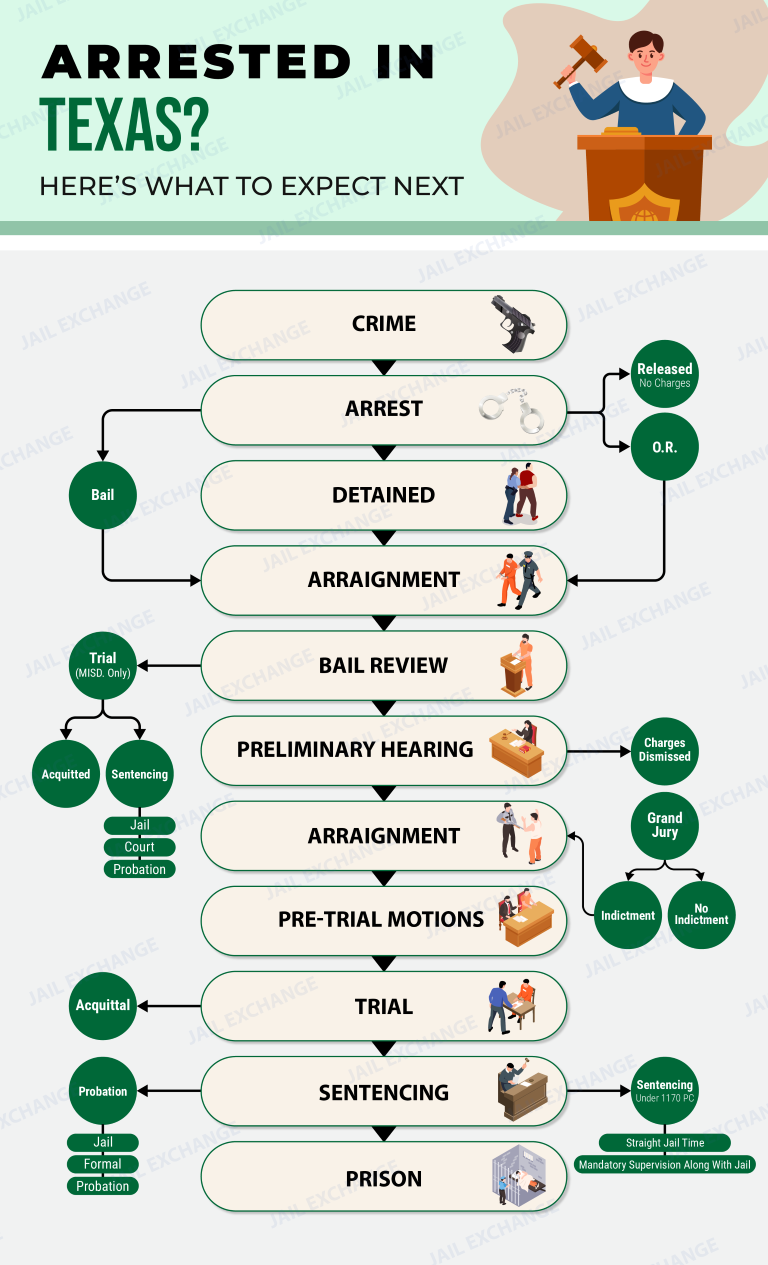

Access Securepak is an authorized correctional commissary care-package program that allows families to purchase customized food, snack, hygiene, apparel, and electronics packages sent directly to an incarcerated loved one. Every package is custom-packed to meet the strict security regulations of the specific jail or state prison.
Important: Delivery Schedules and Package Quotas
Jail package guidelines are not uniform across detention centers. Some facilities permit orders year-round, while others restrict deliveries to quarterly cycles or strict weekly deadlines that you should confirm with the facility directly. If you delay setting up your account, you risk missing the upcoming delivery cutoff, leaving your loved one waiting an extra cycle for fresh food, warm thermals, or personal toiletries.
Step-by-Step Instructions to Register and Access Service
- Visit the official Access Securepak online store at www.accesscatalog.com.
- Select the state and the specific jail or correctional institution from the dropdown menu.
- Enter the inmate's legal last name and inmate ID to verify their active housing and package eligibility.
- Browse the catalog of approved meats, cheeses, ramen soups, cookies, toiletries, and clothing.
- Add items to your cart up to the facility's maximum weight or dollar limit (usually $50 to $125 per order).
- Check out using your debit or credit card and save the order confirmation tracking number.
What the Inmate Needs to Do
The inmate does not need to order anything themselves. Securepak ships the sealed package directly to the correctional facility's commissary warehouse. Jail staff inspect the box and deliver it to the inmate during regular pod commissary distribution, where the inmate signs for the package.
Official Provider: Access Corrections / Keefe Group Official Website
Customer Service Telephone: 1-800-546-6283
Support Hours: Monday – Friday, 8:30 AM – 11:30 PM EST; Saturday, 11:00 AM – 5:00 PM EST
Supported Languages: English and Spanish
Other Services Provided by Access Corrections / Keefe Group
In addition to Access Securepak (Commissary & Gift Packages), Access Corrections / Keefe Group provides several other communication, financial, and visitation services at participating correctional facilities:
- Inmate Trust Money Deposits: Send cash directly to their personal account so they can buy items independently.
• Learn more on our website: Inmate Trust Money Deposits Guide | • Visit official vendor page: Access Corrections / Keefe Group Inmate Trust Money Deposits - Digital Messaging & Photos: Send fast electronic letters and digital pictures to their tablet.
• Learn more on our website: Digital Messaging & Photos Guide | • Visit official vendor page: Access Corrections / Keefe Group Digital Messaging & Photos
Buy Commissary for an Inmate in the Galveston County Jail
Galveston County Jail Inmate Commissary - Sending Money or Purchasing Commissary for an Inmate
Galveston County Jail allows inmates to purchase commissary. Ask the jail what its commissary sells; snacks and hygiene items are common.
You can buy commissary for an inmate using an online service called Access Securepak.

Call the facility at 409-766-2315 to ask whether there is a limit on how much an inmate can spend on commissary.
Access Securepak's site shows whether friends and family can order commissary for an inmate at this jail.
Scroll down for information on the Galveston County Jail's service they use for you being able to purchase commissary items online and have them shipped directly to the inmate.
You can also go to our Inmate Money page for information on how to send money to an inmate.
GettingOut / ViaPath Trust & Commissary Deposits
Provider: GettingOut (Telmate) • Rebranding as ViaPath Technologies (myViaPath)GettingOut and ViaPath Technologies provide electronic inmate trust banking solutions that allow family and friends to transfer money directly into an incarcerated person's jail trust and commissary account. Deposited funds give inmates the financial balance needed to purchase food items, personal hygiene products, stationery, and over-the-counter medical goods from the jail store.
Important: Facility Banking Policies Vary Across Jails
Once a person is booked and moved to a housing unit, facilities do not always allow cash drop-offs or phone payments directly to the jail window. Some might and you should confirm this by calling the facility and asking. But if you do not register online and fund your loved one's trust account immediately, they may be forced to wait days or weeks for standard paper processing, leaving them without essential soap, clean undergarments, basic medical sundries or snacks.
Step-by-Step Instructions to Deposit Trust Funds
- Confirm the inmate's legal first and last name, date of birth, and assigned jail booking identification number.
- Navigate to www.gettingout.com or the updated my.viapath.com portal.
- Sign into your verified profile and select Deposit Funds.
- Select the detention center where the inmate is currently housed.
- Choose Trust Account / Commissary and specify your deposit amount.
- Enter your credit or debit card billing information, review transaction fees, and submit payment.
- Save your digital receipt and confirmation number for your records.
What the Inmate Needs to Do
The inmate does not need an internet account to receive funds. Once the electronic transaction clears, the balance posts directly to their jail trust ledger according to facility accounting schedules. The inmate can review their updated balance at a dayroom pod kiosk or on their tablet and place orders on their regular commissary day.
Official Providers: GettingOut Website | myViaPath Portal
Customer Service Telephone: 1-866-516-0115 (GettingOut) • 1-877-650-4249 (ViaPath)
Support Hours: Monday – Friday, 7:00 AM – 11:00 PM CST; Saturday – Sunday, 8:00 AM – 7:00 PM CST
Supported Languages: English and Spanish
Other Services Provided by GettingOut / ViaPath
In addition to Trust Deposits, GettingOut and ViaPath provide several other communication and visitation options:
- Phone Calling Accounts: Prepay for phone calling credits so your loved one can call your telephone directly.
• Learn more on our website: Phone Calling Accounts Guide | • Visit official vendor page: ViaPath Phone Accounts - Two-Way Text Messaging: Send electronic messages and photos directly to an inmate's tablet or kiosk.
• Learn more on our website: Digital Messaging Guide | • Visit official vendor page: GettingOut Messaging - Remote Video Visits: Schedule and join live video visits from home using your computer or smartphone.
• Learn more on our website: Video Visitation Guide | • Visit official vendor page: GettingOut Video Visits - Inmate Tablets & Media: Fund tablet entertainment, music streaming, games, and news modules.
• Learn more on our website: Tablet Rentals & Content Guide | • Visit official vendor page: GettingOut Tablets
Deposit Money for an Inmate in the Galveston County Jail
The Easiest and Securest Way of Depositing Money for an Inmate
There are several methods for depositing money on an inmate's account:
1. To send money online to an inmate in the Galveston County Jail use gettingout / GTL / Viapath.

2. If you prefer to use your credit or debit card and deposit money over the phone, you can call them at 866-516-0115.
3. Deposit cash or use a debit or credit card using a dedicated kiosk for this purpose. The machine is located in the lobby or visitation area of the Galveston County Jail.
4. The Galveston County Jail may also allow you to *mail an inmate a money order or cashier’s check from a trusted source such as the Post Office, a local bank, or Western Union. The money order should be be made out to either the inmate or the Galveston County Sheriff's Office, with the inmate’s name and ID# on the memo line of the check. To confirm this option call the facility at 409-766-2315.
*When mailing a money order or cashier’s check, send it an envelope by itself. Never send it with a letter or photos for your inmate, unless the facility allows it. Never send personal checks or cash.
5. The Galveston County Jail has a reception desk that may accept cash, money orders or cashier checks. Call 409-766-2315 to find out the specific hours for drop off times.
Personal mail for the Galveston County Jail on Avenue H in Galveston went digital on November 1, 2023. Letters, cards and photos now go to a mail-scanning service, and people inside read the scanned pages electronically. Personal letters mailed to the jail building after that date are returned to the sender. Scanning keeps out paper that has been soaked in drugs such as heroin or meth, dried and mailed in.
Personal letters and cards (scanned):
Inmate's Full Name & Inmate ID#
Galveston County Jail-TX
PO Box 247
Phoenix, MD 21131
Legal mail, books and money orders (to the jail):
Inmate's Full Name & Inmate ID#
Galveston County Jail
5700 Avenue H
Galveston, TX 77551
- Look-up first: Find the person's inmate ID number on the Sheriff's jail inmate list and write it next to their full name.
- Return address: Mail for Galveston County with no return address is handed back to the post office.
- Ink: Stick to black or blue ink so the scan is easy to read. The scanner can't use felt marker or crayon, so neither is allowed.
- Leave off: Glitter, confetti, lipstick and perfume, and don't draw on the envelope.
- Greeting cards: Only plain cards that don't play music are accepted for scanning.
- Books, newspapers and magazines: Mailed new by the publisher to the jail address, not the scanning address.
- From a lawyer: Legal mail goes to the jail, where it is opened in front of the person only to check for contraband.
- Money orders: Make it out to the person or to the Galveston County Sheriff's Office, with their name and inmate ID number on the memo line, and mail it in its own envelope to the jail. Cash and personal checks are not accepted at the Avenue H jail.
- How many: There is no limit on how many letters someone may send or receive.
Families can also reach someone faster through electronic messages.
ViaPath AdvancePay Phone Calling Accounts
Provider: ViaPath Technologies • Formerly ConnectNetwork / Global Tel*Link (GTL)
AdvancePay is the primary prepaid telecommunications service operated by Global Tel*Link (GTL) and ConnectNetwork, which have unified under the corporate identity of ViaPath Technologies (and the myViaPath platform). By funding an AdvancePay account, telephone charges are deducted per minute whenever an incarcerated loved one calls your specific telephone number, preventing calls from being rejected by cellular carriers.
Important: Cell Carriers Automatically Block Jail Collect Calls
Inmate telephone networks do not permit incoming calls, and wireless cell providers automatically block traditional collect billing by default. While select traditional landlines may support operator billing, cell phones and internet-based lines require an active AdvancePay balance, which you can verify with your carrier. If you do not register your number online and add funds immediately, your loved one will hear an automated operator announcement stating your line is blocked from receiving correctional calls.
Step-by-Step Instructions to Open and Fund AdvancePay
- Visit web.connectnetwork.com or the updated my.viapath.com portal, or launch the ConnectNetwork / ViaPath mobile application.
- Click Sign Up and register using your primary 10-digit cellphone number and email address.
- Select Add Facility, pick your state, and choose the detention center or state prison where the inmate is held.
- Search for the inmate using their full legal name or facility booking ID number and link them to your contact directory.
- Select AdvancePay Phone and choose your deposit amount ($25, $50, or custom).
- Enter your debit or credit card billing details, accept the administrative transaction fee, and complete the payment.
- Check your phone settings to confirm that automated or unknown correctional numbers are not routed straight to spam.
What the Inmate Needs to Do
The inmate approaches any housing pod telephone, enters their assigned PIN and voice biometric recognition phrase, and dials your 10-digit number. ViaPath's automated operator confirms your active prepaid balance and connects the call. All personal telephone calls are subject to recording and monitoring by facility investigators.
Official Providers: ConnectNetwork Portal | myViaPath Portal
Customer Service Telephone: 1-877-650-4249 (Automated & Live Support)
Support Hours: Automated Service 24/7; Live Operators Monday – Friday, 8:00 AM – 10:00 PM EST
Supported Languages: English and Spanish
Other Services Provided by ViaPath Technologies (ConnectNetwork)
In addition to AdvancePay Phone Calling, ViaPath / ConnectNetwork provides several other communication, financial, and visitation services:
- ConnectNetwork Trust Fund Deposits: Transfer money directly into an inmate's jail trust account for commissary store purchases.
• Learn more on our website: Inmate Trust Deposits Guide | • Visit official vendor page: ConnectNetwork Trust Deposits - ViaPath PIN Debit Phone Calling: Give the inmate their own calling funds to contact any approved phone number independently.
• Learn more on our website: PIN Debit Phone Calling Guide | • Visit official vendor page: ViaPath PIN Debit Calling - ViaPath Messaging & Photo Sharing: Send digital messages, photos, and video attachments directly to their terminal.
• Learn more on our website: Digital Messaging Guide | • Visit official vendor page: ViaPath Messaging Services - GettingOut Video Visitation & Tablets: Schedule face-to-face remote video visits and manage handheld tablet communications.
• Learn more on our website: Remote Video Visitation Guide | • Visit official vendor page: GettingOut Video Visits
ViaPath PIN Debit Phone Calling Accounts
Provider: ViaPath Technologies • Formerly ConnectNetwork / Global Tel*Link (GTL)ViaPath PIN Debit (hosted on ConnectNetwork and myViaPath) provides incarcerated individuals with their own calling funds. Unlike AdvancePay (which only funds calls placed to your specific phone number), PIN Debit funds belong directly to the inmate, allowing them to call attorneys, bondsmen, employers, or extended family members across multiple approved telephone numbers.
Important: AdvancePay Only Funds a Single Phone Number
When someone is arrested, they often need to contact multiple people—including legal defense counsel, bail agents, employers, and relatives. If you only fund an AdvancePay account, your loved one will have no calling balance to dial anyone else, as rules and call authorizations vary by facility. Adding funds directly to ViaPath PIN Debit grants them the calling flexibility needed to handle critical legal and family arrangements without delay.
Step-by-Step Instructions to Fund a PIN Debit Account
- Sign into your account at web.connectnetwork.com or my.viapath.com.
- Click on PIN Debit under the communications menu.
- Select the state and facility, and link the inmate's booking identification number.
- Enter the deposit dollar amount and review the payment transaction fee.
- Enter your debit or credit card details and submit the payment.
- Notify your loved one that their personal PIN calling balance has been credited.
What the Inmate Needs to Do
The calling balance appears under the inmate's personal identification PIN. When they pick up any dayroom telephone or tablet, they select the 'PIN Debit' prompt from the automated menu to place calls to any approved number on their personal contact list.
Official Providers: ConnectNetwork Portal | myViaPath Portal
Customer Service Telephone: 1-877-650-4249
Support Hours: Automated Deposits 24/7/365; Live Agents Monday – Friday, 8:00 AM – 10:00 PM EST
Supported Languages: English and Spanish
Other Services Provided by ViaPath Technologies (ConnectNetwork)
In addition to PIN Debit Calling, ViaPath / ConnectNetwork provides several other communication, financial, and visitation services:
- AdvancePay Dedicated Phone Calling: Fund calls placed specifically to your personal phone number.
• Learn more on our website: AdvancePay Calling Guide | • Visit official vendor page: ConnectNetwork AdvancePay - ConnectNetwork Trust Fund Deposits: Deposit money for commissary food, hygiene supplies, and stationery.
• Learn more on our website: Inmate Trust Deposits Guide | • Visit official vendor page: ConnectNetwork Trust Deposits - ViaPath Messaging & Photo Sharing: Send digital messages and photos directly to their kiosk or tablet.
• Learn more on our website: Digital Messaging Guide | • Visit official vendor page: ViaPath Messaging Services - GettingOut Video Visitation & Tablets: Schedule face-to-face remote video visits from home.
• Learn more on our website: Remote Video Visitation Guide | • Visit official vendor page: GettingOut Video Visits
GettingOut / ViaPath Inmate Messaging
Provider: GettingOut (Telmate) • Rebranding as ViaPath Technologies (myViaPath)GettingOut (a service of Global Tel*Link / Telmate) provides an instant two-way digital messaging and photo-sharing platform connecting families with incarcerated individuals via housing-unit kiosks and handheld tablets. The provider is actively rebranding as ViaPath Technologies (under the myViaPath platform); depending on the facility contract, local booking sheets and tablets may still refer to the service as GettingOut, GTL, or ViaPath, but both brand portals grant access to the same centralized messaging balance.
Important: Contact Authorization and Digital Mail Rules Vary
Inmate digital messaging rules are not uniform across all county detention centers. While some jails allow immediate two-way messaging upon registration, others require initial contact invitations or administrative ID verification, which you should verify directly with the facility. If you delay setting up an online profile and funding your Friends & Family messaging account, your loved one may face lengthy periods without direct family communication.
Step-by-Step Instructions to Register and Message an Inmate
- Visit www.gettingout.com or the newly branded my.viapath.com portal, or install the GettingOut / myViaPath mobile app.
- Create a user profile using your primary email address and 10-digit mobile phone number.
- Complete identity verification by uploading a clear photo of your government-issued driver's license or state ID and taking a verification selfie if requested.
- Search for the inmate by selecting the state, correctional facility, and their legal name or booking ID.
- Send an outside contact connection request to link your account to their tablet profile.
- Deposit funds into your 'Friends & Family Account' using a debit or credit card to cover message and photo-sharing costs.
- Compose your text message in the chat box, attach approved photos, and submit it for jail screening.
What the Inmate Needs to Do
The inmate powers on their assigned pod tablet or approaches a housing-unit kiosk and logs into the messaging application with their PIN. They accept your incoming contact invitation on the screen. Once approved by institutional monitors, incoming messages appear in their inbox, and the inmate types a reply directly on the screen.
Official Providers: GettingOut Website | myViaPath Portal
Customer Service Telephone: 1-866-516-0115 (GettingOut Support) • 1-877-650-4249 (ViaPath Support)
Support Hours: Monday – Friday, 7:00 AM – 11:00 PM CST; Saturday – Sunday, 8:00 AM – 7:00 PM CST
Supported Languages: English and Spanish
Other Services Provided by GettingOut / ViaPath
In addition to Two-Way Text Messaging, GettingOut and ViaPath provide several other communications and visitation options:
- Remote Video Visits: Schedule and join live web-based video visits from your computer or smartphone.
• Learn more on our website: Video Visitation Guide | • Visit official vendor page: GettingOut Video Visits - Inmate Tablet Rentals & Media: Fund tablet entertainment, music streaming, games, and news modules.
• Learn more on our website: Tablet Rentals & Content Guide | • Visit official vendor page: GettingOut Tablets - AdvancePay Phone Calling: Prepay for telephone calls so your loved one can dial your mobile phone directly.
• Learn more on our website: AdvancePay Phone Calling Guide | • Visit official vendor page: ViaPath ConnectNetwork Calling - Inmate Trust Deposits: Transfer funds directly into their jail trust account for commissary store purchases.
• Learn more on our website: Inmate Trust Deposits Guide | • Visit official vendor page: ViaPath Trust Deposits
GettingOut / ViaPath Inmate Tablets & Media
Provider: GettingOut (Telmate) • Rebranding as ViaPath Technologies (myViaPath)GettingOut provides specialized, secure handheld tablets for county jail inmates, offering access to messaging apps, telephone calling, legal research tools, eBooks, vocational training, and premium entertainment rentals. As part of GTL and Telmate's transition to ViaPath Technologies, tablet firmware and management platforms are moving to the myViaPath system.
Important: Tablet Feature Availability Varies by Facility
Jails manage tablet distribution according to individual facility contracts. While basic educational and legal materials are often provided without cost, access to music streaming, games, podcasts, and premium movies requires an active funded account. You should confirm the tablet rules with the facility directly. Registering and funding their media balance right away ensures your loved one has productive resources and recreation during their stay.
Step-by-Step Instructions to Fund Inmate Tablet Services
- Confirm that GettingOut / ViaPath handheld tablets are active at your loved one's specific detention facility.
- Navigate to www.gettingout.com or my.viapath.com.
- Sign into your verified user profile and link the inmate's legal name and booking ID number.
- Select Make a Deposit and choose either your Friends & Family Account (for messaging) or the inmate's personal Inmate Account (for entertainment and song rentals).
- Choose your deposit amount, review convenience fees, and complete payment with a credit or debit card.
- Notify your loved one that their tablet account balance has been funded.
What the Inmate Needs to Do
The inmate unlocks their assigned tablet or signs one out from the pod charging station using their biometric verification or PIN. Once logged in, their available balance appears on the screen, allowing them to download songs, stream educational content, and communicate with approved family members.
Official Providers: GettingOut Website | myViaPath Portal
Customer Service Telephone: 1-866-516-0115 (GettingOut) • 1-877-650-4249 (ViaPath)
Support Hours: Monday – Friday, 7:00 AM – 11:00 PM CST; Saturday – Sunday, 8:00 AM – 7:00 PM CST
Supported Languages: English and Spanish
Other Services Provided by GettingOut / ViaPath
In addition to Tablet Media & Rentals, GettingOut and ViaPath provide several other communication and account services:
- Two-Way Text Messaging: Send electronic letters and photos straight to the inmate's screen.
• Learn more on our website: Two-Way Text Messaging Guide | • Visit official vendor page: GettingOut Messaging - Remote Video Visits: Meet face-to-face over secure live video from home.
• Learn more on our website: Video Visitation Guide | • Visit official vendor page: GettingOut Video Visits - AdvancePay Phone Calling: Prepay for phone calling credits so your loved one can call your telephone directly.
• Learn more on our website: AdvancePay Phone Calling Guide | • Visit official vendor page: ViaPath ConnectNetwork Calling - Inmate Trust Deposits: Transfer cash directly into an inmate's jail ledger for commissary purchases.
• Learn more on our website: Inmate Trust Deposits Guide | • Visit official vendor page: ViaPath Trust Deposits
Galveston County Juvenile Facilities
Nearby counties
- Jail (Main): 409-766-2315
- Sheriff: 409-766-2300
The Galveston County Jail serves the following cities and towns of Galveston County: Bayou Vista, Clear Lake Shores, Dickinson, Friendswood, Galveston, Hitchcock, Jamaica Beach, La Marque, League City, Santa Fe, Texas City and Webster.