
Hopkins County Jail
Hopkins County Jail
Physical Address
298 RosemontSulphur Springs, TX 75482
Jail Phone Number
903-438-4040Hopkins County Inmate Search: Who's Held on Rosemont and How to Reach Them
Most people arrested around here end up in the Hopkins County Jail, the Sheriff's one jail building at 298 Rosemont, Sulphur Springs, TX 75482. Below, learn to look someone up and make sense of what their listing says. The page also covers visits, money, mail, court dates and what happens if they move.
The Sheriff's inmate listing is the place to look first. It splits into people held right now, the past day's arrests and arrests on a date you choose. Entries show the charges, bond amounts and the arresting agency.
Your first call should go to 903-438-4040. Ask for the jail, then ask whether your person is booked, what bond was set and when they see a magistrate. For release steps, open our bail page. Our court page explains judges, hearings and each step of a case.
Read inmate search answers
 Read inmate search answers
1. How do I use the Hopkins County jail roster?
The roster runs on a records vendor's site that the Sheriff links to. Here's how to work it:
- Open the inmate listing.
- Choose a tab. "Current Inmates" lists everyone held today. "24 Hours Arrests" shows fresh bookings. "Inmates by Arrest Date" lets you pick a day.
- Narrow things down with the name filter.
- Read the entry: status, sex, height, weight, arrest date, arresting agency and days spent in jail.
- Check the charge lines. Every count has its own warrant number, statute, brief description, M or F letter and bond.
At the top, "Total bond" adds up every count. If it reads "NOT SET," no amount is in place yet. Home addresses are blanked out on purpose.
↑ Back to the question list2. Not on the Rosemont list: where else to check?
A name that won't come up usually points to one of four things:
- Booking is still underway. A name posts only after fingerprinting, a photo and forms. Check the 24-hour tab again in a while.
- They're out. Bond, a dropped case or a finished sentence takes a name off "Current Inmates."
- They were shipped elsewhere. A sheriff from a different county could be holding them on that county's warrant. Federal agents, ICE or TDCJ may have them too, and later answers here explain each.
- The spelling differs. Shorten the surname to its opening letters, and test any legal or maiden name.
When in doubt, phone the jail through the Sheriff's Office at 903-438-4040. For old bookings or written records, use the county's open records request page.
↑ Back to the question list3. Is the person at Rosemont or in a neighbor county's jail?
Locally there's only one adult lockup: the Hopkins County Jail, 298 Rosemont, Sulphur Springs, TX 75482, 903-438-4040. The state rates it for 192 beds. Besides local arrests, it houses contract and federal prisoners. On the roster you'll see holds for the U.S. Marshals and some immigration holds.
A warrant from a nearby county, or an arrest just across the line, can put someone in a neighbor's jail instead:
- Rains County Jail, 313 E. North Street, Emory, TX 75440, 903-473-3181.
- Wood County Detention Center, 402 South Stephens Street, Quitman, TX 75783, 903-763-2201.
- Franklin County Jail, 208 TX Hwy 37, Mount Vernon, TX 75457, 903-537-4539.
- Delta County Jail, 200 W. Bonham St, Cooper, TX 75432, 903-395-2146.
- Hunt County Detention Center, 2801 Stuart St., Greenville, TX 75401, 903-453-6849.
4. Does the Hopkins County roster show mugshots?
For many people, yes. The Current Inmates roster shows a booking photo beside some entries, while others read "image not available." For someone already released, or a missing photo, you'll likely need to ask.
- Asking the Sheriff. Send a written request through the county's open records page. Texas treats basic arrest facts as public (Public Information Act). If the Sheriff's staff need over ten business days, they have to give you a date.
- Photos taken by ICE. Those need a federal FOIA request, made on ICE's records page.
- Federal booking photos. Generally kept private. The Marshals may release a picture when they're hunting a fugitive.
- Websites selling removal. When a posted record is inaccurate or incomplete, Texas says the site must fix or remove it free. Expunged or nondisclosed records can't be posted at all, under chapter 109 of the state's business code.
5. Will IVSS-Counties warn me when Rosemont lets them go?
It can. Register on Texas IVSS-Counties, the statewide system that took VINE's place. Search a whole name or just a piece. An account is optional. Nobody pays, and the prisoner is never told who signed up.
Messages come by phone or online, in English or Spanish. They cover a booking at Rosemont, a release, a court setting added or changed, and a move to TDCJ. Its 866-268-8959 line runs all day and night. Oversight passed to the Governor's office this fall. Once a prisoner lands with TDCJ, that agency's Victim Services Division sends notices instead, 800-848-4284.
↑ Back to the question list6. How do people bond out of the Rosemont jail?
Inside 48 hours, a magistrate sets the bail amount and conditions. You can see the result on the roster as each count's bond and the total. Three kinds of bond exist in Texas:
- Cash. Someone pays the whole amount, and it's refunded, minus any fees, after the case.
- Bondsman (surety). A licensed company signs for the full bond, and the fee it charges is kept.
- Personal bond. Release on a signature alone, with money due only after a missed court date. Certain violent charges never qualify.
Some people stay in after bond, for example on another county's warrant, a federal hold or an ICE detainer. Since November 2025, the state constitution lets judges deny bail for certain violent charges after a hearing. Our bail page explains each step and who to pay.
↑ Back to the question list7. Where do the charges show, and what do M and F mean?
Every count on the roster comes with its statute and a letter. An M sends the case to the County Court at Law on Church Street. An F means a felony for the 8th or 62nd District Court. The Penal Code number lets you look up the crime in the Penal Code, where chapter 12 lists each level's punishment.
For the actual complaint or indictment, ask the District Clerk on a felony at 903-438-4081. On a misdemeanor, try the County Court at Law. Charges can change after arrest, so the paperwork filed later is what counts. You can also make a free account on re:SearchTX, the state's court-filing site.
↑ Back to the question list8. Who represents someone in the Hopkins County Jail?
Your person can hire any lawyer. Families often do this the same day. Short on cash? At the jail hearing, your person can ask for a court-paid lawyer. The magistrate helps them swear out an affidavit of indigence, a form about income and bills. The local plan picks lawyers from a rotation. One should be named within three working days (art. 26.04).
Didn't ask at magistration? Bring or mail the affidavit to the coordinator for the 8th District Court at 118 Church Street, Sulphur Springs, TX 75482, 903-438-4022. On a capital murder charge, a state-funded regional defender steps in. Read the county's appointment plan for every detail.
↑ Back to the question list9. What should I know before visiting Rosemont?
Phone 903-438-4040 first. Have the jail staff explain the visiting days, which photo ID works, and whether visits happen in the jail lobby or by video from home. State standards promise each prisoner two visits a week, through glass or on screen, of 20 minutes or longer. One of the pair should fit a work schedule, after hours or on a weekend.
Kids may visit a jailed mom or dad. Expect the jail to want their own parent, guardian or lawyer with them. A jailed veteran may also meet free with a veterans service officer, and those meetings come on top of family visits. For tips on dress and timing, read our visitation page.
↑ Back to the question list10. Putting money on the books: which site does the jail use?
The Sheriff's website links a jail-funds company, jailfunds.com, for deposits. Money there pays for snacks, hygiene items and other store orders. Before you send any, call 903-438-4040 to confirm the person's name as booked and any fees. See our money page for ways to deposit and our commissary page for what the store sells.
↑ Back to the question list11. How do Rosemont phone calls and messages get set up?
State rules put a phone in each Texas jail's intake room, so a person may ring family while being booked. Later calls run through the communications company the Sheriff's site links, ncic.com. There, families set up an account to take calls and, where offered, send messages. Ask whether calls are recorded and what each one costs.
Ask the jail at 903-438-4040 about tablet use and calling hours. Our phone page and messaging page walk through setting up an account.
↑ Back to the question list12. Will a letter reach them, and where should it go?
Before you write, call 903-438-4040 and ask for the jail's exact mailing address. Some Texas jails send letters to a scanning center, not the building. Use the person's full name as the roster shows it.
State standards protect a lot. Prisoners may write anyone, as often and as long as they like, and get mail the same way. A lawyer's letter gets opened while the prisoner watches, just to check for anything hidden. Someone without funds receives free supplies and postage to mail three letters each week. See our mail page for common rules on cards, photos and packages.
↑ Back to the question list13. Can family pick up a wallet, keys or a phone?
Whatever a person carries in, from clothes to car keys, is written on an inventory and locked up at booking. Often the prisoner may sign a form letting a relative take some of it home. Call 903-438-4040 and ask which items can leave, what ID you need and the pickup hours. Anything seized as evidence won't be released.
On the way out, the person signs for their stored items. Before release day, ask the jail how a leftover commissary balance is refunded.
↑ Back to the question list14. Who at Rosemont should hear about an illness or a prescription drug?
Call the jail right away at 903-438-4040. Give the person's name, the problem, any prescriptions and the doctor's name. Medical staff decide what treatment and medicine are given. Signs of mental illness at booking must be reported to the magistrate (art. 16.22).
If care seems poor, your person can use the jail's own complaint process, which must be posted inside. Families can reach the state jail commission (TCJS) through its complaints page or at 512-463-5505.
↑ Back to the question list15. How do I check for a Hopkins County warrant?
Deputies serve most warrants here, and the two precinct constables serve others. Call the Sheriff's Office at 903-438-4040 to ask about a name. Online, the county posts an Open Warrants page, and DPS posts its Most Wanted fugitives. Clearing one goes best with a lawyer beside you. Then walk in at Rosemont, or let the lawyer phone the judge's office that issued it about a hearing. Felony warrant records are with the District Clerk, 282 Rosemont Street, Suite 2, Sulphur Springs, TX 75482, 903-438-4081.
↑ Back to the question list16. Where do I find a Hopkins County court date?
Felony settings for the 8th and 62nd District Courts appear on the district court dockets. Misdemeanors sit on the County Court at Law criminal docket. Fine-only tickets go to the two justice courts on Jefferson Street.
Settings shift, so call to confirm. Try the District Clerk at 903-438-4081 on a felony or the Church Street courthouse on a misdemeanor. Our court page lays out each court, address and step.
↑ Back to the question list17. A Marshals hold on the roster: what does it mean?
That person faces a U.S. charge, heard in Sherman Division court for Texas's Eastern District. The division clerk's office is at the Paul Brown United States Courthouse, 101 East Pecan Street, Room 216, Sherman, TX 75090, 903-892-2921. Whether they go home on conditions or stay locked up is settled early by a U.S. magistrate judge in Sherman or Plano (18 U.S.C. 3142).
The U.S. Marshals Service holds people before trial, and Rosemont keeps many of them. Look for a Marshals hold on the roster. The Sherman office is at 903-868-2379. A sentenced person heads to a Bureau of Prisons site, which the BOP locator names.
↑ Back to the question list18. If ICE takes them from Rosemont, how do I find them?
- A detainer arrives at Rosemont on Form I-247A.
- Once nothing in the Texas case holds them, the jail may keep them up to 48 hours after they would otherwise be released (8 CFR 287.7(d)).
- ICE takes custody at Rosemont and moves them to a federal holding site.
- Search the ICE Online Detainee Locator by A-number and country of birth, or by name. You can also call the Dallas Field Office, 8101 N. Stemmons Freeway, Dallas, TX 75247, 972-367-2200.
A Texas jail must carry out an ICE detainer. That changes if the person shows ID proving they're a citizen or lawfully here (art. 2A.060). Also, Texas wants a signed 287(g) pact between ICE and each county that runs a jail, due December 1, 2026.
↑ Back to the question list19. Sentenced to TDCJ: which online search finds them?
A felony prison or state jail term means TDCJ eventually collects the person from Rosemont. Intake comes first: tests, interviews and a security rating. A permanent unit is chosen after that.
Try the TDCJ inmate search with the exact surname plus an initial, or with a TDCJ number or SID. Results include only people inside TDCJ right now. Updates happen on working days, so the newest info is about one day old. Our Texas state prisons section covers each unit.
↑ Back to the question list20. Are kids ever held at Rosemont, or somewhere else?
Kids from 10 to 16 never go into the Rosemont adult cells. They're held in a youth detention center. At 17, Texans face charges as adults, so a 17-year-old does get booked and listed at Rosemont. For younger kids, police must reach a parent fast. If the child is kept, a lawyer gets assigned. By the second working day, the juvenile court rules on keeping the child or letting them go home.
Juvenile probation for the county is at 228 Hinnant, Sulphur Springs, TX 75482, 903-885-8041. Its officers can name the youth center holding your child and give you the court date.
↑ Back to the question list21. Deputy, trooper or city officer: who arrested them in Hopkins County?
Look at "arresting agency" on the roster entry. Most local arrests come from one of these:
- Sheriff's Office. Deputies patrol the rural county and run the jail, 298 Rosemont, Sulphur Springs, TX 75482, 903-438-4040.
- Sulphur Springs Police Department. City officers handle calls inside the city limits. For their number, ask the Sheriff's dispatch.
- Constables. Precinct 1 and Precinct 2 serve papers and warrants for the justice courts.
- Smaller towns. Como, Cumby and other small towns: dispatch at the Sheriff's Office knows who patrols there.
- Texas DPS troopers. DPS Highway Patrol covers the main roads through the county. For a traffic-stop arrest by DPS, the jail can say where the case went.
Hopkins County Bail and Release
Adults arrested in Hopkins County end up at the county jail on Rosemont, at 298 Rosemont, Sulphur Springs, TX 75482. The Sheriff's Office runs that single building. Sections below cover the magistrate who fixes a bail figure, Texas bond choices, paying, and snags that keep someone inside even once money changes hands.
First, confirm your person was booked. The Sheriff's inmate listing names everyone held on Rosemont, plus each charge and bond. Our Jail Roster page then handles custody questions: today's bookings, who sits in a cell, open warrants, what each charge means, mugshots, appointed counsel, and how belongings get reclaimed.
Next, phone the Sheriff's Office at 903-438-4040 and request the jail. Ask: is a bond set yet, how large is it on each count, and where and how may it be paid? Hearings after release live on our court page. For background on statewide release law, browse our Texas bail laws page.
1. After a Hopkins County arrest, who names the bail?
That job belongs to a Texas magistrate. In Texas, the clock allows 48 hours, tops, before the accused must face one, whether in person or on a screen (arts. 14.06, 15.17). The county's plan for appointed lawyers holds local magistrates to that same clock. The jail at 903-438-4040 can say when your person is scheduled.
This quick hearing does three jobs:
- Out loud, the magistrate names the charge and warns about the right to silence and to counsel.
- The person is asked whether they need a free attorney, and gets help with that paperwork.
- Bail is fixed for this individual, with the mildest terms that still keep folks safe and get the accused to court later (art. 17.028).
Judges at the district, county, justice-of-the-peace and city levels all qualify as magistrates, along with a few others (art. 2A.151). Charges of Class B or higher add a step: a public safety report, pulled from state records, goes to the magistrate first. It offers facts only: no risk score, no proposed bail (arts. 17.021, 17.022).
↑ Back to the question list2. Three ways to make bail: which suits you?
The Code of Criminal Procedure sorts Texas bail into three kinds in arts. 17.01 to 17.03:
- Paying cash. Somebody pays every dollar of the bail up front. That money sits with the court till the case is finished.
- Using a surety. A bondsman, or someone owning enough land or property, backs the full amount should the accused miss court. Whatever the bondsman charges, you won't see again.
- Signing a personal bond. The accused signs a promise and leaves without putting down a dime. Texas allows a fee on this kind, and a judge may waive it (art. 17.42).
Certain charges bar that signature-only option. Examples are violent crimes named in the statute, a felon carrying a firearm, and some protective order breaches (art. 17.03). Many bonds come with strings, like testing for drugs or keeping clear of a victim. For someone charged with DWI again, expect a breath device wired to the car's ignition (art. 17.441).
↑ Back to the question list3. Bail amounts in Sulphur Springs: how are they figured?
No two cases get a stock price here. Each magistrate weighs a list set by law (art. 17.15):
- the offense and its details, violence included;
- the accused's real ability to come up with money;
- whether the victim, officers or the wider community could be at risk;
- prior record, earlier no-shows and immigration status.
The figure should pull the person back to court without turning into a way to oppress them. Good news for families: the online inmate listing prints a total bond and a per-charge bond for every person on Rosemont. Seeing "NOT SET" means no magistrate has ruled. Ring 903-438-4040 for anything newer.
One cap comes from statute. Deputies sometimes arrest without a warrant. If a magistrate then misses the probable cause deadline, bail can't top $5,000 on a misdemeanor or $10,000 on a felony (art. 17.033). Bail forms filed statewide are searchable through the courts' TOPICS portal.
↑ Back to the question list4. Bonding out at Rosemont: what are the steps?
The Rosemont jail is where most bonds start. Here's the order that tends to work:
- Search the inmate listing and note each bond amount by charge.
- Dial the Sheriff's Office, 903-438-4040, and ask for jail staff. Get the window or desk that accepts bonds, when it's open and how you can pay.
- Carry photo ID, the person's legal name and birthday to 298 Rosemont, Sulphur Springs, TX 75482.
- Pay a cash bond in full, or have your bondsman meet you to sign the papers.
- Hang on to the written receipt. A refund later depends on it.
- Expect a wait. Release paperwork, extra holds, or the 4-hour family violence rule can stretch it out.
5. Can a Hopkins County court clerk take a bond?
Once a case reaches a court, its clerk keeps the bond paperwork. Phone first to learn whether money is accepted there:
- Felony files: District Clerk, 282 Rosemont Street, Suite 2, Sulphur Springs, TX 75482, 903-438-4081. Hours run Monday to Thursday 8:00 a.m. to 5:00 p.m. with a lunch closing, and Friday 8:00 a.m. to 4:00 p.m. straight through.
- Jailable misdemeanors (Class A or B): handled by the County Court at Law, courthouse at 118 Church St., Sulphur Springs, TX 75482, 903-438-4006.
- Class C cases: either the Precinct 1 justice court, 128 Jefferson Street, Suite K, Sulphur Springs, TX 75482, 903-438-4026, or the Precinct 2 justice court, 128 Jefferson Street, Suite G, Sulphur Springs, TX 75482, 903-438-4036. Each keeps hours of 8:00 a.m. to 4:30 p.m. Class C defendants usually sign a personal bond there (art. 45A.107).
Those two justice courts accept ticket fines through an online county payment page that adds a service charge. It covers fines only, never bail.
↑ Back to the question list6. What payment works for a cash bond?
Save yourself a wasted trip. Call 903-438-4040 and settle these points before leaving home:
- Is it cash only, or do they accept a money order, cashier's check, or debit or credit card?
- Does a card payment carry an added charge?
- Whose name belongs on the bond receipt?
Pay attention to that final point. Refunds of cash bail are paid to the receipt holder alone, minus a possible fee (art. 17.02). Exact change helps when you can manage it. Paying a bondsman? Hand money only to the company itself, and get paper proof, since Texas requires bondsmen to issue a receipt for cash or property (Occupations Code 1704.305).
↑ Back to the question list7. How do Texas bondsmen and their fees work?
At Rosemont, a bondsman (the law says surety) signs for the whole bail and charges you for taking that risk. State law leaves that fee uncapped (Occupations Code ch. 1704).
- Once a county reaches 110,000 people, a bail bond board must license its sureties. Under that population, a county may form one but doesn't have to (Occupations Code 1704.002).
- Where sureties aren't board-licensed, the Sheriff's Office may approve and post bondsmen who showed enough assets (art. 17.141). Call 903-438-4040 to hear which ones may write bonds on Rosemont.
- Jail lobbies and cells are no place for bondsmen to sign up customers. The law bans it (Occupations Code 1704.304).
- Want a pledged deed or car title back? After the case ends, send the bondsman a written request. A 30-day return deadline starts then (Occupations Code 1704.301).
- The lawyer handling the case is also allowed to act as surety (Occupations Code 1704.163).
A surety may also hand a client back to the jail. Since 2025, the bondsman must give the defense lawyer a heads-up beforehand, plus the prosecutor on felony cases. A sworn statement is filed with the court (art. 17.19).
↑ Back to the question list8. What else can stop a release after bond?
Covering one bond won't always free someone. Watch for these:
- Warrants from elsewhere. A magistrate on this side of the county line may take bail on it and pass the paperwork to the county where the warrant started (art. 15.18). Otherwise, deputies from the warrant's county drive over for a pickup.
- Parole blue warrants. Someone on parole picked up this way normally sits until the parole board's violation hearing (Gov't Code 508.254).
- Probation. Fresh charges can trigger a filing in the earlier case, carrying a separate bond.
- Federal holds. Federal prisoners stay on Rosemont too, and the listing marks holds for the U.S. Marshals.
- ICE detainers under art. 2A.060.
- Family violence. If further violence looks likely, jailers keep the person 4 hours past posting. A magistrate may lengthen that hold by a written order, up to 48 hours (art. 17.291).
Ask about every hold at once when you ring 903-438-4040.
↑ Back to the question list9. When may bail be refused outright?
Most people charged with a crime in Texas can get bail. The state constitution's article I lists the exceptions:
- a capital murder charge backed by strong proof (§11);
- certain repeat felony records, or a felony arrest that happens during release on an earlier felony bond (§11a);
- violating a safety condition of release, or a family protective order (§11b and §11c).
A November 4, 2025 statewide vote, Proposition 3, wrote §11d into the constitution. Its list covers murder, capital murder and trafficking. Also listed are robbery, kidnapping and sexual assault when charged as aggravated crimes. For those, a judge "shall" deny bail when the district attorney persuades the court at a hearing that flight or harm to someone is likely. The hearing happens only when prosecutors ask. A judge who still allows bail must give reasons in writing.
Also since 2025, the state can challenge a bail it thinks is too small in certain violent cases. Meanwhile the person stays jailed, and the appeals court gets 20 days for its ruling (art. 44.01). Locally, prosecutors work from 282 Rosemont, Suite 1, Sulphur Springs, TX 75482, 903-885-0641.
↑ Back to the question list10. Bond too high to pay? What can a lawyer ask for?
Your lawyer asks the judge in writing, through a motion. Felony requests go to the district court via the District Clerk, 903-438-4081. Class A and B requests are filed in the County Court at Law, 903-438-4006. Bring pay stubs, a lease, utility bills and anything showing long ties to the area.
Delay by the state can also force relief. Once the state misses its readiness deadline, the jailed person must receive a personal bond or a bail cut (art. 17.151):
- Felony: 90 days.
- Bigger misdemeanor, with over 180 days possible: 30.
- Smaller misdemeanor: 15.
- Fine-only ticket: 5.
That rule has carve-outs, including for anyone who violated a safety condition while out before.
↑ Back to the question list11. Can Hopkins County appoint a lawyer for free?
A person facing possible jail who can't pay a lawyer can request one. The county's indigent defense plan lays out these steps:
- Speak up during magistration and fill out an affidavit of indigence. That sworn paper covers pay, debts and bills.
- Missed that chance? Pick up the form from the Court Coordinator, 8th Judicial District Court, 118 Church Street, Sulphur Springs, TX 75482, 903-438-4022, and return it there.
- Count three working days from when the court receives the form. A lawyer should be assigned by the end of that third day.
Appointed counsel are private attorneys taken in turn from a list. District judges pick them on felonies, while the county judge or County Court at Law judge picks them on misdemeanors. In a capital murder case, defense comes from Texas's Regional Public Defender for Capital Cases. With broader questions, contact the Texas Indigent Defense Commission, 209 West 14th Street, Room 202, Austin, TX 78701, 512-936-6994.
↑ Back to the question list12. Which courthouses hear Hopkins County cases?
Cases split by how serious they are:
- 8th and 62nd District Courts take felonies. Their clerk sits at 282 Rosemont Street, Suite 2, Sulphur Springs, TX 75482, 903-438-4081.
- The county courthouse, 118 Church St., Sulphur Springs, TX 75482, 903-438-4006, is home to the County Court at Law and its Class A and B docket.
- Precinct 1 justice court, 128 Jefferson Street, Suite K, Sulphur Springs, TX 75482, 903-438-4026.
- Precinct 2 justice court, 128 Jefferson Street, Suite G, Sulphur Springs, TX 75482, 903-438-4036.
Citations from a town's own officers can land in that town's municipal court. The Sheriff's Office at 903-438-4040 can point you to the right one and its number.
↑ Back to the question list13. Will we ever see the bond money again?
Cash bail returns after the case ends, provided every bond condition was met. Only the receipt's listed name can claim it (art. 17.02). Deductions can apply:
- The clerk's 5% cut, never more than $50, applies only if the judge convicted the person or ordered deferred adjudication (Local Gov't Code 117.055).
- Judges may use the deposit to cover court costs and fines the defendant owes (art. 17.53).
- Bondsman fees are not part of any refund.
After the final ruling, the clerk hands out the motion form for releasing the deposit, free of charge (state bond guide).
A skipped court date triggers forfeiture by a judgment nisi (art. 22.02). From there, the bondsman gets a set window to see the client jailed again: misdemeanors allow 180 days, felonies 270. Meeting it releases the bondsman from the forfeiture, except for costs and interest (art. 22.13). Separately, a no-show may face a new charge, bail jumping, ranging from a Class C misdemeanor to a felony of the third degree, matched to the first case (Penal Code 38.10).
↑ Back to the question list14. What about their property and account balance?
Booking staff bag up personal items, and the jail stores them until release. Any balance on the jail account stays with the jail as well. Phone 903-438-4040 to learn:
- the way leftover account funds get paid out;
- if a relative may collect items, and whether the inmate signs a release first;
- pickup times at 298 Rosemont, Sulphur Springs, TX 75482.
Have a photo ID with you. Deposits and leftover money get a fuller look in our guide to jail accounts.
↑ Back to the question list15. What happens to bail in a Sherman Division case?
This county's federal cases go to the Eastern District's Sherman Division. Release is the federal court's decision, not a county magistrate's:
- In Sherman or Plano, a federal magistrate judge takes up detention at a hearing. The ruling: stay in custody, or go home under conditions (18 U.S.C. 3142). Sherman's building is the Paul Brown United States Courthouse, 101 East Pecan Street, Room 216, Sherman, TX 75090, 903-892-2921, and Plano's is at 7940 Preston Road, Room 101, Plano, TX 75024, 214-872-4800.
- Pretrial, the U.S. Marshals Service assigns each federal detainee a jail bed. Since the Rosemont jail takes federal prisoners, your person might never leave town. District headquarters: 211 West Ferguson Street, 4th Floor, Tyler, TX 75702, 903-590-1370.
- Federal defenders keep a Sherman office at 600 E. Taylor Street, Suite 4000, Sherman, TX 75090, 903-892-4448.
- After sentencing, track the person with the Federal Bureau of Prisons inmate locator.
16. Does an ICE detainer outlast a paid Texas bond?
Yes. An ICE detainer stays put after Texas bail is posted. Expect this order:
- ICE sends the Rosemont jail a detainer on Form I-247A.
- Rosemont staff may then keep the person up to 48 hours after they would otherwise be released, giving ICE time to collect them (8 CFR 287.7(d)).
- Texas jails have to comply with the detainer. A person who can document citizenship or lawful presence is the exception (art. 2A.060). Since 2017, Texas has also banned city and county policies that hamper federal immigration enforcement (Gov't Code 752.053).
- Also, under a 2025 Texas law, every jail-operating county faces a December 1, 2026 deadline for a written 287(g) partnership with ICE. Call the Sheriff's Office at 903-438-4040 to learn this county's status.
- Next, search the ICE Online Detainee Locator. Search it by alien registration number. No number? Use the person's whole name and birth country. For this region, the ICE field office is in Dallas: 8101 N. Stemmons Freeway, Dallas, TX 75247, 972-367-2200.
17. Where does someone serve state jail or prison time?
Felony time belongs to the state. The Texas Department of Criminal Justice (TDCJ for short) runs both state jails and prisons. State jail felonies land in a TDCJ state jail, while third-degree and worse felonies land in prison (Penal Code ch. 12). Many people stay on Rosemont until the state transfers them. Intake staff assess each new arrival, then assign a fitting unit.
To find someone, try TDCJ's inmate database. Search with a surname and first initial. TDCJ and SID numbers also work there. Updates happen on working days only, so expect day-old data at best. For visiting and mail at each unit, our Texas state prisons page has details.
↑ Back to the question list18. Is a Hopkins County teenager handled differently?
Texas sends youths aged 10 to 16 to juvenile court, and the adult courts take 17-year-olds (Family Code 51.02). Kids skip the adult bail process. Here is the path instead:
- A parent or guardian has to get prompt word from officers, including why the child is held (Family Code 52.02).
- A boy or girl held at detention faces the juvenile judge by the second business day, though Friday and Saturday arrests get theirs by the first working day. Every child gets a court-named lawyer beforehand (Family Code 54.01).
- That judge decides about sending the child home.
Juvenile probation for this area works out of 228 Hinnant, Sulphur Springs, TX 75482, 903-885-8041. Staff there can say which youth detention center is used and the date set.
↑ Back to the question listHopkins County Jail ON-SITE VISITATION SCHEDULE
298 Rosemont
Sulphur Springs, TX 75482
903-438-4040
- Schedule subject to change.
- Call 903-438-4040 to confirm visitation time prior to making arrangements.
- All visitors must be pre-approved. Call 903-438-4040 to apply.
- A maximum of 3 guests are allowed per visit.
- All visits must be made at least 24 hours in advance.
- You must arrive 15 minutes early.
| DAY | TIME |
| SUNDAY - FEMALES | 10:00am - 6:00PM |
| THURSDAY - FEMALES | 10:00am - 6:00PM |
| TUESDAY - MALES | 10:00am - 6:00PM |
| SATURDAY - MALES | 10:00am - 6:00PM |
Hopkins County Jail ON-SITE (at the jail) VIDEO VISITATION SCHEDULE
298 Rosemont
Sulphur Springs, TX 75482
903-438-4040
Schedule Video Visits online with NCIC

- On-site Visits are free.
- Visits are 20-30 minutes.
- Visitation schedule subject to change.
- Inmates are allowed two visits per week
- A maximum of 2 guests are allowed per an On-site video session. A 3rd guest is allowed if it is a child and no more than 6 years old.
- All visits must be made at least 24 hours in advance.
| DAY | TIME |
| SUNDAY | No video sessions |
| MONDAY | 9:00 AM - 12:00PM |
| TUESDAY | 9:00 AM - 12:00PM |
| WEDNESDAY | 9:00 AM - 12:00PM |
| THURSDAY | 9:00 AM - 12:00PM |
| FRIDAY | 9:00 AM - 12:00PM |
| SATURDAY | No video sessions |
Hopkins County Jail REMOTE (at home) VIDEO VISITATION SCHEDULE

- All visits must be scheduled at least 24 hours in advance.
- Visitation Schedule subject to change.
| DAY | TIME |
| SUNDAY | 9:00 AM - 8:30PM |
| MONDAY | 9:00 AM - 8:30PM |
| TUESDAY | 9:00 AM - 8:30PM |
| WEDNESDAY | 9:00 AM - 8:30PM |
| THURSDAY | 9:00 AM - 8:30PM |
| FRIDAY | 9:00 AM - 8:30PM |
| SATURDAY | 9:00 AM - 8:30PM |

NCIC Video Visitation provides a secure online platform that enables families and loved ones to conduct scheduled face-to-face video visits with incarcerated individuals from home. Using an internet-connected smartphone, tablet, or personal computer equipped with a webcam, visitors can connect directly without traveling to the facility.
Important: Advance Registration and Visitor Clearance Required
Detention centers do not permit unscheduled or unverified video sessions. Correctional facilities require prospective visitors to submit government-issued photo identification and receive administrative clearance before booking an appointment, an approval process that can take up to 48 hours depending on facility staffing. You should verify your visitor approval status with the facility prior to scheduling. If you do not register well in advance, you will miss your loved one's scheduled visiting window for the week.
Step-by-Step Instructions to Register and Schedule a Video Visit
- Visit account.ncic.com and sign into your account.
- Register your visitor profile and upload a clear photograph of your government-issued ID (driver's license or passport) for facility background review.
- Wait for email notification confirming facility visitor approval.
- Select Video Visitation, choose the detention facility, and select the inmate.
- Browse the available schedule calendar, select an open time slot, and pay the visitation fee using a credit or debit card.
- Log into the website or mobile app 10 minutes prior to the start time on a device with a functioning camera, microphone, and reliable high-speed internet connection.
What the Inmate Needs to Do
The inmate receives a visitation notification on their housing unit video kiosk or terminal. At the appointed time, they log in with their PIN and sit before the terminal. Inmates and visitors must strictly observe jail dress and conduct rules; sessions are monitored by staff and will terminate immediately upon any violation.
Official Provider: NCIC Official Website
Customer Service Telephone: 1-800-943-2189
Support Hours: 24 hours a day, 7 days a week, 365 days a year
Supported Languages: English and Spanish
Other Services Provided by NCIC Inmate Communications
In addition to Remote Video Visitation, NCIC provides calling and digital messaging services at participating facilities:
- Prepaid Phone Calling Accounts: Prepay for phone calling credits so your loved one can call your telephone directly.
• Learn more on our website: Prepaid Calling Accounts Guide | • Visit official vendor page: NCIC Prepaid Calling - Inmate Messaging Services: Send electronic messages and photos directly to an inmate's housing unit terminal.
• Learn more on our website: Inmate Messaging Guide | • Visit official vendor page: NCIC Messaging
Hopkins County Criminal Court Guide
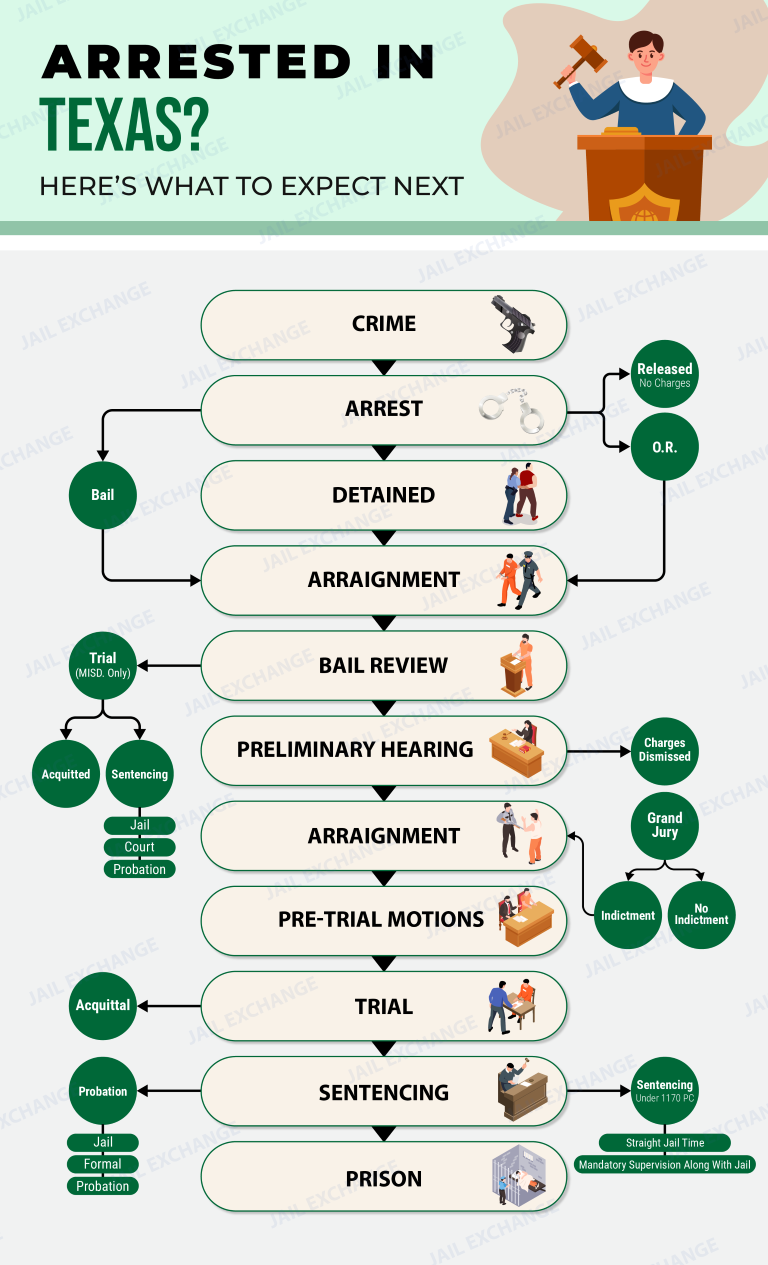
When someone is charged here, local judges in Sulphur Springs hear the case. Meanwhile the accused may sit in the Hopkins County Jail, the single jail building at 298 Rosemont, Sulphur Springs, TX 75482. This page sorts out which judge takes which charge, gives each courthouse address, and walks a case from the jail magistrate to a verdict.
First make sure your person is still behind bars by checking the Sheriff's jail roster search. Beyond that, JailExchange's own Inmates in Custody page explains who's booked now, last-day arrests, outstanding warrants and charges. Mugshots, public defenders and releasing property get their own sections.
Next, phone the Church Street courthouse at 903-438-4006 on a misdemeanor, or the District Clerk at 903-438-4081 on a felony. Ask two things: which court owns the file, and when the next setting is. Need them out first? Our bail page covers bonds and bondsmen.
1. Felony or misdemeanor: whose courtroom gets the file?
Texas ranks crimes by the worst punishment possible, and that rank picks the courtroom (state court guide). Locally it shakes out like this:
- Class C, fine only. Precinct 1 or Precinct 2 justice court on Jefferson Street, or a town's municipal court. The fine can reach $500, and nobody goes to jail for it.
- Jailable misdemeanors. Class A and B counts belong to the County Court at Law in the Church Street building. Class B risks up to 180 days behind bars; Class A, up to a year.
- Felonies. The 8th District Court or the 62nd, with papers held by the District Clerk on Rosemont.
- Final appeals. Austin's Court of Criminal Appeals.
Glance at the roster's M/F column beside each count. M marks a misdemeanor and F a felony, so you know right away which clerk to phone.
↑ Back to the question list2. Where do Hopkins County judges hold court?
Every local courtroom sits in the county seat, spread over four addresses:
- Church Street courthouse, home of the County Court at Law. That office schedules hearings by email and offers forms to waive arraignment or reset a misdemeanor date. Find it at 118 Church St., Sulphur Springs, TX 75482, 903-438-4006.
- District Clerk, keeper of files for the 8th and 62nd District Courts: 282 Rosemont Street, Suite 2, Sulphur Springs, TX 75482, 903-438-4081. Hours run Monday to Thursday 8:00 a.m. to 5:00 p.m., closing over lunch, and Friday 8:00 a.m. to 4:00 p.m. straight through.
- Justice of the Peace, Precinct 1: 128 Jefferson Street, Suite K, Sulphur Springs, TX 75482, 903-438-4026. Doors open 8:00 a.m. to 4:30 p.m.
- Justice of the Peace, Precinct 2: 128 Jefferson Street, Suite G, Sulphur Springs, TX 75482, 903-438-4036, with matching hours.
After closing, either justice office takes papers through its drop box.
↑ Back to the question list3. Could a town ticket go to a municipal judge?
Any Texas town can set up a municipal court. Its judge hears Class C cases and city ordinance breaks from inside town limits. So a citation written by a town officer may be heard by that town's judge, not on Jefferson Street. To learn which court holds a city ticket, phone the Sheriff's Office at 903-438-4040.
Tickets that deputies or state troopers write on rural roads land in Precinct 1 or 2. Those two offices accept fines online through a county payment link that adds a service fee. Balances still open after 30 days pick up a $15 time-payment fee. A judge can swap part of a fine for community service. Can't pay at all? Say so. Jail for an unpaid Jefferson Street fine is allowed only when a hearing proves the person had money and still wouldn't pay.
↑ Back to the question list4. What does the magistrate tell a new arrestee?
Two days at most go by between arrest and a hearing before a magistrate (art. 15.17). Expect the magistrate to cover:
- what the accusation is, and any sworn complaint filed;
- a right to a lawyer, hired or appointed, even during police questioning;
- a right to keep quiet and to stop any interview;
- on a felony, a right to ask for an examining trial;
- a warning that anything they say may come up in court.
Your person will be asked if they'd like an appointed lawyer. Saying yes means the magistrate helps with a short form, which is passed along to the appointing judge by the next day. Bail usually gets set during this same visit. Jailers who see possible mental illness must flag it to the magistrate quickly, under art. 16.22.
↑ Back to the question list5. Shoplifting, DWI or a fight: what's the misdemeanor route here?
Theft, DWI, assault or trespass can be charged either way, as a misdemeanor or a felony. Dollar amounts and past records decide which. A Class A or B case usually goes through these stages:
- A prosecutor signs and files the charge paper, called an "information."
- Arraignment, where a plea goes on record. A defendant with a lawyer may skip it by following the court's arraignment waiver steps.
- Pretrial settings for trading evidence and talking over plea offers.
- The finish: a negotiated plea, dropped charges, or six jurors deciding guilt.
Punishment comes from Penal Code ch. 12. Class B carries a jail term up to 180 days plus a fine up to $2,000. Class A doubles the fine cap to $4,000 and stretches jail to one year. Another outcome is deferred adjudication, a kind of supervised second chance. Complete it, and the Church Street judge dismisses the charge without a conviction. Neither that nor ordinary probation can top two years on these lower charges.
↑ Back to the question list6. What steps lead a felony to the 8th or 62nd?
A felony takes more stops before it ends:
- Examining trial. Pre-indictment, a defense lawyer can make the state show a judge some proof.
- Grand jury. A panel of twelve neighbors hears prosecutors in private. Nine yes votes produce an indictment.
- Arraignment. At the 8th or 62nd, the indictment is read and the defendant pleads.
- Plea or trial. A defendant whose plea deal the judge turns down may take the guilty plea back.
How long? Penal Code ch. 12 ties it to the level:
- State jail felony: a stay in a TDCJ state jail lasting from six months up to 24 months.
- Third degree: between two years and ten in prison.
- Second degree: from a 2-year floor to a 20-year ceiling.
- First degree: anywhere from a 5-year minimum through 99 years, or life.
Judges may add a fine reaching $10,000 at every felony level. Past felony records can bump a sentence into the next range up.
Felony supervision, deferred or regular, has a ten-year limit. The adult probation office (CSCD) for this area is at 228 Hinnant St, Sulphur Springs, TX 75482, 903-885-7851. For a drug, veterans or mental health court that might accept a local case, search the state's specialty court registry.
↑ Back to the question list7. Murder, family violence and other grave charges: what's different?
The gravest charges change the rules from the start:
- Bail. Proposition 3 won statewide in November 2025, so bail "shall be denied" on charges like murder or aggravated robbery when the state proves, at a hearing, a flight or danger risk (Tex. Const. art. I, §11d). Certain hired magistrates, the kind created under Government Code ch. 54, may never set bail when the charge is murder of any kind, aggravated kidnapping or aggravated sexual assault. A judge must do it (art. 17.027).
- Personal bonds are off the table for the violent crimes art. 17.03 lists.
- Family violence. Even after posting bond, the person may wait four more hours at Rosemont. A magistrate can also order them to stay away from the victim for two to three months. Add a gun or knife, or bad injuries, and that order runs three to four months (arts. 17.291, 17.292).
- Capital murder has just two possible sentences: death, or prison for life with zero chance of parole. The death penalty is barred if the accused hadn't turned 18 yet when the killing happened. A regional capital defender office, funded by the state, represents people charged with it.
8. Who brings Hopkins County charges, and who defends for free?
The District Attorney handles felony cases in the 8th and 62nd, for both this county and Franklin County: 282 Rosemont, Suite 1, Sulphur Springs, TX 75482, 903-885-0641. A County Attorney's office exists too. Unsure who is prosecuting a Class A or B count? The County Court at Law staff at 903-438-4006 can check.
Too broke to hire counsel? Then a private attorney gets picked off a rotation, as the county's appointed-counsel plan sets out. Ask at magistration, or send the indigence affidavit to the 8th District's Court Coordinator, 118 Church Street, Sulphur Springs, TX 75482, 903-438-4022. The court should pick someone by the third working day. From there, the appointee has a single working day to get in touch (art. 26.04).
Worried the appointed-lawyer system isn't working? Tell the Texas Indigent Defense Commission, 209 West 14th Street, Room 202, Austin, TX 78701, 866-499-0656.
↑ Back to the question list9. Hopkins County dockets: where can I find a setting?
Each court keeps its calendar in a different spot. These free tools cover most of them:
- District court dockets, showing felony settings for the 8th and 62nd.
- The County Clerk's county docket, plus the County Court at Law criminal docket for misdemeanors.
- re:SearchTX, Texas's statewide filing system. A free login opens filings and judgments, though hearing dates don't appear there.
- For past convictions, the DPS conviction name search, which costs a fee.
Settings get moved, so call before you drive in. On a felony, the District Clerk at 903-438-4081 can read you the date. On a misdemeanor, try the Church Street courthouse. Know the exact legal name and the birthday before you dial.
↑ Back to the question list10. Does someone have a Hopkins County warrant, and what then?
Most arrest warrants here get served by the Sheriff's deputies, and Precinct 1 and 2 constables serve some. Phone the Sheriff's Office at 903-438-4040 and ask if one is active. Online, scan the county's Open Warrants list and the state's DPS fugitive list. Found a name? Get legal advice before anything else. Then surrender at 298 Rosemont, Sulphur Springs, TX 75482, or ring the issuing judge's office and ask for a new hearing date. The District Clerk keeps felony warrants at 282 Rosemont Street, Suite 2, Sulphur Springs, TX 75482, 903-438-4081.
↑ Back to the question list11. What if Sherman or Plano federal court takes the case?
When U.S. prosecutors bring the charge, the Sherman Division of Texas's Eastern District hears it. That division uses a courthouse in each of two cities:
- Paul Brown United States Courthouse, 101 East Pecan Street, Room 216, Sherman, TX 75090, 903-892-2921.
- United States Courthouse, 7940 Preston Road, Room 101, Plano, TX 75024, 214-872-4800.
A magistrate judge rules on pretrial custody at the first appearance under 18 U.S.C. 3142. The U.S. Attorney's staff work at 600 East Taylor Street, Suite 2000, Sherman, TX 75090, 903-868-9454. Federal defenders share that building: 600 E. Taylor Street, Suite 4000, Sherman, TX 75090, 903-892-4448.
Until a federal trial, the U.S. Marshals decide where someone sleeps, and Rosemont beds a good number of them. For placement questions, call the Marshals' Tyler office at 903-590-1370. After sentencing, the Bureau of Prisons' federal inmate locator shows each person's assigned prison.
↑ Back to the question list12. With an immigration detainer on file, does the Texas case stop?
No. The Texas case moves ahead on its own track. Meanwhile the detainer works in steps:
- Federal officers file Form I-247A at Rosemont.
- Bond paid or charges dropped, Rosemont can still keep the person up to 48 hours after they would otherwise be released (8 CFR 287.7(d)).
- Texas orders jails to obey ICE detainers (art. 2A.060). Showing a Texas driver's license or other ID that proves U.S. citizenship or legal status ends that duty. A 2017 statute also stops towns and counties from adopting limits on immigration work (Gov't Code ch. 752).
- With an ICE detainer in place, only a judge, not a hired Government Code magistrate, may set bail (art. 17.027). A bondsman stays responsible even while immigration officers have the person (art. 17.16).
- To find someone ICE holds, use the ICE Online Detainee Locator or call the Dallas Field Office, 8101 N. Stemmons Freeway, Dallas, TX 75247, 972-367-2200.
A 2025 Texas statute requires each jail-running county to hold a signed 287(g) agreement with ICE. They have until December 1, 2026. For this jail's progress, try the Sheriff's Office, 903-438-4040.
↑ Back to the question list13. After a TDCJ sentence, how do I locate my person?
After sentencing on a felony, most people wait at Rosemont for a TDCJ bus. TDCJ's intake staff test and interview each person, then assign a unit based on security level and health needs. The lowest felony class means time in a state jail. Higher classes mean a prison unit.
The TDCJ inmate search covers everyone now in a TDCJ facility. A surname with one initial works. So does a TDCJ number or SID. Records refresh on working days. For visiting days and mail at each unit, try our Texas state prisons guide.
↑ Back to the question list14. When the person charged is 16 or younger, who decides?
In Texas, a juvenile is anyone from 10 through 16 when the act happened, and their case skips adult court. Each juvenile board picks the court for these cases. A single board serves Delta, Franklin, Hopkins and Rains counties, with one shared juvenile appointment plan.
- Police have to contact a parent right away when they detain a child.
- A child kept in detention is given a lawyer. Then, by the second working day, a judge decides whether detention continues (Family Code ch. 54).
- Prosecutors can ask to move a 14- or 15-year-old's serious felony case into district court. That transfer needs its own hearing.
Intake goes through juvenile probation at 228 Hinnant, Sulphur Springs, TX 75482, 903-885-8041. Ask which detention center is holding the child.
↑ Back to the question list15. Help for Hopkins County crime victims: what rights apply?
Texas law spells out a list of crime victim rights (art. 56A.051). Magistrates must consider victim safety when they set bail. Victims who ask get notice of court settings, and they can speak through a victim impact statement before sentencing. To sign up for case notices, call the District Attorney's office at 903-885-0641.
- Sign up with Texas IVSS-Counties to get a free, private message if the Rosemont jail books, frees or moves the offender. This service replaced the old Texas VINE system. Its line, 866-268-8959, is staffed 24/7 with Spanish help.
- Up to $50,000 may come back for hospital care, therapy and missed paychecks. Apply for Crime Victims' Compensation with the Attorney General's office. Call 800-983-9933.
- When the offender reaches state prison, notices move to TDCJ's Victim Services Division, 800-848-4284.
Information for this service is currently unavailable.
VendEngine / CorrectPay Inmate Kiosk & Web Deposits
Provider: VendEngine • Transitioned to CorrectPay
VendEngine (operating primarily under the consumer platform CorrectPay) provides electronic accounting and kiosk software for county jails and regional detention centers. Family and friends can transfer funds directly into an incarcerated person's jail trust account using a credit or debit card online, via mobile app, or through lobby kiosks, giving them the balance needed to purchase canteen supplies, hygiene products, and snacks.
Important: Facility Intake and Banking Policies Vary
Once a person is booked and moved to a cell, facilities do not always allow cash drop-offs or phone payments directly to the jail window. Some might and you should confirm this by calling the facility and asking. But if you do not register online and fund your loved one's trust account immediately, they may be forced to wait days or weeks for standard paper processing, leaving them without essential soap, clean undergarments, basic medical sundries or snacks.
Step-by-Step Instructions to Register and Deposit Funds
- Confirm the inmate's legal first and last name, date of birth, and assigned jail booking identification number.
- Go to www.correctpay.com or download the CorrectPay app (formerly VendEngine).
- Select Make a Deposit and choose the state and detention center.
- Search for the inmate to verify their profile matches the active housing roster.
- Select Trust Deposits, choose your deposit amount, review convenience fees, and enter your credit or debit card billing information.
- Submit payment and save the digital confirmation receipt for your financial records.
What the Inmate Needs to Do
The inmate does not need an internet account to receive trust funds. Once authorized, the funds post directly to their facility accounting balance. The inmate checks their balance on a dayroom VendEngine kiosk terminal or tablet to place orders on their regular commissary day.
Official Provider: CorrectPay Official Website
Customer Service Telephone: 1-855-836-3364
Support Hours: Monday – Friday, 7:00 AM – 7:00 PM CST; Saturday, 8:00 AM – 5:00 PM CST
Supported Languages: English and Spanish
Other Services Provided by VendEngine / CorrectPay
In addition to Trust Deposits, VendEngine / CorrectPay provides several other communication, financial, and commissary services at participating facilities:
- Commissary Orders & Snack Packs: Order pre-approved snack boxes, food packages, and clothing directly to the jail.
• Learn more on our website: Commissary Orders Guide | • Visit official vendor page: CorrectPay Store Packages - Digital Mail & Email Messaging: Send digital messages and photos directly to their kiosk or tablet.
• Learn more on our website: Digital Messaging Guide | • Visit official vendor page: CorrectPay Messaging - Inmate Phone Time: Prepay for phone calling credits so your loved one can call your telephone directly.
• Learn more on our website: Inmate Phone Time Guide | • Visit official vendor page: CorrectPay Phone Time - Remote Video Visits: Meet face-to-face over secure live video from home.
• Learn more on our website: Video Visitation Guide | • Visit official vendor page: CorrectPay Video Visits
Deposit Money for an Inmate in the Hopkins County Jail
The Easiest and Securest Way of Depositing Money for an Inmate
There are several methods for depositing money on an inmate's account:
1. To send money online to an inmate in the Hopkins County Jail use correctpay.
.JPG)
2. If you prefer to use your credit or debit card and deposit money over the phone, you can call them at 855-836-3364.
3. Correct Pay says deposits can also be made at a lobby kiosk in the jail. Call the Hopkins County Jail to ask whether it has one and where it is.
4. The Hopkins County Jail may also allow you to *mail an inmate a money order or cashier’s check from a trusted source such as the Post Office, a local bank, or Western Union. Ask the jail who the money order should be made out to and what to write on it. To confirm this option call the facility at 903-438-4040.
*When mailing a money order or cashier’s check, send it an envelope by itself. Never send it with a letter or photos for your inmate, unless the facility allows it. Never send personal checks or cash.
5. To ask whether the Hopkins County Jail takes deposits in person, and when, call 903-438-4040.
People held by the Hopkins County Sheriff's Office are kept at the Hopkins County Jail on Rosemont Street in Sulphur Springs. Personal letters, lawyer mail and publications are all addressed to the jail. Before you mail, look the person up on the Sheriff's inmate listing and copy their name exactly as it appears.
Personal and legal mail, books and money orders:
Inmate's Full Name & Inmate ID#
Hopkins County Jail
298 Rosemont
Sulphur Springs, TX 75482
- Your address: Print your name and full mailing address in the top left corner, since the Sulphur Springs jail will likely destroy a letter without them.
- Pen color: Hopkins County accepts letters written in blue or black, never in crayon or felt marker.
- Money orders: Fill in the person's full name as payee and note their inmate ID number. If you are unsure, call 903-438-4040 to confirm. Mail it in its own envelope, and never send cash or a personal check.
- Things to leave out: Skip drawings, glitter, confetti, lipstick and perfume on anything you mail to Hopkins County.
- Publications: New books, newspapers and magazines sent from the publisher are the only kind accepted. No hardcover books.
- Greeting cards: If cards are allowed, keep them plain with no music.
- Packages: These can come only from the jail's commissary service.
- Who is off limits: People held on Rosemont Street cannot write to co-defendants, other inmates or anyone under a no-contact order.
Mail is handed out on weekdays, and there is no limit on the number of letters.
NCIC Inmate Communications provides telecommunications services that allow incarcerated individuals to place outbound voice calls from dayroom telephones to family and friends. Because correctional facilities do not permit incoming phone calls, establishing an NCIC prepaid calling account connects calls directly to your cell phone or landline without being blocked by wireless carriers.
Important: Mobile Phones Automatically Block Inmate Calls
Cellular phone carriers automatically reject standard collect calls originating from jail phone systems. While some residential landlines might permit direct monthly billing, mobile devices and internet-based telephone lines require an active prepaid calling balance, which you can verify by checking with your provider. If you do not register online and fund an NCIC account right away, your loved one will receive an automated disconnect announcement when attempting to call your number.
Step-by-Step Instructions to Register and Fund an Account
- Visit account.ncic.com or call NCIC customer care at 1-800-943-2189.
- Click Create Account and register using the primary 10-digit telephone number where you want to receive calls.
- Select the state and correctional facility where your loved one is currently detained.
- Search for and add the inmate using their full legal name or booking ID number.
- Select your deposit dollar amount and enter your debit or credit card billing details.
- Submit payment and ensure your mobile phone settings allow calls from automated or unfamiliar correctional numbers.
What the Inmate Needs to Do
The inmate dials your 10-digit number from any dayroom telephone and keys in their assigned PIN. The automated system verifies that your phone number has an active prepaid balance and prompts you to press a digit to accept the call. All personal telephone conversations are recorded and monitored by facility staff.
Official Provider: NCIC Official Website
Customer Service Telephone: 1-800-943-2189
Support Hours: 24 hours a day, 7 days a week, 365 days a year
Supported Languages: English and Spanish
Other Services Provided by NCIC Inmate Communications
In addition to Prepaid Phone Calling, NCIC provides several other digital communication and visitation services at participating facilities:
- Remote Video Visitation: Schedule and join live face-to-face video visits from home using your computer or smartphone.
• Learn more on our website: Video Visitation Guide | • Visit official vendor page: NCIC Video Visits - Inmate Messaging Services: Send electronic messages and photos directly to an inmate's housing unit terminal.
• Learn more on our website: Inmate Messaging Guide | • Visit official vendor page: NCIC Messaging
NCIC Inmate Messaging allows friends and family members to exchange electronic text messages and digital photos directly with an incarcerated loved one. Messages are delivered electronically to housing unit terminals and tablets within hours, avoiding the lengthy transit times associated with physical postal mail.
Important: Electronic Messaging Screening Rules Differ
Inmates cannot receive incoming phone calls, and traditional postal mail rules differ across correctional agencies. While some facilities still allow regular handwritten letters, many jails have transitioned to digital-only mail scanning or restrict postal delivery, which you can verify by checking facility rules. If you do not register online and purchase messaging credits immediately, your loved one may face lengthy periods without direct written contact from family.
Step-by-Step Instructions to Register and Send Messages
- Go to account.ncic.com and sign in or create a user profile.
- Select Messaging from your dashboard options.
- Select your state and detention center, then search for the inmate using their full legal name or booking ID.
- Purchase a messaging credit bundle using a debit or credit card.
- Type your message in the composition window and attach approved JPEG photos if permitted by the facility.
- Submit your message to the facility's screening queue.
What the Inmate Needs to Do
All electronic correspondence is screened by facility staff before delivery. Once approved, messages appear in the inmate's inbox on their housing unit terminal or tablet. The inmate opens the message, reads your note, and types an electronic reply using their available credits.
Official Provider: NCIC Official Website
Customer Service Telephone: 1-800-943-2189
Support Hours: 24 hours a day, 7 days a week, 365 days a year
Supported Languages: English and Spanish
Other Services Provided by NCIC Inmate Communications
In addition to Inmate Messaging, NCIC provides calling and video visitation services at participating facilities:
- Prepaid Phone Calling Accounts: Fund a calling balance tied directly to your phone number.
• Learn more on our website: Prepaid Calling Accounts Guide | • Visit official vendor page: NCIC Prepaid Calling - Remote Video Visitation: Schedule and join live face-to-face video visits from your computer or smartphone.
• Learn more on our website: Video Visitation Guide | • Visit official vendor page: NCIC Video Visits
NCIC Inmate Communications deploys secure, corrections-grade handheld tablets to incarcerated individuals in county detention centers. Operating on a secure internal wireless network, these devices allow inmates to conduct remote video visits, make voice telephone calls, send electronic messages, stream music, read eBooks, and access self-help and educational resources directly from their housing pods.
Important: Tablet Hardware Deployment and Rental Rules Vary
Detention centers do not manage tablet distribution identically. While some agencies issue individual personal tablets to every detainee at booking, others utilize shared pod docking stations or restrict tablet use to specific dayroom hours, which you should confirm with the facility directly. Although core educational and legal resources are generally provided free of charge, sending messages, listening to music, or making phone calls from the tablet requires an active balance funded by outside contacts.
Step-by-Step Instructions to Support and Fund NCIC Tablets
- Verify that NCIC handheld tablets are active at your loved one's specific detention facility.
- Navigate to account.ncic.com on your computer or mobile device.
- Sign into your verified user account and link the inmate's legal name and booking ID number.
- Select Tablet Media / Messaging or Inmate PIN Debit to add funds to their available balance.
- Specify your deposit dollar amount, review convenience fees, and enter your credit or debit card billing details.
- Submit payment, save your confirmation receipt, and notify your loved one that their device balance is available.
What the Inmate Needs to Do
The inmate unlocks their assigned tablet using their PIN or biometric login. Their available balance appears on the screen, allowing them to download songs, read digital books, write messages, and communicate with approved family members. Devices are returned to charging carts during quiet hours and shift counts for overnight recharging.
Official Provider: NCIC Official Website
Customer Service Telephone: 1-800-943-2189
Support Hours: 24 hours a day, 7 days a week, 365 days a year
Supported Languages: English and Spanish
Other Services Provided by NCIC Inmate Communications
In addition to Tablet Services, NCIC provides several other communication, financial, and visitation options:
- Prepaid Phone Calling Accounts: Prepay for phone calling credits so your loved one can call your telephone directly.
• Learn more on our website: Prepaid Calling Accounts Guide | • Visit official vendor page: NCIC Prepaid Calling - Remote Video Visitation: Schedule and join live face-to-face video visits from your computer or smartphone.
• Learn more on our website: Video Visitation Guide | • Visit official vendor page: NCIC Video Visits - Inmate Messaging Services: Send electronic messages and photos directly to an inmate's terminal or tablet.
• Learn more on our website: Inmate Messaging Guide | • Visit official vendor page: NCIC Messaging - Inmate Trust & Commissary Money Deposits: Send canteen funds directly into an incarcerated person's jail trust account.
• Learn more on our website: Trust Deposits Guide | • Visit official vendor page: NCIC Trust Deposits
Nearby counties
- Jail (Main): 903-438-4040
- Sheriff: 903-438-4040
The Hopkins County Jail serves the following cities and towns of Hopkins County: Como, Cumby and Sulphur Springs.