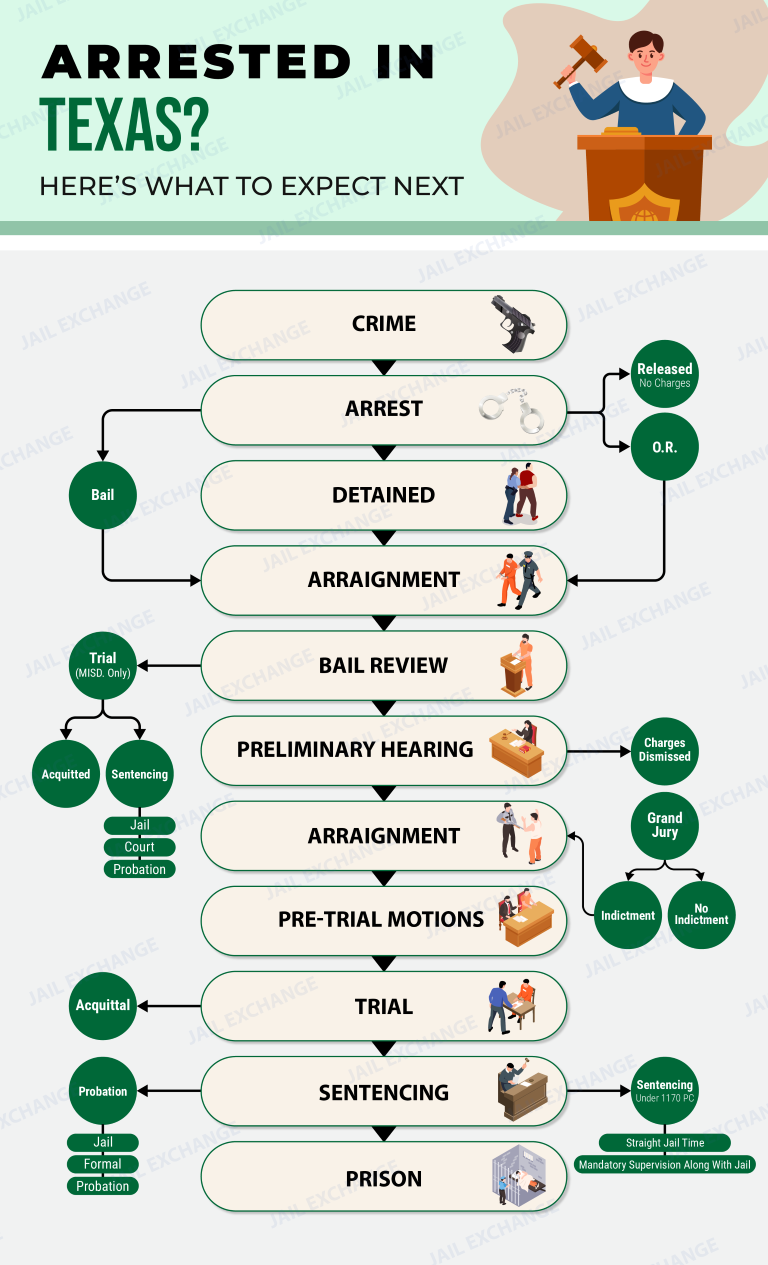
Lubbock, home of Texas Tech University and the largest city on the South Plains, is the county seat of Lubbock County. Class C offenses go to four justice of the peace courts and to the municipal courts of Lubbock, Slaton, Wolfforth, Idalou, Shallowater, New Deal, Ransom Canyon and Buffalo Springs; the three numbered County Courts at Law decide Class A and B misdemeanors; and felonies go to six district courts, the 72nd, 99th, 137th, 140th, 237th and 364th. The Lubbock County Criminal District Attorney prosecutes misdemeanors and felonies alike. Adults arrested anywhere in the county are booked into the Lubbock County Detention Center, run by the Sheriff.
- Lubbock County Courthouse (district courts, county courts at law, justice courts and clerks), 904 Broadway, Lubbock, TX 79401; mailing address P.O. Box 10536, Lubbock, TX 79408
- Lubbock County District Clerk (felony case files), 904 Broadway, Suite 105, (806) 775-1585
- Lubbock County Clerk (misdemeanor case files for the county courts at law), 904 Broadway, Suite 207, (806) 775-1076
- Lubbock County Criminal District Attorney (all felony and misdemeanor prosecutions), (806) 775-1100
- Lubbock County Court Magistrate (magistrate warnings and release decisions for people in custody), (806) 775-1700
- Lubbock County Detention Center (Lubbock County Sheriff's Office), 3502 North Holly Street, Lubbock, TX; inmate mail P.O. Box 10535, Lubbock, TX 79408; (806) 775-1400
- Lubbock Private Defenders Office (managed assigned counsel program for indigent defendants), 1401 Crickets Avenue, Lubbock, TX 79401
Which court hears your case. Class C misdemeanors are the offenses punished by a fine alone, such as traffic violations, public intoxication, minor in possession, theft under $100 and assault by offensive contact. A ticket written by Lubbock police, or by officers in one of the smaller cities, goes to that city's municipal court; a ticket written by a deputy or a state trooper generally goes to the Justice of the Peace court for the precinct. Prosecutors file Class A and B misdemeanors, a first DWI among them, in one of the three Lubbock County Courts at Law (No. 1, No. 2 or No. 3); in Lubbock County these criminal cases are handled by the county courts at law rather than by the County Judge. Felonies start with magistrate warnings at the jail and, after a Lubbock County grand jury indicts, are assigned to one of the six district courts. Most criminal felony dockets are concentrated in the 137th, 140th and 364th District Courts, while the 72nd (which also serves Crosby County), 99th and 237th carry larger civil and family dockets.
Where pretrial inmates are held. The Lubbock County Detention Center, the large modern jail the Sheriff operates in north Lubbock, holds people arrested by the Sheriff's Office, Lubbock police, Texas Tech police, the Department of Public Safety and the police departments of Slaton, Wolfforth and the other small cities. People stay there until they post bail, are released on a personal bond, or have their cases resolved. Call the detention center at (806) 775-1400 to confirm whether someone is in custody, the charges and the bond amounts.
- Local courts in Lubbock County (justice of the peace, municipal and county courts)
- Lubbock County courthouses and offices
- What happens after an arrest in Lubbock County
- The Lubbock County Detention Center
- Public defender and court-appointed lawyers
- The Criminal District Attorney and diversion
- Specialty courts in Lubbock County
- Misdemeanor (for example, theft, a first DWI, assault causing bodily injury, criminal trespass)
- Felony (for example, burglary, felony theft, drug possession or delivery, aggravated assault)
- Violent felony (for example, murder, sexual assault, aggravated robbery)
- Juveniles (under 17) arrested in Lubbock County
- Federal cases (U.S. District Court) from Lubbock County
Local courts in Lubbock County (justice of the peace, municipal and county courts)
Lubbock County's four justices of the peace all keep their courtrooms in the county courthouse on Broadway rather than in the outlying towns. Besides Class C cases, they hear evictions and small claims, issue arrest and search warrants and share magistrate duty with the court magistrate for people booked into the Lubbock County Detention Center, including setting bond.
Justice of the Peace courts
- Precinct 1, Lubbock County Courthouse, 904 Broadway, Room 110, Lubbock, TX 79401, (806) 775-1547
- Precinct 2, Lubbock County Courthouse, 904 Broadway, Room 113, Lubbock, TX 79401, (806) 775-1560
- Precinct 3, Lubbock County Courthouse, 904 Broadway, Room 111, Lubbock, TX 79401, (806) 775-1328
- Precinct 4, Lubbock County Courthouse, 904 Broadway, Room 121, Lubbock, TX 79401, (806) 775-1540
Municipal courts
- Lubbock Municipal Court, 915 Avenue J (P.O. Box 2000), Lubbock, TX 79457, (806) 775-2473
- Slaton Municipal Court, Slaton City Hall, 130 South 9th Street, Slaton, TX 79364, (806) 828-2004
- Wolfforth Municipal Court, City of Wolfforth Municipal Building, 302 Main Street (P.O. Box 36), Wolfforth, TX 79382, (806) 855-4120
- Idalou Municipal Court, 301 Main Street (P.O. Box 1277), Idalou, TX 79329, (806) 892-2531
- Shallowater Municipal Court, P.O. Box 246, Shallowater, TX 79363, (806) 832-4521
- New Deal Municipal Court, P.O. Box 126, New Deal, TX 79350, (806) 746-6399
- Ransom Canyon Municipal Court, 24 Lee Kitchens Drive, Ransom Canyon, TX 79366, (806) 829-2470
- Buffalo Springs Municipal Court, 9999 High Meadows Road, Lubbock, TX 79404, (806) 790-4324
The Lubbock Municipal Court is by far the busiest of these and handles city ordinance cases, traffic tickets and Class C offenses written by Lubbock police. The address and first court date are printed on every citation.
County courts
- Lubbock County Court at Law No. 1, 904 Broadway, Lubbock, TX 79401; court staff (806) 775-1305
- Lubbock County Court at Law No. 2 (also home of the county's DWI Court), 904 Broadway, Lubbock, TX 79401; court staff (806) 775-1301
- Lubbock County Court at Law No. 3, 904 Broadway, Lubbock, TX 79401; court staff (806) 775-1321
- Lubbock County Court (constitutional county court; County Judge), 904 Broadway, Lubbock, TX 79401; case records through the County Clerk at (806) 775-1076
Class A and B misdemeanor cases, and appeals from justice and municipal courts that are not courts of record, are heard by the county courts at law. A person convicted in a justice court can appeal for a new trial within 10 days of the judgment.
Lubbock County courthouses and offices
Nearly all criminal court business in Lubbock County happens in downtown Lubbock, in and around the county courthouse at 904 Broadway. Knowing which office keeps which file saves time.
- Felony cases are heard in the district courtrooms of the courthouse. The District Clerk at (806) 775-1585 keeps the files, accepts bond paperwork and can give the next setting.
- Misdemeanor cases are heard in the three county courts at law, also at 904 Broadway. The County Clerk at (806) 775-1076 keeps the records and collects fines and court costs.
- Justice court cases are in the four JP courtrooms inside the courthouse; each precinct has its own phone line, listed above.
- City cases from Lubbock police go to the Lubbock Municipal Court on Avenue J, a few blocks away.
- Magistration for people in custody is handled at the Lubbock County Detention Center by the court magistrate's office, (806) 775-1700.
- Juvenile cases are handled at the Lubbock County Juvenile Justice Center on North Akron Avenue, not at the main courthouse.
Court coordinators for each district court and county court at law set hearings and can answer questions about dockets, but they cannot give legal advice.
What happens after an arrest in Lubbock County
The first day after an arrest in Lubbock County follows a fairly standard sequence, whether the arrest is by city police, deputies or troopers.
- Booking. The arresting officer brings the person to the Lubbock County Detention Center, where jail staff record identifying information, take fingerprints and photographs, inventory property and run warrant checks.
- Magistration. Within 48 hours, and usually much sooner, the person is brought before the court magistrate or a justice of the peace. The magistrate reads the article 15.17 warnings, explains the charges and the right to stay silent, and asks whether the person wants a lawyer appointed.
- Release decision. The magistrate reviews a public safety report, required since the 2021 Damon Allen Act, and sets bail. Options include a cash bond, a surety bond through a licensed bail bondsman (who charges a nonrefundable premium), or a personal bond, which may come with conditions such as reporting, alcohol monitoring or an ignition interlock. People charged with violent offenses cannot receive personal bonds, and Under a constitutional amendment Texas voters approved in 2025, judges in Lubbock County can deny bail in some violent-crime cases.
- Request for counsel. A person who asks for a court-appointed lawyer fills out a financial affidavit. If eligible, the person is assigned a lawyer through the Lubbock Private Defenders Office.
- Release or continued custody. Once bond is posted, the person is released with a court date. Someone who cannot post bond stays in the detention center, and under article 17.151 must generally be released on personal bond or reduced bail if the State is not ready for trial within 90 days on a felony (shorter periods apply to misdemeanors), with exceptions for violent offenses.
Family-violence arrests usually bring a magistrate's order for emergency protection, which can bar contact with the alleged victim and order the person to stay away from the home for weeks or months.
The Lubbock County Detention Center
The Lubbock County Detention Center is one of the largest county jails in West Texas and the only adult county jail in Lubbock County. It holds people awaiting trial on state charges, people serving short county sentences, and people waiting for transfer to state prison.
- Location: 3502 North Holly Street, Lubbock
- Phone: (806) 775-1400
- Inmate mail: P.O. Box 10535, Lubbock, TX 79408 (include the person's full name and jail number)
Families can confirm custody, charges and bond amounts by phone. Video visitation, commissary deposits and inmate phone accounts run through the jail's contracted vendors, and visitors must follow the jail's dress code and identification rules. People arrested in Lubbock County on warrants from other counties are held at the detention center until the other county picks them up.
Public defender and court-appointed lawyers
Lubbock County provides lawyers for people who cannot afford one mainly through a managed assigned counsel program, the Lubbock Private Defenders Office, 1401 Crickets Avenue. Rather than employing all of the attorneys itself, the office screens and assigns qualified private lawyers to felony and misdemeanor cases, monitors their caseloads and provides caseworkers and client advocates, including help for clients with serious mental illness or intellectual disabilities. The Texas Indigent Defense Commission helps fund the program.
- How to ask for a lawyer: tell the magistrate at the Lubbock County Detention Center that you want appointed counsel, and complete the financial affidavit. People who are out on bond can ask the court handling their case, through the District Clerk at (806) 775-1585 for felonies or the County Clerk at (806) 775-1076 for misdemeanors.
- Capital cases: the Regional Public Defender for Capital Cases, which is based in Lubbock and serves most rural Texas counties, represents many defendants facing capital murder charges.
- Eligibility: the decision depends on income, household size and the seriousness of the charge. A person who later can pay may be ordered to reimburse part of the cost.
The Criminal District Attorney and diversion
Lubbock County has a Criminal District Attorney, which means one office prosecutes felonies, misdemeanors, juvenile cases and certain civil matters. The office, reachable at (806) 775-1100, reviews arrests, presents felony cases to grand juries and handles plea negotiations.
- Pretrial diversion: for some first-time, lower-level offenders, the Criminal District Attorney may agree to set the case aside while the person completes conditions such as classes, community service and restitution; if the person completes the program, the case is dismissed and may be eligible for expunction.
- DWI alternatives: first-time DWI defendants may be considered for a pretrial intervention or for the county's DWI Court, depending on the facts and the person's record.
- Deferred adjudication: commonly offered on first misdemeanors and many first felonies; if the person finishes supervision, there is no final conviction and an order of nondisclosure may be possible.
- Victim services: the office's victim assistance staff notify victims of hearings and help with impact statements and protective orders.
Specialty courts in Lubbock County
Lubbock County operates several specialty courts that combine close judicial supervision with treatment, aimed at defendants whose cases are driven by addiction or other underlying problems.
- DWI Court: run by the judge of County Court at Law No. 2, this program supervises repeat or high-risk DWI offenders with frequent court appearances, alcohol monitoring, treatment and incentives for progress.
- Adult Drug Court: presided over by the judge of the 364th District Court, it takes felony drug offenders who agree to an intensive program of treatment, testing and regular status hearings in exchange for a reduced or dismissed charge on completion.
- Mental health support: for defendants with serious mental illness or intellectual disabilities, the Lubbock Private Defenders Office provides caseworkers who connect clients with treatment, which can shape release conditions and plea terms.
Entry into a specialty court usually requires the agreement of the prosecutor and the judge, a screening interview and a plea or agreement on the underlying charge. A defense lawyer can say whether a particular case might qualify.
Misdemeanor (for example, theft, a first DWI, assault causing bodily injury, criminal trespass)
The misdemeanor caseload in Lubbock County is heavy: DWI arrests on the Marsha Sharp Freeway and Loop 289, shoplifting from big-box stores, family-violence assaults, marijuana and paraphernalia cases, and alcohol-related offenses connected to the university. Every one begins with booking at the Lubbock County Detention Center.
Getting out and the first setting
After magistration, most misdemeanor defendants are released on a surety bond, a cash bond or a personal bond, often with conditions. The bond paperwork lists the court and the first setting, usually an arraignment in one of the three county courts at law.
How a misdemeanor case moves
The Criminal District Attorney's misdemeanor division files an information with the County Clerk, and the case is assigned to County Court at Law No. 1, 2 or 3. At arraignment, the defendant enters a plea and, if eligible, has a lawyer appointed through the Lubbock Private Defenders Office. Many cases resolve at pretrial settings through plea agreements, diversion or dismissal. A defendant who insists on trial is entitled to six jurors, who must agree unanimously, or may waive a jury and have the judge decide.
Penalties for typical charges
- Theft: below $100 it is Class C; from $100 to $750 it is Class B, punishable by up to 180 days in jail and a $2,000 fine; from $750 to $2,500 it is Class A, punishable by up to a year in jail and a $4,000 fine.
- Assault causing bodily injury: Class A. A finding of family violence can turn a second offense into a felony, and the federal Gun Control Act then bars possessing firearms.
- Criminal trespass: Class B in most situations, and Class A when it involves a home or the person has a deadly weapon.
- First DWI: Class B, carrying a jail range from 72 hours up to 180 days plus a fine that can reach $3,000; Class A whenever a breath or blood test comes back at 0.15 or higher; and a mandatory six days in jail if police find an open container. Expect a separate administrative license suspension, a DWI education program, possible ignition interlock as a bond or probation condition, and a state fine after conviction. Probation is common for first offenders.
Other outcomes include deferred adjudication, which leaves no conviction on successful completion, and orders of nondisclosure for eligible cases. A Lubbock County Class A or B case usually takes two to six months, sometimes longer when lab results are needed.
Felony (for example, burglary, felony theft, drug possession or delivery, aggravated assault)
Felony cases in Lubbock County are prosecuted by the Criminal District Attorney's felony trial teams and heard in the district courts at 904 Broadway, primarily the 137th, 140th and 364th.
- Magistration. The magistrate sets bail after reviewing the public safety report. A defendant who cannot post it remains at the Lubbock County Detention Center.
- Appointed counsel. Felony defendants who cannot afford a lawyer are assigned one through the Lubbock Private Defenders Office. Requests can also be made through the District Clerk at (806) 775-1585.
- Grand jury. Lubbock County grand juries meet regularly and hear felony cases presented by prosecutors. They can indict or decline to indict. A defendant can waive indictment and plead on an information, typically when a plea deal is in place.
- The 90-day rule. A person held on a felony is generally entitled to release on personal bond or reduced bail if the State is not ready for trial within 90 days, except in violent-offense cases.
- Arraignment, plea or trial. After indictment, the case is set for arraignment and pretrial hearings. Most felonies end in plea agreements, but a trial requires 12 jurors who must all agree, and the defendant can elect jury sentencing.
Felony punishment levels
- State jail felony: 180 days to 2 years in a state jail facility, for crimes such as theft of $2,500 to $30,000 or possession of less than one gram of a Penalty Group 1 drug.
- Third degree: 2 to 10 years. Second degree: 2 to 20 years, the range used for most Lubbock burglaries of a residence and most aggravated assaults. First degree: 5 to 99 years or life. Lubbock County juries and judges may also add a fine of as much as $10,000 at every one of these levels.
- Drug cases: graded by penalty group and weight; fentanyl and methamphetamine cases with larger weights can reach first degree.
Prior felony convictions can enhance the range, including under the habitual offender laws. People convicted of "3g" offenses must serve half the sentence, with a two-year minimum, before parole eligibility; most others become eligible after about a quarter with good time. Deferred adjudication or probation is common for first-time felony defendants, and the Adult Drug Court is an option for some drug cases. Felonies in Lubbock County typically take six to eighteen months.
Violent felony (for example, murder, sexual assault, aggravated robbery)
Homicides, aggravated robberies and serious sexual assaults in Lubbock County are investigated by Lubbock police, the Sheriff's Office or the Texas Rangers, and prosecuted by the Criminal District Attorney. The Damon Allen Act bars personal bonds for violent offenses, and bail amounts are often high.
- Capital murder: death, if the Criminal District Attorney seeks it, or life without parole. Lubbock County has sought the death penalty in a number of cases over the years.
- Murder: first degree; a Lubbock jury can return any sentence between 5 and 99 years, or life.
- Sexual assault: second degree. Aggravated sexual assault: first degree, with Texas law requiring at least 25 years in certain cases where the child is very young.
- Aggravated robbery: first degree, and as a "3g" crime it keeps the defendant from parole review until half the term is done.
Defendants charged with these offenses usually remain in the Lubbock County Detention Center through trial. Capital cases require specially qualified defense counsel, and the Regional Public Defender for Capital Cases, based in Lubbock, often handles them. Victims have rights under article I, section 30 of the Texas Constitution, including notice, the right to be present and the right to give an impact statement. Expect a violent felony case in the 137th, 140th or 364th District Court to last one to three years.
Juveniles (under 17) arrested in Lubbock County
Texas treats children 10 through 16 at the time of the offense as juveniles. A 17-year-old arrested in Lubbock County, including a high school senior, is booked into the adult detention center and charged in adult court.
Intake at the Juvenile Justice Center
Juveniles taken into custody are brought to the Lubbock County Juvenile Justice Center, 2025 North Akron Avenue, Lubbock, TX 79415, (806) 775-1800, which is open around the clock. Juvenile probation intake officers decide whether to release the child to a parent, offer an informal disposition or refer the case to the Criminal District Attorney, which files petitions in the court the Lubbock County Juvenile Board has designated as the juvenile court. Juvenile hearings are typically held at the Juvenile Justice Center.
Detention
The Juvenile Justice Center includes the county's secure juvenile detention facility, which can also take youths from smaller South Plains counties by agreement. A child who is detained must have a detention hearing within two working days, and the judge must keep reviewing detention while the case is pending.
Possible outcomes
- For a first, low-level referral, intake may offer supervisory caution or a deferred prosecution contract.
- Probation with conditions such as school attendance, counseling, curfew, community service and restitution, or a residential placement.
- Commitment to the Texas Juvenile Justice Department (TJJD), or a determinate sentence for serious offenses that can be completed in adult prison.
- Certification to stand trial in adult court, which the juvenile judge may generally order at age 14 or older for capital and first-degree felonies (and certain aggravated drug felonies), and at 15 or older for other felonies.
The juvenile court appoints a lawyer if the family cannot afford one. Juvenile records are confidential, and most can be sealed after the young person meets the legal requirements.
Federal cases (U.S. District Court) from Lubbock County
Lubbock County is the seat of the Lubbock Division of the Northern District of Texas, which serves 19 South Plains counties. Federal cases are heard at the George H. Mahon Federal Building on Texas Avenue in downtown Lubbock.
- U.S. District Court clerk, Lubbock: George H. Mahon Federal Building, 1205 Texas Avenue, Room 209, (806) 472-1900
- U.S. Attorney's Lubbock office: George Mahon Federal Building, 1205 Texas Avenue, Suite 700, (806) 472-7351
- Federal Public Defender for the Northern District of Texas, which keeps a Lubbock office, or a private Criminal Justice Act (CJA) panel lawyer when the office has a conflict
What brings a case to federal court
As the regional hub, Lubbock sees steady federal caseloads in drug trafficking (particularly methamphetamine and fentanyl), firearms possession by people with felony records, child exploitation, bank and health care fraud, and robbery of banks or businesses involved in interstate commerce. Local and federal task forces often decide together which system will handle a case.
The federal process
At the first appearance, held in the Mahon Federal Building, a federal magistrate judge reads the charges and decides whether the defendant qualifies for appointed counsel. Federal court has no commercial bail; when the government seeks detention, a hearing is generally held within three court days, and under the Bail Reform Act the magistrate judge either releases the defendant on conditions supervised by U.S. Pretrial Services or orders detention. Detained federal defendants are housed by the U.S. Marshals in county or contract jails in the region. The grand jury must indict within 30 days of arrest on a complaint, and the Speedy Trial Act sets 70 days for trial, though extensions are routine. A federal jury has 12 members who must be unanimous, but most cases end in guilty pleas.
Sentencing
The court's probation office prepares a presentence report, and the district judge considers the advisory Sentencing Guidelines and any mandatory minimum. Federal prisoners do not receive parole and serve about 85 percent of the sentence in the Bureau of Prisons, followed by supervised release. A Lubbock County federal appeal goes to the U.S. Court of Appeals for the Fifth Circuit.
For a Lubbock County resident already in federal prison, the Federal Bureau of Prisons inmate locator gives the facility; search with a name or register number. Someone in U.S. Marshals custody awaiting trial in a county jail may also appear on that jail's inmate roster. Federal prosecution of juveniles is rare.
This page provides general information about criminal cases in Lubbock County and is not legal advice. Court assignments, phone numbers and jail procedures change. Anyone facing a criminal charge should consult a defense lawyer; a person who cannot afford one can ask the magistrate for appointed counsel through the Lubbock Private Defenders Office, or contact the District Clerk at (806) 775-1585 (felonies) or the County Clerk at (806) 775-1076 (misdemeanors).