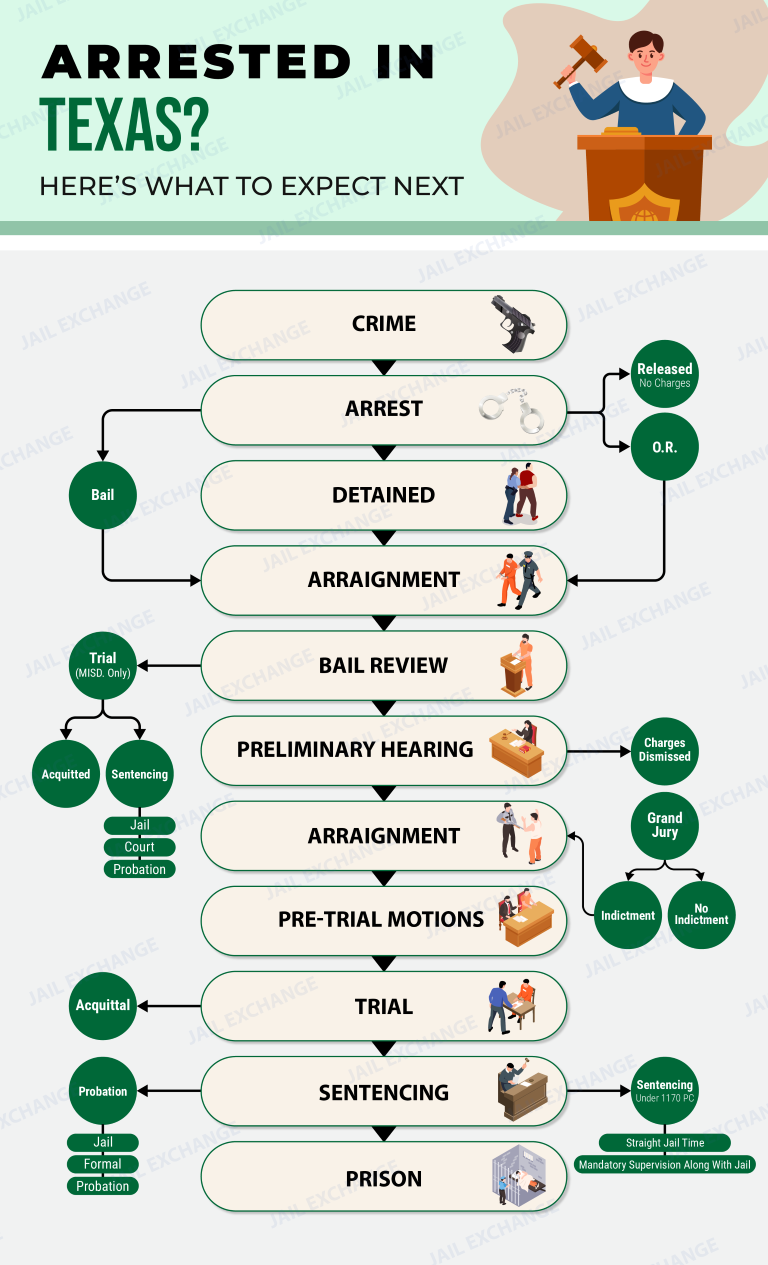
Laredo, the busiest inland port on the U.S.-Mexico border, is the county seat of Webb County, and nearly every criminal case in the county is heard at the Webb County Justice Center at 1110 Victoria Street downtown. Class C cases go to six justice of the peace courts or the Laredo and El Cenizo municipal courts; Webb County's two statutory county courts, County Court at Law No. 1 and No. 2, try Class A and B misdemeanors; and felonies are heard in the 49th, 111th, 341st and 406th District Courts. The Webb County Attorney prosecutes misdemeanors, and the 49th Judicial District Attorney, whose district covers Webb and Zapata counties, prosecutes felonies. Adults arrested in the county are held at the Webb County Jail, run by the Sheriff a block from the Justice Center.
- 49th, 111th, 341st and 406th District Courts and Webb County District Clerk, Webb County Justice Center, 1110 Victoria Street, Suite 203, Laredo, TX 78040, (956) 523-4268
- County Court at Law No. 1, County Court at Law No. 2 and the constitutional Webb County Court, 1110 Victoria Street, Suite 201, Laredo, TX 78040, (956) 523-4266
- 49th Judicial District Attorney (felonies), 1110 Victoria Street, Suite 404, Laredo, TX 78040, (956) 523-4900
- Webb County Attorney (misdemeanors and juvenile cases), Webb County Justice Center, Laredo, TX 78040
- Webb County Public Defender's Office, 1110 Washington Street, Suite 102, Laredo, TX 78040, (956) 523-4101
- Webb County Sheriff's Office, 902 Victoria Street, Laredo, TX 78040, (956) 523-4500
- Webb County Jail, 902 Victoria Street, Laredo, TX 78040, (956) 523-4500
Which court hears your case. Class C misdemeanors, which can bring only a fine, include traffic tickets, public intoxication, minor alcohol violations, disorderly conduct, shoplifting of less than $100 and offensive-contact assaults with no injury. Laredo police file them in the Laredo Municipal Court; El Cenizo officers use the El Cenizo Municipal Court; and deputies, constables and troopers file them in the Justice of the Peace court for the precinct. Class A and B misdemeanors, including a first DWI, theft from $100 to $2,500 and assault causing bodily injury, go to County Court at Law No. 1 or County Court at Law No. 2. Felonies begin with magistration at the jail and, after a Webb County grand jury indicts, are assigned to the 49th, 111th, 341st or 406th District Court. The 49th District also includes Zapata County, so that court's judge splits time between Laredo and Zapata.
Where pretrial inmates are held. The Webb County Sheriff operates the Webb County Jail at 902 Victoria Street in downtown Laredo, a few steps from the Justice Center. In the state's January 2022 jail report it had a capacity of 570, with roughly 450 people in custody, including some held under contract for other agencies. Laredo police, Sheriff's deputies, constables, DPS troopers and campus police at Texas A&M International University and Laredo College all bring arrested adults there, and a magistrate sets bail within 48 hours. Federal immigration and U.S. Marshals detainees in the Laredo area are mostly held in separate federal contract detention centers rather than the county jail. Call the Sheriff's Office at (956) 523-4500 for custody information.
- Local courts in Webb County (justice of the peace, municipal and county courts)
- After an arrest in Webb County: booking, magistration and release
- Public defender and appointed lawyers in Webb County
- Misdemeanor (for example, theft, a first DWI, assault causing bodily injury, criminal trespass)
- Felony (for example, burglary, felony theft, drug possession or delivery, aggravated assault)
- Violent felony (for example, murder, sexual assault, aggravated robbery)
- Juveniles (under 17) arrested in Webb County
- Federal cases (U.S. District Court) from Webb County
Local courts in Webb County (justice of the peace, municipal and county courts)
Webb County's justice of the peace courts are organized into four precincts, with two judges ("places") each in Precincts 1 and 2. Justices of the peace hear Class C cases, evictions, small claims and debt claims, and they also take turns as magistrates for people booked into the Webb County Jail, setting bond and issuing warrants.
Justice of the Peace courts
- Justice of the Peace, Precinct 1, Place 1, Webb County Justice Center, 1110 Victoria Street, Suite 106, Laredo, TX 78040, (956) 523-4300
- Justice of the Peace, Precinct 1, Place 2, Webb County Justice Center, 1110 Victoria Street, Suite 103, Laredo, TX 78040, (956) 523-4303
- Justice of the Peace, Precinct 2, Place 1, 901 South Milmo Avenue, Laredo, TX 78043, (956) 721-2502
- Justice of the Peace, Precinct 2, Place 2, 901 South Milmo Avenue, Laredo, TX 78043, (956) 523-5330
- Justice of the Peace, Precinct 3 (eastern Webb County, including the Bruni and Oilton area), mail: P.O. Box 55, Oilton, TX 78371, (956) 523-4850
- Justice of the Peace, Precinct 4, 8501 San Dario Avenue, Laredo, TX 78045, (956) 523-4840
Municipal courts
- Laredo Municipal Court, 4610 Maher Avenue, Laredo, TX 78041 (mail: P.O. Box 579, Laredo, TX 78042), (956) 794-1680
- El Cenizo Municipal Court, 507 Cadena Street, El Cenizo, TX 78046, (956) 712-9107
The Laredo Municipal Court handles by far the most Class C cases in Webb County, including city ordinance violations. Tickets from Rio Bravo, the colonias south of Laredo, Bruni, Oilton, Mirando City and the ranchlands along Interstate 35 and U.S. 59 are filed in the court printed on the citation, usually a justice court for the precinct.
County courts
- Webb County Court at Law No. 1 (Class A and B misdemeanors; appeals from justice and municipal courts), 1110 Victoria Street, Suite 201, Laredo, TX 78040, (956) 523-4266
- Webb County Court at Law No. 2 (Class A and B misdemeanors), 1110 Victoria Street, Suite 201, Laredo, TX 78040, (956) 523-4266
- Webb County Court (constitutional county court, County Judge), 1110 Victoria Street, Laredo, TX 78040, (956) 523-4266
District courts
- 49th District Court, 111th District Court, 341st District Court and 406th District Court (felonies), 1110 Victoria Street, Laredo, TX 78040; District Clerk, Suite 203, (956) 523-4268
A Class C conviction from a Webb County justice court, or from a municipal court that is not a court of record, can be appealed to a county court at law for a new trial, usually by filing an appeal bond within 10 days of the judgment.
After an arrest in Webb County: booking, magistration and release
Almost every adult arrest in Webb County ends at the Sheriff's jail on Victoria Street, whether the arrest was made by Laredo police on San Bernardo Avenue, by deputies in the eastern ranch country or by troopers on Interstate 35. At booking, officers record the charges, take fingerprints and photographs, check for warrants and holds (including immigration detainers), and inventory property.
Magistration. Within 48 hours of arrest, a magistrate, usually a justice of the peace on rotation, must give the arrested person the warnings required by Article 15.17 of the Code of Criminal Procedure: the charge, the right to remain silent, the right to a lawyer and the right to request an appointed lawyer. The magistrate then sets bail and any conditions. Hearings are commonly conducted in Spanish and English, and interpreters are available.
Types of bond. In Laredo a person can be released on a cash bond (the full amount paid to the Sheriff), a surety bond through a licensed bail bond company (usually for a nonrefundable fee), or a personal bond (a written promise to appear, often supervised by Webb County Pretrial Services with check-ins or monitoring). Bail bond companies in Webb County are licensed by the county's Bail Bond Board, (956) 523-4972. The 2021 Damon Allen Act requires the magistrate to review a public safety report and prohibits personal bonds for people charged with violent offenses. Common conditions include no-contact orders in family-violence cases, ignition interlocks after DWI arrests, and GPS monitoring.
If bond is not posted. A person who stays in jail can ask a judge to lower bail through a bond reduction hearing. If prosecutors are not ready for trial within 90 days of detention on a felony (shorter periods apply for misdemeanors), the defendant can generally seek release on a personal bond or reduced bail, unless charged with a violent offense. People with immigration detainers may be transferred to federal custody when released from the county case, which can complicate posting bond.
First court date. After release or once a lawyer is appointed, misdemeanor cases are set in a County Court at Law and felony cases wait for grand jury action before a district court setting. The jail can confirm release status, and the District Clerk at (956) 523-4268 or the county court office at (956) 523-4266 can provide case numbers and upcoming dates.
Public defender and appointed lawyers in Webb County
Webb County is one of the Texas border counties with a full-time public defender. The Webb County Public Defender's Office, 1110 Washington Street, Suite 102, Laredo, TX 78040, (956) 523-4101, represents adults who cannot afford a lawyer in misdemeanor cases in the County Courts at Law and in felony cases in the district courts. The office is open Monday through Friday during business hours.
How to get a lawyer. The request is usually made at magistration: the magistrate asks whether the person wants a court-appointed lawyer and has the person fill out a financial affidavit. The court reviews income, household size and expenses under the county's indigent defense plan, which is filed with the Texas Indigent Defense Commission. If the person qualifies, the court appoints the Public Defender's Office or, when the office has a conflict (for example, when it already represents a co-defendant), a private attorney from the court's appointment list. People released on bond who did not request counsel at the jail can apply through the court where their case is pending.
Capital and complex cases. Death-penalty cases require lawyers who meet state capital-qualification standards, and the court may appoint a regional capital public defender or other qualified counsel. Webb County juvenile cases are handled under the juvenile court's own appointment procedures.
Hiring a private lawyer. Anyone may hire a private defense attorney at any time, and a defendant who later becomes able to pay may be ordered to repay part of the cost of appointed counsel. A lawyer, whether appointed or hired, is especially important before accepting any plea, because a conviction or deferred adjudication can carry immigration consequences for noncitizens, which are common concerns in Laredo cases.
Misdemeanor (for example, theft, a first DWI, assault causing bodily injury, criminal trespass)
A misdemeanor arrest in Laredo, such as for a first DWI, theft, assault causing bodily injury or criminal trespass, leads to booking at the Victoria Street jail and magistration within 48 hours. Many people are released within a day on a cash, surety or personal bond. In family-violence cases the magistrate often issues an emergency protective order that bars contact with the alleged victim and may require leaving the shared home.
Prosecutor and courts. The Webb County Attorney prosecutes Class A and B misdemeanors in County Court at Law No. 1 and No. 2. The County Attorney may offer pretrial diversion to some first-time offenders, which usually involves classes, community service or restitution in exchange for dismissal. The county court office at (956) 523-4266 can confirm settings.
Penalties. In the Webb County Courts at Law, a Class B misdemeanor is punished by up to 180 days in jail and a fine of up to $2,000, and a Class A by up to a year and $4,000. Thefts of $100 to $750 are Class B; $750 to $2,500 is Class A. Assault causing bodily injury is a Class A offense, often charged after a family dispute, with tougher penalties for repeat family violence. Criminal trespass is generally Class B and becomes Class A if it involves a habitation or a deadly weapon.
First DWI in Laredo. A first DWI in Webb County is a Class B misdemeanor with a range of 72 hours to 180 days in jail and a fine of up to $3,000; an alcohol concentration of 0.15 or more raises it to Class A, and an open container carries a six-day jail minimum. The Department of Public Safety also starts an administrative license revocation case, which must be contested quickly. First offenders often receive probation with a DWI education program and may be ordered to install an ignition interlock. A state traffic fine applies on conviction. Noncitizen drivers should get legal advice about immigration consequences before resolving a DWI case.
Outcomes and timing. Webb County misdemeanors can end in dismissal, pretrial diversion, deferred adjudication (probation with no conviction if completed), probation after conviction, a fine, or county jail time with credit for time served. Some people who complete deferred adjudication may later qualify for an order of nondisclosure. Class A and B cases in the Courts at Law typically take two to six months, while Class C cases in the justice and municipal courts are often resolved in a few weeks.
Appointed lawyers. Indigent misdemeanor defendants in Webb County are generally represented by the Public Defender's Office, (956) 523-4101, or by an appointed private attorney when the office has a conflict. Ask for a lawyer at magistration.
Felony (for example, burglary, felony theft, drug possession or delivery, aggravated assault)
Felony arrests in Webb County, including burglary, felony theft, drug possession or delivery and aggravated assault, go through the same booking and magistration as misdemeanors, but bail amounts are higher and release conditions are stricter. Under the Damon Allen Act, the magistrate must review a public safety report and cannot grant a personal bond to a defendant charged with a violent offense. If the State is not ready for trial within 90 days of a felony detention, the defendant can generally request release on a personal bond or reduced bail, unless the charge is violent.
Grand jury. The 49th Judicial District Attorney's office, (956) 523-4900, reviews felony cases and presents them to a Webb County grand jury. If the grand jury returns an indictment, the case is assigned to one of the four district courts for arraignment and pretrial hearings. Some defendants waive indictment and proceed on an information as part of a plea agreement. The District Attorney's office may offer pretrial diversion in some lower-level felony cases, particularly for first-time offenders.
Penalty ranges. A Webb County state jail felony carries 180 days to two years in a state jail facility; a third-degree felony two to ten years in prison; a second-degree felony two to twenty years; and a first-degree felony five to 99 years or life, with fines up to $10,000 at each level. Stolen property worth $2,500 to $30,000 makes a theft a state jail felony in the Laredo courts. Burglary of a habitation and most aggravated assaults heard in the Laredo district courts are second-degree felonies. Drug offenses are graded by penalty group and weight, from a state jail felony for small amounts to first-degree felonies for large quantities, and prior felony convictions can enhance the punishment.
Border-related state cases. Because Laredo sits on major smuggling corridors, Webb County district courts see state charges for smuggling of persons, drug trafficking, money laundering and evading arrest after pursuits on I-35 and U.S. 83. Many such cases are prosecuted federally instead; the decision depends on the agency that made the arrest and the amounts involved. A person charged in state court may also face a federal case for the same conduct.
Plea or trial. Most Webb County felony cases end in a plea bargain for deferred adjudication, community supervision, state jail time or prison. A Webb County felony trial is decided by twelve jurors who must all agree, and the accused can ask those jurors to assess punishment. Prison inmates generally become eligible for parole after serving about one-quarter of the sentence with good time; "3g" offenses require half the sentence, at least two years. Felony cases usually take six to eighteen months, longer when lab testing or multiple co-defendants are involved.
Appointed counsel. The Webb County Public Defender's Office represents many indigent felony defendants; the district courts appoint private attorneys when the office has a conflict. The District Clerk at (956) 523-4268 can tell a family which lawyer has been appointed.
Violent felony (for example, murder, sexual assault, aggravated robbery)
Murder, sexual assault, aggravated robbery and other violent felonies in Webb County are typically investigated by the Laredo Police Department, the Sheriff's Office or the Texas Rangers and prosecuted by the 49th Judicial District Attorney in one of the four district courts. A personal bond is barred for violent offenses, so release generally requires a large cash or surety bond, often with GPS monitoring and no-contact orders. Texas voters approved a 2025 constitutional amendment that lets judges deny bail in some violent-crime cases, so a Laredo judge may hold certain defendants without bail until trial.
Punishment. Capital murder is punished by life without parole or death, and Webb County prosecutors seek death only in exceptional cases. A murder conviction in a Laredo district court brings five to 99 years or life. Sexual assault is a second-degree felony; aggravated sexual assault is a first-degree felony, with a 25-year minimum for some offenses against young children. Aggravated robbery is a first-degree felony and a "3g" offense, so half the sentence must be served before parole eligibility.
What to expect. Serious violent cases in Laredo commonly take one to three years from arrest to resolution because of forensic testing, expert witnesses, discovery and plea negotiations. The defendant has the right to a unanimous 12-person jury and may elect jury sentencing. Crime victims have rights under Article I, Section 30 of the Texas Constitution, including the right to be notified of hearings, to confer with the prosecutor and to give an impact statement; the District Attorney's victim services staff can help Webb County victims and families.
Defense. Indigent defendants charged with violent felonies are represented by the Public Defender's Office or by appointed private attorneys qualified for the level of offense. Capital cases require capital-qualified counsel. Request a lawyer at magistration, or call the Public Defender at (956) 523-4101.
Juveniles (under 17) arrested in Webb County
In Texas, juvenile court covers children who were 10 through 16 years old at the time of the alleged offense; a 17-year-old arrested in Laredo is prosecuted as an adult. When a Webb County youth is taken into custody, the Webb County Juvenile Department (juvenile probation) conducts intake, contacts the parents and decides whether the child can be released or must be detained. The county's juvenile board designates the juvenile court, typically one of the district courts or a County Court at Law; the District Clerk at (956) 523-4268 can help families find the case.
Detention. Youths who must be held are generally detained at Webb County's juvenile facility, the Solomon P. Casseb Jr. Webb County Youth Village in Laredo. Within two working days the Webb County juvenile judge holds a detention hearing, where the child is entitled to a lawyer. The judge decides whether the youth can go home, often with conditions such as electronic monitoring or curfew, or must remain in detention.
The case. The Webb County Attorney typically reviews juvenile referrals and decides whether to file a petition alleging delinquent conduct; serious felony referrals may involve the District Attorney. Many cases end with deferred prosecution, a period of supervision without a formal finding. Others result in court-ordered probation, which can include counseling, school requirements and community service. Serious or repeated offenses can lead to commitment to the Texas Juvenile Justice Department (TJJD), and for certain grave offenses prosecutors may seek a determinate sentence that can begin in TJJD and later transfer to adult prison.
Certification to adult court. A Webb County juvenile judge may transfer a youth to adult criminal court after a hearing and a full diagnostic study. This is generally possible for a 14-year-old charged with a capital felony, a first-degree felony or certain aggravated controlled substance felonies, and for a 15- or 16-year-old charged with other felonies. Certification is uncommon.
Records. Juvenile records in Texas are generally confidential, and many can be sealed after the case ends. A lawyer is appointed for a child whose family cannot afford one.
Federal cases (U.S. District Court) from Webb County
Webb County is the center of the Laredo Division of the Southern District of Texas, one of the busiest federal criminal dockets in the country. Federal cases are heard at the United States Courthouse, 1300 Victoria Street, Laredo, TX 78040, (956) 723-3542, a short walk from the Webb County Justice Center. Because Laredo is a major border crossing, immigration offenses (especially illegal reentry after deportation), human smuggling and drug trafficking cases are very common, along with firearms smuggling to Mexico, money laundering and cargo-related fraud. Arrests by the Border Patrol, CBP officers at the ports of entry, Homeland Security Investigations and the DEA usually go straight to federal court.
Prosecutors and defenders. The U.S. Attorney's Office for the Southern District of Texas has a Laredo office, (956) 723-6523 (mailing address P.O. Box 1179, Laredo, TX 78042). Laredo federal defendants without money for counsel are assigned the Federal Public Defender for the Southern District or a private lawyer from the Criminal Justice Act panel.
The federal process. After a federal arrest in Webb County, the defendant appears before a U.S. magistrate judge in Laredo, often within a day or two. Federal court does not use the commercial bail bonds found in county court. If the government seeks detention, a hearing is usually held within three court days, and the magistrate decides under the Bail Reform Act whether to release the defendant on conditions supervised by U.S. Pretrial Services or order detention. Noncitizens charged with immigration offenses are usually detained because of immigration holds. Laredo prosecutors who start a case by complaint must indict within 30 days, and the 70-day Speedy Trial Act deadline is routinely extended. The great majority of Laredo Division defendants plead guilty, many under fast-track agreements in reentry cases, and a trial goes to twelve jurors whose verdict must be unanimous. Sentencing follows a presentence report, with the advisory Sentencing Guidelines and any mandatory minimum (common in drug and smuggling cases) applying. Because federal parole was abolished, a Laredo federal prisoner serves roughly 85 percent of the term in the Bureau of Prisons before supervised release begins; noncitizens are typically deported after serving their sentences. Appeals go to the U.S. Court of Appeals for the Fifth Circuit.
Federal pretrial detainees in Laredo are held in contract detention facilities and county jails used by the U.S. Marshals. Laredo families can search the Federal Bureau of Prisons inmate locator for a Webb County defendant by name or register number. Someone awaiting federal trial in a county jail that boards prisoners for the Marshals Service may be listed on that jail's roster as well. Juveniles are rarely prosecuted federally, although teenagers caught in smuggling cases are sometimes referred to federal authorities.
This guide to criminal courts in Webb County and Laredo is general information, not legal advice. Phone numbers, court assignments and procedures can change; confirm with the District Clerk at (956) 523-4268 or the county court office at (956) 523-4266. Anyone who cannot afford a lawyer may request one at magistration or through the Webb County Public Defender's Office at (956) 523-4101.