
Box Elder County Correctional Facility
Box Elder County Correctional Facility
Jail Phone Number
435-734-3300Box Elder County Inmate Search: Custody and Family Contact
This page helps families locate an adult in Box Elder County custody and arrange contact without confusing a court record with a jail record. The Box Elder County Correctional Facility is operated by the Sheriff; its contact lobby is at 52 South 1000 West, Brigham City, UT 84302. Booking provides current inmate, charge and bail information by phone.
Use the custody information link as an initial resource, then use Booking for a current answer about this jail. The county says its jail roster is not available online. The questions below explain the local postcard rules, video-only visits, account deposits, photo requests and separate ways to find federal, immigration or state corrections custody.
Your first call is the number listed for Booking, using the automated prompts for Booking. Give the person’s legal name and ask where they are held, what charges and release conditions apply, and which court is handling the case. The bail page explains payment; the court page identifies the different clerk offices and hearing routes.
Read inmate search answers
 Read inmate search answers
1. How do I find someone in the county jail?
The Sheriff directs current-inmate, charge and bail inquiries to Booking, available 24 hours a day, seven days a week at the number listed for Booking. Follow the automated prompts. The county’s published telephone directory also identifies 435-734-3839 as direct Booking.
Start with the full legal name and distinguish the person from anyone with a similar name. Write down the custody location and any identifier staff provide before making a deposit or addressing mail. The official custody information resource does not replace Booking’s current answer about this jail, whose county roster is not online.
↑ Back to the question list2. Where are the jail contact lobby and mail address?
The Sheriff’s Office lists its physical address as 52 South 1000 West, Brigham City, UT 84302. That is the contact location for the correctional facility’s lobby services; the official remote-bail page gives the same address. The jail has 168 beds, with 26 reserved for women, and includes dormitory and pod-style housing.
Inmate mail instead goes to Inmate Full Name, P.O. Box 888, Brigham City, UT 84302-0888, under the jail’s postcard and enclosure rules below. A street address for lobby business should not be substituted for that published inmate-mail address.
↑ Back to the question list3. What does a missing online result tell me?
For this county, an absent web entry is not a reliable test of whether someone is in jail: the Sheriff’s Corrections page explicitly directs families to telephone Booking instead of an online county roster. Utah’s victim-notification information also describes statewide custody notices, which serve a different purpose from a court case file.
Give Booking the person’s identifying details and the arresting agency if known. Ask whether the person is currently there, has been released or is now in another agency’s custody; do not choose a destination for money or visits from an empty search result alone.
↑ Back to the question list4. How can I find the charges and the next hearing?
Booking answers questions about current charges and bail. For a filed court case, use Xchange and the court named on the papers. First District Court is at 43 North Main Street, Brigham City, UT 84302, 435-734-4600; county Justice Court is at 81 North Main Street, Suite 103, Brigham City, UT 84302, 435-734-3390.
Municipal courts have separate contacts on the court page. Garland cases and services transferred to county Justice Court effective October 1, 2025. Use the latest hearing notice, not a custody alert, for appearance instructions.
↑ Back to the question list5. How do I learn whether release can be arranged?
Ask Booking at the number listed for Booking for the current financial condition and every remaining release restriction. Limited early jail-official authority under Utah Code § 77-20-204 ends once Rule 9 review begins; the earlier amount then no longer authorizes release. A judicial order under § 77-20-205 can impose money, nonfinancial restrictions or detention.
The Sheriff links a remote bail service for this county. This is different from the commissary account kiosk. Our bail instructions explain the legal limits and payment choices; request the correct payment destination before authorizing a charge.
↑ Back to the question list6. How can a jailed person request a public defender?
The accused should tell the judge that counsel is needed and hiring a lawyer is unaffordable. Criminal Rules 7 and 7A direct the court to address counsel at the initial appearance. The financial declaration supports a request for appointed counsel; the handling clerk explains submission in that case.
For District Court, use 43 North Main Street, Brigham City, UT 84302, 435-734-4600. County Justice Court is at 81 North Main Street, Suite 103, Brigham City, UT 84302, 435-734-3390. Ask Booking about arranging attorney contact rather than assuming the family video account is an attorney channel.
↑ Back to the question list7. How should I report an injury, medication issue or safety concern?
Call the number listed for Booking and state clearly that the concern involves someone currently in custody. Ask to speak with the on-duty supervisor or the appropriate medical contact. Describe the immediate problem, when it began and any medication, allergy or urgent safety information that may help staff identify the concern.
Keep a list of medications and the times of any missed doses ready for the staff member taking the report. For a life-threatening emergency outside the jail, use 911. Ask staff for directions before bringing or mailing medication.
↑ Back to the question list8. Are visits in person or by video?
The county currently suspends in-person visitation and offers video through kiosks in the Sheriff’s lobby or remotely. Lobby kiosks are free; the posted remote rate is $0.39 per minute. The Sheriff’s lobby contact is 52 South 1000 West, Brigham City, UT 84302.
An inmate must have been at the jail at least five days before a visit. Visitors create an account with a clear photograph of themselves and their identification; approval may take up to 72 hours. Every visitor age 18 or older needs an individual account. The visitation page covers the appropriate account route, which is separate from paying bail.
↑ Back to the question list9. What are the lobby visiting hours and ID rules?
The posted video-visiting windows are Monday–Friday, 8 a.m.–4:30 p.m., and Saturday–Sunday, 9 a.m.–4:30 p.m. Availability varies by housing unit and can close for security. Visit questions go to 435-734-3830; the posted fallback is 435-734-3838.
Photo ID is required, including for children 12 and older; school photo ID is accepted for ages 12–16. Visitors under 18 must be accompanied by a parent, legal guardian or grandparent. Modest dress, adult supervision of children and compliance with lobby rules matter. These visiting windows are not the longer commissary-deposit lobby hours.
↑ Back to the question list10. What should I ask about phone calls and messages?
When seeking help with a call, keep the inmate’s identifying details, the receiving telephone number and any error notice together. A video-visiting account does not by itself establish the right account for every other communication service. Use the phone-account information and messaging information for the particular contact method.
Do not send case-sensitive details through a public inquiry intended for account support. For an urgent family message or a connection problem, call Booking at the number listed for Booking to ask what communication arrangements are available and which account, if any, is needed.
↑ Back to the question list11. What ordinary personal mail will the jail accept?
The jail accepts white cardstock or generic white postcards no larger than 6 by 9 inches for ordinary personal correspondence. Include the sender’s full name and return address and the inmate’s full name. The front is reserved for the sender’s and inmate’s addresses, without other writing.
Address it to Inmate Full Name, P.O. Box 888, Brigham City, UT 84302-0888. The mail policy prohibits third-party letters, media cutouts and unauthorized inmate-to-inmate correspondence. An inmate requesting an exception to the postcard rule must submit a written justification to the Jail Commander; approval requires written authorization. See the mail instructions before preparing an enclosure.
↑ Back to the question list12. Can I send photographs, books or magazines?
Photos go in a plain white envelope marked PHOTOS. The limit is ten photographs, each no larger than 4 by 6 inches, with no Polaroids. Writing on a photo is limited to a name, location and date; other correspondence cannot be enclosed, except an allowed money order for the inmate’s account.
Books and magazines must arrive directly from the publisher and cannot be hardbound. The policy also excludes unauthorized racial, pornographic, gang-related or safety-threatening material. Use the inmate’s full name and the published P.O. Box 888, Brigham City, UT 84302-0888 address for permitted inmate mail rather than the physical lobby address.
↑ Back to the question list13. How is legal or returned mail handled?
The jail allows legal mail separately from its ordinary postcard procedure. For outgoing legal mail, the envelope is sealed in an officer’s presence; ordinary outgoing envelopes are not sealed by the inmate. Outgoing mail must include the inmate’s first and last name and county inmate number, plus the recipient’s full name and complete mailing address.
The county provides a returned-mail or publication appeal contact through Support Services at 435-734-3884, within the Sheriff’s operation at 52 South 1000 West, Brigham City, UT 84302. An incoming legal-mail question should identify the type of document rather than treating it as an ordinary postcard.
↑ Back to the question list14. How can I add spending money?
The Sheriff’s lobby kiosk accepts cash or credit cards for inmate commissary funds. The county quotes an $8.95 card transaction fee for that service. Deposit access is Monday–Wednesday, 8 a.m.–5 p.m.; Thursday–Friday, 8 a.m.–6 p.m.; and Saturday–Sunday, 9 a.m.–6 p.m., at 52 South 1000 West, Brigham City, UT 84302.
For mail deposits, send a money order naming the inmate to P.O. Box 888, Brigham City, UT 84302. Do not mail cash or personal checks. The money page and commissary page address spending funds, not satisfaction of a bail order.
↑ Back to the question list15. Who can help me retrieve belongings?
Start with Booking at the number listed for Booking and explain whether you mean belongings taken into jail or property kept by the investigating agency. Ask who has the items, whether the inmate must authorize release, and what identification and collection arrangements apply before sending someone to pick them up.
Keep the arresting agency and any property receipt available for that conversation. Do not treat an account balance, a court-held bail deposit and physical belongings as one collection request. For lobby business, the Sheriff’s published contact is 52 South 1000 West, Brigham City, UT 84302.
↑ Back to the question list16. Where do mugshot and media requests go?
Finding a person in custody does not require buying an image from a commercial mugshot site. For a local photograph or other Sheriff’s record, the county lists Records/GRAMA at 435-734-3822; media inquiries go to the Sheriff’s Public Information Office at 435-734-3880. The Sheriff’s physical contact is 52 South 1000 West, Brigham City, UT 84302.
A request does not guarantee disclosure. The U.S. Marshals Service has a separate policy against its public release of federal prisoner photographs. For immigration records, use the ICE records-request process, not the county custody lookup.
↑ Back to the question list17. How do I check a warrant or arrange to address one?
The Sheriff handles local warrant-service questions at 52 South 1000 West, Brigham City, UT 84302, the number listed for Booking. Use the state warrant search along with public court case records. A custody search alone does not establish whether a warrant is active.
The issuing court controls recall. For District Court, contact the clerk at 43 North Main Street, Brigham City, UT 84302, 435-734-4600. A lawyer can address surrender and release terms; obtaining a new date is not itself proof that the warrant has been cleared.
↑ Back to the question list18. Where should I look after a federal arrest?
Box Elder federal cases belong to the District of Utah’s Northern Division. That court hears Northern Division cases in Salt Lake City; its clerk is at 351 South West Temple, Room 1.100, Salt Lake City, UT 84101, 801-524-6100. A federal initial appearance and detention hearing address release under federal law, separately from county bail.
Someone awaiting federal proceedings can be in local or contracted detention rather than a federal prison. Following a prison commitment, search the BOP inmate locator. Use the federal case information to pursue pretrial custody rather than assuming a blank BOP result means release.
↑ Back to the question list19. What are the steps when ICE has lodged a detainer?
First ask Booking whether Form I-247A has been issued and whether the person otherwise meets the local release conditions. Then distinguish the requested hold from an actual federal pickup: 8 CFR 287.7(d) describes up to 48 hours after the scheduled release, excluding Saturdays, Sundays and holidays, for immigration authorities to assume custody.
If ICE takes custody, request the receiving detention facility’s name before arranging a visit or deposit. A county bail payment is not an immigration-bond payment and does not identify where ICE will hold the person. Keep any A-number or transfer information with the local case papers for the next search.
↑ Back to the question list20. How do I find an ICE transfer and understand Utah’s role?
Use the ICE detainee locator after an immigration transfer. ICE’s guidance describes searching by A-number and country of birth, or by biographical details. If the record cannot be located, the ERO directory supplies the relevant office contact route. The receiving detention location must come from custody information, not an assumed county destination.
Utah Code § 17-72-505(5) separately directs advance federal notice and coordination for unlawfully present people finishing a jail sentence for a felony or a class A conviction covered by § 76-3-204(1)(b)(i). That narrow sentence-completion rule does not classify every person arrested here.
↑ Back to the question list21. How do I locate someone under Utah corrections supervision?
The Utah Department of Corrections search is for people currently under that department’s supervision. The agency expressly excludes unsentenced people awaiting trial in county jails. A result should be read for the actual custody or supervision status rather than assuming that everyone returned by a corrections search is inside a prison.
For prison contact pages, use Utah’s state-prison directory. Keep the corrections identifier with the sentencing case number. If the family believes the person remains at the county jail, pursue that physical location through Booking instead of choosing a prison from the sentence alone.
↑ Back to the question list22. Who should a parent call about a child’s location or hearing?
For a youth matter, contact the First District Juvenile Court office at 43 North Main Street, Brigham City, UT 84302, using the judiciary directory’s shared line 435-734-4600. Identify the juvenile case and ask the office or arresting agency about the actual placement and hearing.
Public Xchange excludes juvenile delinquency cases, so an adult court or custody search should not be used as a youth locator. Some non-misdemeanor traffic offenses for juveniles 16 and older are handled by county Justice Court; the court named on the youth’s papers matters.
↑ Back to the question list23. Can a custody alert or payment request replace a call to Booking?
Utah’s victim-notification resource provides statewide VINE information. A notice is useful for custody awareness but does not supply the jail’s account-deposit rules, video approval or current court release order. Those are separate questions.
For a payment request, use the Sheriff’s verified remote-bail route or the published inmate-account method for the correct purpose. Keep any receipt and contact Booking independently at the number listed for Booking about an unexpected demand. Do not treat a caller’s claimed identity, a commercial photo or a payment screenshot as proof of custody or release.
↑ Back to the question list24. Which police departments, Sheriff and jail can I contact?
The county lists five municipal police departments; Tremonton-Garland serves both named cities. Use the arresting department for its report and the jail for current custody. The official county directory supplies these department numbers:
- Brigham City Police Department: 20 North Main Street, first floor, Brigham City, UT 84302; 435-734-6650.
- Tremonton-Garland Police Department: 125 South 100 West, Tremonton, UT 84337; 435-257-9555.
- Willard Police Department: 80 West 50 South, Willard, UT 84340; 435-734-9881.
- Perry Police Department: 1950 South Highway 89, Perry, UT 84302; 435-723-6461.
- Mantua Police Department: 409 North Main Street, Mantua, UT 84324; 435-723-7054.
- Box Elder County Sheriff’s Office and jail contact: 52 South 1000 West, Brigham City, UT 84302; the number listed for Booking, with the automated Booking prompts.
For a life-threatening emergency, call 911 rather than an office line.
↑ Back to the question listBox Elder County Bail and Release
This page explains payment choices, court review and release from the Box Elder County Correctional Facility, the county adult jail. Its Sheriff’s Office contact and lobby are at 52 South 1000 West, Brigham City, UT 84302. Booking answers custody and bail questions around the clock, while courts decide release conditions once judicial review begins.
The linked custody information is a starting point, but the county directs families to Booking for current inmates, charges and bail because its jail roster is not online. Our Box Elder County Inmate Search page explains mail, video visits, property, mugshots and finding the correct court record.
First call Booking at the number listed for Booking and use the automated prompts. Have the person’s legal name ready, then ask for the current financial condition, any separate hold and the payment channel for that case. The court guide helps distinguish felony proceedings from cases filed in county or municipal justice courts.
1. Where should a family begin after an arrest?
Start with Booking, not a payment app. The Sheriff runs the correctional facility, which has 168 beds, including 26 reserved for women. Its published contact address is 52 South 1000 West, Brigham City, UT 84302. The county offers Booking information 24 hours a day, seven days a week through the number listed for Booking; the telephone directory also lists 435-734-3839 as direct Booking.
Ask staff to identify the person in custody, the charge and the release order that applies now. A previous amount on a receipt does not establish today’s release terms.
↑ Back to the question list2. Can I pay Box Elder bail online?
The Sheriff links a remote bail payment page specifically identifying Box Elder County Sheriff’s Department. That page gives 52 South 1000 West, Brigham City, UT 84302 and 435-734-3838 as its payment contact. This is different from a court fine portal or an inmate spending account.
Before authorizing a charge, compare the agency, payment purpose, amount and any service fee with the release instructions for the person. Keep the dated confirmation for Booking and ask whether another condition still prevents release.
↑ Back to the question list3. Which bail payment methods does Utah law authorize?
The permitted instruments in § 77-20-401 include surety bonds and cash, along with money orders, certified or cashier’s checks and card payments. A personal check qualifies only when accompanied by a check guarantee card, and the jail decides which authorized instruments it will accept. This permission does not require every payment method at every counter. Bail collected by the jail is forwarded to the proper court; the statutory remittance deadline is three days after the receipt day.
Keep the case identifier with the receipt rather than treating an inmate-account deposit as a bail payment.
↑ Back to the question list4. Is the lobby commissary kiosk also the bail counter?
The county describes the lobby kiosk as a way to fund an inmate’s commissary account, with cash or credit cards. Its posted $8.95 card transaction fee belongs to that inmate-account service; it is not a quoted fee for the separate remote bail page. See account deposits and commissary purchases for those purposes.
Deposit access is Monday through Wednesday, 8 a.m.–5 p.m.; Thursday and Friday, 8 a.m.–6 p.m.; Saturday and Sunday, 9 a.m.–6 p.m. The Sheriff’s lobby is at 52 South 1000 West, Brigham City, UT 84302. Ask Booking which payment destination satisfies the release order before spending money.
↑ Back to the question list5. When may a jail official set an early amount?
A booking desk cannot always choose a release price. Section 77-20-204 reserves that early jail-official decision for the period before the probable-cause statement has been submitted to a magistrate. Eligible state misdemeanors exclude domestic-violence and DUI offenses; class B or C ordinance charges have their own limits. For the misdemeanor route, recognizance release under § 77-20-203 must be unavailable, and the person must sign an agreement to attend future criminal proceedings.
Only third-degree felonies specifically covered by the statute qualify for the felony route. For that felony route, an existing probation term, parole or separate pretrial release disqualifies the person. The principal concern must be nonappearance, and a signed appearance agreement is also required.
↑ Back to the question list6. What are the caps for that early jail-official decision?
For a case meeting the eligibility rules above, § 77-20-204 sets the following ceilings on the jail official’s decision:
- Listed third-degree felony: $5,000.
- State class A misdemeanor: $1,950.
- State class B misdemeanor: $680.
- State class C misdemeanor: $340.
- Class B city or county ordinance: $150.
- Class C city or county ordinance: $80.
Several arrest charges do not turn these ceilings into a bill to be totaled: the official chooses a single figure within the limit for the highest offense level. Once Rule 9 review starts, the jail official loses that authority and release can no longer proceed under the earlier jail-set amount. These are not limits on a judge’s later order.
↑ Back to the question list7. How are judicial bail figures different?
Judges use a separate starting schedule, § 77-20-205.5, alongside the individualized decision required by § 77-20-205. Examples of judicial defaults are:
- First-degree felony: $25,000 if violent, otherwise $20,000.
- Second-degree felony: $10,000.
- Third-degree felony: $5,000.
- Misdemeanors: class A $2,000; class B $700; class C $350.
The judge weighs the person’s payment resources and likelihood of attending court, setting a single financial figure for the case. The jail official’s earlier choice carries no deference in that decision. A family should use the issued order rather than selecting a figure from either list.
↑ Back to the question list8. Can the judge order release without a cash deposit?
Recognizance, conditions and detention are distinct choices under § 77-20-205; detention requires a lawful basis rather than an assumption that every arrest requires cash. Conditions can address appearance, witness safety and public safety. Examples include a curfew, avoiding contact with a named person, treatment or reporting obligations.
The statute limits conditions to reasonably available options. A court cannot require a county to supply a service it does not have, although some conditions can operate without county resources. A family that supplies the ordered money still must respect any contact prohibition and the other restrictions in the release order.
↑ Back to the question list9. What if the financial condition is unaffordable?
Tell defense counsel about the actual financial problem and ask for review of the pretrial order. The modification procedure in Rule 7(c) and its lower-level counterpart, Rule 7A(c), allows a challenge to the initial-appearance order at any time. Notice must leave the other side enough preparation time and allow alleged victims to be notified and attend. A further request must identify circumstances that have materially changed.
There is no seven-day waiting requirement in that rule. Its separate seven-day preparation continuance concerns the initial appearance, not a mandatory delay before requesting affordable release terms.
↑ Back to the question list10. Does every protective-order allegation mean no release?
Release restrictions depend on the statute and the actual order, not a single label on the arrest. The pre-first-appearance restriction in § 77-20-205(11) covers alleged violations of the jail release agreements and jail release court orders governed by § 78B-7-802. That language should not be read as covering every protective-order allegation.
The same pretrial statute addresses judicial detention and required findings concerning substantial danger or flight risk. Section 77-20-204 also prohibits a jail from releasing someone subject to the specified 72-hour Department of Corrections hold. Counsel can identify which authority applies to the person.
↑ Back to the question list12. What should a co-signer understand about collateral?
A bail agent’s collateral agreement is separate from a court’s financial condition. Under R590-196, security may back the agent’s charges, the full bond obligation or both; the rule limits the circumstances in which that security can be converted. The rule also requires excess sale proceeds to go back to the depositor when they exceed the outstanding balance.
Read which obligation the collateral secures before signing. For a court-held deposit, ask the clerk handling that case about disbursement and required paperwork; do not assume the private agent’s refund terms or a card-payment receipt describe a court refund.
↑ Back to the question list13. Which local courts may control the case?
The court named on the charging papers controls its own docket. Felonies and class A misdemeanors go through District Court; justice courts handle class B and C misdemeanors and infractions. Local contacts are:
- First District Court and First District Juvenile Court: 43 North Main Street, Brigham City, UT 84302; shared directory line 435-734-4600.
- Box Elder County Justice Court: 81 North Main Street, Suite 103, Brigham City, UT 84302; 435-734-3390. Its office is open Monday–Friday, 8 a.m.–5 p.m., except holidays.
- Tremonton Justice Court: 102 South Tremont Street, Tremonton, UT 84337; 435-257-9509.
- Mantua Justice Court: 409 North Main Street, Mantua, UT 84324; 435-723-7054, extension 101.
- Willard Justice Court: City Hall contact, 80 West 50 South, Willard, UT 84340; court line 435-723-2634. Court mailing address: P.O. Box 593, Willard, UT 84340.
Garland transferred all court cases and services to the county Justice Court effective October 1, 2025. The court page explains individual office arrangements.
↑ Back to the question list14. How does the defendant request a public defender?
A defendant unable to hire counsel should raise that issue at the first appearance. Criminal Rules 7 and 7A address access to an attorney at the initial appearance, including appointment for an indigent defendant unless counsel is knowingly and intelligently waived. The court’s financial declaration asks about resources and obligations; the clerk can explain how to submit it in that case.
For District Court, contact 43 North Main Street, Brigham City, UT 84302, 435-734-4600. For county Justice Court, use 81 North Main Street, Suite 103, Brigham City, UT 84302, 435-734-3390.
↑ Back to the question list15. Where should a parent ask about a juvenile case?
The local First District Juvenile Court is at 43 North Main Street, Brigham City, UT 84302, with the state directory’s shared line 435-734-4600. A parent should ask the juvenile office about the child’s hearing and any detention placement rather than treating the adult jail’s bail page as a youth locator.
Public Xchange excludes juvenile delinquency cases. An adult custody search therefore is not the right way to establish a juvenile court schedule. The juvenile office and arresting agency are the appropriate contacts for the child’s actual location.
↑ Back to the question list16. Does this bail procedure apply to a federal arrest?
Box Elder is in the U.S. District Court for the District of Utah’s Northern Division. Its federal court explains that Northern Division cases are heard in Salt Lake City. The clerk’s office is at 351 South West Temple, Room 1.100, Salt Lake City, UT 84101, 801-524-6100.
A federal judicial officer decides detention or release under federal law, not the Utah jail-official caps. Before sentencing, custody may be in a local or contract jail; after a prison commitment, the BOP locator helps identify a federal prison placement. A missing BOP result does not settle federal pretrial custody.
↑ Back to the question list17. How can an ICE detainer affect local release?
Ask Booking whether ICE has lodged Form I-247A and whether local release conditions are otherwise satisfied. Under 8 CFR 287.7(d), the requested extension is up to 48 hours beyond the scheduled release, leaving out Saturdays, Sundays and holidays. A detainer is not itself an immigration bond payment or proof that a particular ICE facility has accepted the person.
After federal pickup, request the receiving facility’s name and use the ICE detainee locator; the ERO directory is the contact route if a locator result is unavailable. Utah Code § 17-72-505(5) separately requires advance federal notice and coordination for sentence-completion releases of unlawfully present people convicted of a felony or the class A offenses specified in § 76-3-204(1)(b)(i). It is not a blanket detention rule for every arrest.
↑ Back to the question list18. What changes after a Utah prison sentence?
A state prison commitment belongs to the Department of Corrections system rather than this county bail process. The Utah offender search covers state corrections information; it is not a roster of everyone awaiting trial in county custody. Use the Utah state-prison directory for prison-specific contact pages.
Keep the court’s sentencing paperwork and any corrections identifier together. For someone still physically in the county jail, Booking remains the first custody contact; a sentence does not establish a particular transfer date or receiving prison.
↑ Back to the question list19. How do I avoid sending bail to the wrong place?
Reach the official payment page from the Sheriff’s verified remote-bail link, not a caller’s text message. Compare “remote bail” with the separate commissary purpose and keep the receipt with the person’s name and case information. The county Justice Court has its own fine-payment methods; a fine payment should not be assumed to satisfy a jail release order.
If someone pressures you to pay immediately through an unfamiliar account, stop the transaction and contact Booking yourself at the number listed for Booking to establish the correct amount and destination.
↑ Back to the question listPay an Inmate's Bond Online

AllPaid (formerly GovPayNow) is an approved government payment gateway that allows families to post cash bail, appearance bonds, and court release fees online or by phone using major credit or debit cards, eliminating the need to obtain certified cashier's checks or deliver physical cash to a courthouse or jail lobby.
Important: Bond Release Procedures Differ by Jurisdiction
Jail discharge desks do not all accept electronic bail payments around the clock. While many agencies process online bonds immediately, some require physical paperwork from an authorized magistrate or clerk, and policies vary by county. Always call the booking window to confirm that intake is finished, no out-of-county holds exist, and the exact bail amount is verified before paying, as processed bond fees are non-refundable.
Step-by-Step Instructions to Register and Access Service
- Contact the facility's booking desk to verify the arrestee has been magistered, that bail is set, and ask for their specific 4-digit AllPaid Pay Location Code (PLC).
- Navigate to www.allpaid.com or dial the live payment hotline at 1-888-604-7888.
- Type in the 4-digit PLC code to ensure your funds reach the correct jail booking or sheriff's account.
- Enter the defendant's full legal name, date of birth, and booking or criminal docket number.
- Input your debit or credit card details, verify the bail amount, accept the service fee, and authorize payment.
- Print your receipt containing the confirmation code and call the booking desk to advise them that the bond has been posted.
What the Inmate Needs to Do
The booking deputy pulls up the electronic transaction record in their agency portal, prepares the discharge paperwork, and has the arrestee sign the court appearance contract before proceeding with their physical release from the holding area.
Official Provider: AllPaid Official Website
Customer Service Telephone: 1-888-604-7888
Support Hours: 24/7/365
Supported Languages: English and Spanish
Other Services Provided by AllPaid (GovPayNow)
In addition to AllPaid Bail & Bond Payments, AllPaid provides several other communication, financial, and visitation services at participating correctional facilities:
- Inmate Trust Account Deposits: Transfer funds to an inmate's personal account for canteen and telephone use.
• Learn more on our website: Inmate Trust Account Deposits Guide | • Visit official vendor page: AllPaid Inmate Trust Account Deposits
Video visits at Box Elder County Correctional Facility
Face-to-face family visits are suspended. Choose a free video kiosk in the Sheriff’s Office lobby at 52 S. 1000 W., Brigham City, or use Inmate Canteen from home.
At the Sheriff’s Office
Lobby video is available weekdays 8 a.m.–4:30 p.m. and weekends 9 a.m.–4:30 p.m. Mountain. Call 435-734-3830 to confirm the time for the person’s housing unit, or Booking at 435-734-3838 if there’s no answer.
From home
The county lists the home-video rate as 39¢ per minute. Confirm the price and availability in Inmate Canteen before paying; the lobby schedule does not apply to home calls.
Who can visit
The person must be in custody for at least five days. Visitors 18 and older need their own Inmate Canteen account; submit a photo of yourself and your ID and allow up to 72 hours for approval. Visitors 12 and older need photo ID. Anyone under 18 needs a parent, legal guardian or grandparent with them.

Inmate Canteen Video Visitation allows family members and approved contacts to hold scheduled, face-to-face video visits with incarcerated loved ones from home. Using a computer with a webcam or a mobile device, visitors can connect directly through housing-unit video kiosks without traveling to the correctional facility.
Important: Advance Visitor Clearance Required
Detention centers do not permit unscheduled or unverified video sessions. Correctional facilities require prospective visitors to submit government-issued photo identification and receive administrative clearance before booking an appointment, an approval process that can take up to 48 hours depending on facility staffing. You should verify your visitor approval status with the facility prior to scheduling. If you do not register well in advance, you will miss your loved one's scheduled visiting window for the week.
Step-by-Step Instructions to Register and Schedule a Video Visit
- Visit www.inmatecanteen.com and sign into your account.
- Register your visitor profile and upload a clear photograph of your government-issued ID (driver's license or passport) for facility background review.
- Wait for email notification confirming facility visitor approval.
- Select Video Visitation, choose the detention facility, and select the inmate.
- Browse the available schedule calendar, select an open time slot, and pay the visitation fee using a credit or debit card.
- Log into the website or app 10 minutes prior to the start time on a device with a functioning camera, microphone, and reliable high-speed internet connection.
What the Inmate Needs to Do
The inmate receives a visitation notification on their housing unit video kiosk. At the appointed time, they log in with their PIN and sit before the terminal. Inmates and visitors must strictly observe jail dress and conduct rules; sessions are monitored by staff and will terminate immediately upon any violation.
Official Provider: Inmate Canteen Official Website
Customer Service Telephone: 1-715-690-2965
Support Hours: Monday – Friday, 8:00 AM – 5:00 PM CST
Supported Languages: English and Spanish
Other Services Provided by Inmate Canteen (TurnKey Corrections)
In addition to Remote Video Visitation, Inmate Canteen provides several other communication, financial, and commissary services at participating correctional facilities:
- Commissary & Snack Packs: Order pre-approved snack boxes, food packages, and clothing directly to the jail.
• Learn more on our website: Commissary Orders Guide | • Visit official vendor page: Inmate Canteen Commissary - Digital Messaging & Chirp Texts: Send electronic messages and photos directly to housing pod kiosks and handheld devices.
• Learn more on our website: Digital Messaging Guide | • Visit official vendor page: Inmate Canteen Messaging - Trust & Phone Deposits: Deposit money directly into an inmate's jail trust account or phone calling balance.
• Learn more on our website: Trust & Phone Deposits Guide | • Visit official vendor page: Inmate Canteen Deposits
Box Elder County Court Guide
This page separates the criminal courts serving Box Elder County so a family can find the right clerk, hearing and payment route. Adults in county detention are held at the Box Elder County Correctional Facility; the Sheriff’s jail-contact lobby is at 52 South 1000 West, Brigham City, UT 84302. A court appearance and a jail visit are different trips.
The custody information link can help orient a search, but Booking is the county’s stated source for current inmates, charges and bail. The Box Elder County Inmate Search page brings together mugshot requests, warrants, property, counsel and family contact rules without treating a custody entry as the filed court case.
Call the number listed for Booking first for the person’s current jail status and the court named on the release paperwork. Next, use the clerk contacts below to locate the case and its hearing instructions. Our bail and release page explains the distinct jail-payment route, judicial amounts and requests to change release conditions.
1. Where are felony and class A misdemeanor cases heard?
First District Court’s Box Elder office is at 43 North Main Street, Brigham City, UT 84302, 435-734-4600. District Court handles felonies and class A misdemeanors. Contact its clerk during business hours using the case number and defendant’s name from the court papers.
Xchange provides public district-court case information, while the actual hearing notice identifies the required place or remote appearance instructions. Do not use the county Justice Court’s different street address for a District Court appearance merely because both offices are in Brigham City.
↑ Back to the question list2. What does the county Justice Court handle?
Box Elder County Justice Court is at 81 North Main Street, Suite 103, Brigham City, UT 84302, 435-734-3390. Its office hours are Monday–Friday, 8 a.m.–5 p.m., with holiday closures; the county lists Spanish-speaking assistance Monday–Thursday. The court handles class B and C misdemeanors, infractions and non-misdemeanor traffic offenses involving juveniles age 16 or older.
Cases may start with a citation or a summons and charging information. Use public case lookup to follow a filed case, and use the court name on the papers rather than the arresting department alone to decide where to appear.
↑ Back to the question list3. Where did Garland Justice Court cases go?
Garland’s official notice transferred all cases and services to Box Elder County Justice Court effective October 1, 2025. The receiving court is at 81 North Main Street, Suite 103, Brigham City, UT 84302, 435-734-3390; its weekday office hours are 8 a.m.–5 p.m., excluding holidays.
This transfer concerns the court, not whether a city police department still operates. For an older Garland matter, give the receiving clerk the original citation or case number. Search Xchange for public docket information and follow the most recent court notice rather than an old destination printed on earlier papers.
↑ Back to the question list4. How do I contact Tremonton Justice Court?
The state court directory lists Tremonton Justice Court at 102 South Tremont Street, Tremonton, UT 84337, with clerk line 435-257-9509. Use that court-specific line for case inquiries during business hours. Tremonton is a separate Justice Court contact from the county office on North Main Street in Brigham City.
Public justice-court dockets can be searched through Xchange. Keep the citation available when asking the clerk which case number or appearance instructions apply. The scheduled time on a hearing notice is more useful than assuming that a municipal office’s general opening hours describe the hearing calendar.
↑ Back to the question list5. Does Mantua require an appointment to visit the court office?
Mantua Justice Court is at 409 North Main Street, Mantua, UT 84324, 435-723-7054, extension 101. The court lists office hours Monday–Friday, 9 a.m.–1 p.m., by appointment only, with no walk-ins and closure on major holidays. Court is held most Wednesdays, 1–3 p.m.; the judicial assistant schedules appearances.
The town’s longer Thursday City Hall hours are not the court office schedule. The official court page offers court payments, and public case information is available through Xchange. Use the clerk’s appointment instructions for the particular case.
↑ Back to the question list6. Where should I direct a Willard Justice Court inquiry?
The judiciary lists Willard Justice Court’s mailing address as P.O. Box 593, Willard, UT 84340, and its court phone as 435-723-2634. For a physical municipal contact, the county lists Willard City Hall at 80 West 50 South, Willard, UT 84340. A post-office box is not a hearing entrance.
Call the court line during business hours for the assigned hearing location, and use Xchange for public justice-court records. Follow the notice for the case rather than treating City Hall’s address as a guarantee of a particular courtroom.
↑ Back to the question list7. Which local office handles juvenile court questions?
First District Juvenile Court’s Box Elder office shares the 43 North Main Street, Brigham City, UT 84302 location. The judiciary directory lists 435-734-4600 for this court contact. A parent or guardian should identify the juvenile case when requesting hearing or placement information, instead of asking an adult jail search to locate a child.
Juvenile delinquency cases are excluded from public Xchange. Also, the county Justice Court’s authority over non-misdemeanor traffic offenses for juveniles 16 and older means a youth’s traffic paper may name Justice Court rather than Juvenile Court.
↑ Back to the question list8. How are jail custody and the court docket connected?
Booking supplies the county’s current inmate, charge and bail information by telephone at the number listed for Booking, 24 hours a day. The Sheriff’s contact lobby is at 52 South 1000 West, Brigham City, UT 84302. Its 168-bed correctional facility is an adult custody operation, not the clerk’s filing office.
Keep the person’s name and any case identifier together, then take questions about the filed accusation to the court named on the papers. A custody inquiry, a public case search and a request to change a release order serve different purposes. Our inmate search page covers family contact while the case proceeds.
↑ Back to the question list9. What happens at a lower-level misdemeanor appearance?
Criminal Rule 7A governs initial procedures for class B and C misdemeanors and infractions. The court explains the charge, counsel rights and pretrial release, and the person need not make a statement about the accusation. The court determines whether counsel should be appointed or time allowed to obtain a lawyer.
A guilty plea can lead to sentencing; a not-guilty plea leads to a trial or pretrial conference. The rule also allows the court to enter a not-guilty plea administratively in appropriate circumstances. A citation starts obligations even when the person was never taken to the jail.
↑ Back to the question list10. What is the preliminary-hearing timetable?
For felonies and class A misdemeanors, Rule 7 addresses the initial appearance, counsel and a preliminary hearing. If requested and not waived, that hearing ordinarily must occur within 14 days after the request when the defendant is in custody for the charged offense, or 28 days after the request when not in custody. Good cause can extend those periods.
An indictment eliminates the preliminary hearing. These are request-based periods, not a promise of a trial within two or four weeks after arrest. Counsel can explain the charging route and later dates in the District Court case.
↑ Back to the question list11. Who sets release conditions after judicial review begins?
Utah Code § 77-20-205 authorizes recognizance, conditional release or legally supported detention. A judicial financial condition is one amount per case and takes account of ability to pay and appearance risk. Other restrictions can protect witnesses and public safety.
The earlier jail-official authority in § 77-20-204 has eligibility rules and ends when Rule 9 review begins; its old amount no longer authorizes release. Judicial defaults in § 77-20-205.5 are a different schedule. The bail page distinguishes those stages and the county’s remote payment channel.
↑ Back to the question list12. Can a release order be reviewed before seven days pass?
Yes. Rules 7(c) and 7A(c) permit either party to seek modification of the initial-appearance order at any time, with notice sufficient for preparation and alleged-victim participation. A later modification request needs a material change in circumstances. The seven-day continuance provision is about preparation for the initial appearance, not a waiting period imposed on release-review requests.
A defense lawyer can present the financial and practical information relevant to § 77-20-205, including resources, employment, community ties and available supervision. The court decides the request; filing it does not itself cancel existing restrictions or direct the jail to release someone.
↑ Back to the question list13. How does someone apply for appointed defense counsel?
Tell the judge that hiring counsel is unaffordable. Rules 7 and 7A require the court to address access to counsel at the initial appearance. The judiciary’s Declaration of Financial Status asks for financial information that supports the request. It is not a bail-payment form.
District Court’s clerk is at 43 North Main Street, Brigham City, UT 84302, 435-734-4600; the county Justice Court clerk is at 81 North Main Street, Suite 103, Brigham City, UT 84302, 435-734-3390. Ask the clerk for that case’s submission instructions rather than sending private financial papers to an assumed email address.
↑ Back to the question list14. What are Utah’s general misdemeanor and felony limits?
The charge classification matters, but these general limits are not a sentence prediction. Section 76-3-204 allows six months for class B misdemeanors and 90 days for class C. Class A generally allows 364 days, with a one-year rule for specified Chapter 5 offenses and statutory exceptions to that rule.
Under §§ 76-3-203 and 76-3-301, ordinary felony prison ranges are five years to life for first degree, one to 15 years for second degree and up to five years for third degree. General individual fine ceilings are $10,000 for first and second degree and $5,000 for third degree; misdemeanor ceilings are $2,500, $1,000 and $750 for classes A, B and C. Special penalties, restitution and surcharges require separate attention.
↑ Back to the question list15. How do I look up a public case or obtain my own case information?
Xchange covers public District and Justice Court information, with district document images available for purchase. It does not expose sealed or expunged matters or juvenile delinquency cases. A search result is court information rather than a current jail head count.
The judiciary also offers MyCase for eligible parties to access their own cases. Use the named clerk for a record or hearing question that the online service cannot resolve. Protect financial declarations and case-sensitive information rather than posting them in a public inquiry.
↑ Back to the question list16. How are county court payments different from bail?
The county Justice Court accepts exact cash, checks payable to B.E.J.C, cashier’s checks, money orders and listed major cards. Its stated card fee is 2.5%. Payments can be made in person, by mail or through its official online court-payment page. The office is at 81 North Main Street, Suite 103, Brigham City, UT 84302, 435-734-3390.
The Sheriff has a different remote-bail page, and the inmate commissary kiosk has another purpose. Match the obligation and case before paying; do not assume a fine payment is a release payment.
↑ Back to the question list17. How do I check or clear a warrant?
For local service questions, contact the Sheriff at 52 South 1000 West, Brigham City, UT 84302, the number listed for Booking. Search the Utah statewide warrant lookup and Xchange court records rather than relying only on a custody alert.
The issuing court must resolve its warrant; paying or receiving a new court date is not proof it has been recalled. For a District Court warrant, the clerk is at 43 North Main Street, Brigham City, UT 84302, 435-734-4600. Counsel can address surrender and request court action.
↑ Back to the question list18. Which federal division serves this county?
The District of Utah places Box Elder in its Northern Division, whose cases are heard in Salt Lake City. The federal clerk is at 351 South West Temple, Room 1.100, Salt Lake City, UT 84101, 801-524-6100. Follow the federal notice for a particular appearance.
Federal proceedings can include an initial appearance and detention hearing before a plea or trial. Federal pretrial detention may use a local or contracted jail. The Bureau of Prisons locator is useful for people in that system, especially following a federal prison commitment; it is not a complete federal pretrial-jail list.
↑ Back to the question list19. What if the local case ends but ICE seeks custody?
First distinguish an ICE request from the local court’s order. Form I-247A identifies the immigration detainer. The rule in 8 CFR 287.7(d) describes a requested hold of up to 48 hours after the scheduled release, with Saturdays, Sundays and holidays excluded. Ask whether ICE actually collected the person before choosing a new visiting or deposit destination.
After a transfer, use the ICE custody locator or ERO contact directory to establish the receiving facility. Utah § 17-72-505(5) requires advance notice and coordination for certain sentence-completion releases involving unlawfully present felony prisoners or the specified class A convictions. Neither that state provision nor local bail identifies a guaranteed ICE placement.
↑ Back to the question list20. Where do state corrections and probation fit?
After a Utah prison commitment, use the Department of Corrections offender search and Utah prison directory for state-custody information. The department explains that unsentenced people awaiting trial in county jails are outside that search. A jail entry and a corrections-supervision entry answer different questions.
For probation or another release restriction, follow the agency and reporting instructions actually named in the order. Section 77-20-205 allows reporting conditions but limits court-imposed county services to those available. Counsel can address how a separate hold or supervision condition affects the pending case.
↑ Back to the question list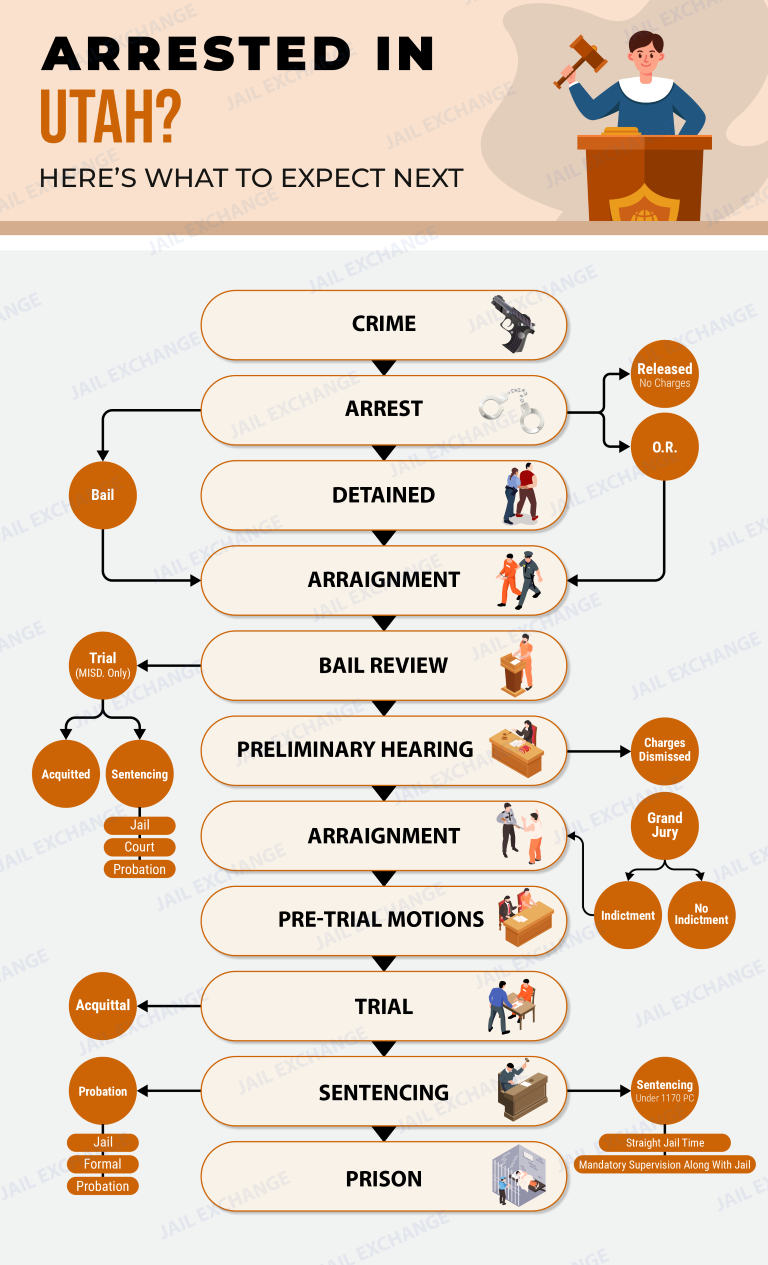
Inmate Canteen (operated by TurnKey Corrections) allows friends and family members to purchase pre-approved commissary packages, including brand-name snacks, confectionery goods, personal hygiene products, stationery, and apparel kits sent directly to an incarcerated loved one. Every package is packed to adhere strictly to facility security regulations, ensuring items pass institutional intake without being rejected at the loading dock.
Important: Package Deadlines and Delivery Windows Vary
Detention centers do not manage care package deliveries under identical schedules. While some facilities allow weekly orders, others restrict deliveries to bi-weekly or monthly distribution windows, and spending limits vary from jail to jail. You should verify the facility's active cutoff schedule and order allowances by calling them directly. If an order is submitted after the weekly processing deadline, delivery will be held until the following cycle, leaving your loved one waiting an extra cycle for fresh snacks, thermal wear, or personal care supplies.
Step-by-Step Instructions to Place a Commissary Package Order
- Confirm the inmate's legal first and last name, date of birth, and assigned booking or inmate ID number.
- Navigate to www.inmatecanteen.com and sign in or create a user profile.
- Select Commissary / Store and choose your state and detention center.
- Search for the inmate to unlock the facility's approved product catalog.
- Select allowable snack foods, candies, personal care goods, and clothing items up to the facility's allowed spending limit.
- Proceed to checkout, enter your debit or credit card billing details, and submit payment.
- Save your digital receipt and confirmation tracking number for your records.
What the Inmate Needs to Do
The inmate does not need an internet account to receive care packages. TurnKey Corrections prepares the order in secure, tamper-evident packaging and delivers it directly to the jail commissary department. Facility staff inspect the shipment and deliver the items during regular housing unit commissary rounds, where the inmate signs for receipt.
Official Provider: Inmate Canteen Official Website
Customer Service Telephone: 1-715-690-2965
Support Hours: Monday – Friday, 8:00 AM – 5:00 PM CST
Supported Languages: English and Spanish
Other Services Provided by Inmate Canteen (TurnKey Corrections)
In addition to Commissary Care Packages, Inmate Canteen provides several other communication, financial, and visitation services:
- Tablets & Chirp Units: Learn how secure handheld devices allow inmates to communicate, read, and message.
• Learn more on our website: Tablet Programs Guide | • Visit official vendor page: Inmate Canteen Devices - Remote Video Visitation: Schedule and join live face-to-face video visits from your computer or smartphone.
• Learn more on our website: Video Visitation Guide | • Visit official vendor page: Inmate Canteen Video Visits - Digital Messaging: Send electronic messages and photos directly to housing pod kiosks and handheld devices.
• Learn more on our website: Digital Messaging Guide | • Visit official vendor page: Inmate Canteen Messaging - Trust & Phone Deposits: Deposit money directly into an inmate's jail trust account or phone calling balance.
• Learn more on our website: Trust & Phone Deposits Guide | • Visit official vendor page: Inmate Canteen Deposits
Buy Commissary for an Inmate in the Box Elder County Correctional Facility
Box Elder County Correctional Facility Inmate Commissary - Sending Money or Purchasing Commissary for an Inmate
Box Elder County Correctional Facility allows inmates to purchase commissary. This can be snacks, hygiene products, stamps, stationary, clothing and even electronics.
You can buy commissary for an inmate using an online service called Inmate Canteen.
Inmate Canteen Customer Service can be reached at 715-690-2965, or by email at support@inmatecanteen.com.

There is a monthly limit of $200-300 on how much inmates can spend on commissary items.
This amount is subject to change so call the facility at 435-734-3300 in order to confirm the amount that cannot be exceeded.
Inmates have access to both an in-house commissary store, and commissary packages that can be purchased and shipped to the inmate by friends and family.
Scroll down for information on the Box Elder County Correctional Facility's service they use for you being able to purchase commissary items online and have them shipped directly to the inmate.
You can also go to our Inmate Money page for information on how to send money to an inmate.
Inmate Canteen Trust & Phone Deposits allow friends and family members to transfer money directly into an incarcerated person's jail trust account or telephone calling balance using a credit or debit card. Deposited funds give your loved one the financial balance needed to buy personal care goods, over-the-counter medication, snacks, and phone talk time from the facility canteen.
Important: Facility Banking Policies Vary Across Jails
Once a person is booked and moved to a cell, facilities do not always allow cash drop-offs or phone payments directly to the jail window. Some might and you should confirm this by calling the facility and asking. But if you do not register online and fund your loved one's trust account immediately, they may be forced to wait days or weeks for standard paper processing, leaving them without essential soap, clean undergarments, basic medical sundries or snacks.
Step-by-Step Instructions to Register and Deposit Funds
- Confirm the inmate's legal first and last name, date of birth, and assigned booking or inmate ID number.
- Navigate to www.inmatecanteen.com on your computer or mobile device.
- Click on Deposit Funds and select whether to fund the Trust Account (for commissary) or Phone Account (for talk time).
- Select the state and facility where the inmate is currently housed.
- Search for the inmate to confirm their active housing record matches the facility roster.
- Enter your deposit dollar amount, review convenience fees, and enter your debit or credit card billing details.
- Submit payment and save the digital confirmation receipt for your financial records.
What the Inmate Needs to Do
The inmate does not need an internet connection to receive trust funds. Once payment clears, the balance posts directly to their accounting profile in the jail's internal system. The inmate can review their updated balance at the pod kiosk terminal and place their regular weekly commissary order or make outbound phone calls.
Official Provider: Inmate Canteen Official Website
Customer Service Telephone: 1-715-690-2965
Support Hours: Monday – Friday, 8:00 AM – 5:00 PM CST
Supported Languages: English and Spanish
Other Services Provided by Inmate Canteen (TurnKey Corrections)
In addition to Trust & Phone Deposits, Inmate Canteen provides several other communication, financial, and commissary services at participating correctional facilities:
- Commissary & Snack Packs: Order pre-approved snack boxes, food packages, and clothing directly to the jail.
• Learn more on our website: Commissary Orders Guide | • Visit official vendor page: Inmate Canteen Commissary - Remote Video Visitation: Schedule and join live face-to-face video visits from your computer or smartphone.
• Learn more on our website: Video Visitation Guide | • Visit official vendor page: Inmate Canteen Video Visits - Digital Messaging & Chirp Texts: Send electronic messages and photos directly to housing pod kiosks and handheld devices.
• Learn more on our website: Digital Messaging Guide | • Visit official vendor page: Inmate Canteen Messaging
Deposit Money for an Inmate in the Box Elder County Correctional Facility
Commissary, media, phone calls and secure packs at the Box Elder County Correctional Facility are all paid from the same money families send in. Pick whichever of these three fits you.
- From your phone or computer. Inmate Canteen runs 24/7 and takes Visa or Mastercard, credit or debit.
- At the Sheriff's Office. A card-only kiosk (credit or debit) sits in the lobby at 52 South 1000 West, Brigham City, open seven days a week from 8 a.m. to 5 p.m.
- Through the mail. A money order is the one form of payment the jail takes by post. Put the person's full name on it, plus their inmate ID, and seal it in an envelope by itself, with nothing extra written on that envelope. Send to Box Elder County Correctional Facility, P.O. Box 888, Brigham City, UT 84302-0888.
Cash and personal checks get refused.
Friends and family can only send postcards to people held at the Box Elder County Correctional Facility in Brigham City. Letters in envelopes are turned away, with a few exceptions such as photos and legal mail. Everything goes to the jail's post office box.
Postcards, photos, legal mail and publications:
Inmate's Full Name & Inmate ID#
Box Elder County Correctional Facility
PO Box 888
Brigham City, UT 84302-0888
- What counts as a postcard: A plain white card stock postcard or a generic white postcard, no larger than 6 x 9 inches. Most postcards sold by the post office are fine.
- Front of the card: Only your address and the inmate's address may go on the front. Put the person's full name on the card, and write your full name and return address too.
- Photos: Mail them in a plain white envelope with "PHOTOS" written on it. Send no more than 10, each 4 x 6 inches or smaller, and no Polaroids. The only writing allowed on a picture is a name, a place and a date.
- Money orders: Money orders are the only money the jail takes, and they go on the commissary account. The payee line gets the inmate's full name, with their inmate ID number added beside it. If you are unsure, call 435-734-3300 to confirm. Write nothing extra on an envelope that holds money or photos. The jail turns down cash and personal checks.
- Reading material: Books and magazines must come straight from the publisher, and hardbound books are not accepted. Clippings cut from newspapers, magazines or books are not allowed.
- Content rules: Racist, pornographic, gang or drug material, letters meant to be passed to someone else, and anything that threatens safety are kept out. Inmates may not write to other inmates unless it is approved.
- Exceptions: To send something other than a postcard, the inmate must make a written request to the Jail Commander, who decides.
- Returned mail: If mail or a publication is sent back, you can appeal to the Support Services lieutenant at 435-734-3884.
Money for the commissary account can also be deposited online instead of by mail.

Securus AdvanceConnect is a prepaid calling account that links directly to your mobile phone or landline number, allowing you to receive outbound calls from an incarcerated individual. Because correctional phone systems never allow incoming calls, funding an AdvanceConnect balance ensures calls are accepted immediately without being blocked by cell carriers.
Important: Mobile Networks Block Inmate Calls Without Prepaid Funds
Correctional facilities do not allow collect billing to cell phones, and mobile carriers automatically block incoming collect calls from detention centers. While some residential landlines may allow direct billing, mobile phones and VoIP services require an active prepaid AdvanceConnect balance, which you can verify with your phone provider. If you do not register online and fund your account right away, your loved one will hear an automated error message stating that your number cannot accept calls.
Step-by-Step Instructions to Register and Fund AdvanceConnect
- Go to securustech.online or open the Securus mobile app.
- Select Sign Up and create your account using your 10-digit telephone number and email address.
- Search for your facility by state and agency name, then add the inmate using their full legal name or booking ID.
- Select AdvanceConnect under calling accounts.
- Choose your deposit amount, review convenience and transaction fees, and enter your credit or debit card billing details.
- Authorize payment and confirm that your mobile phone allows calls from automated or unknown correctional numbers.
What the Inmate Needs to Do
The inmate picks up any dayroom phone or logs onto their handheld tablet, dials your 10-digit number, and enters their assigned PIN. The automated system verifies that your AdvanceConnect account has an active balance and connects the call. All calls are subject to recording and monitoring by facility staff.
Official Provider: Securus Technologies Official Website
Customer Service Telephone: 1-800-844-6591
Support Hours: 24 hours a day, 7 days a week, 365 days a year
Supported Languages: English and Spanish
Other Services Provided by Securus Technologies
In addition to AdvanceConnect Prepaid Calling, Securus Technologies and its subsidiary JPay provide several other communication, financial, and visitation services:
- Direct Bill Phone Calling: Establish a monthly billed calling account for verified landline numbers.
• Learn more on our website: Direct Bill Phone Calling Guide | • Visit official vendor page: Securus Direct Bill - Securus Video Connect: Schedule and join live video visits from home using your computer or smartphone.
• Learn more on our website: Video Visitation Guide | • Visit official vendor page: Securus Video Connect - JPay Money Deposits (Trust & Canteen): Send money directly into an inmate's jail trust account for commissary store purchases.
• Learn more on our website: Money Deposits Guide | • Visit official vendor page: JPay Money Transfers - JPay Email Messaging & Photos: Send electronic messages, photo attachments, and VideoGrams directly to their tablet or kiosk.
• Learn more on our website: Email Messaging Guide | • Visit official vendor page: JPay Email Services
Securus Direct Bill is an invoiced telephone calling service designed for approved residential landlines, law offices, and commercial businesses. Instead of prepaying funds in advance, calls received from an incarcerated individual are billed directly to your account on a monthly itemized billing invoice.
Important: Direct Bill Requires Credit Approval and Qualifying Lines
Direct Bill is not available for mobile cell phones, internet VoIP numbers, or customers with poor or unestablished telephone credit history. Correctional facilities enforce strict telecommunications billing rules, which you can verify by calling Securus customer care. If your line does not meet credit approval standards, you must open an AdvanceConnect prepaid account instead to receive incoming calls from your loved one.
Step-by-Step Instructions to Set Up a Direct Bill Account
- Contact Securus customer service at 1-800-844-6591 or submit an application via securustech.net.
- Provide your billing name, service address, and qualifying residential or business landline telephone number.
- Submit to a standard credit evaluation performed by Securus to determine billing eligibility.
- Establish your authorized monthly credit limit upon approval.
- When your phone rings with a call from the detention center, follow the recorded operator instructions and press the requested key to accept charges.
- Pay your monthly billing invoice online, by phone, or through the mail.
What the Inmate Needs to Do
The inmate dials your phone number from any dayroom telephone and keys in their assigned PIN. The automated system verifies that your account is in good standing and has not exceeded its monthly spending ceiling before connecting the call. All non-privileged conversations are recorded and monitored.
Official Provider: Securus Technologies Official Website
Customer Service Telephone: 1-800-844-6591
Support Hours: 24 hours a day, 7 days a week, 365 days a year
Supported Languages: English and Spanish
Other Services Provided by Securus Technologies
In addition to Direct Bill Calling, Securus and its subsidiary JPay offer several other communication, financial, and visitation services:
- AdvanceConnect Prepaid Calling: Fund a prepaid calling account tied to your mobile phone number.
• Learn more on our website: AdvanceConnect Calling Guide | • Visit official vendor page: Securus AdvanceConnect - Securus Video Connect: Schedule and join live video visits from home using your computer or smartphone.
• Learn more on our website: Video Visitation Guide | • Visit official vendor page: Securus Video Connect - JPay Money Deposits (Trust & Canteen): Send money directly into an inmate's jail trust account for commissary store purchases.
• Learn more on our website: Money Deposits Guide | • Visit official vendor page: JPay Money Transfers - JPay Email Messaging & Photos: Send electronic letters, photos, and VideoGrams directly to their tablet or kiosk.
• Learn more on our website: Email Messaging Guide | • Visit official vendor page: JPay Email Services
Inmate Canteen Digital Messaging allows friends and family members to send electronic text messages and digital photos directly to an incarcerated loved one. Messages are delivered electronically to housing unit kiosks and Chirp handheld devices within hours, avoiding the lengthy delivery times associated with postal mail.
Important: Electronic Mail Guidelines Vary by Facility
Correctional facilities enforce strict rules regarding incoming correspondence. While some jails continue to accept paper letters, many facilities restrict physical postal mail or mandate digital message screening, which you can verify by checking facility rules. If you do not register online and set up message credits immediately, your loved one may face lengthy periods without direct written contact from family.
Step-by-Step Instructions to Register and Send Messages
- Go to www.inmatecanteen.com and sign in or create a user profile.
- Select Email / Messaging and choose your state and detention facility.
- Search for the inmate using their legal first and last name or booking ID number.
- Purchase messaging credits using a credit or debit card.
- Type your message in the text box and attach approved digital images if permitted by the facility.
- Submit your message to the facility's screening queue.
What the Inmate Needs to Do
All electronic correspondence is screened by facility staff before delivery. Once approved, messages appear in the inmate's inbox on their housing unit kiosk or assigned handheld Chirp device. The inmate opens the message, reads your note, and types an electronic reply using their available account credits.
Official Provider: Inmate Canteen Official Website
Customer Service Telephone: 1-715-690-2965
Support Hours: Monday – Friday, 8:00 AM – 5:00 PM CST
Supported Languages: English and Spanish
Other Services Provided by Inmate Canteen (TurnKey Corrections)
In addition to Digital Messaging, Inmate Canteen provides several other communication, financial, and commissary services at participating correctional facilities:
- Commissary & Snack Packs: Order pre-approved snack boxes, food packages, and clothing directly to the jail.
• Learn more on our website: Commissary Orders Guide | • Visit official vendor page: Inmate Canteen Commissary - Remote Video Visitation: Schedule and join live face-to-face video visits from your computer or smartphone.
• Learn more on our website: Video Visitation Guide | • Visit official vendor page: Inmate Canteen Video Visits - Trust & Phone Deposits: Deposit money directly into an inmate's jail trust account or phone calling balance.
• Learn more on our website: Trust & Phone Deposits Guide | • Visit official vendor page: Inmate Canteen Deposits
Inmate Canteen (TurnKey Corrections) provides specialized handheld tablets and Chirp communication units to incarcerated individuals in county detention centers. Running over a secure internal wireless network, these devices allow inmates to send and receive text messages, submit facility requests, review commissary balance accounts, and read digital materials directly from their living areas.
Important: Tablet Hardware Deployment and Rental Rules Vary
Detention centers do not manage tablet distribution identically. While some agencies issue individual personal tablets to every detainee at booking, others utilize shared pod docking stations or restrict tablet use to specific dayroom hours, which you should confirm with the facility directly. Although core educational and legal resources are generally provided free of charge, sending messages, initiating video calls, or making phone calls from the tablet requires an active balance funded by outside contacts.
Step-by-Step Instructions to Support and Fund Tablet Use
- Confirm that TurnKey Corrections / Inmate Canteen tablets or Chirp devices are active at the facility.
- Navigate to www.inmatecanteen.com and sign into your user profile.
- Link the inmate to your account by state, detention facility, and their legal name or booking ID.
- Select Messaging / Chirp Funds or Trust Deposits to add funds to their available balance.
- Specify your deposit amount, review convenience fees, and enter your credit or debit card billing details.
- Submit payment, save your confirmation receipt, and notify your loved one that their device balance is available.
What the Inmate Needs to Do
The inmate logs into their assigned tablet or Chirp device using their personal PIN. They can review their available messaging balance, read incoming family correspondence, and type replies directly on the device. Tablets are returned to docking stations during facility count times and for overnight charging.
Official Provider: Inmate Canteen Official Website
Customer Service Telephone: 1-715-690-2965
Support Hours: Monday – Friday, 8:00 AM – 5:00 PM CST
Supported Languages: English and Spanish
Other Services Provided by Inmate Canteen (TurnKey Corrections)
In addition to Tablet Services, Inmate Canteen provides several other communication, financial, and commissary services:
- Commissary & Care Packages: Order pre-approved snack boxes, food packages, and clothing directly to the jail.
• Learn more on our website: Commissary Orders Guide | • Visit official vendor page: Inmate Canteen Commissary - Remote Video Visitation: Schedule and join live face-to-face video visits from your computer or smartphone.
• Learn more on our website: Video Visitation Guide | • Visit official vendor page: Inmate Canteen Video Visits - Digital Messaging: Send electronic text messages and digital photos directly to housing pod kiosks and handheld devices.
• Learn more on our website: Digital Messaging Guide | • Visit official vendor page: Inmate Canteen Messaging - Trust & Phone Deposits: Deposit money directly into an inmate's jail trust account or phone calling balance.
• Learn more on our website: Trust & Phone Deposits Guide | • Visit official vendor page: Inmate Canteen Deposits
Box Elder County Juvenile Facilities
- Jail (Main): 435-734-3300
The Box Elder County Correctional Facility serves the following cities and towns of Box Elder County: Bear River City, Brigham City, Corinne, Elwood, Fielding, Garland, Honeyville, Howell, Judson, Kelton, Mantua, Perry, Plymouth, Portage, Snowville, Tremonton and Willard.