
Halifax Adult Detention Center
Halifax Adult Detention Center
Jail Phone Number
434-476-5500Halifax County Inmate Search: Track Down a Loved One at the Blue Ridge Lane Jail
Anyone taken into custody by deputies or town officers here is driven to the Halifax Adult Detention Center, 1010 Blue Ridge Lane, Halifax, VA 24558. Four more jails belong to the same regional authority. Below you will find help with mugshots, lawyers, visits, mail, money and court.
The authority posts a live jail list, and the official county search opens it. Type a surname and scan every booking row. Someone brought in this morning could take a few hours to appear.
Your best first move is dialing the jail at 434-476-5500. Name the person as the jail has them on file, add the birthday, then ask which charges were filed. For release, see our bail page. For dates and courtrooms, see our court page.
Read inmate search answers
 Read inmate search answers
1. Walking through the Halifax County jail list
A company called JailTracker powers the list for the regional authority. Do this:
- Open the jail list using whatever browser you like.
- Try the surname alone to begin. A long result list calls for a first name as well.
- Choose the right person from the rows shown, using the birth date if one appears.
- Copy down the booking or inmate number. It speeds up every later phone call.
- Come back in a few hours if the person was only just arrested.
Still lost? The jail desk, 434-476-5500, will search for you.
↑ Back to the question list2. The list says nothing for the name I typed
Do not panic. Common causes are:
- Booking is slow. Intake paperwork and fingerprinting may drag on for hours.
- They went home. A magistrate may already have sent them home on their own word or a bond.
- A paper ticket. For minor offenses, an officer may write a summons and send the person on their way.
- Another site. The authority runs five lockups, and inmates are sometimes shuffled among them.
- A state hold. Some inmates sit in a county cell until the state has room.
- A spelling snag. Try nicknames, middle names and swapped letters.
Phone the jail and ask if booking is done. If staff find no record, call the Sheriff's Office at 434-476-3339 or the police department that made the stop.
↑ Back to the question list3. The five jails of the regional authority and others nearby
Most local arrests end up at the Adult Detention Center on Blue Ridge Lane, 1010 Blue Ridge Lane, Halifax, VA 24558, 434-476-5500, just outside the town of Halifax. Five sites make up the Blue Ridge Regional Jail Authority, and inmates can be sent from one to another. Its main office is at 510 Ninth Street, Lynchburg, VA 24504, 434-847-3100. Ask that office which building holds your person and what it is used for, such as men, women, short stays or longer sentences.
- Amherst site, 219 S Riverview Rd, Madison Heights, VA 24572
- Bedford site, 1000 Broad St, Bedford, VA 24523
- Campbell site, 90 Courthouse Lane, Rustburg, VA 24588
- Lynchburg site, 510 9th St, Lynchburg, VA 24504
A person stopped across a boundary may sit in that area's own cells, like the Pittsylvania County jail or the Danville Adult Detention Center. Phone whichever agency made the stop to find out.
↑ Back to the question list4. Does the Halifax County list show mugshots?
Open the list and look, since the jail has not said it carries mugshots. Virginia's Freedom of Information Act makes police and sheriffs hand over the photo taken of an adult during intake, except when a felony probe could be hurt under Va. Code § 2.2-3706. A juvenile's photo is never released.
- Check with the arresting agency. For the Sheriff's Office, write or call: 134 S Main Street, Halifax, VA 24558, 434-476-3339.
- To ask for an ICE-held picture, fill out the ICE records request.
- If the arrest was federal, expect no photo. The U.S. Marshals Service may publish one for a fugitive, which is the only exception.
5. Getting a text or call the minute they leave
VINE is the free tool for this. It watches custody for county and regional jails as well as state prisons, and it warns you about releases, transfers and escapes. Search the name on vinelink.com or dial 1-800-467-4943 at any hour. Choose text, phone or email alerts.
The service can run behind, so for certainty phone the jail at 434-476-5500.
↑ Back to the question list6. Getting released after a Halifax County arrest
A magistrate is able to set bail day or night. That office is on the jail grounds, 1010 Blue Ridge Lane, Halifax, VA 24558, 434-476-2071. Possible outcomes: release on a written pledge, a bond with no deposit due now, or a bond that needs cash, property equity or a bail bondsman.
- Bondsmen are state licensed and charge a nonrefundable fee of 10 to 15 percent.
- Conditions can ban contact with one person, impose a curfew or require a GPS monitor.
- Anyone still held gets a judge's review on the first court day.
Ask the jail desk at 434-476-5500 how to pay. Our bail page goes deeper, and Virginia's bail laws have a page too.
↑ Back to the question list7. Which charges were filed?
Ask the jail desk or read the court file. Trials happen at the courthouse, 8 S. Main Street, Halifax, VA 24558. Misdemeanors and traffic tickets begin in General District Court, 434-476-3385. Felonies move up to Circuit Court once grand jurors return a true bill, and its clerk is at 434-476-6211.
Virginia's Online Case Information System covers adult criminal and traffic matters but not juvenile ones. Prosecutors work from the Commonwealth's Attorney's office at 8 S Main Street, Halifax, VA 24558, 434-476-2139. Have the legal name and birthday ready before you dial.
↑ Back to the question list8. Appointed counsel for a person who is broke
At the first hearing a judge explains that a lawyer is available. Anyone short on money asks the magistrate or the judge, then swears to a form listing income and debts. Who qualifies is up to the judge, as § 19.2-159 of the Virginia Code provides.
The public defender serving this area works from 2201 Wilborn Avenue, South Boston, VA 24592, 434-575-1054, and also covers Lunenburg and Mecklenburg. If it has a conflict, the judge picks a lawyer in private practice. Families are free to hire their own.
↑ Back to the question list9. What Halifax County requires of jail visitors
Visitors meet inmates in person, once a week per inmate. Days follow the housing unit, and most fall on mornings from Monday to Thursday or on Sunday, with a few Thursday afternoons. Phone 434-476-5500 to learn your person's day.
- Your name has to be on the inmate's list of approved visitors.
- Arrive at least 30 minutes before the visit.
- Carry a photo ID that matches the list.
- No more than three adults go in together.
- Anyone under 18 needs a parent, a guardian or a notarized form.
More tips sit in our visiting guide.
↑ Back to the question list10. Putting dollars on the inmate's books
The jail steers families to two websites. Deposits run through JailATM, and store orders go through Oasis. Know the full name and inmate number before you start.
A mailed money order should name the authority as payee and travel by itself to the P.O. Box listed in the mail answer. Cash must never go in an envelope. See our money guide and commissary guide.
↑ Back to the question list11. Calls from inside, texts and tablets
Families are pointed to ViaPath for inmate calls. Phone that service at 1-800-483-8314 to open an account. Each call is cut off after 15 minutes, and staff can listen, so save case details for the lawyer alone.
Ask the jail desk, 434-476-5500, whether tablets or messages exist. Extra advice sits in the jail phone guide alongside the email and text guide.
↑ Back to the question list12. Where do I mail Halifax County jail letters?
Two addresses are in use, so pick carefully.
- Personal letters and photos: the facility's name, the person's full name, the inmate number, P.O. Box 247, Phoenix, MD 21131.
- Legal mail and money orders: the person's full name, the inmate number, P.O. Box 829, Halifax, VA 24558.
Include your return address on the envelope. If you doubt what may be sent, phone 434-476-5500. Our mail guide adds the usual rules.
↑ Back to the question list13. Reclaiming clothes, wallets and phones
Whatever the person had at arrest is stored until release. To bring clothes or collect things, phone 434-476-5500 and ask who may take them, which ID to carry and what hours work. Do not leave items at the jail unless a staff member says so.
↑ Back to the question list14. Help for an inmate who is hurt or unwell
Phone 434-476-5500 and ask to reach nursing or medical staff. Share the name, inmate number, the problem and any pills the person takes. Tell them to hand in a written medical request too. Life-threatening trouble? Dial 911 first.
↑ Back to the question list15. Checking whether police are looking for someone
The Sheriff's Office, 134 S Main Street, Halifax, VA 24558, 434-476-3339, serves warrants, and Halifax and South Boston police serve them inside town limits. We found no public wanted list, so phone the office and ask whether a name is on file. For a case check, phone the General District Court clerk, 434-476-3385, or the Circuit Court clerk, 434-476-6211, or try the state's case lookup. A lawyer can advise on lifting a warrant, and the court that signed it handles the paperwork. You can reach both clerks at 8 S. Main Street, Halifax, VA 24558.
↑ Back to the question list16. Halifax County hearing dates and which courtroom
Each clerk's office below can tell you the next hearing date by phone. Three courts share the building on South Main Street:
- General District Court, 8 S. Main Street, Suite 200, Halifax, VA 24558, 434-476-3385, for lesser crimes, traffic and early felony steps.
- Circuit Court clerk, 8 S. Main Street, Halifax, VA 24558, 434-476-6211, for felony trials and appeals.
- Juvenile and Domestic Relations court, 8 S. Main Street, 1st Floor, Halifax, VA 24558, 434-476-3388, for kids and family violence.
The court page traces the path of a case.
↑ Back to the question list17. A federal charge and where it goes
For federal crimes, this area sits in the Western District of Virginia. Since the Danville courthouse shut its doors to new filings in late 2025, such a case is now sent to the Lynchburg Division, 1101 Court Street, Suite A66, Lynchburg, VA 24504, 434-847-5722.
- Under 18 U.S.C. § 3142, a judge uses the first appearance to rule on jail or release.
- Before the trial, the Marshals keep the defendant in custody. Their Lynchburg office is at 1101 Court Street, Room B66, Lynchburg, VA 24504, 434-847-4859.
- Once the sentence is imposed, the federal BOP inmate locator accepts a name or register number.
18. Immigration officers want the jail to hold someone
- ICE opens the process by serving Form I-247A, a detainer, on the jail.
- A hold may last up to 48 hours after they would otherwise be released (8 CFR 287.7(d)), and the jail decides how to apply it.
- Next, ICE agents pick the person up out of the jail. Their Washington Field Office is at 14797 Murdock Street, Chantilly, VA 20151, 703-633-2100.
- Use the ICE Online Detainee Locator to find where they were taken.
Virginia's rules on detainers are changing in 2026, so a lawyer is the best source on what holds today. As one plain fact, a governor's order of February 4, 2026 told Virginia state agencies to end every 287(g) agreement.
↑ Back to the question list19. Where is the person who got a prison sentence?
Following sentencing, a person is sent to a Department of Corrections reception site for classification, then to the prison that fits. A few wait in the local lockup first.
- The VADOC locator takes a name or DOC number, refreshes daily and also lists people kept in local jails under state control.
- The main state line is 804-674-3000.
- Our state prisons guide for Virginia covers visiting and mail rules.
20. My child is under 18 and was picked up
The adult jail does not take children. Their case is heard in Juvenile and Domestic Relations court, 8 S. Main Street, 1st Floor, Halifax, VA 24558, 434-476-3388. The court service unit's intake officer, 434-476-3390, chooses between sending the child home and detention.
Youths held from this area are usually sent to the W.W. Moore, Jr. Detention Home, 603 Colquhoun Street, Danville, VA 24541, 434-799-5295. A judge looks at the hold within a few days and appoints counsel when needed.
↑ Back to the question list21. Which Halifax County agency picked them up?
Whichever agency is named on the booking, the same jail receives the person. These offices work in the area:
- Sheriff's Office, 134 S Main Street, Halifax, VA 24558, 434-476-3339. Patrols the countryside, plus Scottsburg and Virgilina.
- Halifax Police Department, 70 Main Street, Halifax, VA 24558, 434-476-2526
- South Boston Police Department, 640 Hamilton Boulevard, South Boston, VA 24592, 434-575-4772
- Virginia State Police, Division Three, 240 Third Division Loop, Appomattox, VA 24522, 434-352-7128. Troopers here answer to this office.
Halifax County jail and bail
Adults arrested in Halifax County are booked at the Halifax Adult Detention Center, 1010 Blue Ridge Lane, Halifax, VA 24558. A regional jail authority runs it. Below: the people who set bail, how a bond is paid, and what comes next in court.
Enter the full name in the jail's online roster to check if the person is inside yet. Our Halifax Inmate Search page has fresh arrests, listed charges, and warrants.
Ring the jail desk at 434-476-5500. Find out what the bond is, if any, and where the money goes. Court dates live on our Halifax court page.
1. Where are Halifax arrestees held?
At the Halifax Adult Detention Center, 1010 Blue Ridge Lane, Halifax, VA 24558. Phone 434-476-5500.
↑ Back to the question list2. Where is the magistrate?
At the same campus, 1010 Blue Ridge Lane, Halifax, VA 24558, 434-476-2071.
↑ Back to the question list3. How do I search?
4. Can bail rules include GPS?
Yes, when a secured bond is required (Va. Code § 19.2-123).
↑ Back to the question list5. What happens after a Halifax County arrest?
Deputies or South Boston police book the person at the Blue Ridge Lane jail outside the town of Halifax. The magistrate's office is on that same campus, so the bail hearing tends to come within a few hours (Va. Code § 19.2-80).
↑ Back to the question list6. What kinds of release can a Halifax magistrate give?
Some people go home on their written word. Others sign an unsecured bond, owed only if they skip court, and some must post a secured bond before leaving (Va. Code § 19.2-123).
↑ Back to the question list7. How do families post a Halifax bond?
Pay cash at the jail, pledge Virginia land with clear equity, or hire a DCJS-licensed bondsman (Va. Code § 9.1-185). A bondsman's charge is 10% to 15% and is not returned (Va. Code § 9.1-185.8). The Blue Ridge Lane magistrate is reachable overnight (Va. Code § 19.2-48.1).
↑ Back to the question list8. When does a Halifax judge look at bail?
If the person is still held, a district judge at Courthouse Square on South Main Street hears bail at the next session (Va. Code § 19.2-158). That judge also asks about appointed counsel (Va. Code § 19.2-159). Halifax Circuit Court can take an appeal (Va. Code § 19.2-124).
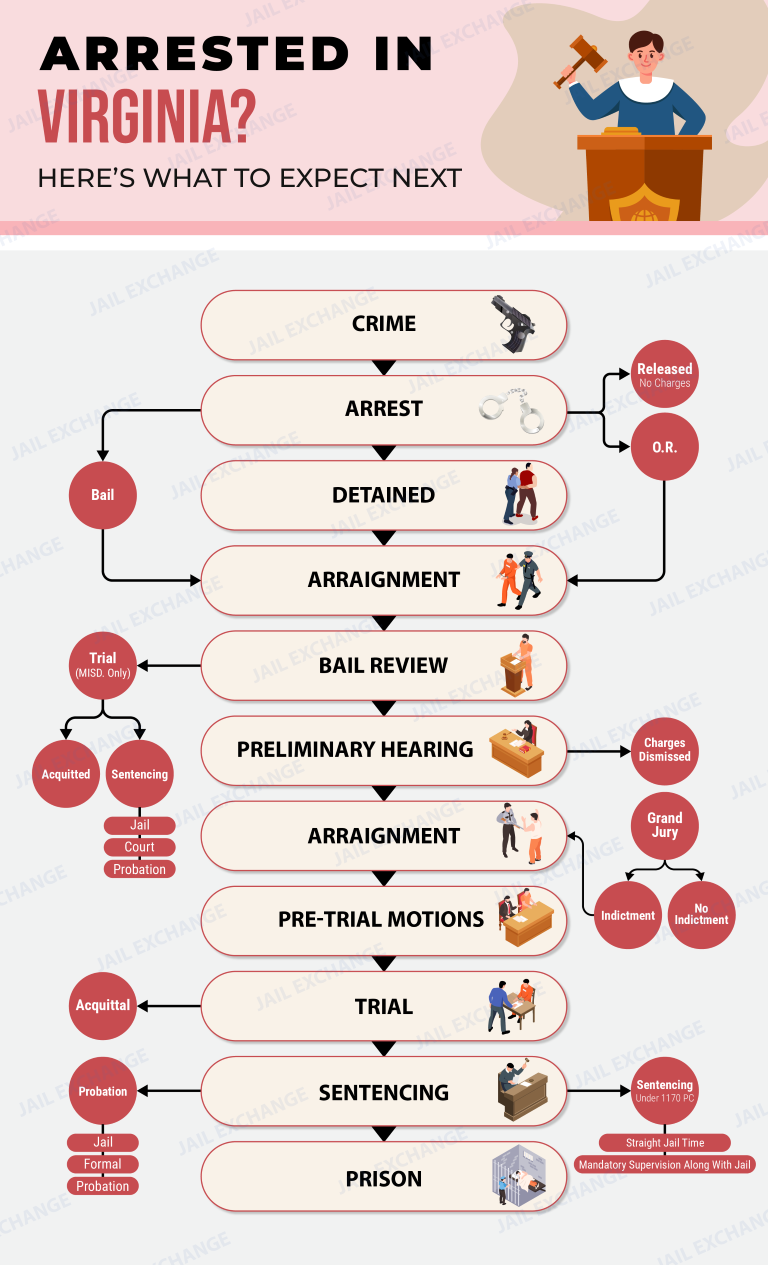
↑ Back to the question list9. How does a Halifax case move?
General District Court in Suite 200 tries misdemeanors, and a conviction there can be appealed within 10 days (Va. Code § 16.1-132). Felony charges get a preliminary hearing (Va. Code § 19.2-218) before a grand jury. JDR is on the first floor at 8 S. Main Street, Courthouse Square, 1st Floor, Halifax, VA 24558, 434-476-3388 (Va. Code § 16.1-241).
↑ Back to the question list10. Can a Halifax defendant get a free lawyer?
Yes, if jail is possible. The person fills out a sworn statement about money, and the judge decides (Va. Code § 19.2-159).
↑ Back to the question list11. What other rules can a Halifax bond have?
Bonds here can bar contact with someone, set a curfew, or forbid alcohol (Va. Code § 19.2-123). Arrests within a household usually bring a brief protective order (Va. Code § 16.1-253.4). With North Carolina right across the county line, a Tar Heel warrant may keep someone at Blue Ridge Lane after bond (Va. Code § 19.2-102) (Va. Code § 19.2-85).
↑ Back to the question list12. What if a Halifax defendant misses court?
Expect a capias from the South Main Street court, a forfeited bond, and possibly a charge for not showing up (Va. Code § 19.2-128).
↑ Back to the question list13. Where are federal Halifax cases heard?
Federal charges from Halifax are heard about 45 minutes west in Danville, by the Western District of Virginia (18 U.S.C. § 3142).
↑ Back to the question list14. What should Halifax co-signers know?
Halifax co-signers can be billed if the defendant runs (Va. Code § 19.2-143). A co-signer may also hand the defendant back to the sheriff before a missed date (Va. Code § 19.2-149). Cash bail returns once the Halifax case closes and every date was met.
↑ Back to the question list15. Who can confirm bond in Halifax County?
Jail: 434-476-5500. Magistrate: 434-476-2071. District court: 434-476-3385.
↑ Back to the question listContacts for Halifax County
- Jail
- Halifax Adult Detention Center, 1010 Blue Ridge Lane, Halifax, VA 24558; 434-476-5500
- Magistrate
- 1010 Blue Ridge Lane, Halifax, VA 24558; 434-476-2071
- District court
- 8 South Main Street Suite 200, Halifax, VA 24558; 434-476-3385
- Circuit court
- 8 S. Main Street, Halifax, VA 24558; 434-476-6211
- Inmate search
- Halifax County inmate search
This page is not legal advice.
Halifax Adult Detention Center Inmate Visitation
Visit at 1010 Blue Ridge Lane, Halifax. You must be on the person’s visitor list; bring valid photo ID that matches the name on that list and check in at least 30 minutes before the visit. Visitors may visit once per week, with no more than three adults at once. Minors must come with a parent or legal guardian, or with an approved adult and the required notarized form.
On-site visits by housing assignment (Eastern time):
- Monday: Housing unit C 9–11 a.m.; unit I 10–11 a.m.
- Tuesday: Unit B 9–11 a.m.
- Wednesday: Unit H 9–11 a.m.
- Thursday: Intake, Medical and unit D 9–11 a.m.; unit E 2–2:30 p.m.; unit F 2:30–3 p.m.; unit G 3–3:30 p.m.
- Sunday: Unit A 9–11 a.m.
Call 434-476-5500 if you need to confirm the housing assignment, the applicable visiting time or whether a video option is available.
GettingOut / ViaPath Remote Video Visits
Provider: GettingOut (Telmate) • Rebranding as ViaPath Technologies (myViaPath Visits)

GettingOut Video Visitation allows friends and family members to conduct live, face-to-face video visits with incarcerated loved ones using a personal computer, laptop webcam, or the mobile application. Telmate and GTL operate under ViaPath Technologies, and the visiting service is transitioning from GettingOut Visits to myViaPath Visits; users may encounter either brand name depending on whether their county jail has completed the platform update.
Important: Advance Background Clearance Required
Detention centers do not permit unapproved drop-in video visitation. All visitors must submit valid government photo identification and pass administrative screening before an appointment can be booked, a review that can take up to 48 hours depending on facility staffing. You should verify your visitor approval status with the facility in advance. If you do not register ahead of time, you will miss your loved one's scheduled visiting slots for the week.
Step-by-Step Instructions to Schedule a Video Visit
- Open the GettingOut / myViaPath Visits app or go to www.gettingout.com / my.viapath.com.
- Register your profile and upload clear photographs of your government ID and a verification photo.
- Wait for the facility to issue visitor approval (you will receive an email confirmation).
- Select Schedule Visit, pick your detention facility, and select the inmate.
- Choose an available 25- or 30-minute time slot from the calendar and pay the visitation fee using a credit or debit card.
- Sign into the app or website 10 minutes prior to the start time on a device with a functioning camera, microphone, and stable internet connection.
What the Inmate Needs to Do
The inmate receives a schedule alert on their housing unit video kiosk or personal tablet. At the appointed time, they log in with their PIN and sit in front of the terminal. Inmates must follow institutional dress and conduct rules; corrections staff actively monitor sessions and will terminate any call immediately if rules are broken.
Official Providers: GettingOut Visits | myViaPath Visits
Customer Service Telephone: 1-866-516-0115 (GettingOut) • 1-877-650-4249 (ViaPath)
Support Hours: Monday – Friday, 7:00 AM – 11:00 PM CST; Saturday – Sunday, 8:00 AM – 7:00 PM CST
Supported Languages: English and Spanish
Other Services Provided by GettingOut / ViaPath
In addition to Remote Video Visits, GettingOut and ViaPath provide several other communication and financial options:
- Two-Way Text Messaging: Send electronic messages and photos straight to the inmate's screen.
• Learn more on our website: Two-Way Text Messaging Guide | • Visit official vendor page: GettingOut Messaging - Inmate Tablet Rentals & Content: Provide funds for educational modules, music streaming, and news.
• Learn more on our website: Tablet Rentals & Content Guide | • Visit official vendor page: GettingOut Tablets - AdvancePay Phone Calling: Keep a funded prepaid balance to receive calls directly on your phone.
• Learn more on our website: AdvancePay Phone Calling Guide | • Visit official vendor page: ViaPath ConnectNetwork Calling - Inmate Trust Deposits: Transfer money directly into their jail trust account for canteen goods.
• Learn more on our website: Inmate Trust Deposits Guide | • Visit official vendor page: ViaPath Trust Deposits
Halifax County courts and where criminal cases begin
Crime in Halifax County is tried in Circuit, General District, or the youth and family court. They share one courthouse at 8 South Main Street, Halifax, VA 24558. Adults held after an arrest are at the Halifax Adult Detention Center, 1010 Blue Ridge Lane, Halifax, VA 24558.
Is your person still inside? Put the last name into the jail's inmate roster. Our Halifax Inmates in Custody page also shows new bookings, charges, and free lawyer options.
Call the General District Court clerk at 434-476-3385 and ask what date the person must appear. For a felony, the Circuit Court office at 434-476-6211 keeps the file. Bond questions are answered on our Halifax bail page.
1. Courts in Halifax County (circuit, general district, and juvenile and domestic relations courts)
Halifax County is a large rural county in Southside Virginia whose seat, the town of Halifax, holds the courthouse on South Main Street; its biggest town, South Boston, gave up its status as an independent city in 1995 and is now part of the county. All criminal matters are decided by three courts in that courthouse, the Halifax General District Court, the Halifax Juvenile and Domestic Relations District Court and the Halifax Circuit Court, which sit in the 10th Judicial Circuit. Cases are prosecuted by the elected Commonwealth's Attorney for Halifax County, and defendants who cannot afford a lawyer are usually represented by the Halifax Public Defender Office in South Boston. Adults held after arrest go to the Halifax Adult Detention Center, a facility of the Blue Ridge Regional Jail Authority just outside the town of Halifax.
- Halifax Circuit Court (felonies, jury trials, appeals), 8 S. Main Street, P.O. Box 729, Halifax, VA 24558; Clerk (434) 476-6211
- Halifax General District Court (misdemeanors, traffic, preliminary hearings), 8 S. Main Street, Suite 200, Halifax, VA 24558, (434) 476-3385
- Halifax Juvenile and Domestic Relations District Court, 8 S. Main Street, Courthouse Square, 1st Floor, Halifax, VA 24558, (434) 476-3388
- Magistrate, Halifax office (10th District), 1010 Blue Ridge Lane, Halifax, VA 24558, (434) 476-2071
- Commonwealth's Attorney for Halifax County, Courthouse Square, Halifax, (434) 476-2139; Victim/Witness Program (434) 476-3393
- Halifax Public Defender Office, 2201 Wilborn Avenue, South Boston, VA 24592, (434) 575-1054
- Halifax County Sheriff's Office, P.O. Box 370, Halifax, VA 24558, (434) 476-3339
- 10th District Court Service Unit (juvenile intake), 8 South Main Street, P.O. Box 1836, Halifax, VA 24558, (434) 476-3390
- Halifax Adult Detention Center (Blue Ridge Regional Jail Authority), 1010 Blue Ridge Lane, Halifax, VA 24558; custody questions through the Sheriff's Office, (434) 476-3339
Which court hears your case. In Halifax County, every misdemeanor and traffic charge starts in the Halifax General District Court, which hears cases without juries; anyone convicted there may appeal within 10 days to the Halifax Circuit Court, where the case is retried from the beginning and a jury can be requested. If the charge is an assault or another offense against a family or household member, or the case involves a juvenile, the Halifax Juvenile and Domestic Relations District Court takes it instead. Felonies receive a preliminary hearing in the General District Court (in the JDR court when a family member is the alleged victim) and, after a grand jury returns an indictment, proceed in the Halifax Circuit Court.
Where pretrial inmates are held. The Blue Ridge Regional Jail Authority runs jails for Amherst, Appomattox, Bedford, Campbell and Halifax counties and the City of Lynchburg, and its Halifax facility on Blue Ridge Lane is where people arrested in the county are booked. The county magistrate works from the same address, so an arrested person's warrant, release decision and booking usually happen in one stop. Anyone not released on bond stays there while the case is pending, though the authority can move inmates among its facilities. The Halifax County Sheriff's Office, (434) 476-3339, can help families confirm where someone is.
Virginia's towns do not operate courts of their own; no municipal, town or mayor's court exists anywhere in the Commonwealth. A ticket or arrest by South Boston or Halifax town officers, or by deputies in Scottsburg, Virgilina and the rest of the county, is therefore filed in the Halifax County courts on South Main Street.
Courthouse offices
- Halifax Circuit Court, 8 S. Main Street, Halifax, VA 24558; mail to P.O. Box 729, since the Post Office does not deliver to the street address. Clerk's office (434) 476-6211, open 8:30 to 4:30; judge's office (434) 476-6114.
- Halifax General District Court, 8 S. Main Street, Suite 200, Halifax, VA 24558, (434) 476-3385. The clerk handles criminal, traffic and civil filings and the financial forms for appointed counsel.
- Halifax Juvenile and Domestic Relations District Court, Courthouse Square, 1st Floor, 8 S. Main Street, Halifax, VA 24558, (434) 476-3388 or (434) 476-3389; open 8:30 to 4:30.
After-hours and intake offices
- Magistrate, Halifax office, 1010 Blue Ridge Lane, Halifax, VA 24558, (434) 476-2071. Magistrates issue warrants, emergency protective orders and the first decision on bail, day or night.
- 10th District Court Service Unit, 8 South Main Street, Halifax, VA 24558, (434) 476-3390, the main office of a unit that also covers seven neighboring counties.
Lawyers on both sides
- Commonwealth's Attorney for Halifax County, Courthouse Square, Halifax, VA 24558, main office (434) 476-2139; Victim/Witness Program (434) 476-3393
- Halifax Public Defender Office (Virginia Indigent Defense Commission), 2201 Wilborn Avenue, South Boston, VA 24592, (434) 575-1054. The office also covers Lunenburg and Mecklenburg counties. A private attorney from the court's list is appointed if the office has a conflict.
Police and sheriff
- Halifax County Sheriff's Office, P.O. Box 370, Halifax, VA 24558, (434) 476-3339
- South Boston Police Department, 640 Hamilton Boulevard, South Boston, VA 24592, (434) 575-4772
- Halifax Police Department (Town of Halifax), 70 Main Street, Halifax, VA 24558, (434) 476-2526
- Scottsburg and Virgilina: these small towns are patrolled by the Sheriff's Office, (434) 476-3339.
2. Misdemeanor (for example, petit larceny, a first DUI, assault and battery, trespassing)
A Halifax County misdemeanor can begin in one of two ways. For many shoplifting, trespass and traffic-related charges the officer simply issues a summons, and the person's only obligation is to show up in the General District Court on the listed date. For DUI, domestic assault and similar charges the person is usually arrested and taken to the magistrate on Blue Ridge Lane.
Release
The magistrate looks at the charge, the person's record and whether he or she is likely to return to court or poses a danger. Release may come on a recognizance bond, which is only a signed promise; on an unsecured bond, which costs nothing unless the person misses court; or on a secured bond, posted in cash or through a licensed bail bondsman for a nonrefundable fee. If the magistrate orders the person held, booking at the Halifax Adult Detention Center follows, and a district court judge can review the decision at a bond hearing.
First appearance
On the court's next session day the defendant is advised of the charge and of the right to a lawyer. Defendants who face possible jail and cannot pay a lawyer complete a sworn financial statement, available from the General District Court clerk at (434) 476-3385, and the judge typically appoints the Halifax Public Defender Office.
Typical charges and penalties
- Petit larceny (property under $1,000) and trespassing are both Class 1 misdemeanors, the most serious misdemeanor level, punishable by a year or less in jail and a fine not exceeding $2,500.
- Assault and battery is also Class 1; against a spouse, partner, parent, child or other household member it goes to the JDR court. A first-time defendant there may be allowed a deferred disposition that ends in dismissal, and a third conviction for assaulting a family member can rise to a felony.
- A first DUI, again Class 1, brings a minimum $250 fine; a mandatory 5 days in jail at a blood alcohol content between 0.15 and 0.20, or 10 days above 0.20; loss of the license for one year, with a restricted license and ignition interlock possible; and enrollment in VASAP. A 7-day administrative suspension starts the day of the arrest.
Class 2 misdemeanors carry up to 6 months and $1,000, Class 3 a fine up to $500, and Class 4 a fine up to $250.
How it ends
The judge, sitting without a jury, may dismiss the charge, take it under advisement as a first-offender deferral, impose a fine, suspend a jail sentence on conditions of probation, or order jail time. A defendant unhappy with the result can note an appeal to the Halifax Circuit Court within 10 days and receive a completely new trial. Expect one to three months for most cases, longer if appealed. Virginia's record-sealing law may later cover some charges and convictions.
↑ Back to the question list3. Felony (for example, burglary, grand larceny, drug possession or distribution, malicious wounding)
Felony charges in Halifax County are prosecuted by the Commonwealth's Attorney and ultimately decided in the Halifax Circuit Court, but the first hearings take place in the General District Court downstairs.
The early stage
A person arrested on a felony goes before the magistrate, who sets bail terms or orders detention after weighing flight risk and danger to the public; the 2021 reforms removed the old presumption against bail for certain charges. Those detained are held at the Halifax Adult Detention Center and can ask a judge for a bond hearing, with a further appeal to the Circuit Court. At the advisement the court appoints counsel, usually the Halifax Public Defender Office, if the person qualifies.
Preliminary hearing and indictment
At the preliminary hearing, the General District Court judge hears witnesses and decides only whether probable cause exists. When it does, the judge certifies the charge to the next Halifax grand jury. The prosecutor may instead take the case straight to the grand jury by direct indictment. After indictment the defendant is arraigned in the Circuit Court.
Resolution
Plea agreements settle most Halifax felonies. Defendants who go to trial may choose a judge or a jury of 12, whose verdict must be unanimous. The judge sets the sentence, guided by Virginia's discretionary sentencing guidelines, unless the defendant elects to have the jury do it. Under Code §19.2-243, the trial generally must begin within five months after probable cause is found if the defendant is jailed, or nine months if he or she is out on bond, subject to exceptions such as continuances the defense requests.
Ranges for common felonies
- Grand larceny, when the value taken is at least $1,000, is punished by 1 to 20 years in prison, or a jail sentence of up to 12 months.
- Burglary of a home at night is a Class 3 felony (5 to 20 years), raised to Class 2 when the intruder carries a deadly weapon; a statutory burglary of some other kind is capped at 20 years.
- Possession of a Schedule I or II drug, such as cocaine, heroin or fentanyl, is Class 5 (1 to 10 years, or up to 12 months in jail). Distribution or possession with intent carries 5 to 40 years for a first offense, with mandatory minimums for large amounts. Adults 21 or older may lawfully possess an ounce of marijuana or less, though selling it remains illegal.
- Malicious wounding is Class 3; the lesser charge of unlawful wounding, with no malice proven, drops to Class 6, the lowest felony tier.
For reference, the remaining classes are Class 4 (2 to 10 years), Class 2 (20 years to life) and Class 1 (life). Parole does not exist for felonies committed since January 1, 1995, although earned sentence credits may reduce the time served, and prison terms longer than 12 months are served in the Virginia Department of Corrections. A felony case here usually takes four to twelve months.
↑ Back to the question list4. Violent felony (for example, murder, rape, robbery)
Homicides, sexual assaults and robberies in Halifax County are investigated by the Sheriff's Office or the South Boston and Halifax police, often with the Virginia State Police, and tried in the Halifax Circuit Court. Each case follows the felony process described above, from magistrate to preliminary hearing to grand jury.
Custody while the case is pending
With a violent charge, a magistrate or judge is more likely to refuse release or to set a high secured bond, especially when there is evidence of a threat to the victim. Defendants who are not released remain at the Halifax Adult Detention Center and are transported to the courthouse for hearings.
Penalties
- Aggravated murder: Class 1, life imprisonment. Capital punishment was abolished in Virginia in 2021.
- Murder in the first degree: Class 2, a minimum of 20 years and a maximum of life. Murder in the second degree: the Halifax Circuit Court may impose 5 to 40 years.
- Rape: 5 years to life. Robbery: 5 years to life, depending heavily on whether a weapon was used and whether anyone was hurt.
- Aggravated malicious wounding: Class 2, so a Halifax County conviction can mean 20 years to life.
Victims, appeals and timing
The Crime Victim and Witness Rights Act entitles victims to notice of proceedings, to be consulted about plea offers in many cases and to give an impact statement at sentencing; the Commonwealth's Attorney's Victim/Witness Program, (434) 476-3393, provides that help. Because of forensic testing, mental-health evaluations and the time needed for jury trials, these cases often take one to two years. A conviction can be appealed to the Court of Appeals of Virginia and from there to the Supreme Court of Virginia.
↑ Back to the question list5. Juveniles (under 18) arrested in Halifax County
Children and teenagers accused of crimes in Halifax County appear in the Halifax Juvenile and Domestic Relations District Court, on the first floor of the courthouse at 8 S. Main Street, (434) 476-3388.
The Court Service Unit decides the first step
Police complaints about a juvenile are reviewed by an intake officer of the 10th District Court Service Unit, whose main office is in the same courthouse, (434) 476-3390. The officer may divert a minor first offense away from court, authorize a petition that puts the case on the judge's docket, or approve placement in secure detention. Petitions that proceed are prosecuted by the Commonwealth's Attorney for Halifax County.
If the child is held
Youth from Halifax County who are detained usually go to the W.W. Moore, Jr. Juvenile Detention Center, 603 Colquhoun Street, Danville, VA 24541, (434) 799-5295, a regional center serving seven Southside and Piedmont localities. The JDR judge must hold a detention hearing within 72 hours of the child being taken into custody, or by the next day court is in session when the deadline falls on a weekend or holiday. The court appoints a lawyer for the child when needed.
Outcomes
- Diversion programs or informal handling that keeps the case out of court.
- Probation supervised by the Court Service Unit, often with counseling, community service, restitution and school requirements, and referrals to community programs.
- Commitment to the Department of Juvenile Justice in serious cases, which can mean Bon Air Juvenile Correctional Center or a community placement program.
Trial as an adult
If a youth was at least 14 when a serious felony was allegedly committed, the Commonwealth's Attorney may ask the JDR court to transfer the case to the Halifax Circuit Court, and a transfer hearing decides the request. A 16- or 17-year-old charged with the gravest offenses, such as murder or aggravated malicious wounding, may be certified for trial as an adult by the prosecutor after a preliminary hearing. Cases that stay in the JDR court keep their records confidential in most circumstances.
↑ Back to the question list6. Federal cases (U.S. District Court) from Halifax County
Halifax County is in the Western District of Virginia. Its federal cases used to be heard in Danville, but that courthouse closed to new filings in late 2025, and the county is now assigned to the Lynchburg Division.
- U.S. District Court, Lynchburg Division, 1101 Court Street, Suite A66, Lynchburg, VA 24504; Clerk (434) 847-5722
- U.S. Attorney's Office, Western District of Virginia (headquarters), 310 1st Street SW, Room 906, Roanoke, VA 24011, (540) 857-2250
- Federal Public Defender, Western District of Virginia, Roanoke office, 210 First Street SW, Suite 400, Roanoke, VA 24011, (540) 777-0880; Criminal Justice Act panel lawyers handle cases the office cannot take
Typical federal matters
A Halifax County investigation is more likely to end up in federal court when it involves large-scale drug distribution, a firearm possessed by a convicted felon or another prohibited person, robbery of a bank, online exploitation of children, or fraud against federal programs or across state lines. Offenses on federal property, such as U.S. Army Corps of Engineers land at Kerr Reservoir, can also be federal, with minor violations sent to a magistrate judge's petty-offense docket.
From arrest to judgment
The process starts with an initial appearance before a U.S. magistrate judge. Instead of a money bail system, the Bail Reform Act lets the court release the defendant under conditions monitored by U.S. Pretrial Services or order detention, typically after a hearing held within three court days of the government's request. If the case began with a complaint, an indictment must follow within 30 days, and the Speedy Trial Act sets a 70-day target for trial that is often extended. Guilty pleas resolve most cases; trials are held before 12 jurors who must agree. A presentence investigation precedes sentencing under the advisory federal Guidelines and any statutory minimum. Federal inmates are not paroled and serve roughly 85 percent of the term in the Bureau of Prisons, then a period of supervised release. The Fourth Circuit hears appeals.
Searching for a federal inmate
The Federal Bureau of Prisons inmate locator lets families search by a person's name or BOP register number. People awaiting federal trial while housed in a local or regional jail under contract with the U.S. Marshals may also be listed on that jail's roster. Juveniles are seldom charged federally; nearly all Halifax County youth cases remain in the JDR court.
↑ Back to the question listThe information on this page is a general summary of criminal procedure in Halifax County, not legal advice, and arrangements such as jail assignments can change. Questions about a particular charge are best taken to a criminal defense lawyer. A court-appointed lawyer can be requested from the magistrate or the judge at the first appearance, or through the General District Court clerk at (434) 476-3385; the Halifax Public Defender Office can be reached at (434) 575-1054, and the Sheriff's Office at (434) 476-3339.
Oasis Commissary (operated online at jailcanteen.com) allows families and friends to purchase pre-approved snack boxes, food packages, confectionery goods, hygiene products, and apparel kits sent directly to an incarcerated loved one. Each package is packed to comply with local facility security rules, ensuring items clear intake smoothly without being rejected at the loading dock.
Important: Package Deadlines and Delivery Windows Vary
Detention centers do not manage care package deliveries under identical schedules. While some facilities allow weekly orders, others restrict deliveries to bi-weekly or monthly distribution windows, and spending limits vary from jail to jail. You should verify the facility's active cutoff schedule and order allowances by calling them directly. If an order is submitted after the weekly processing deadline, delivery will be held until the following cycle, leaving your loved one waiting an extra cycle for fresh snacks, thermal wear, or personal care supplies.
Step-by-Step Instructions to Place a Commissary Package Order
- Confirm the inmate's legal first and last name, date of birth, and assigned booking or inmate ID number.
- Navigate to www.jailcanteen.com on your computer or mobile device.
- Select your state and detention center to open the jail's authorized product catalog.
- Search for the inmate to link the order to their active housing record.
- Browse available snack boxes, meats, hygiene kits, and clothing options, adding items up to the facility's allowed spending limit.
- Proceed to checkout, enter your debit or credit card billing details, and submit payment.
- Save your digital receipt and confirmation tracking number for your records.
What the Inmate Needs to Do
The inmate does not need an internet account to receive care packages. Oasis Commissary fulfills the order in tamper-evident security containers and delivers it directly to the facility commissary department. Jail staff inspect the shipment and deliver the items during regular housing unit commissary distribution, where the inmate signs for receipt.
Official Provider: Oasis Commissary (jailcanteen.com)
Customer Service Telephone: 1-800-956-2747 or 1-618-548-6034
Support Hours: Monday – Friday, 8:00 AM – 5:00 PM CST
Supported Languages: English and Spanish
Other Services Provided by Oasis Commissary
In addition to Care Packages, Oasis Commissary provides trust deposit services at participating facilities:
- Inmate Trust Money Deposits: Send money directly into an inmate's jail trust account for independent canteen shopping.
• Learn more on our website: Inmate Trust Deposits Guide | • Visit official vendor page: Oasis Trust Deposits
Buy Commissary for an Inmate in the Halifax Adult Detention Center
Halifax Adult Detention Center Inmate Commissary - Sending Money or Purchasing Commissary for an Inmate
Halifax Adult Detention Center allows inmates to purchase commissary. This can be snacks, hygiene products, stamps, stationary, clothing and even electronics.
You can buy commissary for an inmate using an online service called Oasis Commissary / jailcanteen.com.

There is a monthly limit of $200-300 on how much inmates can spend on commissary items.
This amount is subject to change so call the facility at 434-476-5500 in order to confirm the amount that cannot be exceeded.
Inmates have access to both an in-house commissary store, and commissary packages that can be purchased and shipped to the inmate by friends and family.
Scroll down for information on the Halifax Adult Detention Center's service they use for you being able to purchase commissary items online and have them shipped directly to the inmate.
You can also go to our Inmate Money page for information on how to send money to an inmate.

JailATM provides a secure electronic payment portal that allows friends and family members to deposit funds directly into an incarcerated person's jail trust and commissary account. Deposited money provides the financial balance needed for your loved one to purchase personal hygiene items, snacks, over-the-counter medical sundries, and correspondence supplies from the facility commissary.
Important: Facility Deposit Rules and Window Intake Vary
Once a person is booked and moved to a housing unit, facilities do not always allow cash drop-offs or phone payments directly to the jail window. Some might and you should confirm this by calling the facility and asking. But if you do not register online and fund your loved one's trust account immediately, they may be forced to wait days or weeks for standard paper processing, leaving them without essential soap, clean undergarments, basic medical sundries or snacks.
Step-by-Step Instructions to Register and Deposit Funds
- Obtain the inmate's legal first and last name, date of birth, and assigned facility booking ID number.
- Navigate to deposits.jailatm.com/webdeposits/ on your computer or mobile device.
- Click Sign In or Register to set up your verified user account using your email address and password.
- Select the state and the detention facility where the inmate is currently housed.
- Search for the inmate using their ID number or legal last name to confirm an exact roster match.
- Enter your desired deposit dollar amount and review the calculated transaction and convenience fees.
- Input your debit or credit card billing details, complete payment authorization, and save your digital receipt.
What the Inmate Needs to Do
The inmate does not need an internet account to receive funds. Once the electronic transaction clears, the balance posts directly to their jail trust ledger according to facility accounting schedules. The inmate can review their updated balance at a dayroom pod kiosk or on their weekly trust statement and place orders on their regular commissary day.
Official Provider: JailATM Official Website
Customer Service Telephone: 1-877-810-0914
Support Hours: Monday – Friday, 8:00 AM – 5:00 PM CST
Supported Languages: English and Spanish
Other Services Provided by JailATM
In addition to Trust & Commissary Money Deposits, JailATM provides several other communication, store, and visitation services at participating facilities:
- Commissary Gift Packs & Store Ordering: Order pre-approved snack boxes, food packages, and hygiene bundles sent directly to the jail.
• Learn more on our website: Commissary Gift Packs Guide | • Visit official vendor page: JailATM Store Orders - Digital Messaging & Picture Sharing: Send electronic messages and photos directly to an inmate's housing unit kiosk.
• Learn more on our website: Digital Messaging Guide | • Visit official vendor page: JailATM Messaging - Remote Video Visitation: Schedule and join live video visits from home using your computer or smartphone.
• Learn more on our website: Video Visitation Guide | • Visit official vendor page: JailATM Video Visits
Deposit Money for an Inmate in the Halifax Adult Detention Center
Is a money order for someone at the Halifax Adult Detention Center made out to the center? No. Halifax is a Blue Ridge Regional Jail Authority site and follows the authority's money rules, so the payee is BRRJA.
Put your name as the buyer and the inmate's name right behind it. The money order travels alone, with no letter, to either address:
- P.O. Box 829, Halifax, VA 24558
- 1010 Blue Ridge Lane, Halifax, VA 24558
Tuck it into a letter and it gets returned. Dropping one off at the center isn't allowed either, and nothing for an inmate account should go to the Phoenix, MD letter address.
Online, accounts are loaded through JailATM. Cash, certified checks and personal checks are all refused. With a question about one particular person, dial 434-476-5500 and keep their complete name and birth date nearby.
Information for this service is currently unavailable.
ViaPath AdvancePay Phone Calling Accounts
Provider: ViaPath Technologies • Formerly ConnectNetwork / Global Tel*Link (GTL)
AdvancePay is the primary prepaid telecommunications service operated by Global Tel*Link (GTL) and ConnectNetwork, which have unified under the corporate identity of ViaPath Technologies (and the myViaPath platform). By funding an AdvancePay account, telephone charges are deducted per minute whenever an incarcerated loved one calls your specific telephone number, preventing calls from being rejected by cellular carriers.
Important: Cell Carriers Automatically Block Jail Collect Calls
Inmate telephone networks do not permit incoming calls, and wireless cell providers automatically block traditional collect billing by default. While select traditional landlines may support operator billing, cell phones and internet-based lines require an active AdvancePay balance, which you can verify with your carrier. If you do not register your number online and add funds immediately, your loved one will hear an automated operator announcement stating your line is blocked from receiving correctional calls.
Step-by-Step Instructions to Open and Fund AdvancePay
- Visit web.connectnetwork.com or the updated my.viapath.com portal, or launch the ConnectNetwork / ViaPath mobile application.
- Click Sign Up and register using your primary 10-digit cellphone number and email address.
- Select Add Facility, pick your state, and choose the detention center or state prison where the inmate is held.
- Search for the inmate using their full legal name or facility booking ID number and link them to your contact directory.
- Select AdvancePay Phone and choose your deposit amount ($25, $50, or custom).
- Enter your debit or credit card billing details, accept the administrative transaction fee, and complete the payment.
- Check your phone settings to confirm that automated or unknown correctional numbers are not routed straight to spam.
What the Inmate Needs to Do
The inmate approaches any housing pod telephone, enters their assigned PIN and voice biometric recognition phrase, and dials your 10-digit number. ViaPath's automated operator confirms your active prepaid balance and connects the call. All personal telephone calls are subject to recording and monitoring by facility investigators.
Official Providers: ConnectNetwork Portal | myViaPath Portal
Customer Service Telephone: 1-877-650-4249 (Automated & Live Support)
Support Hours: Automated Service 24/7; Live Operators Monday – Friday, 8:00 AM – 10:00 PM EST
Supported Languages: English and Spanish
Other Services Provided by ViaPath Technologies (ConnectNetwork)
In addition to AdvancePay Phone Calling, ViaPath / ConnectNetwork provides several other communication, financial, and visitation services:
- ConnectNetwork Trust Fund Deposits: Transfer money directly into an inmate's jail trust account for commissary store purchases.
• Learn more on our website: Inmate Trust Deposits Guide | • Visit official vendor page: ConnectNetwork Trust Deposits - ViaPath PIN Debit Phone Calling: Give the inmate their own calling funds to contact any approved phone number independently.
• Learn more on our website: PIN Debit Phone Calling Guide | • Visit official vendor page: ViaPath PIN Debit Calling - ViaPath Messaging & Photo Sharing: Send digital messages, photos, and video attachments directly to their terminal.
• Learn more on our website: Digital Messaging Guide | • Visit official vendor page: ViaPath Messaging Services - GettingOut Video Visitation & Tablets: Schedule face-to-face remote video visits and manage handheld tablet communications.
• Learn more on our website: Remote Video Visitation Guide | • Visit official vendor page: GettingOut Video Visits
ViaPath PIN Debit Phone Calling Accounts
Provider: ViaPath Technologies • Formerly ConnectNetwork / Global Tel*Link (GTL)ViaPath PIN Debit (hosted on ConnectNetwork and myViaPath) provides incarcerated individuals with their own calling funds. Unlike AdvancePay (which only funds calls placed to your specific phone number), PIN Debit funds belong directly to the inmate, allowing them to call attorneys, bondsmen, employers, or extended family members across multiple approved telephone numbers.
Important: AdvancePay Only Funds a Single Phone Number
When someone is arrested, they often need to contact multiple people—including legal defense counsel, bail agents, employers, and relatives. If you only fund an AdvancePay account, your loved one will have no calling balance to dial anyone else, as rules and call authorizations vary by facility. Adding funds directly to ViaPath PIN Debit grants them the calling flexibility needed to handle critical legal and family arrangements without delay.
Step-by-Step Instructions to Fund a PIN Debit Account
- Sign into your account at web.connectnetwork.com or my.viapath.com.
- Click on PIN Debit under the communications menu.
- Select the state and facility, and link the inmate's booking identification number.
- Enter the deposit dollar amount and review the payment transaction fee.
- Enter your debit or credit card details and submit the payment.
- Notify your loved one that their personal PIN calling balance has been credited.
What the Inmate Needs to Do
The calling balance appears under the inmate's personal identification PIN. When they pick up any dayroom telephone or tablet, they select the 'PIN Debit' prompt from the automated menu to place calls to any approved number on their personal contact list.
Official Providers: ConnectNetwork Portal | myViaPath Portal
Customer Service Telephone: 1-877-650-4249
Support Hours: Automated Deposits 24/7/365; Live Agents Monday – Friday, 8:00 AM – 10:00 PM EST
Supported Languages: English and Spanish
Other Services Provided by ViaPath Technologies (ConnectNetwork)
In addition to PIN Debit Calling, ViaPath / ConnectNetwork provides several other communication, financial, and visitation services:
- AdvancePay Dedicated Phone Calling: Fund calls placed specifically to your personal phone number.
• Learn more on our website: AdvancePay Calling Guide | • Visit official vendor page: ConnectNetwork AdvancePay - ConnectNetwork Trust Fund Deposits: Deposit money for commissary food, hygiene supplies, and stationery.
• Learn more on our website: Inmate Trust Deposits Guide | • Visit official vendor page: ConnectNetwork Trust Deposits - ViaPath Messaging & Photo Sharing: Send digital messages and photos directly to their kiosk or tablet.
• Learn more on our website: Digital Messaging Guide | • Visit official vendor page: ViaPath Messaging Services - GettingOut Video Visitation & Tablets: Schedule face-to-face remote video visits from home.
• Learn more on our website: Remote Video Visitation Guide | • Visit official vendor page: GettingOut Video Visits
GettingOut / ViaPath Inmate Messaging
Provider: GettingOut (Telmate) • Rebranding as ViaPath Technologies (myViaPath)GettingOut (a service of Global Tel*Link / Telmate) provides an instant two-way digital messaging and photo-sharing platform connecting families with incarcerated individuals via housing-unit kiosks and handheld tablets. The provider is actively rebranding as ViaPath Technologies (under the myViaPath platform); depending on the facility contract, local booking sheets and tablets may still refer to the service as GettingOut, GTL, or ViaPath, but both brand portals grant access to the same centralized messaging balance.
Important: Contact Authorization and Digital Mail Rules Vary
Inmate digital messaging rules are not uniform across all county detention centers. While some jails allow immediate two-way messaging upon registration, others require initial contact invitations or administrative ID verification, which you should verify directly with the facility. If you delay setting up an online profile and funding your Friends & Family messaging account, your loved one may face lengthy periods without direct family communication.
Step-by-Step Instructions to Register and Message an Inmate
- Visit www.gettingout.com or the newly branded my.viapath.com portal, or install the GettingOut / myViaPath mobile app.
- Create a user profile using your primary email address and 10-digit mobile phone number.
- Complete identity verification by uploading a clear photo of your government-issued driver's license or state ID and taking a verification selfie if requested.
- Search for the inmate by selecting the state, correctional facility, and their legal name or booking ID.
- Send an outside contact connection request to link your account to their tablet profile.
- Deposit funds into your 'Friends & Family Account' using a debit or credit card to cover message and photo-sharing costs.
- Compose your text message in the chat box, attach approved photos, and submit it for jail screening.
What the Inmate Needs to Do
The inmate powers on their assigned pod tablet or approaches a housing-unit kiosk and logs into the messaging application with their PIN. They accept your incoming contact invitation on the screen. Once approved by institutional monitors, incoming messages appear in their inbox, and the inmate types a reply directly on the screen.
Official Providers: GettingOut Website | myViaPath Portal
Customer Service Telephone: 1-866-516-0115 (GettingOut Support) • 1-877-650-4249 (ViaPath Support)
Support Hours: Monday – Friday, 7:00 AM – 11:00 PM CST; Saturday – Sunday, 8:00 AM – 7:00 PM CST
Supported Languages: English and Spanish
Other Services Provided by GettingOut / ViaPath
In addition to Two-Way Text Messaging, GettingOut and ViaPath provide several other communications and visitation options:
- Remote Video Visits: Schedule and join live web-based video visits from your computer or smartphone.
• Learn more on our website: Video Visitation Guide | • Visit official vendor page: GettingOut Video Visits - Inmate Tablet Rentals & Media: Fund tablet entertainment, music streaming, games, and news modules.
• Learn more on our website: Tablet Rentals & Content Guide | • Visit official vendor page: GettingOut Tablets - AdvancePay Phone Calling: Prepay for telephone calls so your loved one can dial your mobile phone directly.
• Learn more on our website: AdvancePay Phone Calling Guide | • Visit official vendor page: ViaPath ConnectNetwork Calling - Inmate Trust Deposits: Transfer funds directly into their jail trust account for commissary store purchases.
• Learn more on our website: Inmate Trust Deposits Guide | • Visit official vendor page: ViaPath Trust Deposits
GettingOut / ViaPath Inmate Tablets & Media
Provider: GettingOut (Telmate) • Rebranding as ViaPath Technologies (myViaPath)GettingOut provides specialized, secure handheld tablets for county jail inmates, offering access to messaging apps, telephone calling, legal research tools, eBooks, vocational training, and premium entertainment rentals. As part of GTL and Telmate's transition to ViaPath Technologies, tablet firmware and management platforms are moving to the myViaPath system.
Important: Tablet Feature Availability Varies by Facility
Jails manage tablet distribution according to individual facility contracts. While basic educational and legal materials are often provided without cost, access to music streaming, games, podcasts, and premium movies requires an active funded account. You should confirm the tablet rules with the facility directly. Registering and funding their media balance right away ensures your loved one has productive resources and recreation during their stay.
Step-by-Step Instructions to Fund Inmate Tablet Services
- Confirm that GettingOut / ViaPath handheld tablets are active at your loved one's specific detention facility.
- Navigate to www.gettingout.com or my.viapath.com.
- Sign into your verified user profile and link the inmate's legal name and booking ID number.
- Select Make a Deposit and choose either your Friends & Family Account (for messaging) or the inmate's personal Inmate Account (for entertainment and song rentals).
- Choose your deposit amount, review convenience fees, and complete payment with a credit or debit card.
- Notify your loved one that their tablet account balance has been funded.
What the Inmate Needs to Do
The inmate unlocks their assigned tablet or signs one out from the pod charging station using their biometric verification or PIN. Once logged in, their available balance appears on the screen, allowing them to download songs, stream educational content, and communicate with approved family members.
Official Providers: GettingOut Website | myViaPath Portal
Customer Service Telephone: 1-866-516-0115 (GettingOut) • 1-877-650-4249 (ViaPath)
Support Hours: Monday – Friday, 7:00 AM – 11:00 PM CST; Saturday – Sunday, 8:00 AM – 7:00 PM CST
Supported Languages: English and Spanish
Other Services Provided by GettingOut / ViaPath
In addition to Tablet Media & Rentals, GettingOut and ViaPath provide several other communication and account services:
- Two-Way Text Messaging: Send electronic letters and photos straight to the inmate's screen.
• Learn more on our website: Two-Way Text Messaging Guide | • Visit official vendor page: GettingOut Messaging - Remote Video Visits: Meet face-to-face over secure live video from home.
• Learn more on our website: Video Visitation Guide | • Visit official vendor page: GettingOut Video Visits - AdvancePay Phone Calling: Prepay for phone calling credits so your loved one can call your telephone directly.
• Learn more on our website: AdvancePay Phone Calling Guide | • Visit official vendor page: ViaPath ConnectNetwork Calling - Inmate Trust Deposits: Transfer cash directly into an inmate's jail ledger for commissary purchases.
• Learn more on our website: Inmate Trust Deposits Guide | • Visit official vendor page: ViaPath Trust Deposits
Halifax County Juvenile Facilities
- Jail (Main): 434-476-5500
- Sheriff: 434-476-3339
The Halifax Adult Detention Center serves the following cities and towns of Halifax County: Halifax and South Boston.