
Chippewa County Jail
Chippewa County Jail
Physical Address
50 East Spruce Street.Chippewa Falls, WI 54729
Jail Phone Number
715-726-7704Chippewa County Inmate Search: Track Down a Person Held in Chippewa Falls
Deputies, troopers and the local police departments bring their arrests to the Chippewa County Jail, 50 E Spruce Street, Chippewa Falls, WI 54729. This one building holds people waiting for trial, people serving up to a year, and the Huber work-release group. Read on for help with the jail list, Wisconsin bail, visits, deposits, letters and hearings.
The Sheriff keeps a current inmate list as a PDF file of everyone in custody on the day it was printed. Search it for the last name. Each entry gives an ID number, age, booking date, charges and the bond set for each charge. Staff refresh it on weekdays during business hours, so a weekend arrest or a release from today may be missing.
Right now, phone the jail office at 715-726-7704. Spell out the legal name from their driver's license and give the birth date. Ask staff to confirm the booking, the charges and the bond. Our bail guide explains how to pay, and our court guide covers the first hearing.
Read inmate search answers
 Read inmate search answers
1. Where is the Chippewa County inmate list, and what does it show?
The jail list is one long PDF file, so these steps help:
- Tap the Sheriff's inmate list to open it.
- Find the date printed in the footer. It shows which day the file was made.
- Search inside the PDF for the surname with your browser's Find feature.
- Next to each name sits an ID number in parentheses, then the age and booking date.
- Check the booking type. It says Sentenced, Custody Arrest, Electronic Monitoring or Housed Out of County.
- Go through each charge line. It shows the state law number, a short description, the class and the bond amount.
- Copy down the ID number. Staff can help you faster with it.
Still stuck? Phone the jail office at 715-726-7704.
↑ Back to the question list2. Their name isn't on the list. Now what?
An empty search has many simple causes:
- Timing. The file changes Monday through Friday during office hours, and not on weekends or holidays.
- Release. They may have posted bail or signed a bond with the court.
- Spelling. Enter only the first four or five letters, or try a married or earlier surname.
- Another county. If police in Eau Claire, Dunn or Barron made the arrest, check that jail.
- Age. A child of 16 or younger goes to juvenile intake, which works apart from the adult jail.
For a firm answer, ring 715-726-7704 and ask about a booking or a recent release.
↑ Back to the question list3. Which Chippewa County buildings and nearby jails hold people?
The county runs one adult jail. Its programs and nearby jails are listed here:
- Main county jail, 50 E Spruce Street, Chippewa Falls, WI 54729, 715-726-7704. It holds new arrests, people awaiting trial who can't pay bail, and people serving a few days up to one year. It was built in 1949 and grew in 2002 to 199 beds on three floors.
- Huber work release runs from the same jail. People sentenced to Huber go to work and return to the jail daily. Anyone ordered into Huber checks in at the jail on Sunday at 3 p.m., unless the court picks a different time. The Huber Officer answers at 715-720-3640.
- Electronic monitoring and home detention are also run from the jail. People on these programs live at home and pay a fee, usually $20 a day.
- Housed out of county. The list marks some people this way. They sit in a jail outside the county for now. The jail office can name the place.
The state also runs the Chippewa Valley Correctional Treatment Facility, 2909 E. Park Ave., Chippewa Falls, WI 54729, 715-720-2850. It is a minimum-security treatment prison for men, not a county jail.
If the arrest happened outside the county, check one of these jails:
- Eau Claire County Jail, 710 Second Ave., Eau Claire, WI 54703, 715-839-4707
- Dunn County Jail, 615 Stokke Parkway, Menomonie, WI 54751, 715-232-2220
- Barron County Jail, 1420 State Highway 25 North, Barron, WI 54812, 715-537-5559
- Clark County Jail, 517 Court Street, Neillsville, WI 54456, 715-743-5380
4. Are mugshots shown on the Chippewa County roster?
The jail list is a PDF of names, charges and dates. Anyone hoping for mugshots or a single booking photo can file an open records request with the Sheriff's Office. Wisconsin's records statutes, sections 19.31 through 19.39, cover this. Call 715-726-7701 to learn where to send it.
- The law treats records as open. A requester may stay nameless and skip giving a reason. Still, the office weighs every request on its own.
- Police files on children stay private.
- News outlets make photo requests to the Sheriff's Office too.
- ICE handles its own photo requests at its FOIA page.
- Federal booking pictures are generally not released. The U.S. Marshals Service may release one, for example for someone on the run.
5. Can VINE alert me when someone leaves Spruce Street or changes jails?
Wisconsin's free VINE service lets anyone check a person's county jail custody status and where they are held. Registering adds a phone, text or email notice at release or transfer. Use is anonymous, and help comes in English, Spanish and Hmong.
- Search or register on VINELink.
- Or dial 888-944-8463 (1-888-WI-4-VINE) day or night.
Check VINE, and also confirm with the jail office at 715-726-7704. The PDF list changes only on weekdays, so for a Saturday or Sunday release, talking to staff gives the clearest answer.
↑ Back to the question list6. What does Wisconsin bail look like in Chippewa County?
Wisconsin judges decide release at the person's first hearing. Statewide, that first look is often a video hookup between courtroom and cellblock. The law favors letting people go. Plenty walk out after signing a bond that costs nothing unless they skip court. Families call this a signature bond.
- Cash bail is allowed only as a way to make sure they return for hearings. For a violent crime, voters changed the state constitution in 2023 so the judge may also consider risk to the community and past violent convictions.
- No bondsmen. Paid bail bonds are illegal in Wisconsin under Wis. Stat. 969.12. The family pays every dollar of the cash amount itself.
- Paying. An officer can collect bail only inside a police station or sheriff's office, and you get a numbered receipt. The Clerk of Circuit Court also takes it. Hold on to that receipt.
- Keeping the money. After a conviction, the court may put the bail toward fines, costs or restitution, even when family paid it.
- Review. If the terms stay unmet and jail goes on for 72 hours after the first hearing, the court must look at them again.
When a judge orders supervision, the person reports to Criminal Justice Services in Room 221 of the courthouse, 711 N Bridge Street, Chippewa Falls, WI 54729, 715-726-7798. Huber is only for people already sentenced. Our bail guide has local payment steps, and our Wisconsin bail law summary goes deeper.
↑ Back to the question list7. Which crimes are listed, and where do I read them?
Every entry on the jail list spells out the charges. Look for the Wisconsin law number, a short label such as theft, a class letter (M stands for misdemeanor and F for felony) and the bond tied to that count. The Legislature's statutes site lets you open any chapter and read the law.
After prosecutors file the complaint, look it up on Wisconsin Circuit Court Access by name. It shows the charges, court dates and case status. Misdemeanor jail limits: Class A up to 9 months, Class B up to 90 days, Class C up to 30 days. Prosecutors work from Room 222 at the courthouse, 711 N Bridge Street, Chippewa Falls, WI 54729, 715-726-7740.
↑ Back to the question list8. Who gives them a free lawyer if money is tight?
At that first court date, the judge goes over the person's right to legal help. People short on money are sent to apply with the State Public Defender. That agency takes adult misdemeanor and felony cases for people who fit its income limits.
- Office: 10 N Bridge St, Suite 200, Chippewa Falls, WI 54729, 715-908-8473. It also serves Barron and Rusk counties.
- Applying takes about 15 minutes. Read the steps on the public defender's apply page.
- If the agency says no, tell the judge. A lawyer paid by the county is sometimes possible.
Lawyers can meet clients at the jail on weekdays from 8 to 11 a.m. and 1 to 4 p.m. Calls to a lawyer are not recorded.
↑ Back to the question list9. When can I visit the Chippewa County Jail?
The jail at 50 E Spruce Street, Chippewa Falls, WI 54729 offers two kinds of visits. Every visit starts on the hour or half hour.
- In person: Saturday and Sunday, 8 to 11 a.m. and 1 to 4 p.m.
- From home by video: every day, 8 to 11 a.m., noon to 4 p.m. and 6 to 9 p.m. Set up an approved CIDNET account first at CIDNET's sign-up page, then book at least 24 hours ahead.
- Children: Visitors under 18 must be the person's brother, sister or child. A parent or legal guardian with papers must come too. Kids must stay supervised, and an unruly visit can be stopped.
- Cell phones can't come into the jail. The visiting areas work for wheelchairs.
Coming from far away? Jail management can approve a special visit case by case at 715-738-2964. More visiting advice sits in our visitation guide.
↑ Back to the question list10. How can I send money for their jail account?
Deposits go onto the person's jail account. You can add money two ways:
- Online: go to the Jail ATM deposit site, pick Chippewa County Jail and search by name. A card deposit costs $3.50 or 10% of the amount, whichever is more.
- Lobby kiosk: in the main lobby of the jail, 50 E Spruce Street, Chippewa Falls, WI 54729. It takes cash ($4 fee) or Visa, MasterCard and Discover. Search by last name or ID number.
Card money posts as soon as the card is approved. Fees are not refunded. Family can also order snacks through the same Jail ATM site, and orders go out with the next delivery. Deposits are covered in our money page, and snack orders in our commissary page. Questions go to 715-726-7704.
↑ Back to the question list11. How will we talk by phone or message?
Calls run through CIDNET, the same company that handles video visits. You need an approved CIDNET account before calls can be set up. All outgoing calls are recorded, except calls to a lawyer.
Staff pass along only true emergency messages, and only after they check them. Leave case details out of your chats and let the lawyer handle them. To ask about tablets or messages, call 715-726-7704. Learn more from our calling guide and our messaging guide.
↑ Back to the question list12. Letters to Spruce Street: what goes on the envelope?
Address letters this way:
Inmate's full name
C/O Chippewa County Jail
50 E Spruce Street
Chippewa Falls, WI 54729
- Your own full address must appear as the return address. The jail requires it.
- Staff may open and read regular mail. Letters from a lawyer get only a light check.
- Ask the jail before sending photos, books or cards, and whether to add the ID number from the list.
For questions, call 715-726-7704. Our mail guide lists the usual rules.
↑ Back to the question list13. Can I collect their wallet, keys or clothes?
Before driving over to collect a person's wallet, keys or other things, call 715-726-7704. Ask about pickup times, the ID you need, and any signed permission the person must give first.
You can also drop off clothes at the jail, 50 E Spruce Street, Chippewa Falls, WI 54729, during public visiting times. Items must be new, white, in the original package and free of logos. Socks, underwear, T-shirts and sweatshirts are allowed. Sweatshirts can't have hoods or drawstrings.
↑ Back to the question list14. What medical and mental health care does the Spruce Street jail give?
State jail rules make the Sheriff provide medical treatment, mental health treatment and urgent dental work. Being broke never blocks treatment. A health screening must happen within two weeks of arrival.
Tell the jail at 715-726-7704 about any prescriptions or health concerns as soon as you can. List each drug, its dose and the prescriber's contact. The jail offers mental health counseling about 20 hours a week, and people can get Narcan when they leave. Complaints about care go through the jail's grievance process, and a denied grievance can be appealed.
The Department of Corrections sends a jail inspector to Spruce Street once a year. Its Office of Detention Facilities is based at 3099 East Washington Ave., Madison, WI 53704, 608-240-5000. For a life-or-death crisis, 911 is the number.
↑ Back to the question list15. Who can tell me about a Chippewa County warrant?
Phone the Sheriff's Office at 715-726-7701 with the name and birth date, or call the police department where you live. Search the name on Wisconsin Circuit Court Access too. If it shows a skipped hearing, a warrant may have followed. Before doing anything, get legal advice. With counsel beside them, the person can surrender at the jail, 50 E Spruce Street, Chippewa Falls, WI 54729. You may instead phone the clerk to get the case back on the calendar. The Clerk of Circuit Court is in Room 220 of the courthouse, 711 N Bridge Street, Chippewa Falls, WI 54729, 715-726-7758.
↑ Back to the question list16. Where are hearing dates kept for the Bridge Street courthouse?
All criminal cases here go to the circuit court at the courthouse, 711 N Bridge Street, Chippewa Falls, WI 54729. It has three branches. The Clerk of Circuit Court in Room 220 can give dates at 715-726-7758.
- Search Wisconsin Circuit Court Access by name for free. It shows hearings, charges and case status. Computers at the courthouse can run it too.
- Felony cases get a preliminary hearing. It must happen within 10 days when bail above $500 keeps the person locked up, or 20 days when they are free.
- Victims have rights under the state constitution. The Crime Victim Witness office in Room 222 answers at 715-726-7733.
Our court guide explains the hearings one by one.
↑ Back to the question list17. The case is federal. Who has the person?
Chippewa Falls sits inside the federal court's Western District of Wisconsin. Its clerk works from the Robert W. Kastenmeier U.S. Courthouse, 120 N. Henry St., Room 320, Madison, WI 53703, 608-264-5156.
- A detention hearing comes at the start of the federal case (18 U.S.C. 3142). The judge rules on release before trial or detention.
- The U.S. Marshals Service has custody before trial. Federal prisoners can be held in a county jail. Ask where at 120 N. Henry St., Suite 440, Madison, WI 53703, 608-661-8300.
- Federal Defender Services of Wisconsin may help with a lawyer: 22 East Mifflin Street, Suite 1000, Madison, WI 53703, 608-260-9900.
- After sentencing, find the person with the Federal Bureau of Prisons inmate locator.
18. How do immigration holds work at the jail?
Immigration cases at a county jail tend to follow these steps:
- Agents send the Spruce Street jail a detainer request (Form I-247A).
- With a detainer, ICE wants the person kept up to 48 hours after they would otherwise be released (8 CFR 287.7(d)).
- After pickup, the person may go wherever the Chicago Field Office sends detainees. In Wisconsin that has included the Dodge County Jail at Juneau.
- Try the ICE Online Detainee Locator. The quickest search uses the A-number from immigration papers. The legal name and birth country also work.
- No match? Phone the Chicago Field Office, 101 W. Ida B. Wells Dr., Suite 4000, Chicago, IL 60605, 872-351-3990.
The Sheriff's Office at 715-726-7701 can explain its own detainer practice.
↑ Back to the question list19. The judge gave prison time. How do I follow them?
Prison time is served under the Wisconsin Department of Corrections. Every new prisoner begins at a reception site for assessments. Intake usually runs 8 to 12 weeks. Once a bed opens, the state sends them to a prison that suits their needs.
- Type a name into the state's DOC Inmate and Offender Search.
- For felonies dated Dec. 31, 1999 or later, Wisconsin ended parole. Instead, a judge orders a stretch of confinement and then a stretch of extended supervision.
- For each prison's visits, mail and deposits, open our Wisconsin prisons guide.
20. My child is a minor. Where would police take them?
Wisconsin treats 17-year-olds accused of crimes as adults, so they face adult court and the county jail. Kids 16 and under are screened by Human Services juvenile intake. Intake decides whether a youth is held. No youth goes to detention without an in-person interview, except in rare cases.
- Juvenile Intake: Room 305 of the courthouse, 711 N Bridge Street, Chippewa Falls, WI 54729, 715-726-7734.
- Human Services, open 24 hours: 715-726-7788.
When intake orders secure custody, the youth may go to a center outside the county, for example the Northwest Regional Juvenile Detention Center, 721 Oxford Ave., Suite 1001, Eau Claire, WI 54703, 715-839-2300. Ask intake where your child is. A child kept in secure custody sees a judge quickly: no later than a day after the hold is decided, and weekends and legal holidays are left out.
↑ Back to the question list21. Which Chippewa County police agencies make arrests?
Any of the departments below could have booked your loved one. Wisconsin's official estimate counted 68,414 residents on Jan. 1, 2025.
- Chippewa County Sheriff's Office, 32 E Spruce Street, Chippewa Falls, WI 54729, 715-726-7700, non-emergency 715-726-7701. Call it about an arrest made by deputies.
- Chippewa Falls Police Department, 210 Island Street, Chippewa Falls, WI 54729, 715-726-2707
- Lake Hallie Village Police Department, 13138 30th Avenue, Lake Hallie, WI 54729, 715-726-2666
- Bloomer Police Department, 1200 15th Avenue, Bloomer, WI 54724, 715-568-5924
- Cadott Police Department, 110 Central Street, Cadott, WI 54727, 715-289-4238
- Cornell Police Department, 221 Main Street, Cornell, WI 54732, 715-239-3708
- Eau Claire Police Department (part of the city lies in this county), 721 Oxford Ave, Suite 1400, Eau Claire, WI 54703, 715-839-4975
- Wisconsin State Patrol, Eau Claire Post, 5005 U.S. Highway 53, Eau Claire, WI 54701, 715-839-3800
For an arrest in Stanley, Boyd or New Auburn, the Sheriff's non-emergency line can tell you who patrols that address.
↑ Back to the question listChippewa County bail: pay at a police agency by day, at the jail at night
Police in every part of Chippewa County bring arrested adults to the Chippewa County Jail, 50 E Spruce Street, Chippewa Falls, WI 54729. Read on to learn what bail is, where the money can be paid in the daytime and at night, and what happens to it later.
Put the name into the county's official lookup and you will see whether your person is inside and what bail was set. The Chippewa County Recent Arrests page lists new bookings, charges, mugshots and warrants, and shows the way to a public defender.
Still nothing? Phone the jail office at 715-726-7704 and find out the amount, if one was set, plus the spot in Chippewa Falls that accepts payment today. Once a court date exists, our Chippewa County court page walks through each hearing.
1. How do I tell whether my family member is in the Chippewa County Jail?
Run the name through Chippewa County Inmate Search. If the search shows nothing, the booking may be too new, so try again later. The Jail Administrator at 715-726-7704 can answer what the search does not cover, such as whether another county wants the person.
The jail takes fresh arrests from every police agency in the county, so a city or village arrest ends up in the same place.
↑ Back to the question list2. Where is the jail?
The Chippewa County Jail is at 50 E Spruce Street, Chippewa Falls, WI 54729. It is a three-floor building built to hold 199 people, and it holds people awaiting trial, people serving sentences of up to a year, and people on fresh arrests. The Sheriff's Office is on the same street, and the courthouse is a separate building at 711 N Bridge Street.
↑ Back to the question list3. Can I pay bail at a police department instead of the jail?
Yes, and during business hours the county asks you to. Weekday business-hour bail is paid at the law enforcement agency nearest to you, not at the jail, or at the Clerk of Courts. Pay with cash, a money order, a certified bank check, or a credit card at the agency.
For criminal court questions, the clerk's criminal desk is at 715-726-7758, ext. 2.
↑ Back to the question list4. Where do I go at night or on a weekend?
After business hours, you may pay bail at the nearest law enforcement agency or at the Chippewa County Jail. State law lets an officer take bail only at a sheriff's office or police station and hand you a numbered receipt, so bring photo ID, the person's full name, and the exact dollar amount.
If you are unsure which agency is closest, call the Jail Administrator at 715-726-7704.
↑ Back to the question list5. What forms of payment will they take?
The Clerk of Courts takes cash, money orders, and certified bank checks. Police agencies and the jail take those same three plus credit cards. A personal check is not on either list.
Only the agencies and the jail list cards. A card fee may apply, so ask before you hand one over.
↑ Back to the question list6. Is a bail bondsman an option in Chippewa County?
No. Wisconsin bans paid bonding. A surety must be an individual and cannot receive any pay for signing (Wis. Stat. 969.12(2)). A promise of "10 percent down" from a stranger has no court standing here.
The only money that counts is the cash the judge ordered, paid to a county office. Pay the county and nobody else.
↑ Back to the question list7. What is pretrial monitoring?
Chippewa County runs a Pretrial Services program from Room 221 of the courthouse. When a judge orders monitoring, the released person must report to a pretrial specialist right away. If cash bail is paid on a weekend or after 4:30 p.m. on a weekday, the person must report by the next business day.
Monitoring usually carries no fee and lasts until the case ends. Conditions can include hearing reminders, check-ins, drug and alcohol tests, or a monitoring device. Call 715-726-7798 with questions.
↑ Back to the question list8. What does the Public Safety Assessment do?
Pretrial staff use a tool called the Public Safety Assessment to give the judge two scores: the chance of a new crime and the chance of missing a future hearing. It uses records, not an interview about the charge. The judge still decides release terms.
The program's stated aim is to release more people before trial while protecting the public and getting people back to court.
↑ Back to the question list9. What role does the district attorney have?
The prosecutor does not set bail. A judge does. After that, the district attorney can ask the court to raise the amount or change conditions (Wis. Stat. 969.08).
For a short list of serious charges, only the district attorney can ask the judge to deny release, and a hearing must begin within 10 days.
↑ Back to the question list10. Could Huber release get him out before trial?
No. Huber, the county's work-release program, is for people who have been sentenced. The Huber deputy at 715-720-3640 explains the rules for those inmates. Someone awaiting trial who cannot pay bail stays in custody until the judge changes the terms or the case ends.
↑ Back to the question list11. What happens to the money after the case?
There is no promise of a full refund. A judge can apply the deposit to court costs, fines, forfeitures, or restitution. It can also be forfeited if the defendant misses court, breaks a bond condition, or is charged with a new offense.
When the court orders forfeiture, written notice goes to both the defendant and the payer, who then have 30 days to respond. A missed court date can bring an immediate forfeiture order.
↑ Back to the question list12. How can the judge be asked to lower bail?
Ask a lawyer to file a request under Wis. Stat. 969.08. A person still jailed 72 hours after the first appearance may ask the judge to review the terms, and a judge who keeps them must explain why on the record.
Courts may weigh ability to pay, the seriousness of the offense, past record, and the policy against needless pretrial jail.
↑ Back to the question list13. What if the arrest involved domestic violence?
A person arrested on a mandatory-arrest domestic abuse charge is held until bail is posted or a judge sees the case. After release, a 72-hour ban on contact and on going near the alleged victim's home applies (Wis. Stat. 968.075). Breaking it can bring a fine of up to $10,000, up to 9 months in jail, or both.
↑ Back to the question list14. Who handles legal help for people without money?
The State Public Defender office at 10 N Bridge Street, Suite 200, Chippewa Falls, WI 54729 covers Chippewa County. Call 715-908-8473. Request an appointed lawyer on the record when the judge first sees the case.
↑ Back to the question list15. What if my teenager was picked up?
Call the juvenile clerk at 715-726-7734. The clerk can tell you where the young person is held and when the hearing takes place. Records for minors are private, so Chippewa County Inmate Search will not show them.
↑ Back to the question list16. How do I spot a bail scam?
Real payment goes to the Clerk of Courts, a police agency, or the jail, never to a person who wants gift cards, an app transfer, or crypto. Verify any request by calling 715-726-7704 yourself.
↑ Back to the question listChippewa County bail contacts
- Jail: Chippewa County Jail, 50 E Spruce Street, Chippewa Falls, WI 54729; Jail Administrator 715-726-7704
- Custody lookup: Chippewa County Inmate Search
- Clerk of Courts: 711 N Bridge Street, Chippewa Falls, WI 54729; criminal desk 715-726-7758, ext. 2
- Pretrial (Criminal Justice Services): Room 221, Chippewa County Courthouse; 715-726-7798
- Huber deputy: 715-720-3640
- Juvenile clerk: 711 N Bridge Street; 715-726-7734
- Public defender: 10 N Bridge Street, Suite 200, Chippewa Falls; 715-908-8473
Office hours and payment options can change, so call before you leave home. This page gives general guidance and does not replace a lawyer.
Chippewa County Jail ON-SITE VISITATION SCHEDULE
50 East Spruce Street.
Chippewa Falls, WI 54729
715-726-7704
- Register for visits with CIDNET
- Visits are 20 minutes.
- You must be on the inmate's visitor list.
- The actual visitation times may depend on the inmate and their housing location. Call 715-726-7704 and get your inmate's times and make an appointment to visit.
- Inmates are allowed one visit per week.
- A maximum of 3 guests are allowed per inmate.
- Visitors must have a government issued photo ID.
- Dress professionally with non-revealing clothing.
- Visiting Hours for Remote Visitation Hours:
8:00 am to 11:00 am
12:00 pm to 4:00 pm
6:00 pm to 9:00 pm
ON SITE VISITATION SCHEDULE - ALWAYS CALL 715-726-7704 TO CONFIRM VISITATION SCHEDULE!
| DAY | TIMES |
| SUNDAY | 8:00AM - 11:00AM 1:00PM - 4:00PM |
| SATURDAY | 8:00AM - 11:00AM 1:00PM - 4:00PM |

CIDNET Video Visitation allows families to conduct live, face-to-face video visits with incarcerated loved ones from home. Using an internet-connected smartphone, tablet, or personal computer equipped with a webcam, visitors connect directly through housing-unit video stations or handheld tablets without traveling to the facility or waiting in jail visitor lobbies.
Important: Advance Registration and Visitor Clearance Required
Detention centers do not permit unscheduled or unverified video sessions. Correctional facilities require prospective visitors to submit government-issued photo identification and receive administrative clearance before booking an appointment, an approval process that can take up to 48 hours depending on facility staffing. You should verify your visitor approval status with the facility prior to scheduling. If you do not register well in advance, you will miss your loved one's scheduled visiting window for the week.
Step-by-Step Instructions to Register and Schedule a Video Visit
- Visit customer.cidnet.net or launch the CIDNET app.
- Register your visitor profile and upload a clear photograph of your government-issued ID and a verification photo.
- Wait for email notification confirming institutional visitor approval.
- Ensure your account has sufficient Data Points to cover the duration of the visit.
- Select Video Visitation, select the detention facility, and pick an available calendar time slot.
- Log into the website or mobile app 10 minutes prior to the start time on a device with a functioning camera, microphone, and stable high-speed internet connection.
What the Inmate Needs to Do
The inmate receives a schedule notification on their housing unit video kiosk or tablet. At the appointed time, they log in with their PIN and sit before the screen. Inmates and visitors must strictly observe jail dress and conduct rules; sessions are monitored by staff and will terminate immediately upon any violation.
Official Provider: CIDNET Customer Portal | Encartele Corporate
Customer Service Telephone: 1-888-984-1903
Support Hours: Monday – Friday, 8:00 AM – 5:00 PM CST
Supported Languages: English and Spanish
Other Services Provided by CIDNET
In addition to Remote Video Visitation, CIDNET provides several other communication channels:
- Data Points (Unified Funding): Purchase the central credits that power video visitation, calling, and messaging.
• Learn more on our website: CIDNET Data Points Guide | • Visit official vendor page: Buy CIDNET Data - Inmate Messaging & Digital Mail: Send electronic text messages and digital photo attachments directly to an inmate's terminal.
• Learn more on our website: CIDNET Messaging Guide | • Visit official vendor page: CIDNET Messaging Portal - Phone PINs & Voice Calling: Fund prepaid telephone calling so your loved one can call your mobile device.
• Learn more on our website: CIDNET Phone Calling Guide | • Visit official vendor page: CIDNET Voice Calling
Facing Charges in Chippewa County: How the Chippewa Falls Courts Work
Criminal cases from every town in Chippewa County go to the courthouse in Chippewa Falls. People kept in custody wait at the Chippewa County Jail, 50 East Spruce Street, Chippewa Falls, WI 54729. Further down, see who hears each type of charge and how the case travels to its end.
Is your person still in the jail? The county search tool can tell you. Our Chippewa County Inmate Lists page covers who is in custody, plus charges, warrants, mugshots, property pickup and free lawyers.
The Clerk of Circuit Court, at 715-726-7758, knows the next hearing time. Give the full name. Thinking about money for release? Our Chippewa County bail page explains it.
1. Local courts in Chippewa County (circuit court and municipal courts)
Which court hears your case. First-offense OWI is a civil matter in Wisconsin (a forfeiture rather than a crime, unless a passenger younger than 16 was aboard), and it is handled the same way as other ordinance tickets: in the Cornell or New Auburn municipal court if the stop happened in that community, and otherwise in the circuit court. Because Chippewa Falls, Bloomer, Lake Hallie and most other municipalities here do not run their own courts, the large majority of tickets in the county go to the circuit court. Misdemeanors, along with criminal traffic charges like a second OWI, are filed in the Chippewa County Circuit Court and divided among its three branches. A felony is handled in that same court at every stage, including the initial appearance, the preliminary hearing and any trial.
Where pretrial inmates are held. The Sheriff's Office operates the county jail at 32 East Spruce Street, a short distance from the courthouse, and it receives arrestees from the Chippewa Falls, Lake Hallie, Bloomer, Cadott, Cornell, Boyd and Stanley police as well as from deputies and troopers. An arrest in the slice of the city of Eau Claire that lies inside Chippewa County can raise questions about which county's court and jail apply, so confirm with the arresting agency. Some sentenced inmates may receive Huber release. Call the Sheriff's Office at (715) 726-7700 to learn whether a person is in custody and what is needed for release.
- Chippewa County Circuit Court (Branches 1, 2 and 3), Chippewa County Courthouse, 711 North Bridge Street, Chippewa Falls, WI 54729; Clerk of Circuit Court (715) 726-7758
- Chippewa County District Attorney, Courthouse, Room 222, 711 North Bridge Street, Chippewa Falls, WI 54729, (715) 726-7740
- Chippewa County Sheriff's Office, 32 East Spruce Street, Chippewa Falls, WI 54729, (715) 726-7700
- Chippewa County Jail, 32 East Spruce Street, Chippewa Falls, WI 54729, (715) 726-7700
- Wisconsin State Public Defender, Chippewa Falls office (assigned to Chippewa, Barron and Rusk counties), 10 North Bridge Street, Suite 200, Chippewa Falls, WI 54729, (715) 908-8473
- Chippewa County Department of Human Services, Children, Youth & Family Services (juvenile intake), Courthouse, Room 305, 711 North Bridge Street, Chippewa Falls, WI 54729, (715) 726-7788
Chippewa County's court system is centered almost entirely on the circuit court. Only two municipal courts operate in the county, each serving one small community, and the city of Stanley reports that its own municipal court was abolished in 2016, so Stanley tickets are now filed in the Chippewa County or Clark County circuit court depending on where they were written. A municipal judge hears ordinance violations only and can impose money forfeitures, not jail, except to enforce a forfeiture that has gone unpaid. Depending on the type of case, a defendant may have a route to move a municipal citation into circuit court; the municipal clerk can explain the deadline.
Circuit court
- Chippewa County Circuit Court, Chippewa County Courthouse, 711 North Bridge Street, Chippewa Falls, WI 54729. Three branches. Clerk of Circuit Court for criminal, traffic and forfeiture cases (715) 726-7758; juvenile clerk (715) 726-7734. Ticket payments can be made in person or by mail at the courthouse.
Municipal courts
- Cornell Municipal Court (city of Cornell), P.O. Box 796, Cornell, WI 54732, (715) 202-3621
- New Auburn Municipal Court (village of New Auburn, which straddles the Chippewa–Barron county line), Post Office Box 100, New Auburn, WI 54757, (715) 237-2423
- Chippewa Falls, Bloomer, Cadott, Lake Hallie, Boyd, Stanley and the towns generally send their citations to the circuit court unless a municipality sets up its own court; check the citation to see which court is named.
Prosecutor, public defender, police and youth services
- Chippewa County District Attorney, Courthouse, Room 222, (715) 726-7740; victim/witness services (715) 726-7733
- State Public Defender, Chippewa Falls office, 10 North Bridge Street, Suite 200, (715) 908-8473
- Chippewa County Sheriff's Office (runs the Chippewa County Jail), 32 East Spruce Street, (715) 726-7700
- Chippewa Falls Police Department, 210 Island Street, Chippewa Falls, WI 54729, (715) 726-2707
- Lake Hallie Police Department, 13138 30th Avenue, Lake Hallie, WI 54729, (715) 726-2666
- Bloomer Police Department, 1200 15th Avenue, Bloomer, WI 54724, (715) 568-5924
- Cadott Police Department, 110 Central Street, Cadott, WI 54727, (715) 289-4238
- Cornell Police Department, 221 Main Street, Cornell, WI 54732, (715) 239-3708
- Boyd Police Department, 705 Murray Street, Boyd, WI 54726, (715) 667-3577
- Stanley Police Department, Stanley, WI 54768, (715) 644-5975
- Juvenile intake: Chippewa County Department of Human Services, Children, Youth & Family Services, Courthouse, Room 305, (715) 726-7788 or (715) 726-7736
2. Misdemeanor (for example, theft, battery, disorderly conduct, a second OWI)
Retail theft along the Highway 124 and Lake Hallie commercial strips, domestic disturbances, and drunk-driving arrests on Highways 29, 53 and 178 fill much of the Chippewa County misdemeanor calendar.
Arrest, release and the first court date
For many misdemeanors the officer issues a citation or summons and the person goes home. If the person is booked into the Chippewa County Jail, the common result is release on a signature bond: a signed promise to appear, with a dollar figure that becomes owed only on a failure to appear. When a judge or court commissioner requires cash, the defendant or a family member pays the full sum at the jail or the Clerk of Circuit Court, because Wisconsin has no bail bond companies. An arrest for domestic abuse brings a 72-hour ban on contact with the alleged victim and on returning to that home, which the victim can waive in writing. A person who is still held typically appears before the court within 48 hours, frequently by video.
Getting a lawyer
The judge reads the charge and the maximum penalty at the initial appearance. Defendants who cannot pay for a lawyer can apply to the State Public Defender's Chippewa Falls office on North Bridge Street at (715) 908-8473. Its financial test is demanding; a judge may appoint counsel at county expense for someone who is just over the limit but genuinely cannot afford a lawyer.
Penalties in Chippewa County
- Theft ($2,500 or less): Class A misdemeanor, carrying a maximum of 9 months in the county jail plus a $10,000 fine in Chippewa County Circuit Court.
- Battery: Class A misdemeanor; a domestic abuse finding adds a surcharge and may trigger a federal firearms ban.
- Disorderly conduct: Class B misdemeanor, up to 90 days and $1,000.
- Second OWI in 10 years: a crime with 5 days to 6 months of mandatory jail, a fine, license revocation and an interlock device. A first offense is a forfeiture of $150 to $300 plus costs, a revocation of 6 to 9 months and an assessment, with an interlock required for a 0.15 or higher test or a refusal.
- Class C misdemeanors: a Chippewa County defendant risks no more than 30 days behind bars and a $500 fine.
A Chippewa County misdemeanor jury has six members. Results include dismissal, deferred prosecution through the District Attorney, fines, probation, or jail with Huber privileges. A speedy trial demand generally entitles a defendant to trial within about 60 days, although most cases close in two to six months.
↑ Back to the question list3. Felony (for example, burglary, felony theft, drug possession with intent to deliver, substantial battery)
Methamphetamine cases are a fixture of the Chippewa County felony docket, alongside burglaries of homes and rural outbuildings, embezzlement and repeat OWI cases that have reached felony level.
Stages of the case
- Charging and initial appearance. The District Attorney files a criminal complaint. At the initial appearance a judge or court commissioner checks that the complaint shows probable cause and sets conditions and any cash bail. Following a 2023 constitutional amendment, the court may consider the risk of serious harm to the public in setting cash bail for violent charges.
- Preliminary hearing. Within 10 days if the defendant sits in the Chippewa County Jail unable to meet the amount set, or within 20 days for others. The judge decides only whether probable cause exists to believe a felony was committed. Defendants frequently waive it.
- Information and arraignment. After bindover the DA files an information and the defendant enters a plea in one of the three branches.
- Resolution. Most cases settle with a plea. Felony juries in Chippewa County have 12 members, all of whom must agree; a defendant who demands a speedy trial generally must be tried within 90 days.
- Sentencing. A presentence investigation by the Department of Corrections often comes first. The judge can order probation, conditional jail time, or prison.
Penalty ranges
- Burglary: Class F felony, with a ceiling of 12 years 6 months and $25,000 in fines.
- Felony theft: Class I between $2,500 and $5,000 (up to 3.5 years), Class H from $5,000 to $10,000 (up to 6 years), Class G beyond $10,000 (up to 10 years).
- Possession with intent to deliver: graded by drug and quantity; methamphetamine counts can reach Class C, with up to 40 years, at the top weights.
- Substantial battery: Class I. If great bodily harm results, prosecutors may charge aggravated battery, a Class H felony or a Class E felony when the harm was intended.
Prison sentences in Wisconsin are bifurcated into a term of initial confinement and a term of extended supervision, and parole was eliminated for crimes after 1999. A judge can declare a defendant eligible for the Challenge Incarceration Program or the Substance Abuse Program. Anything over a year is served in a state prison. Chippewa County felonies usually take six months to a year, and the State Public Defender can help a defendant explore treatment-based options with the DA.
↑ Back to the question list4. Violent felony (for example, homicide, sexual assault, armed robbery)
Chippewa County records only a handful of homicides, yet sexual assault, serious battery and robbery charges come before its circuit judges every year. These defendants are usually held at the Chippewa County Jail on a high cash bail with orders to stay away from victims and witnesses.
Maximum sentences
- First-degree intentional homicide: Class A, a mandatory life sentence. The Chippewa County judge decides at sentencing whether the person will ever be eligible for extended supervision, and when.
- Second-degree intentional homicide; first-degree reckless homicide: Class B, up to 60 years for either.
- First-degree sexual assault: Class B, up to 60 years; some offenses against very young children carry required minimum prison terms.
- Armed robbery: Class C, as much as 40 years and $100,000. Robbery committed without a dangerous weapon drops to a Class E felony.
The death penalty has been prohibited in Wisconsin since 1853.
What families should know
Investigations often involve the state Division of Criminal Investigation and the state crime lab, and expert testimony, competency questions and discovery disputes can stretch a case to a year or two. The State Public Defender's Chippewa Falls office typically assigns its most experienced lawyers to these files. Under Marsy's Law, adopted in 2020, victims are entitled to notice, to attend hearings and to be heard at sentencing; the DA's victim/witness staff can be reached at (715) 726-7733.
↑ Back to the question list5. Juveniles (under 17) arrested in Chippewa County
Wisconsin law sends 17-year-olds accused of crimes to adult court. For children aged 10 to 16, delinquency cases are heard by the Chippewa County Circuit Court acting as juvenile court, with a separate juvenile clerk at (715) 726-7734.
Intake
Police refer the youth to the Children, Youth & Family Services division of the Chippewa County Department of Human Services ((715) 726-7788). Intake can dismiss the referral, offer a deferred prosecution agreement, or recommend that the District Attorney file a delinquency petition. When intake orders a child held, Wisconsin law calls for a custody hearing within 24 hours of the decision, leaving out weekends and legal holidays.
Secure detention
Chippewa County does not run its own juvenile detention center. Youths who need secure custody are generally taken to a regional center under contract with the county, typically the Northwest Regional Juvenile Detention Center at 721 Oxford Avenue in Eau Claire. Intake staff can tell parents where their child is being held.
Dispositions
- Deferred prosecution or a consent decree, either of which pauses the case while the youth follows rules.
- A delinquency adjudication with supervision, treatment, restitution or service hours.
- Out-of-home placement, a Type 2 placement under county supervision, or Type 1 commitment to Lincoln Hills School for boys or Copper Lake School for girls in Irma.
- The Serious Juvenile Offender program, reserved for the gravest cases and lasting up to five years.
Adult court for juveniles
The DA may ask the juvenile court to waive jurisdiction over a youth 14 or older for certain offenses, and the judge weighs the seriousness of the act and the child's record. Adult court has original jurisdiction, with no waiver hearing, when a child at least 10 years old is charged with attempted or completed first-degree intentional homicide, first-degree reckless homicide or felony murder, and in some cases where a youth previously adjudicated delinquent is accused of certain new crimes. Children are represented by the State Public Defender regardless of what their parents earn. Juvenile court records are generally confidential.
↑ Back to the question list6. Federal cases (U.S. District Court) from Chippewa County
Federal prosecutions arising in Chippewa County belong to the Western District of Wisconsin, whose criminal clerk's office and courtrooms are in Madison, roughly a three-hour drive south. U.S. Probation keeps an office in the federal building in nearby Eau Claire.
- U.S. District Court for the Western District of Wisconsin, Clerk's Office (criminal filings), 120 North Henry Street, Room 320, Madison, WI 53703, (608) 264-5156
- U.S. Attorney's Office, Madison headquarters, 222 West Washington Avenue, Suite 700, Madison, WI 53703, (608) 264-5158
- Federal Defender Services of Wisconsin, Suite 1000, 22 East Mifflin Street, Madison, WI 53703, (608) 260-9900; Criminal Justice Act panel lawyers are appointed when the defender's office cannot take a case
When charges go federal
Typical federal cases from Chippewa County involve methamphetamine or fentanyl distribution networks, felons or other prohibited persons caught with firearms, bank robbery, child exploitation offenses and fraud against banks or government programs. Tribal-land questions seldom arise here; Wisconsin is a Public Law 280 state, which means state courts generally have criminal jurisdiction on reservations, except the Menominee Reservation.
Steps in federal court
Someone arrested on federal charges from Chippewa County is first brought before a federal magistrate judge, told of the charges and given appointed counsel if eligible. In place of the cash bail used in Chippewa County Circuit Court, the Bail Reform Act calls for release under conditions monitored by U.S. Pretrial Services, or detention, with a detention hearing usually within three court days after the prosecutor asks for one. When a case starts with a complaint, an indictment from a grand jury must follow within 30 days. Trial must begin within 70 days under the Speedy Trial Act, though judges frequently extend that period.
Guilty pleas resolve most cases. Federal juries are made up of 12 people, and every one of them must agree to convict or acquit. Before sentencing, a federal probation officer writes a presentence report, which the judge uses along with the advisory Sentencing Guidelines and any mandatory minimum. Federal sentences carry no parole; people serve about 85 percent of the prison term with the Bureau of Prisons and then a period of supervised release. Any appeal goes to the Seventh Circuit, which sits in Chicago and covers Wisconsin, Illinois and Indiana.
Locating a federal inmate
Families can find a federal prisoner through the Federal Bureau of Prisons inmate locator, using either a name or a register number. A defendant held before trial in a county jail through a U.S. Marshals agreement may also show on that jail's roster. Juvenile prosecutions in federal court from Chippewa County are uncommon. The State Public Defender does not handle federal cases.
↑ Back to the question listThis page summarizes the criminal process in Chippewa County in general terms and is not legal advice; branches, municipal courts and phone numbers may change. Consult a Wisconsin-licensed criminal defense lawyer about any particular case. Apply for a public defender through the State Public Defender's Chippewa Falls office at (715) 908-8473, and call the Chippewa County Sheriff's Office at (715) 726-7700 about anyone in custody.


JailATM Commissary Ordering allows family members to purchase pre-approved snack boxes, meat and cheese selections, hygiene bundles, and seasonal gift care packages sent directly to an incarcerated loved one. Each package is tailored to comply with local facility security rules, ensuring items clear intake smoothly without being rejected at the loading dock.
Important: Package Deadlines and Delivery Windows Vary
Detention centers do not all follow identical package distribution schedules. Some facilities allow weekly orders while others restrict shipments to bi-weekly or monthly windows, and spending limits differ widely across institutions. You should confirm the facility's active cutoff schedule and order allowances by calling them directly. If an order is placed after the weekly processing deadline, it will be held until the following distribution cycle, leaving your loved one waiting an extra cycle for fresh supplies.
Step-by-Step Instructions to Place a Commissary Package Order
- Confirm the inmate's legal first and last name, date of birth, and assigned booking identification number.
- Navigate to deposits.jailatm.com/webdeposits/ and sign into your account.
- Select Commissary Packs or Gift Packs from the service menu.
- Choose your state and detention center to open the jail's authorized product catalog.
- Search for the inmate to link the order to their active housing record.
- Browse available food bundles, hygiene kits, and clothing options, adding items up to the facility's allowed spending limit.
- Enter your billing details, complete checkout with a credit or debit card, and save your confirmation receipt.
What the Inmate Needs to Do
The inmate does not need an active online account to receive care packages. JailATM fulfills the order in tamper-evident security containers and delivers it directly to the facility commissary department. Jail staff inspect the shipment and deliver the items during regular housing unit commissary distribution, where the inmate signs for receipt.
Official Provider: JailATM Official Website
Customer Service Telephone: 1-877-810-0614
Support Hours: Monday – Friday, 8:00 AM – 5:00 PM CST
Supported Languages: English and Spanish
Other Services Provided by JailATM
In addition to Commissary Gift Packs, JailATM provides several other communication, financial, and visitation services at participating facilities:
- Inmate Trust & Commissary Money Deposits: Send money directly into an inmate's jail trust account for independent commissary spending.
• Learn more on our website: Inmate Trust Deposits Guide | • Visit official vendor page: JailATM Trust Deposits - Digital Messaging & Picture Sharing: Send electronic messages and photos directly to an inmate's housing unit kiosk.
• Learn more on our website: Digital Messaging Guide | • Visit official vendor page: JailATM Messaging - Remote Video Visitation: Schedule and join live video visits from home using your computer or smartphone.
• Learn more on our website: Video Visitation Guide | • Visit official vendor page: JailATM Video Visits
Buy Commissary for an Inmate in the Chippewa County Jail
Chippewa County Jail Inmate Commissary - Sending Money or Purchasing Commissary for an Inmate
Chippewa County Jail allows inmates to purchase commissary. This can be snacks, hygiene products, stamps, stationary, clothing and even electronics.
You can buy commissary for an inmate using an online service called Jail ATM.
Questions? Call Jail ATM at 877-810-0914.
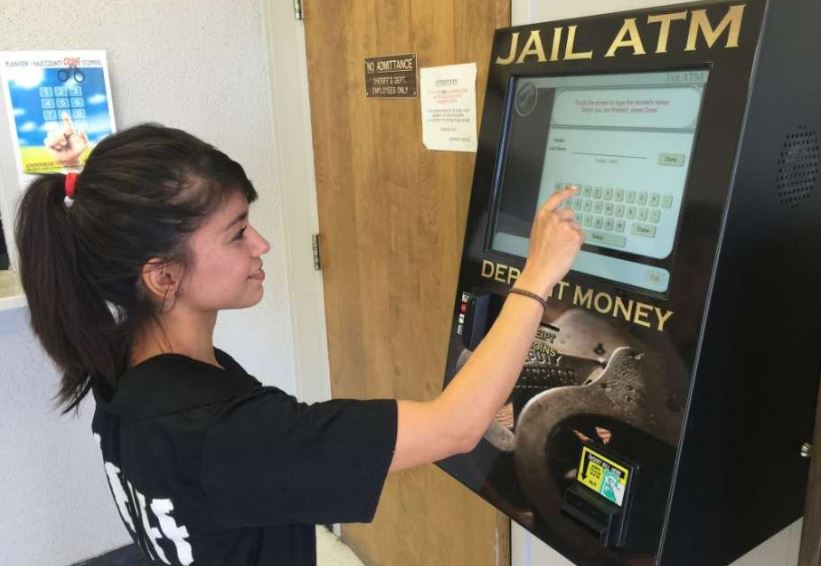
There is a monthly limit of $200-300 on how much inmates can spend on commissary items.
This amount is subject to change so call the facility at 715-726-7704 in order to confirm the amount that cannot be exceeded.
Inmates have access to both an in-house commissary store, and commissary packages that can be purchased and shipped to the inmate by friends and family.
Scroll down for information on the Chippewa County Jail's service they use for you being able to purchase commissary items online and have them shipped directly to the inmate.
You can also go to our Inmate Money page for information on how to send money to an inmate.
JailATM provides a secure electronic payment portal that allows friends and family members to deposit funds directly into an incarcerated person's jail trust and commissary account. Deposited money provides the financial balance needed for your loved one to purchase personal hygiene items, snacks, over-the-counter medical sundries, and correspondence supplies from the facility commissary.
Important: Facility Deposit Rules and Window Intake Vary
Once a person is booked and moved to a housing unit, facilities do not always allow cash drop-offs or phone payments directly to the jail window. Some might and you should confirm this by calling the facility and asking. But if you do not register online and fund your loved one's trust account immediately, they may be forced to wait days or weeks for standard paper processing, leaving them without essential soap, clean undergarments, basic medical sundries or snacks.
Step-by-Step Instructions to Register and Deposit Funds
- Obtain the inmate's legal first and last name, date of birth, and assigned facility booking ID number.
- Navigate to deposits.jailatm.com/webdeposits/ on your computer or mobile device.
- Click Sign In or Register to set up your verified user account using your email address and password.
- Select the state and the detention facility where the inmate is currently housed.
- Search for the inmate using their ID number or legal last name to confirm an exact roster match.
- Enter your desired deposit dollar amount and review the calculated transaction and convenience fees.
- Input your debit or credit card billing details, complete payment authorization, and save your digital receipt.
What the Inmate Needs to Do
The inmate does not need an internet account to receive funds. Once the electronic transaction clears, the balance posts directly to their jail trust ledger according to facility accounting schedules. The inmate can review their updated balance at a dayroom pod kiosk or on their weekly trust statement and place orders on their regular commissary day.
Official Provider: JailATM Official Website
Customer Service Telephone: 1-877-810-0614
Support Hours: Monday – Friday, 8:00 AM – 5:00 PM CST
Supported Languages: English and Spanish
Other Services Provided by JailATM
In addition to Trust & Commissary Money Deposits, JailATM provides several other communication, store, and visitation services at participating facilities:
- Commissary Gift Packs & Store Ordering: Order pre-approved snack boxes, food packages, and hygiene bundles sent directly to the jail.
• Learn more on our website: Commissary Gift Packs Guide | • Visit official vendor page: JailATM Store Orders - Digital Messaging & Picture Sharing: Send electronic messages and photos directly to an inmate's housing unit kiosk.
• Learn more on our website: Digital Messaging Guide | • Visit official vendor page: JailATM Messaging - Remote Video Visitation: Schedule and join live video visits from home using your computer or smartphone.
• Learn more on our website: Video Visitation Guide | • Visit official vendor page: JailATM Video Visits
Deposit Money for an Inmate in the Chippewa County Jail
The Easiest and Securest Way of Depositing Money for an Inmate
There are several methods for depositing money on an inmate's account:
1. To send money online to an inmate in the Chippewa County Jail use Jail ATM.
.png)
2. If you prefer to use your credit or debit card and deposit money over the phone, you can call them at 877-810-0914.
3. Some jails also have a JailATM kiosk for cash or card deposits. Call the Chippewa County Jail at 715-726-7704 to ask whether it has one and where it is.
4. The Chippewa County Jail may also allow you to *mail an inmate a money order or cashier’s check from a trusted source such as the Post Office, a local bank, or Western Union. Ask the jail who the money order should be made out to and what to write on it. To confirm this option call the facility at 715-726-7704.
*When mailing a money order or cashier’s check, send it an envelope by itself. Never send it with a letter or photos for your inmate, unless the facility allows it. Never send personal checks or cash.
5. To ask whether the Chippewa County Jail takes deposits in person, and when, call 715-726-7704.
Send an Inmate Mail in the Chippewa County Jail
When mailing a letter or postcard to an inmate, please address your mail as follows:
Inmate's Full Name & Inmate ID #
C/O Chippewa County Jail
50 E Spruce Street
Chippewa Falls, WI 54729
- All mail sent to an inmate at the Chippewa County Jail must include the sender's name and mailing address in the top left corner of the envelope or postcard.
- Failure to include your return address will most likely result in your mail NOT being delivered and your letter destroyed.
- Always use blue or black ink. Do NOT use felt markers or crayons.
- Do NOT include drawings, nor should you draw on the envelope or postcard.
- Do NOT enclose glitter, confetti or anything else in envelope.
- Do not use lipstick, perfume, colored ink or markers, or crayons.
- When greeting cards are allowed, they should be plain and not be musical.
- When books, newspapers and magazines are allowed, they must be new, and only be sent directly from the publisher.
- Packages, when allowed, must only be sent directly to an inmate from the third-party vendor outlined on our Commissary Page.
Inmates have their mail delivered Monday thru Friday. There is no limit on how much mail they can receive. Inmates are allowed to send mail to friends and family, but NOT to co-defendants, other inmates in this or other jails or prisons, and NOT from people they have a 'no contact' order in place from.
The Chippewa County Jail has a zero-tolerance policy regarding mail violations.
Follow these instructions exactly to help ensure that your inmate receives his/her mail and not have it thrown away.
Scroll down for a list of Frequently Asked Questions and Answers regarding how to send an inmate mail, or call the Chippewa County Jail at 715-726-7704 with your questions.
CIDNET Phone Calling enables incarcerated individuals to place outbound voice calls from housing-unit wall phones or handheld tablets directly to approved cell phones and landlines. Because jail phone systems cannot accept incoming calls, setting up a CIDNET account and purchasing Data Points ensures outbound calls connect immediately without wireless carrier collect blocks.
Important: Mobile Networks Block Inmate Calls Without Data Points
Wireless cellular carriers automatically block collect calls originating from jail telecommunications systems. While some traditional landline telephone providers may support monthly operator billing, mobile smartphones and VoIP numbers require an active prepaid CIDNET balance, which you can verify with your provider. If you do not register your 10-digit number online and purchase Data Points immediately, your loved one will hear an automated operator recording stating that your phone number cannot accept calls.
Step-by-Step Instructions to Set Up and Fund Voice Calling
- Go to customer.cidnet.net or launch the CIDNET Customer mobile app.
- Register your account using the primary 10-digit telephone number where you want to receive calls.
- Upload your driver's license or state ID for identity verification.
- Select the detention center where the inmate is held and link them to your contact profile.
- Purchase Data Points using a debit or credit card to cover per-minute calling rates.
- Confirm your mobile phone allows calls from automated or unknown correctional numbers and does not send them to spam.
What the Inmate Needs to Do
The inmate approaches a pod wall phone or opens the phone app on their tablet, enters their assigned inmate PIN, and dials your 10-digit number. CIDNET's automated system verifies that your account has sufficient Data Points and connects the call once you accept the automated prompt. All non-privileged conversations are recorded and monitored by the facility.
Official Provider: CIDNET Customer Portal | Encartele Corporate
Customer Service Telephone: 1-888-984-1903
Support Hours: Monday – Friday, 8:00 AM – 5:00 PM CST
Supported Languages: English and Spanish
Other Services Provided by CIDNET
In addition to Phone Calling, CIDNET operates messaging and video visitation services:
- Data Points (Unified Funding): Purchase the central credits used to pay for telephone talk time.
• Learn more on our website: CIDNET Data Points Guide | • Visit official vendor page: Buy CIDNET Data - Remote Video Visitation: Schedule and join live video visits from home using your computer or smartphone.
• Learn more on our website: CIDNET Video Visits Guide | • Visit official vendor page: CIDNET Video Visitation - Inmate Messaging & Digital Mail: Send text messages and digital photo attachments directly to an inmate's terminal.
• Learn more on our website: CIDNET Messaging Guide | • Visit official vendor page: CIDNET Messaging Portal
CIDNET Inmate Messaging provides a secure digital messaging and picture-sharing service for families of incarcerated individuals. Powered by CIDNET Data Points, outside contacts can compose electronic letters and upload JPEG photographs directly through the CIDNET web app, delivering correspondence to inmate screens within hours and avoiding paper mail sorting delays.
Important: Postal Mail Transition and Screening Rules Vary
Inmates cannot receive incoming phone calls, and physical postal mail policies differ across jurisdictions. While some detention centers accept handwritten envelopes, many facilities contracting with CIDNET have prohibited physical paper mail in favor of electronic mail scanning and direct digital messaging, which you can verify by checking facility rules. If you do not register online and purchase Data Points immediately, your loved one may face lengthy periods without direct written communication from family.
Step-by-Step Instructions to Register and Message an Inmate
- Log into your account at customer.cidnet.net or launch the CIDNET app.
- Ensure your identity verification (photo ID and selfie) is approved by the facility.
- Confirm your account has an active Data Point balance; purchase additional points if needed.
- Select Messages from your navigation menu and click on your linked contact.
- Type your message in the text editor and attach clear JPEG photo files if authorized by the facility's media rules.
- Review the estimated Data Point cost for the message length and image attachments.
- Click Send to submit your transmission to the institutional mailroom screening queue.
What the Inmate Needs to Do
All messages and photographs pass through facility screening filters. Once approved, the message arrives in the inmate's inbox on their housing unit kiosk or assigned tablet. The inmate opens the message, views the images, and types a digital response, which draws against available account points.
Official Provider: CIDNET Customer Portal | Encartele Corporate
Customer Service Telephone: 1-888-984-1903
Support Hours: Monday – Friday, 8:00 AM – 5:00 PM CST
Supported Languages: English and Spanish
Other Services Provided by CIDNET
In addition to Inmate Messaging, CIDNET provides several other communication and visitation options:
- Data Points (Unified Funding): Purchase universal credits that power voice calling, messaging, and video visits.
• Learn more on our website: CIDNET Data Points Guide | • Visit official vendor page: Buy CIDNET Data - Remote Video Visitation: Schedule and join live video visits from home using your computer or smartphone.
• Learn more on our website: CIDNET Video Visits Guide | • Visit official vendor page: CIDNET Video Visitation - Phone PINs & Voice Calling: Fund outbound voice telephone calls so your loved one can call your telephone directly.
• Learn more on our website: CIDNET Phone Calling Guide | • Visit official vendor page: CIDNET Voice Calling
CIDNET provides secure handheld wireless tablets designed specifically for correctional housing units. Operating over a private, encrypted facility network, these devices allow incarcerated individuals to exchange messages, place voice calls, conduct remote video visits, read approved digital books, access law library materials, and complete rehabilitative courses directly from their cells.
Important: Tablet Hardware Deployment and Rental Rules Vary
Detention centers do not manage tablet distribution identically. While some agencies issue individual personal tablets to every detainee at booking, others utilize shared pod docking stations or restrict tablet use to specific dayroom hours, which you should confirm with the facility directly. Although core educational and legal resources are generally provided free of charge, sending messages or making calls from the tablet requires an active balance of Data Points funded by friends or family.
Step-by-Step Instructions to Support Tablet Use
- Confirm that CIDNET handheld tablets are active and deployed at your loved one's specific detention facility.
- Register your verified user account at customer.cidnet.net.
- Complete identity verification by uploading your government photo ID.
- Link the inmate to your profile and purchase a reserve of CIDNET Data Points.
- Notify your loved one that funds are available so they can open the communication apps on their tablet.
What the Inmate Needs to Do
The inmate unlocks their assigned tablet using biometric verification or their unique facility PIN. Once logged on, they can browse institutional announcements, access educational materials, or select approved outside contacts to read messages and start calls. When quiet hours begin or tablets require recharging, inmates return devices to designated pod docking carts.
Official Provider: CIDNET Customer Portal | Encartele Corporate
Customer Service Telephone: 1-888-984-1903
Support Hours: Monday – Friday, 8:00 AM – 5:00 PM CST
Supported Languages: English and Spanish
Other Services Provided by CIDNET
In addition to Inmate Tablet Services, CIDNET provides several core communication channels:
- Data Points (Unified Funding): Purchase the digital currency required to power all tablet communications.
• Learn more on our website: CIDNET Data Points Guide | • Visit official vendor page: Buy CIDNET Data - Inmate Messaging & Digital Mail: Send text messages and photos directly to an inmate's tablet screen.
• Learn more on our website: CIDNET Messaging Guide | • Visit official vendor page: CIDNET Messaging Portal - Remote Video Visitation: Conduct scheduled live video calls directly to their tablet or pod kiosk.
• Learn more on our website: CIDNET Video Visits Guide | • Visit official vendor page: CIDNET Video Visitation
Nearby counties
- Jail (Main): 715-726-7704
- Jail Nurse: 715-726-7967
- Sheriff: 715-726-7701
The Chippewa County Jail serves the following cities and towns of Chippewa County: Boyd, Cadott, Chippewa Falls, Cornell, Eau Claire, Elk Mound, Holcombe, Lake Hallie, New Auburn and Tilden.