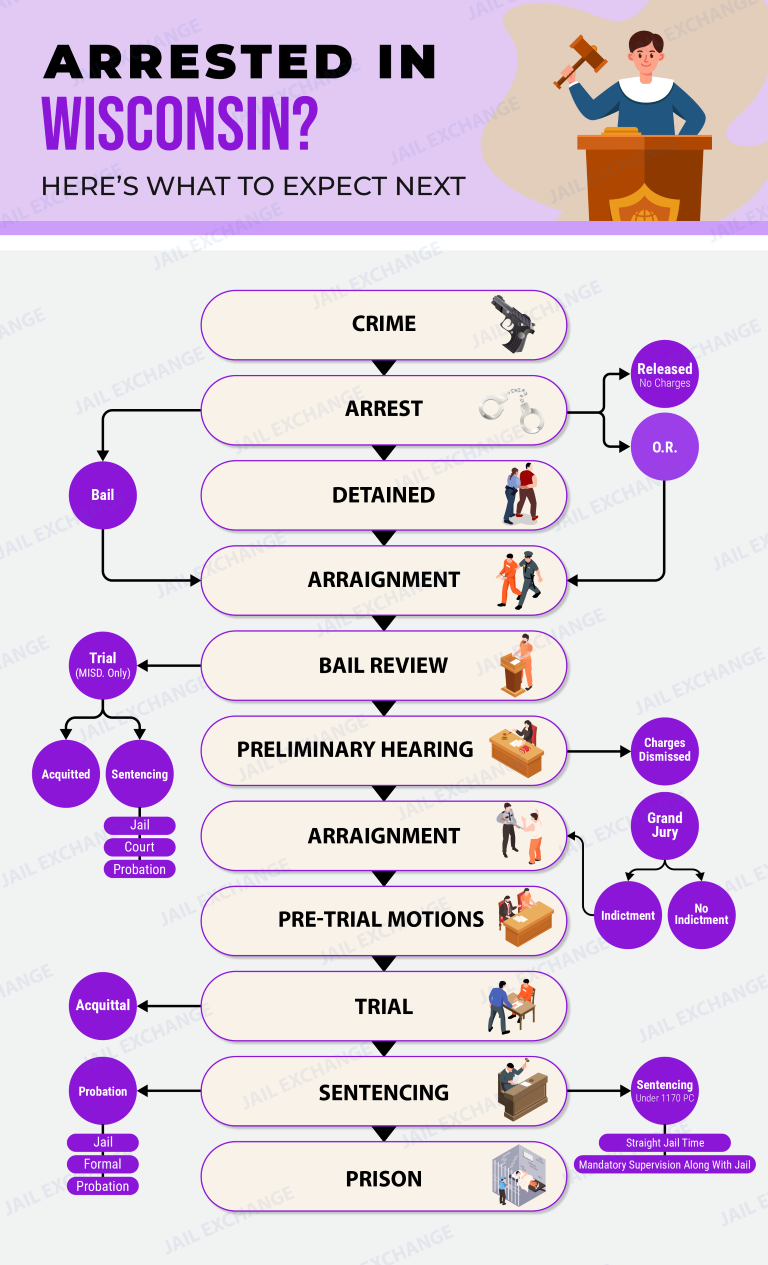
Keshena is the seat of Menominee County. The county's borders nearly match those of the Menominee Indian Reservation, and that shapes every criminal case. State charges go to the Menominee County Circuit Court. By law it forms one two-county circuit with Shawano County, and the judges sit in Shawano; the county's Clerk of Circuit Court works in Keshena. No municipal court is listed in the county, so the circuit court also takes ordinance citations. A single elected District Attorney serves Menominee and Shawano counties together. Menominee County runs no jail of its own: people arrested on state charges go to the jail that serves Menominee County, under the Sheriff's arrangements. Serious crimes involving tribal members on the reservation are generally federal cases. Tribal charges go to the Menominee Tribal Court.
- Menominee County Circuit Court (Menominee–Shawano circuit): Clerk of Circuit Court, W3269 Courthouse Lane, P.O. Box 279, Keshena, WI 54135; (715) 799-3313
- Shawano/Menominee District Attorney's Office (in the Shawano courthouse, 311 N. Main Street): victim/witness (715) 526-4608
- Menominee County Sheriff's Office: W3269 Courthouse Lane, P.O. Box 190, Keshena, WI 54135; (715) 799-3357
- The jail that serves Menominee County: the Sheriff's Office, (715) 799-3357, can say where a person held on a state charge is being kept
- Menominee Tribal Detention Facility, Keshena (tribal jail), (715) 799-3592
- Wisconsin State Public Defender, Shawano office (for Menominee and Shawano counties): 106 S. Main Street in Shawano; (715) 524-2521
- Menominee County Human Services (juvenile intake): P.O. Box 280, Keshena, WI 54135; (715) 799-3861
- Menominee Tribal Court: P.O. Box 429, Keshena, WI 54135; (715) 799-3348
Which court hears your case. In Menominee County, the first question is often which government has jurisdiction. Wisconsin's Public Law 280 authority over the reservation went back to the federal government in 1976. So a felony-level crime by or against a tribal member generally goes to federal court in Green Bay. Lesser offenses by members go to the Menominee Tribal Court. The state keeps the remaining cases, typically those with no tribal member as defendant or victim. Those follow the usual Wisconsin path. Ordinance tickets and first-offense OWI go to the Menominee County Circuit Court, since no municipal court is listed. (A first OWI is a civil forfeiture; it turns criminal with a child under 16 aboard.) Misdemeanors and criminal traffic, OWI number two among them, land in that court too. So do felonies: initial appearance, preliminary hearing, and plea or trial. Most hearings take place before the shared judges in Shawano.
Where pretrial inmates are held. There is no Menominee County jail. Adults arrested on state charges go to the jail that serves Menominee County. For the location in a particular case, and for release details, call the Sheriff's Office: (715) 799-3357. Tribal police arrests on tribal charges are booked at the tribal detention facility in Keshena.
- Local courts in Menominee County (circuit court and municipal courts)
- Misdemeanor (for example, theft, battery, disorderly conduct, a second OWI)
- Felony (for example, burglary, felony theft, drug possession with intent to deliver, substantial battery)
- Violent felony (for example, homicide, sexual assault, armed robbery)
- Juveniles (under 17) arrested in Menominee County
- Federal cases (U.S. District Court) from Menominee County
Local courts in Menominee County (circuit court and municipal courts)
The entire county is one civil town: the Town of Menominee. It takes in Keshena, Neopit, Zoar, South Branch and Legend Lake. Wisconsin's municipal court directory lists no court here. Citations that a municipal judge would hear elsewhere generally go to the circuit court instead. Check the ticket; the court printed there is the one to follow. Elsewhere, municipal courts handle just one thing: ordinance forfeitures. They cannot jail anyone, except over unpaid forfeitures. Some defendants there may move a case up to circuit court.
The shared Menominee–Shawano circuit
State law combines Menominee and Shawano into a single judicial circuit. Wisconsin has only three such two-county circuits. The judges work at the Shawano County Courthouse, 311 N. Main Street in Shawano. Menominee County's clerk and case records stay in Keshena. Expect to travel to Shawano, about 10 miles south, for many hearings. The hearing notice gives the courtroom.
- Clerk of Circuit Court, Keshena: W3269 Courthouse Lane; P.O. Box 279; (715) 799-3313
Other offices
- District Attorney for Shawano and Menominee: 311 N. Main Street, Shawano; (715) 526-4608. State statutes make the two counties one prosecutorial unit. Voters in both elect one District Attorney.
- SPD Shawano office: 106 S. Main Street; (715) 524-2521
- Menominee County Sheriff: W3269 Courthouse Lane, Keshena; (715) 799-3357
- Menominee Tribal Police: based in Keshena; the main law enforcement agency on the reservation. The county has no city or village police department.
- Human Services: Keshena; (715) 799-3861
Tribal court and tribal jail
- Menominee Tribal Court: P.O. Box 429, Keshena; (715) 799-3348. It hears tribal criminal, juvenile and civil matters.
- Menominee Tribal Detention Facility: Keshena; (715) 799-3592. This 45-bed jail is a Bureau of Indian Affairs facility run by the tribe under contract.
Tribal cases and state or federal cases are separate. Each has its own release rules. On a state charge, the circuit court sets cash bail or other terms. The Sheriff's Office or the Keshena clerk can explain where to pay.
Misdemeanor (for example, theft, battery, disorderly conduct, a second OWI)
A misdemeanor-level offense in Menominee County can go to either of two courts. Think of a fight, a domestic call, petty theft, or drunk driving on Highway 47 or 55. If a tribal member did it on the reservation, the Menominee Tribal Court generally takes the case. If the state has jurisdiction, the filing is in the Menominee County Circuit Court. That is most often the case when neither suspect nor victim is a tribal member.
The state misdemeanor process
Booking takes place at the jail that serves Menominee County. Many defendants then leave on a signature bond. That bond is a promise to return. It can carry a dollar figure owed after a missed hearing. Others get a citation and go. Those kept in custody see a judge or court commissioner. That normally happens within 48 hours, often over video. Sobriety or no-contact terms are typical. Wisconsin has no bail bond businesses. Family members or the defendant pay any cash themselves. Domestic abuse arrests add a rule. Upon release, contacting the alleged victim is barred for 72 hours. A written waiver by the victim ends it.
Lawyers for people who cannot pay
State cases from Menominee County are covered by the Shawano SPD office, (715) 524-2521. Apply through jail staff, or directly with the office. Its financial standard is strict. Outside the standard but still unable to pay? A judge may order counsel at county expense. Tribal court has separate representation rules.
State misdemeanor penalties in Menominee County
- A Menominee County charge of battery, or of theft of up to $2,500, is a Class A misdemeanor: jail can reach 9 months and the fine $10,000.
- Disorderly conduct: Class B. Jail up to 90 days; fine up to $1,000. A domestic abuse label is often added.
- Class C misdemeanors: Menominee County penalties top out at 30 days in jail plus a $500 fine.
- OWI, second within ten years: criminal. Confinement is mandatory, between 5 days and 6 months. Also ordered: a fine; revocation; an assessment; an interlock. Penalties climb on a third. A fourth is generally a felony.
Possible outcomes: dismissal; deferred prosecution; an amended forfeiture; a fine; probation; jail, sometimes with Huber release for work. State misdemeanor juries seat six. Most take two to six months.
Felony (for example, burglary, felony theft, drug possession with intent to deliver, substantial battery)
Around Keshena and Neopit, the most frequent felonies are drug dealing, burglary and serious assaults. Suppose a tribal member is the suspect. Or suppose a non-member is accused of harming a member. Then tribal police and federal agents commonly investigate, and federal court prosecutes. What follows describes the cases Wisconsin keeps.
State felony steps
- Complaint and initial appearance. The shared District Attorney files a complaint. A judge or commissioner sets release terms: cash bail with conditions, or a signature bond.
- Preliminary hearing. The question is probable cause. Did a felony likely happen, and did the defendant likely commit it? Timing is 10 days for someone held for want of the release money. Others get 20 days. Many defendants waive the hearing.
- Information and arraignment. The prosecutor's information comes next. At arraignment, the defendant pleads.
- Plea or jury trial. Plea deals settle most cases. A trial jury has 12 members; their verdict must be unanimous. A formal demand for a speedy trial generally means trial within 90 days.
State felony penalties
- Burglary: Class F. Prison can reach 12.5 years.
- Felony theft: Over $2,500 it is Class I (3.5 years max). Class H past $5,000 (6 years). Class G past $10,000 (10 years).
- Possession with intent to deliver: graded by drug type and quantity. Low-level cases are minor felonies. Big fentanyl or meth amounts can reach Class C.
- Substantial battery: Class I. Aggravated battery: Class H, or Class E when the intent was great bodily harm.
Truth in sentencing gives a prison sentence two pieces. Initial confinement comes first; extended supervision second. No parole applies to post-1999 crimes. A judge can open the door to the Challenge Incarceration Program. The Substance Abuse Program is another option. A year or less counts as a jail term. Anything longer is served with the Department of Corrections. Appointments come through the Shawano SPD office. Expect six months to a year for a state felony.
Violent felony (for example, homicide, sexual assault, armed robbery)
On the Menominee Reservation, killings, sexual assaults and robberies involving tribal members fall under the federal Major Crimes Act and related laws. The U.S. Attorney in Green Bay usually charges them, and they are tried in federal court. The tribe may file its own charges too. Only a case within state jurisdiction goes to the Menominee County Circuit Court.
State release decisions
When the charge is a state violent felony, cash bail is often high. Strict no-contact orders accompany it. A 2023 amendment changed Wisconsin's constitution on this point. Judges may now consider a defendant's risk of serious harm to the public. That factor applies to conditions and to cash amounts.
Wisconsin maximums if the case is in state court
- First-degree intentional homicide: Class A. Life imprisonment is mandatory. The judge may set a date for extended supervision eligibility, or deny it.
- Second-degree intentional homicide: Class B; 60 years. First-degree reckless homicide: the same class and cap.
- First-degree sexual assault: a Class B felony, punishable in Menominee County by up to 60 years. Some offenses against children require minimum terms.
- Armed robbery: Class C. Conviction in the Menominee County court can bring 40 years. Simple robbery is Class E, with 15 years at most.
The death penalty? Wisconsin abolished it in 1853. Plan on one to two years. In state court, Marsy's Law guarantees victims notice and a voice. For victim/witness help, the shared DA office is at (715) 526-4608. Indigent defendants in state court are represented by the SPD.
Juveniles (under 17) arrested in Menominee County
Anyone 17 or older is tried in Wisconsin's adult courts. In state court, a child from 10 to 16 goes before the circuit court acting as juvenile court. Those hearings are confidential. For Menominee tribal youth on the reservation, delinquency matters often go through the Menominee Tribal Court instead. Families should ask which court has the case.
Intake
State youth referrals go to Menominee County Human Services in Keshena: (715) 799-3861. The intake worker decides custody first. Can the youth go home or to relatives, or must the youth be held? Then the worker decides the path. The case may be closed or handled by deferred prosecution agreement. Otherwise it is referred; a delinquency petition from the DA may follow.
When a child is held
No secure juvenile center operates in Menominee County. In a state case, a youth who is held typically goes to a regional center taking the county's placements. One common example: the Brown County Juvenile Detention Center, located in Green Bay. Once intake decides to hold, the clock starts. Within 24 hours, a custody hearing generally must take place. Weekends and legal holidays are left out of that count. In a state delinquency case, every child may have a public defender. Family income is irrelevant. Contact the Shawano office: (715) 524-2521.
Outcomes in juvenile court
- The case closes, or it is resolved by deferred prosecution or a consent decree.
- A delinquency finding, with supervision at home. Restitution, counseling or community service may be ordered.
- Placement away from home: foster or group care, or a county-overseen Type 2 placement.
- For the most serious or persistent cases: Type 1 commitment. The facilities: Lincoln Hills School and Copper Lake School, both near Irma. The Serious Juvenile Offender program is the alternative.
Adult court
State law allows waiver to adult court at 14 and older. For a few grave offenses, waiver of a younger child is allowed. Some charges begin in adult court from age 10: first-degree intentional homicide, or the attempt; first-degree reckless homicide; felony murder. Certain new crimes by already-adjudicated youths do as well. For major crimes on the reservation, federal prosecution of a juvenile is possible but uncommon. Juvenile records are generally confidential.
Federal cases (U.S. District Court) from Menominee County
No Wisconsin county depends on federal court more than Menominee. The county sits in the Eastern District of Wisconsin. Cases go to the Green Bay Division, about an hour from Keshena by car.
- Federal court clerk, Green Bay: (920) 884-3720. Office: Suite 102, 125 S. Jefferson Street.
- U.S. Attorney (Green Bay): (920) 884-1066. Office: Suite 301, 205 Doty Street.
- Federal Defender Services of Wisconsin: (920) 430-9900. Office: 801 E. Walnut Street, Green Bay. When it cannot, a CJA panel attorney is appointed.
- Pretrial Services and Probation (Green Bay): (920) 884-7780. Office: Room 301, 125 S. Jefferson Street.
Why so many cases here are federal
Wisconsin is a Public Law 280 state. Normally that puts reservation crimes in state court. The Menominee Reservation is the exception. Federal recognition of the tribe was restored in 1973. The state then gave up its jurisdiction there, effective March 1, 1976. Today the U.S. Attorney prosecutes serious reservation crimes by tribal members. Many crimes by non-members against members are federal too. Two statutes govern: the Major Crimes Act; the General Crimes Act. The Menominee Tribal Court may also prosecute members; federal law caps its sentences. Apart from reservation cases, the usual federal charges apply here as anywhere. Examples: drug trafficking; guns held by prohibited persons; bank robbery; child exploitation; fraud.
The federal process
In federal court, Wisconsin's cash bail rules give way to the Bail Reform Act. An arrested defendant first faces a U.S. magistrate judge in Green Bay. A lawyer is appointed if the person cannot afford one. Release on conditions is one option. Pretrial Services then supervises. Or the judge may order detention after a hearing. Expect that hearing within about three court days. When charges begin by complaint, an indictment must follow. The grand jury has 30 days. After indictment, a 70-day trial deadline applies; that comes from the Speedy Trial Act. Excludable delays often extend it. Guilty pleas end most cases. At trial, 12 jurors must agree unanimously.
A presentence report precedes sentencing. Then the advisory Guidelines are calculated. Mandatory minimums bind the judge. There is no federal parole. Good-time credit leaves roughly 85 percent to serve. That happens in Bureau of Prisons custody. Supervised release starts afterward. The Seventh Circuit, in Chicago, takes appeals.
Finding someone in federal custody
Search by name or register number: Federal Bureau of Prisons inmate locator. Federal detainees awaiting trial often stay in county jails under U.S. Marshals Service contracts. A person held that way may be on the jail's roster too.
Here you have general information on Menominee County, Wisconsin criminal cases. It is not legal advice. Reservation jurisdiction turns on the facts of each case, and court and custody arrangements can change. See a lawyer about a specific charge. In a state case, ask at the jail for a public defender, or call the SPD's Shawano office at (715) 524-2521. The Menominee County Sheriff's Office, (715) 799-3357, can say where someone is held.