Graham County Detention Facility Criminal Court Process
Criminal Court Process for Graham County Arizona
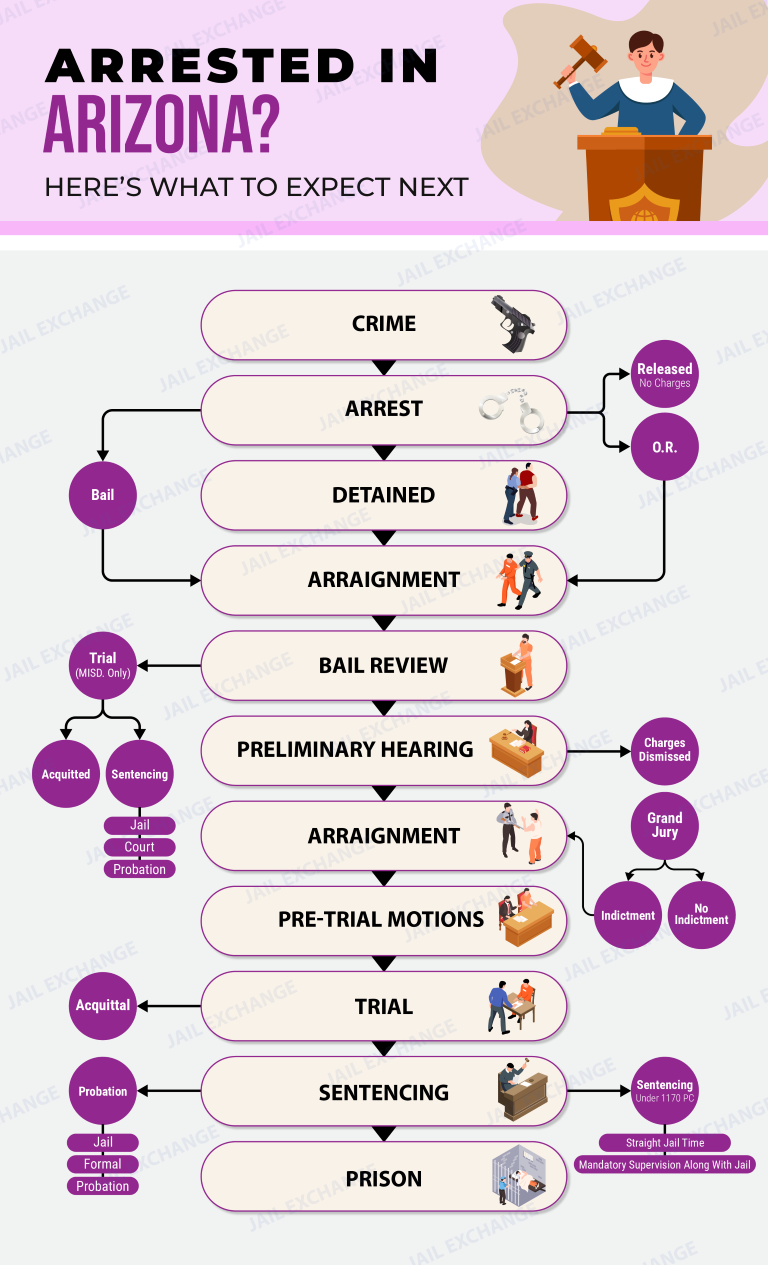
What Happens After an Arrest in Graham County
Graham County, centered on the Gila Valley farming towns of Safford, Thatcher and Pima beneath Mount Graham, has a compact court system with nearly everything under one roof. The Superior Court of Arizona in Graham County, which tries every felony and runs the county’s juvenile court, is located at 800 W. Main Street, Safford, AZ 85546. The Clerk of the Superior Court’s number is (928) 428-3100. Lower-level cases are spread among two justice courts and three municipal courts:
- Safford Justice Court, 800 W. Main Street, Safford, in the same complex as the Superior Court: (928) 428-1210
- Pima Justice Court, covering the western part of the county: (928) 485-2771
- Safford City Court, Thatcher Municipal Court and Pima Municipal Court, which hear misdemeanors and traffic offenses committed inside those towns
The Graham County Attorney prosecutes felonies and the misdemeanors filed in justice court, and the towns use their own prosecutors in municipal court. Adults who are booked go to the Graham County detention center in Safford.
Federal cases from Graham County are part of the Tucson Division of the U.S. District Court for the District of Arizona and are heard at the Tucson federal courthouse, 405 W. Congress Street, Tucson, AZ 85701, (520) 205-4200; there is no federal court in the county. The basic test is whose law applies. State crimes break Arizona statutes and are charged by the County Attorney in state court. Federal crimes break laws enacted by Congress or involve something federal, such as smuggling drugs or people across state or international lines, immigration violations, robbery of a federally insured bank, or acts on U.S. land such as the Coronado National Forest up on Mount Graham or Bureau of Land Management land. The eastern portion of the San Carlos Apache Reservation, including the community of Bylas, lies within Graham County. The Major Crimes Act makes murder, sexual abuse, kidnapping, serious assaults and other listed felonies federal crimes when a Native American commits them on reservation land, and San Carlos cases are heard in Phoenix, not Tucson, under federal court rules. The San Carlos Apache tribal court handles most other crimes involving tribal members there.
Open the box for your kind of charge to see the usual Safford path.
- Misdemeanor charges (DUI, shoplifting, assault, trespassing)
- Felony charges (burglary, dangerous drug possession, theft, aggravated DUI)
- Violent and serious felonies (murder, sexual assault, armed robbery)
- Graham County courthouse in Safford
- When a Graham County arrest is federal
- Search tools after a Graham County arrest
- Immigration detainers in Graham County
Misdemeanor charges (DUI, shoplifting, assault, trespassing)
A misdemeanor arrest made by a town officer in Safford, Thatcher or Pima normally becomes a municipal court case, while sheriff’s deputies and state troopers file in the Safford or Pima justice court. Many people receive a citation and a date to appear. Anyone held in jail gets an initial appearance within 24 hours, and under the Arizona rules a misdemeanor defendant is presumed eligible for release on their own recognizance.
Arizona’s sentencing limits for misdemeanors are tied to class. A class 1 misdemeanor can bring six months in jail and up to $2,500 in fines; a class 2, four months and $750; a class 3, thirty days and $500. Surcharges are tacked onto the base fine. A first DUI still includes mandatory jail time, an ignition interlock device and alcohol screening. In a case that could end in jail, a person who can’t pay for counsel is helped: the judge names one and may ask the person to cover part of it.
Most misdemeanors are tried to a judge, but a handful, including DUI, come with a right to a six-person jury. Very few cases get that far: Graham County misdemeanors usually end with a plea, diversion, deferred prosecution or dismissal, and sentences commonly involve probation, fines, counseling or community restitution. Expect weeks, sometimes months, before it ends.
When the person charged is under 18, the case generally goes to the Graham County Juvenile Court, part of the Superior Court on West Main Street in Safford. Juvenile probation officers screen the referral, and the County Attorney often allows diversion for first offenses so that completing conditions like classes or community work avoids a formal petition. Some minor violations, such as underage alcohol or tobacco possession, curfew and traffic offenses, can be sent to a justice or municipal court instead.
Felony charges (burglary, dangerous drug possession, theft, aggravated DUI)
Someone arrested for a felony is brought before a justice of the peace within 24 hours, often in the same Main Street complex that houses the Superior Court. Release terms are set, and a defendant who qualifies financially is appointed a lawyer paid for by the county, with a separate attorney assigned whenever the first one has a conflict.
Formal charging follows one of two routes. The County Attorney may ask for a preliminary hearing, which must be held within 10 days of the initial appearance if the defendant is jailed or 20 days if released, and there a judge weighs whether there is probable cause. Or the County Attorney may take the case to a grand jury for an indictment. Either route leads to arraignment in Superior Court, and Rule 8 then requires trial within 150 days for a jailed defendant and 180 days for a released one, although continuances and excluded time commonly extend the schedule.
Arizona grades felonies from class 1 through class 6. A class 6 felony can sometimes be designated a misdemeanor by the judge, when sentenced or once probation ends. Older felony records raise the sentencing range under A.R.S. 13-703, and prison inmates must serve 85% of their sentences before release. Felony juries are made up of eight people unless 30 or more years in prison is possible. In Graham County, most felony cases resolve through negotiated pleas in roughly six months to a year.
Youths under 18 accused of felonies are usually handled in Juvenile Court. Graham County has no youth detention building, and detained youth are housed under contract elsewhere; recent state listings name Pinal County’s facility in Florence. When a juvenile is detained, the petition must be filed and a detention hearing held, each within 24 hours, weekends and holidays included. Under A.R.S. 13-501(B), the County Attorney may file adult charges against a youth aged 14 or older accused of a class 1 or 2 felony, certain class 3 felonies, a dangerous offense, or who qualifies as a chronic felony offender. Juvenile jurisdiction ends at 18 in most cases, though it can continue to 19 when the state files notice regarding a 17-year-old.
Violent and serious felonies (murder, sexual assault, armed robbery)
The court steps don't change for these charges, but the odds of release and the prison exposure do. Article 2, Section 22 of the Arizona Constitution permits holding a defendant with no bail at all in capital cases and sexual assault cases backed by strong evidence of guilt, and, for other grave felonies, once a hearing shows the defendant a danger that release conditions can’t adequately address. Since 2017, Arizona Supreme Court rulings have narrowed some of the automatic bail-denial categories, requiring more individualized findings.
A crime committed with a deadly weapon or causing serious physical injury is typically charged as a dangerous offense under A.R.S. 13-704, making prison mandatory. For a first armed robbery conviction the range is 7 to 21 years. Sexual assault brings 5.25 to 14 years on a first conviction with no early release, plus sex-offender registration. A first-degree murder verdict brings death or a life sentence. Arizona executions resumed in 2025 after a pause. When death is sought, the jury has 12 members and two qualified defense attorneys are appointed. If the offense took place on the San Carlos Apache Reservation and involved a Native American, it may be prosecuted federally in Phoenix instead.
Crime victims in Graham County are protected by Arizona’s Victims’ Bill of Rights, Article 2, Section 2.1, so they get told about court dates, may come and speak when release, a plea or a sentence is decided, can say no to a defense interview, and are owed repayment. From charge to finish, a homicide or sex-assault case here usually lasts between one year and three.
For the most serious crimes, juveniles don’t stay in Juvenile Court. A.R.S. 13-501(A) makes adult court mandatory for teens who are at least 15 and charged with murder (first or second degree), armed robbery, forcible sexual assault or another violent felony offense, and for chronic felony offenders of that age facing any felony charge. These cases start in Superior Court like any adult prosecution, but anyone under 18 at the time of the offense is constitutionally barred from the death penalty and from mandatory life without release.
Graham County courthouse in Safford
The Superior Court and clerk share the Safford courthouse on Main Street:
- Safford courthouse (Superior Court): 800 West Main Street, Safford, AZ 85546 · 928-428-3100
When a Graham County arrest is federal
Federal charges, including some from the San Carlos Apache Reservation, are filed in the U.S. District Court for the District of Arizona. Graham County's judges have no say:
- First hearing at Tucson federal courthouse, 405 West Congress Street, Tucson, AZ 85701 (clerk 520-205-4200).
- Background interview by federal pretrial staff.
- A detention hearing when prosecutors ask for one.
- Time in a Marshals contract jail for anyone held.
Marshals office in Tucson: U.S. Marshals Service, 405 West Congress Street, Suite 2300, Tucson, 520-879-6900.
Search tools after a Graham County arrest
- Graham County Inmate Search: the Safford jail roster.
- VINELink (https://vinelink.vineapps.com/): Arizona jails and prisons.
- Federal Bureau of Prisons Inmate Locator (https://www.bop.gov/inmateloc/): federal inmates; phone 520-879-6900 for pretrial.
- ADCRR Inmate Data Search (https://inmatedatasearch.azcorrections.gov/): state prison.
- ICE Online Detainee Locator System (https://locator.ice.gov/odls/): immigration detention; or call 520-295-4100.
Immigration detainers in Graham County
ICE detainers request up to 48 hours of added custody, weekends and holidays included. A judge doesn't sign them. Arizona's A.R.S. 11-1051 bans county limits on immigration enforcement. Graham County has no public 287(g) agreement.
Cases are handled by ICE office in Tucson (part of the Phoenix Field Office), 6431 South Country Club Road, Tucson, 520-295-4100. Detention sites:
- Eloy Detention Center: 1705 East Hanna Road, Eloy, AZ 85131 · 520-464-3000
- Florence Service Processing Center: 3250 North Pinal Parkway, Florence, AZ 85132 · 520-868-5862
- Central Arizona Florence Correctional Center: Florence, AZ · 520-868-9095
Use this as a rough map of Graham County cases, not legal advice. Anyone charged should hire private counsel or ask the Safford clerk's office about a free one at (928) 428-3100.
Ring the Safford clerk at 928-428-3100 to confirm the date and courtroom.