From Arrest to Verdict: Napa County Criminal Courts
Napa County keeps its criminal justice system compact. Whether an arrest happens in American Canyon, Napa, Yountville, St. Helena or Calistoga, the case is heard by the Superior Court of California, County of Napa, and almost always in one building downtown. Like every California county, Napa has had a single unified trial court since municipal courts were absorbed into the superior courts around 2000, so there is no separate city court for criminal matters. Adult criminal cases are heard at the Criminal Courthouse, 1111 Third Street, Napa, CA 94559. The court’s general number is (707) 299-1100, and the Criminal Division clerk’s office can be reached directly at (707) 299-1180, weekdays from 8 a.m. to 4 p.m. The court’s other buildings, the Historic Courthouse at 825 Brown Street and the juvenile courthouse on Old Sonoma Road, handle civil, family and juvenile matters.
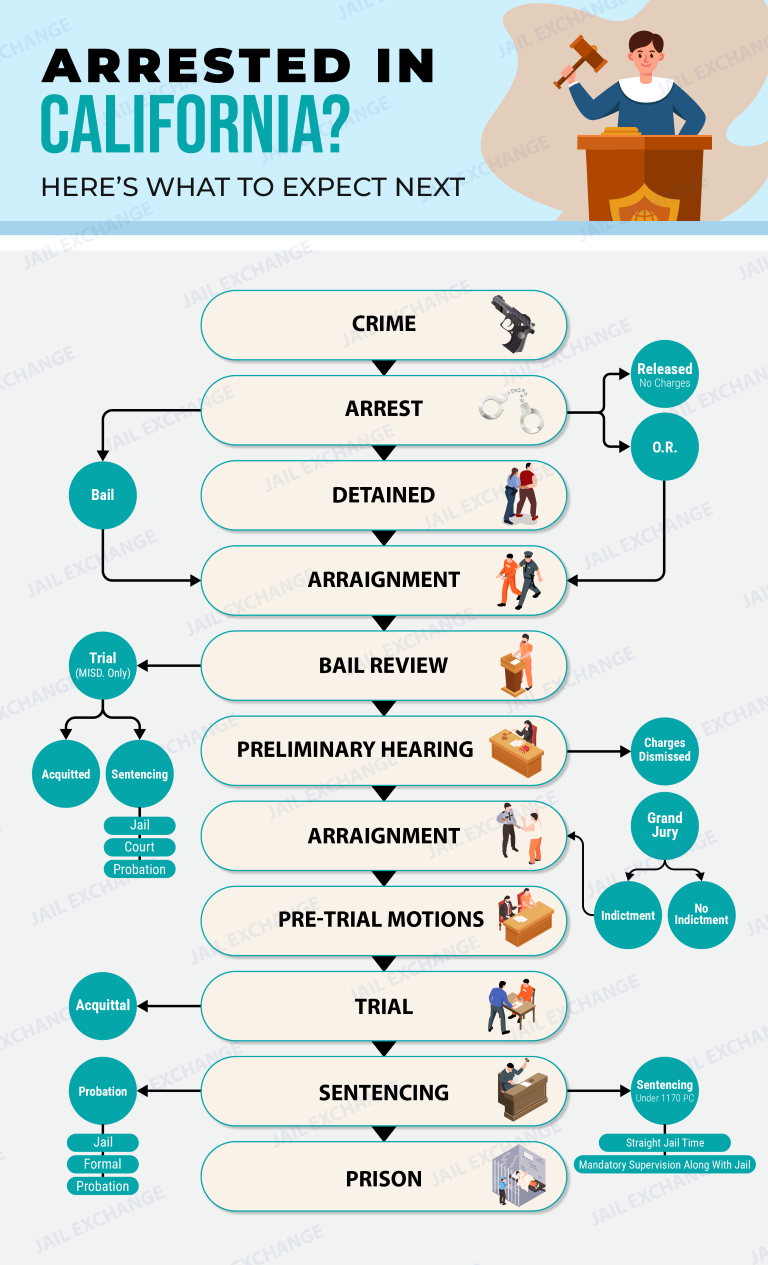
Because everything runs through one courthouse, the main question for a defendant is which department and what time. Felony in-custody arraignments are usually held in Department 1 in the afternoon, and out-of-custody misdemeanor arraignments in Department 3 in the morning. Use the links below to see how each kind of case typically proceeds.
- Misdemeanor charges (petty theft, a first DUI, simple battery, trespassing)
- Felony charges (burglary, grand theft, selling drugs, felony DUI)
- Violent and serious felonies (murder, rape, armed robbery)
Misdemeanor charges (petty theft, a first DUI, simple battery, trespassing)
The Napa County District Attorney’s Office prosecutes misdemeanors from every city and unincorporated area in the county. Many of these cases start with a written citation and a promise to appear, which lets the person go home and come back on the date shown, typically to Department 3 at the Third Street courthouse at 8:30 a.m. Someone who is booked into the county jail, which sits on Third Street a short walk from the courthouse, and not released must see a judge within 48 hours, a deadline that does not count Sundays or holidays.
At the arraignment, the charges are read, a plea is entered and release conditions are addressed. Most people plead not guilty at this point to keep their options open. Defendants who can’t afford a private attorney and face possible jail time are represented by the Napa County Public Defender, whose office is next door at 1125 Third Street. Appointed counsel no longer generates a charge to the defendant in California courts. For many misdemeanors, a lawyer can handle court appearances without the client attending.
From there, cases move to settlement conferences in Department 3, with separate days for Public Defender clients and privately represented defendants. Most misdemeanors end at this stage through a plea bargain, a reduced charge or a dismissal. Misdemeanor diversion is another possibility: the judge pauses the case and dismisses it if the defendant completes the required classes or treatment, though DUI, domestic violence and registrable sex offenses are excluded. A defendant who wants a trial gets a 12-member jury, and has the right to start that trial within 30 days of arraignment if jailed or 45 days if free, unless the defense agrees to more time.
Punishment for most misdemeanors is capped at six months in jail and a $1,000 fine, with a handful of offenses reaching one year. Probation, fines, community service and court-ordered programs are far more typical. The court’s Court Ordered Programs office tracks many of those requirements. A Napa misdemeanor case often finishes within weeks or a few months.
Felony charges (burglary, grand theft, selling drugs, felony DUI)
Felony cases in Napa begin in Department 1, where in-custody defendants are arraigned on the District Attorney’s complaint in the afternoon, usually within 48 hours of arrest not counting Sundays and holidays. The judge takes up release at this hearing. Ever since the California Supreme Court decided In re Humphrey in 2021, bail may not be set at an amount the person cannot pay unless the court finds no lesser condition would protect the public or ensure a return to court.
Defense counsel is appointed at arraignment for defendants who can’t hire their own. The Napa County Public Defender handles most of these cases. When the office has a conflict of interest, for example in a case with two co-defendants, the court appoints a separate attorney so each person has independent representation.
The preliminary hearing comes next. A judge listens to witnesses and decides whether there is enough evidence to send the case to trial, and the hearing has to occur within 10 court days of arraignment unless the defendant waives that timeline. In rare cases the District Attorney seeks a grand jury indictment instead, which replaces the preliminary hearing. A defendant held to answer is then arraigned on an “information,” usually in Department 1 on a Monday morning, and trial must start within 60 days unless time is waived. Defense lawyers often waive time to investigate, and most felony cases resolve by negotiated plea.
If there is a conviction, the Napa County Probation Department prepares a report for the judge, and sentencing generally takes place within 20 court days. Since 2011 realignment, many lower-level felony sentences are served in county jail rather than state prison, and so-called “wobblers” can be charged or later reduced to misdemeanors. Napa also runs a Drug Court, a Mental Health Court and mental-health diversion under Penal Code 1001.36, which can steer qualifying defendants into treatment instead of incarceration. Felony cases commonly take several months and can stretch beyond a year.
Violent and serious felonies (murder, rape, armed robbery)
Napa sees relatively few homicides and violent felony cases, but when they arise, they follow the standard felony route: arraignment, a preliminary hearing or indictment, and trial. Pretrial release is much harder to obtain. Article I, section 12 of the California Constitution allows a judge to deny bail outright in violent and sexual-assault felony cases if there is clear and convincing evidence of a substantial likelihood that the person’s release would lead to great bodily harm to others. Defendants in these cases frequently spend the entire case in the Napa County jail.
Sentences are long. These crimes are strikes under the Three Strikes law, so a single prior strike doubles the sentence and two prior strikes can produce a term of 25 years to life. A defendant convicted of a violent felony must also serve at least 85% of the prison term.
- Murder: first-degree murder carries 25 years to life, second-degree murder 15 years to life. A finding of special circumstances, such as murder committed during a rape or robbery, means life without the possibility of parole or a death sentence. Whether to seek death is solely the District Attorney’s call, and California has observed a moratorium on executions since 2019.
- Armed robbery: the base term for robbery reaches nine years. Gun enhancements under Penal Code 12022.53 add 10 years, 20 years or 25 years to life depending on how the firearm was used and whether someone was seriously injured, but a judge may strike them, a power courts have had since 2018.
- Rape: up to eight years in prison before any aggravating enhancements, together with lifetime sex-offender registration at the highest tier.
In any capital case, the court appoints two qualified defense attorneys. Victims and their families have rights under Marsy’s Law, including being told about hearings, being heard at sentencing and receiving restitution. With forensic analysis, expert testimony and lengthy defense preparation, serious violent cases routinely last one to three years, and murder cases can last five years or more.
The information here describes the general criminal court process and is not legal advice. Anyone charged with a crime should consult a criminal defense attorney or contact the Napa County Public Defender at (707) 253-4442.