
William Marion Stevenson House Detention Center
William Marion Stevenson House Detention Center
Juvenile
302-424-8100William Marion Stevenson House Detention Center: Information for Families
Detention or long-term placement? This is a state juvenile detention center (short-term), not a long-term placement. DYRS, a division of the state children's department (DSCYF), holds youth under 18 here while their case is still open in court.
Information for families of youth held at William Marion Stevenson House Detention Center (SHDC) (750 North DuPont Boulevard, Milford, DE 19963), phone 302-424-8100.
Read inmate search answers
 Read inmate search answers
1. Is my child at Stevenson House?
Juvenile records are not searchable online the way adult records are. Call 302-424-8100 and ask. These details are kept private to protect the minor, so staff share them only with a parent or guardian.
↑ Return to the question list2. What programs are offered?
Classes come from public education teachers with transferable credits. Youth get medical, dental and psychological care from certified providers. Activities include recreation, yoga, Lego robotics, music recording, culinary arts and guest speakers (DSCYF).
Every DYRS secure care facility uses the same behavior system, Cognitive Behavior Training (CBT), which helps youth change thinking patterns and can earn added privileges (DSCYF).
↑ Return to the question list3. How do family visits work?
Call 302-424-8100 and ask which family members may visit, the current days and times, and what ID to bring. Also ask whether any items may be brought in at a visit.
Throughout a stay, staff keep in contact with the family to help the youth adjust and improve behavior (DSCYF).
↑ Return to the question list4. Can my child be released before the case is decided?
A Justice of the Peace Court or the Family Court decides a child's release and any bail (10 Del. C. § 1007(k)). Before choosing secure detention, the judge has to consider less restrictive options: the child's own recognizance, release to a parent, guardian or relative, bail with or without conditions, or a nonsecure DSCYF program such as home detention or daily monitoring (§ 1007(b)).
Detention is reviewed: the Family Court hears it the next day it is in session after a Justice of the Peace Court commitment, then again with a lawyer within 14 days and every 30 days or sooner (§ 1007(e), (f)). If bail is set, your child's lawyer or the Family Court clerk can explain how to post it.
↑ Return to the question list5. Who can write, and what can I send?
Parents, relatives and friends can write. Writing to another resident, a person in another facility, or a DYRS contracted placement needs the Superintendent's approval (DSCYF).
Youth may send and receive unlimited mail. Incoming mail is scanned through a secure mail system before the resident gets it, and it may be read, censored or rejected for security. Mail that arrives after release is forwarded if the address is known, or returned (DSCYF).
Write as often as you like. Check with 302-424-8100 before mailing stamps, envelopes or books.
Mailing address
Resident's Full Name
Stevenson House Detention Center
750 North DuPont Boulevard
Milford, DE 19963
6. How do I report a problem?
Call the Delaware Child Abuse and Neglect Report Line at 1-800-292-9582, open 24 hours.
Questions about sexual safety (PREA) can go to the DYRS Office of the Director at 302-633-2620 or yrs.dscyf@delaware.gov.
↑ Return to the question list7. When can my child phone me?
At admission, each youth may call a parent or guardian. After that, the youth gets a PIN and can call out only to the numbers on the approved phone sheet; how many minutes are allowed depends on the youth's behavior level (DSCYF).
Families can't call a youth directly; calls go out from the youth. Professionals such as attorneys, court and DFS workers and probation or aftercare staff may call in. Questions about call days or the approved list go to 302-424-8100. These details are kept private to protect the minor, so staff share them only with a parent or guardian.
↑ Return to the question list8. How long will my child be here?
If a child is detained before the case is decided, the adjudicatory hearing (the trial) must be held within 30 days of detention; if it isn't, the defense can ask the court to set a date within 72 hours (10 Del. C. § 1007(g)).
For your child's release date or next court date, call 302-424-8100 or your child's lawyer. These details are kept private to protect the minor, so staff share them only with a parent or guardian.
↑ Return to the question list9. Can my child be moved to an adult prison?
A child over 12 and under 16 can be tried as an adult only for first- or second-degree murder or first- or second-degree rape (§ 1010(a)(5)). For other charges against a child 16 or older, the Family Court can hold an amenability hearing and send the case to Superior Court if it finds the child is not amenable to its rehabilitative services (§ 1010(c)).
A child aged 16 or older is proceeded against as an adult, in Superior Court, when charged with first- or second-degree murder, first- or second-degree rape, first-degree assault, first-degree kidnapping, certain first-degree robberies, or an attempt at any of these (10 Del. C. § 1010(a)(1)).
A case can also go the other way: the Attorney General may move a case to Family Court, and the defense can ask the Superior Court to transfer it within 60 days of arraignment; the court announces its decision within 90 days of arraignment (§ 1011(a)-(c)).
Youth under 18 held before trial stay in DSCYF juvenile detention, not an adult prison (House Bill 26, effective January 1, 2022, per the Delaware Juvenile Justice Advisory Group). The Superior Court can move a nonamenable child 16 or older to a non-DSCYF facility only after a hearing and on clear and convincing evidence that DSCYF detention is full and the child is at risk, or that the child is a danger to other youth (§ 1007(d)). Raise this with the defense lawyer as soon as possible.
↑ Return to the question listInformation for this service is currently unavailable.
Delaware’s Prisons and Treatment Centers: How a Case Moves Through Court
William Marion Stevenson House Detention Center: Juvenile Court Information
What kind of facility is this? It is short-term secure detention, not a long-term placement. The Division of Youth Rehabilitative Services (DYRS), part of the Delaware Department of Services for Children, Youth and Their Families (DSCYF), runs it for boys and girls under 18 whose cases have not been decided yet.
Delaware juvenile cases start in the Family Court, which has three courthouses, one per county.
1. Which court handles juvenile cases?
Juvenile cases in Delaware go to the Family Court. Youth detained here usually have their case in Family Court, Kent County, 445 S. Governors Avenue, Dover, DE 19904 (302-672-1000) and Family Court, Sussex County, Sussex County Family Courthouse, 100 East Market Street, Georgetown, DE 19947 (302-855-7400).
Call the court for hearing dates and times, or ask your child's lawyer.
↑ Back to the top of the questions2. How soon does a judge review detention?
If a Justice of the Peace Court sends a child to detention, the Family Court must hold a hearing on whether detention is appropriate, and review the release conditions, the next day it is in session (10 Del. C. § 1007(e)).
A detention review with a lawyer must follow within 14 days, then at least every 30 days while detention continues (§ 1007(f)). The adjudicatory hearing must be within 30 days of detention (§ 1007(g)).
↑ Back to the top of the questions3. What are the possible outcomes?
Options after a delinquency finding include staying at home with or without court supervision, probation, restitution, community service, or commitment to DSCYF (10 Del. C. § 1009(c)).
A commitment can mean Level IV staff-secure care such as the Mowlds or Snowden cottages, or Level V secure care at Ferris School (DSCYF). For a child 16 or older found delinquent of possessing a firearm during a felony or certain first-degree robberies, the law requires at least 6 months of Level V commitment (§ 1009(k)).
↑ Back to the top of the questions4. Will my child have a lawyer?
A child has the right to counsel at all stages of a delinquency case. If no lawyer is present at the first Family Court appearance, the judge has the Chief Defender assign one (10 Del. C. § 1007C).
The right can't be waived for a felony charge, for a child in Division of Family Services custody, or by a child under 16 (§ 1007C(c)).
↑ Back to the top of the questions5. Could my child be tried as an adult?
A child over 12 and under 16 can be tried as an adult only for first- or second-degree murder or first- or second-degree rape (§ 1010(a)(5)). For other charges against a child 16 or older, the Family Court can hold an amenability hearing and send the case to Superior Court if it finds the child is not amenable to its rehabilitative services (§ 1010(c)).
A child aged 16 or older is proceeded against as an adult, in Superior Court, when charged with first- or second-degree murder, first- or second-degree rape, first-degree assault, first-degree kidnapping, certain first-degree robberies, or an attempt at any of these (10 Del. C. § 1010(a)(1)).
A case can also go the other way: the Attorney General may move a case to Family Court, and the defense can ask the Superior Court to transfer it within 60 days of arraignment; the court announces its decision within 90 days of arraignment (§ 1011(a)-(c)).
Youth under 18 held before trial stay in DSCYF juvenile detention, not an adult prison (House Bill 26, effective January 1, 2022, per the Delaware Juvenile Justice Advisory Group). The Superior Court can move a nonamenable child 16 or older to a non-DSCYF facility only after a hearing and on clear and convincing evidence that DSCYF detention is full and the child is at risk, or that the child is a danger to other youth (§ 1007(d)). Raise this with the defense lawyer as soon as possible.
↑ Back to the top of the questions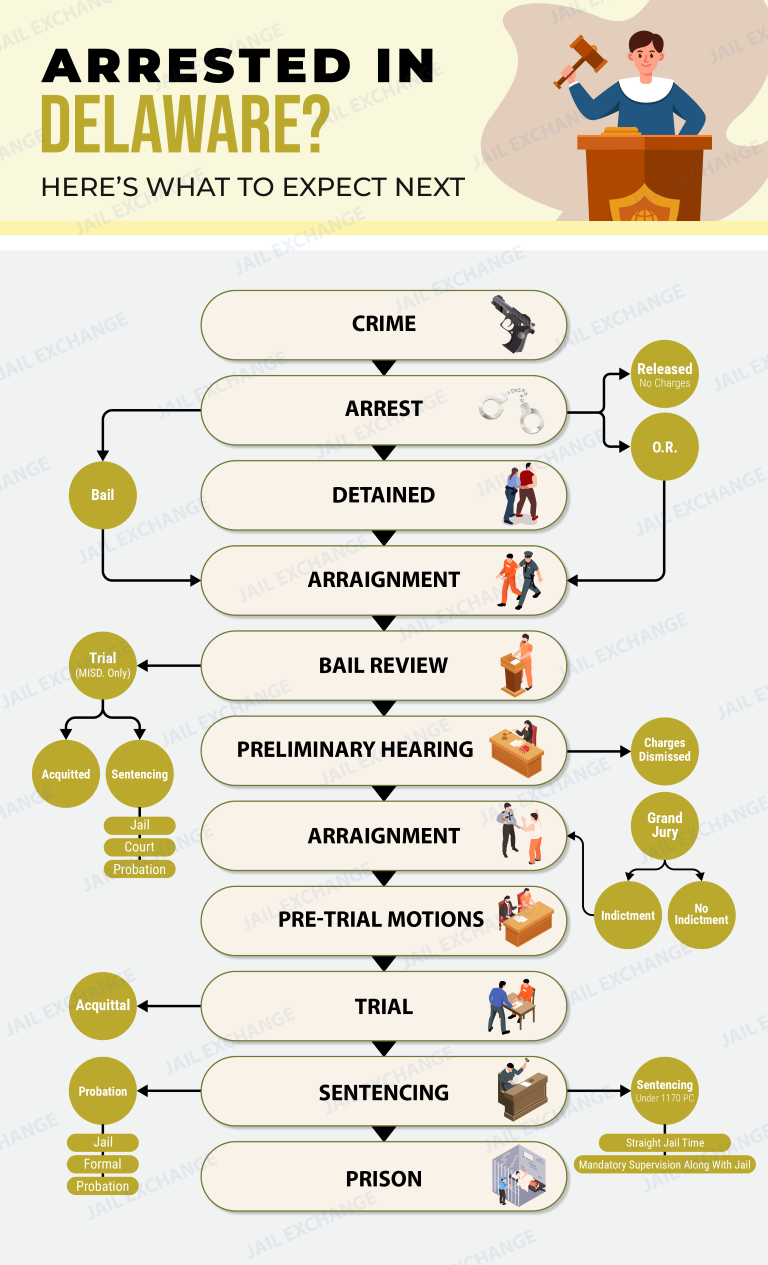
Information for this service is currently unavailable.
Information for this service is currently unavailable.
William Marion Stevenson House Detention Center Family Mail
Resident's Full Name
Stevenson House Detention Center
750 North DuPont Boulevard
Milford, DE 19963
The minimum letter rules for William Marion Stevenson House Detention Center (DE) are stated here. Write only as immediate family, because mail can only be sent and received to immediate family. For safety, all mail is opened and checked for contraband or content that is not allowed. Families may keep writing, because residents can send and receive as many letters, within reason, as they want.
Families writing to William Marion Stevenson House Detention Center should use the Milford street 750 North DuPont Boulevard and should not divert the envelope to a Sussex County adult lockup.
Keep this mail out of any adult jail stream in Sussex County; this card is only for William Marion Stevenson House Detention Center.
Questions about stamps or packages go to 302-424-8100; ask as a parent or legal guardian, because that information is kept private to protect the minor.
Double-check 19963 before you seal the envelope; it is part of the official street address for this youth center.
Information for this service is currently unavailable.
Information for this service is currently unavailable.
Information for this service is currently unavailable.
Sussex County County Jails
Sussex County Juvenile Facilities
- Juvenile: 302-424-8100
The William Marion Stevenson House Detention Center serves the following cities and towns of Sussex County: Bethany Beach, Blades, Bridgeville, Dagsboro, Delmar, Ellendale, Fenwick Island, Frankford, Georgetown, Greenwood, Laurel, Lewes, Milford, Millsboro, Millville, Milton, Ocean View, Rehoboth Beach, Seaford, Selbyville and South Bethany. At times this facility may also house inmates arrested in the following counties: Kent County and New Castle County.