
Seminole County Juvenile Detention Center
Seminole County Juvenile Detention Center
Juvenile
407-665-4190Seminole County Juvenile Detention Center: Information for Families
Detention or long-term placement? This is a county juvenile detention center (short-term), not a long-term program: a 56-bed secure facility operated by the Seminole County Sheriff's Office for youth from Seminole County whose cases are not yet decided (SCSO).
Family guide for the Seminole County Juvenile Detention Center, 200 Eslinger Way, Sanford, FL 32773. Call 407-665-4190.
Read inmate search answers
 Read inmate search answers
1. How can I confirm where my child is held?
Juvenile records are confidential, so call the center at 407-665-4190 and ask. Because the information is kept private to protect the minor, staff discuss it only with a parent or legal guardian.
↑ Back to the list of questions2. When will my child see a judge?
A child held in detention must have a detention hearing within 24 hours (s. 985.255(1), F.S.). Secure detention generally can't last more than 21 days before the adjudicatory hearing starts, with limited extensions for serious charges (s. 985.26(2)).
↑ Back to the list of questions3. Who do I call with a safety concern?
The Florida Abuse Hotline, 1-800-962-2873, takes reports of abuse or neglect at any hour; call 911 in an emergency.
↑ Back to the list of questions4. What are the mail rules?
Before writing, call 407-665-4190 and ask who can write, how often letters are allowed, whether to include stamps or envelopes, and whether books or photos may be sent.
Mailing address
Resident's Full Name
Seminole County Juvenile Detention Center
200 Eslinger Way
Sanford, FL 32773
5. What does my child do each day?
Seminole County Public Schools teaches youth at the center, and the center provides mental health, religious support and health care services (SCSO).
↑ Back to the list of questions6. Can my child call home?
Calls go out from the youth's side, so you wait for your child to call. Ask at 407-665-4190 about phone call times and approved numbers. Because the information is kept private to protect the minor, staff discuss it only with a parent or legal guardian.
↑ Back to the list of questions7. What should I know before visiting?
Call 407-665-4190 and ask about visiting days and times, who is approved to visit, and what ID to bring. Because the information is kept private to protect the minor, staff discuss it only with a parent or legal guardian.
↑ Back to the list of questions8. Could my child end up in adult court?
Direct file at 14 or 15: the state attorney can charge a child as an adult for offenses on a statutory list, including murder, sexual battery, robbery, kidnapping, carjacking, home invasion robbery and aggravated battery (s. 985.557(1)(a), F.S.).
For a child who was 16 or 17, the state attorney may direct-file any felony, and a misdemeanor only if the child has at least two prior adjudications or withheld adjudications, one of them for a felony (s. 985.557(1)(b)).
A juvenile judge can transfer a child 14 or older on the state attorney's waiver motion (s. 985.556(2)); for an offense punishable by death or life imprisonment, a grand jury indictment sends a child of any age to adult court (s. 985.56(1)).
A child transferred or indicted for adult prosecution goes to the county jail under a court order, in a section kept separate by sight and sound from adult inmates; a misdemeanor transfer can't be held there (s. 985.265(5)). Ask your child's lawyer about this as early as you can.
↑ Back to the list of questionsSeminole County Juvenile Detention Center Release and Bail Questions
What kind of facility is this? It is short-term secure detention, not a long-term placement. The Seminole County Sheriff's Office runs this 56-bed secure center for pre-adjudicated youth detained in Seminole County; the state DJJ operated it until 2011 (SCSO).
Florida decides juvenile release with a DJJ risk assessment and a detention hearing within 24 hours.
1. Is there bail for a juvenile?
DJJ screens every youth taken into custody using a standard Detention Risk Assessment Instrument (DRAI); a youth who is not a public-safety risk may go home to a parent or guardian (DJJ).
Florida law ties every detention decision to the risk assessment (s. 985.245(1), F.S.). Call 407-665-4190 for your child's status. These details are kept private to protect the minor, so staff share them only with a parent or guardian.
↑ Return to the question list2. What are the time limits?
Before trial, the general cap on secure detention is 21 days, extendable for serious charges (s. 985.26(2), F.S.). A child on supervised release gets a review hearing within 15 days after the 60th day (s. 985.26(2)(a)1.).
↑ Return to the question list3. What counts in the DRAI?
It considers pending felony and misdemeanor charges, offenses committed while a case is pending, prior offenses, firearm possession or use, past failures to appear, supervision violations and current supervision status, and any history of abuse or neglect (s. 985.245(2)(b)).
The outcome is one of three: release, supervised release detention, or secure detention (s. 985.245(2)(b)).
↑ Return to the question list4. What happens at the detention hearing?
Within 24 hours the judge decides whether the child stays in secure detention, moves to supervised release detention (which can include electronic monitoring), or is released (s. 985.255(1), 985.26(2)(a)).
The court can move a child between secure detention and supervised release later as well, on its own motion or on a motion by the child or the state (s. 985.26(2)(a)3.).
↑ Return to the question list5. What happens if adult charges are filed?
Adult court uses its own pretrial release and bond rules.
For a child who was 14 or 15, the state attorney may file adult charges directly for listed serious offenses such as murder, sexual battery, robbery, carjacking, kidnapping, aggravated battery or using a weapon in a felony (s. 985.557(1)(a), F.S.).
Children who were 16 or 17 can be charged as adults for any felony at the state attorney's discretion. Misdemeanors qualify only with at least two earlier adjudications, one involving a felony (s. 985.557(1)(b)).
A juvenile judge can transfer a child 14 or older on the state attorney's waiver motion (s. 985.556(2)); for an offense punishable by death or life imprisonment, a grand jury indictment sends a child of any age to adult court (s. 985.56(1)).
After transfer or indictment, the child is moved to an adult jail by court order and must be housed separately, with no sight or sound contact with adults. Children transferred on misdemeanors can't be held in an adult jail (s. 985.265(5)). Ask your child's lawyer about this as early as you can.
↑ Return to the question listSeminole County Juvenile Detention Center: Juvenile Court Information
Detention or long-term placement? This is a county juvenile detention center (short-term), not a long-term program: a 56-bed secure facility operated by the Seminole County Sheriff's Office for youth from Seminole County whose cases are not yet decided (SCSO).
Delinquency cases in Florida go to the juvenile division of the circuit court.
1. Which court hears my child's case?
Each county's circuit court has a juvenile division. This center holds youth from Seminole, so cases are heard in the 18th Judicial Circuit.
The county Clerk of Court or your child's lawyer can give you hearing dates.
↑ Back to the list of questions2. What if we can't afford a lawyer?
Every child in a delinquency case is entitled to counsel at all stages; if the family is indigent, the court appoints a lawyer (s. 985.033(1), F.S.).
When parents can pay but won't hire a lawyer, the judge appoints counsel for the detention hearing and then orders the parents to retain one (s. 985.033(3)).
↑ Back to the list of questions3. What happens before a commitment decision?
If a child was not detained at the adjudicatory hearing but residential commitment is likely, the court can order detention for up to 72 hours, not counting weekends and holidays, to complete a comprehensive evaluation (s. 985.26(5), F.S.).
↑ Back to the list of questions4. What happens after an arrest?
The judge must see a detained child within 24 hours of the arrest (s. 985.255(1), F.S.).
At that hearing the judge decides whether there is probable cause and whether the child needs to stay in detention, using DJJ's risk assessment. A judge who orders more or less restrictive care than the assessment shows must give clear and convincing reasons in writing (s. 985.255(3)).
↑ Back to the list of questions5. When does a Florida juvenile case go to adult court?
Direct file at 14 or 15: the state attorney can charge a child as an adult for offenses on a statutory list, including murder, sexual battery, robbery, kidnapping, carjacking, home invasion robbery and aggravated battery (s. 985.557(1)(a), F.S.).
For a child who was 16 or 17, the state attorney may direct-file any felony, and a misdemeanor only if the child has at least two prior adjudications or withheld adjudications, one of them for a felony (s. 985.557(1)(b)).
A juvenile judge can transfer a child 14 or older on the state attorney's waiver motion (s. 985.556(2)); for an offense punishable by death or life imprisonment, a grand jury indictment sends a child of any age to adult court (s. 985.56(1)).
A child transferred or indicted for adult prosecution goes to the county jail under a court order, in a section kept separate by sight and sound from adult inmates; a misdemeanor transfer can't be held there (s. 985.265(5)). Ask your child's lawyer about this as early as you can.
↑ Back to the list of questions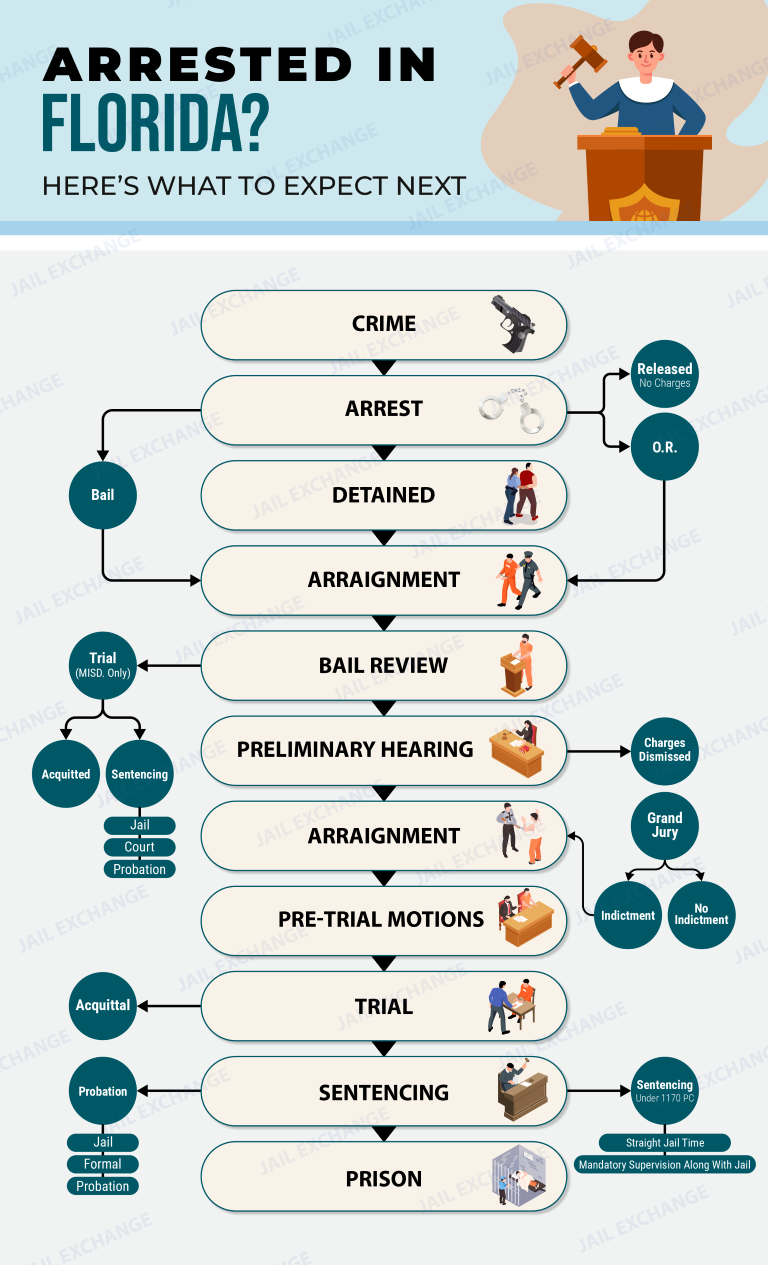
Information for this service is currently unavailable.
Information for this service is currently unavailable.
Information for this service is currently unavailable.
Information for this service is currently unavailable.
Information for this service is currently unavailable.
Information for this service is currently unavailable.
Seminole County County Jails
Seminole County Juvenile Facilities
Nearby counties
- Juvenile: 407-665-4190
- Adult Probation: 407-665-4603
- Juvenile: 407-897-2800
- Juvenile Probation: 407-330-6968
- Public Defender: 407-665-4524
The Seminole County Juvenile Detention Center serves the following cities and towns of Seminole County: Altamonte Springs, Casselberry, Lake Mary, Longwood, Oviedo, Sanford and Winter Springs.