
Terrell Regional Youth Detention Center
Terrell Regional Youth Detention Center
Physical Address
1666 Albany HighwayDawson, GA 39842
Jail Phone Number
229-995-8550Terrell Regional Youth Detention Center Family Information
What kind of facility is this? Short-term detention. The Department of Juvenile Justice runs this RYDC for youth held on a new charge, a probation violation or a court order, usually until a judge decides the case or a placement opens. Its DJJ service area is Terrell County plus Baker, Calhoun, Clay, Dougherty and Early counties.
Family guide for Terrell Regional Youth Detention Center, 1666 Albany Highway, Dawson, GA 39842. Call 229-995-8550.
Read inmate search answers
 Read inmate search answers
1. How can I confirm where my child is held?
Juveniles won't appear on the jail roster. Phone 229-995-8550 instead. Because it is kept private to protect the minor, staff will discuss it only with a parent or legal guardian.
↑ Back to the question list2. Will my child see a doctor?
Youth are oriented to the rules, given state clothing and a room, screened for mental health needs and examined by medical staff within 72 hours (DJJ FAQ).
↑ Back to the question list3. Who do I call with a safety concern?
Start with the counselor or the Director; you can also call the DJJ Ombudsman at 855-396-2978 (DJJ).
Suspected abuse can be reported to Georgia DFCS at 1-855-GACHILD (1-855-422-4453) (call 911 first in an emergency).
↑ Back to the question list4. How do phone calls work?
Your child is usually allowed a first phone call on arrival at the RYDC and before the detention hearing. After that, it is one free phone call per week (DJJ).
You can't call in to speak with your child; youth make the calls. The counselor can tell you the schedule, or call 229-995-8550. Because it is kept private to protect the minor, staff will discuss it only with a parent or legal guardian.
↑ Back to the question list5. Can I send letters and stamps?
Letters are welcome from parents and family, and youth can write as often as they want at set times (DJJ).
Without stamps from you, only two postcards a week are mailed; send extra stamps to the facility for more (DJJ).
Call 229-995-8550 before sending books or other items; ask what the facility accepts.
How to address a letter
Resident's Full Name
Terrell Regional Youth Detention Center
1666 Albany Highway
Dawson, GA 39842
6. When can I visit?
Staff at the facility reach out to parents and guardians to arrange visits; call 229-995-8550 for the current visiting schedule (DJJ).
The visit and call list is limited to immediate family, with exceptions for an attorney or pastor (DJJ FAQ).
Alcohol, cigarettes, money, gum, snacks, drugs and weapons are contraband, and violators will be prosecuted. You can buy snacks from the vending machines, but your child has to eat them during the visit (DJJ).
Phone and video visits are free for approved visitors and run on state-issued phones, tablets or computers. Anyone not yet approved should contact the facility first (DJJ).
↑ Back to the question list7. Who do I contact about my child's well-being?
Ask for your child's assigned counselor, or the nurse for anything medical (DJJ FAQ).
You can bring prescribed medicine, eyeglasses, hearing aids or other medical items; staff give medicine as prescribed (DJJ FAQ).
↑ Back to the question list8. Does my child need money or clothes?
No. Clothing and hygiene items are provided, and the facility cannot and will not hold money for youth (DJJ FAQ). Jail commissary and deposit accounts do not apply here.
↑ Back to the question list9. What if the case is moved to superior court?
Georgia's juvenile courts handle delinquency cases for children under 17; a 17-year-old is charged in adult court (O.C.G.A. § 15-11-2).
For a child aged 13 to 17 accused of murder, voluntary manslaughter, rape, aggravated sodomy, aggravated child molestation, aggravated sexual battery, armed robbery or aggravated assault with a firearm, or another offense on the statute's list, the case belongs to superior court (O.C.G.A. § 15-11-560).
Through a transfer hearing, a juvenile court judge can send a case to superior court (O.C.G.A. § 15-11-561).
Once a case is in superior court, adult procedures, including adult bond rules, can apply; ask the lawyer where your child will be housed. Ask your child's lawyer about this as early as you can.
↑ Back to the question listHow Release Works at Terrell Regional Youth Detention Center
Is this detention or a placement? Short-term detention. The Department of Juvenile Justice runs this RYDC for youth held on a new charge, a probation violation or a court order, usually until a judge decides the case or a placement opens. Besides Terrell County, it holds youth from Baker, Calhoun, Clay, Dougherty and Early counties (DJJ).
In Georgia juvenile cases, the judge decides on bond and release; the facility does not.
1. Is bond available?
The judge decides whether bond will be considered and sets the amount, though youth do have a right to bond (DJJ FAQ).
Depending on the county, you may be sent to the District Attorney's office, an intake officer or the juvenile court clerk to process it; if your child has a lawyer, start there (DJJ FAQ).
↑ Return to the question list2. Can my child come home after the detention hearing?
Release depends on the child's record, the charge and its seriousness, the detention assessment and the parent's ability to supervise (DJJ FAQ).
↑ Return to the question list3. When is the next hearing?
A detention hearing comes within 72 hours; for a detained child, the petition is due within three days of it and the full hearing within 10 days of the petition (DJJ FAQ).
↑ Return to the question list4. Who do I ask about release?
The public defender represents a detained child at the detention hearing; ask that lawyer, or the intake officer, about release (DJJ FAQ).
The facility does not set bond or accept bond money.
↑ Return to the question list5. What if my child is charged as an adult?
Through a transfer hearing, a juvenile court judge can send a case to superior court (O.C.G.A. § 15-11-561).
Juvenile court in Georgia covers offenses by children under 17. At 17, a person is prosecuted as an adult (O.C.G.A. § 15-11-2).
Superior court has exclusive jurisdiction over a child 13 to 17 charged with certain serious violent felonies, including murder, voluntary manslaughter, rape, aggravated sodomy, aggravated child molestation, aggravated sexual battery and armed robbery with a firearm (O.C.G.A. § 15-11-560).
A superior court case follows adult procedure, so ask the defense lawyer about bond and about where your child will be held. Your child's lawyer can tell you whether this applies.
↑ Return to the question listJuvenile Court Questions for Terrell Regional Youth Detention Center Families
What kind of facility is this? Short-term detention. The Department of Juvenile Justice runs this RYDC for youth held on a new charge, a probation violation or a court order, usually until a judge decides the case or a placement opens. Its DJJ service area is Terrell County plus Baker, Calhoun, Clay, Dougherty and Early counties.
The facility is run by DJJ; the case itself belongs to a county juvenile court.
1. Which court handles my child's case?
The case is heard in the juvenile court of the county that filed it. Counties served by this RYDC: Terrell, Baker, Calhoun, Clay, Dougherty and Early.
For hearing dates, contact the juvenile court clerk in that county or your child's intake or probation officer (DJJ FAQ).
↑ Back to the question list2. How soon does a judge see my child?
The judge holds a detention hearing within 72 hours of the child being detained (DJJ FAQ).
If the child stays detained, the petition must be filed within three days of the detention hearing, weekends included, and the full hearing held within 10 days of filing (DJJ FAQ).
↑ Back to the question list3. What happens at the end of the case?
Outcomes include probation for up to two years, or a general commitment to DJJ; a standard commitment order lasts two years. For more serious offenses, a designated felony commitment with restrictive custody runs five years (DJJ FAQ).
↑ Back to the question list4. Does this follow my child?
You can ask the court to seal your child's juvenile record when the case ends (DJJ FAQ).
↑ Back to the question list5. Could my child be tried as an adult?
Georgia's juvenile courts handle delinquency cases for children under 17; a 17-year-old is charged in adult court (O.C.G.A. § 15-11-2).
For a child aged 13 to 17 accused of murder, voluntary manslaughter, rape, aggravated sodomy, aggravated child molestation, aggravated sexual battery, armed robbery or aggravated assault with a firearm, or another offense on the statute's list, the case belongs to superior court (O.C.G.A. § 15-11-560).
Through a transfer hearing, a juvenile court judge can send a case to superior court (O.C.G.A. § 15-11-561).
Once a case is in superior court, adult procedures, including adult bond rules, can apply; ask the lawyer where your child will be housed. Ask your child's lawyer about this as early as you can.
↑ Back to the question list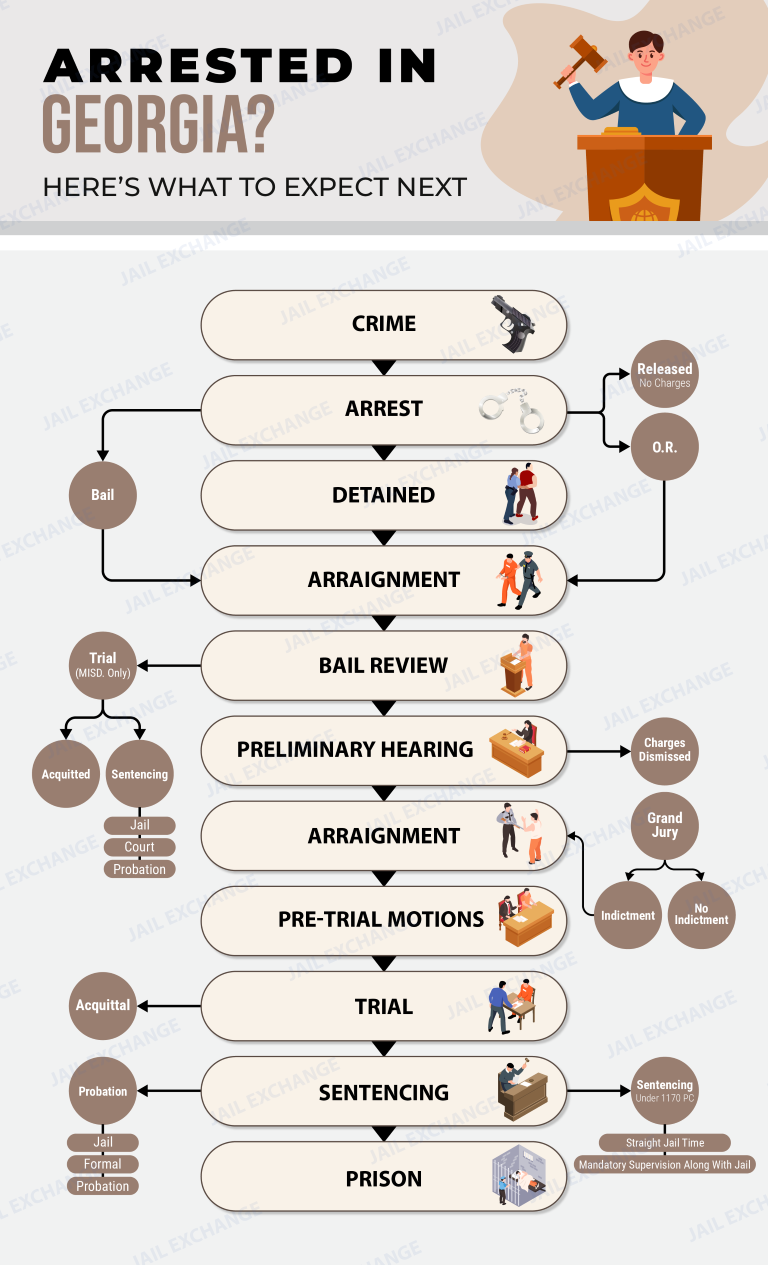
Information for this service is currently unavailable.
Information for this service is currently unavailable.
Information for this service is currently unavailable.
Information for this service is currently unavailable.
Information for this service is currently unavailable.
Information for this service is currently unavailable.
Terrell County County Jails
Terrell County Juvenile Facilities
Nearby counties
- Juvenile: 229-995-8550
The Terrell Regional Youth Detention Center serves the following cities and towns of Terrell County: Dawson and Parrott. At times this facility may also house inmates arrested in the following counties: Baker County, Calhoun County, Clay County, Dougherty County and Early County.