
Linn County Juvenile Detention Center
Linn County Juvenile Detention Center
Juvenile
319-892-5735Linn County juvenile detention
Is My Child Being Held at the Linn County Juvenile Detention Center?
Phone the center at 319-892-5735; it is staffed 24 hours a day, and a call is the only way to confirm that a youth was brought here. Linn County does not post the names of detained youth anywhere, and juveniles are left out of the Linn County Correctional Center's inmate list, VINELink and Iowa Courts Online. The adult name search shown on this page will not find a minor. When you call, give the youth's full name and date of birth and explain that you are the parent or legal guardian; staff share information only with the people the law lets them tell.
The center is part of Linn County Juvenile Detention and Diversion Services. It gives secure, temporary care to boys and girls aged 12 to 18 who are accused of a delinquent act and are seen as a danger to themselves or the community, mostly from Linn and Johnson counties. Youth arrive under the authority of the juvenile court or the arresting police agency and are screened with Iowa's statewide detention tool, because only youth who truly need locked custody are supposed to be held; many others go to shelter care.
No youth stays here more than 24 hours without a court order. A Sixth Judicial District juvenile judge or the judge's designee then decides whether detention continues, and Iowa law calls for a detention hearing within one working day of admission. For a Linn County case, the juvenile court office is at 211 Eighth Ave. SW, second floor, Cedar Rapids, phone 319-398-3545.
What Linn County families ask
How do I find out if my child is here?
Call 319-892-5735 and ask whether the youth was admitted. Often a police officer calls you first, since Iowa Code 232.19 tells the officer to notify a parent, guardian or custodian as soon as possible. If the center has no record, call the arresting department, such as Cedar Rapids or Marion police or the Linn County Sheriff's Office, to learn where the youth was taken or whether the youth was released to a relative.
How do I report a problem?
Raise a concern with the center's director by calling 319-892-5735. Suspected abuse or neglect goes to the Iowa Child Abuse Hotline at 1-800-362-2178, and an emergency goes to 911. Linn County posts the center's latest Prison Rape Elimination Act audit on its detention web page, which shows how sexual abuse reports are handled there.
What is daily life like?
Youth live under round-the-clock supervision and follow an individual school program, recreation and a behavior management system that sets privileges, including how often visits happen. Staff run group and one-on-one guidance sessions, and a chaplain ministry is offered. When the juvenile court orders them, medical, psychiatric, psychological, educational and behavioral evaluations are done here.
Does my child need anything from home?
Usually not. Iowa's licensing rules make the center responsible for clean, seasonal clothing and bedding, and Linn County does not publish a list of items families may drop off. If your child takes prescription medicine, call 319-892-5735 to arrange getting it to staff in its labeled pharmacy bottle, which Iowa's detention-home rules require. Ask the same call about schoolwork from your child's home school.
What should I know before visiting?
Only parents and legal guardians may visit, and they may bring one brother, sister or grandparent, so no more than two people come at once. Reserve a time by calling ahead. Visits last 45 minutes, start at 2:30 or 3:30 p.m. on weekdays, with evening slots on Wednesdays, and a late arrival still ends at the reserved time. The county site lists Wednesday evening visits at 5 and 6 p.m. in one place and 5:30 and 6:30 p.m. in another, so confirm the slot when you book.
Who can write, and what can I send?
Write to the youth by full name on the first line, then the center's name and street address, and add your return address. Iowa's licensing rules let youth send and receive letters and bar staff from reading them, though a youth can be asked to open mail in front of staff when contraband is suspected. Ask staff before you send photos, books or anything besides a letter.
How do phone calls work?
A youth may talk with a parent or legal guardian once a day for five minutes. Parents who live apart each get their own daily call, and a parent may let a sibling or grandparent speak during that call, but no one else joins. Three-way calls are not allowed and can cost a parent call privileges, and staff can listen in or use the speakerphone if the rules are misused.
Could my child end up in adult court?
Some cases start there. A 16- or 17-year-old accused of a forcible felony, a felony gun charge or certain drug crimes involving weapons is prosecuted in Linn County District Court under Iowa Code 232.8 unless a judge sends the case back to juvenile court. In other cases the county attorney may ask a juvenile judge to waive a youth 14 or older after a hearing under Iowa Code 232.45, or to place a youth aged 12 to 15 in youthful offender status. The lawyer can tell you whether your child would stay here or move to the adult jail, which needs a district judge's written findings.
Linn County juvenile release
How a Youth Leaves the Linn County Juvenile Detention Center
Families do not post bail for a youth in Linn County juvenile detention; a juvenile judge decides when the youth goes home, and there is no dollar amount to pay. Iowa's adult bail chapter does not reach juvenile court, so bond agents and the clerk's cash-bond window play no part. The quickest route home is the detention hearing, which Iowa Code 232.44 requires within one working day of admission. Call the center at 319-892-5735 to confirm your child is there, then call the Linn County juvenile court office at 319-398-3545 to learn when the hearing is.
The usual order of events looks like this:
- Police or the juvenile court admit the youth, and staff use Iowa's detention screening tool to see whether locked custody is needed.
- Within 24 hours a judge or the judge's designee must order continued detention, or the youth is let go.
- The county attorney files a delinquency petition, and the court notifies the youth, the lawyer and the parents at least 12 hours ahead of the hearing.
- At the hearing the judge decides whether there is probable cause and whether Iowa Code 232.22 permits detention.
- The youth is released, often to a parent with conditions, or held for up to seven days or until the adjudicatory hearing, whichever comes first.
A youth who is still detained when that order ends gets an automatic hearing the next day court is in session. Parents should go to each hearing, bring questions for the lawyer, and keep the juvenile court officer's number handy.
Release questions from Linn County parents
How does release work?
The judge may send the youth home on a parent's or guardian's promise to bring the youth to court, or place the youth with a relative or other suitable adult. Release is required when the judge finds no probable cause or no lawful ground to detain, such as a real risk of running away or of seriously hurting someone. Once released, the youth answers to a juvenile court officer of the Sixth Judicial District.
Will I have to pay anything to get my child out?
No. Juvenile court in Iowa works without bail, so release depends on the judge's findings and the conditions set, not on money. The law allows a bail or bond requirement only for a youth in youthful offender status. Be wary of anyone who asks you for money to free a child from juvenile detention.
Who explains release conditions?
The juvenile court officer assigned to the case explains them and checks that they are kept, and the youth's lawyer can ask the judge to change them. Conditions may limit where the youth lives, travels or goes, set a curfew, bar contact with certain people, or require a return to custody at set times. A youth who breaks them can be brought back to the center.
Who represents my child at the hearing?
A lawyer, always. Iowa Code 232.11 says the right to counsel at a detention hearing cannot be waived, so the judge appoints one if you have not hired counsel. Parents who are able to pay part of the cost can be ordered to repay it, and a judgment can be entered against parents who ignore that order without good reason.
Can I look up my child's case online?
No. Juvenile delinquency files are confidential under Iowa Code 232.147 and are left out of Iowa Courts Online. The youth, the parents and the lawyer may see the official court record, and the lawyer or juvenile court officer can give you hearing dates. A petition alleging a forcible felony becomes a public record, but it is not put online unless the youth is adjudicated delinquent.
What happens if my child is charged as an adult?
Adult bail rules then apply. Youth 16 or 17 accused of a forcible felony or certain felony weapons and drug crimes start in Linn County District Court, and a juvenile judge may waive a youth 14 or older there after a hearing. The district court must hold its own hearing and write findings before a youth can be housed in the Linn County Correctional Center, so ask the lawyer early whether your child will stay in juvenile detention while the case moves forward.
Linn County Juvenile Detention Center: Court and Hearing Questions
Detention or long-term placement? Short-term detention. It holds youth while their case is pending or until a placement is ready, and it is not the adult jail. It is operated by Linn County. Its youth come from Linn County.
The facility holds youth; a judge decides the case.
1. Where is the case heard?
The juvenile court in the county that filed the case hears it, not the facility.
↑ Back to the top of the questions2. How soon does a judge see my child?
The court sets the detention and later hearings. Ask the lawyer or juvenile court officer for the date and time.
↑ Back to the top of the questions3. When can a child be kept in detention?
Iowa Code 232.22 allows detention only in listed situations, such as a substantial probability the child will not appear, a serious risk of harm, or another statutory ground.
↑ Back to the top of the questions4. Can the case move to adult court?
A judge may waive juvenile jurisdiction over a child who is 14 or older only after a waiver hearing (Iowa Code 232.45).
Some cases of a youth 16 or older start in district (adult) court instead of juvenile court, including a forcible felony and certain drug and weapons offenses (Iowa Code 232.8(1)(c)).
If the case goes to adult court, ask the lawyer about release and where your child will be housed. Ask your child's lawyer about this early.
↑ Back to the top of the questions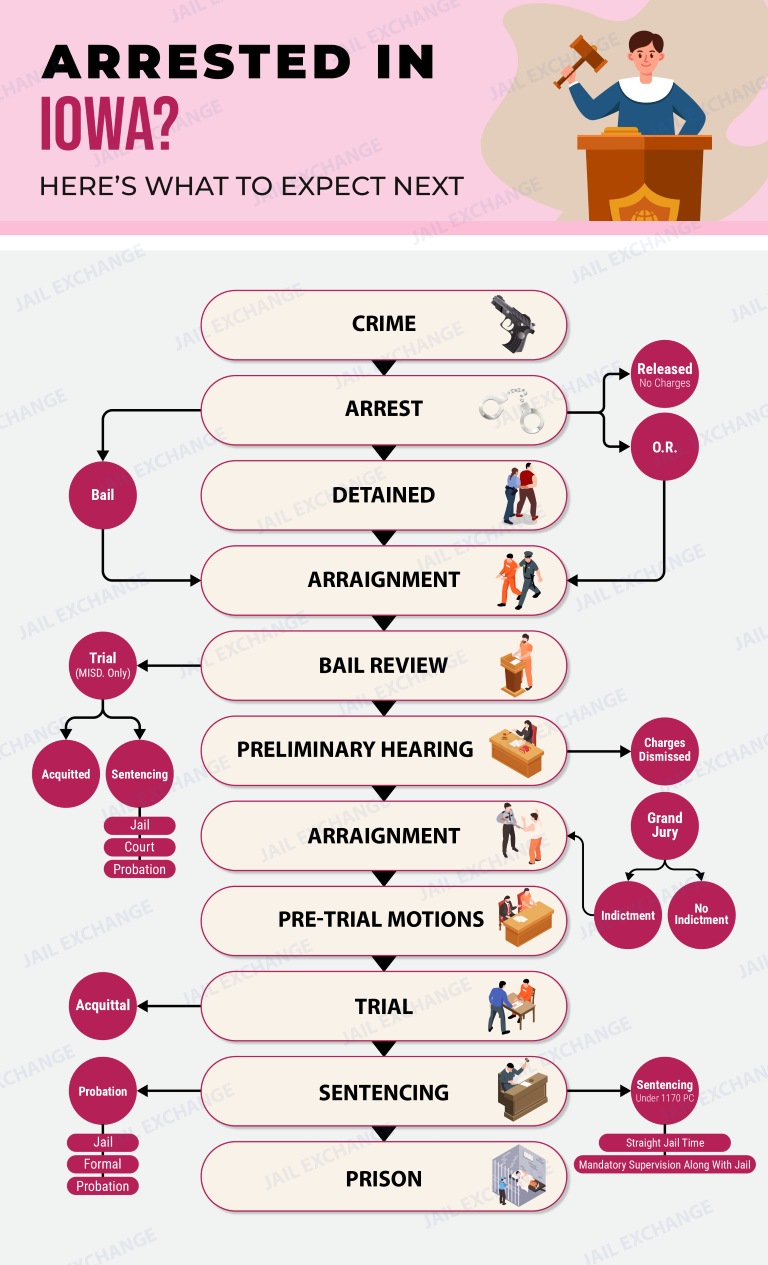
Information for this service is currently unavailable.
Information for this service is currently unavailable.
Linn County Juvenile Detention Center Family Mail
What kind of facility is this? It is short-term secure detention, not a long-term placement: a juvenile detention center for youth waiting for court or placement, run by Linn County. It holds youth from Linn County.
Put your child's full name on the first line, then Linn County Juvenile Detention Center and the address below.
Call 319-892-5735 to ask who can write, how often letters are allowed, whether stamps can be sent, and before mailing books or photos.
Mailing address
Resident's Full Name
Linn County Juvenile Detention Center
800 Walford Road SW
Cedar Rapids, IA 52404
These family-mail rules apply at Linn County Juvenile Detention Center in IA. Mail can only be sent and received to immediate family. Staff make sure all mail is opened and checked for contraband or content that is not allowed. A youth at this center can send and receive as many letters, within reason, as they want.
Information for this service is currently unavailable.
Information for this service is currently unavailable.
Information for this service is currently unavailable.
Linn County County Jails
Linn County Juvenile Facilities
- Juvenile: 319-892-5735
The Linn County Juvenile Detention Center serves the following cities and towns of Linn County: Cedar Rapids, Hiawatha, Marion, Mount Vernon and Robins.