
Saint Louis County Jail
Saint Louis County Jail
Duluth Jail
218-726-2345St. Louis County Inmate Search: Duluth Jail, Range Lockups and NERCC
From Duluth's hillside to the towns of the Iron Range, adult arrests lead to booking at the St. Louis County Jail, a 197-bed Sheriff's jail at 4334 Haines Road, Duluth, MN 55811. Two small Sheriff's lockups up north, in Hibbing and Virginia, cover the first few days. A regional center in Saginaw houses some men too. Keep reading for help with search, bail, mail, deposits and court.
Begin on the Sheriff's jail roster, a PDF that lists everyone in custody and gets a fresh copy each hour. Search inside the file for a last name. Someone still in intake shows up only after staff give them a booking number, so try again later if the name is absent.
Want a person on the line? Ring the Duluth jail at 218-726-2345. Confirm your loved one is there, then ask about the charge and when a judge will see them. After that call, lean on our bail guide and our court guide to plan.
Read inmate search answers
 Read inmate search answers
1. Using the St. Louis County roster PDF
The Duluth jail's roster arrives as a single PDF, so a few tricks help:
- Open the Sheriff's roster page.
- Pick the link for the current list. The PDF loads in your browser.
- Ctrl+F brings up a search box on a laptop. On a phone, tap the browser's menu, then its find option. Enter the last name.
- Copy down the LID beside the name. Mail needs it, and jail staff use it to pull up records.
- Some lines note that a person is boarded in another county's jail. In that case, phone that jail.
The list is rebuilt hourly. A listing never means the person is guilty. For the charge, bail and next hearing, ask the staff at 218-726-2345.
↑ Back to the question list2. The name you need is missing
Check these likely causes:
- Booking isn't done. A name appears once a booking number is assigned. Give it an hour.
- A Range lockup has them. Arrests near Hibbing or Virginia can begin in a 72-hour lockup. Reach the Sheriff's Hibbing office, 1810 12th Avenue E, Hibbing, MN 55746, at 218-312-8134. The Virginia office is at 300 S 5th Ave, Virginia, MN 55792, 218-471-7134.
- Let go already. For many misdemeanors, officers write a ticket and let the person leave. Others walk out after seeing a judge. Check the 48-hour release list linked from the roster page.
- Sent elsewhere for room. A full jail can move people to another jail. These moves are never discipline.
- A minor. Juvenile details are restricted, so people under 18 won't appear among the adults.
- Spelled differently. Retry with a birth surname, middle name or nickname.
Still nothing? Give the Duluth jail at 218-726-2345 the person's legal name plus birth date.
↑ Back to the question list3. Every St. Louis County jail site and its job
Four places can hold an adult arrested here. The Sheriff runs three of them:
- St. Louis County Jail, 4334 Haines Road, Duluth, MN 55811, 218-726-2345. The main jail, with 197 beds. Booking happens here, and people held longer than a few days are normally kept here.
- Hibbing lockup: 8 beds for stays of up to 72 hours. Call the Sheriff's Hibbing office, 1810 12th Avenue E, Hibbing, MN 55746, 218-312-8134.
- Virginia lockup: 12 beds, also for stays of up to 72 hours. Call the Sheriff's Virginia office, 300 S 5th Ave, Virginia, MN 55792, 218-471-7134.
- Northeast Regional Corrections Center (NERCC), 6102 Abrahamson Rd., Saginaw, MN 55779, 218-729-8673. Arrowhead Regional Corrections operates it. Men only, at minimum and medium security. It takes pressure off crowded jails in St. Louis, Carlton, Cook, Lake and Koochiching counties.
Overflow can also land in Two Harbors. The Lake County Jail, 613 3rd Avenue, Two Harbors, MN 55616, 218-834-8385, reports housing people from this county. Picked up across the county line? Then the neighboring Sheriff's jail has them, and that Sheriff can confirm it.
↑ Back to the question list4. Booking photos and mugshots after a Northland arrest
Minnesota classifies a jail booking photo as public data. Deputies or police can wait to share one if an active investigation would suffer (Minn. Stat. 13.82, subd. 26). Arrest details are public as well, including the charge and custody status (Minn. Stat. 13.82, subd. 2).
Requests for mugshots go to whichever agency arrested the person. Deputies' arrests belong to the Sheriff's Office, 100 N 5th Avenue W, Room 103, Duluth, MN 55802, 218-726-2340. If town officers made the arrest, ask that police department.
- Immigration booking photos come through the ICE FOIA request page.
- As for federal arrests, the photos generally stay private. Still, the U.S. Marshals Service can release one, say, to track down someone who fled.
5. Getting a text when they leave custody
Minnesota VINE is a free alert service. The state's public safety department runs it, and it tracks who is held in county jails like the one on Haines Road. It can send a call, text or email the moment someone is released or transferred.
- Visit VINELink Minnesota, or dial 877-664-8463.
- Type the name and choose the correct record.
- Register for notices. Nothing arrives until you do.
VINE also shows current custody status and the facility name. On the Sheriff's roster page, a separate list shows releases from the last two days. Prison notices are a separate DOC system called Minnesota Haven.
↑ Back to the question list6. Getting released on bail in St. Louis County
At the first appearance, the District Court judge decides on release. Locally, many first appearances use a video hookup to the jail. If officers arrested the person with no warrant, they must be brought before a judge inside 36 hours. In counting those hours, skip the arrest day, every Sunday and any legal holiday (Minn. R. Crim. P. 4.02, subd. 5).
- Starting point. The rules steer judges toward freeing the person on a simple pledge to show up. Any rules added should be only what safety or the next court date needs (Minn. R. Crim. P. 6.02).
- Often two figures. A judge must also name a cash amount without conditions. That is why many orders show two numbers: a low one tied to conditions and a high one with none.
- Family violence. People arrested for domestic assault, stalking or violating an order for protection or a no-contact order are brought to jail. The alleged victim's safety is part of the release decision (Minn. Stat. 629.72).
- Bondsmen. According to the Sheriff's bail bonds page, agents charge 10 to 20 percent of the bail, and that fee stays with them. Minnesota requires at least $100. Pick one from the court system's approved agent list.
- Paying cash. Cash goes to court administration. Legally the defendant owns it, even if a grandparent or friend posted it. The court may take out fines and restitution, then refund the rest (Minn. Stat. 629.53).
Ready to post? First phone 218-726-2345. Get the location, open hours and accepted payment types. Our bail guide goes deeper, and our Minnesota bail laws page lays out state law.
↑ Back to the question list7. Looking up the exact charges
When the prosecutor files a case, it shows in Minnesota Court Records Online (MCRO), a free state site.
- Open the MCRO case search.
- Key in the person's name as it appears on their ID.
- Choose the matching case to see the counts.
Certain juvenile files never show there. By phone, court clerks at the Duluth Courthouse, 100 North 5th Avenue West, Duluth, MN 55802, 218-221-7560, can help too.
The level tells you the stakes. Ninety days in jail is the cap for a misdemeanor, and 364 days is the cap for a gross misdemeanor. Under Minn. Stat. 609.02, subd. 2, crimes that can mean prison for one year or more count as felonies.
↑ Back to the question list8. A free lawyer from the Sixth District
At the first court hearing in Duluth, Hibbing or Virginia, a defendant who can't cover a lawyer's fee can ask for a public defender. That covers felony and gross misdemeanor charges, plus any misdemeanor that carries possible jail (Minn. Stat. 611.14). Eligibility comes from a financial statement the court reviews. Anyone on means-tested benefits is treated as qualifying (Minn. Stat. 611.17).
In Duluth, the Sixth Judicial District Public Defender keeps its office at 1400 Alworth Building, 306 W Superior Street, Duluth, MN 55802, 218-733-1027. Its attorneys handle Hibbing and Virginia cases as well. Hiring private counsel remains a choice for any family.
↑ Back to the question list9. Visiting at Haines Road and NERCC
Visit rules shift from time to time. Before driving out to Haines Road, call 218-726-2345 and check:
- if visits are in the lobby, on a screen, or both,
- how you sign up and how many days ahead,
- which ID works and what dress code applies.
Reliance, the jail's phone provider, plans to add video calls through its Reliance Connect app. A man at NERCC, 6102 Abrahamson Rd., Saginaw, MN 55779, follows that center's own rules, so dial 218-729-8673. Lockup stays in Hibbing and Virginia are brief, so ask the Sheriff's office in that city whether visits happen. Our visiting guide offers general advice.
↑ Back to the question list10. Adding funds through Stellar and JailATM
Inmate funds at the Duluth jail are managed by Stellar Services. To deposit online, use JailATM at deposits.jailatm.com. Keep the person's full name and LID from the roster handy.
One catch: deposits cover any fees the person owes first. Only the rest can be spent on commissary or calls. For deposit choices beyond JailATM, ask the jail at 218-726-2345.
At NERCC, 6102 Abrahamson Rd., Saginaw, MN 55779, 218-729-8673, kiosks sit in the main building's front hall. They accept cash and debit or credit cards on weekdays from 8 a.m. until 4 p.m., holidays excepted. NERCC also credits JailATM deposits and mailed money orders. Personal checks are refused. To learn more, JE has a money guide for deposits and a commissary guide for the jail store.
↑ Back to the question list11. Reliance calls, texts and voice messages
Reliance Telephone handles calls, texting and video for the jail. Its line is 800-896-3201, or use the company website. Through Reliance, a family can:
- set up a collect call account,
- purchase a phone card,
- fund the person's Wallet, which covers texts and video calls.
Video calls through the Reliance Connect app, for Android or iPhone, are marked coming soon. Link your number to a Reliance Connect account, and the person may phone you any time during the day for $0.25 a minute, drawn from the Wallet. The jail also has an inmate voice message number, 218-409-8366.
Staff record and review all calls and messages. Only attorney calls are exempt. Keep case details out of family calls. Two JE pages dig deeper: our texting and email guide and our jail phone guide.
↑ Back to the question list12. TextBehind mail for the St. Louis County jail
Starting March 1, 2025, letters for the Duluth jail travel through TextBehind. The company scans each piece and forwards a copy into the jail. Use this exact address block:
First and last name, and LID
St. Louis County Jail, Minnesota
P.O. Box 247
Phoenix, MD 21131
Look up the LID on the jail roster. TextBehind sorts mail on weekdays only.
- Letters and photos are the only items allowed.
- Cash, checks, money orders and gift, debit or credit cards get mailed back to you.
- Legal mail skips TextBehind. Attorneys can learn that route by calling the jail at 218-726-2345.
- Obscene material and contraband are turned away.
NERCC, 6102 Abrahamson Rd., Saginaw, MN 55779, 218-729-8673, handles mail its own way. Reading material must ship direct from a Barnes & Noble or Books-a-Million distributor. Phone the center for the right address format. Our mail guide has extra pointers.
↑ Back to the question list13. Picking up property from the Duluth jail
Personal items collected during booking stay locked up at the jail, 4334 Haines Road, Duluth, MN 55811. Phone 218-726-2345 first and find out:
- whether paperwork from your loved one has to come first,
- on which days and at what times items go out,
- which photo ID is needed.
For someone who started out in the Hibbing or Virginia lockup, ask where their items ended up.
↑ Back to the question list14. Sickness, injury or missing medication
Worried about health? Call 218-726-2345 and ask to speak with medical staff or the shift supervisor. Have the pill bottle in hand so you can give the drug name and dose, and keep the doctor's number close. Your loved one should also tell jail staff, and ask them how to make a medical request.
Name any suicide or self-harm risk out loud during that call. For a resident of NERCC, 6102 Abrahamson Rd., Saginaw, MN 55779, dial 218-729-8673. In a true emergency, use 911.
↑ Back to the question list15. St. Louis County warrant lists and turning in
The Sheriff's Office serves warrants from 100 N 5th Avenue W, Room 103, Duluth, MN 55802, 218-726-2340. Its warrant division page offers a felony list and a misdemeanor list, updated nightly at 9:00 PM. Court changes can lag behind, so deputies must verify each one. Statewide, the DOC posts Wanted Fugitives who broke supervised release. MCRO lists cases only. To settle a warrant, get legal advice and reach the issuing court. Duluth Courthouse, 100 North 5th Avenue West, Duluth, MN 55802, 218-221-7560, takes walk-ins in room 133 Tuesdays at 8:30 a.m.
↑ Back to the question list16. Court dates in Duluth, Hibbing and Virginia
Three District Court buildings serve the county, each with a full clerk's office. Arrest or release papers say which one has the case.
- Duluth Courthouse, 100 North 5th Avenue West, Duluth, MN 55802, 218-221-7560. Weekdays 8 a.m. to 4:30 p.m.
- Virginia Courthouse, 300 5th Ave. South, Virginia, MN 55792, 218-305-7021. Weekdays 8 a.m. to 4:30 p.m.
- Hibbing Courthouse, 1810 East 12th Avenue, Hibbing, MN 55746, 218-274-6007. Enter through the main door beside the 18th Street parking lot.
The free MCRO hearing search lists upcoming hearing times by name. Our court guide explains the path from first hearing to the end.
↑ Back to the question list17. Federal charges and the Duluth federal courthouse
A federal case belongs to the U.S. District Court for the District of Minnesota. In Duluth, that court sits at 515 West First Street, Duluth, MN 55802. Reach the clerk at 612-664-5000.
- Home or jail until trial? A federal judge makes that call at a detention hearing (18 U.S.C. 3142).
- The U.S. Marshals Service keeps federal prisoners. Its Duluth office: 515 West 1st Street, Suite 307, Duluth, MN 55802, 218-529-3620. Its district office: 300 South 4th Street, Suite 402, Minneapolis, MN 55415, 612-664-5900.
- Many people held for the Marshals stay at the Sherburne County Jail, down in Elk River. Sherburne's Sheriff's Office: 13880 Business Center Drive NW, Suite 100, Elk River, MN 55330, 763-765-3500.
- Sentenced federal prisoners appear on the BOP inmate locator.
18. Immigration detainers on someone held here
- ICE's first step is usually Form I-247A, a detainer it delivers to the Duluth jail. The form seeks notice before release and a brief hold.
- Under 8 CFR 287.7(d), a jail may hold someone up to 48 hours after they would otherwise be released, to give ICE time to arrive.
- Minnesota's Attorney General took up this question in a formal opinion of February 6, 2025. It reads state law as barring a jail here from extending custody based only on an ICE detainer once the person is due to go free.
- Some ICE detainees in Minnesota are kept in county jails, including Sherburne's, at 13880 Business Center Drive NW, Suite 100, Elk River, MN 55330, 763-765-3500.
- Check the ICE Online Detainee Locator.
- The ERO St. Paul Field Office covers this area: 1 Federal Drive, Suite 1601, Fort Snelling, MN 55111, 612-843-8600.
19. From the Duluth jail to state prison
Prison time on a felony puts the person under the Minnesota Department of Corrections (DOC). The person sits at Haines Road until deputies drive them to DOC intake. Intake staff choose a prison that matches.
- Use the DOC Offender Locator. Give the locator a few business days to catch up after a move.
- JE's Minnesota prisons guide explains visiting and mail.
- The final third of most terms is supervised release: the person lives back home while DOC agents keep watch.
Release notices for prison come through Minnesota Haven, not VINE.
↑ Back to the question list20. Teens held at the Arrowhead Juvenile Center
Under Minn. Stat. 260B.007, a 17-year-old or anyone younger counts as a child. Their matter goes to juvenile court, which belongs to the District Court. Officers in Duluth or on the Range normally let a parent or guardian take the child home. Only a youth judged dangerous, or likely to miss court, is kept in custody (Minn. Stat. 260B.176, subd. 1).
Youth who are held go to the Arrowhead Juvenile Center, 1918 N. Arlington Avenue, Duluth, MN 55811, a 48-bed secure detention and residential center. Arrowhead Regional Corrections lists a line for the center, 218-625-6708.
- Secure detention can't stretch past 36 hours, weekends and holidays excluded, without both a filed petition and a judge's okay.
- Haines Road and the Range lockups are adult sites. A child's stay there must be short. It is six hours tops if the site is in a metro area. If not, it is 24 hours tops (Minn. Stat. 260B.176, subd. 2).
- Very serious charges against youth aged 14 through 17 can lead to certification for adult court, or to an extended jurisdiction juvenile (EJJ) case.
Probation officers with Arrowhead Regional Corrections work at 100 N 5th Avenue W, Room 319, Duluth, MN 55802, 218-726-2633. Court staff at 218-221-7560 have hearing times.
↑ Back to the question list21. Every St. Louis County police and sheriff office
Each city's officers patrol their own streets. Deputies cover spots without a city force, among them Embarrass and Gnesen. The full list, sorted by region:
Sheriff's Office
- Duluth office, 100 N 5th Avenue W, Room 103, Duluth, MN 55802, 218-726-2340. Handles Gnesen.
- Hibbing office, 1810 12th Avenue E, Hibbing, MN 55746, 218-312-8134
- Virginia office, 300 S 5th Ave, Virginia, MN 55792, 218-471-7134. Handles Embarrass.
- Ely office, 209 East Chapman Street, Ely, MN 55731, 218-365-3344
- Cook office, 9558 Ashawa Road, Cook, MN 55723, 218-471-7268
- Mountain Iron office, 8586 Enterprise Dr. S., Mountain Iron, MN 55768, 218-748-7574
- Rice Lake office, 4107 W Beyer Rd, Duluth, MN 55803. Use the Duluth office number above.
Duluth and nearby
- Duluth Police Department, 218-730-5400
- Hermantown Police Department, 218-729-1200
- Proctor Police Department, 218-624-7788
- University of Minnesota Duluth Police Department (campus), 218-726-7000
Mesabi Range towns
- Hibbing Police Department, 1810 12th Ave East, Hibbing, MN 55746, 218-403-5710
- Virginia Police Department, 218-748-7510
- Eveleth Police Department, 218-744-7560
- Chisholm Police Department, 218-254-7915
- Gilbert Police Department, 218-748-2225
- Hoyt Lakes Police Department, 218-225-2000
- Biwabik Police Department, 218-865-4186
- Biwabik Township Police Department, 218-865-4305
Ely, Babbitt, Cook and Floodwood
- Ely Police Department, 218-226-5477. Alternative number after hours: 218-742-9825.
- Babbitt Police Department, 218-827-2441
- Cook Police Department, 218-666-5128
- Floodwood Police Department, 218-476-2239
Troopers from the Minnesota State Patrol work out of district headquarters in Duluth and in Virginia. For the right district, call State Patrol Headquarters, 445 Minnesota Street, Suite 130, St. Paul, MN 55101, 651-201-7100.
↑ Back to the question listSt. Louis County bail and bond: one big county, one jail, two lockups
Adults picked up by police here usually land in the St. Louis County Jail, 4334 Haines Road, Duluth, MN 55811. On the Iron Range, a person may first spend up to three days in a small lockup in Hibbing or Virginia. Below, we walk through who sets bail, how money gets paid and how to dodge a scam.
Open the official jail lookup, enter a last name, and check whether your person has been booked. Someone booked an hour ago might be missing from the list for now. Our Recent Arrests page sorts out charges, warrants and the steps toward a public defender.
Next, phone the jail at 218-726-2345. Ask if bail is set yet and which window takes the money. For hearing dates in Duluth, Hibbing or Virginia, open our court page for this county.
1. Is my relative in the Duluth jail or on the Range?
Search St. Louis County Inmate Search first. It shows who is in custody and the charges.
If the name is missing, the person may be in one of the two small lockups on the Range, or may have just been booked. Ask at the jail, 218-726-2345, or call the Sheriff's Office in Duluth at 218-726-2340.
↑ Back to the question list2. What are the Hibbing and Virginia lockups?
The county calls them 72-hour lockups. Hibbing holds up to 8 people and Virginia holds up to 12. They are meant for short stays before court, not long terms.
For Hibbing, call 218-312-8134. For Virginia, call 218-471-7134. After a stay of up to three days, a person may be moved to the Duluth jail.
↑ Back to the question list3. Which courthouse will hear the case: Duluth, Hibbing, or Virginia?
St. Louis County is in the Sixth Judicial District, and the court has full offices in three towns. Duluth is at 100 N. Fifth Avenue W., 218-221-7560. Hibbing is at 1810 E. 12th Avenue, 218-274-6007. Virginia is at 300 South Fifth Avenue, 218-305-7021.
Each opens Monday to Friday, 8:00 a.m. to 4:30 p.m. The charging papers say which one has your case. If you are unsure, call Duluth first.
↑ Back to the question list4. How soon will a judge see him after the arrest?
Minnesota's rule is 36 hours, not counting the day of arrest, Sundays, or legal holidays. Saturdays do count. A judge must also decide probable cause within 48 hours, counting every day.
A person arrested on a misdemeanor and not brought before a judge in time must be let go on a citation. Court staff at 218-221-7560 can tell you the hearing date.
↑ Back to the question list5. Where do I pay bail in St. Louis County, and what is accepted?
For bail window hours and the payment list, phone the jail at 218-726-2345 and ask three things: where to go, what hours, and what forms of payment.
Cash bail is the defendant's own money even if you hand it over. The court holds it until the case ends, and a judge may apply it to a fine or restitution. Keep the receipt and the case number.
↑ Back to the question list6. How much will bail be for this charge?
No fixed price list covers the state. Judicial policy tells courts not to lean on preset schedules, so a judge looks at the charge, the record, work, family, and safety.
A judge may order release with no money at all, or give a choice of a high amount with no conditions or a lower one with conditions. The figure for your relative should show on St. Louis County Inmate Search.
↑ Back to the question list7. What does a bail agent charge in St. Louis County?
The county's own page says an agent charges 10 to 20 percent of the bail and that this fee is not given back. State law says the agent must charge the company's filed rate, with a $100 minimum, so ask for the rate sheet.
Agents hold a Commerce Department license and court approval. The county points families to the state list of approved agents rather than naming a firm.
↑ Back to the question list8. Can a house or cabin be used to post a bond here?
Court rules allow security other than cash, and the court administrator in the courthouse that has the case can explain how to use property. In Duluth, call 218-221-7560.
Agents who take a house as backing must give a numbered receipt, and may not take a quitclaim deed. Collateral must be returned within 21 days after you show proof the case is over.
↑ Back to the question list9. Why does the record show no bail?
A judge may not have acted yet. A probation hold or a warrant from another county can also block release. Minnesota has no death penalty, so every person has a right to bail, but a judge may add conditions or hold someone who is a danger.
After a domestic assault arrest, release often comes with a no-contact order. Call 218-726-2345 to ask which reason applies.
↑ Back to the question list10. Is money on a jail account the same as bail?
No. Inmate funds pay for phone and store items. Only a bail payment on the case helps with release.
The sheriff's site has a separate Inmate Funds page for deposits. A licensed bail agent may not put money on an inmate's account, so treat a caller who offers that as a warning sign.
↑ Back to the question list11. How do I get a free lawyer in St. Louis County?
Ask the judge for a public defender at the first hearing, or apply online at the court system's public defender page. You must show you cannot pay. The court assigns the lawyer.
To reach the public defender office for your courthouse, call the Duluth court at 218-221-7560 and ask for the office that handles your courthouse.
↑ Back to the question list12. Where does St. Louis County keep arrested teens?
The Arrowhead Juvenile Center in Duluth serves St. Louis, Carlton, Cook, Koochiching, and Lake counties. It is the county's detention center for young people.
Court staff can tell you the hearing time. Call the Duluth court at 218-221-7560. Youth records are private, so a child may not show on the adult search.
↑ Back to the question list13. What if he misses a court date after bail?
Call the court that has the case that same day, then call a lawyer. The judge can issue a warrant and begin forfeiture of the bond.
Minnesota law makes the court tell the agent in writing within set deadlines. If it misses them, the bond is discharged without penalty. Tell your agent at once.
↑ Back to the question list14. When do I get my bail money back?
Cash bail comes back after the case ends, to the person who paid or to someone the defendant names in writing. The judge may first take out fines or restitution.
An agent's fee does not come back under the county's page. Ask the Duluth court at 218-221-7560 how to request a refund.
↑ Back to the question list15. Who should I trust when someone offers to post bail?
Use only agents on the state's approved list. State law bars agents from soliciting inside jails and courthouses, from calling jail phones, and from paying jail staff.
If a stranger asks for a wire or gift cards, hang up and call the jail line, 218-726-2345, yourself.
↑ Back to the question list16. How do I visit someone in the Duluth jail?
Call the Duluth jail at 218-726-2345 to ask how visits work and when they can happen.
Lockup stays in Hibbing and Virginia are short, so call the lockup first at 218-312-8134 or 218-471-7134.
↑ Back to the question listSt. Louis County bond contacts
- County jail: St. Louis County Jail, Duluth, listed at 4334 Haines Road; 218-726-2345
- Bail help: Bail and bond guide for this jail
- Custody lookup: St. Louis County Inmate Search
- Sheriff: Duluth 218-726-2340; Hibbing 218-312-8134; Virginia 218-471-7134
- Lockups: Hibbing (8 beds) and Virginia (12 beds), 72-hour stays
- Duluth court: 100 N. Fifth Avenue W., Duluth; 218-221-7560
- Hibbing court: 1810 E. 12th Avenue, Hibbing; 218-274-6007
- Virginia court: 300 South Fifth Avenue, Virginia; 218-305-7021
- Juvenile: Arrowhead Juvenile Center, Duluth; ask the court at 218-221-7560
- Bail agents: State bail bond program
Hours, fees, and addresses shift over time. This page explains how things usually work in the county, and it is not a substitute for a lawyer who has read your relative's file.
The St. Louis County Sheriff recommends that you use a bail bond agent licensed to do business in St. Louis County.
- You can pay a cash bond yourself, or use your home in St. Louis County, or in some cases the state of Minnesota, but the benefit of using a bail bond agent is that they take responsibility for making sure the inmate shows up for court in St. Louis County, and if they don't, then they take the financial responsibility.
- The typical fee for a bond will be between 10-20% of the bail amount; usually 15%. So if an offender has a bail of $10,000.00, their bond will be $1500.00.
Call 218-726-2345 to find out the exact bond (plus other fees) amount, or look it up online by looking up the information on the St. Louis County inmate locator.

Saint Louis County Jail Inmate Visitation
4334 Haines Road
Duluth, MN 55811
218-726-2345
- First, you must register online with Reliance Telephone, then schedule an appointment.

- All lobby visiting must be pre-registered through the Reliance Website 1-8 days in advance.
| DAY | TIMES |
| MONDAY | 8:00AM - 10:00AM |
| TUESDAY | 8:00AM - 10:00AM |
| WEDNESDAY | 8:00AM - 10:00AM |
| THURSDAY | 8:00AM - 10:00AM |
| FRIDAY | 8:00AM - 10:00AM |
| SATURDAY | 8:00AM - 11:00AM 3:00PM - 5:00PM |
| SUNDAY | 8:00AM - 11:00AM 3:00PM - 5:00PM |
St. Louis County Criminal Cases: Courthouse, Charges and Court Dates in Duluth
Every criminal charge filed here is handled by the St. Louis County District Court, part of the Sixth Judicial District, at 100 North Fifth Avenue West, Duluth, MN 55802; Range cases may be heard in Hibbing or Virginia. Court administration answers at 218-221-7560. Adults kept after arrest stay at the county jail in Duluth, 4334 Haines Road, Duluth, MN 55811, or briefly in a Range lockup.
Search the county jail search by last name to learn whether your relative remains behind bars. Our Jail Roster page adds active warrants, charge details and a path to a public defender.
Have the case number ready when you dial 218-221-7560, then ask for the date, time and courthouse of the next hearing. Once a bail amount exists, our bail page for this county walks you through posting it.
1. The three St. Louis County courthouses
St. Louis County, the largest county in Minnesota by area, runs its District Court out of three courthouses: the main courthouse in Duluth, the county seat, plus full-service courthouses on the Iron Range in Virginia and Hibbing. The court is part of the Sixth Judicial District. Felonies and juvenile cases are prosecuted by the elected St. Louis County Attorney, while misdemeanors and gross misdemeanors from cities such as Duluth are prosecuted by city attorneys. Adults held after an arrest end up in the St. Louis County Jail in Duluth, with short-term lockups in Virginia and Hibbing.
- St. Louis County District Court, Duluth (Sixth Judicial District), 100 North Fifth Avenue West, Duluth, MN 55802, (218) 221-7560
- St. Louis County District Court, Virginia, 300 South Fifth Avenue, Virginia, MN 55792, (218) 305-7021
- St. Louis County District Court, Hibbing, 1810 East 12th Avenue, Hibbing, MN 55746, (218) 274-6007
- St. Louis County Attorney's Office, felony, juvenile and township prosecutor, Duluth
- Sixth District Public Defender's Office, Duluth (State Board of Public Defense); St. Louis County clients can reach its Duluth office at 306 West Superior Street, Duluth, MN 55802, (218) 733-1027
- St. Louis County Jail (St. Louis County Sheriff's Office), 4334 Haines Road, Duluth, MN 55811, (218) 726-2345
Which court hears your case. Whatever the charge, a St. Louis County criminal case belongs to the St. Louis County District Court; Minnesota abolished separate municipal courts long ago, so even a Duluth ordinance violation is filed there. The level of the offense determines who prosecutes and how many hearings follow, not which court has the case. A misdemeanor or gross misdemeanor committed within a city is typically handled by the city attorney's office or a private firm under contract with that city, and the Duluth City Attorney's Office prosecutes those cases from inside Duluth. When the same kind of offense happens in a township or unorganized territory, the St. Louis County Attorney prosecutes. All felonies are prosecuted by the County Attorney. Which of the three courthouses hears the case generally depends on where in the county the offense occurred.
Where pretrial detainees are held. The main adult detention facility is the St. Louis County Jail at 4334 Haines Road in Duluth, run by the Sheriff's Office ((218) 726-2345). The Sheriff also operates 72-hour lockups in Virginia, which holds up to 12 people, and Hibbing, which holds up to 8. People arrested on the Range can be held briefly in those lockups for court in Virginia or Hibbing, but anyone who stays in custody beyond a few days is generally housed at the Duluth jail.
Because St. Louis County stretches from Lake Superior to the Canadian border, the court keeps full administrative offices in three places. Each one can accept filings, take payments and schedule hearings in criminal, traffic, family, civil, probate and juvenile cases.
- Duluth Courthouse, 100 North Fifth Avenue West: the main courthouse, hearing most cases from Duluth and the southern part of the county. Call (218) 221-7560.
- Virginia Courthouse, 300 South Fifth Avenue: one of two Iron Range courthouses, handling many cases from Virginia and the surrounding northern part of the county. Call (218) 305-7021.
- Hibbing Courthouse, 1810 East 12th Avenue: the second Range courthouse, handling many cases from Hibbing and the western Range. Call (218) 274-6007.
Your citation, summons or release paperwork names the courthouse for your hearing. If you are unsure, call any of the three offices with your case number; staff can see cases countywide. Entering any of the courthouses involves security screening, so leave knives and other prohibited items at home.
↑ Back to the question list2. What happens after an arrest in St. Louis County
Officers from the Sheriff's Office, Duluth Police, Range police departments, tribal police and the State Patrol all bring arrestees into the same system. Many minor offenses end with a citation and a court date. A custodial arrest leads to booking, where staff take fingerprints and photographs, inventory property and screen for medical needs.
Getting out before court
For some offenses a person can be released from booking by paying the amount listed on a bail schedule. Others, especially domestic assault, felony charges and serious DWI offenses, generally have to wait for a judge.
Seeing a judge within 36 hours
Under Minnesota Rule of Criminal Procedure 4.01, a person in custody must appear before a judge within 36 hours of arrest, not counting the day of the arrest, Sundays or legal holidays. A judge also has to find probable cause within 48 hours when the arrest was made without a warrant. In St. Louis County, first appearances for people in custody are frequently held by video between the jail and the courtroom.
How release is decided
The judge can release the person on recognizance or with conditions such as no contact, sobriety testing, alcohol monitoring or reporting to probation. If money bail is ordered, a Sixth District judge typically lists two amounts, the higher with no strings attached and the lower paired with release conditions. Bail may be posted with cash or through a licensed bail bond agent, and commercial bonds are legal in Minnesota. Pretrial evaluations prepared by probation staff help the judge weigh flight risk and public safety.
↑ Back to the question list3. The St. Louis County Jail and Range lockups
The St. Louis County Jail on Haines Road, on the western edge of Duluth near Hermantown, is the county's full-service jail. It holds people waiting for a first appearance, defendants who are still waiting to post bail and people serving local sentences. Questions about custody status, bail posting, visits or property go to the jail at (218) 726-2345.
On the Iron Range the Sheriff runs two smaller 72-hour holding facilities. The Virginia lockup has space for 12 people and the Hibbing lockup for 8. They make it possible to hold someone overnight and bring them to court on the Range without a long drive to Duluth. A person who is not released within that short window is typically transferred to the Duluth jail, which can mean a trip of an hour or more for families visiting from the north.
↑ Back to the question list4. Public defenders in the Sixth District
The State Board of Public Defense provides public defenders for St. Louis County through the Sixth District Public Defender's Office, which has its main office in Duluth and attorneys who cover the Range courthouses. A person who cannot afford a lawyer can request one at the first appearance; the court reviews income and expenses and the judge makes the appointment.
Public defenders are appointed in misdemeanor, gross misdemeanor, felony and juvenile delinquency cases. They are not appointed for petty misdemeanors, which carry no jail. Because the public defender usually meets clients for the first time at or just before the first appearance, bring any paperwork you have, including the complaint and release conditions, to the next court date.
↑ Back to the question list5. Prosecutors and diversion in St. Louis County
The elected St. Louis County Attorney handles felony cases across all three courthouses, every juvenile delinquency petition, and misdemeanor or gross misdemeanor cases from the townships and unorganized territory patrolled by the Sheriff. Inside Duluth, the Duluth City Attorney's Office prosecutes lower-level offenses such as shoplifting, disorderly conduct, many first DWIs and domestic assault misdemeanors. In other cities, that city's own attorney does the same work.
Diversion is a common outcome for first-time, nonviolent defendants. Successful completion of a diversion contract, which may include restitution, classes, treatment or community service, ends in dismissal. Prosecutors also negotiate continuances for dismissal, stays of adjudication and amended charges. In domestic violence and other cases with an identified victim, prosecutors are expected to consult the victim before agreeing to a resolution.
↑ Back to the question list6. Treatment courts in St. Louis County
St. Louis County has operated treatment-court programs for years, aimed mainly at defendants whose offenses are tied to alcohol, drugs, mental illness or military service trauma. These programs, which can include DWI court, drug court, veterans court and mental health court tracks, replace a traditional sentence with close supervision, treatment, frequent testing and regular review hearings in front of the same judge.
Entry usually requires a guilty plea, a screening for eligibility and the agreement of the prosecutor. Participants who stay sober and follow the plan move through phases over a year or more and may earn a reduced sentence or dismissal; those who do not can be sentenced on the original charge. Which programs are open at the Duluth, Virginia or Hibbing courthouse at a given time varies, so ask your defense attorney.
↑ Back to the question list7. Misdemeanor (for example, theft, a first DWI, fifth-degree assault, trespassing)
Minnesota divides its lowest-level offenses into petty misdemeanors, misdemeanors and gross misdemeanors, and all three are covered here. In St. Louis County most of these cases start with a ticket or a brief jail stay in Duluth, Virginia or Hibbing and are heard at the courthouse closest to where the offense happened.
Steps in a St. Louis County misdemeanor case
The first hearing is an arraignment, where the defendant hears the charge and enters a plea. After a not-guilty plea the case moves to a pretrial conference, where most cases settle. Cases that do not settle go to a court trial or a trial before six jurors, all of whom must agree. Gross misdemeanors are handled more like felonies, with a Rule 5 first appearance and an omnibus hearing, but the jury still has six members.
Lawyers for misdemeanor defendants
If jail is possible and the defendant cannot pay for a lawyer, the judge can appoint the Sixth District Public Defender's Office at arraignment.
Maximum sentences in the Sixth District
- A St. Louis County petty misdemeanor: not a criminal offense; the court can impose a fine of up to $300 and no jail.
- Misdemeanor charged in Duluth or on the Range: up to 90 days in jail and a $1,000 fine, covering theft of $500 or less, trespass and fifth-degree assault.
- Gross misdemeanor in St. Louis County: up to 364 days and $3,000, for example theft between $500 and $1,000 or a repeat fifth-degree assault.
- First DWI in St. Louis County: a fourth-degree DWI charged in Duluth or on the Range is a misdemeanor carrying up to 90 days and $1,000. One aggravating factor, such as an alcohol concentration of 0.16 or higher, a child under 16 in the vehicle or refusing a test, makes it a third-degree gross misdemeanor with up to 364 days and $3,000. An administrative license revocation runs separately from the criminal case, and ignition interlock, plate impoundment, vehicle forfeiture in aggravated cases and a chemical use assessment are all possible.
Probation, fines, community service, a stayed jail sentence or diversion are the usual outcomes for a first offense. A St. Louis County misdemeanor generally resolves in one to four months.
↑ Back to the question list8. Felony (for example, burglary, felony theft, drug sale, second-degree assault)
The St. Louis County Attorney charges felonies by filing a complaint, and a judge must find probable cause before the case proceeds. Grand juries are convened in Minnesota only for crimes punishable by life in prison.
Felony hearings at the Duluth, Virginia or Hibbing courthouse
- First appearance under Rule 5: the charge is explained, counsel is appointed for eligible defendants and release terms are set.
- Second appearance under Rule 8: discovery begins and the parties may talk about a plea.
- Omnibus hearing: the defense may contest probable cause or ask the judge to suppress evidence from a search or interrogation.
- Settlement conference, then a trial before 12 jurors who must agree unanimously, or a plea.
- Sentencing, ordinarily after a presentence investigation report.
Defendants who make a speedy trial demand are entitled to trial within 60 days, absent good cause.
Appointed counsel in Sixth District felony cases
Eligible felony defendants are represented by the Sixth District Public Defender's Office through every stage, including sentencing.
Sentencing ranges for St. Louis County felonies
Felony sentences are set using the Minnesota Sentencing Guidelines, a grid that crosses offense severity with criminal history to produce a presumptive stayed sentence (probation) or executed sentence (prison). A judge needs substantial and compelling reasons to depart.
- Theft prosecuted in St. Louis County: up to 5 years when the value exceeds $1,000, 10 years above $5,000 and 20 years above $35,000.
- Burglary in the Sixth District: St. Louis County judges can impose as much as 20 years for first degree, 10 for second degree and 5 for third degree.
- First-degree drug sale in St. Louis County: up to 30 years in prison.
- Second-degree assault from St. Louis County (with a dangerous weapon): up to 7 years, with a mandatory minimum when a firearm is used.
Many lower-level felonies result in probation with local jail time, or a stay of imposition that reduces the conviction to a misdemeanor after probation is completed. A St. Louis County defendant sent to prison generally serves two-thirds of the term behind bars and the last third on supervised release. Expect a felony case here to take four to twelve months.
↑ Back to the question list9. Violent felony (for example, murder, criminal sexual conduct, aggravated robbery)
Violent felony prosecutions in St. Louis County use the same Rule 5, Rule 8 and omnibus steps, but defendants often stay in the Haines Road jail throughout the case because bail is set high. First-degree murder charges require a grand jury indictment.
Penalties St. Louis County judges can impose for violent crimes
- First-degree murder: mandatory life imprisonment, without parole for premeditated murder and some other forms, and otherwise with parole eligibility after 30 years. There has been no death penalty in Minnesota since 1911.
- Second-degree murder: up to 40 years. Third-degree murder: up to 25 years.
- First-degree criminal sexual conduct: up to 30 years; the presumptive sentence for a first offense is 144 months.
- Aggravated robbery in the first degree: up to 20 years.
Victims, defense and timeline
Victims have rights under Minnesota Statutes chapter 611A to be notified, to be present and to speak at sentencing. The Sixth District Public Defender's Office represents qualifying defendants, frequently assigning senior trial lawyers to homicide and sexual assault cases. Forensic testing, expert witnesses and extensive motion practice mean these cases commonly take one to two years or longer.
↑ Back to the question list10. Juveniles (under 18) arrested in St. Louis County
Youth under 18 are handled in the juvenile division of St. Louis County District Court, with hearings in Duluth, Virginia or Hibbing depending on where the offense took place. The St. Louis County Attorney decides whether to file a delinquency petition. For a first offense, diversion through a contract, restorative program or classes is a common alternative to formal charges.
A young person who is held in secure custody is taken to the Arrowhead Juvenile Center in Duluth rather than an adult jail or lockup. A detention hearing must take place within 36 hours of being taken into custody, excluding weekends and holidays, where a judge decides whether the youth can return home and under what conditions. The Sixth District Public Defender's Office represents children who qualify.
In serious cases, prosecutors can ask for Extended Jurisdiction Juvenile (EJJ) status for some 14- to 17-year-olds, meaning a juvenile disposition backed by a stayed adult sentence. They can also move to certify a youth 14 or older for adult prosecution; certification is presumed for 16- and 17-year-olds charged with an offense carrying a presumptive prison sentence or committed with a firearm. Sixteen- and 17-year-olds charged with first-degree murder are tried in adult court. Juvenile records are generally confidential, though certain felony-level records for youth 16 and older can be public.
↑ Back to the question list11. Federal cases (U.S. District Court) from St. Louis County
Some arrests in St. Louis County lead not to the courthouse on North Fifth Avenue West but to the United States District Court for the District of Minnesota. The county belongs to the court's Division 5, which sits at the Gerald W. Heaney Federal Building and U.S. Courthouse, 515 W. First Street, Duluth, MN 55802, in the same downtown civic area as the county courthouse. Jurors for Duluth-division trials report to that building, so a defendant from Hibbing, Virginia or Ely who goes to trial is judged by a panel summoned to Duluth. Initial appearances and detention hearings for northeastern arrests are often held in Duluth as well, although some early hearings take place in Minneapolis or St. Paul. The Clerk of Court's main line is (612) 664-5000.
What turns a St. Louis County case federal
Federal charges rest on federal law, and the investigation usually involves an agency such as the FBI, DEA, ATF, Homeland Security Investigations, U.S. Postal Inspectors or IRS Criminal Investigation. Typical northeastern Minnesota examples include trafficking methamphetamine, fentanyl or other drugs brought in from outside the state, possession of a gun or ammunition by someone with a felony record, mail, wire or benefits fraud, child exploitation offenses, bank robbery, and immigration crimes, including matters tied to the Canadian border. An arrest by Duluth police or a sheriff's deputy can be "adopted" by federal prosecutors, and because the state and the United States are separate sovereigns, the same conduct can be charged in both courts.
Prosecutor, defender and Marshals
Charges are brought by the U.S. Attorney's Office for the District of Minnesota, headquartered at the U.S. Courthouse, 300 S. 4th Street, Suite 600, Minneapolis, MN 55415, (612) 664-5600; its St. Paul office is at 316 N. Robert Street, Suite 404, St. Paul, MN 55101, (651) 848-1950. Defendants who cannot afford counsel are represented by the Office of the Federal Defender for the District of Minnesota, 107 U.S. Courthouse, 300 S. 4th Street, Minneapolis, MN 55415, (612) 664-5858, or, when that office has a conflict, by a private lawyer appointed from the court's CJA panel. The U.S. Marshals Service controls federal custody; its Duluth office answers at (218) 529-3620, and the Minneapolis office at (612) 664-5900.
Steps in a Duluth-division case
- Arrest and initial appearance: after an arrest by federal agents or on a federal warrant or indictment, the person goes before a U.S. magistrate judge, who explains the charges and appoints a lawyer if needed.
- Detention hearing: if prosecutors ask to hold the person, a hearing usually follows within three court days. Under the Bail Reform Act the judge either releases the defendant on conditions monitored by U.S. Probation and Pretrial Services or orders detention when no conditions would assure appearance and community safety. Bail bond agents play no part, and money bail is rare.
- Indictment: a case started by complaint needs a grand jury indictment within 30 days of the arrest; a preliminary hearing may be held in the meantime.
- Arraignment and the trial clock: the Speedy Trial Act calls for trial within 70 days of indictment or first appearance, but continuances are routine. A federal trial jury has 12 members, and its verdict must be unanimous.
- Plea and sentencing: most cases are resolved by plea agreement. Sentencing comes roughly three months later, after a presentence report, under the advisory U.S. Sentencing Guidelines and any mandatory minimum.
- Prison and after: there is no federal parole; with good-conduct credit a person serves at least about 85% of the term in a Bureau of Prisons facility, then a period of supervised release. Appeals go to the Eighth Circuit.
Where federal detainees from the county are held
A person charged federally is in the custody of the Marshals rather than the Sheriff, even if the first night was spent at the Haines Road jail. The Marshals Service rents beds in county jails it contracts with across Minnesota, and occasionally outside the state, so someone arrested in Virginia or Duluth may be moved to another county's jail while the case is pending. Relatives can phone the Duluth Marshals office to find out where a person is housed. Once a sentence is imposed, the Bureau of Prisons inmate locator lists the prison where the person was sent.
Bois Forte and other reservation lands
Minnesota is a Public Law 280 state, which means the state usually prosecutes crimes committed on reservations. The Bois Forte Reservation is an exception: on Bois Forte lands in St. Louis County, including part of the Nett Lake area and the Vermilion section near Tower, serious offenses covered by the Major Crimes Act, such as murder, manslaughter, sexual abuse and assault resulting in serious bodily injury, are prosecuted in federal court. The Fond du Lac Reservation, which also reaches into the county, follows the general state-jurisdiction rule. Separately, federal courts very seldom take cases against people younger than 18.
↑ Back to the question listThis guide summarizes how criminal cases generally move through the St. Louis County District Court and is not legal advice. If you or someone close to you has been charged, consult a criminal defense attorney or ask the Sixth District Public Defender's Office to be appointed at the first appearance; the Duluth courthouse is at (218) 221-7560 and the county jail at (218) 726-2345.


JailATM Commissary Ordering allows family members to purchase pre-approved snack boxes, meat and cheese selections, hygiene bundles, and seasonal gift care packages sent directly to an incarcerated loved one. Each package is tailored to comply with local facility security rules, ensuring items clear intake smoothly without being rejected at the loading dock.
Important: Package Deadlines and Delivery Windows Vary
Detention centers do not all follow identical package distribution schedules. Some facilities allow weekly orders while others restrict shipments to bi-weekly or monthly windows, and spending limits differ widely across institutions. You should confirm the facility's active cutoff schedule and order allowances by calling them directly. If an order is placed after the weekly processing deadline, it will be held until the following distribution cycle, leaving your loved one waiting an extra cycle for fresh supplies.
Step-by-Step Instructions to Place a Commissary Package Order
- Confirm the inmate's legal first and last name, date of birth, and assigned booking identification number.
- Navigate to deposits.jailatm.com/webdeposits/ and sign into your account.
- Select Commissary Packs or Gift Packs from the service menu.
- Choose your state and detention center to open the jail's authorized product catalog.
- Search for the inmate to link the order to their active housing record.
- Browse available food bundles, hygiene kits, and clothing options, adding items up to the facility's allowed spending limit.
- Enter your billing details, complete checkout with a credit or debit card, and save your confirmation receipt.
What the Inmate Needs to Do
The inmate does not need an active online account to receive care packages. JailATM fulfills the order in tamper-evident security containers and delivers it directly to the facility commissary department. Jail staff inspect the shipment and deliver the items during regular housing unit commissary distribution, where the inmate signs for receipt.
Official Provider: JailATM Official Website
Customer Service Telephone: 1-877-810-0614
Support Hours: Monday – Friday, 8:00 AM – 5:00 PM CST
Supported Languages: English and Spanish
Other Services Provided by JailATM
In addition to Commissary Gift Packs, JailATM provides several other communication, financial, and visitation services at participating facilities:
- Inmate Trust & Commissary Money Deposits: Send money directly into an inmate's jail trust account for independent commissary spending.
• Learn more on our website: Inmate Trust Deposits Guide | • Visit official vendor page: JailATM Trust Deposits - Digital Messaging & Picture Sharing: Send electronic messages and photos directly to an inmate's housing unit kiosk.
• Learn more on our website: Digital Messaging Guide | • Visit official vendor page: JailATM Messaging - Remote Video Visitation: Schedule and join live video visits from home using your computer or smartphone.
• Learn more on our website: Video Visitation Guide | • Visit official vendor page: JailATM Video Visits
Buy Commissary for an Inmate in the Saint Louis County Jail
Saint Louis County Jail Inmate Commissary - Sending Money or Purchasing Commissary for an Inmate
Saint Louis County Jail allows inmates to purchase commissary. This can be snacks, hygiene products, stamps, stationary, clothing and even electronics.
You can buy commissary for an inmate using an online service called Jail ATM.
Questions? Call Jail ATM at 877-810-0914.
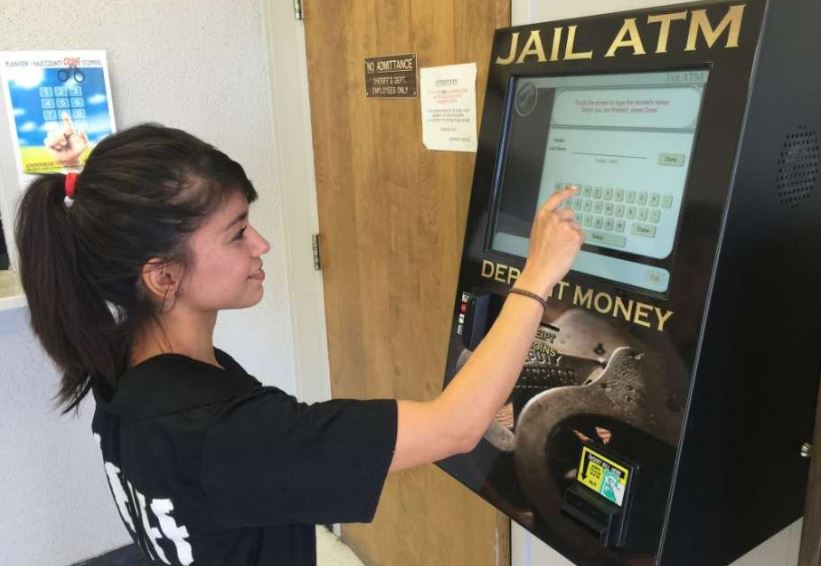
There is a monthly limit of $200-300 on how much inmates can spend on commissary items.
This amount is subject to change so call the facility at 218-726-2345 in order to confirm the amount that cannot be exceeded.
Inmates have access to both an in-house commissary store, and commissary packages that can be purchased and shipped to the inmate by friends and family.
Scroll down for information on the Saint Louis County Jail's service they use for you being able to purchase commissary items online and have them shipped directly to the inmate.
You can also go to our Inmate Money page for information on how to send money to an inmate.
JailATM provides a secure electronic payment portal that allows friends and family members to deposit funds directly into an incarcerated person's jail trust and commissary account. Deposited money provides the financial balance needed for your loved one to purchase personal hygiene items, snacks, over-the-counter medical sundries, and correspondence supplies from the facility commissary.
Important: Facility Deposit Rules and Window Intake Vary
Once a person is booked and moved to a housing unit, facilities do not always allow cash drop-offs or phone payments directly to the jail window. Some might and you should confirm this by calling the facility and asking. But if you do not register online and fund your loved one's trust account immediately, they may be forced to wait days or weeks for standard paper processing, leaving them without essential soap, clean undergarments, basic medical sundries or snacks.
Step-by-Step Instructions to Register and Deposit Funds
- Obtain the inmate's legal first and last name, date of birth, and assigned facility booking ID number.
- Navigate to deposits.jailatm.com/webdeposits/ on your computer or mobile device.
- Click Sign In or Register to set up your verified user account using your email address and password.
- Select the state and the detention facility where the inmate is currently housed.
- Search for the inmate using their ID number or legal last name to confirm an exact roster match.
- Enter your desired deposit dollar amount and review the calculated transaction and convenience fees.
- Input your debit or credit card billing details, complete payment authorization, and save your digital receipt.
What the Inmate Needs to Do
The inmate does not need an internet account to receive funds. Once the electronic transaction clears, the balance posts directly to their jail trust ledger according to facility accounting schedules. The inmate can review their updated balance at a dayroom pod kiosk or on their weekly trust statement and place orders on their regular commissary day.
Official Provider: JailATM Official Website
Customer Service Telephone: 1-877-810-0614
Support Hours: Monday – Friday, 8:00 AM – 5:00 PM CST
Supported Languages: English and Spanish
Other Services Provided by JailATM
In addition to Trust & Commissary Money Deposits, JailATM provides several other communication, store, and visitation services at participating facilities:
- Commissary Gift Packs & Store Ordering: Order pre-approved snack boxes, food packages, and hygiene bundles sent directly to the jail.
• Learn more on our website: Commissary Gift Packs Guide | • Visit official vendor page: JailATM Store Orders - Digital Messaging & Picture Sharing: Send electronic messages and photos directly to an inmate's housing unit kiosk.
• Learn more on our website: Digital Messaging Guide | • Visit official vendor page: JailATM Messaging - Remote Video Visitation: Schedule and join live video visits from home using your computer or smartphone.
• Learn more on our website: Video Visitation Guide | • Visit official vendor page: JailATM Video Visits
Deposit Money for an Inmate in the Saint Louis County Jail
The Saint Louis County Jail at 4334 Haines Road in Duluth uses Stellar Services to manage inmate funds. Money on an account first pays any fees the person owes the jail; what is left buys commissary, phone time and other needs.
- Online: The Sheriff's deposit link goes to JailATM.
- By mail: No form of money can be mailed to this jail.
- At the jail: The jail chooses not to publish whether it has a lobby kiosk or takes money in person. The only way to get it is to call the facility at 218-726-2345.
When you call about one person's account, have their full name and date of birth ready.
The St. Louis County Jail on Haines Road in Duluth, Minnesota, is the Sheriff's 197-bed jail. Since March 1, 2025, it does not take personal mail at the jail at all. Letters and photos go to a mail-scanning service, which copies each page, in color when needed, and sends the copies to the jail to hand out. Jails use these services because people have mailed in paper soaked with drugs such as heroin or meth.
Letters and photos (scanned):
Inmate's Full Name & LID
St. Louis County Jail, Minnesota
P.O. Box 247
Phoenix, MD 21131
Legal mail, books, magazines and newspapers:
Inmate's Full Name & LID
St. Louis County Jail
4334 Haines Rd.
Duluth, MN 55811
- Addressing it: Put the person's first and last name and their LID number on the envelope, and write the jail name as "St. Louis County Jail, Minnesota" without shortening it. The LID is on the jail roster.
- Only letters and photos: The scanning service handles nothing else. Other items, and anything obscene or with contraband in it, are not accepted.
- Sent back to you: Legal mail, money orders, personal checks, gift, debit or credit cards and cash mailed to the scanning address are all returned.
- Lawyers: Legal mail goes straight to the jail in Duluth, never to the scanning address.
- Reading material: Books, magazines and newspapers must be new and shipped directly by a publisher or a store to the Duluth address, and paperbacks only, since hardcovers are refused.
- Timing: The scanning service processes and sends on mail only Monday through Friday, never on weekends.
- Your return address: Include your full name and address on every envelope.
- Money: No form of money can be mailed to this jail. Put money on the account with an online deposit.
The jail also offers text messages and voice messages; to leave a voice message, call 218-409-8366.

Reliance Telephone provides telecommunications systems, inmate texting devices, and prepaid calling accounts for county jails across the upper Midwest. Opening a Reliance account allows families to purchase talk time or fund SMS text messaging credits so incarcerated individuals can maintain regular contact from housing unit kiosks and wireless devices.
Important: Mobile Calling Blocks and Messaging Approvals Vary
Inmates cannot receive incoming phone calls, and wireless providers automatically block collect calls from jail systems. While some facilities provide direct text messaging units, device availability and call permissions vary depending on facility housing rules, which you can confirm with the facility directly. If you do not register online and fund your account in advance, your loved one will not be able to connect calls or send text updates to your phone.
Step-by-Step Instructions to Register and Fund Reliance Services
- Visit www.reliancetelephone.com or call 1-800-896-3201.
- Select Create Account and register your 10-digit telephone number and email address.
- Choose your state and the detention facility where the inmate is housed.
- Link the inmate using their full legal name or facility booking ID.
- Select whether to purchase a Phone Card, fund an Inmate Texting Account, or set up Prepaid Collect Calling.
- Enter your debit or credit card billing details, complete payment, and save your receipt.
What the Inmate Needs to Do
The inmate dials your number from a dayroom wall phone or accesses their texting device using their PIN. The system verifies that calling or messaging units are funded and allows the conversation to proceed. All non-privileged communications are subject to recording and monitoring.
Official Provider: Reliance Telephone Official Website
Customer Service Telephone: 1-800-896-3201
Support Hours: Monday – Friday, 8:00 AM – 5:00 PM CST
Supported Languages: English and Spanish
Other Services Provided by Reliance Telephone
In addition to Prepaid Calling Accounts, Reliance offers texting and voice mail features at participating facilities:
- Inmate Texting & Messaging: Send two-way digital text messages to dedicated inmate handheld devices.
• Learn more on our website: Inmate Texting Guide | • Visit official vendor page: Reliance Texting Services
Reliance Telephone provides secure, corrections-grade handheld tablets designed for county jails and regional detention centers across the upper Midwest. Through these portable units, incarcerated individuals can exchange text messages with family, place voice phone calls, conduct scheduled video visits, stream approved entertainment, read eBooks, and access self-help materials directly from their living areas.
Important: Tablet Hardware Deployment and Rental Rules Vary
Detention centers do not manage tablet distribution identically. While some agencies issue individual personal tablets to every detainee at booking, others utilize shared pod docking stations or restrict tablet use to specific dayroom hours, which you should confirm with the facility directly. Although core educational and legal resources are generally provided free of charge, sending messages, listening to music, or making phone calls from the tablet requires an active balance funded by outside contacts.
Step-by-Step Instructions to Fund Reliance Tablet Services
- Verify that Reliance Telephone handheld tablets are active at your loved one's specific detention facility.
- Navigate to www.reliancetelephone.com on your computer or mobile device.
- Sign into your verified user profile or select Create Account using your primary 10-digit telephone number.
- Select your state, detention center, and link the inmate using their full legal name or facility booking ID.
- Select Inmate Texting / Media Funds or Inmate Wallet to add funds to their available balance.
- Specify your deposit dollar amount, review convenience fees, and enter your credit or debit card billing details.
- Submit payment, save your confirmation receipt, and notify your loved one that their device balance is ready for use.
What the Inmate Needs to Do
The inmate unlocks their assigned tablet using their facility PIN. Their active wallet balance appears on the home screen, allowing them to download songs, read digital books, write messages, and communicate with approved family members. Devices are returned to charging racks during facility count times and for overnight storage.
Official Provider: Reliance Telephone Official Website
Customer Service Telephone: 1-800-896-3201
Support Hours: Monday – Friday, 8:00 AM – 5:00 PM CST
Supported Languages: English and Spanish
Other Services Provided by Reliance Telephone
In addition to Tablet Services, Reliance Telephone provides calling, messaging, and visitation channels:
- Prepaid Phone Calling Accounts: Prepay for phone calling credits so your loved one can call your telephone directly.
• Learn more on our website: Prepaid Calling Accounts Guide | • Visit official vendor page: Reliance Phone Services - Inmate Texting & Messaging: Send two-way digital text messages to dedicated inmate handheld devices.
• Learn more on our website: Inmate Texting Guide | • Visit official vendor page: Reliance Texting Services - Remote Video Visitation: Schedule and join live video visits from home using your computer or smartphone.
• Learn more on our website: Video Visitation Guide | • Visit official vendor page: Reliance Video Visits
St. Louis County County Jails
St. Louis County City Jails
St. Louis County Juvenile Facilities
- Duluth Jail: 218-726-2345
- Adult Probation: 218-726-2633
- County Attorney: 218-726-2323
- District Court: 218-221-7560
- Duluth Police: 218-730-5400
- Hibbing Lockup: 218-262-0134
- Public Defender: 218-733-1027
- Sheriff: 218-726-2340
- Virginia Lockup: 218-749-7134