
Leflore County Jail
Leflore County Jail
Physical Address
100 S. Church StreetPoteau, OK 74953
Jail Phone Number
918-647-5013Le Flore County Inmate Search: Locating Someone Held in Poteau
Every adult booked after an arrest here, whether a town officer, a deputy or a trooper made it, ends up in Poteau at the LeFlore County Detention Center. A public trust, rather than the Sheriff, operates the building, so phone its desk for the street address before driving over. Below, we walk through finding your person, then cover charges, defenders, visiting, letters, money, belongings and hearings.
Begin with the official inmate search, typing the family name ahead of the first name. No hit? Swap in alternate spellings or add a middle name. The listing can lag a few hours behind the jail's own system, so someone booked or freed this morning may not appear yet.
Next, ring the Detention Center at 918-647-5013. Have the full name and birthday handy, and request the booking number, the list of charges and the bond figure. Release steps are on our bail page. Hearing by hearing, our court page tracks the case.
Read inmate search answers
 Read inmate search answers
1. What are the first moves to track down a Le Flore County detainee?
Do the online check first and the phone call second:
- Open the inmate search from any phone, tablet or computer.
- Enter the family name, then the first name. Leave the middle name blank at first.
- If a crowd of matches appears, add a birthday, or pick a state or county filter when the tool provides one.
- Jot down any ID the listing shows, whether it is called a booking or an offender number.
- Ring 918-647-5013 to double-check. Ask which unit holds the person, the list of charges and if bond has been set.
The officer who answers may ask how you are related to the detainee. Be brief and courteous, and keep paper and a pen nearby.
↑ Back to the question list2. No match turned up. What does that mean?
An empty result seldom means someone disappeared. Usual reasons:
- Booking isn't finished. Prints, photos and a health check happen first, and the database catches up later.
- Released. Somebody paid the bond, or a judge sent the person home.
- Transferred. Check neighboring county lockups, state prisons and federal custody.
- Name trouble. Search a nickname, a former surname or the name without its hyphen.
- Under 18. Youth detention is separate, and adult searches skip it.
- Arkansas arrest. Pocola and Arkoma touch the state line, so a stop on the far side means an Arkansas jail.
Still nothing? Phone the Detention Center at 918-647-5013 or the Sheriff's Office at 918-647-3426.
↑ Back to the question list3. Might a jail next door to Le Flore County be holding them?
Arrests made inside this county end at the Poteau jail. A stop close to a county border, or a warrant from another county, can put someone in a neighboring lockup instead:
- Sequoyah County Jail, 119 South Oak Street, Sallisaw, OK 74955. Sheriff's non-emergency line: 918-775-9155.
- Haskell County Jail, 1304 East Industrial St., Stigler, OK 74462, 918-967-2400.
- Latimer County Detention Center, 918-465-4012. Its Sheriff's Office sits at 111 North Central, Wilburton, OK 74578.
- Pushmataha County Jail, 207 SW 3rd Street, Antlers, OK 74523, 580-298-2475.
- McCurtain County Jail, reached through the Sheriff's Office, 2001 Industrial Parkway, Idabel, OK 74745, 580-286-3331.
When the arrest took place in Arkansas, contact the sheriff of whichever Arkansas county it happened in.
↑ Back to the question list4. Is a booking picture something I can request?
The official search exists to show where someone is housed. To ask for a booking photo, phone the Detention Center at 918-647-5013 and ask how requests work. Under the Open Records Act (51 O.S. § 24A.8), law enforcement agencies must open their jail registers and basic arrest details, like the name, the charge and the officer. That section does not list photos.
- The Sheriff's website has a form for open records requests.
- Reporters usually go to these same agencies when they want a photo.
- Immigration photos go through a request on the ICE FOIA portal.
- Federal agencies tend to keep booking photos private, though the Marshals sometimes share one, such as while chasing a fugitive.
5. Can VINE alert me when they're moved or freed?
OK VINE is a free notice service from the Attorney General's office. Once you register a person, it phones, texts or emails you when their custody status shifts: a move, a release, an escape, a capture after an escape, or a death. Register on VINELink or call 877-654-8463.
- It does not cover parole decisions.
- When a county detainee enters the Department of Corrections, the person receives a new number, so set up the alert again.
- Notices stop while the person stays at a state mental health hospital, and they resume after the return to DOC.
For news today, calling 918-647-5013 still beats waiting on an alert.
↑ Back to the question list6. What does a bond take at this jail?
Bond amounts come from a District Court judge. Oklahoma's Constitution gives most defendants a right to bail, apart from a few grave charges (Okla. Const. art. II § 8). People usually get out through cash, a licensed bail bondsman, real property pledged as security, or a personal recognizance promise.
- After a second or later DUI arrest, release has to wait until bail is set by a judge (HB 1222).
- Bond on another Oklahoma county's or city's hold can often be paid right here, too (HB 1991).
- Call 918-647-5013 to learn where payments go and what forms of payment are taken.
Our bail page spells out bond types, conditions and refunds.
↑ Back to the question list7. Where do the exact charges show up?
Over the phone, jail staff can read you the charges entered at booking. The charges in the court file can differ after the District Attorney reviews the case.
- Find the case on OSCN, the Oklahoma State Courts Network, or on ODCR, Oklahoma District Court Records.
- To confirm a case number, ring the Court Clerk at 918-647-3181.
- The District Attorney files formal charges from 100 S. Broadway, Room 300, Poteau, OK 74953, 918-647-2245.
Oklahoma treats facts about an arrest as open records at police agencies (51 O.S. § 24A.8). That includes why it happened and which officer made it.
↑ Back to the question list8. Who gets a free defender in Le Flore County, and how?
Your person should ask a jail officer for the form used to apply for a court-appointed lawyer. Completed applications are handed to the Court Clerk, and then a judge weighs earnings, bills and assets to decide whether the person can afford a lawyer (22 O.S. § 1355A).
- If approved, the case is assigned to the Oklahoma Indigent Defense System office, 507 Dewey Ave, Poteau, OK 74953, 918-647-3907.
- The application carries a $40 fee payable to the Court Fund, though a delay in paying it until the case closes can be requested.
- Relatives calling OIDS cannot start an appointment. Only the judge can do that.
- Hiring a private attorney is possible at any point, and that attorney may meet the client at the jail.
9. What should Le Flore County jail visitors plan for?
Phone 918-647-5013 before driving over. Find out the visiting schedule, the approval steps for visitors, accepted ID and the clothing rules.
Under state jail rules, security concerns are the only grounds for limiting how many people visit or how long a visit lasts (OAC 310:670-5-9). Kids may visit only alongside a parent or guardian. Plenty of Oklahoma jails run video visiting too, either from home or on a lobby screen, so ask if this one does and what it charges.
Lock your phone, purse and anything sharp in the vehicle, and plan on being searched. Our jail visiting guide has extra pointers.
↑ Back to the question list10. How do funds reach a detainee's account?
Money on a detainee's account buys commissary food, toiletries and phone minutes. Ring 918-647-5013 for today's deposit choices, fees and caps, and keep the full name and booking number in front of you.
Under SB 2118, passed in 2026, surplus commissary money can be spent on running the jail and on inmate care. Mailing bills or coins is a bad idea. Common deposit routes are compared in our guide to adding money. To see what the money buys, open our commissary guide.
↑ Back to the question list11. Which ways can we talk: calls, tablets, messages?
Booking ends with a right to place two or more calls, local or collect, under Oklahoma jail rules (OAC 310:670-5-1). That first call usually arrives collect, sometimes many hours after the arrest.
For later calls, ask the Detention Center at 918-647-5013 how to open an account, what a minute costs and whether tablets or messaging exist. Jail calls are frequently recorded, so save case details for the lawyer. For rates and apps, read our guide to jail phone calls or our inmate messaging guide.
↑ Back to the question list12. What about letters and postcards?
Before you write, ask the jail at 918-647-5013 for the correct mailing address and which number belongs on the envelope. Also check what may be enclosed, like pictures or books.
- Oklahoma's jail rules cap neither incoming nor outgoing letters, although staff may open envelopes to search for anything banned (OAC 310:670-5-9).
- Envelopes sent by a lawyer or a judge's office are unsealed only with the recipient watching, and outgoing legal mail leaves sealed.
- Write the detainee's complete legal name, and include your own address in the top corner.
The usual dos and don'ts are in our jail mail guide. Never tuck money inside a letter.
↑ Back to the question list13. Who keeps the wallet, keys and phone?
At booking, staff list each item taken and store it until the person leaves (OAC 310:670-5-1). At release, an officer checks the person's identity, hands back each item against the list and collects a signature.
Picking up belongings for someone who is still locked up? Call 918-647-5013. Find out whether the detainee must first sign a release and what hours pickup happens. Carry photo ID.
↑ Back to the question list14. What if they're ill, injured or on medication?
Each new arrival gets a health screening during booking and is told how to request care. A written request should bring a visit from licensed medical staff within two days (OAC 310:670-5-8), or sooner when it's urgent. Oklahoma statute separately demands adequate care for sickness or injury starting at arrest (74 O.S. § 192).
- Phone 918-647-5013 with the drug's name and dose and the prescribing doctor's number.
- Clearly report any mental health emergency or risk of suicide.
- Serious care complaints can go to the state jail inspectors at the OSDH Detention Program, 123 Robert S. Kerr Ave., Suite 1702, Oklahoma City, OK 73102, 405-426-8170.
15. How can I learn about a Le Flore County warrant?
Arrest warrants in this county are served by Sheriff's deputies, and questions go to the Sheriff's Office at 918-647-3426. Its around-the-clock dispatch center at 918-647-2317 can also check for a warrant. Look through the Sheriff's most wanted list, then check the state's top ten fugitives from the Attorney General and the federal top fifteen kept by the Marshals. A name search on OSCN can turn one up as well. Anyone with a warrant out should phone a lawyer before anything else, then walk in at the issuing court or ask it by phone for a fresh date. Reach the District Court Clerk at 100 S. Broadway, Poteau, OK 74953, 918-647-3181.
↑ Back to the question list16. Which day and courtroom come next?
The Court Clerk keeps the District Court calendar. Call 918-647-3181 and give the person's name and birthday. Hearings take place at the courthouse, 100 S. Broadway, Poteau, OK 74953.
- Type the name into OSCN or ODCR.
- Pocola's town court meets on the third Tuesday each month, 918-436-2388.
- Tribal matters are heard at the Choctaw Nation Tribal Courthouse, 302 Church Street, Talihina, OK 74571, 918-567-3582.
To follow a case from first appearance to sentencing, see our court page.
↑ Back to the question list17. Was a federal officer behind the arrest?
Federal charges from this area go before the Eastern District of Oklahoma's U.S. District Court. Find its clerk at 101 North 5th Street, Room 208, Muskogee, OK 74401, 918-684-7920.
- Soon after the arrest, a detention hearing decides whether the person sits in custody or returns home before trial (18 U.S.C. 3142).
- Anyone kept in custody becomes the Marshals' responsibility. Phone their Muskogee office at 539-239-5500 to learn the location.
- During transfers, prisoners may pass through the Federal Transfer Center, 7410 S. MacArthur Blvd, Oklahoma City, OK 73169, 405-682-4075.
- Following sentencing, the Bureau of Prisons inmate locator tracks the person by name or register number.
18. What if immigration placed a hold?
An immigration hold generally goes like this:
- First, the jail receives an ICE detainer request.
- That request asks the jail to keep the person up to 48 hours after they would otherwise be released (8 CFR 287.7(d)).
- Officers from ICE's Dallas Field Office, responsible for Oklahoma, collect the person. Its address is 8101 N. Stemmons Frwy, Dallas, TX 75247, 972-367-2200. ICE also keeps an office at 1220 Sovereign Row, Oklahoma City, OK 73108, 405-219-3199.
- Detainees may go to Cimarron Correctional Facility, 3200 S. Kings Hwy., Cushing, OK 74023. Its information line, 918-225-3336, answers weekdays from 8 a.m. to 3 p.m.
- Plug an A-number, or else a name paired with the birth country, into the ICE Online Detainee Locator.
HB 4156 (21 O.S. § 1795) turned unlawful presence in Oklahoma into a state offense. A federal court order has frozen it while the appeal continues.
↑ Back to the question list19. How is a state prisoner tracked after sentencing?
Someone sentenced to prison often spends months in the county jail first, and DOC's own estimate is 6 to 9 months. After that, DOC transfers the person to an assessment and reception site, and the choice of prison is made there.
- Names and DOC numbers both work in the DOC Offender Lookup.
- Each facility's case manager answers questions about a prisoner, or call DOC at 405-425-2500.
- Our Oklahoma prisons page sorts visiting and mail rules by facility.
20. Where do Le Flore County kids go after an arrest?
Youths under 18 are never housed in the adult jail. They go to a juvenile detention center instead, and officers can keep a young person for no more than 6 hours while finishing paperwork. Locally, the Office of Juvenile Affairs handles these cases from its district office at 109 Beard Street, Suite 111, Poteau, OK 74953, 918-647-9154, staffed weekdays from 8 a.m. to 5 p.m. That office can say which facility took the youth and when a judge will hold the detention hearing.
↑ Back to the question list21. Which Le Flore County police force booked them?
The arresting agency appears on the booking record, or jail staff can name it. Below is each agency with its number. In an emergency, dial 911.
- LeFlore County Sheriff's Office, 100 S. Church Street, Poteau, OK 74953, 918-647-3426. Deputies cover every part of the county.
- County dispatch, staffed 24 hours: 918-647-2317.
- Poteau Police Department: 918-647-8260.
- Pocola Police Department, 202 S. Pocola Blvd., Pocola, OK, 918-436-2476. Its dispatchers work around the clock.
- Arkoma Police Department, 1103 Main Street, Arkoma, OK 74901, 918-875-3381.
- Spiro Police Department: 918-962-5078.
- Heavener, Talihina, Panama, Wister, Bokoshe and Shady Point have their own town police. The Sheriff's Office can put you through to them.
- Cameron, Fort Coffee, Howe, Le Flore, Rock Island and Fanshawe: for arrests in these towns, start with the Sheriff's Office.
- Carl Albert State College Campus Police, Hamilton Complex Room 309, 1507 S. McKenna, Poteau, OK 74953, 918-647-1400. Officers there do not work around the clock.
- Choctaw Nation Lighthorse Police, 1802 Chukka Hina, Durant, OK 74701, non-emergency dispatch 580-920-1517. Its officers hold cross-deputization on the reservation.
- Oklahoma Highway Patrol: the Sheriff's Office lists Troop D in McAlester, 918-423-3636, and Troop C in Muskogee, 918-683-3256.
Le Flore County Bail and Release
An arrest anywhere from Pocola down to Talihina usually ends with a booking at the LeFlore County Detention Center in Poteau. A public trust runs this jail, not the Sheriff, so jail questions go to its own staff. Get the street address from them before you drive over. This page walks through who fixes the bond, the bond types Oklahoma allows, the windows that take money and what can block release even after paying.
Begin by confirming your loved one is still locked up. The official inmate lookup answers that first. After it, our Le Flore County Inmate Lists page tracks recent arrests and who sits in custody today, along with active warrants, the counts filed, booking mugshots, public defenders and the release of property.
Your first call goes to the Detention Center at 918-647-5013. Write down the person's legal name and birthday first. Staff can tell you the charges, the bond on each and when court starts. Once you hold a case number, our court page picks up the story.
1. Who decides the bond amount after a Le Flore County arrest?
A judge. State charges filed in this county are heard by its District Court. The county sits in Judicial District 16 along with Haskell and Latimer counties. The courthouse is at 100 S. Broadway, Poteau, OK 74953, and its Court Clerk picks up at 918-647-3181.
Oklahoma's Constitution makes bail the normal rule for most charges (Okla. Const. art. II § 8). The wait for a first hearing hinges on the docket, so ask jail staff for the date of that first court appearance.
Certain charges need a judge's signature before any release. Since November 1, 2025, a person booked for DUI who has a prior DUI stays in until a judge fixes bail, and the judge's written order has to give reasons for the figure (HB 1222). Charges under a town's own ordinances, like a Pocola ticket, are handled by that town's court.
↑ Back to the question list2. Which bond types can a judge order here?
Oklahoma offers more than one road out before trial. The judge chooses which road and how much it costs.
- Cash. The whole sum is handed over as money to a court officer or jailer authorized to take it. A relative or friend can pay it for the person (59 O.S. § 1323).
- Surety. You pay a licensed bondsman a fee, and the bondsman guarantees the court the rest.
- Property. Real estate stands in for cash. Whoever files the pledge covers the filing fees (59 O.S. § 1331).
- Own recognizance. No money changes hands. Your person signs a pledge to show up for every court date, and state bail law gives these bonds a section of their own (22 O.S. § 1108.1).
- Conditions. The Pretrial Release Act allows courts to add terms, such as an ankle monitor. Counties may run pretrial release programs under the same Act (22 O.S. § 1105.2, § 1105.3). The Court Clerk can say whether this court uses one.
3. What do bonds run for typical charges in Le Flore County?
Bond is fixed case by case, often starting from a list the court keeps. To hear the figure on a specific charge, phone the Court Clerk at 918-647-3181. These state rules shape the range:
- Town ordinance tickets. Pocola and Arkoma cases get their amounts from those towns' own courts.
- Simple drug possession, or a theft under $1,000. State Question 780 turned both into misdemeanors starting July 1, 2017.
- DUI number two. The amount must come from a judge, along with written reasons (HB 1222).
- DUI number three or more. As of November 1, 2025, bail can be refused outright (SB 981).
- Violent crimes, or crimes carrying life. A judge may hold these without bail after a hearing (Okla. Const. art. II § 8).
- Arrested for violence while on bond for an earlier violent case. A judge starts out assuming detention, though that assumption can be overcome (HB 3782).
- Wanted elsewhere in Oklahoma. That place prices its own bond, and the family may be able to post it there (HB 1991).
Whatever the charge, the Constitution forbids excessive bail (Okla. Const. art. II § 9).
↑ Back to the question list4. Can the Detention Center take the bond itself?
State law says a cash bond can be paid by the arrested person or by someone else for them (59 O.S. § 1323). These steps save a wasted trip:
- Ring 918-647-5013. Spell out the name and give the date of birth.
- Get the full bond total and the case number it is tied to. Ask whether the case needs a judge's OK before release.
- Find out whether the jail accepts the bond at its own desk, during which hours, or whether the courthouse is the place to pay.
- Ask which kinds of money staff accept, and what name belongs on the "pay to" line.
- Write down the jail's street address and where visitors park.
- Arrive with a photo ID and the exact sum. Insist on a written receipt, and file it somewhere safe until the case closes.
Prefer not to pay the full bail? A licensed bondsman can post it for a fee, as the bondsman answer on this page explains.
↑ Back to the question list5. Can I pay at the courthouse or a town window?
Often, yes. The District Court's clerk works inside the courthouse at 100 S. Broadway, Poteau, OK 74953. Call 918-647-3181 during business hours with three questions. Does the office accept a cash bond on this case? What payment does it take? How soon does word of the payment reach the jail?
Town charges are paid at the town:
- Pocola Municipal Court, 204 South Pocola Blvd., Pocola, OK, 918-436-2388. Its clerk keeps weekday hours of 8 a.m. to noon and 1 to 5 p.m. The judge holds court the third Tuesday of every month, starting at 8:30 a.m.
- Arkoma Town Hall, 1103 Main Street, Arkoma, OK 74901, 918-875-3228. Arkoma takes fine payments face to face, Monday to Friday, 8 a.m. to 4 p.m. Ask whether a bond goes through the same counter.
If city officers made the arrest, phone the Poteau Police Department at 918-647-8260 to learn where a city bond gets paid.
↑ Back to the question list6. Which forms of payment work, and which don't?
Every window sets its own rules, and the jail, the courthouse and a town court may not match. Check with the one you plan to use before leaving the house:
- Ask about cash, cashier's checks, money orders and cards, and whether a card brings an extra charge.
- Ask precisely how the payee should be written. A mistake there can mean a second drive.
- Bring the precise sum, because some counters keep little change on hand.
- Don't mail cash. If a stranger calls asking for bond money, end the call.
The District 16 prosecutor's office page links an online payment site. That site handles bogus check cases, restitution and supervision charges, and bail can't be paid through it. For what the Detention Center itself accepts, call 918-647-5013.
↑ Back to the question list7. How do bondsmen operate under Oklahoma law?
The Oklahoma Insurance Department licenses and polices every bondsman in the state, and writing bonds without that license is against the law (59 O.S. § 1303).
- Before signing as surety on any bond, a bondsman registers with the court clerk (59 O.S. § 1320).
- The fee, known as the premium, has to show on the bond paperwork before it goes to the court. Ask for the numbered receipt the law requires (59 O.S. § 1316).
- That fee counts as earned when your person is out and not jailed on anything else. If release never comes, the premium and collateral must be handed back without delay (59 O.S. § 1327).
- A bondsman may hand a client back to custody ahead of any default. Under certain listed reasons, the fee stays with the bondsman.
- Jailers and police can't hold a bondsman license (59 O.S. § 1315). Soliciting customers where prisoners are held or brought to court is grounds for discipline (59 O.S. § 1310).
Before you sign, run the bondsman's name through the state's license search for bail bondsmen. Complaints can go on the department's online complaint page. Its bail bond staff work at 400 NE 50th Street, Oklahoma City, OK 73105, 405-521-6610.
↑ Back to the question list8. Could something else keep them inside?
Each bond settles one case only. Any of the following can still stand in the way:
- A second place wants them. Another Oklahoma county or town may have its own hold. Since November 1, 2025, family members can post that other bond to lift it (HB 1991).
- DUI, second time or more. Release waits on a judge's bail order (HB 1222).
- Time owed to the state. A Department of Corrections hold outranks a county bond.
- Probation or parole trouble. A violation report can keep someone held.
- Federal agents or immigration. Each has its own answer further down.
So before money changes hands, call 918-647-5013 and have staff list every hold on file.
↑ Back to the question list9. Can a judge in Le Flore County say no to bail?
Yes, though only in narrow cases. The Oklahoma Constitution permits holding a person with no bail on a capital charge when guilt looks clear. Violent offenses are on the list, along with any charge whose top sentence is life or life without parole. So is a felony when the person charged has two prior felony convictions that came from separate events, and so are drug crimes punished by ten years or more (Okla. Const. art. II § 8).
Apart from capital cases, the judge must make two more findings. First, the case against the person looks solid. Second, even strict release terms would still leave someone in danger. In 2025, lawmakers added felony DUI, third offense and beyond, to the list (SB 981).
Arguing for detention falls to the District Attorney for District 16, with a local office at 100 S. Broadway, Room 300, Poteau, OK 74953, 918-647-2245. Victims may speak at any release hearing (Okla. Const. art. II § 34).
↑ Back to the question list10. How might the family get the bond reduced?
Ask the defense lawyer to file for a bond review. Excessive bail breaks the Oklahoma Constitution, so a figure far beyond the charge can be fought (Okla. Const. art. II § 9).
- Speak with the lawyer first. Appointed lawyers handle these requests as well as hired ones.
- Pull together proof that your person has roots here: work records, a rental agreement or house papers, and notes from people who count on them.
- Be truthful about the money the family can raise, and suggest terms that ease the judge's concerns.
- Raise the idea of an ankle monitor or a pretrial program, both of which state law allows (22 O.S. § 1105.2).
The next court date can be learned from the Court Clerk at 918-647-3181.
↑ Back to the question list11. Who gets an appointed lawyer in Le Flore County?
A person charged with anything that could lead to a jail cell is entitled to a lawyer, misdemeanor or felony. Oklahoma's top criminal court confirmed that in 2025. Here, free defense comes from the Oklahoma Indigent Defense System (OIDS) satellite office at 507 Dewey Ave, Poteau, OK 74953, 918-647-3907.
- The application form comes from, and goes back to, the Court Clerk's office. From inside the jail, your person should request one from a jailer.
- A judge rules on who can't afford counsel, based on a sworn list of income, assets and debts (22 O.S. § 1355A). Making bail is weighed, yet it may never decide the question by itself.
- There is a $40 charge to apply. It goes into the Court Fund instead of to OIDS, and the person may ask to settle it once the case is finished.
- OIDS takes cases only when the judge appoints it, so phoning them first won't speed things.
12. Which courts handle cases from Le Flore County?
- District Court (state felonies and misdemeanors), 100 S. Broadway, Poteau, OK 74953. Court Clerk: 918-647-3181.
- Pocola Municipal Court (Pocola ordinance cases), 204 South Pocola Blvd., Pocola, OK, 918-436-2388.
- Arkoma Town Hall (Arkoma fines), 1103 Main Street, Arkoma, OK 74901, 918-875-3228.
- Choctaw Nation Tribal Courthouse, 302 Church Street, Talihina, OK 74571, 918-567-3582.
- Federal court: U.S. District Court for the Eastern District of Oklahoma, 101 North 5th Street, Room 208, Muskogee, OK 74401, 918-684-7920.
McGirt v. Oklahoma (2020) and later rulings changed where some cases go. Oklahoma's criminal appeals court found that Congress never ended the Choctaw reservation. So a tribal citizen charged over something that happened on reservation land is usually prosecuted in tribal or federal court. Ask the lawyer which court has power over your person's case.
↑ Back to the question list13. Is cash bail ever refunded, or lost?
Cash bail is refunded once the case wraps up, or once your person is surrendered to the court (59 O.S. § 1328). Hold on to the receipt and a photo ID. The Court Clerk at 918-647-3181 can explain how refund checks go out.
Skipping court starts a clock under 59 O.S. § 1332:
- Day 10 is the deadline for the court to issue a warrant after a forfeiture.
- By day 15, the forfeiture judgment goes on file. The clerk's notice goes out within 30 days of that filing.
- Once that judgment reaches the bondsman, a 90-day window opens to produce the person. If they do, the forfeiture is set aside.
- Otherwise, the full bond amount must be paid into the court clerk's office in cash or securities.
Municipal courts don't wait. A town judge declares forfeiture on the no-show day itself, and court costs come out of the money (11 O.S. § 27-118).
↑ Back to the question list14. How do we collect leftover jail money and belongings?
Under Oklahoma jail standards, nobody leaves until staff confirm exactly who they are. Belongings are checked off against the property inventory, and the person signs to show everything came back (OAC 310:670-5-1).
A leftover account balance, or items too bulky to carry, may take a second trip. Ask the Detention Center at 918-647-5013 how a leftover balance is refunded, and whether family can collect property. Carry a photo ID, and check if your person must sign a release note first. Our page on jail accounts explains putting money in and getting it back.
↑ Back to the question list15. Does a federal arrest follow different release rules?
Yes. This county lies inside the Eastern District of Oklahoma, so a federal case filed here lands in the U.S. District Court for the Eastern District of Oklahoma. The clerk's office is at 101 North 5th Street, Room 208, Muskogee, OK 74401, 918-684-7920, open weekdays 8:30 a.m. to 4:30 p.m. The federal statute also lists Poteau among the cities where this court may meet.
- A federal magistrate weighs release or custody at a detention hearing (18 U.S.C. 3142). County bond money plays no role there.
- The U.S. Marshals Service, 101 North 5th Street, Suite 136, Muskogee, OK 74401, 539-239-5500, has charge of federal defendants who are not released.
- Some prisoners pass through the Federal Transfer Center, 7410 S. MacArthur Blvd, Oklahoma City, OK 73169, 405-682-4075, during moves.
- For a federal defendant without money for counsel, there is the Federal Public Defender, 112 North 7th Street, Muskogee, OK 74401, 918-687-2430.
- Once sentenced, your person shows up on the Federal Bureau of Prisons inmate locator.
16. Will a paid bond lift an ICE detainer?
No. The county bond and an ICE detainer are separate, so one doesn't clear the other. Expect these steps:
- ICE starts the process with its written detainer, Form I-247A, sent to the Detention Center.
- The request: keep the person up to 48 hours after they would otherwise be released (8 CFR 287.7(d)).
- Agents arrive to take custody. Oklahoma belongs to ICE's Dallas Field Office, 8101 N. Stemmons Frwy, Dallas, TX 75247, 972-367-2200, which also runs an office at 1220 Sovereign Row, Oklahoma City, OK 73108, 405-219-3199.
- ICE's detention site at Cimarron Correctional Facility, 3200 S. Kings Hwy., Cushing, OK 74023, is one possible stop. Its information line is 918-225-3336.
- Track them on the ICE Online Detainee Locator by full name and birth country.
State lawmakers passed HB 4156 (21 O.S. § 1795), aimed at noncitizens who remain here with no lawful right to enter the U.S. A federal judge put that law on ice, and the state's appeal is still open.
↑ Back to the question list17. Where does a long prison term get served?
A state prison term belongs to the Oklahoma Department of Corrections. Expect a long wait first. DOC says 6 to 9 months usually pass before pickup from the county jail. Once the person reaches DOC's assessment and reception unit, intake staff score the person's custody level and pick a matching prison.
- The DOC Offender Lookup shows the current prison when you enter a name.
- The DOC main line, 405-425-2500, connects to any facility. After arrival, an assigned case manager is the best contact.
- Our Oklahoma state prisons page lists visits, mail and contact details facility by facility.
18. What happens when a Le Flore County teen lands in custody?
Minors are held at a juvenile detention center. An adult jail gets a six-hour window at most with a youth, just long enough to identify, book or move them. The youth must never be within sight or earshot of any grown inmate (OAC 310:670-5-5). This county falls under the Office of Juvenile Affairs, which keeps a district office at 109 Beard Street, Suite 111, Poteau, OK 74953, 918-647-9154, weekdays 8 a.m. to 5 p.m.
- Call that office for the youth's location and hearing date.
- A 15-, 16- or 17-year-old charged with certain grave crimes may be handled as a youthful offender under the Youthful Offender Act.
- A teen can instead be certified and tried as an adult.
Visitation Grid
Leflore County Jail Inmate Video Visitation Schedule
100 S. Church Street
Poteau, OK 74953
918-647-5013

- Only those listed on an inmate's Visitation Form will be permitted to visit. Inmates are given this form when they are assigned a cell.
- Visitors must have a current, valid photo identification (such as a driver's license) in order to visit.
- All visitors, on their first visit, must complete a Visitor Information Form. They will then be checked to determine whether they have any outstanding warrants.
- Visitors under the age of 18 must be accompanied by a parent or guardian who is on the approved list, do not need to be listed on an approved visitation list themselves.
- Each inmate is allowed one hour of visitation per week on their assigned day and time. You must check with your inmate for this date and time.
- Requests for exceptions and special requests must be forwarded through a Corrections Officer to a Shift Supervisor for approval.
- A Shift Supervisor may extend visits by reason of distance traveled, past infrequent visits, or other reason.
INMATES ARE ASSIGNED A TIME BASED ON THEIR CELL ASSIGNMENT - Check with them.
ON SITE PERSONAL VISITS
| DAY | TIME |
| SUNDAY | 9:00AM - 8:00PM |
| MONDAY | 9:00AM - 8:00PM |
| TUESDAY | 9:00AM - 8:00PM |
| WEDNESDAY | 9:00AM - 8:00PM |
| THURSDAY | 9:00AM - 8:00PM |
| FRIDAY | 9:00AM - 8:00PM |
| SATURDAY | 9:00AM - 8:00PM |
City Telecoin Remote Video Visits
- Approved visitors can schedule a video call (visit) with an inmate online using City Telecoin.
- No scheduling needed.
REMOTE INMATE VIDEO CALLS
| DAY | TIMES |
| SUNDAY | 8:00AM - 9:00PM |
| MONDAY | 8:00AM - 9:00PM |
| TUESDAY | 8:00AM - 9:00PM |
| WEDNESDAY | 8:00AM - 9:00PM |
| THURSDAY | 8:00AM - 9:00PM |
| FRIDAY | 8:00AM - 9:00PM |
| SATURDAY | 8:00AM - 9:00PM |

City Tele-Coin Video Visitation provides a secure online platform that enables families and friends to conduct live, face-to-face video visits with incarcerated loved ones from home. Using an internet-connected smartphone, tablet, or personal computer equipped with a webcam, visitors can connect directly without traveling to the correctional facility.
Important: Advance Registration and Visitor Clearance Required
Detention centers do not permit unscheduled or unverified video sessions. Correctional facilities require prospective visitors to submit government-issued photo identification and receive administrative clearance before booking an appointment, an approval process that can take up to 48 hours depending on facility staffing. You should verify your visitor approval status with the facility prior to scheduling. If you do not register well in advance, you will miss your loved one's scheduled visiting window for the week.
Step-by-Step Instructions to Register and Schedule a Video Visit
- Visit www.citytelecoin.com or launch the CTC Customer app.
- Register your visitor profile and upload a clear photograph of your government-issued ID for background review.
- Wait for email notification confirming facility visitor approval.
- Select Video Visitation, choose the detention facility, and select the inmate.
- Browse the available schedule calendar, select an open time slot, and pay the visitation fee using a credit or debit card.
- Log into the website or mobile app 10 minutes prior to the start time on a device with a functioning camera, microphone, and stable high-speed internet connection.
What the Inmate Needs to Do
The inmate receives a visitation notification on their housing unit video kiosk or tablet. At the appointed time, they log in with their PIN and sit before the terminal. Inmates and visitors must strictly observe jail dress and conduct rules; sessions are monitored by staff and will terminate immediately upon any violation.
Official Provider: City Tele-Coin Official Website
Customer Service Telephone: 1-800-682-0707
Support Hours: Monday – Friday, 7:00 AM – 7:00 PM CST; Saturday, 8:00 AM – 5:00 PM CST
Supported Languages: English and Spanish
Other Services Provided by City Tele-Coin (CTC)
In addition to Remote Video Visitation, City Tele-Coin provides calling, messaging, and account services:
- Inmate Phone Calling Accounts: Prepay for phone calling credits so your loved one can call your telephone directly.
• Learn more on our website: Phone Calling Accounts Guide | • Visit official vendor page: CTC Phone Calling - Chirp Messaging Devices: Exchange digital text messages and photos directly with handheld units.
• Learn more on our website: Chirp Messaging Guide | • Visit official vendor page: CTC Chirp Devices - Inmate Trust & Account Deposits: Send money directly into an inmate's jail trust account for independent canteen shopping.
• Learn more on our website: Inmate Trust Deposits Guide | • Visit official vendor page: CTC Trust Deposits
Criminal Court in Le Flore County: How a Case Moves
State criminal cases filed in this county are heard at the courthouse, 100 S. Broadway, Poteau, OK 74953. Anyone kept in custody while a case is open waits at the LeFlore County Detention Center, the county jail, which a public trust operates in town. Its staff can give you the street address. Further down: which court owns a case, how a felony unfolds, where dates appear and how a warrant gets cleared.
Check custody with the official inmate lookup first. Next, open our Le Flore County Jail Roster. It centers on custody: recent bookings, who is still held, active warrants, each person's charges, mugshots, appointed defense and claiming property.
Ring the Court Clerk at 918-647-3181. Have the spelling and birth date ready. Staff can read you the case number, the coming hearing and the courtroom. If release before trial is the goal, our bail and bond page walks through every route.
1. Does one court hear both felonies and misdemeanors?
Yes. Whether the charge is shoplifting or homicide, a state crime filed here goes to the District Court, which for this county means Judicial District 16. No Oklahoma county goes without an associate district judge, since the Constitution requires one in each, and voters fill the district bench in races where no party label appears (Okla. Const. art. VII § 8, § 9).
- Misdemeanor. The lesser kind of crime. Any jail time is spent in the county jail, never a state prison. When a misdemeanor goes to a jury in District Court, six jurors decide.
- Felony. Serious enough to mean prison. Twelve jurors decide these.
- Ordinance violation. A broken town rule. The state Constitution confines municipal courts to criminal and traffic cases (Okla. Const. art. VII § 1).
Each felony committed from January 1, 2026 onward now carries a letter class. Picture a ladder of fourteen rungs. Y and A1 sit on top, while D2 and D3 sit on the bottom (HB 1792, revised by HB 2104 and HB 2105). Two changes from State Question 780 (effective July 1, 2017) still matter. Personal-use drug possession dropped to a misdemeanor, and a property crime now needs a value of $1,000 or more to be a felony.
↑ Back to the question list2. Where do criminal hearings happen in Poteau?
Nearly all state hearings are held in the county courthouse at 100 S. Broadway, Poteau, OK 74953. The old building is on the National Register. Inside, the Court Clerk records filings and runs the docket, reachable on business days at 918-647-3181. The District Attorney's local staff work out of Room 300.
The Sheriff's Office stands just behind the courthouse, at 100 S. Church Street, Poteau, OK 74953, 918-647-3426.
Some cases that begin in this county end up elsewhere:
- Tribal cases: the Choctaw Nation Tribal Courthouse, 302 Church Street, Talihina, OK 74571, 918-567-3582.
- Federal cases: U.S. District Court for the Eastern District of Oklahoma, clerk's office at 101 North 5th Street, Room 208, Muskogee, OK 74401, 918-684-7920.
3. Which Le Flore County towns hold their own court?
Official town pages show local court business in three places:
- Pocola. Its municipal court sits at 204 South Pocola Blvd., Pocola, OK, 918-436-2388. Court is held on the month's third Tuesday at 8:30 a.m. The clerk's window opens at 8, closes for lunch from noon to 1, and shuts at 5 on weekdays. If Pocola fines go unpaid, the town can turn them over for collection. A driver's license lost over them comes back only after full payment, through Service Oklahoma at 405-425-2424.
- Poteau. City ordinances create a municipal judge and courtroom, and the police chief carries out the court's warrants. The Poteau Police Department, 918-647-8260, can tell you where and when that court meets.
- Arkoma. People settle town fines in person at Town Hall, 1103 Main Street, Arkoma, OK 74901, 918-875-3228, from 8 a.m. to 4 p.m. on weekdays.
Was the ticket written in Heavener, Spiro, Talihina, Panama, Wister, Howe, Bokoshe, Cameron, Shady Point, Rock Island, Fort Coffee, Le Flore or Fanshawe? The town hall there can say where its tickets go, and the District Court Clerk at 918-647-3181 can help too. If a town ever charges a fine above what state law permits, a 2026 law cuts it back to the lawful amount automatically (SB 1775).
↑ Back to the question list4. What comes first after the arrest?
Usually an arraignment in District Court. Picture a short hearing: the judge confirms the charges, decides the bond or takes a fresh look at it, and checks whether your person has a lawyer or needs one appointed.
- Felony arraignments in District Court are not the moment for a guilty or not guilty answer. That comes later.
- If your person is jailed in some other county, the arraignment may happen over video. SB 1711 has allowed that since November 2024.
- Under Okla. Const. art. II § 20, the accused gets a speedy, public trial, judged by an impartial jury from the county where the crime occurred.
- A 2024 law, SB 325, makes the court look again at a slow case. The clock starts at the first appearance. Review comes at 9 months if this charge is all that holds your person in jail, or at 18 months for someone living at home.
Calendars differ week to week, so get the arraignment date straight from the Court Clerk or the jail.
↑ Back to the question list5. What becomes of a DUI, drug or theft misdemeanor?
The District 16 District Attorney files state misdemeanors in this county. Most begin at an arraignment and many close with a plea bargain. A not guilty plea can lead to a six-member jury trial. Some local examples:
- Drugs for personal use. State Question 780 rewrote 63 O.S. § 2-402, so simple possession is now a misdemeanor.
- Theft and property damage. A loss below $1,000 keeps the charge a misdemeanor.
- Drunk driving. Get arrested for DUI with a prior one, and only a judge can set the bail, in writing with reasons (HB 1222). Once DUIs reach felony level on a third or later offense, a judge may deny bail altogether (SB 981).
Sentences on misdemeanors are served locally, in the county jail, often with fines and court costs added. The defense lawyer can explain the punishment range for the exact charge.
↑ Back to the question list6. What path does a Le Flore County felony follow?
Expect these stages, though a plea deal can end the case at any point:
- Booking at the Detention Center after the arrest.
- Arraignment. Charges, bond and the lawyer question all come up.
- Preliminary hearing. This is an evidence check, not a trial. Prosecutors must show three things. A crime really occurred. There is probable cause to think your person committed it. And it took place inside this county.
- Trial in front of twelve jurors.
- Sentencing. On crimes from January 1, 2026 on, the written judgment names the felony's class and the minimum time owed. A judgment missing the class gets the lowest class from DOC (HB 2105).
Judges nearly always order credit for jail days served before the sentence, according to DOC.
↑ Back to the question list7. Do violent charges bring tougher rules?
They do. Here is where the rules tighten:
- Bail. For violent crimes, the Constitution lets a judge refuse release once guilt looks evident and nothing short of jail would protect others (Okla. Const. art. II § 8).
- Repeat violence on bond. Someone accused of violence while already free on a bond in another violent case faces a presumption that they stay locked up (HB 3782).
- Time served. For crimes on the state's 85% list, no parole review happens before 85% of the term is served (21 O.S. § 13.1). Examples include murder in the first degree, child abuse, robbery with a dangerous weapon and first degree burglary. For parole math, life equals 45 years, so the earliest look comes at 38 years and 3 months.
- Children present. When a kid is there to see or hear it, domestic abuse is charged as a B5 felony under SB 1238 (2026).
- Appeal bonds. A person convicted of child abuse or partner abuse can't get out on bail while appealing. That rule began November 1, 2025 (HB 1066).
- Orders of protection. When the person named is sitting in the county jail, the order jumps the line for service, with a first attempt inside 24 hours (SB 623).
8. Whose office prosecutes, and whose defends?
The District 16 District Attorney prosecutes state cases here and in Latimer County. Its staff here work at 100 S. Broadway, Room 300, Poteau, OK 74953, 918-647-2245.
Appointed defense comes from the Oklahoma Indigent Defense System, whose Poteau satellite office is at 507 Dewey Ave, Poteau, OK 74953, 918-647-3907.
- Ask the Court Clerk for the paperwork that requests appointed counsel. Your person can get one in jail by asking staff.
- Only the judge can find someone too poor to hire counsel and hand the case to OIDS. Phoning OIDS does not start that.
- Filing carries a $40 fee for the Court Fund, and it can be postponed to the case's end on request.
A family may also retain its own attorney at any point in the case.
↑ Back to the question list9. Where can we track a case and its dates?
Two websites hold Oklahoma district court dockets, and state agencies rely on both:
- Search one: Oklahoma State Courts Network
- Search two: Oklahoma District Court Records
Search each one by last name and first name, choosing this county's court. Jot down the case number when it turns up, since every call goes faster with it.
Same-day changes may not show online right away. Confirm any hearing date or courtroom with the Court Clerk at 918-647-3181. Pocola town cases are tracked by that court at 918-436-2388.
↑ Back to the question list10. Is someone wanted, and how do they settle it?
Arrest warrants across the county are carried out by the Sheriff's Patrol Division. For a check, phone the Sheriff's Office at 918-647-3426, or county dispatch at 918-647-2317, where warrant checks run day and night. Check these wanted lists too: the Sheriff's own Most Wanted page, the U.S. Marshals' 15 Most Wanted fugitives and, statewide, the Attorney General's 10 Most Wanted. Case files may appear on OSCN or ODCR. To settle a warrant, talk with a defense lawyer first. Surrendering to the court that signed it is one path. The other is to ring that court and request a new hearing date. District Court warrants run through the Court Clerk, 100 S. Broadway, Poteau, OK 74953, 918-647-3181.
↑ Back to the question list11. When does the Choctaw Nation court take a case?
The U.S. Supreme Court's McGirt v. Oklahoma ruling of July 9, 2020, found that Creek reservation land is still Indian country, where states generally lack power to try Indians. Oklahoma's criminal appeals court then reached the same result for the Choctaw reservation. What that means for a family:
- Tribal citizen, reservation land: tribal prosecutors or federal ones usually take over from the state.
- Murder and other crimes on the federal major crimes list, when the accused is Native American, are for federal court alone.
- Oklahoma v. Castro-Huerta (June 29, 2022) lets the state prosecute non-Indians whose victims are Indian, alongside federal prosecutors.
- Cases against Indians from some other tribe are still in flux, so lean on a lawyer for which court applies.
The Nation keeps its Tribal Courthouse inside this county, at 302 Church Street, Talihina, OK 74571, 918-567-3582. Choctaw Lighthorse Police officers hold cross-deputy status with local agencies. The Nation's main number is 800-522-6170.
↑ Back to the question list12. How do federal cases from Le Flore County unfold?
This county belongs to Oklahoma's Eastern federal district. The district clerk works at 101 North 5th Street, Room 208, Muskogee, OK 74401, 918-684-7920, weekdays 8:30 a.m. to 4:30 p.m. Poteau is also named in federal law as a city where this district may hold court.
- Charging. Federal prosecutors work from 520 Denison Ave, Muskogee, OK 74401, 918-684-5100.
- Detention hearing. Held under 18 U.S.C. 3142, it settles home versus a cell until trial.
- Custody. Federal marshals at 101 North 5th Street, Suite 136, Muskogee, OK 74401, 539-239-5500, take charge of anyone the judge does not release.
- Defense. The Federal Public Defender, 112 North 7th Street, Muskogee, OK 74401, 918-687-2430, represents federal defendants short on money.
- After sentencing. Find the prison with the Federal Bureau of Prisons inmate locator.
13. Can an ICE detainer change a state case?
The charges still move forward in state court. What shifts is release day. In order:
- Immigration and Customs Enforcement lodges a detainer on Form I-247A.
- It wants the jail to keep your person up to 48 hours after they would otherwise be released (8 CFR 287.7(d)), giving agents time to arrive.
- ICE's Dallas Field Office, 8101 N. Stemmons Frwy, Dallas, TX 75247, 972-367-2200, oversees Oklahoma. It keeps a check-in office at 1220 Sovereign Row, Oklahoma City, OK 73108, 405-219-3199.
- From there, a detainee can be moved to Cimarron Correctional Facility, 3200 S. Kings Hwy., Cushing, OK 74023, 918-225-3336.
- Use the ICE Online Detainee Locator, with name and birth country.
Title 22 also contains a section on confirming whether a jailed person is a citizen (22 O.S. § 171.2). HB 4156 (21 O.S. § 1795) made being here unlawfully a state crime. Federal courts have halted it, and the Tenth Circuit appeal is pending. Noncitizens should mention their status to the defense lawyer right away, because a plea deal can carry immigration fallout.
↑ Back to the question list14. Where does prison time from Le Flore County get served?
A prison sentence hands your person over to the Oklahoma Department of Corrections. DOC usually takes 6 to 9 months to collect someone from a county jail. First stop after that is one of DOC's intake sites for assessment and reception. Its staff weigh how much security the person needs, then name a prison.
- Follow the person on the DOC Offender Lookup.
- DOC's central office: 4345 N. Lincoln Blvd, Oklahoma City, OK 73105, 405-425-2500.
- Once placed, a case manager at the prison fields family questions.
- Visiting rules and mailing addresses for every prison are gathered on our Oklahoma prisons guide.
15. Is a teen's case handled differently?
The Office of Juvenile Affairs runs youth cases in 73 of Oklahoma's 77 counties, this one included. Its district office here is at 109 Beard Street, Suite 111, Poteau, OK 74953, 918-647-9154, staffed weekdays 8 a.m. to 5 p.m.
- Booking a youth at a police station or the sheriff's office may take 6 hours at most. A teen who must stay locked up longer is moved to juvenile detention, never the adult jail.
- Next comes a detention hearing, normally no later than the next judicial day. A real problem such as transport can push it to two.
- The Youthful Offender Act covers teens 15 to 17 charged with crimes on a set list. A 13 or 14 year old can face it only on a first degree murder charge.
- Certification moves a youth's case into adult court, and a reverse certification request asks for the opposite.
16. What protections do victims get in Le Flore County?
Victims' rights sit in the Oklahoma Constitution itself, in a section people now call Marsy's Law (Okla. Const. art. II § 34). It gives victims these promises:
- Be heard. Victims get a say at hearings on release, plea deals, sentencing and parole.
- Get paid back. Restitution should be full and on time.
- Move on. The case should end without needless delay.
- Be safe. Treatment should respect safety, dignity and privacy.
Case notices go out only after a written request. Send yours to the District Attorney's office, 100 S. Broadway, Room 300, Poteau, OK 74953, 918-647-2245. The letter needs four things: who is charged, which county, the case number, and how to reach you.
Custody alerts are free on VINELink, or through OK VINE by phone at 877-654-8463. Oklahoma's Crime Victims Compensation Program may reimburse a victim for things like medical care, counseling, lost income or a funeral. Call 405-264-5006.
↑ Back to the question list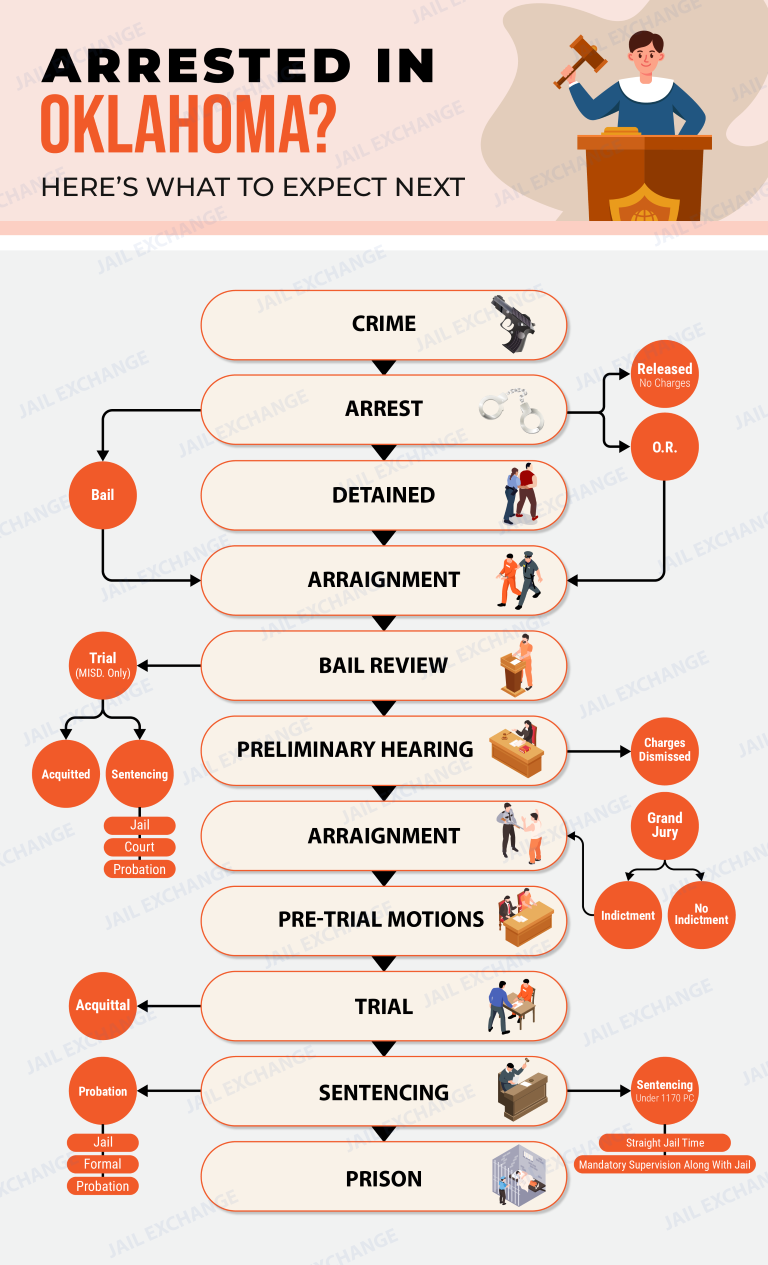
Information for this service is currently unavailable.

CommissaryDeposit.com provides a secure web platform for friends and family to deposit funds directly into an incarcerated individual's institutional trust and canteen account. Money sent through this service allows inmates to purchase daily essentials, food items, over-the-counter medication, hygiene products, and correspondence stationery from the facility commissary.
Important: Inmate Account Intake Policies Differ by Facility
Once a person is booked and moved to a housing unit, facilities do not always allow cash drop-offs or phone payments directly to the jail window. Some might and you should confirm this by calling the facility and asking. But if you do not register online and fund your loved one's trust account immediately, they may be forced to wait days or weeks for standard paper processing, leaving them without essential soap, clean undergarments, basic medical sundries or snacks. Note also that any funds deposited may be subject to facility collections for outstanding booking fees or medical co-pays according to local rules.
Step-by-Step Instructions to Register and Deposit Funds
- Confirm the inmate's current housing facility, their legal first and last name, and their official inmate booking ID number.
- Navigate to www.commissarydeposit.com and click on Deposit Money.
- Select the state and facility from the drop-down directories.
- Search for the inmate using their ID number or last name and verify the record match to ensure you do not send funds to the wrong individual.
- Enter your phone number to receive a one-time verification code via SMS text or automated voice call.
- Specify the deposit dollar amount, review the calculated convenience fees (fixed fee plus percentage fee), and enter your debit or credit card billing details.
- Submit the payment and save the digital confirmation receipt for your financial records.
What the Inmate Needs to Do
The inmate does not need an internet account to receive funds. Once the electronic payment clears, the funds post directly to their ledger balance in the jail's internal commissary management system. The inmate can verify their balance on their weekly account slip or at a dayroom kiosk terminal to place orders during the next scheduled commissary cycle.
Official Provider: CommissaryDeposit.com Official Portal
Customer Support Email: Support@CommissaryDeposit.com (Requests must include facility name, inmate name, and inmate ID)
Support Response Hours: Monday – Friday, 8:00 AM – 4:30 PM EST (Response within two business days)
Supported Languages: English
Other Services Associated with CommissaryDeposit.com
Depending on the detention facility contract, additional commissary package ordering options may be supported:
- Direct Commissary Package Ordering: Order pre-packaged snack boxes and hygiene bundles sent directly to the inmate.
• Learn more on our website: Commissary Package Ordering Guide | • Visit official vendor page: CommissaryDeposit.com Store Orders
Deposit Money for an Inmate in the Leflore County Jail
The Easiest and Securest Way of Depositing Money for an Inmate
There are several methods for depositing money on an inmate's account:
1. To send money online to an inmate in the Leflore County Jail use Commissary Deposit.
NOTE: Commissary Deposit provides support by email only. Your request must include the facility name, inmate name, and inmate ID. Requests without these details will not be serviced.
2. Deposit cash or use a debit or credit card using a dedicated kiosk for this purpose. The machine is located in the lobby or visitation area of the Leflore County Jail.
3. The Leflore County Jail may also allow you to *mail an inmate a money order or cashier’s check from a trusted source such as the Post Office, a local bank, or Western Union. The money order should be be made out to either the inmate or the Le Flore County Sheriff's Office, with the inmate’s name and ID# on the memo line of the check. To confirm this option call the facility at 918-647-5013.
*When mailing a money order or cashier’s check, send it an envelope by itself. Never send it with a letter or photos for your inmate, unless the facility allows it. Never send personal checks or cash.
4. The Leflore County Jail has a reception desk that may accept cash, money orders or cashier checks. Call 918-647-5013 to find out the specific hours for drop off times.
The LeFlore County Jail in Poteau takes paper letters through the U.S. Mail at its South Broadway Street address. Legal mail and books or magazines go to that same address. Officers inspect every envelope, and the jail treats mail as a privilege that can be taken away when the rules are broken.
Personal mail, legal mail and reading material:
Inmate's Full Name & Inmate ID #
LeFlore County Jail
100 South Broadway Street
Poteau, OK 74953
- The envelope: Your name and address belong in the top left corner, and a letter with no return address is usually destroyed.
- What you can send: Letters, postcards, computer printouts and photos can all be sent, though Polaroid pictures are refused.
- Ink: Letters to Poteau should be in blue or black ink, never crayon, felt marker or colored pen.
- Do not add: Drawings, glitter, confetti, lipstick or perfume, on the paper or on the envelope.
- Books and magazines: They must be new and come straight from the publisher or a trusted store. Hardcover and wire-spiral books are refused, and so is anything about violence, sex, gangs, drugs or escapes.
- Greeting cards: A card is allowed if it is plain and does not play music.
- Money orders: Make it out to the inmate's full name and add their inmate number. If you are unsure, call 918-647-5013 to confirm.
- Stamps: They can't be mailed in. Inmates with no money get two or three stamps, plus envelopes and paper, each week.
- Off-limits: Inmates may not trade letters with co-defendants, people in any other jail or prison, or anyone with a no-contact order.
- Contraband: Illegal items are given to the Le Flore County Sheriff or the District Attorney, and both the sender and the inmate can be charged with a crime.
Letters come in Monday through Friday, with no limit on how many one person can get.
Inmate Sales (Combined Public Communications - CPC) provides telecommunications services that allow incarcerated individuals to place outbound voice calls from dayroom telephones or handheld tablets to family and friends. Because correctional facilities do not permit incoming calls, funding an Inmate Sales prepaid account links calling credits directly to your phone number so calls connect without carrier restrictions.
Important: Mobile Phones Automatically Block Inmate Collect Calls
Cellular phone carriers automatically reject standard collect calls originating from jail phone systems. While some residential landlines might permit direct monthly billing, mobile devices and internet-based telephone lines require an active prepaid calling balance, which you can verify by checking with your provider. If you do not register online and fund an Inmate Sales account right away, your loved one will receive an automated disconnect announcement when attempting to call your number.
Step-by-Step Instructions to Register and Fund a Phone Account
- Visit www.inmatesales.com or call customer care at 1-877-998-5678.
- Click New User and register using the primary 10-digit telephone number where you want to receive calls.
- Select the state and facility where the inmate is currently detained.
- Link the inmate to your profile using their full legal name and booking ID number.
- Select Prepaid Collect Phone or Direct Inmate PIN Debit.
- Select your deposit dollar amount and enter your debit or credit card billing details.
- Submit payment, record your confirmation number, and confirm that your mobile phone allows calls from automated or unknown correctional numbers.
What the Inmate Needs to Do
The inmate dials your 10-digit telephone number from any dayroom telephone or tablet and keys in their assigned PIN. The automated system verifies that your phone number has an active prepaid balance and connects the call once you accept the automated prompt. All personal telephone conversations are recorded and monitored by facility staff.
Official Provider: Inmate Sales Official Website
Customer Service Telephone: 1-877-998-5678 or 1-702-829-3001
Support Hours: Monday – Friday, 8:00 AM – 11:00 PM EST; Saturday, 9:00 AM – 5:00 PM EST
Supported Languages: English and Spanish
Other Services Provided by Inmate Sales (CPC)
In addition to Phone Calling Accounts, Inmate Sales provides several other communication and visitation channels:
- Inmate Tablets & Digital Media: Discover educational programs, phone access, and entertainment offered on facility tablets.
• Learn more on our website: Tablet Programs Guide | • Visit official vendor page: Inmate Sales Tablets - Two-Way Texting & Messaging: Send digital text messages and photos directly to an inmate's device.
• Learn more on our website: Digital Messaging Guide | • Visit official vendor page: Inmate Sales Messaging - Remote Video Visitation: Schedule and join live video visits from home using your computer or smartphone.
• Learn more on our website: Video Visitation Guide | • Visit official vendor page: Inmate Sales Video Visits - Commissary & Care Packages: Order pre-approved snack boxes, food packages, and clothing directly to the jail.
• Learn more on our website: Commissary Orders Guide | • Visit official vendor page: Inmate Sales Commissary
City Tele-Coin offers Chirp handheld messaging units that enable incarcerated individuals to send and receive text messages and digital photo attachments directly from their housing areas. Families use the CTC mobile app or web portal to send electronic correspondence, avoiding long transit delays and physical mailroom processing backlogs.
Important: Device Rental and Digital Mail Guidelines Vary
Inmates cannot receive incoming telephone calls, and physical postal mail policies differ widely across jurisdictions. While some detention centers allow paper letters, many facilities utilizing City Tele-Coin restrict physical correspondence or mandate electronic Chirp messaging, which you can verify by checking facility rules. If you do not register online and purchase messaging credits immediately, your loved one may face lengthy periods without direct written contact from family.
Step-by-Step Instructions to Register and Message a Chirp Device
- Go to www.citytelecoin.com or download the CTC Customer app.
- Register your account using your primary 10-digit mobile number and email address.
- Select your state and the facility where your loved one is housed.
- Add the inmate to your contact directory by full legal name or facility booking ID.
- Navigate to Messaging / Chirp and purchase a bundle of messaging credits using a credit or debit card.
- Compose your text message, attach approved JPEG photos if permitted, and submit your transmission for electronic screening.
What the Inmate Needs to Do
All electronic correspondence is screened by facility security staff before delivery. Once approved, the message transmits wirelessly to the inmate's assigned Chirp device. The inmate opens the message, views the attachment, and types an electronic reply using their available message balance.
Official Provider: City Tele-Coin Official Website
Customer Service Telephone: 1-800-682-0707
Support Hours: Monday – Friday, 7:00 AM – 7:00 PM CST; Saturday, 8:00 AM – 5:00 PM CST
Supported Languages: English and Spanish
Other Services Provided by City Tele-Coin (CTC)
In addition to Chirp Messaging Devices, City Tele-Coin offers several communication, banking, and visitation services:
- Inmate Phone Calling Accounts: Prepay for phone calling credits so your loved one can call your telephone directly.
• Learn more on our website: Phone Calling Accounts Guide | • Visit official vendor page: CTC Phone Calling - Remote Video Visitation: Schedule and join live video visits from home using your computer or smartphone.
• Learn more on our website: Video Visitation Guide | • Visit official vendor page: CTC Video Visits - Inmate Trust & Account Deposits: Deposit funds directly into an inmate's jail trust account for independent canteen shopping.
• Learn more on our website: Inmate Trust Deposits Guide | • Visit official vendor page: CTC Trust Deposits
City Tele-Coin provides secure handheld wireless tablets designed specifically for correctional housing pods. Operating on a secure internal network, these devices allow incarcerated individuals to exchange digital messages, make telephone calls, conduct remote video visits, stream approved music, read eBooks, and access self-help legal research materials from their living quarters.
Important: Tablet Hardware Deployment and Feature Rules Vary
Correctional agencies do not manage tablet access under identical contracts. Some facilities provide tablets to every inmate at no hardware cost, while other institutions require daily rental fees or limit tablet use to dayroom hours, which you can verify by checking facility rules. While educational and legal databases are typically free, accessing music, premium games, or outside communications requires an active balance funded by family members.
Step-by-Step Instructions to Fund Tablet Services
- Confirm that City Tele-Coin tablets are active at your loved one's specific detention facility.
- Navigate to www.citytelecoin.com or launch the CTC Customer app.
- Sign into your verified user profile and link the inmate's legal name and booking ID number.
- Select Tablet Media / Messaging and choose your deposit amount.
- Review transaction fees and complete payment with a credit or debit card.
- Notify your loved one that funds have been credited to their media profile.
What the Inmate Needs to Do
The inmate unlocks their assigned tablet using their PIN or biometric scan. Their available balance appears on the screen, allowing them to download songs, read digital books, write messages, and communicate with approved family members.
Official Provider: City Tele-Coin Official Website
Customer Service Telephone: 1-800-682-0707
Support Hours: Monday – Friday, 7:00 AM – 7:00 PM CST; Saturday, 8:00 AM – 5:00 PM CST
Supported Languages: English and Spanish
Other Services Provided by City Tele-Coin (CTC)
In addition to Inmate Tablets & Media, City Tele-Coin offers several core communication channels:
- Chirp Messaging Devices: Send two-way digital text messages and photos directly to handheld units.
• Learn more on our website: Chirp Messaging Guide | • Visit official vendor page: CTC Chirp Devices - Remote Video Visitation: Schedule and join live video visits from home using your computer or smartphone.
• Learn more on our website: Video Visitation Guide | • Visit official vendor page: CTC Video Visits - Inmate Phone Calling Accounts: Prepay for phone calling credits so your loved one can call your telephone directly.
• Learn more on our website: Phone Calling Accounts Guide | • Visit official vendor page: CTC Phone Calling
Le Flore County Juvenile Facilities
- Jail (Main): 918-647-5013
- Sheriff: 918-647-3426
The Leflore County Jail serves the following cities and towns of Le Flore County: Bokoshe, Cameron, Heavener, Hodgens, Howe, Poteau, Shady Point, Spiro, Stapp and Wister.