
Deschutes County Adult Jail
Deschutes County Adult Jail
Jail Phone Number
541-388-6661Deschutes County Inmate Search: Locating Someone After a Central Oregon Arrest
Arrests in Bend, Redmond, Sisters and La Pine, along with those made by deputies and troopers, lead to the county's adult jail, 63333 West Hwy 20, Bend, OR 97703. Below are steps for finding them and for what follows: getting released, learning the charges, visits, mail, money, property, lawyers and court dates. The final answer lists every police agency in the county.
Search the Sheriff's inmate list, open to anyone at any hour. It shows each person's name and the offenses they are held on. The Sheriff's Office says the list updates continuously to match who is in custody.
Before calling the jail at 541-388-6661, have the exact legal name and date of birth handy. Ask about the charges, the security amount and the court date. For release, open our bail page. For hearings and the case path, open our court guide.
Read inmate search answers
 Read inmate search answers
1. Searching the Sheriff's inmate list: what are the steps?
The adult jail opened in 1994. A remodel and addition in 2014 added 144 beds, bringing it to 362 in all. To search it:
- Open the current inmate list on a phone or computer.
- Enter the last name. If there's no match, cut it to the first few letters.
- Check the offense shown beside the name. That tells you what the person is being held for.
- Write down the exact spelling and any number shown, which speeds up a phone call to staff.
Questions about what you see go to the jail's information line, 541-388-6661. The list is free and open around the clock.
↑ Back to the question list2. The name isn't there. What now?
Common reasons:
- Still in booking. Intake takes time. The booking desk answers at 541-388-6682.
- Already released. On many minor charges the jail lets people go once they sign a pledge to show up, before any judge sees them. Others leave after someone posts security.
- Given a ticket instead. A citation with a court date can replace a trip to jail on some misdemeanors.
- Under 18. Youth go to the juvenile detention center, not the adult jail.
- Held somewhere else. Someone picked up in a neighboring county is booked into that county's jail.
- A spelling or name change. Try other versions, like a former last name or a middle name.
If you think something is wrong, the jail's shift supervisor can be reached at 541-388-6687.
↑ Back to the question list3. Could another jail be holding them instead?
Inside the county, adults can be housed at the main jail or at the Work Center, 63360 Britta Street, Bend, OR 97703, a 90-bed dorm building of the jail with separate units for men and women. Call 541-388-6661 to learn which building.
Youth are taken to the juvenile detention center, 63360 NW Britta Street, Building 1, Bend, OR 97703. Intake: 541-385-3209.
If the arrest happened over a county line, try these jails nearby:
- Crook County Jail, 308 NE 2nd Street, Prineville, OR 97754, 541-447-6398
- Jefferson County Jail, 675 NW Cherry Lane, Madras, OR 97741, 541-475-2869
- Lane County Jail, 101 West 5th Avenue, Eugene, OR 97401, 541-682-4263
Oregon's free VISOR search checks county jails and state prisons at once.
↑ Back to the question list4. Will I see a booking photo for a Deschutes County arrest?
Plan on names and offenses only. A 2021 Oregon law, HB 3273, says police and jails generally may not release booking photos. The exceptions include giving the photo to the person in it, to the victim, to another police agency, or to the public to help catch a fugitive or after a conviction.
- Reporters with a photo request can contact the Sheriff's Office, 541-388-6655.
- Federal agencies keep their booking photos private. A fugitive's picture is the rare exception the U.S. Marshals Service may share.
- ICE handles requests for its own photos through its ICE records request page.
The same law helps people whose photo was posted by a pay-to-remove website. The site must take it down within 30 days of a request and may charge $50 at most. If the case was dismissed, never charged, set aside or ended with a pardon, removal is free and due within seven days.
↑ Back to the question list5. How can I get a text when they are released?
Use VISOR, which stands for Victim Information System in Oregon. The Oregon Department of Corrections runs it as the state's version of VINE.
- Go to visor.oregon.gov.
- Search by full or partial name, state ID (SID) or county ID number, and pass the captcha check.
- Pick the person and choose alerts by phone call, email or text.
- Alerts go out if the person is freed, moved, escapes or dies.
VISOR is free and confidential, and the person in custody won't know you signed up. It also shows custody status, not just alerts. The 24-hour line is 855-691-6246, and VISOR voicemail takes messages at 888-749-8080. The state warns that VISOR should not be your only safety plan.
↑ Back to the question list6. How does release work after a Deschutes County booking?
Oregon's starting point is release on a promise to return (ORS 135.245). The county's standing release order, built on the Chief Justice's statewide guidelines, lets the jail free people on many minor charges right away (ORS 135.233). Charges like domestic violence, sex crimes, Measure 11 crimes and failure to appear mean waiting for a judge. That video arraignment comes within 36 hours, a deadline that skips weekends and holidays (ORS 135.010).
- When the judge sets security, the family normally deposits 10 percent, at least $25 (ORS 135.265).
- Pay in the jail lobby from 8:00 a.m. to 5:00 p.m. on weekdays. After hours, use the intercom at the Inmate Services door.
- Accepted: cash, U.S. Postal money orders and cashier's checks. The jail turns away cards and personal checks.
- An adult can also sign for release to a responsible person at that same door, at any hour, with photo ID.
- Oregon has no bail bond agents, so the family pays directly.
Ask the jail at 541-388-6661 how much is owed. Refunds, holds and lowering the amount are in our bail and release guide.
↑ Back to the question list7. Which charges are they facing?
The offense listed on the inmate list is the booking charge. Prosecutors pick the final charges, which may not match the booking. Ways to find out:
- Ask the jail at 541-388-6661 for the booking charges.
- After charges are filed, search the person's name on the free OJD Records and Calendar Search.
- Call the District Attorney's Office, 1160 NW Bond St., Bend, OR 97703, 541-388-6520.
- Go to the arraignment, where the judge reads the charge aloud.
Oregon sorts crimes into felonies (Class A, B and C) and misdemeanors (Class A, B and C). There is no "degree" system for felony classes, though some crimes come in degrees, like assault in the first degree. Violations carry fines and no jail.
↑ Back to the question list8. Who gives a jailed person a lawyer?
The request is made at the first appearance. A court screener reviews a financial form, and the judge appoints counsel when money is too tight to hire one. The court notes a typical $20 application fee, and a judge can waive it. Being broke never leaves a person without a lawyer.
Appointed cases here go to one of three firms:
- Deschutes Defenders, 215 NW Greenwood Ave., Bend, OR 97701, 541-389-7723
- Atlas Law Group, 109 NW Greenwood Ave., Suite 103, Bend, OR 97703, 541-508-5575
- Bend Attorney Group, 541-318-7056, which gives out each assigned lawyer's address by phone
The work is paid for by the Oregon Public Defense Commission. With a statewide shortage of these lawyers, a person jailed seven days past the first appearance without one is generally entitled to release on conditions under a federal order (Betschart).
↑ Back to the question list9. How do video visits at the Deschutes County jail work?
All social visits are by video. Nobody visits in person or with contact. There are two ways to do it:
- Free on-site video visits at the Work Center, 63360 Britta Street, Bend, OR 97703. Each person in custody gets two a week, up to 30 minutes each, with up to two visitors. A child on a lap doesn't count. Extra on-site time can be bought ahead.
- Remote visits from home on your own device with a webcam. These cost money through the jail's video vendor, are first come first served, and have no visitor cap.
Book a visit by phone at 866-516-0115, online through the vendor, or at the cash kiosk at the jail or the Work Center. Visits run 8:00 a.m. to 10:00 p.m. daily, except 11:30 a.m. to 1:00 p.m., 4:30 to 7:00 p.m., and during meals and counts. Times can change without notice.
Rules to know: you can't visit on-site if you were jailed anywhere in the past 60 days or are on probation or parole. Registered sex offenders need a command officer's OK. Minors may need proof of their relationship. Phones stay out of the visiting area, a dress code applies, and visits are recorded. Bringing in contraband is a crime (ORS 162.185). More tips are on our visiting page.
↑ Back to the question list10. Which deposit options fill a jail account?
- In person: use the counter in the main jail lobby, weekdays 8:00 a.m. to 5:00 p.m., except holidays.
- Commissary timing: money must be in by noon Monday to count toward that week's commissary order.
- By mail: send a cashier's check, a U.S. Postal money order or a government check. Personal, payroll, business and two-party checks are refused. Cash is allowed but risky, so skip it.
Whatever is left goes back to the person at release. Call 541-388-6661 to ask who to make a check payable to. Read more on sending money and commissary.
↑ Back to the question list11. How do calls, messages and voicemail work?
People in custody can call collect or use a prepaid phone account. Family can add money to that account three ways: at the kiosks in the lobby and at Inmate Services (card or cash), online at any hour, or by phone at 866-516-0115. That same number lets you leave a voicemail for the person, day or night, for about the price of a local call.
Oregon law caps what a phone company may pay a jail at five cents a minute or less on completed calls, unless the Public Utility Commission sets a different amount (ORS 169.681). Questions about tablets or e-messages? Call the jail at 541-388-6661. Read more about phone calls from jail and inmate messaging.
↑ Back to the question list12. Where should letters to the Deschutes County Adult Jail go?
Personal and legal mail use one address:
Inmate's name
Deschutes County Adult Jail
63333 Hwy 20 West
Bend, OR 97703
- Write the person's complete name. Skip nicknames. No inmate number is needed.
- Up to five photos per letter, 4x6 or smaller. No Polaroids and nothing mounted or framed.
- Postcards and greeting cards are fine without metal, plastic or hard parts.
- Softcover books only, up to three a day, sent straight from a publisher, book club or bookstore.
- Magazines and newspapers must be new and come from the publisher or a bookstore. Revealing photos may be banned.
Staff open and inspect every piece of incoming mail. Under Oregon law, outgoing letters are sent on without being read (ORS 169.076). Details are on our mail page.
↑ Back to the question list13. What happens to belongings after booking?
The jail stores what a person had at booking. Someone else can collect it only after the person in custody signs a property release form. Pickup requires an adult, 18 or over, with official photo ID. Pickup is at the jail lobby desk, 63333 West Hwy 20, Bend, OR 97703, weekdays 8:00 a.m. to 5:00 p.m., except holidays, and only when staff are free. Phone first at 541-388-6661. Account money is paid to the person when they leave.
↑ Back to the question list14. Does the jail give medical care?
Oregon jails must give necessary medical care (ORS 169.140). State standards require written medical steps at booking and release, plus emergency medical and dental care (ORS 169.076). A jail may charge a reasonable health care fee, but only if it treats people whether or not they can pay (ORS 169.150). A person who is unconscious can't be booked at all (ORS 169.105).
If you're worried about someone's health or medicine, call the shift supervisor at 541-388-6687. Share only what staff need to know.
The Sheriff's Office policy lists several kinds of outside checks on this jail. State corrections staff inspect it (ORS 169.070), county commissioners visit it (ORS 169.040), and peer audits test it against Oregon Jail Standards.
↑ Back to the question list15. How can I check whether a warrant is active?
Warrant arrests here are made by deputies outside the cities and by city officers inside them. Ask the Sheriff's Office at 541-388-6655 for Records/warrants to learn whether one is active. The free OJD Records and Calendar Search shows filed cases by name, and the Circuit Court clerk can check by phone. Wanted lists from state and federal agencies: FBI Portland Field Office, U.S. Marshals 15 Most Wanted and Oregon DOC Most Wanted. A warrant names the security set for release. To handle one, get a defense lawyer first, then surrender at the jail, 63333 West Hwy 20, Bend, OR 97703, or contact the court that issued it. That clerk's office is at 1100 NW Bond Street, Bend, OR 97703, 541-388-5300.
↑ Back to the question list16. When is the next court date?
The fastest answer depends on where the person is:
- Still in jail: call the jail at 541-388-6661.
- Released: call the Circuit Court at 541-388-5300.
- Online: try the state's circuit court calendars.
Video arraignments for people in custody happen every business day, at 1:30 p.m. for felonies with a case number and 2:45 p.m. for misdemeanors and other felonies. You can watch from the courthouse at 1100 NW Bond Street, Bend, OR 97703. Our court guide explains each later step.
↑ Back to the question list17. Where would a federal defendant be held?
The county's federal cases go to Eugene. The courthouse there, named for Wayne L. Morse, is at 405 East Eighth Avenue, Suite 2100, Eugene, OR 97401. A federal judge rules on pretrial freedom after a short detention hearing (18 U.S.C. 3142).
- Before trial, call the U.S. Marshals Service, 1000 Southwest 3rd Avenue, Room 401, Portland, OR 97204, 503-326-2209. Ask where the person is held.
- They may be at FCI Sheridan, 27072 Ballston Road, Sheridan, OR 97378, 503-843-4442, or at a contract county jail.
- For the release hearing, U.S. Pretrial Services in Eugene can be reached at 541-431-4080.
- After sentencing, search the Federal Bureau of Prisons inmate locator by name or register number.
18. Has ICE got the person?
- A detainer from ICE comes on Form I-247A.
- With it, ICE seeks to hold the person up to 48 hours after they would otherwise be released (8 CFR 287.7(d)).
- If ICE takes the person, its Seattle Field Office, 12500 Tukwila International Boulevard, Seattle, WA 98168, 206-277-2000, picks where they go.
- Look the person up on the ICE Online Detainee Locator. An A-number works best, and a name plus birth country also works.
- ICE's Medford check-in office handles this county: 3715 International Way, Medford, OR 97504, 541-690-8813.
Oregon adds a limit of its own. Under ORS 181A.820 to 181A.829 and HB 3265 (2021), an immigration request without a judge's signature gets no action from local officers or jail staff. So jails in this state generally won't hold a person past release just because a detainer arrived, and they keep release details away from immigration enforcement. A detainer can still matter if ICE finds the person somewhere else.
↑ Back to the question list19. Is there a lookup for Oregon prison inmates?
After a prison sentence, the person goes to a state intake center run by the Oregon Department of Corrections. Intake takes about a month while staff classify the person. Next comes a move to whichever prison suits their security rating.
- The Oregon Offender Search finds people by name, with no sign-up.
- Call the department at 503-945-9090.
- Browse our list of Oregon state prisons.
Once released to supervision, people check in with Adult Parole and Probation, 63360 Britta Street, Building 2, Bend, OR 97703, 541-385-3246.
↑ Back to the question list20. Where are Deschutes County teens held after arrest?
A youth age 12 to 17 who can't go home stays at the juvenile detention center, 63360 NW Britta Street, Building 1, Bend, OR 97703, run by Juvenile Community Justice. Intake answers at 541-385-3209, and a detention supervisor at 541-322-7657.
- A judge reviews detention every 10 judicial days.
- Visits are for a legal parent or guardian and close family the youth lives with. Weekday hours are 1:30 to 3:30 p.m. and 5:30 to 8:30 p.m.
- Weekends, holidays and days without school add a morning session: 8:30 a.m. to noon, 1:45 to 5:00 p.m. and 5:30 to 8:30 p.m.
- Most visits are non-contact. A contact visit is up to staff, after the youth asks a shift supervisor.
Case questions go to Juvenile Community Justice at 541-388-6671. Youth case files are private, so that office is the place to ask.
↑ Back to the question list21. Which Deschutes County agency handled the arrest?
Census figures for mid-2025 (July 1 estimate) count 213,072 residents. Each agency below can arrest and book someone:
- Sheriff's Office, 63333 W. Highway 20, Bend, OR 97703, 541-388-6655, weekdays 8:00 a.m. to 5:00 p.m. Non-emergency dispatch: 541-693-6911. Deputies patrol four districts outside the larger cities.
- Bend Police Department (county seat, 107,079 people), 555 NE 15th St., Bend, OR 97701, main office 541-322-2960. Non-emergency calls in the city go through the dispatch line above.
- Redmond Police Department (38,199 people), 777 SW Deschutes Ave., Redmond, OR 97756. For its phone number, ask the Sheriff's Office line above.
- Sisters (3,834 people) has no city police force of its own. The Sheriff's Office patrols it under contract from the Sisters Substation, 703 N Larch, Suite C, Sisters, OR 97759, 541-549-2302.
- La Pine (3,223 people) is covered by deputies from the La Pine Substation, 51340 U.S. 97, La Pine, OR 97739, 541-536-1758.
- Terrebonne Substation, 8154 11th St, Terrebonne, OR 97760, 541-923-8270, is a third Sheriff's office.
- Sunriver and Black Butte Ranch have their own police. The Sheriff's Office can connect you.
- Oregon State Police, area command center, 20355 Poe Sholes Drive, Suite 100, Bend, OR 97701, 541-388-6213. From a cell phone, dial *OSP (*677).
- College campuses: for an arrest at Central Oregon Community College or OSU-Cascades, ask the city police line above which agency booked the person.
City populations are certified Portland State University estimates for July 1, 2025. Emergencies always go to 911.
↑ Back to the question listDeschutes County Bail and Release
Arrests by deputies, Bend and Redmond officers and state troopers all end at the Deschutes County Adult Jail, 63333 West Hwy 20, Bend, OR 97703, which the Sheriff's Office runs. Some people are housed instead at the jail's Work Center, 63360 Britta Street, Bend, OR 97703, a 90-bed dorm building with separate units for men and women. Bail goes by the name "security" in Oregon statutes. This page explains who sets it, what the deposit costs, where to pay and how the money comes back.
Start by confirming the person hasn't been released yet. The Sheriff's current inmate list gives names and offenses and refreshes all day. For anything else tied to the arrest, our Inmates in Custody page helps: new bookings, open warrants, what each charge means, rules on booking photos, getting a court-appointed lawyer and claiming property.
Next, phone the jail at 541-388-6661. Ask if a security amount is set, how big the deposit is, and whether the charge means waiting for a judge. Then open our court guide to track the case from its first hearing.
1. Who sets release terms after a Deschutes County arrest?
A judge, called a magistrate in Oregon law, makes the call. It happens at arraignment, the first hearing. A judge who needs more time has 48 hours past arraignment to rule, and five days is the outer limit (ORS 135.245). Someone held in custody gets arraigned inside 36 hours. Saturdays, Sundays and holidays add time, since they aren't counted (ORS 135.010).
Here, people in jail see the judge by video on every business day. In-custody felonies with a case number start at 1:30 p.m. In-custody misdemeanors, and felonies still waiting for a case number, start at 2:45 p.m. Family can watch from the Circuit Court, 1100 NW Bond Street, Bend, OR 97703, 541-388-5300.
Many people go home sooner. A 2021 law, SB 48, had the Chief Justice write statewide release rules, and each judicial district now has a standing release order (ORS 135.233). Under this county's order, the jail can let someone out on a signed promise for many low-level charges where no person was hurt. Staff called release assistance officers may also question the person after booking and report back to the judge (ORS 135.235).
↑ Back to the question list2. Which three release types does Oregon law use?
State law lists three ways to leave jail before trial (ORS 135.230). The judge must choose the mildest one that still protects the public and the victim (ORS 135.245).
- Personal recognizance: a signed promise to appear at every hearing. No money changes hands.
- Conditional release: home, with rules to obey. Common ones are checking in, staying sober or staying away from someone.
- Security release: money or property backs up the promise to return. This is what most families mean by bail.
The jail also handles release to a responsible adult. That adult signs a release agreement in person at the Inmate Services door, at any hour. They must be at least 18, carry official photo ID, be sober, and not be a current victim of the person being released.
↑ Back to the question list3. What does security cost on everyday charges?
Oregon has no price list that ties a dollar amount to each charge. A judge sets a security amount for each person. The Chief Justice's statewide release guidelines (ORS 135.233) place each charge in one of three bands:
- Group 1, out on a promise. Think of shoplifting-type misdemeanors, nonviolent Class C felonies and driving while suspended.
- Group 2, out with rules. Drunk or drugged driving (DUII), many Class B felonies, and misdemeanors that hurt someone outside the family.
- Group 3, wait for a judge. Family violence, sex crimes, Measure 11 crimes and all Class A felonies. Missing court, felony stalking and running from police are on this list too.
Once a judge sets a security amount, the deposit is normally a tenth of it, with a $25 minimum (ORS 135.265). So $5,000 in security means a $500 deposit, and $20,000 means $2,000. A few traffic charges need the full amount. Ask the jail at 541-388-6661 for the exact figure, because it can change when charges change or the court acts.
↑ Back to the question list4. What are the steps to post security on Highway 20?
The jail stands at 63333 West Hwy 20, Bend, OR 97703, across from the Cascade Village Shopping Center. Security can be posted there day or night. Take these steps:
- Call 541-388-6661. Ask the deposit amount and which case it covers.
- On weekdays from 8:00 a.m. to 5:00 p.m., except holidays, go to the main jail lobby in the Sheriff's Office complex.
- At night, on weekends and on holidays, go to the Inmate Services door at the front of the jail and press the intercom button.
- Bring cash, a cashier's check or a U.S. Postal money order. Make a cashier's check out to the Deschutes County Sheriff's Office Adult Jail.
- Get a receipt and keep it safe. Refunds are paid to the name printed on it.
Any adult 18 or older may post, except another inmate. The person paying can't be under the influence. Staff release the person as soon as they can, and the person leaves through the Inmate Services door. For booking questions, call 541-388-6682.
↑ Back to the question list5. Will the courthouse or a police desk accept the deposit?
For someone in custody, the deposit is taken at the jail itself, at 63333 West Hwy 20, Bend, OR 97703. Bend police, Redmond police and the Sheriff's substations in La Pine, Sisters and Terrebonne all bring people there. So go to the jail with the money.
State law allows payment to the court clerk, or to whoever the court picks (ORS 135.265, 135.270). Court Accounting at the Circuit Court handles deposits once they are made, including refunds. It works from the courthouse at 1100 NW Bond Street, Bend, OR 97703, 541-388-5300. The building is open 8:00 a.m. to 5:00 p.m., and the cashier window closes at 4:30 p.m. Phone ahead and ask whether that window can take a deposit on your case.
The city court and the Justice Court collect fines on tickets, not security for people in jail. Bend Municipal Court, 555 NE 15th Street, Bend, OR 97701, 541-388-5572, takes some ticket payments on its online payment page.
↑ Back to the question list6. What money does the jail cashier accept?
Three kinds of payment work, and you can mix them:
- Cash.
- A cashier's check, during business hours only, on a day the bank that issued it is open. An out-of-state bank is fine. A bank outside the U.S. is not.
- A U.S. Postal Service money order.
The jail refuses other money orders. It also refuses personal, two-party, traveler's, payroll and business checks, credit and debit cards, and property of any kind.
Money the person had on them at arrest can count toward the deposit. Family can also add money to the person's jail account to cover the rest. Someone held before trial can post from that account at any time, but any refund of that money then goes to the person in jail. Plan to pay in person, and confirm the amount at 541-388-6661 before you drive over.
↑ Back to the question list7. Can a bondsman post the money in Oregon?
No. Families in Oregon deal straight with the jail or the court, since the state has no commercial bail bond business. A 2009 Oregon House committee analysis said paid sureties ended here around the middle of the 1970s, and that only four states work this way.
That has two upsides. Nobody keeps a fee you can never get back. And most of a deposit returns once the case ends, if the person makes all court dates.
Oregon law still uses the word "surety." It means someone who signs the release papers and promises to cover the full security amount should the defendant skip court (ORS 135.230). Before you sign as one, know that you could owe the full amount, not only the 10 percent.
If anyone asks you for a fee to get your person out, don't pay. Call the jail at 541-388-6661 first.
↑ Back to the question list8. What holds outlast a paid deposit?
A deposit covers one case. Other things can still hold a person:
- Another warrant, from this county or anywhere else in the state.
- A probation or parole hold. Adult Parole and Probation works from 63360 Britta Street, Building 2, Bend, OR 97703, 541-385-3246.
- A charge that needs a judge first, such as family violence or a Measure 11 crime.
- A federal hold from the U.S. Marshals Service.
- A state prison hold from the Oregon Department of Corrections.
Release rules can follow the person home. In a sex crime, a bias crime or a family abuse case, the person is barred from contacting the victim, whether by jail phone or by asking a relative to do it (ORS 135.247, 135.250). Please don't carry messages. If a victim is at the jail, the victim must leave the area before the person walks out. Ask jail staff at 541-388-6661 to list every hold before you pay.
↑ Back to the question list9. Which Oregon charges allow a judge to deny release?
Three charges can mean no release at all: murder, aggravated murder and treason. That applies when the proof of guilt is clear (Or. Const. art. I § 14 and § 43; ORS 135.240).
A judge may also deny release for a violent felony, meaning one with real or threatened serious injury to a victim. The judge must first hold a hearing and find that the person poses a danger of physical injury or sexual harm to the victim or the public (ORS 135.240). The state constitution also lets crime victims have release decisions made with their safety in mind (Or. Const. art. I § 43).
Arguments against release come from the District Attorney's Office, 1160 NW Bond St., Bend, OR 97703, 541-388-6520. Its mailing address is 1164 NW Bond St., Bend, OR 97703.
↑ Back to the question list10. Can the deposit amount be reduced?
Release terms can change. If things change, the court may modify the release agreement or the security amount (ORS 135.285). The steps usually go like this:
- Ask the defense lawyer to request a release hearing or file a motion.
- Pull together pay stubs, rent receipts and the names of relatives living close by.
- Propose limits the judge may like, for example weekly reporting or a promise to keep away from the alleged victim.
- Show what the family can truly afford. Under the Chief Justice's statewide guidelines, conditions shouldn't hinge on a person's wallet.
A delayed release hearing still can't come later than 48 hours after arraignment, and never past five days (ORS 135.245). The Circuit Court clerk at 541-388-5300 can give the next hearing date.
↑ Back to the question list11. Where do Deschutes County defendants find an appointed lawyer?
The person asks for one at the first court appearance. Court staff decide at arraignment if the person qualifies. The test: could the person hire a lawyer only at great hardship? (ORS 151.485) The court says a $20 application fee is typical, depending on what the person can pay, and the judge may waive it. A judge may also order some repayment later. Not being able to pay never means facing court alone.
The court lists three firms that take appointed cases here:
- Deschutes Defenders, 215 NW Greenwood Ave., Bend, OR 97701, 541-389-7723
- Bend Attorney Group, 541-318-7056 (call for the address of the lawyer you're assigned)
- Atlas Law Group, 109 NW Greenwood Ave., Suite 103, Bend, OR 97703, 541-508-5575
The state pays for this work through the Oregon Public Defense Commission (OPDC), which got that name on January 1, 2024. Oregon is short of these lawyers. When 2025 closed, the state counted about 2,500 people still lacking an appointed lawyer, close to 160 of them behind bars. If seven days pass after the first appearance and a jailed person still lacks a lawyer, the Betschart ruling from federal court usually forces a release with conditions. The charges stay in place.
↑ Back to the question list12. Which courthouses serve Deschutes County cases?
Most criminal cases go through the state Circuit Court for the 11th Judicial District. Here is every court that can touch a case from the county:
- Circuit Court (felonies and misdemeanors), Deschutes County Courthouse, 1100 NW Bond Street, Bend, OR 97703, 541-388-5300. Open 8:00 a.m. to 5:00 p.m., with the cashier window open until 4:30 p.m.
- Circuit Court juvenile cases, Juvenile Community Justice Building, 63360 NW Britta Street, Building 1, Bend, OR 97703. Calls go to the main court number.
- Justice Court (traffic and county ordinance violations, small claims), Redmond City Hall, 411 SW 9th Street, Room 230, Redmond, OR 97756, 541-617-4758. Open weekdays 8:00 a.m. to 4:00 p.m., closed noon to 1:00 p.m., and closed to the public after noon on Tuesdays and Thursdays.
- Bend Municipal Court (minor traffic, parking and city code tickets), 555 NE 15th Street, Bend, OR 97701, 541-388-5572. Open weekdays 9:00 a.m. to noon and 1:00 to 4:00 p.m.
- U.S. District Court (federal cases), Wayne L. Morse U.S. Courthouse, 405 East Eighth Avenue, Suite 2100, Eugene, OR 97401. Its pretrial services office is in the same building, 541-431-4080.
13. How much of the deposit is refunded, and when is it forfeited?
The jail doesn't handle refunds. The Circuit Court sends money back after the case closes, every court date is kept and all release rules are met. On a 10 percent deposit, the court keeps 15 percent for costs, at least $5 and at most $750 (ORS 135.265). What remains is paid to whoever the receipt names, unless the court orders something else. It may also go toward fines, fees or restitution first.
- A $2,500 deposit: the court keeps $375 and returns up to $2,125.
- An $8,000 deposit: 15 percent would be $1,200, but the cap means the court keeps only $750.
- Paid the full security amount: no 15 percent fee applies.
Skipping court can wipe out the money. The judge may order an arrest and take the whole security amount, not only the deposit. If the person stays away for 30 days with no good excuse, the court can enter a judgment for the rest (ORS 135.280). Failing to appear is also a crime of its own (ORS 162.195, 162.205). It counts as a Class A misdemeanor if the first charge was a misdemeanor. It becomes a Class C felony if the first charge was a felony. Refund questions go to Court Accounting, 541-388-5300.
↑ Back to the question list14. How does the family collect belongings at release?
Any money left in the jail account is given to the person when they're released. Their other things can be picked up by someone else, but only after the person in jail fills out a property release form.
- Whoever picks up must be at least 18 and bring official photo ID.
- Pickup is at the lobby desk of the jail, 63333 West Hwy 20, Bend, OR 97703.
- Hours are weekdays 8:00 a.m. to 5:00 p.m., except holidays, when staff are free.
Call 541-388-6661 before you go so the items are ready. To learn how deposits to an account work, see our page on adding money for an inmate.
↑ Back to the question list15. Who rules on release in a Deschutes County federal case?
The Eugene Division of the U.S. District Court for the District of Oregon hears federal charges filed here. Cases are heard at the Wayne L. Morse U.S. Courthouse, 405 East Eighth Avenue, Suite 2100, Eugene, OR 97401, open 8:00 a.m. to 5:00 p.m. on weekdays.
- Release turns on a federal detention hearing. Either side may get it postponed, but only briefly (18 U.S.C. 3142).
- U.S. Pretrial Services in Eugene, Room 1800 of that courthouse, prepares a report for the judge, 541-431-4080.
- Pretrial custody on a federal charge belongs to the U.S. Marshals Service, whose Oregon district office sits at 1000 Southwest 3rd Avenue, Room 401, Portland, OR 97204, 503-326-2209.
- The Marshals may keep the person at FCI Sheridan, 27072 Ballston Road, Sheridan, OR 97378, 503-843-4442, or in another county's jail under a Marshals agreement. Ask them which.
- The Federal Public Defender's Eugene office is at 859 Willamette St., Suite 200, Eugene, OR 97401, 541-465-6937.
- After a sentence is handed down, check the Federal Bureau of Prisons inmate locator.
16. Will posting security stop an ICE detainer?
Paying security only settles the state case. ICE works separately:
- The jail may get Form I-247A, a detainer, from federal immigration officers (ICE).
- ICE uses it to ask for custody up to 48 hours after they would otherwise be released (8 CFR 287.7(d)).
- If ICE takes custody, its Seattle Field Office, 12500 Tukwila International Boulevard, Seattle, WA 98168, 206-277-2000, decides where the person goes. Its Medford check-in office covers this county: 3715 International Way, Medford, OR 97504, 541-690-8813.
- Use the ICE Online Detainee Locator. You can search by A-number, which is the person's immigration file number, or by name and birth country.
Oregon then sets its own limits. Under its sanctuary laws (ORS 181A.820 to 181A.829, made stronger by HB 3265 in 2021), Oregon officers and jailers must ignore immigration requests that carry no judge's signature. As a result, a jail here generally won't keep someone just because ICE filed a detainer. It also won't pass along release details to help immigration enforcement. A judge's warrant is a different matter.
↑ Back to the question list17. Where does someone serve an Oregon prison term?
A prison sentence goes to the Oregon Department of Corrections. Every new prisoner first spends time in intake at Coffee Creek Correctional Facility, 24499 SW Grahams Ferry Road, Wilsonville, OR 97070. Intake lasts roughly a month. Men then transfer to a long-term prison, while women remain at that same facility.
- Search the Oregon Offender Search by name.
- For intake questions, call 503-570-2259. For other prison questions, call the department at 503-945-9090.
- See our guide to Oregon state prisons for each facility.
Supervision after release, both probation and post-prison, is a county job separate from the jail. Adult Parole and Probation is at 63360 Britta Street, Building 2, Bend, OR 97703, 541-385-3246.
↑ Back to the question list18. What happens when a Deschutes County teenager is arrested?
A teen from 12 through 17 is handled by the county's juvenile department, not the adult jail. If staff decide a youth can't go home, they're taken to the juvenile detention center, run by Juvenile Community Justice at 63360 NW Britta Street, Building 1, Bend, OR 97703. Call detention intake at 541-385-3209 to learn if the youth is there.
- A detained youth gets a detention review hearing every 10 judicial days.
- For case questions, call Juvenile Community Justice at 541-388-6671.
- Since SB 1008 took effect in 2020, teens of 15 to 17 are no longer tried as adults just because of a Measure 11 charge. Adult court now needs a waiver hearing.
- The Oregon Youth Authority runs the state's youth correctional facilities for longer stays.
Posting Bail for Someone Arrested in Deschutes County

Who can post Bail?
Any adult age 18 or older, except another inmate.
How much is the inmate's Bail?
To find out the exact amount of an inmate's bail, call 541-388-6661.
Where do you go to post bail?
You can post bail in the mail lobby of the jail during the hours of 8:00 a.m. to 5:00 p.m., Monday through Friday, except for holidays.
63333 West Hwy 20
Bend, OR. 97703
After regular business hours or on weekends or holidays, go to the Inmate Services door, which is located in the front of the jail and is the door marked 'Inmate Services'. Push the intercom button for assistance.
63333 West Hwy 20
Bend, OR. 97703
What payment can you use to post Bail?
You can only post bail using (or combining): cash; cashier’s check; or a US postal money order. If you use a cashier's check it needs to be verified by the Sheriff's Department during bank hours. Make the cashier's check or money order out to: Deschutes County Sheriff's Office Adult Jail.
Book a Deschutes County social video visit
Family and friends visit by video, not in person across a table or partition. Book through GettingOut (ViaPath), call ViaPath at 866-516-0115, or use the booking kiosk at the Adult Jail or Work Center. Appointments are first come, first served.
- Free local visits: Go to the Deschutes County Work Center at 63360 Britta Street, Bend. This is the only site for free social visits. Each person in custody can receive up to two free 30-minute visits per week. Up to two visitors can attend, plus one lap infant or toddler.
- Video from home: Reserve an available time through GettingOut and use a camera-enabled device. ViaPath charges for additional off-site time; review the amount before booking.
Daily hours (Pacific): 8 a.m.–10 p.m. No visits from 11:30 a.m.–1 p.m. or 4:30–7 p.m.; headcounts and other jail operations may also affect availability.
For an on-site visit, people on probation or parole or who have been held in a correctional facility in the past 60 days are not eligible. Ask about approval before bringing a minor. See the Sheriff’s visiting rules or call Adult Jail booking at 541-388-6682 if you need to confirm where someone is held.
GettingOut / ViaPath Remote Video Visits
Provider: GettingOut (Telmate) • Rebranding as ViaPath Technologies (myViaPath Visits)

GettingOut Video Visitation allows friends and family members to conduct live, face-to-face video visits with incarcerated loved ones using a personal computer, laptop webcam, or the mobile application. Telmate and GTL operate under ViaPath Technologies, and the visiting service is transitioning from GettingOut Visits to myViaPath Visits; users may encounter either brand name depending on whether their county jail has completed the platform update.
Important: Advance Background Clearance Required
Detention centers do not permit unapproved drop-in video visitation. All visitors must submit valid government photo identification and pass administrative screening before an appointment can be booked, a review that can take up to 48 hours depending on facility staffing. You should verify your visitor approval status with the facility in advance. If you do not register ahead of time, you will miss your loved one's scheduled visiting slots for the week.
Step-by-Step Instructions to Schedule a Video Visit
- Open the GettingOut / myViaPath Visits app or go to www.gettingout.com / my.viapath.com.
- Register your profile and upload clear photographs of your government ID and a verification photo.
- Wait for the facility to issue visitor approval (you will receive an email confirmation).
- Select Schedule Visit, pick your detention facility, and select the inmate.
- Choose an available 25- or 30-minute time slot from the calendar and pay the visitation fee using a credit or debit card.
- Sign into the app or website 10 minutes prior to the start time on a device with a functioning camera, microphone, and stable internet connection.
What the Inmate Needs to Do
The inmate receives a schedule alert on their housing unit video kiosk or personal tablet. At the appointed time, they log in with their PIN and sit in front of the terminal. Inmates must follow institutional dress and conduct rules; corrections staff actively monitor sessions and will terminate any call immediately if rules are broken.
Official Providers: GettingOut Visits | myViaPath Visits
Customer Service Telephone: 1-866-516-0115 (GettingOut) • 1-877-650-4249 (ViaPath)
Support Hours: Monday – Friday, 7:00 AM – 11:00 PM CST; Saturday – Sunday, 8:00 AM – 7:00 PM CST
Supported Languages: English and Spanish
Other Services Provided by GettingOut / ViaPath
In addition to Remote Video Visits, GettingOut and ViaPath provide several other communication and financial options:
- Two-Way Text Messaging: Send electronic messages and photos straight to the inmate's screen.
• Learn more on our website: Two-Way Text Messaging Guide | • Visit official vendor page: GettingOut Messaging - Inmate Tablet Rentals & Content: Provide funds for educational modules, music streaming, and news.
• Learn more on our website: Tablet Rentals & Content Guide | • Visit official vendor page: GettingOut Tablets - AdvancePay Phone Calling: Keep a funded prepaid balance to receive calls directly on your phone.
• Learn more on our website: AdvancePay Phone Calling Guide | • Visit official vendor page: ViaPath ConnectNetwork Calling - Inmate Trust Deposits: Transfer money directly into their jail trust account for canteen goods.
• Learn more on our website: Inmate Trust Deposits Guide | • Visit official vendor page: ViaPath Trust Deposits
Deschutes County Criminal Court Guide
Anyone charged and held in the county waits at the Deschutes County Adult Jail, 63333 West Hwy 20, Bend, OR 97703, or in its Work Center dorms, 63360 Britta Street, Bend, OR 97703, where men and women have separate units. Their criminal cases are heard downtown at the courthouse, 1100 NW Bond Street, Bend, OR 97703. This guide covers which court takes which charge, each step from arraignment to sentencing, and how to look up a case or settle a warrant.
The Sheriff's inmate list tells you who is locked up right now, with names and offenses. Our Recent Arrests page picks up from there: bookings, warrant checks, plain-English charges, the rules on booking photos, finding an appointed lawyer and getting belongings back.
If the person is still in jail, ask the jail at 541-388-6661 for the next court date. If they are out, the Circuit Court clerk at 541-388-5300 can read you the date. Our bail page explains the security deposit that can bring someone home before trial.
1. Which Oregon court tries felonies and misdemeanors here?
Almost every crime charged here lands in the Circuit Court. That is Oregon's main trial court. It hears felonies and misdemeanors. The county makes up the 11th Judicial District on its own. Statewide there are 36 circuit courts grouped into 27 districts (ORS 3.012).
Two smaller courts handle lesser matters:
- Justice Court takes traffic and county ordinance violations, small claims and some civil cases. It holds sessions in Redmond, Sisters and La Pine.
- Bend Municipal Court takes minor traffic tickets, parking tickets and city code infractions written inside city limits.
A violation brings a fine, not jail. Charges under federal law belong in Eugene, at the federal District Court. The state's online case search covers the Circuit Court but not the two smaller courts, so call them directly about their cases.
↑ Back to the question list2. Where do Deschutes County judges hear criminal cases?
- Circuit Court, main courthouse: 1100 NW Bond Street, Bend, OR 97703, 541-388-5300. The building opens 8:00 a.m. to 5:00 p.m. The cashier and information window runs 8:00 a.m. to 4:30 p.m. Adult criminal cases and video arraignments happen here.
- Circuit Court, juvenile location: Juvenile Community Justice Building, 63360 NW Britta Street, Building 1, Bend, OR 97703. Questions go through the main court line.
- Justice Court: inside Redmond City Hall, 411 SW 9th Street, Room 230, Redmond, OR 97756, 541-617-4758. Hours are 8:00 a.m. to 4:00 p.m. on weekdays, with a noon to 1:00 p.m. lunch closure. Since July 1, 2025, it shuts to the public at noon on Tuesdays and Thursdays. Mail goes to PO Box 1750, Redmond, OR 97756.
- Bend Municipal Court: 555 NE 15th Street, Bend, OR 97701, 541-388-5572. Its counter is open 9:00 a.m. to noon and 1:00 to 4:00 p.m. on weekdays.
- Federal trial court: the Wayne L. Morse U.S. Courthouse, 405 East Eighth Avenue, Suite 2100, Eugene, OR 97401. Federal pretrial services can be reached there at 541-431-4080.
3. Which towns in the county have their own court?
Of the county's four cities, only the largest has a court page of its own. Bend Municipal Court sits at 555 NE 15th Street, Bend, OR 97701, 541-388-5572 (press 9 for a clerk). It hears minor traffic, parking and city code cases that arise within its limits. Some tickets can be paid on its online payment page, and a drop box by the entrance takes payments around the clock.
For a ticket written in Redmond, Sisters or La Pine, read the citation first, since it names the court and the date. If that's unclear, call the Circuit Court at 541-388-5300 and ask which court has the case. The county's Justice Court, inside Redmond City Hall at 411 SW 9th Street, Room 230, Redmond, OR 97756, 541-617-4758, takes Sheriff's Office e-citations and holds sessions in all three towns.
The Justice Court and the city court each list only violations and other minor matters. Criminal charges, from misdemeanors up, are filed in the Circuit Court.
↑ Back to the question list4. How does the first video hearing go?
Oregon gives the court 36 hours to arraign anyone kept in custody, and the clock pauses on Saturdays, Sundays and holidays (ORS 135.010). Here, every in-custody arraignment is done by video from the jail. The public can watch from the courthouse at 1100 NW Bond Street, Bend, OR 97703. The daily times are:
- 1:30 p.m.: people in jail on a felony with a case number
- 2:45 p.m.: people in jail on a misdemeanor, or on a felony without a case number yet
- 8:30 a.m.: people out of custody on a felony with a case number
- 1:15 p.m.: people out of custody on a misdemeanor, or a felony without a number
The judge reads out the charge at arraignment and asks for a plea (ORS 135.020). The person learns of the right to counsel. In a felony, the judge also mentions the option of a preliminary hearing (ORS 135.070). Court staff check whether the person qualifies for an appointed lawyer. Release is decided then too, or within 48 hours if the judge needs a later hearing (ORS 135.245).
↑ Back to the question list5. What path do Deschutes County DUII and drug possession charges take?
Many misdemeanors start with a citation instead of an arrest. An officer writes a ticket that orders the person to court, generally inside 30 days (ORS 133.055, 133.060). Others start with a booking at the jail. A DUII arrest usually means release with rules, not a long stay, under the county's standing release order (ORS 135.233). Either way, the case then moves through arraignment, sharing of evidence, plea talks and, if there is no deal, a trial. Every juror has to agree before anyone is found guilty (Ramos v. Louisiana, 2020).
Oregon's top jail terms for misdemeanors:
- Class A misdemeanor, the most serious kind: up to 364 days
- Class B misdemeanor, the middle kind: up to 6 months
- Class C misdemeanor, the lightest kind: up to 30 days
Since September 1, 2024, having a small amount of drugs is a crime again under HB 4002. Lawmakers called it an unclassified drug enforcement misdemeanor. Its jail limit is up to 180 days. In most cases the DA must first offer a conditional discharge, meaning 12 months on probation plus treatment. If the person finishes it, the charge is dismissed.
The court here also runs a Mental Health Court for adults with mental illness, working with county Behavioral Health. The District Attorney may offer a Domestic Violence Deferred Sentencing Program: after treatment and at least 18 months of probation, the plea is set aside and the case dismissed.
↑ Back to the question list6. What are the stages of an Oregon felony case?
A felony can't go to trial on a police report alone. The case moves forward in one of two ways:
- Grand jury. Local residents called for jury duty listen to the evidence behind closed doors, then vote on an indictment.
- Preliminary hearing. A judge hears evidence in open court. If the judge finds probable cause, the case goes on (ORS 135.175, 135.185). For someone in jail, this hearing comes within five judicial days (ORS 135.070).
Then come plea talks, motions and, if needed, a jury trial. Oregon sets these top prison terms:
- Class A felony: prison up to 20 years
- Class B felony: prison up to 10 years
- Class C felony: prison up to 5 years
Most felony sentences come from Oregon's sentencing grid. It weighs how serious the crime is against the person's past record. The grid's shaded boxes call for prison, and the numbers inside are months. Some old records can later be sealed through a set-aside, but Class A felonies and many sex crimes don't qualify.
↑ Back to the question list7. How are Measure 11 cases treated differently?
Voters passed Measure 11 in 1994. It locks in minimum prison time for the most serious crimes that harm people. Time can't be cut short for good behavior. A few of the minimums:
- Murder: 25 years
- Manslaughter in the first degree: 10 years
- Assault or robbery in the first degree: 7 years and 6 months
These cases also play out differently before trial. The Chief Justice's statewide release guidelines keep a person charged with a Measure 11 crime, a Class A felony, a sex crime or domestic violence in jail until a judge rules. For a violent felony, the judge can deny release after a hearing if the person is a danger to the victim or the public (ORS 135.240).
A judge decides any victim contact rules too. In domestic violence cases, the release agreement must bar contact with the victim (ORS 135.250).
↑ Back to the question list8. Who prosecutes in Deschutes County, and who defends?
Oregon voters in each county elect a District Attorney for four-year terms (ORS 8.610). Here that office prosecutes every state crime. The District Attorney's Office is at 1160 NW Bond St., Bend, OR 97703, 541-388-6520. Mail goes to 1164 NW Bond St., Bend, OR 97703.
A defendant short on money asks the judge for appointed counsel at arraignment and fills out a financial form. Court staff review it. A $20 application fee is typical but can be waived, and a judge can also set a payment toward the cost. The court refers appointed cases to three firms:
- Deschutes Defenders, 215 NW Greenwood Ave., Bend, OR 97701, 541-389-7723
- Bend Attorney Group, 541-318-7056; call to learn the assigned lawyer's office address
- Atlas Law Group, 109 NW Greenwood Ave., Suite 103, Bend, OR 97703, 541-508-5575
The Oregon Public Defense Commission funds this work. Under the federal Betschart order, someone in jail who has no lawyer a week after the first appearance generally must be released on conditions, though the case continues. To hire and pay a lawyer instead, try the Oregon State Bar's Lawyer Referral Service at 503-684-3763.
↑ Back to the question list9. Where are case records and hearing times found?
The Oregon Judicial Department offers a free tool called OJD Records and Calendar Search. No account is needed.
- Open the Circuit and Tax Record Search.
- Search by the person's last name and first name.
- Click a case number. The record lists charges, parties, scheduled events and results.
- For hearing times, try the court calendars search.
The online view shows basic facts, not court papers, and it leaves out juvenile cases. A paid service, OJCIN OnLine, shows the official case register. If the free search is down, use the public computers at the courthouse, 1100 NW Bond Street, Bend, OR 97703, or call the clerk at 541-388-5300. Staff can share case facts but not legal advice. Justice Court cases go through 541-617-4758.
↑ Back to the question list10. How do I learn about and settle a warrant?
Sheriff's deputies handle warrant arrests outside the cities, and city police handle them in town. Warrant questions can go to the Sheriff's Office at 541-388-6655 (ask for Records/warrants), or search the free OJD case portal. Three official fugitive lists exist: Oregon DOC Most Wanted, FBI Portland Field Office, and U.S. Marshals 15 Most Wanted. Most warrants state the security needed for release (ORS 133.140). A lawyer should come first. After that, the person can turn in at the jail, 63333 West Hwy 20, Bend, OR 97703, or ring the court listed on the warrant. Staff there can set a new hearing. The Circuit Court clerk's counter: 1100 NW Bond Street, Bend, OR 97703, 541-388-5300.
↑ Back to the question list11. Where do Deschutes County federal charges go?
Federal crimes from the county are filed in the Eugene Division of the U.S. District Court for the District of Oregon. Its courthouse, 405 East Eighth Avenue, Suite 2100, Eugene, OR 97401, carries the name of Wayne L. Morse and opens weekdays 8:00 a.m. to 5:00 p.m.
- Federal prosecutors: the U.S. Attorney's Eugene Branch Office, 405 E 8th Ave., Suite 2400, Eugene, OR 97401, 541-465-6771.
- Defense: the Federal Public Defender, 859 Willamette St., Suite 200, Eugene, OR 97401, 541-465-6937.
- Detention hearing: held soon after the first appearance, it decides custody until trial (18 U.S.C. 3142).
- Custody: the U.S. Marshals Service, 1000 Southwest 3rd Avenue, Room 401, Portland, OR 97204, 503-326-2209, can say where the person is held. That may be FCI Sheridan, 27072 Ballston Road, Sheridan, OR 97378, or in one of the county jails that contract with the Marshals.
- After sentencing: find the person on the Federal Bureau of Prisons inmate locator.
12. Will an immigration hold derail the criminal case?
The criminal charges go on even while ICE is involved. The federal steps are:
- An ICE detainer arrives at the jail as Form I-247A.
- Its request is custody for up to 48 hours after they would otherwise be released (8 CFR 287.7(d)).
- ICE's Seattle Field Office, 12500 Tukwila International Boulevard, Seattle, WA 98168, 206-277-2000, runs enforcement for Oregon. Its Portland office is 4310 S Macadam Ave, Suite 300, Portland, OR 97239, 503-326-4165.
- To find someone ICE holds, use the ICE Online Detainee Locator.
Oregon's sanctuary laws (ORS 181A.820 to 181A.829 and HB 3265 of 2021) shape what happens locally. State and local officers can't act on an immigration paper unless a judge signed it, so jails here generally don't hold anyone on a detainer by itself or share release plans for immigration enforcement. HB 3265 also forbids civil arrests at courthouses unless a judge has signed off. Because a guilty plea can affect immigration, the person's citizenship should come up early with the defense lawyer.
↑ Back to the question list13. Where are prison sentences from this court served?
When a judge imposes prison, the person moves to the Oregon Department of Corrections. Intake comes first, at Coffee Creek Correctional Facility, 24499 SW Grahams Ferry Road, Wilsonville, OR 97070, and runs close to a month. Afterward, men head to whichever prison the department assigns. Women stay on at Coffee Creek for their whole term.
- Track the person with the state's Oregon Offender Search.
- Reach the department at 503-945-9090.
- Read our overview of Oregon state prisons.
Probation, and supervision after prison, is handled by the county's Adult Parole and Probation office, 63360 Britta Street, Building 2, Bend, OR 97703, 541-385-3246.
↑ Back to the question list14. What path does a juvenile case follow here?
Charges against youth ages 12 to 17 start with the county's Juvenile Community Justice department, 541-388-6671. Staff take in each referred case and decide how it is handled, which can mean services, probation or court. Hearings take place at the Juvenile Community Justice Building, 63360 NW Britta Street, Building 1, Bend, OR 97703, which also houses the youth juvenile detention center. Detention intake answers at 541-385-3209.
- Youth kept in detention go back before a judge for review once every 10 judicial days.
- Satellite offices: 737 SW Cascade, Redmond, OR 97756, and 51340 Highway 97 S., La Pine, OR 97739. The La Pine office is open to the public on Tuesdays from 8:00 a.m. to 5:00 p.m.
- Teens of 15 to 17 face adult court only after a waiver hearing, under SB 1008 (2019).
- Juvenile files stay out of the state's online case search.
The Oregon Youth Authority runs the state's youth correctional facilities for youth committed by a judge.
↑ Back to the question list15. Which services protect Deschutes County crime victims?
Oregon's Constitution gives crime victims rights in criminal cases (Or. Const. art. I § 42 and § 43). Some rights apply without asking, for instance having a say when release or a sentence is decided. A victim has to request others. Two examples are getting told ahead of key hearings and hearing when the defendant gets out.
- Victims' Assistance at the District Attorney's Office, 1164 NW Bond St., Bend, OR 97703, 541-388-6525, is the local office for victims of crimes charged here.
- VISOR sends alerts when a person is released or moved. Sign up at visor.oregon.gov or call 855-691-6246. You may stay anonymous.
- Crime Victims' Compensation comes through the state Justice Department. After a violent crime, it may cover hospital bills, therapy, lost pay or a funeral. Funerals are covered up to $5,000. Call 800-503-7983.
A victim may also seek quick repayment, called restitution, from whoever is convicted, and to turn down a defense interview.
↑ Back to the question list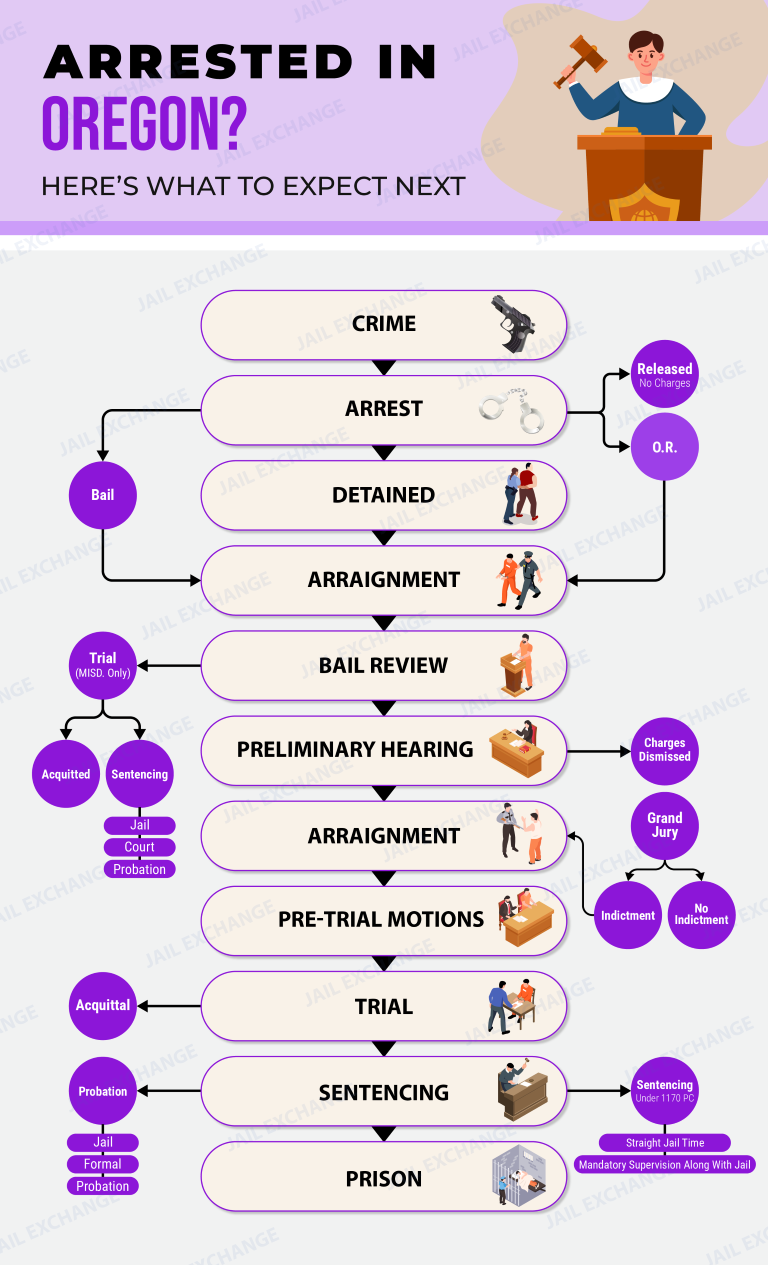

icare (operated by Aramark Correctional Services) is a specialized gift package and commissary program that allows family members to order brand-name snack bundles, confectioneries, hygiene kits, and freshly prepared hot meals sent directly to an incarcerated loved one. Every package is packed to adhere strictly to facility security regulations.
Important: Order Cutoffs and Delivery Windows Vary by Jail
Detention centers do not manage care package deliveries under identical schedules. While some facilities allow weekly orders, others restrict deliveries to bi-weekly or monthly distribution windows, and spending limits vary from jail to jail. You should verify the facility's active cutoff schedule and order allowances by calling them directly. If an order is submitted after the weekly processing deadline, delivery will be held until the following cycle, leaving your loved one waiting an extra cycle for fresh meals or personal snacks.
Step-by-Step Instructions to Place an icare Package Order
- Obtain the inmate's legal first and last name, date of birth, and assigned booking or inmate ID number.
- Visit www.icaregifts.com on your computer or mobile device.
- Select Find a Loved One and choose the state and detention facility.
- Search for the inmate using their ID number or legal last name to unlock the facility-specific catalog.
- Browse available fresh food items, snack packs, candy selections, and hygiene kits, adding items up to the facility's spending cap.
- Proceed to checkout, enter your debit or credit card billing details, and submit your order.
- Save your digital receipt and confirmation tracking number for your records.
What the Inmate Needs to Do
The inmate does not need an internet account to receive care packages. Aramark prepares the shipment in tamper-evident security packaging and delivers it directly to the facility commissary department. Staff inspect the delivery and distribute it during scheduled housing unit delivery rounds, where the inmate signs the delivery manifest.
Official Provider: icare Gifts Official Website
Customer Service Telephone: 1-888-439-5020
Support Hours: Monday – Friday, 8:00 AM – 9:00 PM EST; Saturday – Sunday, 9:00 AM – 5:00 PM EST
Supported Languages: English and Spanish
Other Services Associated with Aramark Corrections
Depending on individual facility agreements, additional trust funding and commissary services may be available:
- Inmate Trust Fund Deposits: Transfer funds directly to an inmate's jail trust account for independent commissary spending.
• Learn more on our website: Inmate Trust Deposits Guide | • Visit official vendor page: icare Inmate Services
Buy Commissary for an Inmate in the Deschutes County Adult Jail
Deschutes County Adult Jail Inmate Commissary - Sending Money or Purchasing Commissary for an Inmate
Deschutes County Adult Jail allows inmates to purchase commissary. This can be snacks, hygiene products, stamps, stationary, clothing and even electronics.
You can buy commissary for an inmate using an online service called icare gifts.

There is a monthly limit of $200-300 on how much inmates can spend on commissary items.
This amount is subject to change so call the facility at 541-388-6661 in order to confirm the amount that cannot be exceeded.
Inmates have access to both an in-house commissary store, and commissary packages that can be purchased and shipped to the inmate by friends and family.
Scroll down for information on the Deschutes County Adult Jail's service they use for you being able to purchase commissary items online and have them shipped directly to the inmate.
You can also go to our Inmate Money page for information on how to send money to an inmate.
TouchPay Inmate Trust Money Deposits
Provider: TouchPay Direct • A ViaPath Technologies Company (GTL Financial)
TouchPay (operated by GTL Financial Services and part of ViaPath Technologies) provides payment processing solutions enabling family members to deposit funds directly into an incarcerated person's jail trust and commissary account. Deposited funds allow the inmate to purchase commissary food items, clothing, hygiene essentials, and medical sundries, or transfer balances to phone time.
Important: Facility Site IDs and Deposit Limits Vary
Once a person is booked and moved to a housing unit, facilities do not always allow cash drop-offs or phone payments directly to the jail window. Some might and you should confirm this by calling the facility and asking. In addition, each correctional agency requires a specific TouchPay Site ID number to route payments accurately. If you do not register online and fund your loved one's trust account immediately, they may be forced to wait days or weeks for standard paper processing, leaving them without essential soap, clean undergarments, basic medical sundries or snacks.
Step-by-Step Instructions to Register and Deposit Trust Funds
- Obtain the inmate's legal first and last name, date of birth, and assigned facility booking ID number, along with the jail's 3- to 5-digit TouchPay Site ID.
- Navigate to www.touchpayonline.com or dial automated phone payments at 1-866-232-1899.
- Select Trust Deposits and enter the facility Site ID or search by state and agency name.
- Confirm the inmate's profile matches the facility's active housing roster.
- Enter the deposit dollar amount, review convenience and transaction fees, and input your credit or debit card billing information.
- Submit payment and record your confirmation tracking number for your financial records.
What the Inmate Needs to Do
The inmate does not need an internet account to receive trust funds. Once authorized, funds post directly to their facility accounting balance in the jail's internal system. The inmate can review their updated balance at a dayroom kiosk terminal or on their trust receipt and place orders on their regular commissary distribution day.
Official Providers: TouchPay Official Website | ViaPath Technologies
Customer Service Telephone: 1-866-232-1899 (Automated & Live Support)
Support Hours: Automated Deposits 24/7/365; Live Support Monday – Friday, 8:00 AM – 7:00 PM CST
Supported Languages: English and Spanish
Other Services Provided by TouchPay (ViaPath Technologies)
In addition to Trust Money Deposits, TouchPay and ViaPath handle bail bonding and inmate telephone services:
- TouchPay Cash Bail & Bond Payments: Pay appearance bonds and release fees online 24/7 to expedite custody release.
• Learn more on our website: Cash Bail & Bonding Guide | • Visit official vendor page: TouchPay Bail Services - AdvancePay Phone Calling Accounts: Prepay for phone calling credits so your loved one can call your mobile phone directly.
• Learn more on our website: AdvancePay Calling Guide | • Visit official vendor page: ViaPath ConnectNetwork Calling
Deposit Money for an Inmate in the Deschutes County Adult Jail
Monday before 12:00 p.m. is the cutoff at the Deschutes County Adult Jail in Bend: money that is in by then counts toward that week's order. Account funds cover hygiene items, writing supplies, commissary snacks and jail fees.
Online, deposit with TouchPay; it handles questions only by email. In person, walk up to the counter in the main jail lobby from 8:00 a.m. to 5:00 p.m., Monday to Friday, holidays excepted.
To mail it:
- Get a cashier's check, a U.S. Postal money order or a government check. Payroll, personal, business and two-party checks will be refused.
- Make it payable to the person, or to Deschutes County Adult Jail with the person's name written on it.
- Address it to the person's name, Deschutes County Adult Jail, 63333 Hwy 20 West, Bend, OR 97703.
Cash by mail is accepted, though the jail warns against sending it. Anything left on the account goes back to the person at release.
The Deschutes County Adult Jail sits on Highway 20 West in Bend, and family letters are delivered there on paper after staff open and inspect them. Write the person's complete legal name, with a middle name or initial if you know it and no nicknames. Only letters carried by the post office are accepted; hand delivery, couriers and postage-due mail are refused. Staff will not confirm that a letter arrived, so ask the person when you next hear from them.
Personal letters, legal papers, books and money orders:
Deschutes County Adult Jail
63333 Hwy 20 West
Bend, OR 97703
- Sender information: Handwrite your full name and return address. Address labels are not allowed, and mail without a return address is neither delivered nor held.
- Outside of the envelope: Only addresses. No stickers, non-postal stamps, lipstick kisses or perfume.
- Pictures: Up to five per letter, each no larger than 4x6, or printed pages up to 8.5 x 11. Several pictures on one sheet count as one. Mounted, framed and Polaroid photos are banned.
- Drawings and printouts: Up to five hand drawings, 9 x 12 or smaller, in pencil, colored pencil or ink. Up to five printed pages of text, and photocopies of news clippings rather than the clippings themselves.
- Cards and postcards: 9 x 12 inches at most, with no metal, plastic, hard parts or hidden folds, and no music.
- Books: Three a day, paperback only and no larger than 9 x 12, shipped by a publisher, book club or bookstore with the seller's address on the label. You can't mail a book yourself. Someone in segregation may get new paperbacks only.
- Magazines and newspapers: New copies from the publisher or a bookstore. Issues with scantily clad people may be held back as sexually explicit.
- Money by mail: U.S. Postal money orders, cashier's checks and government checks are taken, payable to the inmate or to the Deschutes County Adult Jail with the inmate's name included. Payroll, personal, business and two-party checks are refused, and cash, though accepted, is not recommended.
- Who may not write: People held in other jails or treatment centers, anyone relaying mail between prisoners, and victims of the crime.
- Contraband: Glitter, glue, stamps, writing paper, food, medicine, CDs and anything else not approved can be confiscated or destroyed, and mailing contraband is a Class C felony.
Mail questions are answered at 541-388-6661 on weekdays from 8 a.m. to 5 p.m. Deposits can be made online, and short notes can go by electronic message.
GettingOut / ViaPath Inmate Phone Calling
Provider: GettingOut (Telmate) • Rebranding as ViaPath Technologies (myViaPath)GettingOut telephone services (operated under Global Tel*Link / Telmate and transitioning to ViaPath Technologies / myViaPath) allow incarcerated individuals to place outbound voice calls from housing-unit telephones and handheld tablets directly to approved family contacts. Funding a prepaid phone balance ensures calls connect to cellular devices and residential lines without carrier collect call blocks.
Important: Cell Carriers Automatically Block Jail Collect Calls
Inmate phone networks do not permit incoming calls, and wireless cell providers do not support traditional collect billing. While some residential landlines might allow direct carrier billing, mobile numbers require a funded prepaid account or inmate PIN debit balance, which you can verify with your phone provider. If you do not register online and add calling funds promptly, your loved one will receive an automated disconnect announcement when dialing your line.
Step-by-Step Instructions to Set Up and Fund Calling
- Visit www.gettingout.com or the updated my.viapath.com portal.
- Register your account using the primary 10-digit telephone number where you want to receive calls.
- Search for the facility and add the inmate using their full legal name or facility booking ID.
- Select Phone Deposits or AdvancePay from your dashboard.
- Select your deposit dollar amount and enter your debit or credit card billing details.
- Authorize payment, save your confirmation receipt, and confirm that your mobile phone allows calls from automated or unknown correctional numbers.
What the Inmate Needs to Do
The inmate approaches any housing-unit telephone or opens the phone application on their handheld tablet, enters their assigned PIN, and dials your 10-digit number. The system verifies that your account has an active prepaid balance and connects the call once you accept the automated prompt. All non-privileged conversations are recorded and monitored by the facility.
Official Providers: GettingOut Website | myViaPath Portal
Customer Service Telephone: 1-866-516-0115 (GettingOut) • 1-877-650-4249 (ViaPath)
Support Hours: Monday – Friday, 7:00 AM – 11:00 PM CST; Saturday – Sunday, 8:00 AM – 7:00 PM CST
Supported Languages: English and Spanish
Other Services Provided by GettingOut / ViaPath
In addition to Phone Calling, GettingOut and ViaPath provide several communication, financial, and visitation services:
- Two-Way Text Messaging: Send digital text messages and photos directly to an inmate's tablet or kiosk.
• Learn more on our website: Digital Messaging Guide | • Visit official vendor page: GettingOut Messaging - Remote Video Visits: Schedule and join live video visits from home using your computer or smartphone.
• Learn more on our website: Video Visitation Guide | • Visit official vendor page: GettingOut Video Visits - Inmate Tablets & Media: Fund tablet entertainment, music streaming, games, and news modules.
• Learn more on our website: Tablet Rentals & Content Guide | • Visit official vendor page: GettingOut Tablets - Inmate Trust & Commissary Deposits: Transfer funds directly into their jail trust ledger for commissary store purchases.
• Learn more on our website: Inmate Trust Deposits Guide | • Visit official vendor page: ViaPath Trust Deposits
GettingOut / ViaPath Inmate Messaging
Provider: GettingOut (Telmate) • Rebranding as ViaPath Technologies (myViaPath)GettingOut (a service of Global Tel*Link / Telmate) provides an instant two-way digital messaging and photo-sharing platform connecting families with incarcerated individuals via housing-unit kiosks and handheld tablets. The provider is actively rebranding as ViaPath Technologies (under the myViaPath platform); depending on the facility contract, local booking sheets and tablets may still refer to the service as GettingOut, GTL, or ViaPath, but both brand portals grant access to the same centralized messaging balance.
Important: Contact Authorization and Digital Mail Rules Vary
Inmate digital messaging rules are not uniform across all county detention centers. While some jails allow immediate two-way messaging upon registration, others require initial contact invitations or administrative ID verification, which you should verify directly with the facility. If you delay setting up an online profile and funding your Friends & Family messaging account, your loved one may face lengthy periods without direct family communication.
Step-by-Step Instructions to Register and Message an Inmate
- Visit www.gettingout.com or the newly branded my.viapath.com portal, or install the GettingOut / myViaPath mobile app.
- Create a user profile using your primary email address and 10-digit mobile phone number.
- Complete identity verification by uploading a clear photo of your government-issued driver's license or state ID and taking a verification selfie if requested.
- Search for the inmate by selecting the state, correctional facility, and their legal name or booking ID.
- Send an outside contact connection request to link your account to their tablet profile.
- Deposit funds into your 'Friends & Family Account' using a debit or credit card to cover message and photo-sharing costs.
- Compose your text message in the chat box, attach approved photos, and submit it for jail screening.
What the Inmate Needs to Do
The inmate powers on their assigned pod tablet or approaches a housing-unit kiosk and logs into the messaging application with their PIN. They accept your incoming contact invitation on the screen. Once approved by institutional monitors, incoming messages appear in their inbox, and the inmate types a reply directly on the screen.
Official Providers: GettingOut Website | myViaPath Portal
Customer Service Telephone: 1-866-516-0115 (GettingOut Support) • 1-877-650-4249 (ViaPath Support)
Support Hours: Monday – Friday, 7:00 AM – 11:00 PM CST; Saturday – Sunday, 8:00 AM – 7:00 PM CST
Supported Languages: English and Spanish
Other Services Provided by GettingOut / ViaPath
In addition to Two-Way Text Messaging, GettingOut and ViaPath provide several other communications and visitation options:
- Remote Video Visits: Schedule and join live web-based video visits from your computer or smartphone.
• Learn more on our website: Video Visitation Guide | • Visit official vendor page: GettingOut Video Visits - Inmate Tablet Rentals & Media: Fund tablet entertainment, music streaming, games, and news modules.
• Learn more on our website: Tablet Rentals & Content Guide | • Visit official vendor page: GettingOut Tablets - AdvancePay Phone Calling: Prepay for telephone calls so your loved one can dial your mobile phone directly.
• Learn more on our website: AdvancePay Phone Calling Guide | • Visit official vendor page: ViaPath ConnectNetwork Calling - Inmate Trust Deposits: Transfer funds directly into their jail trust account for commissary store purchases.
• Learn more on our website: Inmate Trust Deposits Guide | • Visit official vendor page: ViaPath Trust Deposits
GettingOut / ViaPath Inmate Tablets & Media
Provider: GettingOut (Telmate) • Rebranding as ViaPath Technologies (myViaPath)GettingOut provides specialized, secure handheld tablets for county jail inmates, offering access to messaging apps, telephone calling, legal research tools, eBooks, vocational training, and premium entertainment rentals. As part of GTL and Telmate's transition to ViaPath Technologies, tablet firmware and management platforms are moving to the myViaPath system.
Important: Tablet Feature Availability Varies by Facility
Jails manage tablet distribution according to individual facility contracts. While basic educational and legal materials are often provided without cost, access to music streaming, games, podcasts, and premium movies requires an active funded account. You should confirm the tablet rules with the facility directly. Registering and funding their media balance right away ensures your loved one has productive resources and recreation during their stay.
Step-by-Step Instructions to Fund Inmate Tablet Services
- Confirm that GettingOut / ViaPath handheld tablets are active at your loved one's specific detention facility.
- Navigate to www.gettingout.com or my.viapath.com.
- Sign into your verified user profile and link the inmate's legal name and booking ID number.
- Select Make a Deposit and choose either your Friends & Family Account (for messaging) or the inmate's personal Inmate Account (for entertainment and song rentals).
- Choose your deposit amount, review convenience fees, and complete payment with a credit or debit card.
- Notify your loved one that their tablet account balance has been funded.
What the Inmate Needs to Do
The inmate unlocks their assigned tablet or signs one out from the pod charging station using their biometric verification or PIN. Once logged in, their available balance appears on the screen, allowing them to download songs, stream educational content, and communicate with approved family members.
Official Providers: GettingOut Website | myViaPath Portal
Customer Service Telephone: 1-866-516-0115 (GettingOut) • 1-877-650-4249 (ViaPath)
Support Hours: Monday – Friday, 7:00 AM – 11:00 PM CST; Saturday – Sunday, 8:00 AM – 7:00 PM CST
Supported Languages: English and Spanish
Other Services Provided by GettingOut / ViaPath
In addition to Tablet Media & Rentals, GettingOut and ViaPath provide several other communication and account services:
- Two-Way Text Messaging: Send electronic letters and photos straight to the inmate's screen.
• Learn more on our website: Two-Way Text Messaging Guide | • Visit official vendor page: GettingOut Messaging - Remote Video Visits: Meet face-to-face over secure live video from home.
• Learn more on our website: Video Visitation Guide | • Visit official vendor page: GettingOut Video Visits - AdvancePay Phone Calling: Prepay for phone calling credits so your loved one can call your telephone directly.
• Learn more on our website: AdvancePay Phone Calling Guide | • Visit official vendor page: ViaPath ConnectNetwork Calling - Inmate Trust Deposits: Transfer cash directly into an inmate's jail ledger for commissary purchases.
• Learn more on our website: Inmate Trust Deposits Guide | • Visit official vendor page: ViaPath Trust Deposits
Deschutes County Juvenile Facilities
Nearby counties
- Jail (Main): 541-388-6661
- Adult Probation: 541-385-3246
- Circuit Court: 541-388-5300
- District Attorney: 541-388-6520
- Juvenile: 541-385-3209
- Juvenile Court: 541-317-1416
- Public Defender: 541-389-7723
- Sheriff: 541-388-6655
The Deschutes County Adult Jail serves the following cities and towns of Deschutes County: Bend, La Pine, Redmond, Sisters, Sunriver and Tumalo.