
Campbell County Jail
Campbell County Jail
Jail Phone Number
423-562-7446Campbell County Inmate Search: Look Up Someone Held in Jacksboro
Deputies and town officers bring adult arrests to the Campbell County Jail, 610 Main Street, Jacksboro, TN 37757. This page explains mugshots, attorneys, visiting, deposits, letters and hearing dates.
Begin with the county jail search. Enter a surname, then shorten the spelling if no result appears. New bookings can take hours to appear, so this morning's arrest may be missing.
Then phone the jail at 423-562-7446. Read the staff member the name and birthday. Then ask if they are in custody, which offense is listed and how much bail is set. Once you know those answers, the bail guide and the court guide explain what to do next.
Read inmate search answers
 Read inmate search answers
1. Where do I look up a Campbell County inmate?
Here is the process:
- Load the jail search on any device.
- Put in the surname. Use a first name too only when many people share it.
- No match? Test a nickname, a middle name or fewer letters.
- Copy down whatever the screen shows, like a booking number or hearing date.
- If the arrest just happened, check again later today.
The screen will not answer every question. Phone 423-562-7446 and ask for Booking or Records to fill in the gaps.
↑ Back to the question list2. Why can't I see them on the Campbell County search?
No result does not mean freedom. Typical causes:
- Booking not finished. Fingerprints and forms take a while.
- Town lockup first. A town police cell may be the first stop, ahead of the move to the county jail.
- Already out. Release can come from a ticket, a signed pledge to return or a bond.
- Different jail. The person could be held by a different county or by state officials.
- Spelling. Typing errors happen at booking.
Ring the jail at 423-562-7446. If the answer is no, ask the officers who made the arrest which building took the person.
↑ Back to the question list3. Could the person be in another jail?
Adults go to the Campbell County Jail, 610 Main Street, Jacksboro, TN 37757, 423-562-7446. Our records show just one adult facility here. Ask the staff whether any annex, work program or short-term cells exist, and what type of inmate each one holds.
An arrest in a different county usually means that county's jail. Browse our Tennessee jail directory to find it. Federal, immigration and state prison cases are covered in the last answers on this page.
↑ Back to the question list4. Does the Campbell County search show mugshots?
Phone the Sheriff's Office at 423-562-7446 and ask whether a mugshot can be released. Tennessee's public records law mentions government photographs, but it never says booking photos must be handed over. The arresting agency may hold a copy too.
- Request an ICE photo using the ICE FOIA form.
- Booking photos from federal agencies are off limits to everyone else. Only the U.S. Marshals Service may put out a picture, and that is for a fugitive it is seeking.
5. Does a VINE account send release notices?
A free service named VINE can send alerts. Sign up through VINELink by choosing Tennessee, or phone 888-868-4631, where real operators work every hour. It was built for crime victims and may not track each county jail, so also ask staff at 423-562-7446 to confirm a release.
A call is still quickest. Jail staff know who left, who has a hold and who was transferred.
↑ Back to the question list6. How does bail work for a Campbell County arrest?
A judge or magistrate picks bail one person at a time. The weighing covers home address, job, family and past record. The goal is the smallest bail that keeps the person coming to court.
- Cash: The clerk takes the full figure at the Circuit Court Clerk's counter, 570 Main Street, Jacksboro, TN 37757, 423-562-2624. A debit card may work, with a fee.
- Bondsman: Expect to pay near 10 percent of the bond, and that money stays with the bondsman. Ask to see a license.
- Wait period: After a stalking or domestic abuse arrest, a 12-hour hold may apply. Ask the jail.
The full steps are in our bail guide. For wider rules, see JE's Tennessee bail laws.
↑ Back to the question list7. Which offense are they accused of?
Booking staff can name the offense at 423-562-7446. After filing, the court clerks keep the paperwork. Have the exact name and birthday written down before you call.
- General Sessions Court, 580 Main Street, Jacksboro, TN 37757, 423-562-6020
- Circuit and Criminal Court Clerk, 570 Main Street, Jacksboro, TN 37757, 423-562-2624
The District Attorney General for the Eighth Judicial District chooses which charges move ahead. A clerk can point you to that office.
↑ Back to the question list8. How does a Campbell County defendant get a lawyer?
Someone with no money for an attorney mentions it to the judge during the first hearing. The judge reviews income and decides. The Eighth Judicial District public defender covers this county and answers at 423-563-9701. Offer the full name, any case number and the next hearing date.
Families who can pay should hire a lawyer early. A lawyer can ask a judge to change bail at a later hearing, and that request carries weight.
↑ Back to the question list9. What are visiting days at the jail?
The jail sets visiting days, times, clothing rules and the list of approved guests, and those details can shift. Phone 423-562-7446 before driving over, and ask about each one and about video visits. Bring a government ID. Our visiting guide adds general advice.
Minors, and visitors with a record, may face extra limits. Staff can explain.
↑ Back to the question list10. How can I deposit money for an inmate?
Most jails accept deposits. Call 423-562-7446 to learn the method used here, any charges and where deposits are taken. Our money guide and commissary guide give the general picture.
Deposits never count toward bail. Bail money goes to the clerk or a bondsman. Never pay a stranger who texts an offer to post bail.
↑ Back to the question list11. How do inmate calls and video chats work?
Inmates normally place the calls, and the family funds a prepaid account. Call 423-562-7446 to learn the phone provider and the way to start an account. The phone guide and the email and video guide cover the basics.
Calls are likely taped, so keep case details off the line.
↑ Back to the question list12. How can I write to someone inside?
Ask the jail at 423-562-7446 for the correct mailing address and the letter rules. Many jails reject stickers, photos or packages and send breaking-rule mail back. Print the inmate's name and booking number on each envelope. Your own address belongs in the top left. More advice sits on our mail guide.
↑ Back to the question list13. Who picks up clothes, a wallet or a phone?
At booking, staff store what the person carried in. Call 423-562-7446 to learn how a relative collects items, and bring an ID. Someone released normally gets their bag back at the jail.
↑ Back to the question list14. What about an inmate's health problems?
Phone 423-562-7446 and ask for the medical unit. Name every medicine, allergy, pregnancy or illness. The inmate can also hand in a written health request on the cell block. For an emergency, say so right away.
↑ Back to the question list15. How do I check on an open warrant?
County deputies and town officers both carry out warrants here. Whether a warrant is open is a question for the Sheriff's Office, 423-562-7446. Ask the police in the person's town as well. For the status of a court file, the Circuit Court Clerk can help at 423-562-2624. If a warrant is open, get legal advice first and then call the judge's court that signed it. The Circuit Court Clerk's office sits at 570 Main Street, Jacksboro, TN 37757. For a misdemeanor, the General Sessions office answers at 423-562-6020.
↑ Back to the question list16. Who gives out hearing dates?
The court with the case knows:
- General Sessions Court, 580 Main Street, Jacksboro, TN 37757, 423-562-6020, hears first appearances, minor cases and early felony hearings.
- Circuit Court Clerk, 570 Main Street, Jacksboro, TN 37757, 423-562-2624, gets felony files once grand jurors vote to indict.
The court guide on this site walks through each hearing in order.
↑ Back to the question list17. Are federal agents involved?
Cases brought by federal prosecutors from this county go to the federal trial court for East Tennessee (the Northern Division), which is based in the federal Howard H. Baker Jr. United States Courthouse, 800 Market Street, Knoxville, TN 37902. Its clerk is at 865-545-4228.
- A judge rules on custody or release at the first appearance, under 18 U.S.C. 3142.
- Prisoners waiting for a federal trial are in Marshals custody. Their Knoxville office is at 800 Market Street, Suite 320, Knoxville, TN 37902, 865-824-3801.
- Once sentenced, find the person through the federal prison locator.
18. What does an immigration detainer do?
The usual steps:
- The agency sends a detainer, Form I-247A, under 8 CFR 287.7(d).
- The jail may keep the person up to 48 hours after they would otherwise be released.
- Use the ICE Online Detainee Locator with a name and birth country.
- When no record shows, call the New Orleans Field Office, which handles Tennessee.
Tennessee's safety department names this county on its 287(g) partner list (state page). An attorney can say how that affects a given case.
↑ Back to the question list19. Might they be in a Tennessee prison?
After a prison term, a person may stay in the local jail until the Tennessee Department of Correction, 320 Sixth Avenue North, Nashville, TN 37243, 615-741-1000, picks them up. The jail can tell you where things stand.
- The state offender search gives status and location.
- Our Tennessee state prisons page covers the prisons.
20. Where does a Campbell County teen go after an arrest?
A teen under 18 is kept away from adult inmates. Their cases go to Juvenile Court, 570 Main Street, Jacksboro, TN 37757, 423-562-2624. A parent can ask which detention center is used, where the child is now and when the detention hearing takes place.
↑ Back to the question list21. Which agency made the Campbell County arrest?
The officer who makes an arrest picks the first stop. Five towns have their own officers: Caryville, Jacksboro, Jellico, LaFollette and Rocky Top. Ask the town's police for a report number and the building name.
- Sheriff's Office: serves land outside the towns and runs the jail, 610 Main Street, Jacksboro, TN 37757, 423-562-7446. County offices are at 570 Main Street, Jacksboro, TN 37757, 423-562-2526.
- Town police: ring the Sheriff's number and ask for the department where the arrest happened.
- Tennessee Highway Patrol: open the district contact page and pick the district for this area.
Campbell County bail and bond: the Jacksboro jail and Main Street courts
Campbell County sends its arrests to the Campbell County Jail, which the Sheriff's Department runs at 610 Main Street, Jacksboro, TN 37757. Here you can read who picks the bail amount and where the money goes. You can also learn about bondsmen, free lawyers and missed court dates.
Begin with the state lookup tool and enter a last name. If nothing appears, try a shorter spelling. The Jail Roster on our site shows who was just booked and why.
Still stuck? Phone the Sheriff's Department at 423-562-7446 and ask whether a bail figure has been set yet. After that, see how Campbell County's courts run the first hearing.
1. How do I find out if my husband is in the Campbell County Jail tonight?
Open Campbell County Inmate Search and search his last name. Try a shorter spelling if nothing comes up. Someone arrested minutes ago may take a while to show, so check again after a few hours.
If the screen does not answer your question, call the Sheriff's Department at 423-562-7446. Give the full legal name and date of birth. Ask whether any other agency has a hold on him, because a hold keeps him in jail even after bail is paid.
↑ Back to the question list2. Who sets the bail amount, and can it change?
A judge or other magistrate sets bail, and the decision is made person by person. Tennessee Code 40-11-105 gives anyone arrested on a bailable charge the right to be admitted to bail, and an officer may accept bail only after it has been set (40-11-106). A flat chart used by jailers to release people on a pre-set number is not allowed.
The General Sessions judge can change the amount at a later hearing, and a lawyer can ask for a lower figure. Use the Inmate Search link above to see the current number.
↑ Back to the question list3. Where in Jacksboro do I pay cash bail?
Cash bail means the full amount, not a percentage. Under 40-11-118, the defendant may deposit the exact bail with the court clerk, and the clerk may accept a debit card or mobile cash app and charge the payer its processing fee. The Circuit Court Clerk's office is at 570 Main Street, PO Box 26, Jacksboro, and is open Monday through Friday from 8:00 a.m. to 4:30 p.m. The clerk's line is 423-562-2624.
For payment after those hours, call the Sheriff's Department at 423-562-7446 and ask how the jail takes a deposit overnight.
↑ Back to the question list4. What does a bondsman charge, and what is the money for?
A professional bondsman charges a premium that is not returned, because it pays for the promise to cover the bond if the person skips court. Tennessee Code 40-11-151 sets out the notice every bondsman must give: for a Tennessee resident the premium should be about 10 percent of the bond, with a one-time $25 initiation fee and a $12 bail tax added.
Ask for a receipt that lists each charge. If the bondsman asks for collateral on top of the premium, the receipt must describe each item and explain how you get it back.
↑ Back to the question list5. How can I tell whether a bonding agent is allowed to work in Campbell County?
Ask to see two things. The first is a license from the Board of Professional Bondsmen, which issues them under Tennessee Code 40-11-321. The second is approval from the courts of the judicial district where the bond will be written. Campbell County is in the Eighth Judicial District.
A bondsman missing either one cannot write your bond. A bondsman also may not take a person back into custody arbitrarily or without good cause.
↑ Back to the question list6. Can a house or a piece of land stand in for cash?
Yes, real estate in Tennessee can secure a bond. Tennessee recognizes four kinds of bail: a cash deposit, a bond secured by Tennessee real estate, a bond signed by two sufficient sureties who are neither professional bondsmen nor attorneys, and a bond from a professional bondsman.
A property bond takes longer than cash because the court reviews the ownership papers first. Every owner needs to sign. Call the Circuit Court Clerk at 423-562-2624 before you gather documents so you know what the court wants to see.
↑ Back to the question list7. What facts about my brother will the judge weigh?
Section 40-11-118(b) lists them: how long he has lived here, his job and money situation, family ties, his character and mental condition, prior record, whether he showed up in earlier cases, the charge itself and how likely a conviction is, and whether the record shows danger to anyone.
A responsible person from the community may vouch for him. That person cannot vouch for more than two defendants at the same time. Bring pay stubs or a lease to the first hearing.
↑ Back to the question list8. Is there any way to get out without paying money?
Yes. The court must first consider release on a promise to appear or an unsecured bond (40-11-115). If that is not enough, it must choose the least onerous conditions that will bring the person back to court (40-11-116). Money bail is meant for cases where conditions alone will not do the job (40-11-117).
Raise it at the first hearing. A lawyer's request carries more weight than a family member's.
↑ Back to the question list9. Why is there no bond on the record, or why was he not released after we paid?
There are three usual reasons. Capital offenses fall outside the right to bail in Article I, section 15 of the Tennessee Constitution. A hold from another county or agency blocks release even when bail is paid. And a stalking or domestic arrest can carry a waiting period before release.
Call the Sheriff's Department at 423-562-7446 and ask which of the three applies.
↑ Back to the question list10. How long must he wait after a domestic violence arrest?
Under Tennessee Code 40-11-150, a person arrested for stalking or certain domestic offenses cannot be released until 12 hours have passed unless the official finds no threat to the victim. When serious injury or a deadly weapon is involved, a no-contact order must be in place before bond. If the charge is aggravated assault with strangulation or a weapon, the hold can stretch to 24 hours.
Expect release terms such as no contact, no firearms, no alcohol and GPS monitoring.
↑ Back to the question list11. Where is the first court date, and what happens there?
A person arrested must be taken before a magistrate "without unnecessary delay," in the words of Tennessee Rule of Criminal Procedure 5. At that hearing the magistrate explains the charge, the right to a lawyer and the right to stay silent. In a felony case a preliminary hearing comes within 14 days if the person stays in jail, or within 30 days if he is released.
General Sessions Court meets at 580 Main Street, Jacksboro, and the court office answers at 423-562-6020. The Sessions and Juvenile line is 423-562-2624.
↑ Back to the question list12. Who is the free lawyer, and how do I ask for one?
A person who cannot afford an attorney asks the judge to appoint one. The public defender for the Eighth Judicial District, which covers Campbell, Claiborne, Fentress, Scott and Union counties, answers at 423-563-9701.
Give the office the case number and the next court date.
↑ Back to the question list13. My daughter was stopped in LaFollette. Where is she now?
Campbell County's cities are Caryville, Jacksboro, Jellico, LaFollette and Rocky Top. A city officer who makes an arrest decides where the person is taken first. Ask that department for the name of the facility and a report number, then check Campbell County Inmate Search.
If she is not on the search yet, wait a few hours and look again.
↑ Back to the question list14. How are juveniles handled?
Children are not booked like adults. Juvenile cases go to Campbell County Juvenile Court, whose judge also hears General Sessions. The court office answers at 423-562-2624 and can tell a parent whether a child is being held, where, and when the detention hearing takes place.
Juvenile records are not public, so a child's name will not appear on the adult search.
↑ Back to the question list15. I added money to his jail account. Did that pay his bail?
No. Deposits for the phone or commissary stay on the inmate's account and never reach the court. Bail goes to the Circuit Court Clerk, to a licensed bondsman, or through a property bond. If a stranger texts or messages you offering to post bail for a fee, do not pay. Verify with the Sheriff's Department at 423-562-7446.
↑ Back to the question list16. What if he misses a court date after the bond is posted?
Under 40-11-139 and 40-11-201 the court may forfeit the bond and send officers to arrest him. A cash depositor risks the money. A surety can surrender the defendant to the jail (40-11-132).
If a date is missed by accident, call the Circuit Court Clerk at 423-562-2624 the same day.
↑ Back to the question list17. When does the cash deposit come back?
Under 40-11-119 the clerk returns a cash deposit after the bond conditions are met and the defendant is discharged. Under 40-11-121 the deposit goes first to fines and court costs, so the refund is often smaller than the deposit.
A surety is not liable for fines, costs or restitution unless the bond says so, and never without consent (40-11-118(c)).
↑ Back to the question list18. Campbell County contacts
- Jail: Campbell County Jail, run by the Sheriff's Department, 610 Main Street, Jacksboro, TN 37757; 423-562-7446
- Custody lookup: Campbell County Inmate Search
- Circuit Court Clerk: 570 Main Street, PO Box 26, Jacksboro; 423-562-2624
- General Sessions: 580 Main Street, Jacksboro; 423-562-6020
- Juvenile Court: Same judge as Sessions; 423-562-2624
- Public defender: Eighth Judicial District, 423-563-9701
- Bond help: Campbell County bail and bond instructions
Figures, office hours and phone lines can change, and a judge may set terms different from those described. Confirm with the office before you bring money. This page explains how bail works and does not replace a lawyer.
↑ Back to the question listHow to arrange a visit at Campbell County Jail
Call the Campbell County Sheriff’s Office at 423-562-7446 and ask for the jail. Have the person’s name ready so staff can confirm they are still there and explain how to arrange a visit. If you plan to go to 610 Main Street, Jacksboro, TN 37757, confirm the visitor entrance, whether you need a reservation and which identification to bring.
If you prefer video from home, ask the jail which option applies and confirm the price before paying. Securus lists Campbell County Jail in Tennessee; check with staff before relying on a particular service or time.

Securus Video Connect allows families to conduct scheduled face-to-face video visits with incarcerated loved ones from home. Using a computer with a webcam or the Securus mobile app, visitors can join live video sessions without traveling to the facility or waiting in jail visitor lobbies.
Important: Advance Registration and Visitor Clearance Required
Detention centers do not permit unscheduled or unverified video sessions. Correctional facilities require prospective visitors to submit government-issued photo identification and receive administrative clearance before booking an appointment, an approval process that can take up to 48 hours depending on facility staffing. You should verify your visitor approval status with the facility prior to scheduling. If you do not register well in advance, you will miss your loved one's scheduled visiting window for the week.
Step-by-Step Instructions to Register and Schedule a Video Visit
- Visit securustech.online or open the Securus mobile app.
- Register your account and upload a clear photograph of your government-issued ID (driver's license or passport) for facility background review.
- Wait for email confirmation indicating that facility administration has granted visitor approval.
- Select Schedule a Visit, choose your detention facility, and select the inmate.
- Browse the available schedule calendar, select an open 20- or 30-minute time slot, and pay the fee using a credit or debit card.
- Log into the website or app 10 minutes prior to the start time on a device with a functioning camera, microphone, and reliable high-speed internet connection.
What the Inmate Needs to Do
The inmate receives an alert on their housing unit video kiosk or personal tablet. At the scheduled time, they log in with their PIN and sit in front of the terminal. Inmates and visitors must strictly observe jail dress and conduct rules; sessions are monitored by staff and will terminate immediately upon any violation.
Official Provider: Securus Technologies Official Website
Customer Service Telephone: 1-800-844-6591
Support Hours: 24 hours a day, 7 days a week, 365 days a year
Supported Languages: English and Spanish
Other Services Provided by Securus Technologies
In addition to Securus Video Connect, Securus and its subsidiary JPay offer several other communication, financial, and visitation services:
- AdvanceConnect Prepaid Calling: Prepay for phone calling credits so your loved one can call your mobile phone directly.
• Learn more on our website: AdvanceConnect Calling Guide | • Visit official vendor page: Securus AdvanceConnect - Direct Bill Phone Calling: Establish an invoiced monthly billing account for qualified residential landlines.
• Learn more on our website: Direct Bill Phone Calling Guide | • Visit official vendor page: Securus Direct Bill - JPay Money Deposits (Trust & Canteen): Send money directly into an inmate's jail trust account for commissary store purchases.
• Learn more on our website: Money Deposits Guide | • Visit official vendor page: JPay Money Transfers - JPay Email Messaging & Photos: Send electronic letters, photos, and VideoGrams directly to their tablet or kiosk.
• Learn more on our website: Email Messaging Guide | • Visit official vendor page: JPay Email Services
Campbell County Courts in Jacksboro: Sessions, Circuit and Criminal Cases
Campbell County keeps its court offices on Main Street in Jacksboro, TN 37757, and General Sessions, Circuit and Criminal Court all hear cases tied to that address. Anyone arrested here sits in the Campbell County Jail until released. The answers below walk through each stage of a case.
Check whether a loved one is still held with the state lookup tool. Our Campbell County Inmate Search page also has warrants, mugshots and public defender help.
Wondering when the hearing is? Phone the clerk's office at 423-562-2624 with the full legal name. Is jail the problem? Our bail and bond guide lays out how release works.
1. Where are the courts and who handles criminal cases?
If someone close to you has been arrested in Campbell County, the questions that matter first are where that person is being held and when a judge will see the case. The county seat is Jacksboro, but the exact courtroom depends on whether the charge is a city ordinance violation, a misdemeanor, or a felony. Use the linked questions to find the courthouse information, bail process, defense-lawyer options, sentencing rules, youth-court process, and federal court details.
Circuit Court Clerk — court filings and hearing information
Campbell County Circuit Court Clerk — Mailing address: P.O. Box 26, Jacksboro, TN 37757. This is not a physical courthouse address.
Circuit Court Clerk telephone: (423) 562-2624
Circuit clerks handle many criminal and civil filings. Chancery Courts usually address civil and equity matters, while General Sessions Courts handle many initial criminal hearings. Call the applicable clerk for the specific courtroom assignment.
Campbell County: the county seat is Jacksboro. Tennessee General Sessions Court ordinarily handles initial criminal appearances, misdemeanor proceedings within its authority, and felony preliminary hearings. Felony jury trials are heard in the Circuit or Criminal Court serving Campbell County. The Circuit Court Clerk is responsible for criminal filings and records in courts assigned to that clerk; some Tennessee counties have separate criminal clerks.
Courthouse and court clerk contacts
For other trial-court branches, call the clerk's office listed above.
Chancery Court generally hears civil matters such as certain family, property, estate, and business disputes; a Chancery clerk is not a substitute for the criminal clerk. The exact court named on a summons controls where the hearing takes place.
↑ Back to the question list2. What happens after arrest, and where might someone be held?
After a custodial arrest in Campbell County, the arresting agency arranges booking and detention. The person may be housed in a county facility or another authorized jail under an established custody arrangement.
Booking may include identification, fingerprints, a photograph, a property inventory, and a medical or mental-health screening. The defendant is then brought before the proper judicial officer for a probable-cause and release decision as required by law. A family member should write down the full legal name, booking number if known, charges, and scheduled hearing.
↑ Back to the question list3. How does bail work and how can a person be released?
A judge or authorized magistrate decides whether someone charged in Campbell County can go home before trial and under what conditions. Release on recognizance means there is no up-front bond payment; other orders may require a cash deposit, surety, supervision, travel restrictions, or no contact with another person. Commercial bonding is permitted in Tennessee, but a bondsman cannot decide the court’s bond amount.
If the order allows payment, first establish whether the court or jail collects the money, the exact amount, and whether another hold prevents release. A paid bond does not erase the charges and missing court can lead to forfeiture and arrest.
↑ Back to the question list4. What happens in a misdemeanor case and what penalties apply?
Many less serious cases in Jacksboro begin in General Sessions Court. A prosecutor can discuss a plea, dismissal or diversion; not every offense qualifies. A defendant does not receive a full jury trial in General Sessions Court, and a final misdemeanor decision there requires appropriate consent or waiver under Tennessee law. The case may instead proceed in a court with jury-trial authority.
Maximum misdemeanor punishments
- Class A misdemeanor: up to 11 months and 29 days in jail, a fine up to $2,500, or both.
- Class B misdemeanor: up to 6 months and/or a fine up to $500.
- Class C misdemeanor: up to 30 days and/or a fine up to $50.
These are the usual class limits under Tenn. Code § 40-35-111, not promised outcomes. DUI, domestic assault and other offenses can add required fees, treatment, jail minimums, or enhanced penalties based on earlier convictions.
↑ Back to the question list5. How does a felony case move through court?
A felony complaint arising in Campbell County may start before a General Sessions judge for the initial appearance and preliminary hearing. That hearing tests whether there is enough evidence to continue; it does not decide guilt. A grand jury may indict and the case then moves to the county’s Circuit or Criminal Court. Tennessee also provides other lawful charging routes and waivers in limited circumstances.
After formal charges, the defense can obtain discovery, seek hearings on contested evidence, negotiate a plea, or request trial. A serious felony trial typically uses a twelve-person jury. Felony cases can take substantially longer than minor citations, so hearing notices and attorney communications matter.
↑ Back to the question list6. What happens when someone is accused of a violent crime?
A homicide, robbery, rape, or aggravated-assault accusation in Campbell County brings particularly serious release and sentencing questions. Judges examine the actual charge and lawful detention criteria; no family should assume that paying a bond automatically means release if there are warrants or other holds.
For example, Tennessee treats many intentional aggravated assaults involving serious bodily injury or a deadly weapon as Class C felonies, with a statutory class range of 3–15 years. Some forms are Class B or D, and the aggravated-assault statute separately caps the ordinary offense fine at $15,000. Murder and other offenses have special sentencing statutes beyond the ordinary felony chart. Defense counsel should review the exact subsection charged.
↑ Back to the question list7. What happens when a child under 18 is arrested?
For a child under 18 accused of wrongdoing in Campbell County, the juvenile-court process is different from an adult prosecution. Police or an intake officer may refer the complaint for informal services or ask the juvenile court to hear it. Detention is a separate decision and does not necessarily mean the child has been found delinquent.
A juvenile judge can consider supervision, treatment, community services, restitution, and placement when legally authorized. In especially serious cases, Tennessee law permits transfer proceedings to adult criminal court after a hearing and required findings. Families should ask promptly about appointed counsel, the detention hearing and any restrictions on release of a minor's records.
↑ Back to the question list8. What fines, jail terms and prison sentences are possible?
The punishment depends on the precise statute, offense date, prior record, and any mandatory or alternative-sentence rules. For crimes governed by ordinary Tennessee classification ranges, the overall imprisonment and usual maximum fines are:
- Class A: 15–60 years; ordinary fine ceiling $50,000.
- Class B: 8–30 years; ordinary fine ceiling $25,000.
- Class C: 3–15 years; ordinary fine ceiling $10,000.
- Class D: 2–12 years; ordinary fine ceiling $5,000.
- Class E: 1–6 years; ordinary fine ceiling $3,000.
- Class A misdemeanor: up to 11 months and 29 days in jail, a fine up to $2,500, or both.
- Class B misdemeanor: up to 6 months and/or a fine up to $500.
- Class C misdemeanor: up to 30 days and/or a fine up to $50.
A court may impose probation, diversion, restitution, treatment or a suspended sentence when the law permits. Tennessee’s felony offender-range rules narrow the sentence within the broader class range; special laws and prior violent convictions can change release eligibility. County jail and state prison are not interchangeable labels for every sentence.
↑ Back to the question list9. How does someone get a public defender?
Someone facing a criminal case in Campbell County who cannot afford a private defense attorney may ask the judge for appointed counsel. The court reviews an affidavit or other proof about income, assets and ability to pay. An appointment can be through a district public defender or a conflict lawyer when the public defender cannot handle the case.
At the first hearing, the defendant should clearly say they want a lawyer and cannot afford one. A family member can help gather pay information and court papers but cannot waive the defendant’s rights for them. Tennessee has elected district public defenders, and their service areas can cross county borders.
↑ Back to the question list10. Do city courts hear criminal or traffic cases?
Police in Jacksboro or another town in Campbell County may issue a city citation rather than a county criminal warrant. Some Tennessee municipal courts handle ordinance violations and limited traffic matters; their powers depend on the local charter and state law. Serious criminal charges do not become city-court felonies merely because city police made the arrest.
Check the court name actually printed on the summons. If a charge carries criminal jail exposure, ask a lawyer whether the municipal court has authority over it and whether the case is before a General Sessions or state criminal court instead.
↑ Back to the question list11. What is a federal crime and which U.S. District Court handles it?
Campbell County belongs to the United States District Court for the Eastern District of Tennessee — Northern Division. The division’s listed courthouse is in Knoxville: 800 Market Street, Knoxville, TN 37902. A federal criminal case might involve interstate fraud, offenses on federal property, federal drug trafficking, some firearms offenses, or violations of federal criminal statutes. A state offense does not automatically become federal because it is serious.
Federal defendants may appear before a U.S. magistrate judge for detention and preliminary proceedings; felony cases usually proceed through indictment or another permitted federal charging process, followed by arraignment and trial or plea. Federal prison sentences are administered by the Bureau of Prisons. People awaiting trial or transfer may be held in a contracted or local detention center rather than a prison operated by BOP. Families can search the official Federal Bureau of Prisons inmate locator for eligible federal inmate records.
This Campbell County guide offers general criminal-court information, not advice for a particular defendant. Law and court operations may change; a lawyer can explain the charge and next steps in the actual case.
↑ Back to the question list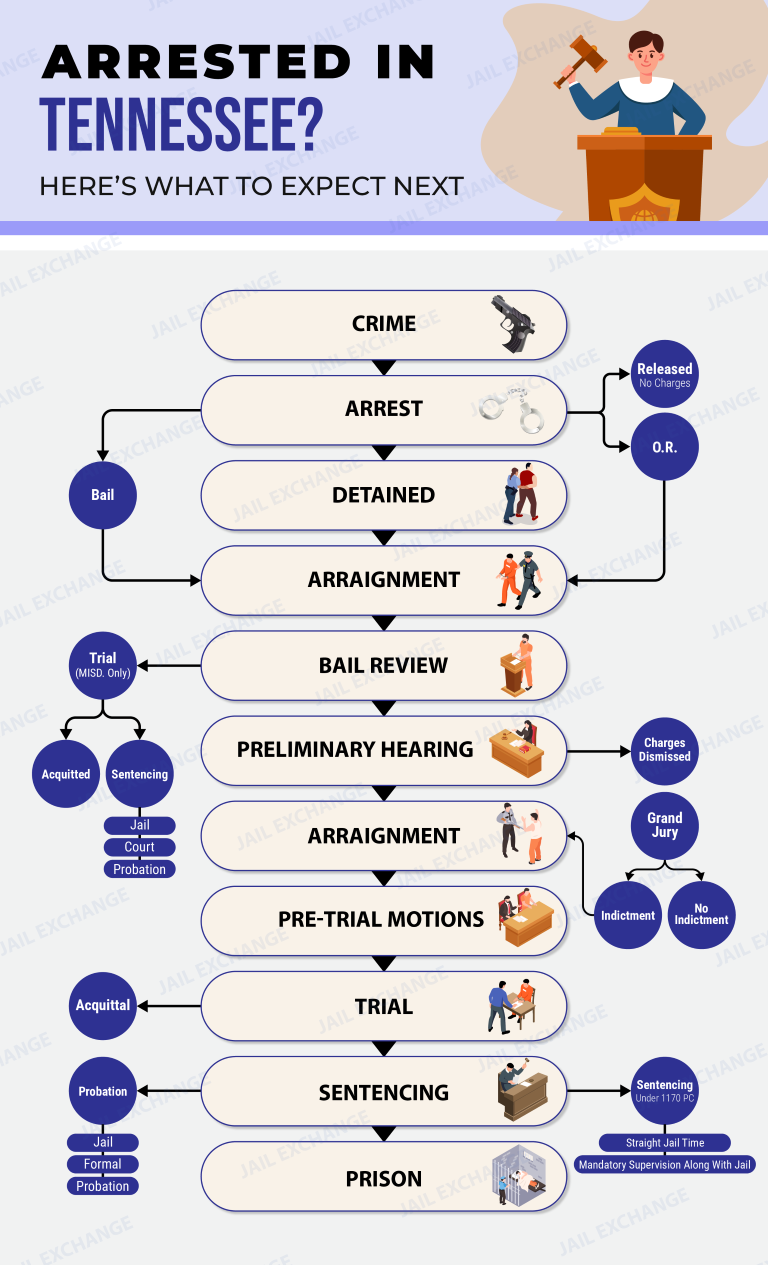
Help Someone Buy Commissary at Campbell County Jail
To add money for snacks or hygiene supplies at the Jacksboro jail, use the Tennessee Business Enterprises visitor portal. Select the commissary deposit for Campbell County, Tennessee and check the person’s name and facility before paying. Tennessee Business Enterprises is not TurnKey or Inmate Canteen.
A deposit adds to the person’s jail account so they can order from the jail store; it does not send a package from home. For questions about a package, the lobby kiosk or a mailed payment, call the jail at 423-562-7446 before sending money.
Is there a phone number for deposits at the Campbell County Jail in Jacksboro? No. Money goes in online, at a kiosk, or by mail.
- Card on the internet: Tennessee Business Enterprises processes it.
- Cash or card in person: the kiosk is in the jail lobby or visiting area.
- By post: a money order or cashier's check with the payee set as the inmate or the Campbell County Sheriff's Office. The inmate's name and ID number belong in the memo. Mail it with no other papers to 195 Kentucky Street, Jacksboro, TN 37757.
Some families ask about handing money over at reception. Campbell County does not say online whether its desk does that or when; one call to 423-562-7446 clears it up.
Letters for people in the Campbell County Jail in Jacksboro are paper mail, given out Monday through Friday. The Campbell County Sheriff's Office runs the jail. People may be released or moved quickly, so search for the person on the inmate search before you mail anything.
Mail of every kind, money orders included:
Inmate's Full Name & Inmate ID #
Campbell County Jail
195 Kentucky Street
Jacksboro, TN 37757
- First line: Begin the address with the inmate's full name and inmate ID number.
- Your name and address: In the top left corner of the envelope or postcard. If they are missing, the Campbell County Jail will most likely destroy the letter.
- Money orders and cashier's checks: Payable to the inmate or to the Campbell County Sheriff's Office, with the inmate's name and ID number in the memo. Mail the money order on its own, with no letter or photos tucked in beside it. The jail will not take a personal check or cash.
- Ink: Blue or black. Crayons, felt markers and colored ink are banned.
- Not allowed: Drawings on the envelope or postcard, glitter, confetti, lipstick and perfume.
- Greeting cards: Plain cards with no sound chip.
- Books, newspapers and magazines: New, and mailed by the publisher itself. No hardcover books.
- Limits: There is no limit on letters, but inmates cannot write co-defendants, other inmates, or anyone under a no-contact order.
Another option is electronic messaging.

CorrectPay Inmate Phone Time allows friends and family members to fund phone calling minutes so their incarcerated loved ones can make outbound calls from jail housing units. Because detention centers never permit incoming calls to inmates, adding calling credits directly unblocks your phone number or provides the inmate with independent PIN debit talk time.
Important: Cell Carriers Automatically Block Jail Calls
Wireless cellular service providers do not permit standard collect calls from detention centers. While traditional residential landlines may occasionally allow collect billing, mobile phones and digital VoIP carriers require an active prepaid balance or funded inmate PIN, which you can verify with your carrier or the facility. If you do not register online and purchase calling minutes right away, your loved one will receive an automated disconnect tone when trying to reach your mobile phone.
Step-by-Step Instructions to Register and Add Phone Time
- Visit www.correctpay.com or open the mobile app.
- Select Phone Services from the dashboard and choose your state and detention facility.
- Locate the inmate using their full legal name or official inmate booking ID number.
- Choose your account option: fund a Prepaid Collect Account (tied to your specific phone number) or Inmate PIN Debit (allows the inmate to call any approved phone number).
- Select your deposit dollar amount and enter your debit or credit card billing details.
- Complete payment and check your mobile phone settings to confirm third-party and unknown call blocks are turned off.
What the Inmate Needs to Do
The inmate dials your 10-digit telephone number from any dayroom phone and keys in their assigned PIN. The automated system verifies that calling funds are active and prompts you to press a digit to accept the call. All personal telephone conversations are monitored and recorded by the facility.
Official Provider: CorrectPay Official Website
Customer Service Telephone: 1-855-836-3364
Support Hours: Monday – Friday, 7:00 AM – 7:00 PM CST; Saturday, 8:00 AM – 5:00 PM CST
Supported Languages: English and Spanish
Other Services Provided by CorrectPay (VendEngine)
In addition to Inmate Phone Time, CorrectPay operates several other communications, financial, and commissary services at participating facilities:
- Inmate Trust Money Deposits: Transfer cash directly into an inmate's jail ledger for independent canteen and commissary purchases.
• Learn more on our website: Inmate Trust Deposits Guide | • Visit official vendor page: CorrectPay Trust Deposits - Commissary Orders & Snack Packs: Order food packs, snack gift boxes, and hygiene kits sent directly to the jail.
• Learn more on our website: Commissary Orders Guide | • Visit official vendor page: CorrectPay Store Packages - Cash Bail & Bonding Services: Pay bail bonds and release fees online 24/7.
• Learn more on our website: Cash Bail & Bonding Guide | • Visit official vendor page: CorrectPay Bail Services - Digital Mail & Email Messaging: Send digital letters and photos straight to the inmate's terminal.
• Learn more on our website: Digital Messaging Guide | • Visit official vendor page: CorrectPay Messaging - Remote Video Visits: Join scheduled face-to-face video calls from home using your phone or PC.
• Learn more on our website: Video Visitation Guide | • Visit official vendor page: CorrectPay Video Visits
Securus eMessaging provides a digital messaging service that allows family members to send electronic letters, digital photos, and eCards directly to an incarcerated loved one via handheld tablets and housing unit kiosks. Messages are screened electronically, delivering communication within hours instead of waiting days for postal mail delivery.
Important: Physical Mail Bans and Stamp Requirements Vary
Inmates cannot receive incoming phone calls, and traditional postal mail rules differ across correctional systems. While some jails continue to accept handwritten letters, many facilities have transitioned entirely to electronic messaging or digital mail scanning, which you can verify by checking facility rules. If you do not register online and purchase eMessaging stamps right away, your loved one may face lengthy periods without direct written contact from family.
Step-by-Step Instructions to Register and Send eMessages
- Go to securustech.online or open the Securus mobile app.
- Sign into your verified profile or create an account with your email and phone number.
- Select eMessaging from your service dashboard.
- Link the inmate to your account by selecting the facility and entering their legal name or booking ID.
- Purchase an eMessaging stamp book using a debit or credit card.
- Type your message in the editor, attach photos or eCards if permitted, and optionally include a prepaid reply stamp.
- Submit your message to the facility's screening queue.
What the Inmate Needs to Do
All electronic correspondence is screened by correctional staff before delivery. Once approved, the message arrives in the inmate's inbox on their assigned Securus tablet or housing unit kiosk. The inmate opens the message, views attached photos, and drafts an electronic reply using their available stamp balance.
Official Provider: Securus Technologies Official Website
Customer Service Telephone: 1-800-844-6591
Support Hours: 24 hours a day, 7 days a week, 365 days a year
Supported Languages: English and Spanish
Other Services Provided by Securus Technologies
In addition to eMessaging, Securus provides calling, video visitation, and trust money services:
- AdvanceConnect Prepaid Calling: Prepay for phone calling credits so your loved one can call your mobile phone directly.
• Learn more on our website: AdvanceConnect Calling Guide | • Visit official vendor page: Securus AdvanceConnect - Securus Video Connect: Schedule and join live video visits from home using your computer or smartphone.
• Learn more on our website: Video Visitation Guide | • Visit official vendor page: Securus Video Connect - JPay Money Deposits (Partner Trust Transfers): Send money directly into an inmate's jail trust account for commissary shopping.
• Learn more on our website: Money Deposits Guide | • Visit official vendor page: JPay Money Transfers
Securus Technologies (Aventiv) deploys secure, corrections-grade community tablets to incarcerated individuals across state prison systems and county jails. Operating over a private, encrypted facility network, these devices provide access to digital messaging (eMessaging), phone calls, educational courses, job search tools, eBooks, podcasts, and streaming music directly from housing units.
Important: Tablet Hardware Deployment and Rental Rules Vary
Detention centers do not manage tablet distribution identically. While some agencies issue individual personal tablets to every detainee at booking, others utilize shared pod docking stations or restrict tablet use to specific dayroom hours, which you should confirm with the facility directly. Although core educational and legal resources are generally provided free of charge, sending messages, listening to music, or making phone calls from the tablet requires an active balance funded by outside contacts.
Step-by-Step Instructions to Support and Fund Securus Tablets
- Verify that Securus handheld tablets are deployed at your loved one's specific facility.
- Log into your account at securustech.online or launch the Securus mobile app.
- Ensure the inmate is linked to your contact list using their legal name and booking ID number.
- Purchase eMessaging Stamps for digital messaging, fund an AdvanceConnect account for phone calls, or deposit funds into their Inmate Debit account for music and media.
- Review all transaction charges, complete payment with a credit or debit card, and save your confirmation receipt.
- Notify your loved one that funds have posted so they can access their media and communication apps.
What the Inmate Needs to Do
The inmate unlocks their assigned tablet using their facility PIN or biometric verification. They can access free rehabilitative and educational materials at no charge, or open communication and media applications to draft messages, place phone calls, or stream music using available balances. Devices are docked during quiet hours and shift changes for secure recharging and data synchronization.
Official Provider: Securus Technologies Official Website
Customer Service Telephone: 1-800-844-6591
Support Hours: 24 hours a day, 7 days a week, 365 days a year
Supported Languages: English and Spanish
Other Services Provided by Securus Technologies
In addition to Tablet Services, Securus provides calling, messaging, video visitation, and trust money transfers:
- eMessaging & Digital Mail: Send electronic messages, photo attachments, and eCards directly to an inmate's tablet.
• Learn more on our website: eMessaging Guide | • Visit official vendor page: Securus eMessaging - AdvanceConnect Prepaid Calling: Prepay for phone calling credits so your loved one can call your telephone directly.
• Learn more on our website: AdvanceConnect Calling Guide | • Visit official vendor page: Securus AdvanceConnect - Securus Video Connect: Schedule and join live video visits from home using your computer or smartphone.
• Learn more on our website: Video Visitation Guide | • Visit official vendor page: Securus Video Connect - JPay Money Deposits (Partner Trust Transfers): Send money directly into an inmate's jail trust account for commissary shopping.
• Learn more on our website: Money Deposits Guide | • Visit official vendor page: JPay Money Transfers
Campbell County Juvenile Facilities
- Jail (Main): 423-562-7446
- Sheriff: 423-562-7446
The Campbell County Jail serves the following cities and towns of Campbell County: Caryville, Jacksboro, Jellico, LaFollette, Newcomb, Pioneer and Speedwell.