
Plano City Jail
Plano City Jail
Jail Phone Number
972-424-5678Collin County Inmate Search: Who Is Held in McKinney and How to Reach Them
Every adult booked on a county charge ends up at 4300 Community Ave., McKinney, TX 75071, in the Collin County Detention Facility. It is a direct-supervision jail, so an officer stays inside each housing unit. City arrests may start with a short hold in a lockup in Plano, Frisco, Allen, Richardson or McKinney. Below: finding someone, mugshots, visits, deposits, mail, property, warrants and police agencies.
The Sheriff's Current Inmate List names everyone in custody right now and anyone released in the last 24 hours. Each entry shows custody status, the charges and the bond amount, so it answers most first questions.
Call the Detention Facility at 972-547-5200 if a name is missing or something looks wrong, and ask for the SO Number, which you need for mail and money. Bond steps live on our bail page, and each hearing stage is traced on the court page.
Read inmate search answers
 Read inmate search answers
1. Searching the Collin County inmate list, one step at a time
- Pull up the Current Inmate List. The county's tool runs in the browser, so give it a moment to load.
- Type the surname first, and the given name if asked. No result? Drop letters, or try a maiden name.
- Look at the custody status first. It tells you if the person is still inside or was released within the past day.
- Read the charge list and the bond set on each charge. Several charges can each carry their own bond.
- Write down the SO Number if it appears. Mail, deposits and money orders all need it. If you can't spot it, staff can give it.
The Sheriff's Office main line, 972-547-5100, also reaches the Detention Bureau. Staff there can't take messages for inmates.
↑ Back to the question list2. No match on the list yet: what are the likely reasons?
- Still in booking. A brand-new arrest takes time to reach the list.
- Held by a city. Plano, Frisco, Allen, McKinney and Richardson police can hold people in their own jails first. The Sheriff's FAQ says agencies usually have 10 days to collect someone held for them.
- Released. People drop off the list a day after release.
- Across the county line. Richardson and some other cities reach into Dallas County, so an arrest on that side may lead to a Dallas County jail.
- Under 17. Kids are handled by juvenile detention, whose records stay private.
- Federal or ICE custody. Questions 17 and 18 explain those searches.
Call 972-547-5200 any hour. Have the full legal name, any nicknames, and the birth date.
↑ Back to the question list3. Could a city lockup be holding them instead of the county?
The county's adult jail is the Detention Facility on the Justice Center grounds. Its Detention Bureau handles booking, classification, housing, release, mail, meals and medical care. A state report listed 1,298 beds in June 2022, and the state says a major addition was finished in 2025. Main line: 972-547-5200.
Each city lockup is a short stop. People stay only until they bond out, are let go, or are driven to the county jail:
- City of Allen Jail, police headquarters, 205 W. McDermott Drive, Allen, TX 75013, front desk 214-509-4200. It holds Class C prisoners. Visits run daily 9 to 11 a.m. and 7 to 9 p.m., once someone has been held 24 hours.
- Frisco City Jail, 7200 Stonebrook Parkway, Frisco, TX 75034, 972-292-6001. Open 24/7 for up to 41 people until release or transfer to a county jail.
- Plano city jail, Plano Police Department, 909 14th Street, Plano, TX 75074.
- The county seat's own city jail, at police headquarters, 2200 Taylor Burk Dr., McKinney, TX 75071.
- Richardson's city jail, Richardson Police Department, 200 N. Greenville Ave., Richardson, TX 75081, jail desk 972-744-4820. It holds people awaiting bond, court or transfer.
For the Plano lockup or the county seat's, ask the Sheriff's Office at 972-547-5100 how to reach the city desk.
↑ Back to the question list4. Are Collin County mugshots part of the jail lookup?
The Sheriff's list is built to show custody status, charges and bond. Booking photos are a separate request. A sheriff must promptly hand over basic arrest information on request (Tex. Gov't Code 552.108). For a booking photo, write to the Sheriff's Office Open Records unit at 972-547-5133 or send the request to 4300 Community Ave., McKinney, TX 75071, and name the person and booking date.
- Some private websites charge $150 or more to take a mugshot down. Texas law makes them fix or remove a wrong or partial record at no cost. They also can't post records that a court sealed or erased (Tex. Bus. & Com. Code ch. 109).
- For a photo from an immigration booking, file a FOIA request on ICE's records page.
- Photos from federal bookings stay out of public hands. Deputy U.S. Marshals may still release a picture when a fugitive is being hunted.
- The DPS Texas 10 Most Wanted list shows photos of listed fugitives.
5. Is there a free custody alert for release or transfer?
The state's custody notice system is Texas IVSS-Counties. It sends alerts when a person is booked, released or moved, and when a court event is set or changed. Look up the person by full or partial name. You may register for alerts without making an account. The 24-hour help number is 866-268-8959 in two languages, and nobody in custody learns that you registered.
The Sheriff's list itself keeps released people on view for 24 hours, so checking it each morning also works. For a family violence case, Texas law calls for the victim to be told before the accused is let out (Code Crim. Proc. art. 17.29).
↑ Back to the question list6. Bond in Collin County: how does someone get released?
First hearings for jailed people happen twice a day in the Magistrate Court, reached at 972-547-5485 and located at 2100 Bloomdale Rd., McKinney, TX 75071. Texas gives officials 48 hours at most, counted from the arrest. The magistrate reads the rights, takes any request for a free lawyer and sets bond.
- Bond types: cash, surety through an approved bonding company, a personal bond, or a pretrial release bond.
- Cash and surety bonds go through the Justice Center bonds window, open all day and night.
- Some violent charges rule out a personal bond. Since a 2025 amendment, bail can be denied for certain violent crimes after a hearing.
- Family violence cases carry a 4-hour hold after bond if further violence is feared. ICE detainers, parole warrants and other counties' warrants can also keep someone in.
Read our bail page for payment rules, refunds and every hold.
↑ Back to the question list7. Where are the formal charges and penalty levels found?
The inmate list shows each charge and its bond. Once the prosecutor files the case, the court record has the formal charge. Search the county's Court Case Search, or call the clerk:
- Felonies: District Clerk, criminal desk, 2100 Bloomdale Rd., McKinney, TX 75071, 972-548-4320.
- Class A and B misdemeanors: County Court at Law Clerks, 2300 Bloomdale Rd., Ste. 2106, McKinney, TX 75071, 972-548-4185.
Texas charges are graded from Class C (fine only) up to capital felony. The state's Penal Code chapter 12 lists the punishment for each level. The Criminal District Attorney's Office decides what is filed. Charges can change before trial, so recheck after each court date.
↑ Back to the question list8. Which office arranges a free lawyer for a jailed person?
The request for appointed counsel is made at magistration, where the magistrate helps complete the paperwork. Since the county relies on appointed private lawyers, the work runs through Indigent Defense, which draws on a roster of approved private attorneys.
- Indigent Defense: 214-491-4824, weekdays 8 a.m. to 4 p.m., closed at lunch. Office at 2100 Bloomdale Rd., McKinney, TX 75071.
- Relatives can help fill in the online Application for Court Appointed Counsel.
- People with a mental illness may be served by the Mental Health Managed Counsel Program, 214-491-4805.
Defense attorneys, hired or appointed, see clients in the Admissions Area, a space set aside for attorney visits. Texas law gives the lawyer a short deadline to reach out after appointment (Code Crim. Proc. art. 26.04).
↑ Back to the question list9. Visiting the Detention Facility: list, sign-up, ID and dress code
Visitors must be on the inmate's visitation list, which the inmate may change once a month. Then:
- One adult visitor per inmate on each visitation day.
- Sign up no more than one hour before the visit. Arrive 20 minutes early, since late visitors are turned away.
- Visits last 25 minutes, plus 5 minutes to walk to the housing cluster.
- Bring a current driver's license or Texas DPS ID card.
- Children visit when space allows. Those 16 and under may come only if they are the child of the inmate or of the visitor.
- No mini-skirts, sleeveless tops, or see-through or revealing clothes. Shorts must reach within 5 inches of the knee.
Days and times are in the Sheriff's visitation packet and schedule, or call the visitation line at 972-547-5224. Times can change without notice. Texas jails must offer at least two visits a week. Our visiting page has more tips.
↑ Back to the question list10. Which deposit methods fund a jail account here?
The jail itself refuses cash, checks and money orders in the mail. The Sheriff's FAQ lists these ways to fund an account:
- the account vendor's app or website;
- the kiosk in the jail lobby;
- by phone with a live agent who speaks English or Spanish, 636-888-7004;
- cash at a walk-in store using a barcode from the vendor;
- a money order mailed to the vendor's lockbox, made out to Jail Case Coordinator (JCC), with the inmate's name and SO Number.
The bonds window takes cash for bonds only, never for accounts. Deposits are explained on our money page, and store items on our commissary page. Snacks, hygiene items and writing supplies come only from the jail's approved store.
↑ Back to the question list11. Prepaid calls, tablets and video chats: how do they work?
Calls are prepaid. Set up an account tied to your phone number online or by calling 888-506-8407. You can also leave a 60-second voicemail. The inmate can buy phone time from commissary too.
- Inmates can't receive incoming calls, and staff won't pass on messages.
- Tablets are free to use. Video visits, messages and photo sharing are paid services.
- Families register through the phone and tablet vendor's site or app to connect video visits from home.
- Calls can be recorded, so keep talk of the charges for the lawyer.
Rates and setup tips are on our jail phone page, and messaging on our inmate email page.
↑ Back to the question list12. What address works for letters to a Collin County inmate?
Personal letters go to a scanning center out of state. Inmates read them on kiosks. Address them this way:
Collin County Detention Facility
Inmate's full name
Inmate SO Number
P.O. Box 247, Phoenix, MD 21131
Personal mail sent to the McKinney building goes back to the sender. Every envelope needs the sender's name and return address. Photos come back only with a stamped, self-addressed envelope.
For legal mail, books and magazines, write the inmate's full name and SO Number, then Detention Facility, at 4300 Community Ave., McKinney, TX 75071. Books must be new softcovers shipped by a publisher or an online seller's warehouse. Magazines must come from the publisher.
Some items are sent back. These include stamps, stickers and labels. Blank paper and envelopes are refused, and so are laminated items and instant photos. Musical or oversized cards, unsigned greeting cards, lottery tickets, clippings, calendars and bank cards are banned too. Our mail page has more.
↑ Back to the question list13. When can belongings be collected from the jail lobby?
Property is handed out at the jail lobby. With a valid photo ID:
- Small valuables like a cell phone, keys or license are available around the clock.
- Bulk property, such as clothes and bags, is released daily from 6 to 9 a.m.
- The inmate signs to release bulk property to one person, and it goes all at once.
- Before a move to state prison, the jail case coordinator decides what goes along. Personal letters stay behind.
Before driving to McKinney, phone 972-547-5200 to confirm the release form is signed.
↑ Back to the question list14. Glasses, prescriptions and illness: who handles medical needs?
Jail Medical won't share health details by phone because of privacy law. You can still help:
- Drop off eyeglasses at the lobby reception desk. Contact lenses must be in sealed boxes.
- Home medicine must come in the pharmacy bottle with its label and a current prescription, and the jail must carry that drug.
- Contact Medical within 48 hours after release, and it can arrange a month's worth of ongoing or psychiatric medication at a pharmacy.
- Ask about classes and programs through the Inmate Programs Coordinator, 972-547-5237.
For a worry about care, call the jail at 972-547-5200. Unresolved concerns can go to the state jail regulator, TCJS, through its online form or at 512-463-5505. In an emergency, call 911.
↑ Back to the question list15. Can I look up an active Collin County warrant?
Deputies, constables and city police serve warrants here. Search names on the county's active warrant list, and see the constables' warrant division pages for Precinct 1 and Precinct 3. The state's Texas 10 Most Wanted page covers top fugitives. To check by phone, try the Sheriff's Office, 972-547-5100, or the Magistrate Court, which signs warrants, 972-547-5485. With a lawyer's help, a person can surrender at the Justice Center, where bonds are posted any hour, or have the issuing judge give a new setting. Felony warrant files are with the District Clerk, 2100 Bloomdale Rd., McKinney, TX 75071, 972-548-4320.
↑ Back to the question list16. Who can tell me the next setting in their case?
- Felony settings: District Clerk, 972-548-4320, weekdays 8 a.m. to 4:30 p.m.
- Misdemeanor settings: County Court at Law Clerks in McKinney, 972-548-4185, or the Plano office, 900 E. Park Blvd., Suite 140-A, Plano, TX 75074, 972-881-3025.
- Class C tickets: the justice or city court named on the citation.
Online, start with the county's case information page. Our court page lists every court with its address and explains each stage.
↑ Back to the question list17. Locating a person held for federal court in Plano or Sherman
For federal arrests, the court is the Sherman Division of the Eastern District. Its nearest courthouse is the United States Courthouse, 7940 Preston Road, Room 101, Plano, TX 75024, 214-872-4800.
- Custody before trial depends on a detention hearing, usually held at the defendant's first appearance (18 U.S.C. 3142).
- Until trial, deputy U.S. Marshals keep custody, frequently using a contract jail nearby. Ask the Marshals' Plano office at 214-705-9850.
- After sentencing, look on the Bureau of Prisons locator, searchable by register number or name. A pretrial detainee may be missing from it.
18. Tracing someone taken into ICE custody from the jail
- Immigration officers send McKinney a Form I-247A detainer.
- Staff may then hold the person up to 48 hours after they would otherwise be released (8 CFR 287.7(d)). Texas jails must comply unless the person proves lawful status (Code Crim. Proc. art. 2A.060).
- Officers from ICE's Dallas Field Office, 8101 N. Stemmons Freeway, Dallas, TX 75247, 972-367-2200, take custody.
- Use the ICE Online Detainee Locator by A-number, or by full name, birth date and birth country. When it finds nothing, ICE points families to the field office.
A 2017 state law bans local rules that limit immigration enforcement. S.B. 8, a 2025 state law, adds a deadline: by December 1, 2026, counties that run jails are to seek 287(g) partnerships with federal immigration authorities.
↑ Back to the question list19. Finding a person after transfer to a Texas prison unit
Following a felony sentence, transport to TDCJ comes from the county jail. Intake staff test and classify each new arrival before assigning a prison or state jail.
- The TDCJ online search accepts an exact surname with a first initial, or a TDCJ or SID number. Records lag by 24 hours or more and refresh on working days.
- Only people inside a TDCJ unit show up.
- Visit our Texas prisons page for each unit's details.
20. Where does a Collin County child go after arrest?
Ages 10 to 16 are juveniles in Texas. Their records are private, so they won't appear on the adult list. Juvenile arrests go straight to John R. Roach Juvenile Detention Center, where medical staff screen the child and an intake officer phones a parent.
- Detention Intake, 24 hours: 972-547-5400.
- Juvenile Court Liaison: 972-547-5402.
- Juvenile Probation offices: 4690 Community Ave., McKinney, TX 75071, 972-548-6470; and 900 E. Park Blvd., Plano, TX 75074, 972-881-3050.
Children can't post bail. A child kept after intake has a detention hearing before the Juvenile Court, usually the next business day. The court appoints a lawyer if the family has none.
↑ Back to the question list21. Plano, Frisco, deputies or troopers: which agency booked them?
Whoever made the arrest controls the first stop, so start with that agency. Departments and offices in the county:
- Sheriff's Office (patrol and investigations), 4300 Community Ave., McKinney, TX 75071, 972-547-5100.
- Allen Police, 205 W. McDermott Drive, Allen, TX 75013, non-emergency 214-509-4321.
- Frisco Police, 7200 Stonebrook Parkway, Frisco, TX 75034, non-emergency 972-292-6010.
- Richardson Police, 200 N. Greenville Ave., Richardson, TX 75081, jail desk 972-744-4820.
For these departments, call the Sheriff's main line above if you need help reaching them:
- Plano Police, 909 14th Street, Plano, TX 75074
- McKinney Police, 2200 Taylor Burk Dr., McKinney, TX 75071
- Wylie Police, 2000 N Hwy 78, Wylie, TX 75098
- Anna Police, 120 W. 7th Street, Anna, TX 75409
- Celina Police, 3025 S. Coit Rd., Celina, TX 75009
- Prosper Police, 101 S Main Street, Prosper, TX 75078
- Melissa Police, 2402 McKinney St., Melissa, TX 75454
- Princeton Police, 2000 E Princeton Drive, Princeton, TX 75407
- Murphy Police, 206 N. Murphy Road, Murphy, TX 75094
- Fairview Police, 372 Town Place, Fairview, TX 75069
- Garland Police, 1891 Forest Lane, Garland, TX 75042
- Dallas Police, for the Dallas part of the county, 1400 Botham Jean Blvd., Dallas, TX 75215
Constables: Precinct 1, 2300 Bloomdale Rd., Suite 1136, McKinney, TX 75071; Precinct 2, 1025 S. State Highway 78, Lavon, TX 75166; Precinct 3, 920 E. Park Blvd., Plano, TX 75074; Precinct 4, 8585 John Wesley Dr., Suite 100, Frisco, TX 75034.
Other towns, including Blue Ridge, Farmersville, Josephine, Lavon, Lowry Crossing, Lucas, Nevada, New Hope, Parker, Royse City, Sachse, St. Paul, Van Alstyne, Weston and Carrollton's Collin side: ask the Sheriff's Office which agency covers the address. DPS troopers patrol the state highways too, and the jail record names the arresting agency.
↑ Back to the question listCollin County Bail and Release
Grown-ups arrested anywhere from Plano to Farmersville land at the Collin County Detention Facility, 4300 Community Ave., McKinney, TX 75071, the adult jail the Sheriff's Office runs. Some people first spend a few hours in a city lockup in Allen, Frisco, Plano, McKinney or Richardson. Below: the magistrate's role, each kind of bond, the places that take payment, and holds that can slow a release.
Start with the Sheriff's Current Inmate List. It shows who is held now, their charges and bond amounts, plus anyone let out in the last 24 hours. Our Recent Arrests page sticks to the custody side of things: fresh bookings, warrants still open, filed charges, mugshots, free lawyers and claiming property.
Next, call the jail at 972-547-5200. Booking staff can look someone up by legal name and birth date. Then ask: has a magistrate ruled, how big is the bond, and is anything else holding them? When a judge takes over, our court page picks up the story, and rules shared by all 254 counties sit on our Texas bail laws page.
1. Who decides bond after a Collin County arrest, and when?
A magistrate does. Here that is usually the county's Magistrate Court, 2100 Bloomdale Rd., McKinney, TX 75071, 972-547-5485. It reads people their rights, decides if there was probable cause for the arrest, sets bond and can attach conditions. It does not decide guilt.
The Sheriff's Office says magistration happens twice a day, usually between 8 and 11 a.m. and again between 2 and 5 p.m. Times shift with the judge's calendar. Families can't sit in, but the hearings can be watched on a video screen in the jail lobby at 4300 Community Ave., McKinney, TX 75071.
Texas law sets the clock. Every arrested person must see a magistrate within 48 hours, in person or by video (Code Crim. Proc. arts. 14.06, 15.17). The bail decision must also come within 48 hours of arrest, judged person by person, with the least strict conditions that will work (Code Crim. Proc. art. 17.028). Ahead of any bail ruling above Class C, a public safety report on the person's record is prepared first (Code Crim. Proc. arts. 17.021, 17.022). Signs of mental illness or intellectual disability trigger a written notice from the jail to the magistrate inside 12 hours (Code Crim. Proc. art. 16.22).
↑ Back to the question list2. Cash, surety, PR or pretrial: what is each kind of Texas bond?
State law splits bail in two: a bail bond, where cash or a surety backs the promise to return, and a personal bond, backed by neither (Code Crim. Proc. arts. 17.01, 17.02, 17.03). The Sheriff's bond page lists four ways out:
- Cash bond. The whole amount is paid up front. The county holds it until the case ends.
- Surety bond. An approved bonding company signs for the whole amount. You owe the company a fee that stays with it.
- Personal (PR) bond. The person promises to come back. No money or collateral is put up. Only a judge or magistrate can grant one.
- Pretrial release bond. The county's pretrial staff check whether the person meets their criteria, and a judge must approve it. The fee is 3% of the bond or $20, whichever is more, and it is not refunded.
Some charges rule out a personal bond. Among them are many violent crimes, gun possession by a felon, terroristic threats at the Class A level or above, certain protective order cases, and a new charge while on supervision for a violent crime. On a burglary, organized crime or certain drug felony, a PR bond has to come from the trial court itself (Code Crim. Proc. art. 17.03). Repeat DWI and DWI with a child in the car bring an ignition interlock as a bond condition (Code Crim. Proc. art. 17.441).
↑ Back to the question list3. How much will bail be on a common charge?
No dollar list applies here. Texas has no statewide bail chart, so each amount comes from a magistrate who looks at the person and the case. For a local figure, ask the Magistrate Court or the jail.
The law tells the magistrate what to weigh (Code Crim. Proc. art. 17.15):
- a figure high enough to bring the person back, yet never used as a means of oppression;
- what the charge is and how the crime was carried out;
- the person's real ability to pay;
- protection for the victim, officers and the community;
- past record plus the public safety report;
- whether the person is a citizen.
The law does fix a few ceilings. When police arrest without a warrant and no probable cause ruling comes in time, release is due by hour 24 with bond no higher than $5,000 for a misdemeanor, and by hour 48 with bond no higher than $10,000 for a felony (Code Crim. Proc. art. 17.033). The state can ask to stretch that to 72 hours. Class C cases carry only a fine of up to $500. For a real amount, check the inmate list or call the jail at 972-547-5200.
↑ Back to the question list4. How does the 24-hour bonds window in McKinney work?
The Sheriff's Office takes cash and surety bonds around the clock at the bonds window downstairs in the Justice Center, 4300 Community Ave., McKinney, TX 75071. Its bond page says the window is open 24/7.
- Look up the bond total on the inmate list, or call 972-547-5200.
- Ask if bond covers every charge and whether any hold could block release.
- For a cash bond, bring the full amount in cash, or bring a cashier's check or money order naming Collin County Sheriff's Office (CCSO).
- A cashier's check must be verified with the bank that issued it before the bank closes. That bank must give a phone number and a contact person.
- For a surety bond, the bonding company handles the paperwork at the window.
- Keep your receipt. Released people walk out through the jail lobby.
A lawyer can also act as surety. The Sheriff's Office handles those bonds on weekdays from 8 a.m. to 5 p.m. and asks for the bond form, a file-marked notice of appearance, ID, a State Bar card and a financial statement.
↑ Back to the question list5. Can bond be posted at a city jail or a court?
Yes, in some cases. The Sheriff's FAQ says people held in a city jail on county charges can bond out there. The person signs at the city jail, and the bond then goes to the Sheriff's Office to be processed. These city jails hold people first:
- City of Allen Jail, 205 W. McDermott Drive, Allen, TX 75013, 214-509-4200. It holds Class C prisoners. The front desk takes bond and fine payments.
- Frisco City Jail, 7200 Stonebrook Parkway, Frisco, TX 75034, 972-292-6001. It is staffed all day and night, holds up to 41 people, and has a judge's arraignment room and a bail waiting area.
- Plano city jail inside the police building at 909 14th Street, Plano, TX 75074.
- City jail in the county seat at the police building, 2200 Taylor Burk Dr., McKinney, TX 75071.
- Richardson city jail, 200 N. Greenville Ave., Richardson, TX 75081, 972-744-4820. Bonds above Class C are paid at the Collin or Dallas County sheriff's office. Arraignment there is usually once a day near 11 a.m.
For the Plano lockup or the one in the county seat, call the Sheriff's Office at 972-547-5100 to be pointed to the right desk. Justice of the Peace courts take payment on their own Class C cases.
↑ Back to the question list6. What forms of payment does the bonds window take?
For a cash bond, the Sheriff's bond page lists cash, money orders and cashier's checks. Make money orders and cashier's checks payable to Collin County Sheriff's Office (CCSO). Call 972-547-5200 before you go if you hope to pay another way.
- The bonds office takes cash only for bonds. It will not put money on an inmate's account.
- A cashier's check that the bank can't verify before closing time may hold things up until the next business day.
- A bonding company sets its own payment terms for its fee.
Fines and court costs are a separate matter. The District Clerk's criminal office takes Visa, MasterCard and Discover for filing fees, fines and costs. Justice courts let people pay citations online for a 5% convenience fee. Neither of those pays a bond for someone still in jail.
↑ Back to the question list7. How do bondsmen work under the Collin County bail bond board?
With well over 110,000 residents, this county must keep a bail bond board, and it does (Tex. Occ. Code 1704.051). The board licenses bonding companies and keeps an approved list. See the county Bail Bond Board page for the current list. The Sheriff's FAQ points families there too.
- Texas sets no cap on the fee. Most companies charge a share of the bond, and it is never returned.
- The company must give you a receipt (Tex. Occ. Code 1704.305).
- Bondsmen may not solicit business inside a jail (Tex. Occ. Code 1704.304).
- Collateral is due back 30 days after you send the company a written request once your Collin case has closed (Tex. Occ. Code 1704.301).
- To surrender a client, a company must notify the defense lawyer first. In a felony it also tells the prosecutor. Then it files a sworn surrender form with the court (Code Crim. Proc. art. 17.19).
Read any contract before you sign. Ask what happens to your collateral if a court date is missed.
↑ Back to the question list8. What else can block release once bond is paid?
Each bond answers for its own case only. Ask the jail at 972-547-5200 to read you each one first.
- Family violence. Where probable cause points to more violence, release waits a mandatory 4 hours after bond. A written order can tack on as much as 48 more (Code Crim. Proc. art. 17.291).
- Warrants from elsewhere in Texas. When another Texas county issued the warrant, a magistrate here can still take bail and mail the bond there (Code Crim. Proc. art. 15.18). The Sheriff's FAQ says other agencies usually have 10 days to pick up people held for them.
- Parole. A state "blue warrant" keeps a parolee in jail until the violation hearing (Tex. Gov't Code 508.254).
- Immigration. An ICE detainer is explained in question 16.
- More than one case. A separate bond may be needed for every case, city tickets too.
- Bond conditions. An interlock, a monitor or a no-contact order must be set up before release when ordered.
9. When can a Texas judge deny bail outright?
Bail is the normal rule in Texas. The state constitution allows a full denial when a capital charge has evident proof (Tex. Const. art. I, §11). Three narrower sections let a district judge refuse bail after a hearing: some repeat or on-bail felonies (§11a), a broken bond condition tied to safety (§11b), and a broken protective order (§11c).
Voters approved Proposition 3 on November 4, 2025. It added §11d. Its list: murder, capital murder, human trafficking, aggravated robbery, indecency with a child, aggravated kidnapping, aggravated sexual assault, and aggravated assault involving serious bodily injury or a deadly weapon such as a firearm, knife, club or explosive. For those charges, bail "shall be denied" if, at a hearing, the prosecution shows that release would leave a real risk of flight or of harm to others. That request belongs to the prosecutor alone. If the judge sets bail anyway, the reasons must be put in writing.
Under S.B. 9, in force since September 1, 2025, prosecutors may also appeal a bail they call too low in listed violent cases. The defendant remains in custody during the appeal, which must be decided within 20 days (Code Crim. Proc. art. 44.01). Here the Criminal District Attorney's Office asks for these hearings. It is at 2100 Bloomdale Rd., Suite 200, McKinney, TX 75071; call the county's main line at 972-548-4100 and ask for that office.
↑ Back to the question list10. How can a lawyer ask for a lower bond?
- Before arraignment. The Sheriff's FAQ says a lawyer can file a writ of habeas corpus when someone needs bond set or changed.
- Inability to pay. A person charged with Class B or higher can file an affidavit that they can't afford the bond and must get a prompt review (Code Crim. Proc. art. 17.028).
- A slow case. When prosecutors are still unready after a set time, the law calls for release on personal bond or a smaller amount. The limits run from fine-only cases after 5 days, to misdemeanors of up to 180 days after 15, longer misdemeanors after 30, and felonies after 90 (Code Crim. Proc. art. 17.151). Some exceptions apply.
- Proof to bring. Pay stubs, rent or mortgage papers, family ties here and treatment plans all help.
Motions and record requests for the Magistrate Court go to the District Clerk on the third floor of the Russell A. Steindam Courts Building, 2100 Bloomdale Rd., McKinney, TX 75071, 972-548-4320. On a felony, the prosecution may in turn ask a district judge to revisit bail (Code Crim. Proc. art. 17.029).
↑ Back to the question list11. How do people in Collin County get a free defense lawyer?
Can't pay for a defense lawyer? The person can request an appointed one. The magistrate explains how at the first hearing and helps with the forms (Code Crim. Proc. art. 15.17). The county has no public defender office. Instead, its Indigent Defense office handles appointments of private lawyers from an approved list.
- Indigent Defense, 2100 Bloomdale Rd., McKinney, TX 75071, 214-491-4824. Open weekdays 8 a.m. to 4 p.m., closed noon to 1 p.m.
- Apply online with the county's Application for Court Appointed Counsel.
- Collin County Mental Health Managed Counsel Program, 2100 Bloomdale Rd., Ste 20209, McKinney, TX 75071, 214-491-4805, for clients living with mental illness.
Big counties like this one, with 250,000 people or more, must name the lawyer within one working day of getting the request (Code Crim. Proc. art. 1.051). Contact from that lawyer should follow no later than one more working day (Code Crim. Proc. art. 26.04). The court may not turn someone down just because they could make bond.
↑ Back to the question list12. Which courthouses take criminal cases from this county?
Most criminal courts share one campus in McKinney. Call before you go to confirm the room.
- District courts (felonies) and the District Clerk, Russell A. Steindam Courts Building, 2100 Bloomdale Rd., McKinney, TX 75071, 972-548-4320. The clerk's criminal desk is open weekdays 8 a.m. to 4:30 p.m.
- County Courts at Law 1 through 7 (Class A and B misdemeanors), same building. Their clerks work at 2300 Bloomdale Rd., Suite 2106, McKinney, TX 75071, 972-548-4185, and at 900 E. Park Blvd., Suite 140-A, Plano, TX 75074, 972-881-3025, weekdays 8 a.m. to 4 p.m.
- Magistrate Court (first hearings and bond), same campus, 972-547-5485.
- Justice of the Peace, Precinct 1, 2300 Bloomdale Rd., McKinney, TX 75071, 972-548-4125.
- Precinct 2, 1025 S. State Highway 78, Lavon, TX 75166, 972-547-1880.
- Precinct 3, 920 E. Park Blvd., Plano, TX 75074, 972-881-3051.
- Precinct 4, 8585 John Wesley Dr., Frisco, TX 75034, 972-731-7300.
The nearest federal courthouse is at 7940 Preston Road, Room 101, Plano, TX 75024, 214-872-4800.
↑ Back to the question list13. How are cash bonds returned or lost in these courts?
Cash bonds are paid back after the case wraps up, provided every court date was kept. The Sheriff's bond page says the court issues the refund through the County Court at Law Clerks. That office mails all bond checks, so keep your address current. Court fees of up to $50 can come out first. Felony refunds run through the District Clerk, 972-548-4320.
Under Texas law, a clerk may hold back 5% of a cash bond, capped at $50, but only once there is a conviction or deferred adjudication. The money may instead be applied to fines and court costs the defendant owes (Code Crim. Proc. art. 17.53).
A no-show leads the court to enter a judgment nisi, which begins forfeiture (Code Crim. Proc. art. 22.01). A surety is let off when the defendant is back behind bars within 270 days (felony) or 180 days (misdemeanor) (Code Crim. Proc. art. 22.13). On top of that, a missed date can mean a fresh charge of bail jumping (Tex. Penal Code 38.10). For a misdemeanor refund, call the McKinney clerks at 972-548-4185.
↑ Back to the question list14. What about leftover account money and belongings at release?
Released people leave through the jail lobby at 4300 Community Ave., McKinney, TX 75071. Here is what the Sheriff's Office says about property:
- Valuables such as a phone, keys or driver's license can be picked up at any time.
- Bulk property is released from 6 to 9 a.m. every day. Bring a photo ID.
- The inmate must sign to release bulk property, and it all goes to one person.
- Someone on long-term medicine should contact jail Medical within 48 hours of release. Medical can send a 30-day supply of chronic or mental health medicine to a pharmacy.
To ask how money left on the account is paid back, call 972-547-5200. Our guide to jail account money has more on deposits and refunds.
↑ Back to the question list15. Who sets release terms when Collin County charges are federal?
A federal judge does, not a county magistrate. This county belongs to the Sherman Division of the Eastern District of Texas, a federal trial court with two courthouses:
- United States Courthouse, 7940 Preston Road, Room 101, Plano, TX 75024, 214-872-4800
- Paul Brown United States Courthouse, 101 East Pecan Street, Room 216, Sherman, TX 75090, 903-892-2921
Pretrial release in a Plano or Sherman case hinges on a detention hearing, which the court typically holds when the defendant is first brought in (18 U.S.C. 3142). Until a ruling, the U.S. Marshals keep the defendant, frequently in a contract bed at a North Texas jail. The Marshals' Plano office answers at 214-705-9850. Federal defenders work from 7460 Warren Parkway, Room 270, Frisco, TX 75034, 469-362-8506. Once a prison term begins, search the BOP's federal inmate locator.
↑ Back to the question list16. Can bond money free someone with an ICE detainer?
No. Bond settles the state case only. An immigration hold follows its own track:
- U.S. Immigration and Customs Enforcement (ICE) lodges a detainer, called Form I-247A, at the Detention Facility.
- With it, ICE asks McKinney jail staff to hold the person up to 48 hours after they would otherwise be released (8 CFR 287.7(d)).
- Texas makes its jails comply, though proof of lawful status ends the hold (Code Crim. Proc. art. 2A.060). Local governments may not adopt rules that hold back immigration enforcement, under a 2017 law (Tex. Gov't Code 752.053).
- ICE takes custody. North Texas is handled by the Dallas Field Office, 8101 N. Stemmons Freeway, Dallas, TX 75247, 972-367-2200.
- Search the ICE Online Detainee Locator by the person's A-number, or by name joined with the birth country.
S.B. 8 (2025) told jail-running counties statewide to try for a 287(g) pact with federal immigration officials, with December 1, 2026 as the target date. The Sheriff's Office, 972-547-5100, can say where the county stands.
↑ Back to the question list17. Which state system takes people sentenced on a felony here?
People convicted of a state jail felony do their time in a state jail. Third-degree felonies and worse lead to a TDCJ prison unit (Tex. Penal Code 12.31-12.35). Most people stay in the McKinney jail after sentencing until TDCJ picks them up. At intake, state staff test and classify them, then send them to a unit that fits.
- Search the TDCJ inmate search by name, TDCJ number or SID number. It updates on working days.
- JE's Texas state prisons listing has visiting and mail details by facility.
- The jail's case coordinator handles the move. Legal papers, religious items, photos, one watch and one wedding ring may go along.
18. What happens when police in Collin County detain a child?
Texas treats children from age 10 until their 17th birthday as juveniles. At 17, a person faces adult court (Tex. Family Code 51.02). Children go to the John R. Roach Juvenile Detention Center in McKinney, never the adult jail. They are screened, and an intake officer calls the parents.
- Juveniles can't post bail.
- A child not released at intake gets a detention hearing before the Juvenile Court. The county holds these each business day, usually the day after arrest. Texas law caps the wait at two working days (Tex. Family Code 54.01).
- If no lawyer is hired, an approved lawyer is appointed for that hearing.
- Detention Intake answers 24 hours a day at 972-547-5400.
- Juvenile Probation is at 4690 Community Ave., McKinney, TX 75071, 972-548-6470, and 900 E. Park Blvd., Plano, TX 75074, 972-881-3050.
Collin County Criminal Court Guide
Nearly every jailable charge from Plano, Frisco, Allen, Wylie, McKinney and the rest of the county is heard on the Bloomdale Road court campus, 2100 Bloomdale Road, McKinney, TX 75071. Adults are held in the Collin County Detention Facility, 4300 Community Avenue, McKinney, TX 75071, sometimes after a short stay in the Allen, Frisco, Plano, McKinney or Richardson city jail. Below you will find every local court, how cases move, who prosecutes and defends, warrant checks and date lookups.
To confirm the arrest, open the Sheriff's Current Inmate List, which shows charges and bond amounts. For the custody questions, our Jail Roster page helps with locating the person, new bookings, warrants, the charge sheet, mugshots, court-appointed counsel and property pickup.
Your first call depends on the charge level. The District Clerk handles felonies at 972-548-4320, while Class A and B files sit with the County Court at Law Clerks at 972-548-4185. Get the cause number, the court's name and the next setting date. If they are still in custody, our bail page explains each way out.
1. Which Collin County courts hear misdemeanors and felonies?
Which courtroom gets a case depends on its charge level. On the Collin docket:
- Felonies (state jail felony up to capital murder) go to the district courts. Their paperwork lives in the District Clerk's office on Bloomdale Road.
- Class A and B misdemeanors, the ones that can mean jail, go to the seven County Courts at Law. The County Clerk's County Court at Law Clerks keep those files.
- Class C misdemeanors, which carry a fine only, go to the four Justice of the Peace courts or to a city's municipal court.
- First hearings for people in jail happen in the Magistrate Court, which sets bond and decides probable cause but never guilt.
Appeals in criminal cases end at the Court of Criminal Appeals in Austin. A Texas Judicial Branch pamphlet maps every level.
↑ Back to the question list2. Where is the courthouse, and when are the clerks open?
Court business centers on the Russell A. Steindam Courts Building at 2100 Bloomdale Road, McKinney, TX 75071. The county's general line there is 972-548-4100.
- District Clerk, criminal, third floor of that building, 972-548-4320, Monday to Friday 8 a.m. to 4:30 p.m. It takes Visa, MasterCard and Discover for criminal filing fees, fines and costs. Copies of records from before 1988 take a written or in-person request, $5 per search and a day or two.
- County Court at Law Clerks, 2300 Bloomdale Road, Suite 2106, McKinney, TX 75071, 972-548-4185, and the Plano branch at 900 East Park Boulevard, Suite 140-A, Plano, TX 75074, 972-881-3025. Both are open weekdays 8 a.m. to 4 p.m. They do not take filings by fax.
- Magistrate Court, on the Bloomdale campus, 972-547-5485.
- Precinct 1 justice court in McKinney at 2300 Bloomdale Road, McKinney, TX 75071, 972-548-4125, weekdays 8:30 a.m. to 4 p.m.
- Precinct 2 justice court, 1025 South State Highway 78, Lavon, TX 75166, 972-547-1880, weekdays 8 a.m. to 4 p.m.
- Precinct 3 justice court, 920 East Park Boulevard, Plano, TX 75074, 972-881-3051, weekdays 8:30 a.m. to 4 p.m.
- Precinct 4 justice court, 8585 John Wesley Drive, Frisco, TX 75034, 972-731-7300, weekdays 8 a.m. to 4 p.m.
3. Which city and municipal courts handle tickets in Plano, Frisco and nearby towns?
Most cities in the county keep a municipal court, where fine-only tickets and city code cases are heard. The citation or bond paper names the right court. The state court office keeps a list of municipal courts by city with each court's contact details.
- Frisco's city jail, 7200 Stonebrook Parkway, Frisco, TX 75034, 972-292-6001, has a judge's arraignment room inside the police building.
- At the Richardson city jail, 200 North Greenville Avenue, Richardson, TX 75081, 972-744-4820, arraignment is usually held once a day, around 11 a.m.
- Outside city limits, Class C cases go to the justice court for the precinct. The county's precinct map shows which one covers an address.
Each justice court has an online citation payment option that adds a 5% fee. Juveniles must pay in person by debit or credit card. A payment made after hours on a case with an active warrant does not recall the warrant until the next business day.
↑ Back to the question list4. What happens at magistration after an arrest?
Magistration comes first for everyone booked at the McKinney jail. The Sheriff's Office says it runs twice daily, usually 8 to 11 a.m. and 2 to 5 p.m. Only the person's lawyer can attend, but family can watch on video in the jail lobby.
Under Texas law this hearing must happen within 48 hours of arrest (Code Crim. Proc. art. 14.06). Its warnings cover:
- the accusation, along with any sworn statement behind it;
- the right to retain counsel, plus how to ask for a free one;
- that they can stay silent, have a lawyer present for questioning and stop any interview;
- that they may ask for an examining trial;
- the fact that statements may be used as evidence (Code Crim. Proc. art. 15.17).
The magistrate then sets bond and any conditions. A ruling of no probable cause has to be backed by written findings inside 24 hours (Code Crim. Proc. art. 15.17(h)).
↑ Back to the question list5. How do DWI, theft and assault misdemeanors move through County Court at Law?
Jailable misdemeanors start when the prosecutor files a charging paper called an information in one of the seven County Courts at Law. From there a case usually runs through these stages:
- Arraignment. The court reads the accusation and asks the defendant to plead (Code Crim. Proc. art. 26.01).
- Pretrial settings. Discovery is shared, and the defense and the prosecutor may negotiate.
- Plea or trial. If the judge won't follow a plea deal, the person may take the plea back (Code Crim. Proc. art. 26.13).
Penalties under the Penal Code (chapter 12):
- Class A: county jail for one year or less and a fine capped at $4,000, either or both.
- Class B: up to 180 days in county jail and a fine capped at $2,000, either or both.
- Class C: a fine up to $500 and no jail.
Deferred adjudication can last up to two years on a misdemeanor, and the case is dismissed if every term is met (Code Crim. Proc. art. 42A.103). County Court at Law No. 7 runs a DWI/Drug Court, and County Court at Law No. 6 runs a Misdemeanor Veterans Court.
↑ Back to the question list6. How does a Collin County felony move toward trial?
Felony cases follow a longer path through the district courts on Bloomdale Road:
- Examining trial. Before indictment, the accused can ask a judge to test whether there is probable cause (Code Crim. Proc. art. 16.01).
- Grand jury. An indictment needs votes from nine or more grand jurors (Code Crim. Proc. art. 20A.301).
- Arraignment and pretrial hearings in the district court that gets the case.
- Plea or trial. A jury or the judge decides guilt, and then punishment.
- State jail felony: at least 180 days and at most two years of state jail time, plus a possible $10,000 fine.
- Prison ranges: third degree, 2 to 10 years; second degree, 2 to 20 years; first degree, 5 to 99 years or life. Judges or juries may also impose a fine of as much as $10,000 at each level.
- Capital felony: a death sentence or life without parole. A defendant under 18 at the time can receive only life.
Prior convictions can raise the level (Tex. Penal Code 12.42). Felony deferred adjudication and probation can each run up to 10 years. Adult probation, called Community Supervision, works from 2100 Bloomdale Road, Suite 12262, McKinney, TX 75071.
↑ Back to the question list7. Do assault, robbery or murder charges follow stricter rules?
Serious violent charges bring tighter bond rules and longer waits:
- Many violent charges bar release on a personal bond (Code Crim. Proc. art. 17.03).
- Proposition 3 passed on November 4, 2025. It covers murder, robbery and kidnapping in their worst forms, sexual assault, trafficking, child indecency and some assaults. If the prosecutor proves flight risk or danger at a hearing, bail "shall be denied" (Tex. Const. art. I, §11d).
- A 2025 statute, S.B. 9, lets the state appeal a bail it calls too low in those cases. The accused stays in custody until the ruling.
- Bond can be revoked and bail denied after a violation in family violence or child sex cases (Code Crim. Proc. arts. 17.152, 17.153).
- In a family violence case, the first hearing can end with an emergency protective order. It runs 61 to 91 days. With a deadly weapon, it runs 91 to 121 days (Code Crim. Proc. art. 17.292).
Capital cases can end in death or life without parole (Tex. Penal Code 12.31).
↑ Back to the question list8. Does Collin County offer mental health, veterans or drug courts?
Yes. A county news release from March 26, 2026 lists these treatment courts. Each takes only people who qualify, and a lawyer can ask about a referral:
- Adult Mental Health Court, 219th District Court with County Court at Law No. 3, for misdemeanor or felony charges tied to serious mental illness.
- Family Preservation Drug Court, 199th District Court.
- North Texas Regional Veterans Court, 296th District Court, which also serves Rockwall, Grayson, Kaufman and Fannin counties.
- Drug Court in the 416th District Court, for some felonies linked to substance use.
- Misdemeanor Veterans Court, County Court at Law No. 6. The Criminal District Attorney must approve entry.
- DWI/Drug Court Program, County Court at Law No. 7.
The state keeps a registry of specialty courts. Most programs run 12 to 24 months.
↑ Back to the question list9. Who are the prosecutors and appointed defense lawyers in Collin County?
The Criminal District Attorney's Office handles state charges, from misdemeanors in the County Courts at Law to felonies in district court. Its address is 2100 Bloomdale Road, Suite 200, McKinney, TX 75071. Reach it through the county's Metro line, 972-424-1460.
There is no public defender office here. Lawyers for people who can't pay are private attorneys picked from an approved roster.
- Indigent Defense, 2100 Bloomdale Road, McKinney, TX 75071, 214-491-4824, weekdays 8 a.m. to 4 p.m. with a noon hour off. Apply with the online Application for Court Appointed Counsel.
- Mental Health Managed Counsel Program, 2100 Bloomdale Road, Suite 20209, McKinney, TX 75071, 214-491-4805.
- The county's appointment rules are in its felony plan and misdemeanor plan.
Here, with a population past 250,000, the court gets one working day from receipt of the request to choose counsel (Code Crim. Proc. art. 1.051). The judge looks at income, debts and dependents, and may not deny a lawyer only because the person posted bond (Code Crim. Proc. art. 26.04). The state agency that checks county lawyer systems is the Texas Indigent Defense Commission, 209 West 14th Street, Room 202, Austin, TX 78701, 512-936-6994.
↑ Back to the question list10. Where can families search Collin court records and settings?
The county runs two free online tools. Start with either:
- Court Case Search, the county's main case lookup page.
- Judicial Online Search, for district and county court cases. The District Clerk says its online records reach back to 1988.
The statewide re:SearchTX site shows the court, case number and filed charges after a free sign-up, though hearing dates are left off. For a setting, call the clerk that holds the file: felonies at 972-548-4320, misdemeanors at 972-548-4185. The clerk will ask for a full name and birth date. For a Class C ticket, call the justice court or city court named on it.
For a paid statewide check of convictions, DPS offers its conviction database.
↑ Back to the question list11. Is there a Collin County warrant, and how is it resolved?
Warrants here are carried out by deputies, by the four precinct constables and by city officers. Check names on the county's active warrant search, and see the constables' warrant pages for Precinct 1 and Precinct 3. Statewide, see Texas 10 Most Wanted from DPS. Phone checks go to the Sheriff's Office, 972-547-5100, or to the Magistrate Court, which issues warrants, 972-547-5485. Before clearing it, get a defense attorney on the phone. Then either surrender at the jail, 4300 Community Avenue, McKinney, TX 75071, whose bonds window never closes, or have the issuing court reset the case. Felony warrant records are kept by the District Clerk, 2100 Bloomdale Road, McKinney, TX 75071, 972-548-4320.
↑ Back to the question list12. How does a federal prosecution from Plano or McKinney unfold?
A federal charge from the Collin area is filed in the Eastern District of Texas, Sherman Division. Its two courthouses:
- United States Courthouse, 7940 Preston Road, Room 101, Plano, TX 75024, 214-872-4800
- Paul Brown United States Courthouse, 101 East Pecan Street, Room 216, Sherman, TX 75090, 903-892-2921
- Prosecution comes from the U.S. Attorney's Plano office, 101 East Park Boulevard, Suite 500, Plano, TX 75074, 972-509-1201.
- A detention hearing, normally at the first court date, settles release or custody until trial (18 U.S.C. 3142).
- The U.S. Marshals keep anyone who is held. Their Plano office is at 214-705-9850.
- The Federal Public Defender's Frisco office, 7460 Warren Parkway, Room 270, Frisco, TX 75034, 469-362-8506, defends people who can't pay.
- For anyone given federal prison time, check the Federal Bureau of Prisons locator.
13. Will an immigration detainer stall or end the McKinney case?
No. Charges still move ahead in county or district court. A detainer only changes the moment of release:
- Federal immigration agents send the jail a Form I-247A.
- Bond, a dismissal or a served sentence would normally end custody. Instead the jail may hold the person up to 48 hours after they would otherwise be released (8 CFR 287.7(d)).
- State law (Code Crim. Proc. art. 2A.060) makes Texas jails follow detainers, with an exception for a person who proves lawful immigration status. State law since 2017 also forbids local policies that limit enforcement (Tex. Gov't Code 752.053).
- ICE's Dallas Field Office, 8101 North Stemmons Freeway, Dallas, TX 75247, 972-367-2200, then takes custody.
- Find the person through the ICE Online Detainee Locator.
A defense lawyer should weigh the immigration effects of any plea before it is entered. Separately, S.B. 8 (2025) set a December 1, 2026 deadline for every jail-running county to pursue a 287(g) partnership with ICE.
↑ Back to the question list14. Where is a Texas prison or state jail sentence served?
A state jail felony sentence is carried out in a state jail. Any felony of the third degree or higher means prison time with TDCJ (Tex. Penal Code 12.35). After sentencing in a district court on Bloomdale Road, the person returns to the county jail and waits for TDCJ transport. Intake staff then classify them and assign a unit.
- The TDCJ inmate search looks people up by TDCJ number, SID number, or exact surname with an initial.
- Our Texas state prison directory covers each unit's visits and mail.
15. What does Collin County juvenile court do with a 10 to 16 year old?
Juvenile court handles offenses by kids aged 10 to 16. By 17, Texas law counts a person as an adult (Tex. Family Code 51.02). A child arrested locally is taken to the county's John R. Roach Juvenile Detention Center, where an intake officer reaches a parent.
- A child held after intake sees the Juvenile Court at a detention hearing. The county holds these every business day, usually the day after arrest.
- Families who have not hired counsel get a court-approved lawyer for that first hearing. The county's juvenile appointment plan sets the rules.
- At 14 or 15 and older, depending on the charge, a judge can move a serious felony case to adult court after a hearing (Tex. Family Code 54.02).
- The 417th District Court runs the SOAR Drug Court and the GEMS and RISE Mental Health Court programs for youth.
Detention Intake: 972-547-5400, any hour. Juvenile Court Liaison: 972-547-5402. Juvenile Probation: 4690 Community Avenue, McKinney, TX 75071, 972-548-6470.
↑ Back to the question list16. Which rights and services protect victims of a crime here?
Texas law gives crime victims a list of rights (Code Crim. Proc. art. 56A.051). Among them:
- safety considered by the magistrate at the bail stage;
- to get notice of court hearings, if they ask;
- to give a victim impact statement before sentencing;
- to wait apart from the defendant before testifying.
Custody alerts on booking, release or transfer come from Texas IVSS-Counties. Register online or by phone at 866-268-8959 any time, in English or Spanish. Registration is free, and the inmate never learns who signed up. The Sheriff's Office runs a Victim Assistance Program. Medical bills, counseling and lost wages may be covered up to $50,000 by the Attorney General's victim compensation program. Phone 800-983-9933.
↑ Back to the question list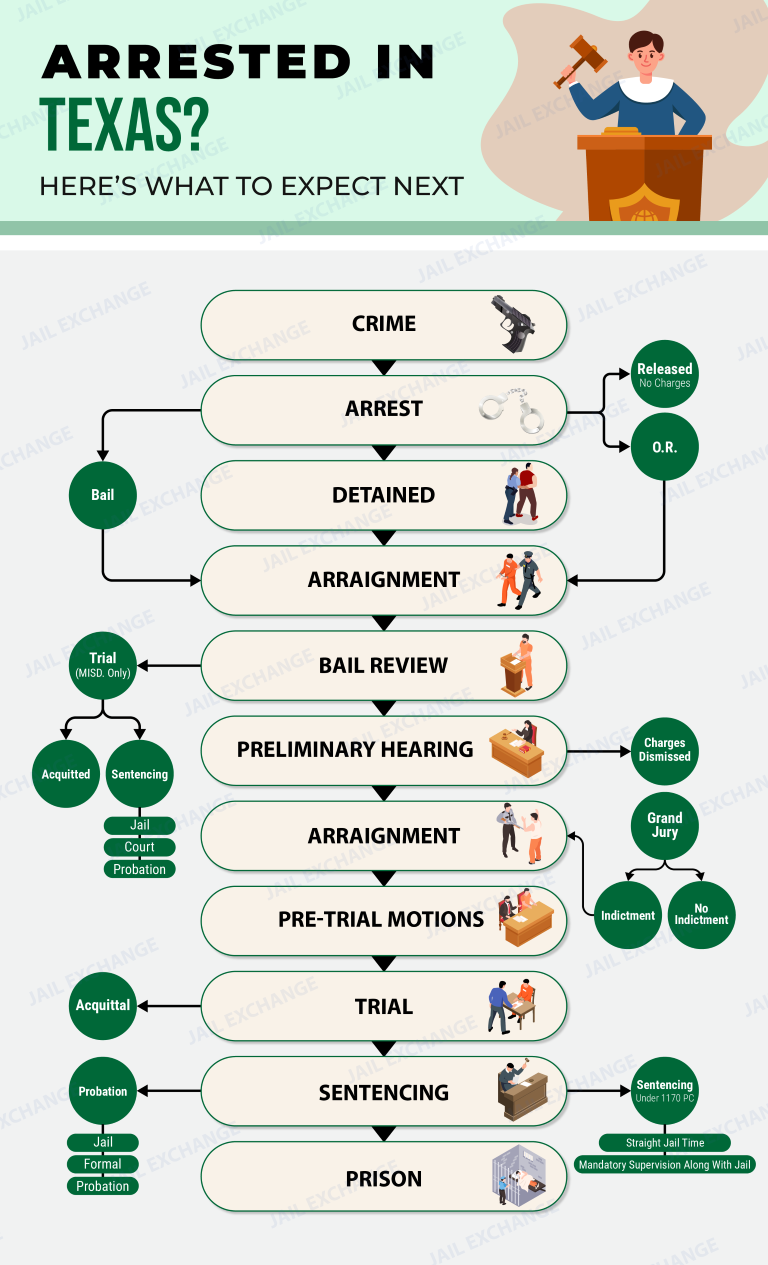
Information for this service is currently unavailable.
Information for this service is currently unavailable.
The Plano City Jail is the Plano Police Department's holding jail on 14th Street. It is a short stop after arrest: people stay only until they bond out, are let go, or are driven to the county jail in McKinney.
Plano City Jail address:
Plano City Jail
909 14th Street
Plano, TX 75074
- Check first: Because stays are brief, search the Collin County records before mailing anything, so you know where the person is now.
- Collin County charges: Bond on those charges can be posted right at the city jail.
- Moved to McKinney: Once the person is at the Collin County Detention Facility, follow that jail's mail rules, which send personal letters to a scanning address instead of the building.
- Questions: Call the jail at 972-424-5678 .

Securus AdvanceConnect is a prepaid calling account that links directly to your mobile phone or landline number, allowing you to receive outbound calls from an incarcerated individual. Because correctional phone systems never allow incoming calls, funding an AdvanceConnect balance ensures calls are accepted immediately without being blocked by cell carriers.
Important: Mobile Networks Block Inmate Calls Without Prepaid Funds
Correctional facilities do not allow collect billing to cell phones, and mobile carriers automatically block incoming collect calls from detention centers. While some residential landlines may allow direct billing, mobile phones and VoIP services require an active prepaid AdvanceConnect balance, which you can verify with your phone provider. If you do not register online and fund your account right away, your loved one will hear an automated error message stating that your number cannot accept calls.
Step-by-Step Instructions to Register and Fund AdvanceConnect
- Go to securustech.online or open the Securus mobile app.
- Select Sign Up and create your account using your 10-digit telephone number and email address.
- Search for your facility by state and agency name, then add the inmate using their full legal name or booking ID.
- Select AdvanceConnect under calling accounts.
- Choose your deposit amount, review convenience and transaction fees, and enter your credit or debit card billing details.
- Authorize payment and confirm that your mobile phone allows calls from automated or unknown correctional numbers.
What the Inmate Needs to Do
The inmate picks up any dayroom phone or logs onto their handheld tablet, dials your 10-digit number, and enters their assigned PIN. The automated system verifies that your AdvanceConnect account has an active balance and connects the call. All calls are subject to recording and monitoring by facility staff.
Official Provider: Securus Technologies Official Website
Customer Service Telephone: 1-800-844-6591
Support Hours: 24 hours a day, 7 days a week, 365 days a year
Supported Languages: English and Spanish
Other Services Provided by Securus Technologies
In addition to AdvanceConnect Prepaid Calling, Securus Technologies and its subsidiary JPay provide several other communication, financial, and visitation services:
- Direct Bill Phone Calling: Establish a monthly billed calling account for verified landline numbers.
• Learn more on our website: Direct Bill Phone Calling Guide | • Visit official vendor page: Securus Direct Bill - Securus Video Connect: Schedule and join live video visits from home using your computer or smartphone.
• Learn more on our website: Video Visitation Guide | • Visit official vendor page: Securus Video Connect - JPay Money Deposits (Trust & Canteen): Send money directly into an inmate's jail trust account for commissary store purchases.
• Learn more on our website: Money Deposits Guide | • Visit official vendor page: JPay Money Transfers - JPay Email Messaging & Photos: Send electronic messages, photo attachments, and VideoGrams directly to their tablet or kiosk.
• Learn more on our website: Email Messaging Guide | • Visit official vendor page: JPay Email Services
Securus Direct Bill is an invoiced telephone calling service designed for approved residential landlines, law offices, and commercial businesses. Instead of prepaying funds in advance, calls received from an incarcerated individual are billed directly to your account on a monthly itemized billing invoice.
Important: Direct Bill Requires Credit Approval and Qualifying Lines
Direct Bill is not available for mobile cell phones, internet VoIP numbers, or customers with poor or unestablished telephone credit history. Correctional facilities enforce strict telecommunications billing rules, which you can verify by calling Securus customer care. If your line does not meet credit approval standards, you must open an AdvanceConnect prepaid account instead to receive incoming calls from your loved one.
Step-by-Step Instructions to Set Up a Direct Bill Account
- Contact Securus customer service at 1-800-844-6591 or submit an application via securustech.net.
- Provide your billing name, service address, and qualifying residential or business landline telephone number.
- Submit to a standard credit evaluation performed by Securus to determine billing eligibility.
- Establish your authorized monthly credit limit upon approval.
- When your phone rings with a call from the detention center, follow the recorded operator instructions and press the requested key to accept charges.
- Pay your monthly billing invoice online, by phone, or through the mail.
What the Inmate Needs to Do
The inmate dials your phone number from any dayroom telephone and keys in their assigned PIN. The automated system verifies that your account is in good standing and has not exceeded its monthly spending ceiling before connecting the call. All non-privileged conversations are recorded and monitored.
Official Provider: Securus Technologies Official Website
Customer Service Telephone: 1-800-844-6591
Support Hours: 24 hours a day, 7 days a week, 365 days a year
Supported Languages: English and Spanish
Other Services Provided by Securus Technologies
In addition to Direct Bill Calling, Securus and its subsidiary JPay offer several other communication, financial, and visitation services:
- AdvanceConnect Prepaid Calling: Fund a prepaid calling account tied to your mobile phone number.
• Learn more on our website: AdvanceConnect Calling Guide | • Visit official vendor page: Securus AdvanceConnect - Securus Video Connect: Schedule and join live video visits from home using your computer or smartphone.
• Learn more on our website: Video Visitation Guide | • Visit official vendor page: Securus Video Connect - JPay Money Deposits (Trust & Canteen): Send money directly into an inmate's jail trust account for commissary store purchases.
• Learn more on our website: Money Deposits Guide | • Visit official vendor page: JPay Money Transfers - JPay Email Messaging & Photos: Send electronic letters, photos, and VideoGrams directly to their tablet or kiosk.
• Learn more on our website: Email Messaging Guide | • Visit official vendor page: JPay Email Services
Information for this service is currently unavailable.
Information for this service is currently unavailable.
Collin County County Jails
Collin County City Jails
Collin County Juvenile Facilities
Nearby counties
- Jail (Main): 972-424-5678
- Inmate Info: 972-424-5678
- Police: 972-941-2145
- Records: 972-424-5678
The Plano City Jail serves the following cities and towns of Collin County: Allen, Anna, Blue Ridge, Celina, Farmersville, Frisco, Lavon, Lucas, McKinney, Melissa, Murphy, Nevada, Parker, Plano, Princeton, Prosper, Richardson, Royse City, Sachse, St. Paul and Wylie.