
Garland Detention Center
Garland Detention Center
Physical Address
1900 W State StreetGarland, TX 75042
Jail Phone Number
972-485-4890Dallas County Inmate Search: Locating Someone Held at Lew Sterrett or a City Jail
Adults arrested across Dallas County nearly always land at the Lew Sterrett Justice Center, 111 West Commerce Street, Dallas, TX 75202. After booking, the Sheriff moves them to the North Tower for top security, the West Tower for men needing medical or psychiatric beds, or the Suzanne Lee Kays Detention Facility, a direct-supervision jail. Garland, Grand Prairie, Irving, Richardson and four more suburbs run short-stay jails. We cover searches, photos, visits, deposits, letters, warrants and each arresting agency.
Use the Sheriff's online jail search to look up current inmates by name. Copy down the book-in number you find there, since mail and deposits require it. Texas IVSS-Counties, the free state custody notice service, can also tell you if a person is still held.
Can't find the name? Call the 24-hour jail information line at 214-761-9025. Ask if they were booked, which building they are in, and their book-in number. Our bail and release page explains bonds, and our court page covers hearings.
Read inmate search answers
 Read inmate search answers
1. Which steps get the best results from the Sheriff's jail lookup?
The Sheriff's lookup covers everyone held in the county jail buildings at Lew Sterrett. Follow these steps:
- Go to the Sheriff's jail search.
- Fill in the surname box before the first-name box. Fewer letters can catch a misspelling.
- Try other spellings, both parts of a hyphenated name, and any nickname or maiden name.
- When you find the right person, write down the book-in number. Mail, account deposits and video visits all ask for it.
- If the arrest happened in the last few hours, or the results look confusing, call 214-761-9025. Staff answer for all of the county's jails, day and night.
Arrested in Mesquite? That city keeps its own Mesquite jail roster, which lists booking time, charges, warrant numbers and bond or fine amounts. The city warns it may not match actual custody, so call to confirm.
↑ Back to the question list2. Nothing matched my search. Where else should I check?
Common reasons a name is missing:
- Still at a city jail. Suburban police hold people first and transfer bigger cases later. Garland, for example, sends Class B and higher cases to the county once they are ready to file.
- Already released. A bond may have been posted, or charges may not have been filed.
- Moved. The person may now be with another county, TDCJ, the U.S. Marshals or ICE. Each has its own search below.
- Under 17. Children go to juvenile detention, which the adult search won't show.
- A typo. Try again with fewer letters or a different spelling.
The fastest fix is a phone call to 214-761-9025. For older records, the District Clerk's criminal records desk is on the 2nd floor of the Frank Crowley Courts Building, 133 N. Riverfront Boulevard, Dallas, TX 75207, 214-653-5954.
↑ Back to the question list3. Which Dallas County jail or city lockup could they be in?
The Sheriff runs four active buildings, all at 111 West Commerce Street, Dallas, TX 75202, with one shared information line, 214-761-9025. Together they can hold more than 7,100 people.
- Lew Sterrett Justice Center: the main complex, finished in 1983. Every new arrest goes through intake and release here. Staff then assign housing based on record, charge, age, health and behavior.
- North Tower Detention Facility: maximum security. It holds up to 3,292 people and has 188 single cells.
- West Tower Detention Facility: men in medium and maximum custody, plus medical, infirmary, suicide watch, protective custody, substance abuse and mental health housing. Up to 1,530 beds.
- Suzanne Lee Kays Detention Facility, also called the South Tower: the county's first direct-supervision jail, where officers work inside the housing units. Up to 2,304 beds.
The former jail at 600 Commerce Street, Dallas, TX 75202 holds no one now. City police jails hold people for a short time:
- Garland Detention Center, 1900 W State Street, Garland, TX 75042, 972-485-4890. Open 24/7, 137 adult beds, for pretrial holds and city court sentences.
- Grand Prairie Detention Center, 1525 Arkansas Ln., Grand Prairie, TX 75052, 972-237-8951. 210 beds; stays usually run under 72 hours.
- Irving City Jail, 305 N. O'Connor Road, Irving, TX 75061, 972-273-1010. 172 adult beds plus a juvenile holding area.
- Mesquite City Jail, 777 N. Galloway Ave., Mesquite, TX 75149, 972-216-6243.
- Richardson City Jail, 972-744-4820. Holds people until bond, transfer or court; arraignments run about 11:00 a.m. daily.
- Hutchins police holding facility, 550 West Palestine Street, Hutchins, TX 75141, 972-225-2225. Class C holds and people waiting for transfer on warrants.
- Carrollton Jail, at the police station, 2025 E. Jackson Road, Carrollton, TX 75006.
- Seagoville police jail, at the police station, 600 N Hwy 175, Seagoville, TX 75159.
People arrested by City of Dallas police skip the city stage and go straight to Lew Sterrett.
↑ Back to the question list4. Does the Dallas County jail search show mugshots?
Want a booking photo? Put the request in writing to the Sheriff's Office as a public information request. Texas law makes basic arrest information public (Gov't Code 552.108(c)). Call the Sheriff's dispatch line at 214-749-8641 to ask where the request should go.
Some official pages do show photos:
- The county's wanted person search has a filter called "People with photos only." It covers people with warrants, not people in jail.
- The Texas 10 Most Wanted page shows photos of the state's top fugitives.
Private sites that post mugshots are not run by the government. Under Texas law, a site that charges $150 or more to remove a record must fix or take down a wrong or incomplete one for free. It also can't publish a record cleared by expunction or by an order of nondisclosure (Business and Commerce Code ch. 109). Federal booking photos are rarely released, apart from an occasional fugitive photo from the Marshals. Ask ICE itself for its photos, using its FOIA request form.
↑ Back to the question list5. Can the state text me when their custody status changes?
Yes. Texas IVSS-Counties is the state's free custody alert system, run with TDCJ.
- Look someone up by whole or partial name at ivss-counties.tdcj.texas.gov.
- Sign up for notices with or without making an account.
- Alerts cover booking, release, court events and transfers, such as a move to TDCJ.
- Phone help, in English or Spanish, runs around the clock at 866-268-8959.
- Signing up is confidential: the inmate won't learn you registered.
Alerts can lag behind real events. Before you drive to pick someone up, confirm with the jail at 214-761-9025.
↑ Back to the question list6. How is a bond posted for someone at Lew Sterrett?
Within 48 hours, a magistrate at Lew Sterrett goes over the charges and legal rights, accepts any request for appointed counsel, and sets bond. That hearing is required by CCP art. 15.17. Pretrial Release staff screen each person for a personal bond.
- Where to pay: the Sheriff's Bond Desk inside Lew Sterrett, 111 West Commerce Street, Dallas, TX 75202, open 24/7.
- How: cash, cashier's check or money order. No credit or debit cards for cash bonds.
- Personal bond fee: $20 or 3% of the bond, whichever is greater.
- Bondsmen: the county bail bond board keeps a list of licensed companies.
- Scam warning: county bonds are posted in person. Never send bond money by app, wire or gift card. Pretrial Services can verify a request at 214-875-2302.
Holds can keep someone in after bond, such as another county's warrant, a parole warrant or an ICE detainer. In family violence cases, Texas makes the jail wait at least four hours after bond before release (CCP art. 17.291). For every step, see our full bail guide for this county, and our page on Texas bail laws covers the state rules.
↑ Back to the question list7. Which charges are on file, and where can I read them?
Start with the jail information line at 214-761-9025. Staff can confirm the charge and bond for each case. After the case is filed, these sources show more:
- The county court portal covers felony and misdemeanor cases.
- District Clerk case information shows the charge, outcome and case history for felonies.
- The County Clerk's criminal office answers misdemeanor questions at 214-653-7099.
- re:SearchTX, free with an account, shows charging papers from courts across Texas.
Texas sorts charges by level. Class C is fine-only. Class B and Class A misdemeanors can bring county jail time. Felonies run from state jail felonies up to capital cases. Our court page explains each range.
↑ Back to the question list8. Can someone at Lew Sterrett get court-appointed counsel?
The person asks the magistrate for one at the first hearing and signs a sworn form about money. The magistrate must help with the paperwork (CCP art. 15.17). The court has until the close of the first business day after it gets the request to appoint counsel (CCP art. 1.051).
Who qualifies in a felony case? Usually it's someone whose household income doesn't exceed 150% of federal poverty guidelines. Their assets must also be $15,000 or less. People on SNAP, Medicaid, SSI or TANF, or living in public housing, qualify too.
- Public Defender's Office: 9th floor, 133 N. Riverfront Boulevard, Dallas, TX 75207, 214-653-3550.
- Already out on a felony and still need a lawyer? Go to Room A14, 5th floor, in the same building, at the Criminal District Court Manager's Office.
- Hiring privately? The jail handbook lists a lawyer referral service at 214-220-7400.
9. What should families know about Dallas County jail video visits?
Visits here are by video. Families connect either from home or from a kiosk on-site. Book through the Sheriff's provider, which is linked from the Sheriff's video visitation page.
- Schedule at least 72 hours ahead. Each visit lasts 20 minutes.
- Visits from home have no weekly cap. On-site visits are limited to two a week.
- On-site hours on the Sheriff's page: Monday, Tuesday and Thursday through Sunday, 8:00 a.m. to 8:30 p.m. There are no visits on Wednesday.
- The person registering must be 17 or older with a government photo ID. Children under 17 can't come on-site on weekdays.
- Breaking the dress code can lead to a 30-day, 60-day or permanent ban.
The December 2025 inmate handbook shows a different on-site schedule, with evening slots split by last name and children allowed only on weekends. Check the tablet or kiosk notice, or call 214-761-9025, before you go. Our visiting page gives general advice too.
↑ Back to the question list10. Which deposit options fund an inmate's account?
You need the person's full name and book-in number. The Sheriff points families to these deposit methods:
- Lobby kiosk: cash at the kiosk in each jail lobby, open 24 hours.
- Online: through Access Corrections, with fees starting at $2.95.
- By phone: 866-345-1884, with fees starting at $3.95.
- At a store: cash at retail locations through CashPayToday, for a $5 fee.
The jail does not take personal checks, payroll checks, money orders or benefit checks for accounts. That rule has been in place since February 14, 2022. Never mail cash.
Account money pays for commissary, which can be capped at $50, and for some tablet services and medical visits. Our money page and commissary page have details.
↑ Back to the question list11. What do calls, tablet messages and e-books involve?
People held here can call out and send messages once someone sets up a prepaid account with the Sheriff's phone provider. Set up an account by calling 727-349-1561 or through the provider site linked on the Sheriff's telephone page.
- Tablets offer books, classes, games and messaging. Some features cost money.
- A damaged tablet can bring a $300 charge to the person's account.
- Books are bought as e-books on the tablet.
General tips are on our phone page and messaging page.
↑ Back to the question list12. Where should letters be addressed, and which items are banned?
Personal mail does not go to the jail building. Address it like this:
[Inmate name] #[book-in number]
c/o Mail Processing Center
PO Box 9226, Seminole, FL 33775-9226
Letters are scanned and delivered electronically, and the paper originals are destroyed. To avoid a returned letter:
- Write on one side only of 8.5 by 11 inch paper. Two-sided letters come back.
- Include your complete return address.
- Don't send cash, checks or money orders.
- Skip greeting cards, stickers, tape, crayon and marker.
- Photos may measure up to 8 by 10 inches; Polaroids are refused.
Mail from lawyers, government checks, voter registration forms and ballots go to PO Box 660334, Dallas, TX 75266. Mail sent to the Florida address is not treated as confidential. Printed magazines are accepted only as prepaid subscriptions from the publisher, and only for housing areas without tablets. See our mail page for more.
↑ Back to the question list13. Who can collect belongings taken at booking?
Property is stored at Lew Sterrett, 111 West Commerce Street, Dallas, TX 75202. The Sheriff's rules for pickup:
- Bring a valid photo ID.
- Everything is released together. Staff can't hand out single items.
- The person in custody signs a release form. Bring that signed form to the front-lobby control center.
- Eyeglasses can be dropped off at building control.
- Extra property must be collected within 30 days.
At release, the person should keep the armband or ID with its barcode. Without it, their account balance is held 24 hours, then paid out at the Lobby Information Window. Questions: 214-761-9025.
↑ Back to the question list14. Who treats a prisoner who is ill, injured or on medication?
Medical care in the jail comes from an outside public health provider. The West Tower holds the medical, infirmary and mental health units.
- Each sick call or incident that needs an assessment costs $10. That includes a check started by a family member's call.
- The fee is waived if it would drop the balance below $6. People with under $5 for 72 hours count as indigent.
- If staff think someone may have a mental illness, Texas law gives them 12 hours to alert a magistrate, under CCP art. 16.22.
To share a health concern, call the jail line at 214-761-9025. The county directory lists jail health at 214-653-2621. Veteran Services can be reached at 972-692-4939. Inmates must file grievances within 7 days. Concerns can also go to the state's jail regulator, the Texas Commission on Jail Standards, via its online complaint form or at 512-463-5505.
↑ Back to the question list15. Where do I look up an open Dallas County warrant?
Deputies, constables and city officers all serve warrants here. For county warrants, phone the Sheriff's warrant information line, 214-761-9026, or search the county's wanted list, which can be narrowed to people with photos. City of Dallas warrants have a 24-hour recorded line, 214-670-0109, and a police warrant page. Grand Prairie handles city warrants at 972-237-8947. DPS posts the state's top fugitives on its Texas 10 Most Wanted page. A warrant stays active until handled: a lawyer can arrange a planned surrender, or the judge who signed it can reset the case. Misdemeanor warrants: County Clerk, Room A-1, 133 N. Riverfront Boulevard, Dallas, TX 75207, 214-653-7099.
↑ Back to the question list16. Which clerk gives the next hearing date?
Most criminal hearings happen at the Frank Crowley Courts Building, 133 N. Riverfront Boulevard, Dallas, TX 75207. Ask a clerk for the next setting:
- Felony cases: District Clerk criminal section, 2nd floor, 214-712-3088.
- Misdemeanor cases: County Clerk criminal office, 2nd floor, 214-653-7099.
- Class C tickets: call whichever JP or city court is printed on the ticket.
Online, the court portal searches by party name or cause number. Clerk offices are open weekdays 8:00 a.m. to 4:30 p.m. See our court guide for each courthouse and stage of a case.
↑ Back to the question list17. Who tracks a prisoner charged in federal court?
Before trial, people charged in federal court are held by the U.S. Marshals Service. Its North Texas office is in the Earle Cabell Federal Building, 1100 Commerce Street, Room 1657, Dallas, TX 75242, 214-767-0836. The Marshals can tell you which jail is holding someone. In 2022, Lew Sterrett held some federal prisoners.
- A federal judge decides release after a detention hearing (18 U.S.C. 3142).
- The court clerk for the Dallas Division is in Room 1452 of the same building, 1100 Commerce Street, Dallas, TX 75242, 214-753-2200.
- The Federal Bureau of Prisons inmate locator lists federal prisoners after sentencing. It may not list people still waiting for trial.
- FCI Seagoville, a federal prison, is in the county at 2113 North Hwy 175, Seagoville, TX 75159, 972-287-2911.
18. What happens when immigration agents place a hold?
In rough order, an ICE hold goes like this:
- Immigration officials send Lew Sterrett a Form I-247A, which requests more time in custody.
- Jail staff may then hold them up to 48 hours after they would otherwise be released (8 CFR 287.7(d)).
- Texas law requires jails to honor detainers. The hold must end once the person proves citizenship or lawful presence. That rule is in CCP art. 2A.060.
- Federal agents collect them and take them to an ICE detention site. North Texas is served by ICE's field office at 8101 N. Stemmons Freeway, Dallas, TX 75247, 972-367-2200.
- Find them on the ICE Online Detainee Locator, entering the nine-digit A-number, or a full name along with birth country.
Under Gov't Code 752.053, no Texas county may adopt a policy blocking immigration enforcement. Separately, S.B. 8, passed in 2025, requires sheriffs who run jails to request a 287(g) partnership with ICE by December 1, 2026. Whether this county's agreement is in place is not known; the Sheriff's Office can say.
↑ Back to the question list19. Where will they be sent after a TDCJ sentence?
A state jail or prison sentence means a transfer from Lew Sterrett to the Texas Department of Criminal Justice. They first pass through an intake unit, where they are assessed. Then they are placed at a unit matching their needs.
- Use the TDCJ inmate search and enter a TDCJ number, SID number, or last name plus first initial.
- Only people now held in a TDCJ facility appear. It refreshes each business day, so expect a one-day lag.
- Our Texas state prisons page covers visits, mail and money for each prison.
20. Where are Dallas County youths under 17 detained?
Texas treats ages 10 through 16 as juvenile cases. A 17-year-old goes to the adult jail (Family Code 51.02). A detained child stays in the Dr. Jerome McNeil Jr. Detention Center, housed in the Henry Wade Juvenile Justice Center, 2600 Lone Star Drive, Dallas, TX 75212. Central Control: 214-698-4212.
- A detention hearing happens within 48 hours. After that, detention is reviewed every ten working days or sooner.
- Visits run Monday to Thursday, 4:00 to 7:00 p.m., for 15 minutes. Last names A to L visit Monday and Wednesday; M to Z visit Tuesday and Thursday. Two visits a week, two parents or guardians each time, photo ID required, no items.
- Juvenile Department main line: 214-698-2200. Intake screening: 214-698-4313.
Other youth sites run by the county:
- Marzelle Hill Transition Center, 2600 Lone Star Drive, Dallas, TX 75212, 214-698-4200 on weekdays.
- Letot Center, 10505 Denton Drive, Dallas, TX 75220, 214-357-0391.
- Youth Village, 1566 East Langdon Road, Dallas, TX 75241, 972-225-9700.
- Medlock Treatment Center, 1566 E. Langdon Road, Dallas, TX 75241, 972-225-9780.
21. Which Dallas County police, sheriff or constable office arrested them?
The arrest report or bond paper names the agency. If you don't know it, the jail line at 214-761-9025 can tell you who booked the person. Numbers below are the ones confirmed on official pages; for other departments, call the Sheriff's dispatch line at 214-749-8641 and ask to be connected.
Central:
- Dallas Police Department, Jack Evans Headquarters, 1400 Botham Jean Blvd, Dallas, TX 75215
- Highland Park Police, 4700 Drexel Dr, Dallas, TX 75205
- University Park Police, 3800 University Blvd, Dallas, TX 75205
- Cockrell Hill Police, 4125 W. Clarendon, Dallas, TX 75211
North:
- Addison Police, 4799 Airport Parkway, Addison, TX 75001
- Carrollton Police, 2025 E. Jackson Road, Carrollton, TX 75006
- Coppell Police, 130 Town Center Blvd., Coppell, TX 75019
- Farmers Branch Police, 3723 Valley View Ln, Farmers Branch, TX 75244
- Richardson Police jail, 972-744-4820
East:
- Garland Police, 1891 Forest Lane, Garland, TX 75042; jail 972-485-4890
- Mesquite Police, 777 N. Galloway Ave., Mesquite, TX 75149; jail 972-216-6243
- Rowlett Police, 4401 Rowlett Rd., Rowlett, TX 75088
- Sunnyvale Police, 364 Long Creek Rd., Sunnyvale, TX 75182
- Seagoville Police, 600 N Hwy 175, Seagoville, TX 75159
West:
- Irving Police, 305 N. O'Connor Road, Irving, TX 75061, non-emergency 972-273-1010
- Grand Prairie Police, 1525 Arkansas Lane, Grand Prairie, TX 75052; detention 972-237-8951
South:
- Cedar Hill Police, 285 Uptown Boulevard, Bldg 200, Cedar Hill, TX 75104
- DeSoto Police, 714 E Belt Line Rd, DeSoto, TX 75115
- Duncanville Police, 203 E Wheatland Rd, Duncanville, TX 75116
- Lancaster Police, mailing address P.O. Box 940, Lancaster, TX 75134
- Hutchins Police, 550 West Palestine Street, Hutchins, TX 75141, 972-225-2225
- Wilmer Police, 219 E. Belt Line Rd., Wilmer, TX 75172
Sheriff and constables:
- Sheriff's Traffic Division, 7201 S. Polk Street, Suite 400, Dallas, TX 75232, 214-589-2315
- Constable Precinct 1, 8301 S. Polk Street, Suite 1200, Dallas, TX 75232, 972-228-0006
- Constable Precinct 2, 140 N. Garland Avenue, Garland, TX 75040, and 500 S. Galloway Avenue, Suite C100, Mesquite, TX 75149, 214-643-4766
- Constable Precinct 3, 6820 LBJ Freeway, Suite 1400, Dallas, TX 75240, 214-904-3160
- Constable Precinct 4, 106 West Church Street, Suite 110, Grand Prairie, TX 75050, 214-751-4065
- Constable Precinct 5, 702 E. Jefferson Boulevard, Suite 1200, Dallas, TX 75203, and 9731 Lake June Road, Dallas, TX 75217, 214-943-1765
Town not listed, such as Balch Springs? Ask the Sheriff's dispatch which agency patrols it. State troopers and campus officers also make arrests here, and their prisoners go to Lew Sterrett too.
↑ Back to the question listInformation for this service is currently unavailable.
Texas criminal courtDallas County Criminal Court Guide
In Dallas County, felony and misdemeanor judges work in the Frank Crowley Courts Building, 133 N. Riverfront Boulevard, Dallas, TX 75207. People who aren't released stay at the Lew Sterrett Justice Center, 111 West Commerce Street, Dallas, TX 75202, in the North Tower (maximum security), West Tower (men; medical and mental health housing) or Suzanne Lee Kays Detention Facility (direct supervision). Suburban police use short-stay city jails. This guide maps the courts, each step of a case, lookups and warrants.
Not sure the person is still behind bars? Search the Sheriff's online jail lookup by name. Arrest and custody questions get answered on our Inmates in Custody section, which follows people held today, this week's bookings, warrant checks, filed charges, mugshots, public defenders and property pickup.
Which judge has the case? Phone a clerk. Felonies: the District Clerk's criminal section, 214-712-3088. Misdemeanors: the County Clerk's criminal courts office, 214-653-7099. Ask for the case number, court number and next setting. Bond help is on our Lew Sterrett bail page.
1. Which Dallas County judges handle felonies versus misdemeanors?
Texas assigns a case by its charge level. Here is the local layout:
- Felonies, from state jail felonies up to capital murder, belong to district courts. This county has seven Criminal District Courts (No. 1 to 7) plus the 194th, 195th, 203rd, 204th, 265th, 282nd, 283rd, 291st, 292nd and 363rd District Courts. There are also Auxiliary Courts 1, 6 and 8, where felony magistrates sit. The District Clerk keeps these files.
- Class A and B misdemeanors land in County Criminal Courts No. 1 through 11. Two County Criminal Courts of Appeals, No. 1 and No. 2, round out the county level. The County Clerk keeps these files.
- Class C offenses carry only a fine. Justice courts and city municipal courts hear them.
Every criminal courtroom listed above sits in the Frank Crowley Courts Building, 133 N. Riverfront Boulevard, Dallas, TX 75207. The last stop for any appeal is the Texas Court of Criminal Appeals. For felony records, call the District Clerk's criminal division at 214-653-5964.
↑ Back to the question list2. Where at Frank Crowley are the criminal clerks and offices?
Almost every criminal office is under one roof at the Frank Crowley Courts Building, 133 N. Riverfront Boulevard, Dallas, TX 75207. Clerk windows keep weekday hours, 8:00 a.m. to 4:30 p.m.
- District Clerk, felony section: 2nd floor. 214-712-3088; criminal records 214-653-5954.
- County Clerk, criminal courts: 2nd floor, Room A-1. 214-653-7099.
- Criminal District Attorney: mail box LB 19. 214-653-3600.
- Public Defender: 9th floor. 214-653-3550.
- Pretrial Services: Room A9 on the 1st and 2nd floors. 214-875-2302.
- Bail Bond Board: mail to LB-31. 214-653-2756.
Other buildings matter too. The jail is the Lew Sterrett Justice Center, 111 West Commerce Street, Dallas, TX 75202, with a 24-hour line at 214-761-9025. Youth cases are handled at the Henry Wade Juvenile Justice Center, 2600 Lone Star Drive, Dallas, TX 75212, 214-698-2200. The Public Defender's family division works in the George Allen Courts Building, 600 Commerce Street, Suite 465-G, Dallas, TX 75202, 214-653-6153. Federal cases are heard at 1100 Commerce Street, Dallas, TX 75242.
↑ Back to the question list3. Where do Class C tickets go: justice of the peace or city court?
Fine-only Class C cases, such as many traffic and public intoxication tickets, are handled close to home. The top fine is $500 and there is no jail time (Penal Code 12.23). The county has five justice precincts with two courts each:
- Precinct 1, Places 1 and 2: South Dallas Government Center, 8301 S. Polk Street, Dallas, TX 75232. Place 1 972-228-0280; Place 2 972-228-2272.
- Precinct 2, Place 1: 140 N. Garland Avenue, Garland, TX 75040, 214-643-4773.
- Precinct 2, Place 2: Mesquite Government Center, 500 S. Galloway Avenue, Suite P200, Mesquite, TX 75149, 972-285-5429.
- Precinct 3, Places 1 and 2: North Dallas Government Center, 6820 Lyndon B. Johnson Freeway, Dallas, TX 75240. Place 1 214-321-4106; Place 2 214-904-3042.
- Precinct 4, Places 1 and 2: Grand Prairie Government Center, 106 W. Church Street, Grand Prairie, TX 75050. Place 1 214-751-4040; Place 2 214-589-7000.
- Precinct 5, Place 1: moved from the closed St. Francis site to 9731 Lake June Road, Dallas, TX 75217, 214-943-6980.
- Precinct 5, Place 2: Oak Cliff Government Center, 702 E. Jefferson Boulevard, Suite 2100, Dallas, TX 75203, 214-943-5981.
Each city also has its own municipal court for tickets written inside city limits. Official addresses for some of them:
- Balch Springs: 3117 Hickory Tree Rd, Balch Springs, TX 75180
- Cedar Hill: 285 Uptown Blvd, #200, Cedar Hill, TX 75104
- Coppell: 130 Town Center Blvd., Coppell, TX 75019
- Farmers Branch: 3723 Valley View Ln, Farmers Branch, TX 75244
- Garland: 1791 Avenue B, Garland, TX 75042
- Lancaster: 220 W. Main St., Lancaster, TX 75146
- Mesquite: 211 Municipal Way, Mesquite, TX 75149
For any other city's court, check the state's municipal courts by city list or the phone number on the ticket. If paying is hard, the judge can allow installments, community service (credited at $150 per 8 hours) or a waiver. Jail for nonpayment comes only after a hearing (CCP art. 45A.252).
↑ Back to the question list4. What happens at the magistrate hearing and the first court setting?
Within 48 hours, the person sees a magistrate at Lew Sterrett (CCP art. 15.17). That official reads the accusation and lists the person's rights: silence, a lawyer, ending any interview, and an examining trial on a felony. The person also hears that their words may be used as evidence. Bail is set, and any request for a free lawyer is taken.
Next, the prosecutor decides what to file. The Criminal District Attorney's felony intake line is 214-653-3848. The misdemeanor division answers at 214-653-3700.
- On a felony, a person may ask for an examining trial, a probable cause hearing held before indictment (CCP art. 16.01). Use the request form on the felony courts' site.
- Arraignment is where the person's identity is confirmed and a plea is entered. It is required for felonies after indictment and for misdemeanors that carry jail time (CCP art. 26.01). A lawyer can waive it in writing.
- After that come pretrial settings. Lawyers trade evidence, file motions and may negotiate.
When a magistrate finds no probable cause, written findings must follow, and a 2025 law gives 24 hours for that (CCP art. 15.17(h)).
↑ Back to the question list5. How does a misdemeanor like DWI, theft or assault move through County Criminal Court?
A misdemeanor is filed by an "information," a charging paper from the prosecutor, and lands in one of the eleven County Criminal Courts. The usual path is arraignment, then one or more pretrial settings, then a plea or a trial. The level of the charge, not its name, sets the range:
- Class A (Penal Code 12.21): jail of up to a year, a fine of up to $4,000, or the two together.
- Class B (Penal Code 12.22): jail of up to 180 days, a fine of up to $2,000, or the two together.
- Class C (Penal Code 12.23): a fine capped at $500, with no jail.
Two outcomes avoid a conviction or jail. Deferred adjudication lets the judge hold off on a guilty finding for up to two years (CCP art. 42A.103). Finish it, and the judge dismisses the case (CCP art. 42A.111). Community supervision, often called probation, can also run up to two years (CCP art. 42A.053). The misdemeanor courts' probation line is 214-653-5370.
With a plea bargain, the judge must announce in open court whether to accept it. If the deal is rejected, the person may then take back the plea (CCP art. 26.13).
↑ Back to the question list6. How does a felony travel from grand jury to sentence?
A felony case here follows a set order:
- Magistrate and bail at Lew Sterrett.
- Examining trial, if the defense asks for one before indictment.
- Grand jury. Its work is secret. An indictment needs votes from at least nine grand jurors (CCP art. 20A.301).
- Arraignment, held by the assigned district court.
- Pretrial hearings on motions, evidence and any offer.
- Plea or trial, followed by sentencing.
Penalty ranges come from Penal Code chapter 12:
- State jail felony: 6 months to 2 years in a state jail facility.
- Third-degree felony: prison for 2 to 10 years.
- Second-degree felony: prison for 2 to 20 years.
- First-degree felony: prison for 5 to 99 years, or life.
- Capital felony: death or life without parole; a person under 18 at the time gets life.
- Each level except capital also allows a fine of up to $10,000.
Earlier convictions can push a case into a higher range (Penal Code 12.42). Some state jail felonies can be sentenced at the Class A level (Penal Code 12.44). Deferred adjudication and probation can each last up to ten years on a felony. Adult probation (the county's Community Supervision and Corrections Department) works from 1300 W. Mockingbird Lane, 3rd Floor, Dallas, TX 75247, 214-653-5300.
↑ Back to the question list7. Are the rules stricter for violent or high-level felonies?
Serious violent charges bring tighter rules at every stage:
- Bail. Most violent offenses make a personal bond impossible (CCP art. 17.03). Proposition 3 (2025) went further. It covers murder, several aggravated crimes, indecency with a child and trafficking. Once the prosecutor proves the need in such a case, a judge has to refuse bail (Tex. Const. art. I, sec. 11d).
- State appeal. The state may appeal a too-low bail in listed violent cases. A ruling is due within 20 days; meanwhile the defendant remains in custody (CCP art. 44.01).
- After a plea. A 2025 law keeps some people in custody from a guilty plea until sentencing on certain serious felonies (CCP art. 27.20).
- Deferred adjudication. It isn't available for most murder charges, some intoxication cases, certain trafficking cases and repeat sex offenses (CCP art. 42A.102).
- Family violence. A magistrate can sign an emergency protective order at the first appearance (CCP art. 17.292). It lasts 61 to 91 days. Cases with a weapon or serious injury get a longer order.
The Criminal District Attorney's family violence division takes calls at 214-653-3605.
↑ Back to the question list8. Which office prosecutes in Dallas County, and where are the public defenders?
The Criminal District Attorney handles felony and misdemeanor prosecutions alike. Its office is in the Frank Crowley Courts Building, LB 19, 133 N. Riverfront Boulevard, Dallas, TX 75207, 214-653-3600. Its juvenile section works from 2600 Lone Star Drive, 2nd Floor, Dallas, TX 75212, 214-698-2285.
For defense, the county Public Defender's Office gets priority when lawyers are appointed. It sits on the 9th floor at 133 N. Riverfront Boulevard, Dallas, TX 75207, 214-653-3550. Juvenile defenders are at 2600 Lone Star Drive, Suite A-132, Dallas, TX 75212, 214-698-4400.
- A free lawyer is requested at the magistrate hearing on a sworn money form (CCP art. 15.17).
- The felony plan covers people earning 150% of the poverty guideline or less who own $15,000 or less.
- It also covers anyone on SNAP, Medicaid, public housing, SSI or TANF.
- Someone already out on a felony can request a lawyer in Room A14 on the 5th floor of Frank Crowley, at the Criminal District Court Manager's Office.
- Once appointed, the lawyer must try to reach the client before the next working day ends (CCP art. 26.04).
The county's appointment rules are posted in the Texas Indigent Defense Commission plan library.
↑ Back to the question list9. Which online tools show a case, its charges and the next setting?
Three free tools cover most needs:
- County court portal. Search cases by name or number. Misdemeanor documents from 2011 forward can be viewed here.
- District Clerk case information. It shows the charge, the outcome and the case history.
- Criminal background search on the same portal.
The statewide re:SearchTX site needs a free account. It shows charging papers and judgments, but hearing dates come from the county. DPS also runs a paid conviction name search.
To confirm a date, call the clerk. Felony records: 214-653-5954. Misdemeanor courts: 214-653-7099. Spell out the name and birth date for the clerk.
↑ Back to the question list10. Could there be a Dallas County warrant, and what clears one?
Sheriff's deputies, the five constables' offices and city police all serve warrants. Call the Sheriff's warrant line at 214-761-9026 or the Warrants Section at 214-653-2700. Online, try the county's wanted person search, the city police warrant page (automated line 214-670-0109) and the DPS Texas 10 Most Wanted fugitive page. A defense attorney can set up a voluntary surrender with the judge who signed it; that court may also give a new date over the phone. Felony warrant records sit with the District Clerk: 2nd floor, 133 N. Riverfront Boulevard, Dallas, TX 75207, 214-712-3088.
↑ Back to the question list11. Who handles a federal arrest from Dallas County?
Federal prosecutions from here are filed in the Northern District of Texas, Dallas Division. The clerk works at 1100 Commerce Street, Room 1452, Dallas, TX 75242, in the Earle Cabell Federal Building, 214-753-2200.
- Prosecutor: the U.S. Attorney, 1100 Commerce Street, 3rd Floor, Dallas, TX 75242, 214-659-8600.
- Defense: the Federal Public Defender, 525 South Griffin Street, Suite 629, Dallas, TX 75202, 214-767-2746.
- Release: a detention hearing settles whether the defendant goes home before trial (18 U.S.C. 3142).
- Custody: the U.S. Marshals Service keeps federal prisoners before trial. Its office is Room 1657, 1100 Commerce Street, Dallas, TX 75242, 214-767-0836.
- After sentencing: the Federal Bureau of Prisons inmate locator shows where a sentenced person is.
↑ Back to the question list12. Does an ICE detainer affect bail, pleas or the state case?
Yes, in a few ways. First, the hold itself:
- ICE sends a detainer (Form I-247A).
- Lew Sterrett can keep the person up to 48 hours after they would otherwise be released (8 CFR 287.7(d)), even with the state bond paid.
- Texas makes the jail comply; showing proof of citizenship or lawful status is the way out (CCP art. 2A.060).
- ICE agents pick the person up. The Dallas ERO field office is at 8101 N. Stemmons Freeway, Dallas, TX 75247, 972-367-2200.
- To find someone afterward, use the ICE Online Detainee Locator.
Second, the court case. A non-citizen who pleads guilty or no contest first gets a deportation warning, both spoken and written (CCP art. 26.13). Talk to a defense lawyer about immigration effects before any plea. Certain appointed magistrates may not release someone with a detainer (CCP art. 17.027). In addition, local governments are barred from limiting immigration enforcement (Gov't Code 752.053). Every Texas county with a jail must, under a 2025 law, apply by December 1, 2026 for a 287(g) partnership with ICE. The Sheriff's Office can speak to local status.
↑ Back to the question list13. After a felony conviction, where does TDCJ send people?
County jail is where misdemeanor time is spent. Felony time belongs to the Texas Department of Criminal Justice, served either to a state jail or to prison, depending on the level.
After sentencing, the person usually waits at Lew Sterrett until TDCJ moves them to an intake unit. There they are assessed and then assigned to a unit suited to their custody level.
- The TDCJ inmate search finds people by last name plus a first initial, TDCJ number or SID number. Last names must match exactly, and results are a day old or more.
- Our Texas state prisons page describes each unit and its rules.
↑ Back to the question list14. How are 10- to 16-year-olds handled in juvenile court here?
Juvenile court in Texas covers children who were 10 through 16 when the offense happened. A person 17 or older at the time faces adult court instead (Family Code 51.02).
- Where they are held: the Dr. Jerome McNeil Jr. Detention Center inside the Henry Wade Juvenile Justice Center, 2600 Lone Star Drive, Dallas, TX 75212. Central Control: 214-698-4212.
- Detention hearing: the county holds it within 48 hours, after a lawyer is named. Family Code 54.01 allows up to two working days.
- Review: the judge must look at detention again at least every ten working days.
- Adult court: after a full hearing, a judge can send some cases to adult court. This applies at 14 for the gravest felonies and at 15 for other felonies (Family Code 54.02).
- Probation: the Juvenile Department intake screening line is 214-698-4313.
Both sides have juvenile teams on that campus. The prosecutor's juvenile section is on the 2nd floor, 2600 Lone Star Drive, Dallas, TX 75212, 214-698-2285. Juvenile public defenders are in Suite A-132 at the same address, 214-698-4400.
↑ Back to the question list15. Where can crime victims in Dallas County get support?
Texas gives victims a set of rights (CCP art. 56A.051). Victims can ask for notice of hearings and ask the magistrate to weigh their safety at bail. They may also give an impact statement that the judge considers.
- Victim/witness help at the Criminal District Attorney: 214-653-5895.
- Protective orders through the same office: 214-653-3528.
- Adult probation's victim services: 214-653-5330.
- Free 24-hour custody alerts come from Texas IVSS-Counties, 866-268-8959.
- Money for medical bills, counseling and lost wages, up to $50,000, from the Attorney General's Crime Victims' Compensation program, 800-983-9933.
The prosecutor's office is at LB 19, 133 N. Riverfront Boulevard, Dallas, TX 75207. Probation is at 1300 W. Mockingbird Lane, 3rd Floor, Dallas, TX 75247.
↑ Back to the question list16. Does Dallas County offer treatment courts or diversion programs?
Yes, several, mostly through adult probation. Felony programs include:
- AIM, for people ages 17 to 24;
- ATLAS, for people with mental illness;
- DIVERT, for first-time, nonviolent drug cases, with dismissal after completion;
- Felony DWI Court and a Felony Domestic Violence Court;
- a Veterans Treatment Court;
- other programs called DDCA, IIP, SAFPF 4C, SET, STAC and STAR.
Misdemeanor cases have a DWI Court and a Mental Health Court. Ask the defense lawyer whether the person fits. Program questions go to probation at 1300 W. Mockingbird Lane, 3rd Floor, Dallas, TX 75247, 214-653-5300.
The Criminal District Attorney also runs pretrial diversion through its Restorative Justice Division, 214-914-1228. Statewide, Texas lists its registered specialty courts; programs usually last 12 to 24 months.
↑ Back to the question list
Dallas County Criminal Court Guide
In Dallas County, felony and misdemeanor judges work in the Frank Crowley Courts Building, 133 N. Riverfront Boulevard, Dallas, TX 75207. People who aren't released stay at the Lew Sterrett Justice Center, 111 West Commerce Street, Dallas, TX 75202, in the North Tower (maximum security), West Tower (men; medical and mental health housing) or Suzanne Lee Kays Detention Facility (direct supervision). Suburban police use short-stay city jails. This guide maps the courts, each step of a case, lookups and warrants.
Not sure the person is still behind bars? Search the Sheriff's online jail lookup by name. Arrest and custody questions get answered on our Inmates in Custody section, which follows people held today, this week's bookings, warrant checks, filed charges, mugshots, public defenders and property pickup.
Which judge has the case? Phone a clerk. Felonies: the District Clerk's criminal section, 214-712-3088. Misdemeanors: the County Clerk's criminal courts office, 214-653-7099. Ask for the case number, court number and next setting. Bond help is on our Lew Sterrett bail page.
1. Which Dallas County judges handle felonies versus misdemeanors?
Texas assigns a case by its charge level. Here is the local layout:
- Felonies, from state jail felonies up to capital murder, belong to district courts. This county has seven Criminal District Courts (No. 1 to 7) plus the 194th, 195th, 203rd, 204th, 265th, 282nd, 283rd, 291st, 292nd and 363rd District Courts. There are also Auxiliary Courts 1, 6 and 8, where felony magistrates sit. The District Clerk keeps these files.
- Class A and B misdemeanors land in County Criminal Courts No. 1 through 11. Two County Criminal Courts of Appeals, No. 1 and No. 2, round out the county level. The County Clerk keeps these files.
- Class C offenses carry only a fine. Justice courts and city municipal courts hear them.
Every criminal courtroom listed above sits in the Frank Crowley Courts Building, 133 N. Riverfront Boulevard, Dallas, TX 75207. The last stop for any appeal is the Texas Court of Criminal Appeals. For felony records, call the District Clerk's criminal division at 214-653-5964.
↑ Back to the question list2. Where at Frank Crowley are the criminal clerks and offices?
Almost every criminal office is under one roof at the Frank Crowley Courts Building, 133 N. Riverfront Boulevard, Dallas, TX 75207. Clerk windows keep weekday hours, 8:00 a.m. to 4:30 p.m.
- District Clerk, felony section: 2nd floor. 214-712-3088; criminal records 214-653-5954.
- County Clerk, criminal courts: 2nd floor, Room A-1. 214-653-7099.
- Criminal District Attorney: mail box LB 19. 214-653-3600.
- Public Defender: 9th floor. 214-653-3550.
- Pretrial Services: Room A9 on the 1st and 2nd floors. 214-875-2302.
- Bail Bond Board: mail to LB-31. 214-653-2756.
Other buildings matter too. The jail is the Lew Sterrett Justice Center, 111 West Commerce Street, Dallas, TX 75202, with a 24-hour line at 214-761-9025. Youth cases are handled at the Henry Wade Juvenile Justice Center, 2600 Lone Star Drive, Dallas, TX 75212, 214-698-2200. The Public Defender's family division works in the George Allen Courts Building, 600 Commerce Street, Suite 465-G, Dallas, TX 75202, 214-653-6153. Federal cases are heard at 1100 Commerce Street, Dallas, TX 75242.
↑ Back to the question list3. Where do Class C tickets go: justice of the peace or city court?
Fine-only Class C cases, such as many traffic and public intoxication tickets, are handled close to home. The top fine is $500 and there is no jail time (Penal Code 12.23). The county has five justice precincts with two courts each:
- Precinct 1, Places 1 and 2: South Dallas Government Center, 8301 S. Polk Street, Dallas, TX 75232. Place 1 972-228-0280; Place 2 972-228-2272.
- Precinct 2, Place 1: 140 N. Garland Avenue, Garland, TX 75040, 214-643-4773.
- Precinct 2, Place 2: Mesquite Government Center, 500 S. Galloway Avenue, Suite P200, Mesquite, TX 75149, 972-285-5429.
- Precinct 3, Places 1 and 2: North Dallas Government Center, 6820 Lyndon B. Johnson Freeway, Dallas, TX 75240. Place 1 214-321-4106; Place 2 214-904-3042.
- Precinct 4, Places 1 and 2: Grand Prairie Government Center, 106 W. Church Street, Grand Prairie, TX 75050. Place 1 214-751-4040; Place 2 214-589-7000.
- Precinct 5, Place 1: moved from the closed St. Francis site to 9731 Lake June Road, Dallas, TX 75217, 214-943-6980.
- Precinct 5, Place 2: Oak Cliff Government Center, 702 E. Jefferson Boulevard, Suite 2100, Dallas, TX 75203, 214-943-5981.
Each city also has its own municipal court for tickets written inside city limits. Official addresses for some of them:
- Balch Springs: 3117 Hickory Tree Rd, Balch Springs, TX 75180
- Cedar Hill: 285 Uptown Blvd, #200, Cedar Hill, TX 75104
- Coppell: 130 Town Center Blvd., Coppell, TX 75019
- Farmers Branch: 3723 Valley View Ln, Farmers Branch, TX 75244
- Garland: 1791 Avenue B, Garland, TX 75042
- Lancaster: 220 W. Main St., Lancaster, TX 75146
- Mesquite: 211 Municipal Way, Mesquite, TX 75149
For any other city's court, check the state's municipal courts by city list or the phone number on the ticket. If paying is hard, the judge can allow installments, community service (credited at $150 per 8 hours) or a waiver. Jail for nonpayment comes only after a hearing (CCP art. 45A.252).
↑ Back to the question list4. What happens at the magistrate hearing and the first court setting?
Within 48 hours, the person sees a magistrate at Lew Sterrett (CCP art. 15.17). That official reads the accusation and lists the person's rights: silence, a lawyer, ending any interview, and an examining trial on a felony. The person also hears that their words may be used as evidence. Bail is set, and any request for a free lawyer is taken.
Next, the prosecutor decides what to file. The Criminal District Attorney's felony intake line is 214-653-3848. The misdemeanor division answers at 214-653-3700.
- On a felony, a person may ask for an examining trial, a probable cause hearing held before indictment (CCP art. 16.01). Use the request form on the felony courts' site.
- Arraignment is where the person's identity is confirmed and a plea is entered. It is required for felonies after indictment and for misdemeanors that carry jail time (CCP art. 26.01). A lawyer can waive it in writing.
- After that come pretrial settings. Lawyers trade evidence, file motions and may negotiate.
When a magistrate finds no probable cause, written findings must follow, and a 2025 law gives 24 hours for that (CCP art. 15.17(h)).
↑ Back to the question list5. How does a misdemeanor like DWI, theft or assault move through County Criminal Court?
A misdemeanor is filed by an "information," a charging paper from the prosecutor, and lands in one of the eleven County Criminal Courts. The usual path is arraignment, then one or more pretrial settings, then a plea or a trial. The level of the charge, not its name, sets the range:
- Class A (Penal Code 12.21): jail of up to a year, a fine of up to $4,000, or the two together.
- Class B (Penal Code 12.22): jail of up to 180 days, a fine of up to $2,000, or the two together.
- Class C (Penal Code 12.23): a fine capped at $500, with no jail.
Two outcomes avoid a conviction or jail. Deferred adjudication lets the judge hold off on a guilty finding for up to two years (CCP art. 42A.103). Finish it, and the judge dismisses the case (CCP art. 42A.111). Community supervision, often called probation, can also run up to two years (CCP art. 42A.053). The misdemeanor courts' probation line is 214-653-5370.
With a plea bargain, the judge must announce in open court whether to accept it. If the deal is rejected, the person may then take back the plea (CCP art. 26.13).
↑ Back to the question list6. How does a felony travel from grand jury to sentence?
A felony case here follows a set order:
- Magistrate and bail at Lew Sterrett.
- Examining trial, if the defense asks for one before indictment.
- Grand jury. Its work is secret. An indictment needs votes from at least nine grand jurors (CCP art. 20A.301).
- Arraignment, held by the assigned district court.
- Pretrial hearings on motions, evidence and any offer.
- Plea or trial, followed by sentencing.
Penalty ranges come from Penal Code chapter 12:
- State jail felony: 6 months to 2 years in a state jail facility.
- Third-degree felony: prison for 2 to 10 years.
- Second-degree felony: prison for 2 to 20 years.
- First-degree felony: prison for 5 to 99 years, or life.
- Capital felony: death or life without parole; a person under 18 at the time gets life.
- Each level except capital also allows a fine of up to $10,000.
Earlier convictions can push a case into a higher range (Penal Code 12.42). Some state jail felonies can be sentenced at the Class A level (Penal Code 12.44). Deferred adjudication and probation can each last up to ten years on a felony. Adult probation (the county's Community Supervision and Corrections Department) works from 1300 W. Mockingbird Lane, 3rd Floor, Dallas, TX 75247, 214-653-5300.
↑ Back to the question list7. Are the rules stricter for violent or high-level felonies?
Serious violent charges bring tighter rules at every stage:
- Bail. Most violent offenses make a personal bond impossible (CCP art. 17.03). Proposition 3 (2025) went further. It covers murder, several aggravated crimes, indecency with a child and trafficking. Once the prosecutor proves the need in such a case, a judge has to refuse bail (Tex. Const. art. I, sec. 11d).
- State appeal. The state may appeal a too-low bail in listed violent cases. A ruling is due within 20 days; meanwhile the defendant remains in custody (CCP art. 44.01).
- After a plea. A 2025 law keeps some people in custody from a guilty plea until sentencing on certain serious felonies (CCP art. 27.20).
- Deferred adjudication. It isn't available for most murder charges, some intoxication cases, certain trafficking cases and repeat sex offenses (CCP art. 42A.102).
- Family violence. A magistrate can sign an emergency protective order at the first appearance (CCP art. 17.292). It lasts 61 to 91 days. Cases with a weapon or serious injury get a longer order.
The Criminal District Attorney's family violence division takes calls at 214-653-3605.
↑ Back to the question list8. Which office prosecutes in Dallas County, and where are the public defenders?
The Criminal District Attorney handles felony and misdemeanor prosecutions alike. Its office is in the Frank Crowley Courts Building, LB 19, 133 N. Riverfront Boulevard, Dallas, TX 75207, 214-653-3600. Its juvenile section works from 2600 Lone Star Drive, 2nd Floor, Dallas, TX 75212, 214-698-2285.
For defense, the county Public Defender's Office gets priority when lawyers are appointed. It sits on the 9th floor at 133 N. Riverfront Boulevard, Dallas, TX 75207, 214-653-3550. Juvenile defenders are at 2600 Lone Star Drive, Suite A-132, Dallas, TX 75212, 214-698-4400.
- A free lawyer is requested at the magistrate hearing on a sworn money form (CCP art. 15.17).
- The felony plan covers people earning 150% of the poverty guideline or less who own $15,000 or less.
- It also covers anyone on SNAP, Medicaid, public housing, SSI or TANF.
- Someone already out on a felony can request a lawyer in Room A14 on the 5th floor of Frank Crowley, at the Criminal District Court Manager's Office.
- Once appointed, the lawyer must try to reach the client before the next working day ends (CCP art. 26.04).
The county's appointment rules are posted in the Texas Indigent Defense Commission plan library.
↑ Back to the question list9. Which online tools show a case, its charges and the next setting?
Three free tools cover most needs:
- County court portal. Search cases by name or number. Misdemeanor documents from 2011 forward can be viewed here.
- District Clerk case information. It shows the charge, the outcome and the case history.
- Criminal background search on the same portal.
The statewide re:SearchTX site needs a free account. It shows charging papers and judgments, but hearing dates come from the county. DPS also runs a paid conviction name search.
To confirm a date, call the clerk. Felony records: 214-653-5954. Misdemeanor courts: 214-653-7099. Spell out the name and birth date for the clerk.
↑ Back to the question list10. Could there be a Dallas County warrant, and what clears one?
Sheriff's deputies, the five constables' offices and city police all serve warrants. Call the Sheriff's warrant line at 214-761-9026 or the Warrants Section at 214-653-2700. Online, try the county's wanted person search, the city police warrant page (automated line 214-670-0109) and the DPS Texas 10 Most Wanted fugitive page. A defense attorney can set up a voluntary surrender with the judge who signed it; that court may also give a new date over the phone. Felony warrant records sit with the District Clerk: 2nd floor, 133 N. Riverfront Boulevard, Dallas, TX 75207, 214-712-3088.
↑ Back to the question list11. Who handles a federal arrest from Dallas County?
Federal prosecutions from here are filed in the Northern District of Texas, Dallas Division. The clerk works at 1100 Commerce Street, Room 1452, Dallas, TX 75242, in the Earle Cabell Federal Building, 214-753-2200.
- Prosecutor: the U.S. Attorney, 1100 Commerce Street, 3rd Floor, Dallas, TX 75242, 214-659-8600.
- Defense: the Federal Public Defender, 525 South Griffin Street, Suite 629, Dallas, TX 75202, 214-767-2746.
- Release: a detention hearing settles whether the defendant goes home before trial (18 U.S.C. 3142).
- Custody: the U.S. Marshals Service keeps federal prisoners before trial. Its office is Room 1657, 1100 Commerce Street, Dallas, TX 75242, 214-767-0836.
- After sentencing: the Federal Bureau of Prisons inmate locator shows where a sentenced person is.
12. Does an ICE detainer affect bail, pleas or the state case?
Yes, in a few ways. First, the hold itself:
- ICE sends a detainer (Form I-247A).
- Lew Sterrett can keep the person up to 48 hours after they would otherwise be released (8 CFR 287.7(d)), even with the state bond paid.
- Texas makes the jail comply; showing proof of citizenship or lawful status is the way out (CCP art. 2A.060).
- ICE agents pick the person up. The Dallas ERO field office is at 8101 N. Stemmons Freeway, Dallas, TX 75247, 972-367-2200.
- To find someone afterward, use the ICE Online Detainee Locator.
Second, the court case. A non-citizen who pleads guilty or no contest first gets a deportation warning, both spoken and written (CCP art. 26.13). Talk to a defense lawyer about immigration effects before any plea. Certain appointed magistrates may not release someone with a detainer (CCP art. 17.027). In addition, local governments are barred from limiting immigration enforcement (Gov't Code 752.053). Every Texas county with a jail must, under a 2025 law, apply by December 1, 2026 for a 287(g) partnership with ICE. The Sheriff's Office can speak to local status.
↑ Back to the question list13. After a felony conviction, where does TDCJ send people?
County jail is where misdemeanor time is spent. Felony time belongs to the Texas Department of Criminal Justice, served either to a state jail or to prison, depending on the level.
After sentencing, the person usually waits at Lew Sterrett until TDCJ moves them to an intake unit. There they are assessed and then assigned to a unit suited to their custody level.
- The TDCJ inmate search finds people by last name plus a first initial, TDCJ number or SID number. Last names must match exactly, and results are a day old or more.
- Our Texas state prisons page describes each unit and its rules.
14. How are 10- to 16-year-olds handled in juvenile court here?
Juvenile court in Texas covers children who were 10 through 16 when the offense happened. A person 17 or older at the time faces adult court instead (Family Code 51.02).
- Where they are held: the Dr. Jerome McNeil Jr. Detention Center inside the Henry Wade Juvenile Justice Center, 2600 Lone Star Drive, Dallas, TX 75212. Central Control: 214-698-4212.
- Detention hearing: the county holds it within 48 hours, after a lawyer is named. Family Code 54.01 allows up to two working days.
- Review: the judge must look at detention again at least every ten working days.
- Adult court: after a full hearing, a judge can send some cases to adult court. This applies at 14 for the gravest felonies and at 15 for other felonies (Family Code 54.02).
- Probation: the Juvenile Department intake screening line is 214-698-4313.
Both sides have juvenile teams on that campus. The prosecutor's juvenile section is on the 2nd floor, 2600 Lone Star Drive, Dallas, TX 75212, 214-698-2285. Juvenile public defenders are in Suite A-132 at the same address, 214-698-4400.
↑ Back to the question list15. Where can crime victims in Dallas County get support?
Texas gives victims a set of rights (CCP art. 56A.051). Victims can ask for notice of hearings and ask the magistrate to weigh their safety at bail. They may also give an impact statement that the judge considers.
- Victim/witness help at the Criminal District Attorney: 214-653-5895.
- Protective orders through the same office: 214-653-3528.
- Adult probation's victim services: 214-653-5330.
- Free 24-hour custody alerts come from Texas IVSS-Counties, 866-268-8959.
- Money for medical bills, counseling and lost wages, up to $50,000, from the Attorney General's Crime Victims' Compensation program, 800-983-9933.
The prosecutor's office is at LB 19, 133 N. Riverfront Boulevard, Dallas, TX 75207. Probation is at 1300 W. Mockingbird Lane, 3rd Floor, Dallas, TX 75247.
↑ Back to the question list16. Does Dallas County offer treatment courts or diversion programs?
Yes, several, mostly through adult probation. Felony programs include:
- AIM, for people ages 17 to 24;
- ATLAS, for people with mental illness;
- DIVERT, for first-time, nonviolent drug cases, with dismissal after completion;
- Felony DWI Court and a Felony Domestic Violence Court;
- a Veterans Treatment Court;
- other programs called DDCA, IIP, SAFPF 4C, SET, STAC and STAR.
Misdemeanor cases have a DWI Court and a Mental Health Court. Ask the defense lawyer whether the person fits. Program questions go to probation at 1300 W. Mockingbird Lane, 3rd Floor, Dallas, TX 75247, 214-653-5300.
The Criminal District Attorney also runs pretrial diversion through its Restorative Justice Division, 214-914-1228. Statewide, Texas lists its registered specialty courts; programs usually last 12 to 24 months.
↑ Back to the question listDallas County Criminal Court Guide
In Dallas County, felony and misdemeanor judges work in the Frank Crowley Courts Building, 133 N. Riverfront Boulevard, Dallas, TX 75207. People who aren't released stay at the Lew Sterrett Justice Center, 111 West Commerce Street, Dallas, TX 75202, in the North Tower (maximum security), West Tower (men; medical and mental health housing) or Suzanne Lee Kays Detention Facility (direct supervision). Suburban police use short-stay city jails. This guide maps the courts, each step of a case, lookups and warrants.
Not sure the person is still behind bars? Search the Sheriff's online jail lookup by name. Arrest and custody questions get answered on our Inmates in Custody section, which follows people held today, this week's bookings, warrant checks, filed charges, mugshots, public defenders and property pickup.
Which judge has the case? Phone a clerk. Felonies: the District Clerk's criminal section, 214-712-3088. Misdemeanors: the County Clerk's criminal courts office, 214-653-7099. Ask for the case number, court number and next setting. Bond help is on our Lew Sterrett bail page.
1. Which Dallas County judges handle felonies versus misdemeanors?
Texas assigns a case by its charge level. Here is the local layout:
- Felonies, from state jail felonies up to capital murder, belong to district courts. This county has seven Criminal District Courts (No. 1 to 7) plus the 194th, 195th, 203rd, 204th, 265th, 282nd, 283rd, 291st, 292nd and 363rd District Courts. There are also Auxiliary Courts 1, 6 and 8, where felony magistrates sit. The District Clerk keeps these files.
- Class A and B misdemeanors land in County Criminal Courts No. 1 through 11. Two County Criminal Courts of Appeals, No. 1 and No. 2, round out the county level. The County Clerk keeps these files.
- Class C offenses carry only a fine. Justice courts and city municipal courts hear them.
Every criminal courtroom listed above sits in the Frank Crowley Courts Building, 133 N. Riverfront Boulevard, Dallas, TX 75207. The last stop for any appeal is the Texas Court of Criminal Appeals. For felony records, call the District Clerk's criminal division at 214-653-5964.
↑ Back to the question list2. Where at Frank Crowley are the criminal clerks and offices?
Almost every criminal office is under one roof at the Frank Crowley Courts Building, 133 N. Riverfront Boulevard, Dallas, TX 75207. Clerk windows keep weekday hours, 8:00 a.m. to 4:30 p.m.
- District Clerk, felony section: 2nd floor. 214-712-3088; criminal records 214-653-5954.
- County Clerk, criminal courts: 2nd floor, Room A-1. 214-653-7099.
- Criminal District Attorney: mail box LB 19. 214-653-3600.
- Public Defender: 9th floor. 214-653-3550.
- Pretrial Services: Room A9 on the 1st and 2nd floors. 214-875-2302.
- Bail Bond Board: mail to LB-31. 214-653-2756.
Other buildings matter too. The jail is the Lew Sterrett Justice Center, 111 West Commerce Street, Dallas, TX 75202, with a 24-hour line at 214-761-9025. Youth cases are handled at the Henry Wade Juvenile Justice Center, 2600 Lone Star Drive, Dallas, TX 75212, 214-698-2200. The Public Defender's family division works in the George Allen Courts Building, 600 Commerce Street, Suite 465-G, Dallas, TX 75202, 214-653-6153. Federal cases are heard at 1100 Commerce Street, Dallas, TX 75242.
↑ Back to the question list3. Where do Class C tickets go: justice of the peace or city court?
Fine-only Class C cases, such as many traffic and public intoxication tickets, are handled close to home. The top fine is $500 and there is no jail time (Penal Code 12.23). The county has five justice precincts with two courts each:
- Precinct 1, Places 1 and 2: South Dallas Government Center, 8301 S. Polk Street, Dallas, TX 75232. Place 1 972-228-0280; Place 2 972-228-2272.
- Precinct 2, Place 1: 140 N. Garland Avenue, Garland, TX 75040, 214-643-4773.
- Precinct 2, Place 2: Mesquite Government Center, 500 S. Galloway Avenue, Suite P200, Mesquite, TX 75149, 972-285-5429.
- Precinct 3, Places 1 and 2: North Dallas Government Center, 6820 Lyndon B. Johnson Freeway, Dallas, TX 75240. Place 1 214-321-4106; Place 2 214-904-3042.
- Precinct 4, Places 1 and 2: Grand Prairie Government Center, 106 W. Church Street, Grand Prairie, TX 75050. Place 1 214-751-4040; Place 2 214-589-7000.
- Precinct 5, Place 1: moved from the closed St. Francis site to 9731 Lake June Road, Dallas, TX 75217, 214-943-6980.
- Precinct 5, Place 2: Oak Cliff Government Center, 702 E. Jefferson Boulevard, Suite 2100, Dallas, TX 75203, 214-943-5981.
Each city also has its own municipal court for tickets written inside city limits. Official addresses for some of them:
- Balch Springs: 3117 Hickory Tree Rd, Balch Springs, TX 75180
- Cedar Hill: 285 Uptown Blvd, #200, Cedar Hill, TX 75104
- Coppell: 130 Town Center Blvd., Coppell, TX 75019
- Farmers Branch: 3723 Valley View Ln, Farmers Branch, TX 75244
- Garland: 1791 Avenue B, Garland, TX 75042
- Lancaster: 220 W. Main St., Lancaster, TX 75146
- Mesquite: 211 Municipal Way, Mesquite, TX 75149
For any other city's court, check the state's municipal courts by city list or the phone number on the ticket. If paying is hard, the judge can allow installments, community service (credited at $150 per 8 hours) or a waiver. Jail for nonpayment comes only after a hearing (CCP art. 45A.252).
↑ Back to the question list4. What happens at the magistrate hearing and the first court setting?
Within 48 hours, the person sees a magistrate at Lew Sterrett (CCP art. 15.17). That official reads the accusation and lists the person's rights: silence, a lawyer, ending any interview, and an examining trial on a felony. The person also hears that their words may be used as evidence. Bail is set, and any request for a free lawyer is taken.
Next, the prosecutor decides what to file. The Criminal District Attorney's felony intake line is 214-653-3848. The misdemeanor division answers at 214-653-3700.
- On a felony, a person may ask for an examining trial, a probable cause hearing held before indictment (CCP art. 16.01). Use the request form on the felony courts' site.
- Arraignment is where the person's identity is confirmed and a plea is entered. It is required for felonies after indictment and for misdemeanors that carry jail time (CCP art. 26.01). A lawyer can waive it in writing.
- After that come pretrial settings. Lawyers trade evidence, file motions and may negotiate.
When a magistrate finds no probable cause, written findings must follow, and a 2025 law gives 24 hours for that (CCP art. 15.17(h)).
↑ Back to the question list5. How does a misdemeanor like DWI, theft or assault move through County Criminal Court?
A misdemeanor is filed by an "information," a charging paper from the prosecutor, and lands in one of the eleven County Criminal Courts. The usual path is arraignment, then one or more pretrial settings, then a plea or a trial. The level of the charge, not its name, sets the range:
- Class A (Penal Code 12.21): jail of up to a year, a fine of up to $4,000, or the two together.
- Class B (Penal Code 12.22): jail of up to 180 days, a fine of up to $2,000, or the two together.
- Class C (Penal Code 12.23): a fine capped at $500, with no jail.
Two outcomes avoid a conviction or jail. Deferred adjudication lets the judge hold off on a guilty finding for up to two years (CCP art. 42A.103). Finish it, and the judge dismisses the case (CCP art. 42A.111). Community supervision, often called probation, can also run up to two years (CCP art. 42A.053). The misdemeanor courts' probation line is 214-653-5370.
With a plea bargain, the judge must announce in open court whether to accept it. If the deal is rejected, the person may then take back the plea (CCP art. 26.13).
↑ Back to the question list6. How does a felony travel from grand jury to sentence?
A felony case here follows a set order:
- Magistrate and bail at Lew Sterrett.
- Examining trial, if the defense asks for one before indictment.
- Grand jury. Its work is secret. An indictment needs votes from at least nine grand jurors (CCP art. 20A.301).
- Arraignment, held by the assigned district court.
- Pretrial hearings on motions, evidence and any offer.
- Plea or trial, followed by sentencing.
Penalty ranges come from Penal Code chapter 12:
- State jail felony: 6 months to 2 years in a state jail facility.
- Third-degree felony: prison for 2 to 10 years.
- Second-degree felony: prison for 2 to 20 years.
- First-degree felony: prison for 5 to 99 years, or life.
- Capital felony: death or life without parole; a person under 18 at the time gets life.
- Each level except capital also allows a fine of up to $10,000.
Earlier convictions can push a case into a higher range (Penal Code 12.42). Some state jail felonies can be sentenced at the Class A level (Penal Code 12.44). Deferred adjudication and probation can each last up to ten years on a felony. Adult probation (the county's Community Supervision and Corrections Department) works from 1300 W. Mockingbird Lane, 3rd Floor, Dallas, TX 75247, 214-653-5300.
↑ Back to the question list7. Are the rules stricter for violent or high-level felonies?
Serious violent charges bring tighter rules at every stage:
- Bail. Most violent offenses make a personal bond impossible (CCP art. 17.03). Proposition 3 (2025) went further. It covers murder, several aggravated crimes, indecency with a child and trafficking. Once the prosecutor proves the need in such a case, a judge has to refuse bail (Tex. Const. art. I, sec. 11d).
- State appeal. The state may appeal a too-low bail in listed violent cases. A ruling is due within 20 days; meanwhile the defendant remains in custody (CCP art. 44.01).
- After a plea. A 2025 law keeps some people in custody from a guilty plea until sentencing on certain serious felonies (CCP art. 27.20).
- Deferred adjudication. It isn't available for most murder charges, some intoxication cases, certain trafficking cases and repeat sex offenses (CCP art. 42A.102).
- Family violence. A magistrate can sign an emergency protective order at the first appearance (CCP art. 17.292). It lasts 61 to 91 days. Cases with a weapon or serious injury get a longer order.
The Criminal District Attorney's family violence division takes calls at 214-653-3605.
↑ Back to the question list8. Which office prosecutes in Dallas County, and where are the public defenders?
The Criminal District Attorney handles felony and misdemeanor prosecutions alike. Its office is in the Frank Crowley Courts Building, LB 19, 133 N. Riverfront Boulevard, Dallas, TX 75207, 214-653-3600. Its juvenile section works from 2600 Lone Star Drive, 2nd Floor, Dallas, TX 75212, 214-698-2285.
For defense, the county Public Defender's Office gets priority when lawyers are appointed. It sits on the 9th floor at 133 N. Riverfront Boulevard, Dallas, TX 75207, 214-653-3550. Juvenile defenders are at 2600 Lone Star Drive, Suite A-132, Dallas, TX 75212, 214-698-4400.
- A free lawyer is requested at the magistrate hearing on a sworn money form (CCP art. 15.17).
- The felony plan covers people earning 150% of the poverty guideline or less who own $15,000 or less.
- It also covers anyone on SNAP, Medicaid, public housing, SSI or TANF.
- Someone already out on a felony can request a lawyer in Room A14 on the 5th floor of Frank Crowley, at the Criminal District Court Manager's Office.
- Once appointed, the lawyer must try to reach the client before the next working day ends (CCP art. 26.04).
The county's appointment rules are posted in the Texas Indigent Defense Commission plan library.
↑ Back to the question list9. Which online tools show a case, its charges and the next setting?
Three free tools cover most needs:
- County court portal. Search cases by name or number. Misdemeanor documents from 2011 forward can be viewed here.
- District Clerk case information. It shows the charge, the outcome and the case history.
- Criminal background search on the same portal.
The statewide re:SearchTX site needs a free account. It shows charging papers and judgments, but hearing dates come from the county. DPS also runs a paid conviction name search.
To confirm a date, call the clerk. Felony records: 214-653-5954. Misdemeanor courts: 214-653-7099. Spell out the name and birth date for the clerk.
↑ Back to the question list10. Could there be a Dallas County warrant, and what clears one?
Sheriff's deputies, the five constables' offices and city police all serve warrants. Call the Sheriff's warrant line at 214-761-9026 or the Warrants Section at 214-653-2700. Online, try the county's wanted person search, the city police warrant page (automated line 214-670-0109) and the DPS Texas 10 Most Wanted fugitive page. A defense attorney can set up a voluntary surrender with the judge who signed it; that court may also give a new date over the phone. Felony warrant records sit with the District Clerk: 2nd floor, 133 N. Riverfront Boulevard, Dallas, TX 75207, 214-712-3088.
↑ Back to the question list11. Who handles a federal arrest from Dallas County?
Federal prosecutions from here are filed in the Northern District of Texas, Dallas Division. The clerk works at 1100 Commerce Street, Room 1452, Dallas, TX 75242, in the Earle Cabell Federal Building, 214-753-2200.
- Prosecutor: the U.S. Attorney, 1100 Commerce Street, 3rd Floor, Dallas, TX 75242, 214-659-8600.
- Defense: the Federal Public Defender, 525 South Griffin Street, Suite 629, Dallas, TX 75202, 214-767-2746.
- Release: a detention hearing settles whether the defendant goes home before trial (18 U.S.C. 3142).
- Custody: the U.S. Marshals Service keeps federal prisoners before trial. Its office is Room 1657, 1100 Commerce Street, Dallas, TX 75242, 214-767-0836.
- After sentencing: the Federal Bureau of Prisons inmate locator shows where a sentenced person is.
12. Does an ICE detainer affect bail, pleas or the state case?
Yes, in a few ways. First, the hold itself:
- ICE sends a detainer (Form I-247A).
- Lew Sterrett can keep the person up to 48 hours after they would otherwise be released (8 CFR 287.7(d)), even with the state bond paid.
- Texas makes the jail comply; showing proof of citizenship or lawful status is the way out (CCP art. 2A.060).
- ICE agents pick the person up. The Dallas ERO field office is at 8101 N. Stemmons Freeway, Dallas, TX 75247, 972-367-2200.
- To find someone afterward, use the ICE Online Detainee Locator.
Second, the court case. A non-citizen who pleads guilty or no contest first gets a deportation warning, both spoken and written (CCP art. 26.13). Talk to a defense lawyer about immigration effects before any plea. Certain appointed magistrates may not release someone with a detainer (CCP art. 17.027). In addition, local governments are barred from limiting immigration enforcement (Gov't Code 752.053). Every Texas county with a jail must, under a 2025 law, apply by December 1, 2026 for a 287(g) partnership with ICE. The Sheriff's Office can speak to local status.
↑ Back to the question list13. After a felony conviction, where does TDCJ send people?
County jail is where misdemeanor time is spent. Felony time belongs to the Texas Department of Criminal Justice, served either to a state jail or to prison, depending on the level.
After sentencing, the person usually waits at Lew Sterrett until TDCJ moves them to an intake unit. There they are assessed and then assigned to a unit suited to their custody level.
- The TDCJ inmate search finds people by last name plus a first initial, TDCJ number or SID number. Last names must match exactly, and results are a day old or more.
- Our Texas state prisons page describes each unit and its rules.
14. How are 10- to 16-year-olds handled in juvenile court here?
Juvenile court in Texas covers children who were 10 through 16 when the offense happened. A person 17 or older at the time faces adult court instead (Family Code 51.02).
- Where they are held: the Dr. Jerome McNeil Jr. Detention Center inside the Henry Wade Juvenile Justice Center, 2600 Lone Star Drive, Dallas, TX 75212. Central Control: 214-698-4212.
- Detention hearing: the county holds it within 48 hours, after a lawyer is named. Family Code 54.01 allows up to two working days.
- Review: the judge must look at detention again at least every ten working days.
- Adult court: after a full hearing, a judge can send some cases to adult court. This applies at 14 for the gravest felonies and at 15 for other felonies (Family Code 54.02).
- Probation: the Juvenile Department intake screening line is 214-698-4313.
Both sides have juvenile teams on that campus. The prosecutor's juvenile section is on the 2nd floor, 2600 Lone Star Drive, Dallas, TX 75212, 214-698-2285. Juvenile public defenders are in Suite A-132 at the same address, 214-698-4400.
↑ Back to the question list15. Where can crime victims in Dallas County get support?
Texas gives victims a set of rights (CCP art. 56A.051). Victims can ask for notice of hearings and ask the magistrate to weigh their safety at bail. They may also give an impact statement that the judge considers.
- Victim/witness help at the Criminal District Attorney: 214-653-5895.
- Protective orders through the same office: 214-653-3528.
- Adult probation's victim services: 214-653-5330.
- Free 24-hour custody alerts come from Texas IVSS-Counties, 866-268-8959.
- Money for medical bills, counseling and lost wages, up to $50,000, from the Attorney General's Crime Victims' Compensation program, 800-983-9933.
The prosecutor's office is at LB 19, 133 N. Riverfront Boulevard, Dallas, TX 75207. Probation is at 1300 W. Mockingbird Lane, 3rd Floor, Dallas, TX 75247.
↑ Back to the question list16. Does Dallas County offer treatment courts or diversion programs?
Yes, several, mostly through adult probation. Felony programs include:
- AIM, for people ages 17 to 24;
- ATLAS, for people with mental illness;
- DIVERT, for first-time, nonviolent drug cases, with dismissal after completion;
- Felony DWI Court and a Felony Domestic Violence Court;
- a Veterans Treatment Court;
- other programs called DDCA, IIP, SAFPF 4C, SET, STAC and STAR.
Misdemeanor cases have a DWI Court and a Mental Health Court. Ask the defense lawyer whether the person fits. Program questions go to probation at 1300 W. Mockingbird Lane, 3rd Floor, Dallas, TX 75247, 214-653-5300.
The Criminal District Attorney also runs pretrial diversion through its Restorative Justice Division, 214-914-1228. Statewide, Texas lists its registered specialty courts; programs usually last 12 to 24 months.
↑ Back to the question list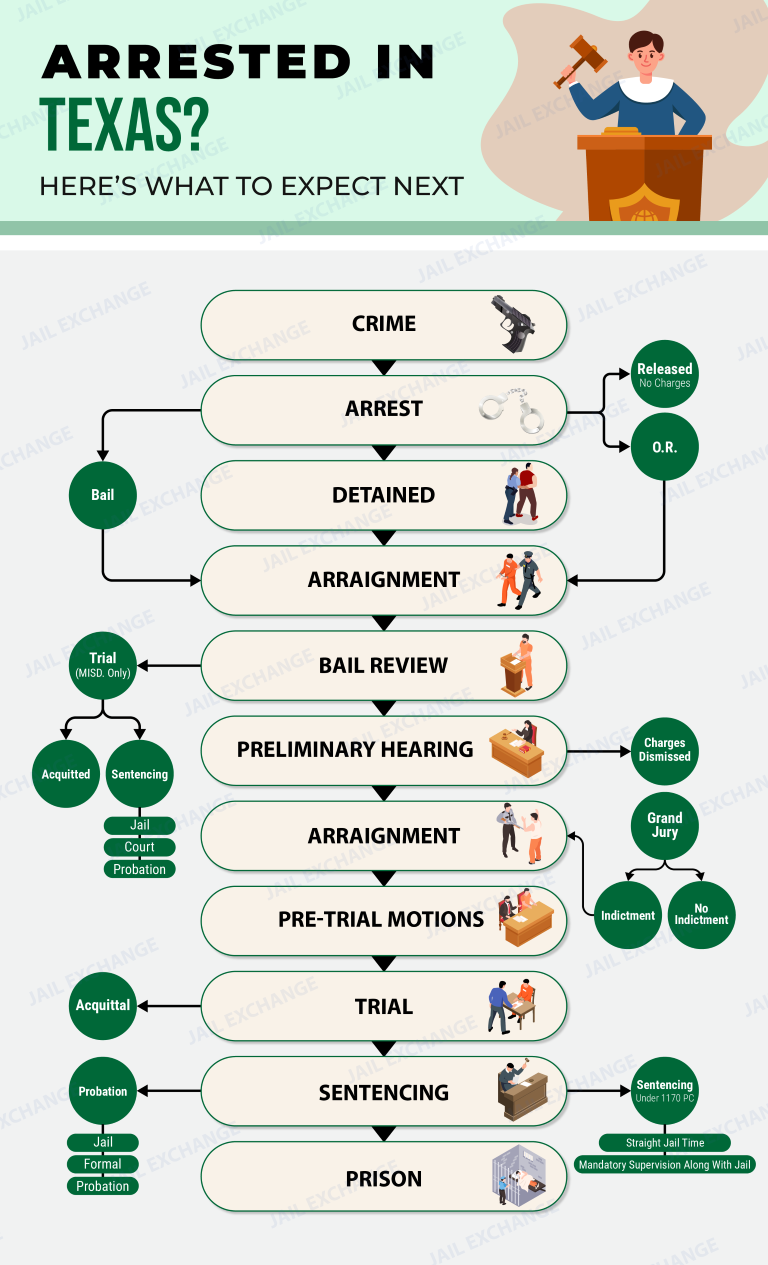
Information for this service is currently unavailable.
Information for this service is currently unavailable.
Information for this service is currently unavailable.
Information for this service is currently unavailable.
Information for this service is currently unavailable.
Information for this service is currently unavailable.
Dallas County County Jails
Dallas County City Jails
Dallas County Juvenile Facilities
Nearby counties
- Jail (Main): 972-485-4890
- 972-485-4890
- Adult Probation: 214-653-5300
- District Attorney - Juvenile: 214-698-4275
- Drug Court - Juvenile: 214-860-4324
- DWI Court: 214-653-5600
- Inmate Info: 214.761.9025
- Juvenile: 214-698-4212
- Juvenile Probation: 214-698-2200
- Police Tips: 214-671-4847
- Public Defender - Adults: 214-653.3550
- Public Defender - Juvenile: 214-698.4400
- Reentry Resources: 214-296-9258
- Sheriff: 214-653-3450
- Victims Help: 214-358-5173
The Garland Detention Center serves the following cities and towns of Dallas County: Addison, Balch Springs, Carrollton, Cedar Hill, Cockrell Hill, Combine, Coppell, Dallas, DeSoto, Duncanville, Farmers Branch, Ferris, Garland, Glenn Heights, Grand Prairie, Highland Park, Hutchins, Irving, Lancaster, Mesquite, Ovilla, Richardson, Rowlett, Sachse, Seagoville, Sunnyvale, University Park and Wilmer. At times this facility may also house inmates arrested in the following counties: Collin County.