
Marathon County Jail
Marathon County Jail
Jail Phone Number
715-261-1700Marathon County Inmate Search: Who Is Locked Up at the Wausau Courthouse
Every police agency in Marathon County brings its arrests to the Marathon County Jail, located inside the courthouse at 500 Forest Street, Wausau, WI 54403. The Sheriff also runs a Huber office for work release, a home monitoring program for low-risk people serving time, and a youth detention center. This guide covers the lookup, mugshots, bail, visits, deposits, letters and court.
Begin with the jail lookup. Enter a surname, and narrow it with a given name when the results run long. A brand-new booking may lag behind. Treat any result as a starting point, then phone to be sure.
Reach the jail desk at 715-261-1700. Spell the person's full name, share their birthday, and ask three things: what they were booked for, whether a bail figure exists, and the date they face a judge. Our bail guide lists each payment route, and our court page explains the case from start to finish.
Read inmate search answers
 Read inmate search answers
1. How does the Marathon County jail lookup work?
Follow these steps to check the list:
- Load the jail lookup.
- Type the surname. If dozens appear, add a given name.
- No hits? Retry with a nickname, the middle name, an earlier last name, or a looser spelling.
- Jot down whatever the entry shows.
- Ring the jail at 715-261-1700 to make sure they are still there, and ask about bail and hearings.
Arrests from every department in the county are booked here. The jail also takes in people held for outside agencies from around Wisconsin and other states, so someone arrested far away can turn up on this list too.
↑ Back to the question list2. Name not there? Common reasons
Several everyday things can hide a name:
- Still being processed. Fingerprinting and paperwork happen before an entry appears.
- They were let go. A judge could have released them on a signature bond, or family covered the cash amount.
- They serve their sentence at home. People on electronic monitoring live at home with a tracker.
- A different agency holds them. Check the neighbor jails, the federal system and ICE.
- They are younger than 17. If held, teens that age stay at the youth center, apart from adults.
- A typo. Swap one letter and search again.
The jail can settle it fast at 715-261-1700. For records or general Sheriff questions, use the main line, 715-261-1200.
↑ Back to the question list3. Which Marathon County facility or program is holding them?
All adult custody sites belong to the Sheriff's Corrections Division. Each one has its own job:
- The county jail, inside the courthouse at 500 Forest Street, Wausau, WI 54403, 715-261-1700. Built in 1988, it gained 120 beds in 2000 and holds up to 279 people today. It houses adults picked up by any local department, along with people kept for agencies elsewhere in the state and nation.
- Huber office, staffed by the jail. Huber (Wis. Stat. 303.08) lets a person serving a sentence leave by day for a job, classes or treatment and sleep at the jail. Only the sentencing judge can grant it. Families also collect released property at this office, so ask the jail where it sits.
- Electronic Monitoring Program, where a person finishes a sentence at home wearing a location tracker. Only those rated minimum risk qualify, and sentences shorter than 7 days are left out. The program office is at 715-261-1321.
- Jail Intake Office, on the courthouse's second floor where 5th Street meets Washington Street, 500 Forest Street, Wausau, WI 54403. A person ordered to report for a sentence signs in here, usually within 45 days. The fee is $30 for day one and $18 for each later day.
- Marathon Juvenile Detention Facility, 7015 Packer Drive, Wausau, WI 54401, a secure center with space for 20 children between 10 and 17. Reach it through the Sheriff's Office at 715-261-1200.
Someone picked up close to the border with another county may sit in that county's jail instead. Two neighbors are the Langlade County Jail, 840 Clermont Street, Antigo, WI 54409, 715-627-6444, and the Clark County Jail, 517 Court Street, Neillsville, WI 54456, 715-743-5380.
↑ Back to the question list4. Are Marathon County mugshots available?
A booking photo, known to most people as a mugshot, can be requested from the Sheriff's Office. Under Wisconsin's open records statute, anybody may put in a request for one. That law presumes public files should be open. Your name and your reason can stay private. Staff judge every request separately.
Phone the Sheriff's Office at 715-261-1200 to ask how to send a request. Reporters can ask the Sheriff's Office too. Juvenile police records are not public.
- Immigration booking photos are requested on ICE's records page.
- Federal government agencies rarely hand out booking photos. The U.S. Marshals Service is different: it may release one, such as when it seeks a fugitive.
5. Can I sign up for custody alerts?
VINE is a free service of the Wisconsin Department of Corrections and county partners. With it you can check custody status at county jails that take part. Ask the jail whether it takes part. Sign up, and VINE will reach you by phone, text or email if that person is freed or transferred. No name is needed to sign up, and help comes in English, Spanish or Hmong.
- Go online to Wisconsin VINELink.
- Or use the VINE phone line, 888-944-8463.
When VINE comes up empty, phone the jail at 715-261-1700 to ask about release timing.
↑ Back to the question list6. What gets someone out of the Marathon County Jail?
Who goes home, and on what terms, is settled by a judge at the person's first court date. The law (Wis. Stat. 970.01) asks for that hearing "within a reasonable time." Suppose officers acted without a warrant. Then a judge reviews whether they had good reason (probable cause), usually inside 48 hours. That hearing often runs on a video screen at the jail.
- Freedom comes first. Lots of people leave owing nothing up front. Their signature bond turns into a debt only if they skip a hearing.
- Cash bail comes into play only when a money stake looks needed to guarantee a return trip to court. In a violent case, the judge can also think about public safety and earlier violent crimes (Wis. Stat. 969.01).
- Bondsmen are banned. State law forbids charging a fee to post bail for someone (Wis. Stat. 969.12). Families have to put up every dollar themselves.
- Paying: the jail at 500 Forest Street, Wausau, WI 54403 takes bail all day and night, in cash or by credit card. JailATM handles online payment, but first call 715-261-1700 so an officer can load the bond. Hang on to your receipt.
- Bail can be kept to cover fines, costs or restitution after a conviction, even if family put it up. Skipping court can forfeit it.
- Stuck behind bars 72 hours after that hearing because the conditions are too hard to meet? A judge must look at them again (Wis. Stat. 969.08).
- Domestic abuse cases: the arrested person stays locked up until a judge sees them or bail gets paid. Then 72 hours of zero contact with the alleged victim follow (Wis. Stat. 968.075).
Our bail guide gives the details, and a short overview of state law sits on our Wisconsin bail rules page.
↑ Back to the question list7. What exactly are they charged with?
Staff at 715-261-1700 know the booking charge. The prosecutor may change that list after reading the police report. The formal charges appear in a criminal complaint, and the judge gives the defendant a copy at the first hearing.
Filed cases appear on Wisconsin Circuit Court Access, the free state case search. Type the name to see every count, where the case stands and what is scheduled next.
The District Attorney's Office sits in Room 103 of the courthouse, 500 Forest Street, Wausau, WI 54403. Its victim-witness unit picks up at 715-261-1111.
For lesser crimes, state law caps jail at 9 months and the fine at $10,000 for a Class A misdemeanor. A Class B tops out at 90 days, a Class C at 30 days (Wis. Stat. 939.51).
↑ Back to the question list8. Can they get a public defender?
The Wisconsin State Public Defender takes cases for adults facing misdemeanor or felony charges when their finances qualify. At the first hearing, the judge points anyone who says they can't afford counsel to this agency.
- Local office: 500 N Third St, Suite 310, Wausau, WI 54403, 715-842-1603.
- Applying: plan on a short interview of roughly 15 minutes. The agency's application steps are posted on its website.
- Turned away? The judge may be able to appoint counsel at county cost.
Private attorneys may see clients at the jail Monday to Friday during three windows: 8:00 to 10:50 a.m., 1:00 to 4:30 p.m., and 7:00 to 9:00 p.m. Attorneys book video meetings at 715-261-1703.
↑ Back to the question list9. When can family come see them?
Each person gets two on-site visits per week, with the week starting Sunday. Staff watch every visit, and each slot must be reserved a day ahead.
- Hours at the jail: weekends 1:00 to 4:30 p.m. and 6:30 to 9:00 p.m.; weekdays 6:30 to 9:00 p.m.
- Booking a slot: sign up with Cidnet, the visit company the jail uses. Pick Videos, New Schedule, then Local, and choose the person and a time. Show up 5 to 10 minutes before it starts.
- Who may visit: each person can approve up to 3 visitors, and only an approved visitor may come. Children and teens may visit if their mom, dad or guardian is with them the whole time.
- Just got out yourself? Past inmates wait 60 days after release. Immediate family may ask a jail lieutenant to waive it.
- Video visits from home through Cidnet run every day, 9:00 to 10:40 a.m., 11:45 a.m. to 4:45 p.m., and 6:30 to 9:30 p.m.
Clergy come Wednesday and Friday from 10 to 11 a.m., and Tuesday and Thursday from 8 to 9 p.m. Officers may stop a visit at any point. Call 715-261-1700 with questions, and our visiting guide has extra tips.
↑ Back to the question list10. What are the deposit options?
Families have three choices:
- Kiosk in the jail lobby, 500 Forest Street, Wausau, WI 54403, for cash or a credit card.
- JailATM online, the deposit service the Sheriff points families to.
- Postal mail. Phone 715-261-1700 to learn the address and which payment forms work. Never tuck cash inside a letter.
Debts owed to the jail come off the top: depending on the debt, half or the whole deposit may go toward it. Our deposit guide covers the basics, and our commissary page describes store items and ordering.
↑ Back to the question list11. Can they call, video chat or message me?
Phone the jail at 715-261-1700 to learn the current call setup, the per-minute cost, and if tablets or messages are an option. Find out if calls are taped. Leave any discussion of the case to private talks with the lawyer.
Setting up a calling account is explained in our inmate phone guide. For e-messages, see our jail email guide.
↑ Back to the question list12. What mail rules does the Marathon County Jail enforce?
Letters must arrive by regular U.S. mail. Call 715-261-1700 for the correct address, and ask whether to add a booking number. Then keep these rules in mind:
- Write your complete name and return address on the envelope. Officers inspect everything that comes in.
- Polaroids and greeting cards are not allowed.
- Anything gang-related or sexually explicit is seized.
- Paperback books only, shipped direct from the publisher or an online seller.
- Magazines and newspapers must be mailed by the publisher on a subscription.
- Legal letters get opened only while the recipient looks on.
Our mail guide offers ideas on writing and sending.
↑ Back to the question list13. How are keys, cards and other belongings released?
Staff will not accept items brought in for someone in custody. Going the other way, a person inside may sign a few things out to you: keys, bank or credit cards, checkbooks and wedding rings. They do this on a Property Release Form with your name on it.
- Only the person named on that form may pick up.
- Carry a photo ID.
- Pickup is at the Huber office, Monday to Friday, 8:00 a.m. to 4:30 p.m.
- Once someone is released, anything left must be claimed within 7 days.
Call 715-261-1700 to find the Huber office and check that the form is done.
↑ Back to the question list14. Who handles medical care behind bars here?
Wisconsin's jail rules (Wis. Admin. Code DOC 350) require medical care, mental health care and urgent dental care. Lack of money can't block treatment. New arrivals get a health screening within two weeks.
Tell the jail at 715-261-1700 which medicines they take, how much, and the prescribing doctor's phone number. If you sense a risk of self-harm, tell staff at once. For a true emergency, dial 911.
Each jail needs a way to file complaints, with an appeal. County jails are inspected once a year by the state's Office of Detention Facilities: 3099 East Washington Ave., Madison, WI 53704, 608-240-5000.
↑ Back to the question list15. Could a Marathon County warrant be waiting?
Phone the Sheriff's Office at 715-261-1200; staff can say if any warrant is active. For a matter inside Wausau city limits, try the police front desk at 715-261-7800. Have the birth date handy.
Next, look up the name on Wisconsin Circuit Court Access. A skipped hearing often shows there, and the Sheriff or the clerk can confirm if a warrant came next.
The safest way to resolve a warrant is with a lawyer's help: surrender together at the jail, 500 Forest Street, Wausau, WI 54403. Another route is asking the Clerk of Circuit Court, in that same courthouse, to set a fresh court date. Deputies at the main line can point you to the clerk's phone.
↑ Back to the question list16. When is their next hearing at the Wausau courthouse?
Wisconsin Circuit Court Access is the quickest tool. Search by surname and given name, click the case number, and scroll to upcoming events. Public terminals for it sit in every courthouse in the state as well.
All criminal cases from this county go to circuit court at 500 Forest Street, Wausau, WI 54403, where the Clerk of Circuit Court keeps the files. For the clerk's number, ring the Sheriff's Office at 715-261-1200. First appearances are often done on camera from the jail.
Read our court page to learn what happens at each hearing.
↑ Back to the question list17. Is a U.S. agency behind the arrest?
This county belongs to the federal court's Western District. Clerk's office location: Robert W. Kastenmeier U.S. Courthouse, 120 N. Henry St., Room 320, Madison, WI 53703, 608-264-5156.
- A judge soon holds a detention hearing (18 U.S.C. 3142). It decides if the person can go home under rules or must stay in custody until trial.
- The U.S. Marshals Service keeps federal defendants who are not released. Its Madison office: 120 N. Henry St., Suite 440, Madison, WI 53703, 608-661-8300. Ask where the person is housed.
- To learn whether a federal defendant is held at the Wausau jail, call 715-261-1700.
- Federal Defender Services of Wisconsin represents people who can't pay: 22 East Mifflin Street, Suite 1000, Madison, WI 53703, 608-260-9900.
- After sentencing, search the Federal Bureau of Prisons inmate locator gives the facility where the person is serving it.
18. What happens when immigration wants the person?
A hold from ICE usually follows these steps:
- Jail staff in Wausau get a written ICE request on Form I-247A. This paper is the detainer.
- It asks for the person to be kept up to 48 hours after they would otherwise be released (8 CFR 287.7(d)).
- Once ICE picks the person up, they may go to a site under the Chicago Field Office, 101 W. Ida B. Wells Dr., Suite 4000, Chicago, IL 60605, 872-351-3990. ICE detainees have been held in Wisconsin at the Dodge County Jail, 216 W. Center Street, Juneau, WI 53039, 920-386-3734.
- Search the ICE Online Detainee Locator. It looks through ICE's own records of people it holds.
A 2025 bill in the Legislature, Assembly Bill 24, deals with sheriffs and federal immigration work. It passed the Assembly, and its record ends in June 2025 without it becoming law. To learn the local practice on holds, call the Sheriff's Office at 715-261-1200. ICE's Milwaukee check-in office is at 310 E. Knapp St., Milwaukee, WI 53202, 414-792-7198.
↑ Back to the question list19. Sentenced to prison: which website tracks them?
Someone sentenced to prison comes under the Wisconsin Department of Corrections. Intake comes first. Over roughly 8 to 12 weeks, staff test each new arrival and decide where they fit, then place them in a prison that suits them. Men in the main intake prison get no visits for their first 3 days.
- Search names on the DOC Inmate and Offender Search.
- No parole applies to crimes from Dec. 31, 1999 onward. Prison time comes first, then a later period of extended supervision in the community.
- Details on prison visits and letters are in our Wisconsin prisons guide.
20. Where does a Marathon County teen go after arrest?
At 17, a Wisconsin teen accused of a crime is handled as an adult, from booking in the adult jail to adult court (Wis. Stat. 938.02). Younger teens follow the juvenile system instead.
- A county intake worker makes the call on whether a child goes home or stays in a locked unit. Intake runs around the clock, and with rare exceptions a child can't be locked up without first meeting that worker face to face (Wis. Stat. 938.067).
- Count 24 hours from midnight of the day the hold was ordered, skipping Saturdays, Sundays and legal holidays. By then, a held child must have a custody hearing (Wis. Stat. 938.21).
- The secure center is the Marathon Juvenile Detention Facility, 7015 Packer Drive, Wausau, WI 54401. It has 20 beds for ages 10 through 17.
Parents trying to locate a child or reach intake can call the Sheriff's Office at 715-261-1200.
↑ Back to the question list21. Which Marathon County police force made the arrest?
The state's Jan. 1, 2025 estimate puts this county at 140,452 people. To see which agency made an arrest, look at the booking entry or ask jail staff. The main agencies are:
- Sheriff's Office, 500 Forest Street, Wausau, WI 54403, 715-261-1200. It runs the jail.
- Wausau Police Department, 515 Grand Avenue, Wausau, WI 54403. Front desk 715-261-7800; non-emergency dispatch 715-261-7795.
- Wisconsin State Patrol, Wausau Post (North Central Region), which serves this county, 715-845-1143.
If the record names a smaller city or village department, the Sheriff's Office can share its phone number.
↑ Back to the question listMarathon County bail and bond: the Wausau jail and how to pay
Adults arrested in Marathon County go to the Marathon County Jail, found inside the courthouse at 500 Forest Street, Wausau, WI 54403. Keep reading to learn how to pay bail there day or night, what a bond is, and what a judge may order instead of money.
Check the Sheriff's search page to see if a person is held. For more, visit Marathon County Jail Roster, where we explain arrests, mugshots, warrants and where free legal help is.
Call the corrections desk at 715-261-1700 and ask for the bail amount. Then read how Marathon County courts handle the case from first hearing to trial.
1. How can I tell if someone is in the Marathon County Jail?
Enter the name in Marathon County Inmate Search. The record shows custody and the bail, when one has been set. For a question the search cannot answer, the jail's corrections desk is at 715-261-1700.
If the booking is only minutes old, the record may not show yet, so check again in an hour.
↑ Back to the question list2. What is the Marathon County Jail?
The Marathon County Jail is the Sheriff's adult jail, inside the Marathon County Courthouse at 500 Forest Street, Wausau, WI 54403. It opened in 1988 and got a 120-bed addition in 2000. It now has 279 beds. The Sheriff's Office main line is 715-261-1200.
The county has its own jail and does not use a state facility.
↑ Back to the question list3. How do I post bond in Marathon County?
The county takes bond several ways. Pay in person at the jail, which takes bond around the clock. Pay at the Stellar Teller kiosk in the jail's public lobby. Pay at the public window of the Clerk of Courts Office, on the second level of the courthouse. Or pay online at JailATM.com or AllPaid.com.
For the online route through JailATM, call the jail at 715-261-1700 first and ask an officer to set up the bond in the system. Marathon County inmates can also be bonded through arrangement with any Wisconsin county jail.
↑ Back to the question list4. When can bond be paid?
At the jail, bond can be paid 24 hours a day, so a late-night arrest does not have to wait for morning. Use the jail when the courthouse is closed. The corrections desk at 715-261-1700 can tell you when the clerk's window is open.
Cash and credit cards are accepted in person at the jail.
↑ Back to the question list5. Someone texted me to pay a bond. Is that real?
Treat it as a scam. The Sheriff's Office warns about callers who demand payment for a person's release using cryptocurrency, wire transfers, gift cards, or payment apps. None of those is an approved way to pay.
Do not click links. Call the jail yourself at 715-261-1700 and report the contact. The Sheriff's Office also says it never asks the public to pay for home monitoring, since those program fees go from the offender to the jail directly.
↑ Back to the question list6. Is there a bail bondsman in Wausau?
No. Wisconsin does not permit paid bail bondsmen. A surety under Wis. Stat. 969.12 has to be a natural person who lives in Wisconsin, and no surety may be paid. There is no licensed company in Wausau to call.
When someone says they can post a Marathon County bond for ten percent, they are not offering a legal service. The court's own bail is paid in money, by one of the methods in the answer on posting bond.
↑ Back to the question list7. What do "bail," "bond," and "conditions" mean in Wisconsin?
Bail is money. Conditions of release are everything else, such as a no-contact order, a ban on weapons, or limits on travel. A judge can order conditions with no bail, or both.
Bail requires a finding. The judge must find a reasonable basis to believe it is needed to make the person come to court. For a violent crime, the judge can weigh the totality of the circumstances, including earlier violent convictions and the need to protect the community and keep witnesses safe.
↑ Back to the question list8. Who sets the amount, and when is the first hearing?
A judge sets it at the initial appearance. Under court rulings, a judge must decide probable cause within 48 hours of a warrantless arrest, and state law lets the hearing run by video. A warrant from a judge may already carry a bail figure.
The Clerk of Circuit Court at 715-261-1300, 500 Forest Street, can tell you the time and the courtroom.
↑ Back to the question list9. Is there a limit to misdemeanor bail?
Yes. In a misdemeanor, bail cannot be more than the highest fine allowed for that crime. Felony bail has no statewide chart, so the judge decides.
Judges can weigh the charge, the person's history, work and family ties, the strength of the case, and the ability to pay. The law also sets a policy against holding people before trial when it is not needed.
↑ Back to the question list10. Does Marathon County have a pretrial program?
Yes. Marathon County has a pretrial program and was one of the pilot sites for the state's pretrial effort. These programs use a risk tool to help judges decide on release and on supervision instead of cash bail.
A judge cannot require pretrial program participation of everyone charged without an individual decision. Ask a defense lawyer, or the Clerk of Circuit Court at 715-261-1300, how the program applies to a case.
↑ Back to the question list11. Can the judge deny bail altogether?
In limited cases. Wis. Stat. 969.035 allows it for specified serious offenses, or when a person accused of a violent crime has a past violent conviction. The district attorney must file the request and allege that no conditions can protect the community.
The hearing must begin within 10 days, and the state carries the burden of clear and convincing proof. If the judge agrees, bail can be denied for up to 60 days after the hearing, and the defense can ask for release at any time.
↑ Back to the question list12. What happens to someone arrested for domestic abuse in Wausau?
Under Wis. Stat. 968.075, officers must arrest when they have reasonable grounds to believe domestic abuse was committed and certain factors are present, such as an injury. The person may not be released until bail is posted or a judge sees the case.
A 72-hour no-contact period follows. The person must stay away from the victim's home and may not contact the victim, directly or through others. Violating it on purpose can bring a fine of up to $10,000, nine months in jail, or both. The victim may waive the order in writing.
↑ Back to the question list13. What is electronic home monitoring?
The jail runs a jail diversion program for minimum-risk inmates, who are placed under in-home detention. It is not a substitute for bail.
Fees go from the offender straight to the jail. Ask the corrections desk about eligibility.
↑ Back to the question list14. Where do teenagers go?
The Marathon County Juvenile Detention Facility is at 7015 Packer Drive, Wausau, WI 54401. It holds up to 20 youths, ages 10 to 17. Juvenile cases run through the juvenile side of circuit court. Call the Clerk of Circuit Court at 715-261-1300 for hearing dates, or the Sheriff's Office at 715-261-1200.
The adult search may not show a juvenile.
↑ Back to the question list15. Who is the free lawyer in Marathon County?
The State Public Defender's Wausau office is at 500 North Third Street, Suite 310, Wausau, WI 54403, phone 715-842-1603. Request an appointed lawyer from the judge at the first appearance.
A lawyer can ask for a bail change. If a person is still in custody 72 hours after the first appearance, the judge can be asked to review the conditions.
↑ Back to the question list16. What if my relative skips a Marathon County hearing?
The bail may be forfeited, and the court can issue a warrant. Bail jumping, defined in Wis. Stat. 946.49, applies to anyone who knowingly ignores bond terms. It is a Class A misdemeanor for a misdemeanor release and a Class H felony for a felony release.
A released person has 48 hours to give the clerk a written address change.
↑ Back to the question list17. When does bail money come back?
If charges are dropped or the person is found not guilty, the deposit goes back to the person who paid. After a conviction, whatever remains once bond costs are paid goes to restitution, then the judgment. The Clerk of Circuit Court at 715-261-1300 handles refund questions.
Money deposited for an inmate's phone or canteen is separate from bail and does not release anyone.
↑ Back to the question listMarathon County bail contacts
- Jail: Marathon County Jail, 500 Forest Street, Wausau, WI 54403; corrections 715-261-1700; Sheriff's Office 715-261-1200
- Bond payments: Jail, 24 hours a day (cash or credit card); Stellar Teller kiosk in the public lobby; Clerk of Courts public window, second level of the courthouse; online by JailATM after a call to the jail, or AllPaid
- Custody lookup: Marathon County Inmate Search
- Clerk of Circuit Court: 500 Forest Street, Wausau, WI 54403; 715-261-1300
- Public defender: State Public Defender, 500 North Third Street, Suite 310, Wausau; 715-842-1603
- Juvenile: Marathon County Juvenile Detention Facility, 7015 Packer Drive, Wausau, WI 54401
Hours, payment options, and amounts can change, and a judge can order terms that differ from the general rules above. Confirm with the jail or clerk before you pay. For advice about a specific case, ask a lawyer.
Book family video visits at Marathon County Jail
Register and get approved in CIDNET, then book at least 24 hours ahead. Choose the local option for onsite visits at 500 Forest Street in Wausau. Arrive 5–10 minutes early. The limit is two onsite visits per resident per week, starting Sunday. Up to three approved visitors may attend; minors stay with a parent or legal guardian.
- At the jail: daily 6:30–9 p.m.; Saturday and Sunday also 1–4:30 p.m.
- From home: daily 9–10:40 a.m., 11:45 a.m.–4:45 p.m. and 6:30–9:30 p.m.
Times are Central. Confirm your session length and any charge in CIDNET before paying. For jail questions call 715-261-1700.
Professional visits (separate from family hours)
Confirm with Jail Administration and bring valid ID. The previously listed attorney and community corrections windows were weekdays 8–10:50 a.m., 1–4:30 p.m. and 7–9 p.m. Previously listed clergy windows were Wednesday and Friday 10–11 a.m. and Tuesday and Thursday 8–9 p.m. Preapproval and a professional visitor card are required; availability can change.

CIDNET Video Visitation allows families to conduct live, face-to-face video visits with incarcerated loved ones from home. Using an internet-connected smartphone, tablet, or personal computer equipped with a webcam, visitors connect directly through housing-unit video stations or handheld tablets without traveling to the facility or waiting in jail visitor lobbies.
Important: Advance Registration and Visitor Clearance Required
Detention centers do not permit unscheduled or unverified video sessions. Correctional facilities require prospective visitors to submit government-issued photo identification and receive administrative clearance before booking an appointment, an approval process that can take up to 48 hours depending on facility staffing. You should verify your visitor approval status with the facility prior to scheduling. If you do not register well in advance, you will miss your loved one's scheduled visiting window for the week.
Step-by-Step Instructions to Register and Schedule a Video Visit
- Visit customer.cidnet.net or launch the CIDNET app.
- Register your visitor profile and upload a clear photograph of your government-issued ID and a verification photo.
- Wait for email notification confirming institutional visitor approval.
- Ensure your account has sufficient Data Points to cover the duration of the visit.
- Select Video Visitation, select the detention facility, and pick an available calendar time slot.
- Log into the website or mobile app 10 minutes prior to the start time on a device with a functioning camera, microphone, and stable high-speed internet connection.
What the Inmate Needs to Do
The inmate receives a schedule notification on their housing unit video kiosk or tablet. At the appointed time, they log in with their PIN and sit before the screen. Inmates and visitors must strictly observe jail dress and conduct rules; sessions are monitored by staff and will terminate immediately upon any violation.
Official Provider: CIDNET Customer Portal | Encartele Corporate
Customer Service Telephone: 1-888-984-1903
Support Hours: Monday – Friday, 8:00 AM – 5:00 PM CST
Supported Languages: English and Spanish
Other Services Provided by CIDNET
In addition to Remote Video Visitation, CIDNET provides several other communication channels:
- Data Points (Unified Funding): Purchase the central credits that power video visitation, calling, and messaging.
• Learn more on our website: CIDNET Data Points Guide | • Visit official vendor page: Buy CIDNET Data - Inmate Messaging & Digital Mail: Send electronic text messages and digital photo attachments directly to an inmate's terminal.
• Learn more on our website: CIDNET Messaging Guide | • Visit official vendor page: CIDNET Messaging Portal - Phone PINs & Voice Calling: Fund prepaid telephone calling so your loved one can call your mobile device.
• Learn more on our website: CIDNET Phone Calling Guide | • Visit official vendor page: CIDNET Voice Calling
What Happens in Marathon County Criminal Court After an Arrest
Nearly every criminal case in Marathon County is heard in the courthouse at 500 Forest Street, Wausau, WI 54403, and the Marathon County Jail is in the same building. This page explains the six court branches, each hearing in order, and the phone numbers you need.
Start by looking up the person in the county inmate lookup. Our Marathon County Inmates in Custody page tells you about new arrests, charges, warrants and public defenders.
The Clerk of Circuit Court for criminal cases, at 715-261-1270, can give you the next date. Want to bring money? Learn about Marathon County bail first.
1. Local courts in Marathon County (circuit court and municipal courts)
Which court hears your case. A local ordinance ticket, along with a first-offense OWI (treated in Wisconsin as a civil forfeiture rather than a crime, except when a passenger younger than 16 was on board), belongs in the municipal court of the place where it happened, provided that place has a court: the City of Wausau, Kronenwetter, Mosinee, the Rothschild Area joint court (Rothschild, Schofield, the village and town of Weston, Marathon City and Edgar), the Marshfield Area court for the village of Spencer, and the Abbotsford and Colby court on the county's western edge. Citations written by the Sheriff's Office or the State Patrol, and tickets from towns and villages without a court, are filed in the circuit court. Criminal charges below the felony level, including traffic crimes like a second OWI or driving while revoked, are filed in the Marathon County Circuit Court, where criminal files are spread across the six branches. Felony cases also stay in circuit court from the initial appearance through the preliminary hearing, arraignment and any trial.
Where pretrial inmates are held. The Sheriff's Corrections Division runs the 279-bed county jail on the courthouse's secure floors, and it books arrests made by every police agency in the county. The jail also houses inmates for other Wisconsin counties and for federal agencies, and some lower-risk inmates are moved to electronic monitoring at home. Call the jail at (715) 261-1700 or the Sheriff's Office at (715) 261-1200 to confirm whether a person is in custody and what must be paid for release.
- Marathon County Circuit Court (Branches 1 through 6), Marathon County Courthouse, 500 Forest Street, Wausau, WI 54403; Clerk of Circuit Court, criminal and traffic, (715) 261-1270; main office (715) 261-1300
- Marathon County District Attorney, Marathon County Courthouse, 500 Forest Street, Wausau, WI 54403, (715) 261-1111
- Marathon County Sheriff's Office, Marathon County Courthouse, 500 Forest Street, Wausau, WI 54403, (715) 261-1200
- Marathon County Jail, inside the Marathon County Courthouse, 500 Forest Street, Wausau, WI 54403, (715) 261-1700
- Wisconsin State Public Defender, Wausau office (the trial office for Marathon County), 500 North Third Street, Suite 310, Wausau, WI 54403, (715) 842-1603
- Marathon County Department of Social Services (youth justice intake), 1000 Lake View Drive, Suite 400, Wausau, WI 54403, (715) 261-7500
Marathon County has one circuit court with six judges and a cluster of municipal courts around the Wausau metro area. The municipal courts are run by elected part-time judges and hear only local ordinance cases, which end in money forfeitures rather than criminal convictions. Jail is not a sentence a municipal judge can impose for the violation itself; it can come into play only as a way to enforce an unpaid forfeiture. In certain situations a municipal case can be transferred to the circuit court at the defendant's request, for example when a jury is demanded, so read the citation and call the clerk named on it well before the court date.
Circuit court
- Marathon County Circuit Court, Marathon County Courthouse, 500 Forest Street, Wausau, WI 54403. Six branches; Branch 1 through Branch 6 each carry part of the criminal, traffic and juvenile calendar. Clerk of Circuit Court criminal and traffic desk (715) 261-1270; main clerk's line (715) 261-1300.
Municipal courts
- Wausau Municipal Court (city of Wausau), Wausau City Hall, 407 Grant Street, Wausau, WI 54403, (715) 261-6650
- Rothschild Area Municipal Court (joint court for the villages of Rothschild, Weston, Marathon City and Edgar, the city of Schofield and the town of Weston), Rothschild Village Hall, 211 Grand Avenue, Rothschild, WI 54474, (715) 298-3215. It replaced the earlier Everest Metro Municipal Court for the Weston and Schofield area.
- Kronenwetter Municipal Court (village of Kronenwetter), 1582 Kronenwetter Drive, Kronenwetter, WI 54455, (715) 693-4200
- Mosinee Municipal Court (city of Mosinee), Mosinee City Hall, 225 Main Street, Mosinee, WI 54455, (715) 693-2275
- Marshfield Area Municipal Court (city of Marshfield and the village of Spencer), Marshfield City Hall, 630 South Central Avenue, Marshfield, WI 54449, (715) 384-6903
- Abbotsford and Colby Municipal Court, a court for two cities that straddle the Clark-Marathon county line; mail to P.O. Box 589, Abbotsford, WI 54405; phone (715) 223-3444
- Elsewhere in the county, including Athens, Stratford, Hatley, Rib Mountain and the many rural towns, ordinance and traffic citations are generally heard in the circuit court unless the municipality has formed or joined a court since; the citation names the court.
Prosecutor, defense and law enforcement
- Marathon County District Attorney, 500 Forest Street, Wausau, (715) 261-1111
- State Public Defender, Wausau office, 500 North Third Street, Suite 310, Wausau, (715) 842-1603; this office covers Marathon County only
- Marathon County Sheriff's Office, operator of the Marathon County Jail, 500 Forest Street, Wausau, (715) 261-1200
- Wausau Police Department, 515 Grand Avenue, Wausau, WI 54403, (715) 261-7800
- Mountain Bay Metro Police Department (Rothschild, Schofield, and the village and town of Weston), 211 Grand Avenue, Rothschild, WI 54474, (715) 359-3879
- Kronenwetter Police Department, 1582 Kronenwetter Drive, Kronenwetter, WI 54455, (715) 693-4215
- Mosinee Police Department, 225 Main Street, Mosinee, WI 54455, (715) 693-2000
- Marathon City Police Department, 311 Walnut Street, Marathon, WI 54448, (715) 443-2470
- Edgar Police Department, 224 South Third Avenue, Edgar, WI 54426, (715) 352-2891
- Athens Police Department, 221 Caroline Street, Athens, WI 54411, (715) 257-7611
- Colby-Abbotsford Police Department (covers the Marathon County parts of both cities), 112 West Spruce Street, Abbotsford, (715) 223-2313
- Juvenile intake: Marathon County Department of Social Services, Youth Justice, 1000 Lake View Drive, Suite 400, Wausau, (715) 261-7500
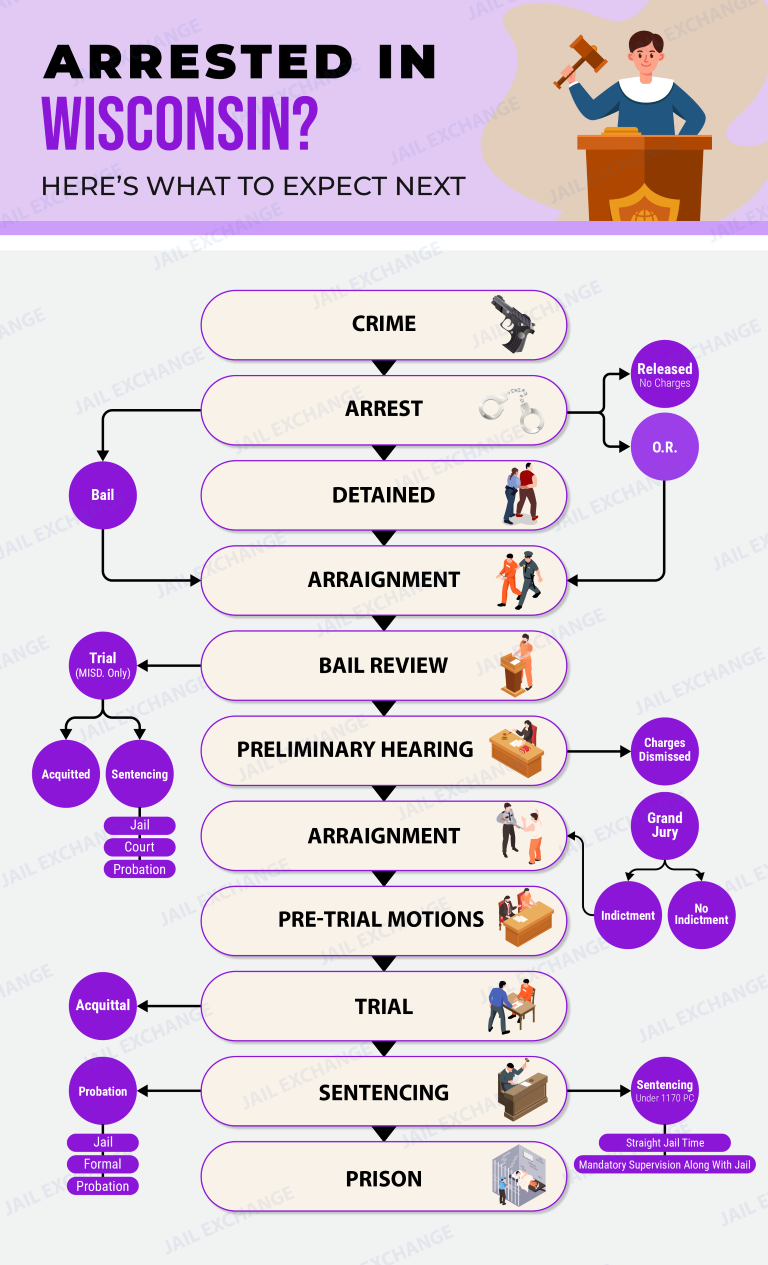
2. After an arrest in Marathon County: booking, the pretrial assessment and bail
Whether the arrest happens on Grand Avenue in Wausau, on Interstate 39 near Mosinee or on a farm road outside Spencer, the person is driven to the Marathon County Jail for booking. Officers and jail staff record personal details, take fingerprints and a photograph, inventory property and check for warrants and holds from other agencies.
Release before seeing a judge
For many lower-level misdemeanors, officers issue a citation or the jail releases the person on a signature bond, which is a written promise to return to court; a dollar figure may be attached that becomes owed only if the person fails to appear. Some charges have a standard cash amount that can be paid at the jail right away. A domestic abuse arrest is different: Wisconsin law calls for arrest in many of these situations, and for the next 72 hours the released person may not contact the alleged victim or return to a shared home, unless the victim signs a waiver.
The pretrial assessment
Marathon County runs a pretrial program through its Justice Alternatives office. Before an in-custody defendant's first hearing, a pretrial assessor completes a Public Safety Assessment, a risk tool whose results are given to the court to help it decide on release conditions. People who are released may be assigned pretrial supervision matched to their risk level, which can include court-date reminders, check-ins and drug or alcohol testing.
The initial appearance
Anyone still held generally appears within about 48 hours before a circuit judge or court commissioner, usually by video from the jail. The court reviews whether there is probable cause, gives the defendant a copy of the criminal complaint, explains the right to a lawyer and sets conditions of release. Those conditions can be a signature amount, a cash figure, or both, along with rules such as no contact with a named person, no alcohol, or no possession of weapons. Since a 2023 amendment to the state constitution, judges setting cash for a person accused of a violent crime may consider the risk of serious harm to the public.
Posting cash
Wisconsin does not permit commercial bondsmen, so there is no bonding company to call in Wausau. The defendant or a family member pays the full cash amount at the jail or at the Clerk of Circuit Court's office, and it is returned at the end of the case, minus any fines, costs or restitution the court applies it to, if every court date is kept. Anyone who needs a lawyer for the next hearing can ask jail staff for a State Public Defender application.
↑ Back to the question list3. The Marathon County Jail and the county's juvenile facility
The Marathon County Jail opened in 1988 inside the courthouse at 500 Forest Street and grew by 120 beds in 2000; it now has room for 279 people. It holds adults awaiting trial, people serving county sentences, and inmates housed under agreements with other jurisdictions, including federal defendants. Its main number is (715) 261-1700.
- Who is held: adults arrested anywhere in the county who are not released at booking, people who cannot meet the cash bail set by the court, people serving sentences of up to a year, and people held on probation or extended supervision holds for the Department of Corrections.
- Electronic monitoring: the Sheriff runs a jail diversion program in which minimum-risk inmates serve time on in-home detention with an electronic monitor.
- Huber release: a judge may allow a sentenced inmate to leave for work, school or treatment and return at set times.
- Juveniles: youths who need secure custody go to the Marathon County Juvenile Detention Facility, 7015 Packer Drive, Wausau, WI 54401, a separate building that holds up to 20 children. It is one of only a dozen secure juvenile detention centers in Wisconsin and accepts youths from other counties under contract.
Questions about release, visits or money for an inmate account go to the jail line. A person held at the jail who wants a public defender can ask staff for the State Public Defender's application form or call the Wausau office at (715) 842-1603.
↑ Back to the question list4. Getting a public defender in Marathon County
The Wisconsin State Public Defender's Wausau trial office, at 500 North Third Street, Suite 310, serves Marathon County alone, which reflects the size of the county's caseload. Its phone is (715) 842-1603.
- How to apply: people held at the Marathon County Jail can request an application from jail staff, and an SPD representative often screens people before the initial appearance. Someone who is out of custody, whether released on a signature bond or cited, should call or visit the Wausau office as soon as the charge is filed.
- Who qualifies: the agency applies a strict financial test based on household income, assets and the cost of hiring a private lawyer for the type of charge. Many people with modest jobs do not qualify.
- If you do not qualify but cannot pay: a circuit judge may, in some cases, appoint a lawyer at county expense; ask the court at the first hearing.
- Who represents you: some clients are represented by SPD staff attorneys, while many others are assigned to private Wausau-area lawyers paid by the agency.
For a child in a delinquency case, the State Public Defender provides a lawyer whatever the parents earn.
↑ Back to the question list5. District Attorney, diversion and treatment courts in Marathon County
Assistant district attorneys in the courthouse review police reports, decide what charges to file and negotiate pleas. Alongside regular prosecution, Marathon County's Justice Alternatives office ((715) 261-1191) runs a range of programs that can change how a case ends. Participation usually starts with a screening for alcohol, drug and mental health needs.
Diversion and deferred prosecution
- Pre-charge diversion: some low-risk first-time defendants are offered an agreement before any charge is filed; finishing it means no case is brought.
- Deferred prosecution and deferred entry of judgment: through the District Attorney's Office, a defendant either has charges held open or enters a guilty or no-contest plea that is set aside, then follows a supervised plan. Successful completion often ends in a dismissed or amended count.
- Justice Volunteer in Probation and the domestic violence track: for low-level first misdemeanors and minimal-level domestic or disorderly conduct charges, with counseling, groups or community service.
- Deflection: since 2022, officers and first responders can steer some people to services before an arrest is made.
Treatment courts and related programs
- OWI Treatment Court (since 2010): for people convicted of a fourth to sixth OWI with alcohol dependence; at least a year of intensive supervision and counseling as a probation condition, for up to 25 participants.
- Drug Treatment Court (since 2018): for high-risk drug offenders facing significant jail time; at least 14 months of treatment, testing and court check-ins.
- SSTOP (Safe Streets Treatment Options Program): for repeat OWI and driving after revocation or suspension; entering treatment early, often as a bond condition, can reduce the jail days later imposed.
- Day Report, education groups and community service, plus a case management and treatment program run with the Department of Corrections for medium- to high-risk defendants.
Admission to any of these programs is negotiated through the prosecutor and the court, so defendants should raise them with their lawyer, whether private or appointed by the State Public Defender.
↑ Back to the question list6. Misdemeanor (for example, theft, battery, disorderly conduct, a second OWI)
Shoplifting at stores along the Rib Mountain and Stewart Avenue corridors, bar-time disturbances downtown, domestic calls and repeat drunk-driving arrests make up much of the misdemeanor docket in Wausau.
How a Marathon County misdemeanor moves
After booking at the Marathon County Jail, most people charged with a misdemeanor go home on a signature bond or with a court date on a citation. At the initial appearance the defendant receives the complaint and can plead not guilty, which leads to a pretrial conference with the assistant district attorney where most cases are settled. Defendants who cannot afford counsel should apply to the State Public Defender's Wausau office at (715) 842-1603 right away. Ask early whether deferred prosecution or a Justice Volunteer in Probation agreement is an option.
Penalties for the example charges in Marathon County
- Theft of $2,500 or less: a Class A misdemeanor, which in Marathon County means a possible 9-month jail term, a fine reaching $10,000, or both.
- Battery: Class A as well. A domestic abuse designation brings a surcharge and a federal firearm ban.
- Disorderly conduct: Class B, with up to 90 days in jail and fines capped at $1,000; it is often charged with a domestic abuse modifier.
- Criminal trespass to a dwelling: Class A.
- Second OWI within 10 years: a crime carrying 5 days to 6 months in jail, a fine, a license revocation and an ignition interlock. By contrast, a first OWI in Marathon County is a non-criminal forfeiture: $150 to $300 plus court costs, six to nine months without a license, an alcohol and drug assessment, and an ignition interlock when the test showed 0.15 or more or the driver refused testing.
- Class C misdemeanors, the lowest tier, are capped at 30 days in the Marathon County Jail and a $500 fine.
A Marathon County misdemeanor that goes to trial is decided by a jury of six. Results range from dismissal or a deferred agreement to fines, probation, or county jail, frequently with Huber release so the person can keep a job. A speedy trial demand generally requires a misdemeanor trial within about 60 days, though most cases close in two to six months.
↑ Back to the question list7. Felony (for example, burglary, felony theft, drug possession with intent to deliver, substantial battery)
Methamphetamine and fentanyl delivery cases, repeat OWIs, burglaries and thefts from employers fill much of the felony calendar in Marathon County. Most defendants in custody remain at the Marathon County Jail until they post the cash bail set at the initial appearance or the case ends.
The felony track in the Wausau courthouse
- Complaint. The District Attorney files a criminal complaint laying out the facts that support each count.
- Initial appearance. A judge or court commissioner confirms probable cause, sets release conditions and makes sure the defendant knows how to reach the State Public Defender.
- Preliminary hearing. For someone held because they cannot pay the cash amount, the hearing should begin within 10 days of the initial appearance; for others, within 20 days. The only question is whether there is probable cause to believe a felony occurred, and the hearing is often waived during negotiations.
- Information and arraignment. After bindover, the formal charging document, called an information, is filed, and the defendant answers it with a plea before the assigned judge.
- Plea or trial. Plea bargains resolve the large majority of Marathon County felonies. A trial uses 12 jurors who must agree unanimously, and a speedy trial demand generally means a trial within 90 days.
- Sentencing. The court may order a presentence investigation by the Department of Corrections, then chooses probation, jail as a probation condition, or prison.
What the example felonies carry
- Burglary: Class F, carrying a maximum of 12 years and 6 months behind bars and a $25,000 fine for a Marathon County conviction.
- Felony theft: Class I (3 years 6 months) when the value is over $2,500 and up to $5,000; Class H (6 years) over $5,000 and up to $10,000; Class G (10 years) beyond $10,000.
- Possession with intent to deliver: graded by drug type and weight; larger amounts of methamphetamine, heroin or fentanyl reach Class C, with up to 40 years.
- Substantial battery: Class I. Causing great bodily harm can be charged as aggravated battery, Class H, or Class E (15 years) if the harm was intended.
Under truth in sentencing, a Wisconsin prison term has two pieces, time in confinement and then extended supervision in the community, and nobody sentenced for a crime after 1999 is eligible for parole. At sentencing the judge may declare the person eligible for one of two earned release programs, Challenge Incarceration or the Substance Abuse Program, either of which can cut the confinement time. A term longer than one year is served in the state prison system. Expect six months to a year from complaint to resolution.
↑ Back to the question list8. Violent felony (for example, homicide, sexual assault, armed robbery)
Homicides are uncommon in Marathon County, but shootings, serious assaults, armed robberies and sexual assault cases reach the Wausau courthouse regularly. A defendant in a case like this is typically held at the Marathon County Jail on high cash bail with no-contact orders, and the judge may weigh the danger of serious harm under the 2023 constitutional change.
Penalties a Marathon County judge can impose
- First-degree intentional homicide: Class A. Life in prison is mandatory; the judge sets the earliest date for release to extended supervision or orders that there be none.
- First-degree reckless homicide and second-degree intentional homicide are both Class B felonies, with a 60-year ceiling in Marathon County cases.
- First-degree sexual assault: Class B, so a Marathon County conviction can mean a sentence of up to 60 years. Where the victim is a young child, certain counts require a minimum period of initial confinement.
- Armed robbery: Class C, with up to 40 years and a $100,000 fine; a robbery charged without any weapon falls to Class E.
No sentence of death is possible in a Wausau courtroom; the state ended capital punishment in 1853.
The longer road
These cases follow the felony steps above, but crime-lab analysis, forensic interviews, mental health or competency evaluations and expert testimony mean that one to two years before trial is common. The State Public Defender's Wausau office usually assigns its most experienced attorneys, or seasoned private counsel, to homicide and major sexual assault cases. Victims hold rights under Marsy's Law, added to the Wisconsin Constitution in 2020, including notice of proceedings and a voice at sentencing; the District Attorney's victim-witness unit answers at (715) 261-1111.
↑ Back to the question list9. Juveniles (under 17) arrested in Marathon County
Wisconsin prosecutes 17-year-olds as adults. Delinquency cases for children aged 10 through 16 are heard by the Marathon County Circuit Court sitting as juvenile court in the Wausau courthouse.
Intake by Social Services
Police and schools refer young people to the Youth Justice unit of the Marathon County Department of Social Services, 1000 Lake View Drive, Suite 400, Wausau ((715) 261-7500). An intake worker decides whether to close the matter, handle it informally, offer a deferred prosecution agreement, or send the case to the District Attorney with a recommendation for a formal petition. When intake decides to keep a child in secure custody, a judge or court commissioner should generally hold a custody hearing within 24 hours after that decision, with weekends and legal holidays left out of the count.
Where youths are held
Marathon County operates its own secure center, the Marathon County Juvenile Detention Facility at 7015 Packer Drive in Wausau, run by the Sheriff's Office for children aged 10 to 17 with room for 20. A staffing shortage closed it in late 2021, and Marathon youths were held in Portage County until it reopened in late 2022.
How cases can end
- Deferred prosecution through intake, or a consent decree after a petition, either of which puts the case on hold while the child meets set conditions.
- A finding of delinquency with in-home supervision, counseling, restitution, community service or electronic monitoring.
- Placement outside the home: a Type 2 placement that the county supervises, or a Type 1 correctional placement at Lincoln Hills School (boys) or Copper Lake School (girls) in Irma, about 30 miles north in Lincoln County.
- The Serious Juvenile Offender program, reserved for the gravest offenses and lasting up to five years.
Adult court for some youths
For some children 14 or older, the District Attorney may ask the juvenile court to waive jurisdiction so the case proceeds in adult court; the judge weighs the offense, the child's history and available treatment. Without any waiver, adult court generally has original jurisdiction over a youth 10 or older accused of felony murder, first-degree reckless homicide, or first-degree intentional homicide (including an attempt), and over certain youths already found delinquent who are accused of specific new offenses. A child facing a delinquency petition gets a State Public Defender lawyer no matter what the family earns. Juvenile court records are generally confidential.
↑ Back to the question list10. Federal cases (U.S. District Court) from Marathon County
Marathon County lies in the Western District of Wisconsin. Federal law still lists Wausau as a place where that court may sit, but in practice Marathon County prosecutions are docketed with the clerk in Madison, roughly 140 miles south, and the hearings are generally held there.
- Clerk of the federal court for the Western District: Room 320, 120 North Henry Street, Madison, WI 53703, (608) 264-5156
- Federal prosecutors (U.S. Attorney, Western District): Suite 700, 222 West Washington Avenue, Madison, WI 53703, (608) 264-5158
- Federal Defender Services of Wisconsin: Suite 1000, 22 East Mifflin Street, Madison, WI 53703, (608) 260-9900. If the defender has a conflict or the case has several defendants, a private attorney from the Criminal Justice Act panel is appointed instead.
- Pretrial Services and Probation (Western District): Suite 340, 222 West Washington Avenue, Madison, (608) 264-5165
When a Wausau-area arrest becomes a federal case
Drug-trafficking investigations along the Highway 51 and Interstate 39 corridor, often built jointly by local officers and federal agents, are a frequent source of federal charges from Marathon County. Federal prosecutors also take cases involving guns found on people barred from having them, bank holdups, child sexual exploitation over the internet, and schemes that defraud lenders, employers or public benefit programs. Marathon County has no reservation or national forest land, so tribal and federal-land jurisdiction rarely arises here.
How federal court works
A federal arrestee from Marathon County first sees a U.S. magistrate judge, who reads the charges and decides whether to appoint the federal defender or a panel lawyer. Federal judges do not set money bail the way a Wausau court commissioner does. Under the Bail Reform Act the options are to release the person under conditions that Pretrial Services officers monitor, or keep the person locked up, usually after a detention hearing held within three court days of the prosecutor's motion. A case started by complaint generally needs a grand jury indictment inside 30 days. On paper the Speedy Trial Act sets a 70-day clock for trial, yet continuances push most cases well past it.
Guilty pleas resolve most federal prosecutions. At a federal trial, all 12 jurors must agree on the verdict. A federal probation officer investigates the defendant's background for a presentence report, after which the judge calculates the advisory Guidelines range, applies any statutory mandatory minimum (common in drug-weight and some gun cases), and imposes a term served in a Bureau of Prisons facility. With parole abolished in the federal system, a prisoner can expect to serve roughly 85 percent of the sentence, followed by supervised release. A Marathon County defendant convicted in Madison may appeal to the Seventh Circuit, which sits in Chicago.
Finding a federal prisoner
To look up a person already in federal custody, enter a name or a register number in the Federal Bureau of Prisons inmate locator. Because the jail in Wausau houses inmates for federal agencies, a person awaiting a federal trial under a U.S. Marshals contract may also appear on that county jail's roster. Federal charges against juveniles are rare. A person charged only in state court should keep working with the State Public Defender rather than the federal defender.
↑ Back to the question listThis page gives general information about criminal cases in Marathon County and is not legal advice; court procedures, municipal court arrangements and contact details change from time to time. For advice on a particular charge, talk with a lawyer licensed in Wisconsin. To apply for a public defender, call the State Public Defender's Wausau office at (715) 842-1603; to find out whether someone is in custody, call the Marathon County Jail at (715) 261-1700 or the Sheriff's Office at (715) 261-1200.

JailATM Commissary Ordering allows family members to purchase pre-approved snack boxes, meat and cheese selections, hygiene bundles, and seasonal gift care packages sent directly to an incarcerated loved one. Each package is tailored to comply with local facility security rules, ensuring items clear intake smoothly without being rejected at the loading dock.
Important: Package Deadlines and Delivery Windows Vary
Detention centers do not all follow identical package distribution schedules. Some facilities allow weekly orders while others restrict shipments to bi-weekly or monthly windows, and spending limits differ widely across institutions. You should confirm the facility's active cutoff schedule and order allowances by calling them directly. If an order is placed after the weekly processing deadline, it will be held until the following distribution cycle, leaving your loved one waiting an extra cycle for fresh supplies.
Step-by-Step Instructions to Place a Commissary Package Order
- Confirm the inmate's legal first and last name, date of birth, and assigned booking identification number.
- Navigate to deposits.jailatm.com/webdeposits/ and sign into your account.
- Select Commissary Packs or Gift Packs from the service menu.
- Choose your state and detention center to open the jail's authorized product catalog.
- Search for the inmate to link the order to their active housing record.
- Browse available food bundles, hygiene kits, and clothing options, adding items up to the facility's allowed spending limit.
- Enter your billing details, complete checkout with a credit or debit card, and save your confirmation receipt.
What the Inmate Needs to Do
The inmate does not need an active online account to receive care packages. JailATM fulfills the order in tamper-evident security containers and delivers it directly to the facility commissary department. Jail staff inspect the shipment and deliver the items during regular housing unit commissary distribution, where the inmate signs for receipt.
Official Provider: JailATM Official Website
Customer Service Telephone: 1-877-810-0914
Support Hours: Monday – Friday, 8:00 AM – 5:00 PM CST
Supported Languages: English and Spanish
Other Services Provided by JailATM
In addition to Commissary Gift Packs, JailATM provides several other communication, financial, and visitation services at participating facilities:
- Inmate Trust & Commissary Money Deposits: Send money directly into an inmate's jail trust account for independent commissary spending.
• Learn more on our website: Inmate Trust Deposits Guide | • Visit official vendor page: JailATM Trust Deposits - Digital Messaging & Picture Sharing: Send electronic messages and photos directly to an inmate's housing unit kiosk.
• Learn more on our website: Digital Messaging Guide | • Visit official vendor page: JailATM Messaging - Remote Video Visitation: Schedule and join live video visits from home using your computer or smartphone.
• Learn more on our website: Video Visitation Guide | • Visit official vendor page: JailATM Video Visits
Buy Commissary for an Inmate in the Marathon County Jail
Marathon County Jail Inmate Commissary - Sending Money or Purchasing Commissary for an Inmate
Marathon County Jail allows inmates to purchase commissary. This can be snacks, hygiene products, stamps, stationary, clothing and even electronics.
You can buy commissary for an inmate using an online service called Jail ATM.
Questions? Call Jail ATM at 877-810-0914.
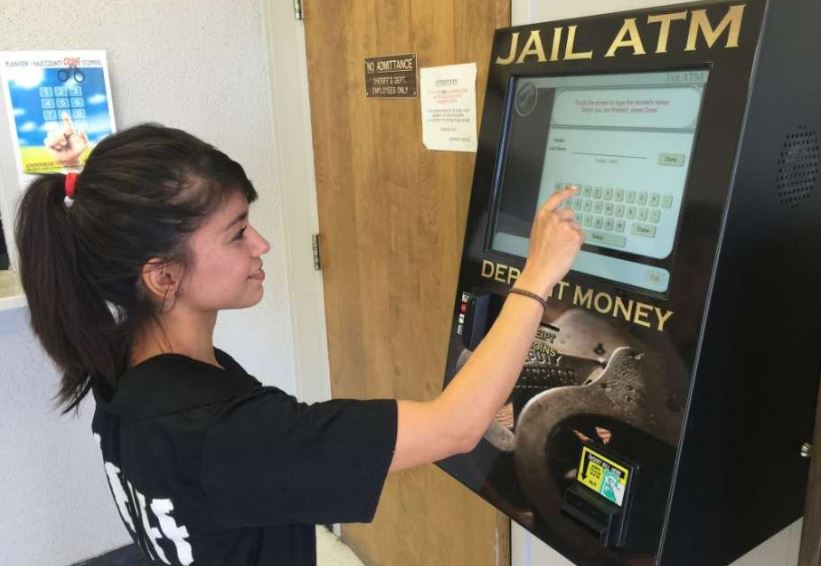
There is a monthly limit of $200-300 on how much inmates can spend on commissary items.
This amount is subject to change so call the facility at 715-261-1700 in order to confirm the amount that cannot be exceeded.
Inmates have access to both an in-house commissary store, and commissary packages that can be purchased and shipped to the inmate by friends and family.
Scroll down for information on the Marathon County Jail's service they use for you being able to purchase commissary items online and have them shipped directly to the inmate.
You can also go to our Inmate Money page for information on how to send money to an inmate.
JailATM provides a secure electronic payment portal that allows friends and family members to deposit funds directly into an incarcerated person's jail trust and commissary account. Deposited money provides the financial balance needed for your loved one to purchase personal hygiene items, snacks, over-the-counter medical sundries, and correspondence supplies from the facility commissary.
Important: Facility Deposit Rules and Window Intake Vary
Once a person is booked and moved to a housing unit, facilities do not always allow cash drop-offs or phone payments directly to the jail window. Some might and you should confirm this by calling the facility and asking. But if you do not register online and fund your loved one's trust account immediately, they may be forced to wait days or weeks for standard paper processing, leaving them without essential soap, clean undergarments, basic medical sundries or snacks.
Step-by-Step Instructions to Register and Deposit Funds
- Obtain the inmate's legal first and last name, date of birth, and assigned facility booking ID number.
- Navigate to deposits.jailatm.com/webdeposits/ on your computer or mobile device.
- Click Sign In or Register to set up your verified user account using your email address and password.
- Select the state and the detention facility where the inmate is currently housed.
- Search for the inmate using their ID number or legal last name to confirm an exact roster match.
- Enter your desired deposit dollar amount and review the calculated transaction and convenience fees.
- Input your debit or credit card billing details, complete payment authorization, and save your digital receipt.
What the Inmate Needs to Do
The inmate does not need an internet account to receive funds. Once the electronic transaction clears, the balance posts directly to their jail trust ledger according to facility accounting schedules. The inmate can review their updated balance at a dayroom pod kiosk or on their weekly trust statement and place orders on their regular commissary day.
Official Provider: JailATM Official Website
Customer Service Telephone: 1-877-810-0914
Support Hours: Monday – Friday, 8:00 AM – 5:00 PM CST
Supported Languages: English and Spanish
Other Services Provided by JailATM
In addition to Trust & Commissary Money Deposits, JailATM provides several other communication, store, and visitation services at participating facilities:
- Commissary Gift Packs & Store Ordering: Order pre-approved snack boxes, food packages, and hygiene bundles sent directly to the jail.
• Learn more on our website: Commissary Gift Packs Guide | • Visit official vendor page: JailATM Store Orders - Digital Messaging & Picture Sharing: Send electronic messages and photos directly to an inmate's housing unit kiosk.
• Learn more on our website: Digital Messaging Guide | • Visit official vendor page: JailATM Messaging - Remote Video Visitation: Schedule and join live video visits from home using your computer or smartphone.
• Learn more on our website: Video Visitation Guide | • Visit official vendor page: JailATM Video Visits
Deposit Money for an Inmate in the Marathon County Jail
Look for the Marathon County Courthouse, 500 Forest Street in Wausau. The county jail is inside it, and on site it takes only two kinds of payment, cash or a credit card, both at the kiosk in the jail lobby.
Away from Wausau, use JailATM online, or mail a money order. Write the money order to the person's full name and send it in an envelope holding nothing else, addressed to the person's full name, Marathon County Jail, 500 Forest Street, Wausau, WI 54403. Cash and personal checks have no place in that envelope.
Know before you send: every deposit lands on the person's account, and if they owe a debt, 50% or 100% of the deposit goes to it first, depending on what the debt covers.
Bail is not the same thing. It's a separate payment, and the jail accepts it in cash or by credit card at any hour. Anything else: 715-261-1700.
The Marathon County Jail is the Sheriff's Office jail on Forest Street in Wausau. Letters still come in on paper through the U.S. Postal Service, and officers inspect every piece before it reaches the person it is addressed to.
Personal letters, legal mail and subscriptions:
Inmate's Full Name
Marathon County Jail
500 Forest Street
Wausau, WI 54403
- Your name on the outside: The sender's full name and address must be written clearly on the envelope. Put them in the top left corner so the letter isn't thrown away.
- Greeting cards and Polaroids: Neither is allowed. Write on plain paper and send regular printed photos only.
- Photos and content: Anything gang related, sexually explicit or seen as a safety risk is confiscated, and that includes pictures.
- Paperbacks: Softcover books may be bought and shipped straight to the jail by a publisher or an online store. Hardcover books are turned away.
- Magazines and newspapers: These come only from the publisher, on a subscription. Publications that show violence, put security at risk or demean a race, sex, religion or sexual preference can be denied.
- Legal mail: Mail from an attorney is opened only while the inmate watches.
- Ink: Stick to blue or black pen, with no markers, crayons, glitter, perfume or lipstick.
- Money orders: Mail it alone in its own envelope, made out to the inmate's full name. If you are unsure, call 715-261-1700 to confirm. Keep cash and personal checks out of the mail; an online deposit works too.
- Property: Personal property is not accepted at the jail, so send only letters and approved reading material.
Letters reach inmates on weekdays. Check the jail roster first to make sure the person is still in Wausau.
CIDNET Phone Calling enables incarcerated individuals to place outbound voice calls from housing-unit wall phones or handheld tablets directly to approved cell phones and landlines. Because jail phone systems cannot accept incoming calls, setting up a CIDNET account and purchasing Data Points ensures outbound calls connect immediately without wireless carrier collect blocks.
Important: Mobile Networks Block Inmate Calls Without Data Points
Wireless cellular carriers automatically block collect calls originating from jail telecommunications systems. While some traditional landline telephone providers may support monthly operator billing, mobile smartphones and VoIP numbers require an active prepaid CIDNET balance, which you can verify with your provider. If you do not register your 10-digit number online and purchase Data Points immediately, your loved one will hear an automated operator recording stating that your phone number cannot accept calls.
Step-by-Step Instructions to Set Up and Fund Voice Calling
- Go to customer.cidnet.net or launch the CIDNET Customer mobile app.
- Register your account using the primary 10-digit telephone number where you want to receive calls.
- Upload your driver's license or state ID for identity verification.
- Select the detention center where the inmate is held and link them to your contact profile.
- Purchase Data Points using a debit or credit card to cover per-minute calling rates.
- Confirm your mobile phone allows calls from automated or unknown correctional numbers and does not send them to spam.
What the Inmate Needs to Do
The inmate approaches a pod wall phone or opens the phone app on their tablet, enters their assigned inmate PIN, and dials your 10-digit number. CIDNET's automated system verifies that your account has sufficient Data Points and connects the call once you accept the automated prompt. All non-privileged conversations are recorded and monitored by the facility.
Official Provider: CIDNET Customer Portal | Encartele Corporate
Customer Service Telephone: 1-888-984-1903
Support Hours: Monday – Friday, 8:00 AM – 5:00 PM CST
Supported Languages: English and Spanish
Other Services Provided by CIDNET
In addition to Phone Calling, CIDNET operates messaging and video visitation services:
- Data Points (Unified Funding): Purchase the central credits used to pay for telephone talk time.
• Learn more on our website: CIDNET Data Points Guide | • Visit official vendor page: Buy CIDNET Data - Remote Video Visitation: Schedule and join live video visits from home using your computer or smartphone.
• Learn more on our website: CIDNET Video Visits Guide | • Visit official vendor page: CIDNET Video Visitation - Inmate Messaging & Digital Mail: Send text messages and digital photo attachments directly to an inmate's terminal.
• Learn more on our website: CIDNET Messaging Guide | • Visit official vendor page: CIDNET Messaging Portal
CIDNET Inmate Messaging provides a secure digital messaging and picture-sharing service for families of incarcerated individuals. Powered by CIDNET Data Points, outside contacts can compose electronic letters and upload JPEG photographs directly through the CIDNET web app, delivering correspondence to inmate screens within hours and avoiding paper mail sorting delays.
Important: Postal Mail Transition and Screening Rules Vary
Inmates cannot receive incoming phone calls, and physical postal mail policies differ across jurisdictions. While some detention centers accept handwritten envelopes, many facilities contracting with CIDNET have prohibited physical paper mail in favor of electronic mail scanning and direct digital messaging, which you can verify by checking facility rules. If you do not register online and purchase Data Points immediately, your loved one may face lengthy periods without direct written communication from family.
Step-by-Step Instructions to Register and Message an Inmate
- Log into your account at customer.cidnet.net or launch the CIDNET app.
- Ensure your identity verification (photo ID and selfie) is approved by the facility.
- Confirm your account has an active Data Point balance; purchase additional points if needed.
- Select Messages from your navigation menu and click on your linked contact.
- Type your message in the text editor and attach clear JPEG photo files if authorized by the facility's media rules.
- Review the estimated Data Point cost for the message length and image attachments.
- Click Send to submit your transmission to the institutional mailroom screening queue.
What the Inmate Needs to Do
All messages and photographs pass through facility screening filters. Once approved, the message arrives in the inmate's inbox on their housing unit kiosk or assigned tablet. The inmate opens the message, views the images, and types a digital response, which draws against available account points.
Official Provider: CIDNET Customer Portal | Encartele Corporate
Customer Service Telephone: 1-888-984-1903
Support Hours: Monday – Friday, 8:00 AM – 5:00 PM CST
Supported Languages: English and Spanish
Other Services Provided by CIDNET
In addition to Inmate Messaging, CIDNET provides several other communication and visitation options:
- Data Points (Unified Funding): Purchase universal credits that power voice calling, messaging, and video visits.
• Learn more on our website: CIDNET Data Points Guide | • Visit official vendor page: Buy CIDNET Data - Remote Video Visitation: Schedule and join live video visits from home using your computer or smartphone.
• Learn more on our website: CIDNET Video Visits Guide | • Visit official vendor page: CIDNET Video Visitation - Phone PINs & Voice Calling: Fund outbound voice telephone calls so your loved one can call your telephone directly.
• Learn more on our website: CIDNET Phone Calling Guide | • Visit official vendor page: CIDNET Voice Calling
CIDNET provides secure handheld wireless tablets designed specifically for correctional housing units. Operating over a private, encrypted facility network, these devices allow incarcerated individuals to exchange messages, place voice calls, conduct remote video visits, read approved digital books, access law library materials, and complete rehabilitative courses directly from their cells.
Important: Tablet Hardware Deployment and Rental Rules Vary
Detention centers do not manage tablet distribution identically. While some agencies issue individual personal tablets to every detainee at booking, others utilize shared pod docking stations or restrict tablet use to specific dayroom hours, which you should confirm with the facility directly. Although core educational and legal resources are generally provided free of charge, sending messages or making calls from the tablet requires an active balance of Data Points funded by friends or family.
Step-by-Step Instructions to Support Tablet Use
- Confirm that CIDNET handheld tablets are active and deployed at your loved one's specific detention facility.
- Register your verified user account at customer.cidnet.net.
- Complete identity verification by uploading your government photo ID.
- Link the inmate to your profile and purchase a reserve of CIDNET Data Points.
- Notify your loved one that funds are available so they can open the communication apps on their tablet.
What the Inmate Needs to Do
The inmate unlocks their assigned tablet using biometric verification or their unique facility PIN. Once logged on, they can browse institutional announcements, access educational materials, or select approved outside contacts to read messages and start calls. When quiet hours begin or tablets require recharging, inmates return devices to designated pod docking carts.
Official Provider: CIDNET Customer Portal | Encartele Corporate
Customer Service Telephone: 1-888-984-1903
Support Hours: Monday – Friday, 8:00 AM – 5:00 PM CST
Supported Languages: English and Spanish
Other Services Provided by CIDNET
In addition to Inmate Tablet Services, CIDNET provides several core communication channels:
- Data Points (Unified Funding): Purchase the digital currency required to power all tablet communications.
• Learn more on our website: CIDNET Data Points Guide | • Visit official vendor page: Buy CIDNET Data - Inmate Messaging & Digital Mail: Send text messages and photos directly to an inmate's tablet screen.
• Learn more on our website: CIDNET Messaging Guide | • Visit official vendor page: CIDNET Messaging Portal - Remote Video Visitation: Conduct scheduled live video calls directly to their tablet or pod kiosk.
• Learn more on our website: CIDNET Video Visits Guide | • Visit official vendor page: CIDNET Video Visitation
Marathon County Juvenile Facilities
- Jail (Main): 715-261-1700
- Adult Probation: 715-261-1600
- Court: 715-261-1000
- District Attorney: 715-261-1111
- Public Defender: 715-842-1603
- Sheriff: 715-261-1200
- Wausau Police: 715-261-7800
The Marathon County Jail serves the following cities and towns of Marathon County: Athens, Brokaw, Edgar, Hatley, Marathon City, Mosinee, Norrie, Rothschild, Schofield, Spencer, Stratford, Wausau and Weston.