
San Diego George Bailey Detention Facility
San Diego George Bailey Detention Facility
Physical Address
446 Alta Rd., Suite 5300San Diego, CA 92158
Jail Phone Number
619-409-5000Arrested in San Diego County: finding the right Sheriff's jail
The Sheriff runs seven adult jails here. Men arrested downtown usually land at San Diego Central Jail, 1173 Front Street, San Diego, CA 92101. North arrests go to Vista and South Bay arrests to Chula Vista. Women are booked at Las Colinas in Santee, and long stays are often on Alta Road in Otay Mesa.
Start with the Sheriff's inmate search. Type a name and it lists the jail, booking number, bail and next court date. Give a brand-new booking a little time to show up.
Can't tell which jail has them? Call 619-409-5000 and ask. The same line reaches every jail. After that, read our San Diego bail page about getting out, and our San Diego court page about the first hearing.
Read inmate search answers
 Read inmate search answers
1. Which San Diego jail has them?
- Men arrested in the city usually go to the San Diego Central Jail, 1173 Front Street downtown.
- North County arrests go to the Vista Detention Facility, 325 South Melrose Drive.
- South Bay arrests may go to the South Bay Detention Facility, 500 Third Avenue, Chula Vista.
- Women are booked at Las Colinas Detention and Reentry Facility, 451 Riverview Parkway, Santee.
- Longer stays are often at the Otay Mesa campus on Alta Road: the large detention facility on Alta Road, Rock Mountain and East Mesa Reentry.
2. San Diego inmate search
San Diego County Inmate Search lists the facility, booking number, bail and next court date. VINE (877-411-5588) can send release alerts.
↑ Back to the question list3. Court after a San Diego arrest
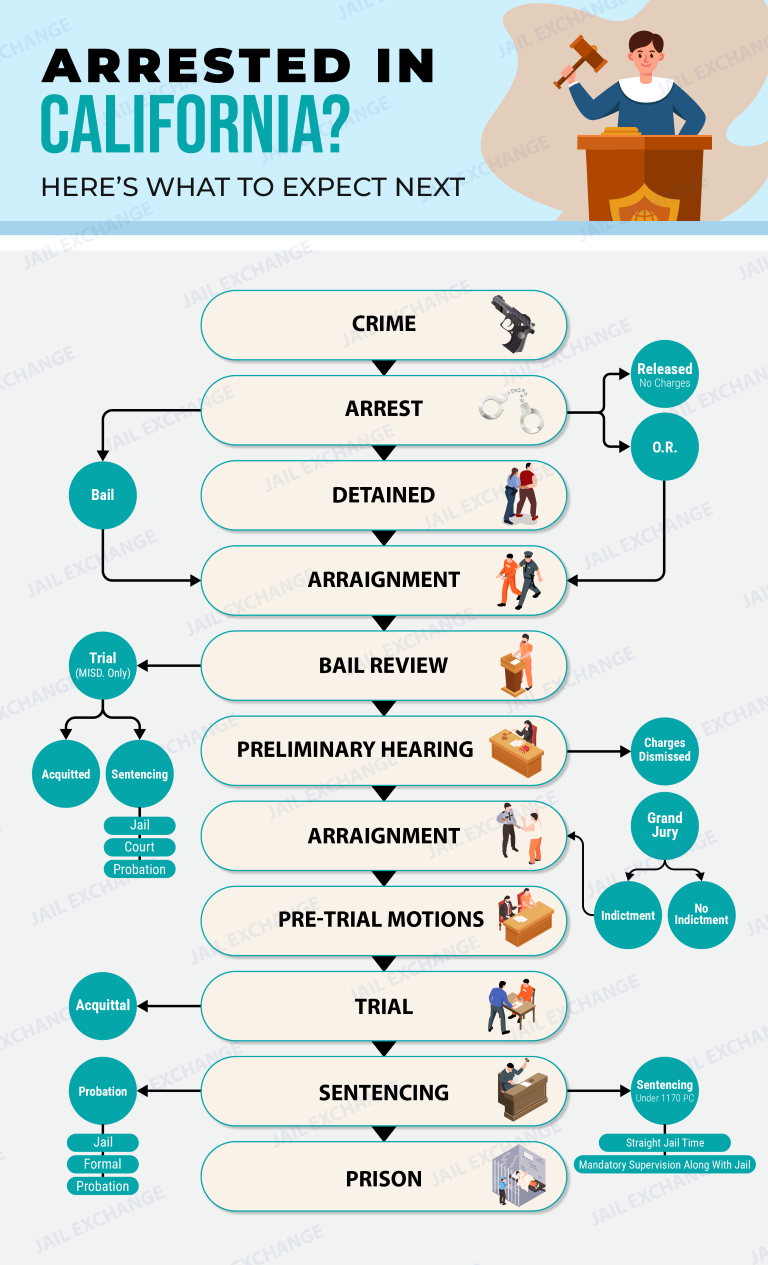
People in custody are arraigned within two court days at the courthouse for their region: Central, 1100 Union Street (619-844-2400); North County in Vista (760-201-8600); East County in El Cajon (619-456-4100); or South County in Chula Vista (619-746-6200). Read San Diego court steps.
↑ Back to the question list4. San Diego bail
The Superior Court publishes a yearly bail schedule. Families post it at the Sheriff's jail or hire a licensed bondsman. Judges set release terms at arraignment after looking at the person's means; the state's high court ruled in 2026 that money bail generally has to be attainable for the person. See the San Diego bail guide.
↑ Back to the question list5. San Diego Public Defender
The Public Defender's main office is at 451 A Street, Suite 900 (619-338-4700), with branch offices at each courthouse.
↑ Back to the question list6. Visits across seven jails
Each facility keeps its own schedule. Book ahead, bring photo ID, and check the roster for transfers the day before. See San Diego visiting and video visits.
↑ Back to the question list7. Writing and depositing
San Diego inmates get mail by name and booking number at the facility address the Sheriff lists. Guides: postcards and letters, account deposits, commissary, phone service, messages, tablets.
↑ Back to the question list8. San Diego youth detention
Detained minors are held at the East Mesa juvenile facility (619-671-4400) or the Youth Transition Campus in Kearny Mesa (858-694-4500). Probation's main line is 858-514-3148.
↑ Back to the question list9. Bail-call fraud in San Diego
Sheriff's staff don't phone families asking for bail by gift card, wire or app. Hang up, then dial the custody line at 619-409-5000 to learn the person's true status.
↑ Back to the question list10. Which court takes federal cases from San Diego County?
It often starts when the FBI, the DEA and the IRS carry out an arrest. Border arrests frequently turn into federal cases. The county belongs to the Southern District of California; cases happen in San Diego, 333 West Broadway, San Diego, CA 92101. The clerk's office in San Diego answers at 619-557-5600. An initial hearing happens quickly, before a federal magistrate. Federal court has no bail chart. The judge settles detention or release at a release hearing under the federal Bail Reform Act. Before the hearing, an officer from pretrial services looks into community ties and prior record.
Before trial, U.S. Marshals can hold them in local jails. Search for them on the county roster. Or call the Marshals Service for the Southern District of California at 619-557-6620 (333 West Broadway, Suite 100, San Diego, CA 92101). After a federal sentence, the person enters BOP custody when space opens. Follow the person on the BOP locator.
↑ Back to the question list11. A friend got an ICE detainer. What happens next?
- During booking, fingerprints reach federal agencies. Then ICE might file a detainer.
- Paying bail doesn't cancel the detainer.
- The detainer asks the San Diego jail to keep them for ICE up to 48 hours after they would otherwise be released (8 CFR 287.7(d)). San Diego jail staff work under SB 54, which holds release to its normal time and limits ICE transfers and release-date sharing to a judge-signed warrant or a listed serious or violent felony.
- ICE officers can take custody at the San Diego County jail in that time. If ICE never comes, that should mean they're released on the local case.
- Check the ICE detainee locator using your loved one's A-number and birth country. People without your loved one's A-number can use the country they were born in, birth date, and the name they were booked under.
- This county is handled by the San Diego enforcement office: 880 Front Street, Suite 2242, San Diego, CA 92101, tel. 619-436-0410.
- ICE itself chooses where they go next.
12. How does a move from the San Diego County jail to the CDCR work?
Prison time is handled by California's corrections department (CDCR). Until then, they wait in the San Diego County jail until the CDCR has room. Then, they are sent to an intake center for check-in. Prison staff screen each person for security level, gang affiliation, and health care needs. Their last step is a facility that suits them.
The CDCR inmate locator shows the current unit after intake. Our California state prison guide covers each unit.
↑ Back to the question list13. Does the San Diego jail post mugshots online?
Open the San Diego jail search to see what a San Diego record shows; mugshots may not be included.
See Section 13665 for the law. It is about social media only. Most nonviolent arrests fall under it. Sheriffs and police can't share them there. Posts must come down within 14 days. A judge can also allow a post. The sheriff's own website isn't covered. Most sheriffs in California skip photos anyway.
For a request for a jail photo not yet released, journalists should call the Sheriff's Office, 858-868-3200. Any federal booking picture is not public, even to reporters. The Marshals' policy limits release to three cases: for an escapee, for pressing public safety or if release would help find them or alert neighbors. Need an immigration mugshot? File ICE's online public records request, then wait for approval.
↑ Back to the question list14. Which agency arrested them in San Diego County?
- San Diego Police non-emergency: 619-531-2000
- Chula Vista Police: 619-691-5151
- Oceanside Police non-emergency: 760-435-4900
- Escondido Police non-emergency: 760-839-4722
- San Diego County Sheriff's non-emergency dispatch: 858-868-3200
Many cities, such as Encinitas, Vista and San Marcos, contract with the Sheriff. Federal arrests at the border go to federal court instead.
↑ Back to the question list15. If Chula Vista or Oceanside police serve a warrant, where is the person held?
Booking happens at the Central Jail, at Las Colinas in Santee for women, or at the Vista jail up north. The Sheriff's warrant search finds most active local warrants by name, and the department takes calls at 858-868-3200 for statewide checks. Open cases appear on the court's online case search. To handle your own warrant first, a defense lawyer can set a surrender for a day that works, and the West Broadway clerk can help schedule a new date once the judge has the case back.
↑ Back to the question listSan Diego County contacts
- Roster: San Diego County Inmate Search
- Custody line: 619-409-5000
- Central Jail: 1173 Front Street, San Diego
- Central court: 1100 Union Street, 619-844-2400
- Public defender: 619-338-4700
Transfers between jails are common; check the roster again before visiting.
San Diego County bail and bond: seven Sheriff jails, one phone line, and the release doors
Most men arrested in the city are taken to San Diego Central Jail, 1173 Front Street, San Diego, CA 92101. Arrests in the north go to Vista, the south to Chula Vista, and women to Las Colinas in Santee. Longer stays are often out on Alta Road in Otay Mesa. Read on to learn how bail is paid, who can go home free, and what can block a release.
Search for your person with the Sheriff's inmate search. Each result names the jail, a booking number, the bail amount, and the next hearing. For fresh arrests, active warrants, charges and free lawyers, try our San Diego Inmates in Custody page.
Not showing yet? Call 619-409-5000, the one custody line for all the jails, and pick the right jail from the menu. Ask whether bail has been set, and for the amount. To find out where the first hearing will be, open our San Diego court page.
1. The name is not in Who's in Jail. Is she missing?
Probably not. Start with San Diego County Inmate Search. The Sheriff says pre-booking at a police station can take up to four hours, so a new arrest may not appear yet. Women are booked at Las Colinas or Vista, and men at Central Jail or Vista. If four hours pass, call 619-409-5000 and choose her facility.
2. Where are the jails, and which number reaches them?
Central Jail, 1173 Front Street, San Diego. Vista Detention Facility, 325 South Melrose Drive, Vista. the Otay Mesa men's jail, Rock Mountain, and East Mesa sit at 446 Alta Road, San Diego, in Otay Mesa. South Bay is at 500 Third Avenue, Chula Vista. Las Colinas is at 451 Riverview Parkway, Santee. All of them answer at 619-409-5000.
3. How is bail paid at the jail?
Sheriff training material (2018) describes payment at the facility's Custody Information Office, where staff check identity and run a warrant check first. Cash, check, money order, cashier's check, or a mix covering the full amount is allowed. A bail agent's surety bond is another route, and the Sheriff says bonds must still be delivered in person to a custody information office. The court's schedule says bail may be cash or a surety bond from a certified insurer. Call 619-409-5000 for current hours.
4. Why would the jail turn away a bail payment?
The most common reason is that he is at court or on the way there, since bail is not accepted while he is being moved. An open warrant on some other matter can stop the payment too. Ask the Custody Information Office, 619-409-5000, which of these applies. That rule comes from Sheriff training material revised in 2018, so confirm today's practice by phone.
5. When and where does he walk out after bail?
Most jails process releases until 10:00 p.m., Las Colinas until midnight, and Vista around the clock. Released people leave through the Custody Information Office area: at Central Jail, 1173 Front Street, San Diego, CA 92101, by a door a few feet south of the lobby entrance, and at East Mesa, 446 Alta Road, San Diego, CA 92158, by a door left of the lobby; both answer at 619-409-5000. Court-ordered releases happen at the end of the court day. Served-time releases usually start at 7:00 a.m.
6. Is money for money on his jail account usable as bail?
Account deposits buy calls and store items. Cash is taken at a Custody Information Office from 8:00 to 10:00 a.m. and 5:00 to 7:00 p.m., and deposits cannot push the balance past $500. Personal checks are refused. Kiosks and the Sheriff's website also take deposits. None of it frees him. Questions: 619-661-2860.
7. What does the 2026 bail schedule say?
The Superior Court schedule took effect January 1, 2026. Its misdemeanor table lists these amounts for crimes filed as misdemeanors: assault with a deadly weapon, $10,000; spousal battery causing injury, $15,000, then $30,000 and $60,000 for later offenses; burglary, $5,000; grand theft, $5,000; drug possession charged under Health and Safety Code 11350(a), $2,000. Charges are generally stacked, so bail for several counts is added together. See the full bail schedule, including the felony pages.
8. Does the judge have to follow that schedule?
Judges set the final number. Penal Code 1275 puts the safety of the public first. A San Diego judge also weighs how serious the charge is, his past record, and whether he is likely to show up for court. After the 2021 In re Humphrey ruling, an amount that a person cannot pay can keep him locked up only in narrow cases. The state Supreme Court went further in In re Kowalczyk (case S277910, April 2026): the judge has to try free release terms before anything else, and if money is set, it has to fit what the person can actually raise. For serious felonies and certain family violence arrests, Penal Code 1270.1 calls for a hearing before the amount is moved off the schedule.
9. Can we pledge a house or condo?
Yes, through a court process. San Diego's property bond packet asks for equity of at least twice the bail, a recent appraisal, a title report dated within 30 days, fire insurance, and a notarized note and deed of trust naming the County of San Diego. After approval, the deed is recorded and the court sends a release order to the jail. Count on several days. The packet gives no phone. The court's Criminal Bail Bonds and Collections line is 619-450-7034.
10. How does a bail agent work in San Diego?
Every jail posts a list of bail agencies, and the Sheriff does not endorse any. Anyone arrested gets at least three free local calls, including one to a bail agent. California's insurance regulators put the normal agent fee near ten percent, and a few go lower. Get the price, collateral, and surrender rules in writing before you sign.
11. Can she be released without paying anything?
Sometimes. The Sheriff says some people are released on their own recognizance soon after booking. Someone held only for being drunk in public is released once safe, often in six to eight hours. Anyone not arraigned within 48 hours, not counting weekends and court holidays, is released. Arresting agencies can also release if charges are dropped.
12. When is bail refused altogether?
California's constitution, article I, section 12, allows a San Diego judge to deny release outright when the charge could bring death. It also covers violent felonies, sex felonies, and felony threats to badly hurt someone, if the proof is strong and the judge sees a real danger. The court's schedule sets no bail for an extradited person facing death or life imprisonment. Holds for parole, probation, or another county's warrant keep the person inside as well.
13. Which courthouse takes the case?
It follows the arrest location. Central Courthouse, 1100 Union Street, San Diego, criminal line 619-844-2400. North County, 325 South Melrose Drive, Vista, 760-201-8600. East County, 250 East Main Street, El Cajon, 619-456-4100. South County, 500 Third Avenue, Chula Vista, 619-746-6200. Call the one nearest the arrest, or the jail desk at 619-409-5000, to learn where the first hearing is. Superior Court handles all criminal cases.
14. What if Chula Vista police or a tribal agency made the arrest?
Chula Vista runs a temporary holding jail at its headquarters, 315 Fourth Avenue, 619-691-5151. It says arrestees are not housed there, so they move to a Sheriff jail. In the backcountry, the Sheriff also staffs substations for tribal lands, such as Viejas in Alpine at 619-659-2600 and Campo at 619-478-5378.
15. Which facility holds arrested juveniles in San Diego?
Probation runs youth detention. East Mesa Juvenile Detention Facility is at 446 Alta Road, Suite 6100, 619-671-4400. The Youth Transition Campus is at 2801 Meadow Lark Drive, 858-694-4500. Probation's main line is 858-514-3148. The Juvenile Division of the Public Defender is 858-974-5757.
16. How do we get a free lawyer and learn about court dates?
The Primary Public Defender's downtown office, 451 A Street, Suite 900, answers at 619-338-4700. Branches: Vista 760-945-4000, Chula Vista 619-498-2001, and El Cajon 619-579-3316. If there is a conflict, the Alternate Public Defender, 619-446-2900, may step in. Register with VINE, 877-411-5588, for release alerts.
17. Does a San Diego judge have to set bail we can reach?
Generally. In re Kowalczyk, decided April 30, 2026, says bail must be reasonable and usually attainable. San Diego, Vista, El Cajon and Chula Vista judges also weigh ability to pay under the 2021 Humphrey ruling.
18. Which San Diego County courthouses hear criminal cases?
San Diego's court sits downtown, in Vista for North County, in El Cajon for the east and in Chula Vista for the South Bay:
- Central courthouse: 1100 Union Street, San Diego, CA 92101 · 619-844-2400
- Hall of justice: 330 West Broadway, San Diego, CA 92101 · 619-844-2400
- East County courthouse: 250 East Main Street, El Cajon, CA 92020 · 619-456-4100
- North County courthouse: 325 South Melrose Drive, Vista, CA 92081 · 760-201-8600
- South County courthouse: 500 Third Avenue, Chula Vista, CA 91910 · 619-746-6200
- Juvenile courthouse: 2851 Meadow Lark Drive, San Diego, CA 92123 · 858-634-1600
19. A Border Patrol or DEA arrest in San Diego: how is release decided?
The Southern District of California has one of the busiest federal dockets in the country because of the border. County bail doesn't apply:
- A magistrate judge at San Diego federal courthouse, 333 West Broadway, San Diego, CA 92101 sees him first.
- Pretrial Services interviews him, often with an interpreter.
- The judge sets release terms or orders detention; the hearing may wait three days (government) or five (defense).
- Detained defendants usually go to the Metropolitan Correctional Center, 808 Union St, San Diego (619-232-4311) downtown, or to a Marshals contract jail.
Marshals: U.S. Marshals Service, 333 West Broadway, San Diego, 619-557-6620.
20. After posting bail at a San Diego County jail, could ICE be waiting?
The Sheriff follows SB 54 and doesn't keep anyone past release for ICE. Agents may learn the release time if the person has a serious or violent conviction. A TRUTH Act notice comes before any ICE interview.
San Diego ICE field office, 880 Front Street, Suite 2242, San Diego, CA 92101, 619-436-0410 covers San Diego. Detention sites include Otay Mesa:
- Otay Mesa Detention Center: 7488 Calzada de la Fuente, San Diego, CA 92154
- Imperial Regional Detention Facility: 1572 Gateway Road, Calexico, CA 92231
21. Which searches help after a San Diego County arrest?
- San Diego County Inmate Search: name or booking number; shows the facility, bail, court date.
- VINELink (https://vinelink.vineapps.com/): California; facility and status.
- Federal Bureau of Prisons Inmate Locator (https://www.bop.gov/inmateloc/): register number or name; federal pretrial at the MCC: 619-557-6620.
- CDCR Inmate Locator (https://inmatelocator.cdcr.ca.gov/): CDCR number or name; the state prison on Alta Road near Otay Mesa shows here.
- ICE Online Detainee Locator System (https://locator.ice.gov/odls/): A-number or name and country of birth; Otay Mesa shows up here. Else 619-436-0410.
22. Where do we call to confirm San Diego bail?
The central San Diego court at 619-844-2400 can check the case. Ask for the bail and the courtroom for the next date.
San Diego County bond contacts
- Sheriff jails: San Diego County Sheriff jails: Central Jail, 1173 Front Street, San Diego 92101; Vista, 325 South Melrose Drive, Vista 92081; the Otay Mesa men's jail, Rock Mountain and East Mesa, 446 Alta Road, San Diego 92158; South Bay, 500 Third Avenue, Chula Vista 91910; Las Colinas, 451 Riverview Parkway, Santee 92071
- Custody line: 619-409-5000, then choose the facility
- Custody lookup: San Diego County Inmate Search
- Release alerts: VINE, 877-411-5588
- Sheriff: Sheriff's Office
- Bail schedule: San Diego Superior Court 2026 schedule
- Courthouses: Central, 1100 Union Street, 619-844-2400; North County, 325 South Melrose Drive, Vista, 760-201-8600; East County, 250 East Main Street, El Cajon, 619-456-4100; South County, 500 Third Avenue, Chula Vista, 619-746-6200
- Public Defender: 451 A Street, Suite 900, San Diego 92101; 619-338-4700
- Chula Vista jail: Police headquarters, 315 Fourth Avenue; 619-691-5151
- Juvenile: East Mesa Juvenile Detention Facility, 619-671-4400; Youth Transition Campus, 858-694-4500; Probation 858-514-3148
Release hours, deposit limits, and payment rules at the jails shift now and then, so ring the San Diego Custody line first, before carrying cash to any jail lobby. What you read here describes general practice and is not legal advice.
San Diego George Bailey Detention Facility in-person Social Visits
619-409-5000
Schedule an In-person Visit
- You can schedule a visit online by first finding your inmate, then scheduling the visit for you and those coming with you by choosing the 'Schedule a visit with this inmate' link.
- In-person social visit reservations can be scheduled by calling 619-409-5000 Wednesday through Sunday, during the hours of 6:30am to 6:00pm. Hours for the George Bailey Detention Facility are 10:00 am - 6:00 pm.
- Visitation is available 5 days a week, with no visits on Tuesdays and Wednesdays.
- A maximum of 3 visitors, including children, are permitted per visit.
- Minors must be accompanied by a parent, court appointed guardian or other adult having legal custody.
- Visitors 18 and over must have valid ID.
- Social visits are free, and 30 minutes in length.
San Diego George Bailey Detention Facility In-Person Visitation Times
- Register by calling 619-409-5000, during the hours of 6:30am to 6:00pm.
- Make sure you know your inmate's unit prior to calling.
- Reservations must be made one day in advance.
- Check in 30 minutes in advance of visit, 60 MINUTES if visiting the George Bailey Detention Facility, Rock Mountain Detention Facility and the East Mesa Reentry Facility.
- Each unit is given certain times on certain days.
To schedule a remote visit, register with Smart Inmate


SmartJailMail Video Visitation provides a secure online platform that enables families and friends to conduct live, face-to-face video visits with incarcerated loved ones from home. Using an internet-connected smartphone, tablet, or personal computer equipped with a webcam, visitors can connect directly without traveling to the facility.
Important: Advance Registration and Visitor Clearance Required
Detention centers do not permit unscheduled or unverified video sessions. Correctional facilities require prospective visitors to submit government-issued photo identification and receive administrative clearance before booking an appointment, an approval process that can take up to 48 hours depending on facility staffing. You should verify your visitor approval status with the facility prior to scheduling. If you do not register well in advance, you will miss your loved one's scheduled visiting window for the week.
Step-by-Step Instructions to Register and Schedule a Video Visit
- Visit www.smartjailmail.com and sign into your account.
- Register your visitor profile and upload a clear photograph of your government-issued ID (driver's license or passport) for facility background review.
- Wait for email notification confirming facility visitor approval.
- Select Video Visitation, choose the detention facility, and select the inmate.
- Browse the available schedule calendar, select an open time slot, and pay the visitation fee using a credit or debit card.
- Log into the website 10 minutes prior to the start time on a device with a functioning camera, microphone, and reliable high-speed internet connection.
What the Inmate Needs to Do
The inmate receives a visitation notification on their housing unit video kiosk or tablet. At the appointed time, they log in with their PIN and sit before the terminal. Inmates and visitors must strictly observe jail dress and conduct rules; sessions are monitored by staff and will terminate immediately upon any violation.
Official Provider: SmartJailMail Official Website
Customer Service Telephone: 1-888-253-5178
Support Hours: Monday – Friday, 7:00 AM – 7:00 PM EST
Supported Languages: English and Spanish
Other Services Provided by Smart Communications
In addition to Remote Video Visitation, Smart Communications provides electronic messaging and phone calling services:
- SmartJailMail Two-Way Messaging: Send electronic messages and photos directly to an inmate's housing unit kiosk.
• Learn more on our website: Two-Way Messaging Guide | • Visit official vendor page: SmartJailMail Messaging - Smart Inmate Phone Services: Prepay for phone calling credits so your loved one can call your telephone directly.
• Learn more on our website: Inmate Phone Time Guide | • Visit official vendor page: Smart Inmate Calling
How Criminal Cases Work in San Diego County Courts
Every adult criminal case in this part of California goes to the Superior Court of California, County of San Diego. Its main criminal courthouse is the Central Courthouse, 1100 Union Street, San Diego, CA 92101, phone 619-844-2400. Courthouses in Vista, El Cajon and Chula Vista take cases from their own areas. Below, you will see which building fits your person and how a case moves along.
First, find out if your person is still in jail. The Sheriff's inmate search lists a hearing date after the judge picks one. For new arrests, warrants, charges and public defenders, we have a San Diego Inmates in Custody page.
Call the criminal business office at 619-844-2400 and ask which courthouse and room will hear the case. Mornings are the best time to reach them. Need to bring someone home? Our San Diego bail page is the next stop.
1. San Diego misdemeanors: shoplifting, a first DUI, minor fights, trespass
San Diego County is home to more than three million people across 18 cities and a long stretch of unincorporated backcountry, and every adult criminal prosecution among them runs through the Superior Court of California, County of San Diego. Around 2000 the state merged its city courts statewide, leaving San Diego with one countywide superior court, and San Diego's old municipal benches closed, so Oceanside, Escondido, El Cajon and Chula Vista have no criminal courts of their own. The center of the court’s criminal work is the 22-story Central Courthouse, 1100 Union Street, San Diego, CA 92101, opened in 2017, where the criminal business office can be reached at (619) 844-2400. Criminal cases are handled at four locations:
- Central Courthouse, 1100 Union Street, San Diego, CA 92101: felonies (first-floor business office) and misdemeanors (second floor) from the city of San Diego and central county. Criminal business office: (619) 844-2400
- North County Regional Center, 325 South Melrose, Vista, CA 92081: cases from Oceanside, Carlsbad, Escondido, San Marcos, Vista and other North County communities. Criminal business office: (760) 201-8600
- East County Regional Center, 250 East Main Street, El Cajon, CA 92020: El Cajon, La Mesa, Santee, Lakeside and the eastern backcountry. Criminal business office: (619) 456-4100
- South County Regional Center, 500 3rd Avenue, Chula Vista, CA 91910: Chula Vista, National City, Imperial Beach and the border region. Criminal business office: (619) 746-6200
The court notes that many business office phones are answered mainly in the morning, between 8:30 and 11:30 a.m. on weekdays. Check the building and department printed on the ticket, or look the case up on the court’s website, before the hearing day. Then open the San Diego charge group that fits.
Who prosecutes a misdemeanor in San Diego County depends on where it happened. Inside the city of San Diego, the San Diego City Attorney’s Office files and tries misdemeanor cases. Everywhere else, from Oceanside to Chula Vista to the unincorporated county, the San Diego County District Attorney handles them. Either way, the case is heard in the same superior court.
A good share of San Diego misdemeanor cases start with a ticket instead of a booking; they get a citation with a date to appear at one of the four criminal courthouses. A person who is taken into custody, for example at the San Diego Central Jail downtown or the Las Colinas Detention and Reentry Facility in Santee, must see a judge within 48 hours, a period that doesn’t count Sundays and holidays. At that first hearing the charge is read out, most people answer “not guilty,” and the judge decides the release conditions. A lawyer is assigned at the same time. Defendants who can’t afford a lawyer are represented by the county’s Department of the Public Defender, which includes the Primary Public Defender, and nobody in California is charged a fee anymore for a court-appointed lawyer. For most misdemeanors a lawyer can appear in place of the client.
Most of these San Diego cases wrap up at a readiness conference, with a plea deal, a lesser charge, or the case thrown out. A judge can offer diversion, where the charge goes away once classes or treatment are finished, but drunk driving, domestic abuse and registrable sex charges are left out. If there is a trial, twelve jurors decide. Defendants have a right to trial within 30 days of arraignment if jailed or 45 days if not, though the defense often waives those dates.
Most misdemeanors top out at six months behind bars and a $1,000 fine, and a handful can bring a year. In practice, San Diego judges more often hand out probation, fines, classes or volunteer hours. A typical San Diego misdemeanor closes out over one to several months.
↑ Back to the question list2. San Diego felonies: break-ins, large thefts, drug sales, injury DUIs
Only the District Attorney prosecutes felonies, including those arising inside the city of San Diego. After an arrest, the defendant is usually booked into a Sheriff’s facility such as the Central Jail, the Vista Detention Facility or Las Colinas, and is arraigned on the felony complaint within 48 hours at the courthouse for that region. The judge rules on bail and release at the arraignment and, following the California Supreme Court’s 2021 decision in In re Humphrey, has to consider what the person can afford. The 2026 Kowalczyk case adds that San Diego County judges cannot use unpayable bail to hold someone.
San Diego County has an unusually layered system of appointed counsel. The Primary Public Defender takes most felony cases. When it has a conflict of interest, the Alternate Public Defender steps in; the Multiple Conflicts Office handles the most serious felonies when both of those offices are conflicted; and the Office of Assigned Counsel arranges private panel attorneys for anyone the other three cannot represent.
The preliminary hearing is next, usually inside 10 court days after the arraignment, unless the defense gives up that deadline. Here a judge decides if the proof is strong enough for a trial. A grand jury indictment can skip this step. When a San Diego judge sends the case on, prosecutors file the formal charges (an “information”), he is arraigned again, and the 60-day clock for trial starts unless his lawyer waives it. Defendants agree to wait quite often, and plea bargains settle most San Diego felonies.
If he is found guilty, San Diego Probation writes up a report with a suggested sentence, and the sentencing hearing usually comes within 20 court days. Since the state’s 2011 realignment, many lower felony terms get served locally rather than in a CDCR prison. Certain “wobbler” crimes can start as felonies and drop to misdemeanors, or be filed low from day one. The court also offers collaborative courts, such as drug and behavioral health courts, for eligible defendants. A felony case typically lasts several months to over a year.
↑ Back to the question list3. The gravest San Diego cases: homicide, sexual assault, robbery with a gun
These prosecutions travel the same felony route through arraignment, a preliminary hearing or indictment, and trial, but they take longer and carry far heavier penalties. They also often begin with a no-bail hold. A judge may deny bail under the California Constitution for violent or sexual-assault felonies if a San Diego judge finds strong, clear evidence that freeing the defendant would probably put others at risk of serious injury. Because of that, many of these San Diego defendants wait out the whole case in a Sheriff’s jail.
California’s Three Strikes law counts each of these three crimes as a strike. One earlier strike means double the prison time, and two earlier strikes can mean 25 years to life. Those convicted of a violent felony have to serve 85% of the sentence or more.
- Murder: second-degree murder is punishable by 15 years to life, first-degree murder by 25 years to life. With a special circumstance, such as a death during a robbery, the punishment rises to life without parole or a death sentence. Only the elected prosecutor’s office decides whether to ask for death, and the 2019 statewide pause has kept every death row inmate alive since.
- Armed robbery: a top term of nine years on the robbery itself. Firearm enhancements add 10 years for use, 20 for discharge and 25 years to life when the shot causes great bodily injury or death, though judges have been able to strike them since 2018.
- Rape: as long as eight years, extra time if aggravating facts are proven, and a lifetime spot on the top tier of the sex-offender registry.
The Multiple Conflicts Office exists specifically for the gravest felonies, and a capital defendant is given a pair of death-qualified attorneys. Marsy’s Law means San Diego victims are told about each hearing, may speak at sentencing, and are owed repayment for losses. Plan on one to three years for most, and five or more when the charge is murder.
↑ Back to the question list4. San Diego Superior Court locations
- Central courthouse: 1100 Union Street, San Diego, CA 92101 · 619-844-2400
- Hall of justice: 330 West Broadway, San Diego, CA 92101 · 619-844-2400
- East County courthouse: 250 East Main Street, El Cajon, CA 92020 · 619-456-4100
- North County courthouse: 325 South Melrose Drive, Vista, CA 92081 · 760-201-8600
- South County courthouse: 500 Third Avenue, Chula Vista, CA 91910 · 619-746-6200
- Juvenile courthouse: 2851 Meadow Lark Drive, San Diego, CA 92123 · 858-634-1600
Which building gets the case depends on the arrest area:
- Downtown and city of San Diego arrests: the Central Courthouse on Union Street, for arraignments, felonies and misdemeanors.
- Oceanside, Carlsbad, Escondido, San Marcos and the rest of North County: Vista, next to the Vista jail.
- El Cajon, La Mesa, Santee, Lakeside and the eastern backcountry: the El Cajon building on Main Street.
- Chula Vista, National City, Imperial Beach and the border towns: the South County building on Third Avenue.
- Anyone under 18: the juvenile courthouse on Meadow Lark Drive in Kearny Mesa.
- The Hall of Justice on Broadway mostly hears civil matters, so check the notice before going there.
5. Federal cases in San Diego
Smuggling, drug and border cases dominate the Southern District of California. The first hearing is before a magistrate judge at San Diego federal courthouse, 333 West Broadway, San Diego, CA 92101. Pretrial Services reports, detention is decided, and most detained people are held at the Metropolitan Correctional Center, 808 Union St, San Diego (619-232-4311). Marshals: U.S. Marshals Service, 333 West Broadway, San Diego, 619-557-6620.
↑ Back to the question list6. ICE detainers in San Diego court
Downtown, Vista, El Cajon or Chula Vista judges handle the case normally. SB 54 bars holding for ICE at release; a date may go to ICE after a serious or violent conviction. Immigration advice from the defense is especially important here. ICE office: San Diego ICE field office, 880 Front Street, Suite 2242, San Diego, CA 92101, 619-436-0410; detention sites:
- Otay Mesa Detention Center: 7488 Calzada de la Fuente, San Diego, CA 92154
- Imperial Regional Detention Facility: 1572 Gateway Road, Calexico, CA 92231
7. San Diego custody searches
- San Diego County Inmate Search: Sheriff's jails.
- VINELink (https://vinelink.vineapps.com/): statewide.
- Federal Bureau of Prisons Inmate Locator (https://www.bop.gov/inmateloc/): federal; pretrial 619-557-6620.
- CDCR Inmate Locator (https://inmatelocator.cdcr.ca.gov/): state prison.
- ICE Online Detainee Locator System (https://locator.ice.gov/odls/): A-number or name and birth country; 619-436-0410.
8. Phoning ahead for a San Diego court date
San Diego's criminal cases run in several courthouses, from downtown to El Cajon and Vista. Call the downtown criminal business office at 619-844-2400 with the case number and ask where and when the hearing is. For someone held, the custody line, 619-409-5000, can confirm transport.
↑ Back to the question list9. Is there a Sheriff warrant search I can use?
Yes. The Sheriff's online warrant search covers most Superior Court warrants by name, and deputies answer at (858) 868-3200. Escondido and El Cajon cases are listed there as well. That search covers this county, so call the Sheriff for statewide records. The court's online case search shows the case behind a warrant. At the Hall of Justice, 330 West Broadway, the clerk handles new dates. A lawyer can also bring you to the Central Jail, 1173 Front Street, or let counsel ask for a recall.
↑ Back to the question listThis overview of San Diego County criminal cases gives a general picture of local practice and isn’t legal advice. If you are charged in San Diego, hire a defense attorney, or phone the San Diego County Primary Public Defender at (619) 338-4700.
Information for this service is currently unavailable.
For the San Diego George Bailey Detention Facility, deposits are handled by the San Diego County Sheriff's Office. Find the person's booking number, then choose one of these.
- Online store site: The Sheriff's commissary website takes deposits to the person's account.
- Kiosks: Found in the lobbies of the Sheriff's jails and open 24 hours. Pay with cash or a card; a fee is added. A kiosk at any facility can be used.
- Window: Staff at the custody information window accept exact cash only from 8:00 to 10:00 a.m. and from 5:00 to 7:00 p.m. You'll need ID.
- Money order in the mail: The Sheriff's Office chooses not to publish a mail-in address for George Bailey deposits. Its other jails take money orders payable to the person's full name, with the booking number on it, at the Mail Processing Center, 451 Riverview Parkway, Building C, Santee, CA 92071, so call 619-409-5000 and ask before you mail one there.
The account limit is $500, and personal checks are refused. This money buys commissary; it can't be used for bail.
The George Bailey Detention Facility sits on Alta Road in San Diego and is run by the San Diego County Sheriff's Office. Don't use the jail's street address for letters. The Sheriff sends all incoming mail through a single Mail Processing Center, where it is opened and searched before it goes out to George Bailey, and mail that goes to the jail directly is returned.
Where to send letters, books, legal mail and money orders:
Inmate's Full Name & Inmate Booking #
George Bailey Detention Facility
Mail Processing Center
451 Riverview Parkway, Building C
Santee, CA 92071
- Who it's from: Your name and full return address belong on every envelope.
- Who it's for: The person's full name, booking number and "George Bailey Detention Facility." Find the booking number with the jail roster.
- Legal mail: Mail from an attorney, a court or a government agency should say "confidential mail" or "legal mail" on the front. It is opened only with the person watching.
- Sending a money order: Write it to the person's full name with their booking number in the memo. Cash should never go in a letter, and online deposits are another choice.
- Books: Only new paperbacks shipped from a publisher or a bookstore. Hardcover books and spiral bindings are not accepted, and the person may hold no more than six books and magazines at once.
- What gets mail rejected: Paint, crayon, marker, glitter, labels, stickers, string, cloth, stains, perfume or lipstick on the paper, plus pictures of nudity, weapons or gang signs.
- Photos and cards: Polaroid photos and homemade greeting cards are not allowed.
- Disks and drives: CDs, tapes and thumb drives are refused.
- Turned-down mail: The sender gets a notice and can appeal by mail to the facility commander within 10 business days.

Smart Inmate (operated by Smart Communications) provides secure telecommunications services for county detention centers and local correctional facilities. Establishing an AdvancePay prepaid telephone account links calling minutes directly to your mobile phone or landline number, ensuring outbound calls placed by an incarcerated loved one connect without carrier billing interruptions.
Important: Cellular Networks Block Unfunded Inmate Calls
Inmate phone networks do not permit incoming telephone calls, and cellular carriers do not support collect billing from detention centers. While select traditional landlines may support direct monthly carrier billing, wireless smartphones and VoIP lines require an active prepaid calling balance, which you can verify by checking with your telephone service provider. If you do not register online and fund your phone account right away, your loved one will receive an automated disconnect announcement when dialing your number.
Step-by-Step Instructions to Register and Fund a Phone Account
- Visit www.smartinmate.com or call customer care at 1-888-253-5178.
- Click Sign Up and register using your primary 10-digit telephone number and email address.
- Select the state and facility where the inmate is currently housed.
- Locate the inmate using their full legal name or facility booking ID number.
- Choose your deposit amount ($25, $50, or custom amount) and enter your credit or debit card billing information.
- Authorize payment, save your confirmation number, and confirm that your mobile phone does not filter automated correctional phone lines as spam.
What the Inmate Needs to Do
The inmate dials your 10-digit telephone number from any dayroom telephone and keys in their assigned PIN. The automated system verifies that your phone number has an active prepaid balance and connects the call once you press the prompted number to accept. All personal telephone calls are recorded and monitored by facility investigators.
Official Provider: Smart Inmate Official Website
Customer Service Telephone: 1-888-253-5178
Support Hours: Monday – Friday, 7:00 AM – 7:00 PM EST
Supported Languages: English and Spanish
Other Services Provided by Smart Communications
In addition to Phone Calling, Smart Communications provides digital messaging and visitation options via its companion portals:
- SmartJailMail Two-Way Messaging: Send electronic messages and photos directly to an inmate's housing unit kiosk.
• Learn more on our website: Digital Messaging Guide | • Visit official vendor page: SmartJailMail Messaging - SmartJailMail Remote Video Visits: Schedule and join live video visits from home using your computer or smartphone.
• Learn more on our website: Video Visitation Guide | • Visit official vendor page: SmartJailMail Video Visits
Send an Email or Text to an Inmate in the San Diego George Bailey Detention Facility
Sending an Email, Text or Secure Electronic Message to an Inmate
The San Diego George Bailey Detention Facility provides a service which allows secure electronic messaging for their inmates.
The email service that San Diego County uses is in-house and allows two 2,500 character digital messages per day.

The San Diego County Inmate email system is not directly connected to the internet like normal email, but instead each correspondence is first intercepted by the jail's servers. This gives the staff an opportunity to review the messages before delivering them to both inmates and the people that the inmates are communicating with.
Electronic messages received by the inmates are read either on kiosks within the inmate's unit.
Allowing inmates access to email has many upsides:
- It is less expensive than regular mail.
- It allows for faster turnaround of communication.
- It allows the jail to monitor inmate communication in real time.
- Because the jail receives a portion of the revenue, it brings the jail revenue they wouldn't have otherwise.
- It is an inmate privilege that they don't want to have taken away, and thus can be used as a way to control behavior.
- It keeps unwanted contraband from entering the facility in the physical mail.
For a list of Frequently Asked Questions and Answers about inmate emailing and texting, scroll down for more information about it or call the jail at 619-409-5000.
Smart Communications Inmate Tablets & Digital Services
Provider: Smart Communications (SmartJailMail / SmartPad)Smart Communications deploys secure, corrections-grade handheld tablets (SmartPad) to incarcerated individuals in county detention facilities. Operating on a secure internal wireless network, these devices allow inmates to conduct remote video visits, make voice telephone calls, send and receive electronic messages, stream approved music, read digital books, and access self-help resources directly from their housing pods.
Important: Tablet Hardware Deployment and Rental Rules Vary
Detention centers do not manage tablet distribution identically. While some agencies issue individual personal tablets to every detainee at booking, others utilize shared pod docking stations or restrict tablet use to specific dayroom hours, which you should confirm with the facility directly. Although core educational and legal resources are generally provided free of charge, sending messages, listening to music, or making phone calls from the tablet requires an active balance funded by outside contacts.
Step-by-Step Instructions to Support and Fund SmartPad Tablets
- Verify that Smart Communications handheld tablets are active at your loved one's specific detention facility.
- Navigate to www.smartjailmail.com on your computer or mobile device.
- Sign into your verified user profile and link the inmate's legal name and booking ID number.
- Select Messaging Credits or Inmate Media Funds to add funds to their available balance.
- Specify your deposit dollar amount, review convenience fees, and enter your credit or debit card billing details.
- Submit payment, save your confirmation receipt, and notify your loved one that their device balance is available.
What the Inmate Needs to Do
The inmate unlocks their assigned tablet using their PIN or biometric scan. Their available balance appears on the screen, allowing them to download songs, read digital books, write messages, and communicate with approved family members. Devices are returned to charging racks during facility count times and for overnight storage.
Official Provider: SmartJailMail Official Website
Customer Service Telephone: 1-888-253-5178
Support Hours: Monday – Friday, 7:00 AM – 7:00 PM EST
Supported Languages: English and Spanish
Other Services Provided by Smart Communications
In addition to Tablet Services, Smart Communications provides several other communication, financial, and visitation options:
- SmartJailMail Two-Way Messaging: Send electronic messages and photos directly to an inmate's housing unit kiosk.
• Learn more on our website: Two-Way Messaging Guide | • Visit official vendor page: SmartJailMail Messaging - Remote Video Visitation: Schedule and join live face-to-face video visits from your computer or smartphone.
• Learn more on our website: Video Visitation Guide | • Visit official vendor page: SmartJailMail Video Visits - Smart Inmate Phone Services: Prepay for phone calling credits so your loved one can call your telephone directly.
• Learn more on our website: Inmate Phone Time Guide | • Visit official vendor page: Smart Inmate Calling - Inmate Trust & Commissary Deposits: Send money directly into an inmate's jail trust account for independent commissary spending.
• Learn more on our website: Trust Deposits Guide | • Visit official vendor page: Smart Communications Deposits
San Diego County County Jails
San Diego County Juvenile Facilities
Nearby counties
- Jail (Main): 619-409-5000
- Adult Courts - San Diego: 619-450-5700
- Adult Probation: 858-514-3148
- Bail: 858-974-2222
- District Attorney: 619-531-4040
- Drug Court: 619-450-5700
- DUI Court: 858-467-6810
- Juvenile: 858-694-4319
- Juvenile Court: 858-634-1600
- Juvenile Court - Minor Offenses: 858-634-1616
- Juvenile Courts - San Diego: 858-634-1600
- Juvenile Drug Court - North County: 760-201-8600
- Juvenile Drug Court - San Diego: 858-634-1600
- Juvenile Probation: 858-694-4319
- San Diego Police: 619-531-2000
- Sheriff: 858-974-2222
- Victims & Witnesses Help: 619-531-4041
The San Diego George Bailey Detention Facility serves the following cities and towns of San Diego County: Carlsbad, Chula Vista, Coronado, Del Mar, El Cajon, Encinitas, Escondido, Imperial Beach, La Mesa, Lemon Grove, National City, Oceanside, Poway, San Diego, San Marcos, Santee, Solana Beach and Vista.