
Cibola County Correctional Center
Cibola County Correctional Center
Cibola County Detention Liaison
505-285-4900Cibola County Inmate Search and Booking Information
Find someone in custody in Cibola County. Call intake with the name and arrest date. For a county case, ask for local booking or the county detention liaison at 505-285-2548. The facility’s main line is 505-285-4900.
For a Grants or Milan arrest, start with the local arresting agency if the facility cannot match the name. For an immigration matter, use the ICE locator below and confirm the facility shown before making any arrangements.
Before you visit or send money: Confirm where the person is held and ask for the booking or inmate number. Cibola County’s description of its detention liaison explains who handles local bookings, releases and court paperwork. Ask which authority is holding the person, since that determines who can answer your questions.
Read inmate search answers
 Read inmate search answers
1. How do I find someone in custody in Cibola County?
Call intake with the name and arrest date. For a county case, ask for local booking or the county detention liaison at 505-285-2548. The facility’s main line is 505-285-4900. Write down the facility, booking or inmate number and the time you confirmed custody. Keep any court case number separate.
↑ Back to the question list2. Who can I call to check a booking?
Contact Cibola County Correctional Center at 2000 Cibola Loop, Milan. Call 505-285-4979. Start with the full name, date of birth, approximate arrest date and the city or agency involved. If you already have a booking number, give that first. Official contact and facility information.
↑ Back to the question list3. What if the person does not show up?
Check spelling, hyphens, both surnames and the name used at arrest. With a recent arrest, ask whether intake is complete. If the jail has no record, ask the arresting agency where the person was taken and call that facility. A missing entry by itself does not establish a release.
↑ Back to the question list4. How can I find out if they went to another jail?
For a Grants or Milan arrest, start with the local arresting agency if the facility cannot match the name. For an immigration matter, use the ICE locator below and confirm the facility shown before making any arrangements. Ask when the person arrived or whether they were transferred, and get the receiving jail’s phone number. Call the receiving jail to confirm it accepted the person before arranging a ride, mailing anything or depositing money.
↑ Back to the question list5. Can I see a booking photo or mugshot?
If a booking record has a photo, compare the booking date and identifying details with what you know. If there is no photo, ask the facility’s records office whether photos are available and what request it accepts. A booking record shows an arrest or intake. The court record is where to check how a charge was resolved.
↑ Back to the question list6. How do I check for an active warrant?
Contact the agency or court that may have issued the warrant. Give the person’s full name and the case number if you have it. The New Mexico Courts public case search can help identify a case and its court, but a missing entry or an old jail listing cannot confirm whether a warrant is active.
↑ Back to the question list7. Where can I see the charges and next court date?
Write down the charge names and any case number you find in the booking record. Search New Mexico Courts public case search and call the clerk listed for that case to confirm the hearing time, courthouse and any public access instructions. For local court contacts, see the JailExchange court guide.
↑ Back to the question list8. Who can tell me whether bond was set or when they will be released?
For a local criminal case, confirm the latest release order with the court and ask the housing jail how it processes the order. A payment can still leave a separate hold to resolve, so ask about pickup before driving. Use the JailExchange bail guide for local contacts and procedures.
↑ Back to the question list9. Can I get a release or transfer notification?
Check New Mexico VINE or call 877-551-8463. If you can locate the record, follow the enrollment steps and keep your contact information current. If the service cannot find the person, ask the holding agency about its custody updates and victim notification process.
↑ Back to the question list10. How can I talk to someone in custody?
Ask the confirmed facility which phone service it uses and whether the person needs your number on an approved list. Ask how they can place an outgoing call. If a call is blocked, confirm the facility and account type before buying more credit. Ask counsel how to arrange a confidential legal call.
↑ Back to the question list11. How can I set up a visit?
Cibola County’s description of its detention liaison explains who handles local bookings, releases and court paperwork. Ask which authority is holding the person, since that determines who can answer your questions. Ask whether you need an appointment, photo ID, visitor approval or special paperwork to bring a child. Confirm the exact address and visit type before leaving home.
↑ Back to the question list12. Where do I send letters or photographs?
Ask for the personal-mail address and the exact format for the person’s name, ID and return address. Some facilities use a separate mail processor. Ask what photographs, cards or other enclosures they accept before sending anything.
↑ Back to the question list13. How do I send money to the right account?
Use the vendor linked by the confirmed facility. Match the facility name, person and ID before paying. Commissary, phone credit and court bond can go through separate systems. If they have moved, check the new facility’s instructions before using the old account.
↑ Back to the question list14. Who do I contact with an urgent health or safety concern?
Call the facility holding the person and ask for the shift supervisor or medical unit. Give the full name, booking number and the specific concern, including any time-sensitive medication. Staff may be able to take the information even if they cannot discuss treatment with you.
↑ Back to the question list15. How do I search state prison, federal or immigration custody?
The New Mexico Corrections Department offender search covers state prison and supervision records. Check the listed status and location. For federal prison custody use the Federal Bureau of Prisons locator. For a recent federal arrest without a locator result, ask the arresting agency or counsel which facility is holding the person. For immigration detention, use the ICE Online Detainee Locator with the A-number and country of birth, or the name and country of birth. For a tribal arrest or a child’s arrest, ask the arresting agency directly about the correct facility and records process.
↑ Back to the question listCibola County bail and bond: Grants, Milan and the Cibola Loop jail
The county closed its own jail in 2017 (NM Counties directory). People picked up in Grants, Milan, San Rafael or Bluewater Lake now go to the Cibola County Correctional Center, run by CoreCivic, 2000 Cibola Loop, Milan.
County liaison: 505-285-2548.
Intake: 505-285-4979 (county detention page). Use the Cibola County Inmate Search to find someone.
1. Which court should I call about a bond?
Call the one that filed the charge. Grants Municipal Court is 505-287-3835. Milan Municipal Court is 505-285-4094. The magistrate court, 114 McBride Rd., Suite B, Grants, is 505-285-4605. District Court, 700 E. Roosevelt Ave., Suite 60, is 505-287-8831 (county bond info).
2. Who else is held at the Milan jail?
The county says the building holds people for local, state, regional and federal agencies (county page). So your family member may be housed beside federal detainees.
3. Is bail in Grants based on a chart?
Charts are off limits under state rules (Rule 5-401, part E). Some petty cases end with quick release on a signed promise, but not DWI, battery or a protection order case (Rule 6-408).
4. How long before a judge hears the case?
If police arrested without a warrant, a judge has two days to review it (Rule 6-203), and release terms by day 3 or 5 depending on where the person is held (Rule 5-401).
5. Does release always cost money?
Often it costs nothing. A promise to appear or an unsecured bond comes first. If the judge needs money, it starts at a 10% deposit (Rule 5-401). Bondsmen must be licensed; check one with the insurance office.
6. Can someone be held without bond?
In felony cases a prosecutor may ask, and a judge decides after a hearing (Sec. 13; Rule 5-409).
7. Where are Cibola County cases heard?
Most start in the Grants magistrate court. Felony cases continue in the Thirteenth Judicial District (NMSA 34-6-1).
8. How do we ask for a free lawyer?
There's no public defender office here. Ask at the magistrate or district court (LOPD).
9. What if the arrest happened at Acoma or Laguna?
Acoma's tribal court is 505-552-7500 and Laguna's is 505-552-6687 (Tribal-State Consortium). The Navajo court at Ramah is 505-775-3218 (Navajo courts). Tribal courts use their own release rules, and serious crimes go to federal court (18 U.S.C. 1153).
10. What about a teen or a federal case?
Teens follow the Children's Code (NMSA 32A-2-13) and are held at one of four certified centers (CYFD). Federal cases go to Albuquerque, 505-348-2000 (U.S. court).
11. Who confirms the amount?
The county liaison at 505-285-2548.
Cibola County bail contacts
- Jail
- CoreCivic, 2000 Cibola Loop, Milan; intake 505-285-4979
- County liaison
- 505-285-2548
- Magistrate court
- 505-285-4605
- Inmate search
- Cibola County Inmate Search
Cibola County Correctional Center Inmate Visitation
Friends and Family – You have to call to learn when visits are held at Cibola County Correctional Center. Staff provide the current days and times only by phone, at 505-285-4900. The usual explanations are privacy, security, and times that vary by housing unit.
Planning the Visit
- Have the inmate's name and date of birth ready, a booking number if you were given one, and your own ID.
- Call 505-285-4900 and tell staff your name and your connection, and keep the conversation polite, clear, and to the point.
- Do not assume a visit is available the day someone is booked; many jails wait from 48 hours up to a week, so ask about eligibility.
- Ask during the call about how far ahead the visit must be scheduled, the visiting days and the hours that go with them, what ID is required of visitors, whether minors can be brought along and what they need to have, and how much time is allowed for a visit. Also ask what you can wear and which items are allowed in, if pre-registration or an approved list applies, and how to get your name on it, and whether visiting is available in person, by video, or both.
Typical Conditions of a Visit
These are common visiting expectations at most facilities. Use the call to 505-285-4900 to confirm what applies here.
- Dress modestly: most jails turn away tank tops, sleeveless shirts, short skirts or shorts, as well as revealing or see-through clothing, gang colors or offensive prints, hats, and sunglasses, and they require shoes.
- Typical practice is to check in at least 15 minutes ahead of the appointment; being late may cost you the visit.
- A visit can be cancelled without notice, such as when the jail is on lockdown or conducting a count.
- Most jails will refuse a visit if a visitor appears to be under the influence of drugs or alcohol.
- Children must stay with an adult and be watched at all times.
- Be prepared to submit a visitor application and go through a background check, which some jails require before visits.
GettingOut / ViaPath Remote Video Visits
Provider: GettingOut (Telmate) • Rebranding as ViaPath Technologies (myViaPath Visits)

GettingOut Video Visitation allows friends and family members to conduct live, face-to-face video visits with incarcerated loved ones using a personal computer, laptop webcam, or the mobile application. Telmate and GTL operate under ViaPath Technologies, and the visiting service is transitioning from GettingOut Visits to myViaPath Visits; users may encounter either brand name depending on whether their county jail has completed the platform update.
Important: Advance Background Clearance Required
Detention centers do not permit unapproved drop-in video visitation. All visitors must submit valid government photo identification and pass administrative screening before an appointment can be booked, a review that can take up to 48 hours depending on facility staffing. You should verify your visitor approval status with the facility in advance. If you do not register ahead of time, you will miss your loved one's scheduled visiting slots for the week.
Step-by-Step Instructions to Schedule a Video Visit
- Open the GettingOut / myViaPath Visits app or go to www.gettingout.com / my.viapath.com.
- Register your profile and upload clear photographs of your government ID and a verification photo.
- Wait for the facility to issue visitor approval (you will receive an email confirmation).
- Select Schedule Visit, pick your detention facility, and select the inmate.
- Choose an available 25- or 30-minute time slot from the calendar and pay the visitation fee using a credit or debit card.
- Sign into the app or website 10 minutes prior to the start time on a device with a functioning camera, microphone, and stable internet connection.
What the Inmate Needs to Do
The inmate receives a schedule alert on their housing unit video kiosk or personal tablet. At the appointed time, they log in with their PIN and sit in front of the terminal. Inmates must follow institutional dress and conduct rules; corrections staff actively monitor sessions and will terminate any call immediately if rules are broken.
Official Providers: GettingOut Visits | myViaPath Visits
Customer Service Telephone: 1-866-516-0115 (GettingOut) • 1-877-650-4249 (ViaPath)
Support Hours: Monday – Friday, 7:00 AM – 11:00 PM CST; Saturday – Sunday, 8:00 AM – 7:00 PM CST
Supported Languages: English and Spanish
Other Services Provided by GettingOut / ViaPath
In addition to Remote Video Visits, GettingOut and ViaPath provide several other communication and financial options:
- Two-Way Text Messaging: Send electronic messages and photos straight to the inmate's screen.
• Learn more on our website: Two-Way Text Messaging Guide | • Visit official vendor page: GettingOut Messaging - Inmate Tablet Rentals & Content: Provide funds for educational modules, music streaming, and news.
• Learn more on our website: Tablet Rentals & Content Guide | • Visit official vendor page: GettingOut Tablets - AdvancePay Phone Calling: Keep a funded prepaid balance to receive calls directly on your phone.
• Learn more on our website: AdvancePay Phone Calling Guide | • Visit official vendor page: ViaPath ConnectNetwork Calling - Inmate Trust Deposits: Transfer money directly into their jail trust account for canteen goods.
• Learn more on our website: Inmate Trust Deposits Guide | • Visit official vendor page: ViaPath Trust Deposits
Going Through the Criminal Courts in Cibola County
Cibola County sits along Interstate 40 west of Albuquerque, with Grants as its county seat and Milan just next door. Both state courts that hear criminal cases are in Grants.
The county is in the Thirteenth Judicial District, which also covers Sandoval and Valencia Counties.
Acoma Pueblo, Laguna Pueblo and Navajo chapter lands also lie within the county, which affects where some cases are heard.
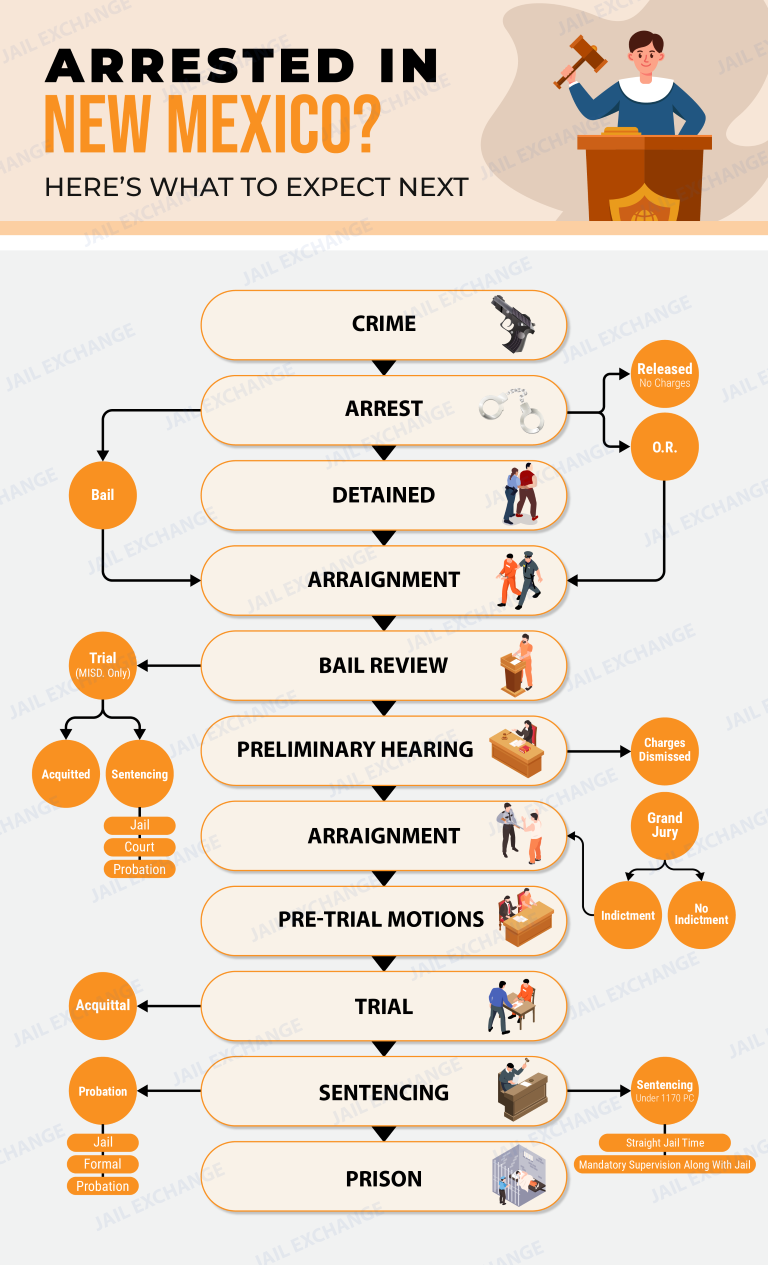
1. What happens after someone is booked into jail in Cibola County?
- Cibola County Magistrate Court, 114 McBride Rd., Suite B, Grants, NM 87020: (505) 285-4605
- Thirteenth Judicial District Court, Cibola County, 700 E. Roosevelt Ave., Suite 60, Grants: (505) 287-8831
- Thirteenth Judicial District Attorney, main office, 700 E. Roosevelt Ave., Suite 30, Grants: (505) 285-4627
- Grants Municipal Court: (505) 287-3835; Milan Municipal Court: (505) 285-9841
Booking records the person's identity, charges and belongings. Use the Cibola County Inmate Search to confirm whether someone is being held. A judge must find probable cause within 48 hours for anyone held without a warrant. The first court appearance, usually in the Grants magistrate court, covers the charges, the right to counsel and the terms of release.
↑ Back to the question list
2. Which court hears misdemeanors in Grants?
State misdemeanors like DWI, shoplifting, domestic battery and driving on a revoked license are heard in the Cibola County Magistrate Court. A jury of six is available if requested. Purely local ordinance tickets from inside Grants or Milan go to those cities' municipal courts. The magistrate court also does first appearances and preliminary hearings in felony cases, but it can't try a felony.
↑ Back to the question list
3. Will a judge set bail, or hold the person until trial?
For most charges the judge sets conditions of release, often within three days of arrest when the person is in custody. Those conditions might be no-contact orders, check-ins, travel limits, or a bond. Only for a felony can the district attorney ask for full pretrial detention. Under the 2016 bail amendment to the state constitution, the judge must hold a hearing, which begins within five days of the motion, and can order detention only on clear and convincing proof that no conditions can protect the public.
↑ Back to the question list
4. How does a felony case move forward in Cibola County?
The magistrate court opens the case. To send it to district court, the prosecutor either presents it to a grand jury or holds a preliminary hearing within 10 days for a jailed defendant or 60 days for one who is out. When probable cause is found, the case is filed in the Thirteenth Judicial District Court in Grants, and the defendant is arraigned. From there come discovery, motions, plea negotiations and possibly trial.
↑ Back to the question list
5. Is there a public defender office in Cibola County?
The Law Offices of the Public Defender does not list an office in the Thirteenth District. Its guidance tells people in counties without an office to apply through the district or magistrate court handling their case, and qualified people are then assigned a lawyer, usually a contract attorney. The main public defender office in Santa Fe is at (505) 395-2888.
↑ Back to the question list
6. What sentences are possible, and can a conviction be appealed?
A 12-person jury decides felony trials in district court. Basic prison terms in New Mexico are 18 months for a fourth-degree felony up to 18 years for first degree, and judges may suspend all or part of that term for probation. A misdemeanor can mean up to 364 days and a fine of up to $1,000.
Someone convicted in magistrate court has 15 days to appeal to the district court. For a district court conviction, the next stop is the New Mexico Court of Appeals, with a 30-day window to file.
↑ Back to the question list
7. How do pueblo and federal cases differ from state cases here?
Acoma and Laguna Pueblos have their own tribal courts for many offenses by tribal members on pueblo land. Serious felonies involving Native Americans on tribal land, like murder or sexual assault, are typically federal crimes under the Major Crimes Act. Those, along with other federal crimes, go to the U.S. District Court for the District of New Mexico, usually at its Albuquerque courthouse, (505) 348-2000.
↑ Back to the question list
8. Where can I find Cibola County case records?
Public case information is posted on New Mexico Courts Case Lookup. You can enter a name or case number to see the docket, upcoming hearings and the judge assigned. Tribal and federal cases won't appear there.
↑ Back to the question list
9. Which office can confirm a Cibola County hearing date?
For a magistrate case, call (505) 285-4605 between 8 a.m. and 4 p.m. on weekdays. For a felony in district court, call (505) 287-8831. Have the case number ready. This page gives general information only and is not legal advice.
↑ Back to the question list
Information for this service is currently unavailable.
GettingOut / ViaPath Trust & Commissary Deposits
Provider: GettingOut (Telmate) • Rebranding as ViaPath Technologies (myViaPath)GettingOut and ViaPath Technologies provide electronic inmate trust banking solutions that allow family and friends to transfer money directly into an incarcerated person's jail trust and commissary account. Deposited funds give inmates the financial balance needed to purchase food items, personal hygiene products, stationery, and over-the-counter medical goods from the jail store.
Important: Facility Banking Policies Vary Across Jails
Once a person is booked and moved to a housing unit, facilities do not always allow cash drop-offs or phone payments directly to the jail window. Some might and you should confirm this by calling the facility and asking. But if you do not register online and fund your loved one's trust account immediately, they may be forced to wait days or weeks for standard paper processing, leaving them without essential soap, clean undergarments, basic medical sundries or snacks.
Step-by-Step Instructions to Deposit Trust Funds
- Confirm the inmate's legal first and last name, date of birth, and assigned jail booking identification number.
- Navigate to www.gettingout.com or the updated my.viapath.com portal.
- Sign into your verified profile and select Deposit Funds.
- Select the detention center where the inmate is currently housed.
- Choose Trust Account / Commissary and specify your deposit amount.
- Enter your credit or debit card billing information, review transaction fees, and submit payment.
- Save your digital receipt and confirmation number for your records.
What the Inmate Needs to Do
The inmate does not need an internet account to receive funds. Once the electronic transaction clears, the balance posts directly to their jail trust ledger according to facility accounting schedules. The inmate can review their updated balance at a dayroom pod kiosk or on their tablet and place orders on their regular commissary day.
Official Providers: GettingOut Website | myViaPath Portal
Customer Service Telephone: 1-866-516-0115 (GettingOut) • 1-877-650-4249 (ViaPath)
Support Hours: Monday – Friday, 7:00 AM – 11:00 PM CST; Saturday – Sunday, 8:00 AM – 7:00 PM CST
Supported Languages: English and Spanish
Other Services Provided by GettingOut / ViaPath
In addition to Trust Deposits, GettingOut and ViaPath provide several other communication and visitation options:
- Phone Calling Accounts: Prepay for phone calling credits so your loved one can call your telephone directly.
• Learn more on our website: Phone Calling Accounts Guide | • Visit official vendor page: ViaPath Phone Accounts - Two-Way Text Messaging: Send electronic messages and photos directly to an inmate's tablet or kiosk.
• Learn more on our website: Digital Messaging Guide | • Visit official vendor page: GettingOut Messaging - Remote Video Visits: Schedule and join live video visits from home using your computer or smartphone.
• Learn more on our website: Video Visitation Guide | • Visit official vendor page: GettingOut Video Visits - Inmate Tablets & Media: Fund tablet entertainment, music streaming, games, and news modules.
• Learn more on our website: Tablet Rentals & Content Guide | • Visit official vendor page: GettingOut Tablets
Deposit Money for an Inmate in the Cibola County Correctional Center
CoreCivic runs the Cibola County Correctional Center in Milan and posts four ways to get money to someone held there.
- Online or by app: Send a card payment to the person's trust account through ConnectNetwork, on the website or its phone app.
- By phone: Call 888-988-4768 for a trust deposit and give site ID 309. Payment help is open 24 hours a day at 877-650-4249.
- Money order or cashier's check: Make it payable to the person you are sending it to and print your own name and address on it. Mail it alone to CoreCivic, P.O. Box 16545, Atlanta, GA 30321-0545. Address the envelope to the person's last name, first name and commissary number, add the facility name (Cibola County Correctional Center), and put your full name and return address in the corner.
- Western Union: CoreCivic posts Western Union steps for this facility on its Cibola County Correctional Center page.
Cash and personal checks are refused. Nothing but the money order goes in that envelope: letters, cards and photos sent to the Atlanta box are never forwarded or returned.
The Cibola County Correctional Center in Milan is a privately run, medium-security detention center, not a regular county jail. It holds people for the U.S. Marshals Service and Immigration and Customs Enforcement, and it also houses detainees for Cibola County and two local pueblos. Letters, cards and pictures go to the center's post office box with the person's name on the first line.
Letters, cards, photos and legal mail:
Inmate's Full Name & Booking #
Cibola County Correctional Center
PO Box 3540
Milan, NM 87021
- Money orders: Make a money order or cashier's check out to the person you are sending it to, with their commissary number. Funds go to a separate lockbox address on the center's money instructions, not to the post office box above. Cash and personal checks are refused, and letters sent to the lockbox are not forwarded. Money can also reach the person's account if you send it online.
- Return address: Your first and last name and address must be on every envelope, or deposits and letters can be delayed or not delivered.
- Ink and extras: Use a blue or black pen for letters to Milan. Glitter, confetti, drawings, markers, crayons, lipstick and perfume are not allowed.
- Greeting cards: A plain card is fine here, but a card with music inside is not.
- Books and magazines: Reading material has to be new and must arrive directly from the publisher. At the Milan center, books with extreme violence or obscene content are discarded, and magazines showing weapons or adult material are confiscated.
- Stamps: Don't send them. People buy stamps from commissary.
- Searched mail: Mail is inspected for drugs and weapons, and illegal items are turned over to law enforcement.
Short electronic messages of up to 500 characters are another way to stay in touch.
GettingOut / ViaPath Inmate Phone Calling
Provider: GettingOut (Telmate) • Rebranding as ViaPath Technologies (myViaPath)GettingOut telephone services (operated under Global Tel*Link / Telmate and transitioning to ViaPath Technologies / myViaPath) allow incarcerated individuals to place outbound voice calls from housing-unit telephones and handheld tablets directly to approved family contacts. Funding a prepaid phone balance ensures calls connect to cellular devices and residential lines without carrier collect call blocks.
Important: Cell Carriers Automatically Block Jail Collect Calls
Inmate phone networks do not permit incoming calls, and wireless cell providers do not support traditional collect billing. While some residential landlines might allow direct carrier billing, mobile numbers require a funded prepaid account or inmate PIN debit balance, which you can verify with your phone provider. If you do not register online and add calling funds promptly, your loved one will receive an automated disconnect announcement when dialing your line.
Step-by-Step Instructions to Set Up and Fund Calling
- Visit www.gettingout.com or the updated my.viapath.com portal.
- Register your account using the primary 10-digit telephone number where you want to receive calls.
- Search for the facility and add the inmate using their full legal name or facility booking ID.
- Select Phone Deposits or AdvancePay from your dashboard.
- Select your deposit dollar amount and enter your debit or credit card billing details.
- Authorize payment, save your confirmation receipt, and confirm that your mobile phone allows calls from automated or unknown correctional numbers.
What the Inmate Needs to Do
The inmate approaches any housing-unit telephone or opens the phone application on their handheld tablet, enters their assigned PIN, and dials your 10-digit number. The system verifies that your account has an active prepaid balance and connects the call once you accept the automated prompt. All non-privileged conversations are recorded and monitored by the facility.
Official Providers: GettingOut Website | myViaPath Portal
Customer Service Telephone: 1-866-516-0115 (GettingOut) • 1-877-650-4249 (ViaPath)
Support Hours: Monday – Friday, 7:00 AM – 11:00 PM CST; Saturday – Sunday, 8:00 AM – 7:00 PM CST
Supported Languages: English and Spanish
Other Services Provided by GettingOut / ViaPath
In addition to Phone Calling, GettingOut and ViaPath provide several communication, financial, and visitation services:
- Two-Way Text Messaging: Send digital text messages and photos directly to an inmate's tablet or kiosk.
• Learn more on our website: Digital Messaging Guide | • Visit official vendor page: GettingOut Messaging - Remote Video Visits: Schedule and join live video visits from home using your computer or smartphone.
• Learn more on our website: Video Visitation Guide | • Visit official vendor page: GettingOut Video Visits - Inmate Tablets & Media: Fund tablet entertainment, music streaming, games, and news modules.
• Learn more on our website: Tablet Rentals & Content Guide | • Visit official vendor page: GettingOut Tablets - Inmate Trust & Commissary Deposits: Transfer funds directly into their jail trust ledger for commissary store purchases.
• Learn more on our website: Inmate Trust Deposits Guide | • Visit official vendor page: ViaPath Trust Deposits
GettingOut / ViaPath Inmate Messaging
Provider: GettingOut (Telmate) • Rebranding as ViaPath Technologies (myViaPath)GettingOut (a service of Global Tel*Link / Telmate) provides an instant two-way digital messaging and photo-sharing platform connecting families with incarcerated individuals via housing-unit kiosks and handheld tablets. The provider is actively rebranding as ViaPath Technologies (under the myViaPath platform); depending on the facility contract, local booking sheets and tablets may still refer to the service as GettingOut, GTL, or ViaPath, but both brand portals grant access to the same centralized messaging balance.
Important: Contact Authorization and Digital Mail Rules Vary
Inmate digital messaging rules are not uniform across all county detention centers. While some jails allow immediate two-way messaging upon registration, others require initial contact invitations or administrative ID verification, which you should verify directly with the facility. If you delay setting up an online profile and funding your Friends & Family messaging account, your loved one may face lengthy periods without direct family communication.
Step-by-Step Instructions to Register and Message an Inmate
- Visit www.gettingout.com or the newly branded my.viapath.com portal, or install the GettingOut / myViaPath mobile app.
- Create a user profile using your primary email address and 10-digit mobile phone number.
- Complete identity verification by uploading a clear photo of your government-issued driver's license or state ID and taking a verification selfie if requested.
- Search for the inmate by selecting the state, correctional facility, and their legal name or booking ID.
- Send an outside contact connection request to link your account to their tablet profile.
- Deposit funds into your 'Friends & Family Account' using a debit or credit card to cover message and photo-sharing costs.
- Compose your text message in the chat box, attach approved photos, and submit it for jail screening.
What the Inmate Needs to Do
The inmate powers on their assigned pod tablet or approaches a housing-unit kiosk and logs into the messaging application with their PIN. They accept your incoming contact invitation on the screen. Once approved by institutional monitors, incoming messages appear in their inbox, and the inmate types a reply directly on the screen.
Official Providers: GettingOut Website | myViaPath Portal
Customer Service Telephone: 1-866-516-0115 (GettingOut Support) • 1-877-650-4249 (ViaPath Support)
Support Hours: Monday – Friday, 7:00 AM – 11:00 PM CST; Saturday – Sunday, 8:00 AM – 7:00 PM CST
Supported Languages: English and Spanish
Other Services Provided by GettingOut / ViaPath
In addition to Two-Way Text Messaging, GettingOut and ViaPath provide several other communications and visitation options:
- Remote Video Visits: Schedule and join live web-based video visits from your computer or smartphone.
• Learn more on our website: Video Visitation Guide | • Visit official vendor page: GettingOut Video Visits - Inmate Tablet Rentals & Media: Fund tablet entertainment, music streaming, games, and news modules.
• Learn more on our website: Tablet Rentals & Content Guide | • Visit official vendor page: GettingOut Tablets - AdvancePay Phone Calling: Prepay for telephone calls so your loved one can dial your mobile phone directly.
• Learn more on our website: AdvancePay Phone Calling Guide | • Visit official vendor page: ViaPath ConnectNetwork Calling - Inmate Trust Deposits: Transfer funds directly into their jail trust account for commissary store purchases.
• Learn more on our website: Inmate Trust Deposits Guide | • Visit official vendor page: ViaPath Trust Deposits
GettingOut / ViaPath Inmate Tablets & Media
Provider: GettingOut (Telmate) • Rebranding as ViaPath Technologies (myViaPath)GettingOut provides specialized, secure handheld tablets for county jail inmates, offering access to messaging apps, telephone calling, legal research tools, eBooks, vocational training, and premium entertainment rentals. As part of GTL and Telmate's transition to ViaPath Technologies, tablet firmware and management platforms are moving to the myViaPath system.
Important: Tablet Feature Availability Varies by Facility
Jails manage tablet distribution according to individual facility contracts. While basic educational and legal materials are often provided without cost, access to music streaming, games, podcasts, and premium movies requires an active funded account. You should confirm the tablet rules with the facility directly. Registering and funding their media balance right away ensures your loved one has productive resources and recreation during their stay.
Step-by-Step Instructions to Fund Inmate Tablet Services
- Confirm that GettingOut / ViaPath handheld tablets are active at your loved one's specific detention facility.
- Navigate to www.gettingout.com or my.viapath.com.
- Sign into your verified user profile and link the inmate's legal name and booking ID number.
- Select Make a Deposit and choose either your Friends & Family Account (for messaging) or the inmate's personal Inmate Account (for entertainment and song rentals).
- Choose your deposit amount, review convenience fees, and complete payment with a credit or debit card.
- Notify your loved one that their tablet account balance has been funded.
What the Inmate Needs to Do
The inmate unlocks their assigned tablet or signs one out from the pod charging station using their biometric verification or PIN. Once logged in, their available balance appears on the screen, allowing them to download songs, stream educational content, and communicate with approved family members.
Official Providers: GettingOut Website | myViaPath Portal
Customer Service Telephone: 1-866-516-0115 (GettingOut) • 1-877-650-4249 (ViaPath)
Support Hours: Monday – Friday, 7:00 AM – 11:00 PM CST; Saturday – Sunday, 8:00 AM – 7:00 PM CST
Supported Languages: English and Spanish
Other Services Provided by GettingOut / ViaPath
In addition to Tablet Media & Rentals, GettingOut and ViaPath provide several other communication and account services:
- Two-Way Text Messaging: Send electronic letters and photos straight to the inmate's screen.
• Learn more on our website: Two-Way Text Messaging Guide | • Visit official vendor page: GettingOut Messaging - Remote Video Visits: Meet face-to-face over secure live video from home.
• Learn more on our website: Video Visitation Guide | • Visit official vendor page: GettingOut Video Visits - AdvancePay Phone Calling: Prepay for phone calling credits so your loved one can call your telephone directly.
• Learn more on our website: AdvancePay Phone Calling Guide | • Visit official vendor page: ViaPath ConnectNetwork Calling - Inmate Trust Deposits: Transfer cash directly into an inmate's jail ledger for commissary purchases.
• Learn more on our website: Inmate Trust Deposits Guide | • Visit official vendor page: ViaPath Trust Deposits
Cibola County Juvenile Facilities
- Cibola County Detention Liaison: 505-285-4900
- Core Civic: 505-285-4900
The Cibola County Correctional Center serves the following cities and towns of Cibola County: Grants, Milan and Laguna.