
De Baca County Detention Center
De Baca County Detention Center
Jail Phone Number
575-355-7870De Baca County Inmate Search and Booking Information
Find someone in custody in De Baca County. Call the detention desk in Fort Sumner to ask about a De Baca County booking. Give the arresting agency and the date, particularly if the arrest occurred outside Fort Sumner.
New Mexico Courts’ district resource guide also identifies De Baca detention as a booking destination for Guadalupe County. If you are calling about someone arrested in Santa Rosa, tell staff that up front.
Before you visit or send money: Confirm where the person is held and ask for the booking or inmate number. Published intercounty arrangements can change. If staff say the person was moved, ask where they are held today and which county’s court controls the case.
Read inmate search answers
 Read inmate search answers
1. How do I find someone in custody in De Baca County?
Call the detention desk in Fort Sumner to ask about a De Baca County booking. Give the arresting agency and the date, particularly if the arrest occurred outside Fort Sumner. Write down the facility, booking or inmate number and the time you confirmed custody. Keep any court case number separate.
↑ Back to the question list2. Who can I call to check a booking?
Contact De Baca County Detention Center at 1000 North Second Street, Fort Sumner. Call 575-355-7870. Start with the full name, date of birth, approximate arrest date and the city or agency involved. If you already have a booking number, give that first. Official contact and facility information.
↑ Back to the question list3. What if the person does not show up?
Check spelling, hyphens, both surnames and the name used at arrest. With a recent arrest, ask whether intake is complete. If the jail has no record, ask the arresting agency where the person was taken and call that facility. A missing entry by itself does not establish a release.
↑ Back to the question list4. How can I find out if they went to another jail?
New Mexico Courts’ district resource guide also identifies De Baca detention as a booking destination for Guadalupe County. If you are calling about someone arrested in Santa Rosa, tell staff that up front. Ask when the person arrived or whether they were transferred, and get the receiving jail’s phone number. Call the receiving jail to confirm it accepted the person before arranging a ride, mailing anything or depositing money.
↑ Back to the question list5. Can I see a booking photo or mugshot?
If a booking record has a photo, compare the booking date and identifying details with what you know. If there is no photo, ask the facility’s records office whether photos are available and what request it accepts. A booking record shows an arrest or intake. The court record is where to check how a charge was resolved.
↑ Back to the question list6. How do I check for an active warrant?
Contact the agency or court that may have issued the warrant. Give the person’s full name and the case number if you have it. The New Mexico Courts public case search can help identify a case and its court, but a missing entry or an old jail listing cannot confirm whether a warrant is active.
↑ Back to the question list7. Where can I see the charges and next court date?
Write down the charge names and any case number you find in the booking record. Search New Mexico Courts public case search and call the clerk listed for that case to confirm the hearing time, courthouse and any public access instructions. For local court contacts, see the JailExchange court guide.
↑ Back to the question list8. Who can tell me whether bond was set or when they will be released?
For a local criminal case, confirm the latest release order with the court and ask the housing jail how it processes the order. A payment can still leave a separate hold to resolve, so ask about pickup before driving. Use the JailExchange bail guide for local contacts and procedures.
↑ Back to the question list9. Can I get a release or transfer notification?
Check New Mexico VINE or call 877-551-8463. If you can locate the record, follow the enrollment steps and keep your contact information current. If the service cannot find the person, ask the holding agency about its custody updates and victim notification process.
↑ Back to the question list10. How can I talk to someone in custody?
Ask the confirmed facility which phone service it uses and whether the person needs your number on an approved list. Ask how they can place an outgoing call. If a call is blocked, confirm the facility and account type before buying more credit. Ask counsel how to arrange a confidential legal call.
↑ Back to the question list11. How can I set up a visit?
Published intercounty arrangements can change. If staff say the person was moved, ask where they are held today and which county’s court controls the case. Ask whether you need an appointment, photo ID, visitor approval or special paperwork to bring a child. Confirm the exact address and visit type before leaving home.
↑ Back to the question list12. Where do I send letters or photographs?
Ask for the personal-mail address and the exact format for the person’s name, ID and return address. Some facilities use a separate mail processor. Ask what photographs, cards or other enclosures they accept before sending anything.
↑ Back to the question list13. How do I send money to the right account?
Use the vendor linked by the confirmed facility. Match the facility name, person and ID before paying. Commissary, phone credit and court bond can go through separate systems. If they have moved, check the new facility’s instructions before using the old account.
↑ Back to the question list14. Who do I contact with an urgent health or safety concern?
Call the facility holding the person and ask for the shift supervisor or medical unit. Give the full name, booking number and the specific concern, including any time-sensitive medication. Staff may be able to take the information even if they cannot discuss treatment with you.
↑ Back to the question list15. How do I search state prison, federal or immigration custody?
The New Mexico Corrections Department offender search covers state prison and supervision records. Check the listed status and location. For federal prison custody use the Federal Bureau of Prisons locator. For a recent federal arrest without a locator result, ask the arresting agency or counsel which facility is holding the person. For immigration detention, use the ICE Online Detainee Locator with the A-number and country of birth, or the name and country of birth. For a tribal arrest or a child’s arrest, ask the arresting agency directly about the correct facility and records process.
↑ Back to the question listDe Baca County bail and bond: Fort Sumner
Arrests in Fort Sumner, Taiban and the rest of De Baca County go to the county detention center in Fort Sumner.
The De Baca County Inmate Search can show who is booked.
Before paying, ask the court or jail which release order applies and where payment is accepted.
1. What is the phone number for the Fort Sumner jail?
The jail is 575-355-7870, at 248 E. Avenue C (county jail booklet). The sheriff shares the address and answers at 575-355-7433 (NM Sheriffs).
2. Why are Guadalupe County inmates here?
Guadalupe County has no jail. In December 2021 it signed a deal to reserve up to 24 beds in Fort Sumner (Eastern New Mexico News).
3. Is there a fixed bail amount for each crime?
New Mexico threw out that approach; judges must set terms person by person (Rule 5-401, part E). Petty cases can end with a release on a promise from court-chosen staff, but DWI and assault-type charges wait for a judge (Rule 6-408).
4. How long can someone sit before seeing a judge?
Within two days a judge must look at probable cause (Rule 6-203). Release terms come by day 3 (Rule 5-401).
5. If we have to pay, what are the options?
A judge who requires money has three steps to climb: ten percent down, a pledge of property, or the whole amount, which you may cover yourself or through a bondsman (Rule 5-401). The bondsman's premium is capped at the state rate (NMSA 59A-51-13).
6. Can bail be denied?
For a felony, after the prosecutor proves at a hearing that release is unsafe (constitution; Rule 5-409). A person who is safe to release cannot be kept just for lack of money.
7. Where is court in Fort Sumner?
Magistrate court is at 282 East Ave. B, 575-355-7371 (court list). The Tenth Judicial District takes felonies (NMSA 34-6-1).
8. Who gives out public defenders here?
The courts. With no local public defender office, you apply at magistrate or district court (LOPD).
9. What about kids and federal cases?
A child is handled under the Children's Code (NMSA 32A-2-13) and, if held, goes to a certified center elsewhere (CYFD). Federal charges go to Albuquerque, 505-348-2000 (U.S. court).
10. Who can confirm the bond?
The magistrate court, 575-355-7371.
De Baca County bail contacts
- Jail
- Fort Sumner; 575-355-7870
- Magistrate court
- 575-355-7371
- Inmate search
- De Baca County Inmate Search
De Baca County Jail ON-SITE VISITATION SCHEDULE
De Baca County Jail / Holding
514 Ave C
Fort Sumner, NM 88119
575-355-2361
To visit anyone held in custody through De Baca County in Fort Sumner, you must first ensure you are officially registered on the detainee's approved visitor roster. Inmates are responsible for submitting visitor information at booking, and jail staff will not admit unregistered visitors.
Because De Baca County boards detainees with Roosevelt or Curry County, contact the sheriff's office by phone at 575-355-2361 to find out the inmate's current visiting schedule. Visiting appointments are organized by cell pod, male versus female housing dorms, and sometimes the alphabetical grouping of the inmate's surname.
Every adult entering the facility must produce a valid government-issued photo identification card. Modest, respectful attire is mandatory; clothing such as exposed midriffs, tight or sheer fabrics, tank tops, and short hemlines is barred. All outside items, including handbags, electronics, and keys, must remain locked in your vehicle.
Minors under 18 years of age may visit only when accompanied by an authorized parent or legal guardian who is also approved on the inmate's visitor record.

CIDNET Video Visitation allows families to conduct live, face-to-face video visits with incarcerated loved ones from home. Using an internet-connected smartphone, tablet, or personal computer equipped with a webcam, visitors connect directly through housing-unit video stations or handheld tablets without traveling to the facility or waiting in jail visitor lobbies.
Important: Advance Registration and Visitor Clearance Required
Detention centers do not permit unscheduled or unverified video sessions. Correctional facilities require prospective visitors to submit government-issued photo identification and receive administrative clearance before booking an appointment, an approval process that can take up to 48 hours depending on facility staffing. You should verify your visitor approval status with the facility prior to scheduling. If you do not register well in advance, you will miss your loved one's scheduled visiting window for the week.
Step-by-Step Instructions to Register and Schedule a Video Visit
- Visit customer.cidnet.net or launch the CIDNET app.
- Register your visitor profile and upload a clear photograph of your government-issued ID and a verification photo.
- Wait for email notification confirming institutional visitor approval.
- Ensure your account has sufficient Data Points to cover the duration of the visit.
- Select Video Visitation, select the detention facility, and pick an available calendar time slot.
- Log into the website or mobile app 10 minutes prior to the start time on a device with a functioning camera, microphone, and stable high-speed internet connection.
What the Inmate Needs to Do
The inmate receives a schedule notification on their housing unit video kiosk or tablet. At the appointed time, they log in with their PIN and sit before the screen. Inmates and visitors must strictly observe jail dress and conduct rules; sessions are monitored by staff and will terminate immediately upon any violation.
Official Provider: CIDNET Customer Portal | Encartele Corporate
Customer Service Telephone: 1-888-984-1903
Support Hours: Monday – Friday, 8:00 AM – 5:00 PM CST
Supported Languages: English and Spanish
Other Services Provided by CIDNET
In addition to Remote Video Visitation, CIDNET provides several other communication channels:
- Data Points (Unified Funding): Purchase the central credits that power video visitation, calling, and messaging.
• Learn more on our website: CIDNET Data Points Guide | • Visit official vendor page: Buy CIDNET Data - Inmate Messaging & Digital Mail: Send electronic text messages and digital photo attachments directly to an inmate's terminal.
• Learn more on our website: CIDNET Messaging Guide | • Visit official vendor page: CIDNET Messaging Portal - Phone PINs & Voice Calling: Fund prepaid telephone calling so your loved one can call your mobile device.
• Learn more on our website: CIDNET Phone Calling Guide | • Visit official vendor page: CIDNET Voice Calling
De Baca County: How Criminal Charges Are Handled
De Baca County is a small ranching county on the Pecos River, and Fort Sumner is its only town of any size.
Both the magistrate court and the district court are in Fort Sumner.
De Baca belongs to the Tenth Judicial District, which it shares with Quay and Harding Counties.
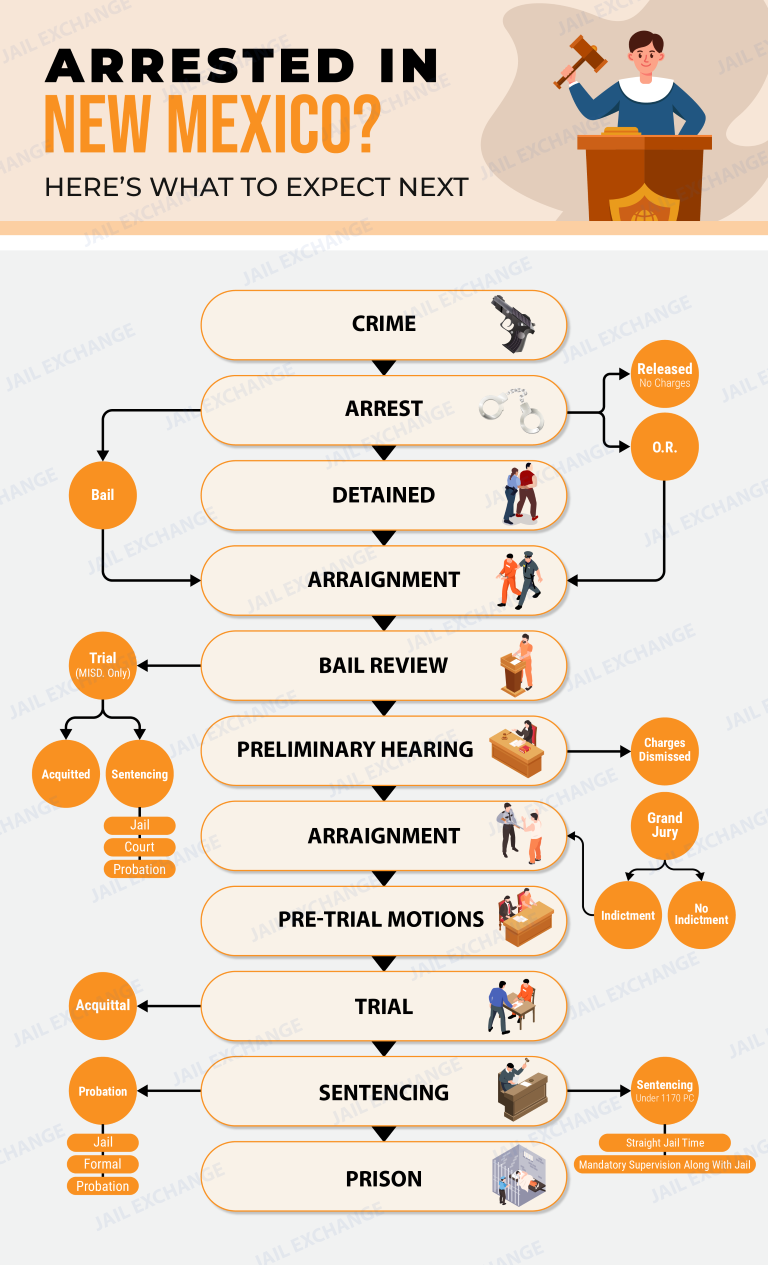
1. What should I expect after an arrest in De Baca County?
- De Baca County Magistrate Court, 282 E. Ave. B, Fort Sumner, NM 88119: (575) 355-7371
- Tenth Judicial District Court, Fort Sumner, 248 E. Ave. C, Fort Sumner: (575) 355-2896
- Tenth Judicial District Attorney, Tucumcari: (575) 461-2075
- Fort Sumner Municipal Court: (575) 355-2402
The person is booked and, if the arrest had no warrant, a judge must review probable cause within 48 hours. The first appearance is in front of the magistrate in Fort Sumner. There the judge goes over the charge and the person's rights and decides on release. Many minor offenses are handled with a citation instead of jail.
↑ Back to the question list
2. What does the Fort Sumner magistrate court decide?
The magistrate court is where misdemeanor cases are tried, such as DWI, petty theft, disorderly conduct and game and fish violations charged under state law. A jury of six is available. On felony charges, the magistrate holds the first appearance and may hold the preliminary hearing, but the case must move to district court for any plea or trial.
↑ Back to the question list
3. Is cash bail always required in De Baca County?
It isn't. New Mexico rules favor release on the least restrictive terms needed, and many people are released on their own recognizance. When a bond is set, the judge is supposed to consider whether the person can afford it. For a felony, the prosecutor may instead seek detention with no bail. That requires a hearing within five days of the motion and strong proof, meeting the clear-and-convincing test, that only jail will keep the community safe, which is the standard set by Article II, Section 13.
↑ Back to the question list
4. How does a felony get to the Tenth Judicial District Court?
A grand jury indictment or a finding of probable cause at a preliminary hearing sends the case up. The preliminary hearing deadline is 10 days for a defendant in jail and 60 days for one on release. Once filed in district court, the case is set for arraignment, and the defendant answers the charge. Plea deals are common, but every defendant can insist on a jury trial.
↑ Back to the question list
5. How does someone in Fort Sumner get a court-appointed lawyer?
The Law Offices of the Public Defender has no office in the Tenth District, so people apply through the court that has their case. If eligible, they are assigned a contract defense attorney. The prosecutor for De Baca County is the Tenth Judicial District Attorney, whose main office is in Tucumcari.
↑ Back to the question list
6. What are the possible penalties, and how does an appeal work?
Felony juries are made up of 12 people. If convicted, the basic terms start at 18 months for the lowest felony level and rise to 3, 9 and 18 years for the higher degrees, though a judge can suspend time and impose probation. Misdemeanors are punishable by up to 364 days and petty misdemeanors by up to six months.
Magistrate cases can be appealed within 15 days to the district court for a fresh trial. A felony conviction is reviewed by the New Mexico Court of Appeals if the defense files within a month (30 days).
↑ Back to the question list
7. When would a De Baca County case go federal?
Crimes under federal law, like trafficking drugs across state lines, certain weapons charges, or theft of federal property, are prosecuted in the U.S. District Court for the District of New Mexico. Its courthouses are in Albuquerque, Santa Fe, Las Cruces and Roswell, and the Albuquerque clerk can be reached at (505) 348-2000.
↑ Back to the question list
8. Is there a way to look up De Baca County cases online?
Use New Mexico Courts Case Lookup. Search by name or case number to see hearing dates and filings from the magistrate court and the district court.
↑ Back to the question list
9. Who can confirm a Fort Sumner court date?
Call the magistrate court at (575) 355-7371 or the district court at (575) 355-2896, depending on where the case is pending. Ask the clerk to confirm the date, time and whether the hearing will be in person or by video. This page is not legal advice.
↑ Back to the question list
Information for this service is currently unavailable.
Information for this service is currently unavailable.
De Baca County runs a small detention center in Fort Sumner, and mail for anyone held there goes to its post office box in town. All letters arrive on paper and are opened and searched by staff. Check the jail roster first, since people in a small county jail are often released or moved.
Personal mail, legal mail and reading material:
Inmate's Full Name & Inmate ID #
De Baca County Detention Center
PO Box 347
Fort Sumner, NM 88119
- The envelope: List the inmate's full name and inmate ID number, and write your own name and return address in the top left corner. Mail with no return address will most likely not reach the inmate.
- Newspapers, magazines and books: New only, shipped straight from the publisher or a store. Violent or obscene books are thrown away, and magazines with profanity, weapons or adult content are confiscated.
- Ink colors: Stick to black or blue pens, because felt markers, crayons, colored ink, lipstick and perfume get letters refused.
- Extras: No glitter, confetti, drawings or anything else tucked inside.
- Cards: Greeting cards need to be plain ones without music.
- Stamps: Stamps can't be mailed to Fort Sumner, but an inmate with no money gets two or three stamps a week from the jail.
- Packages: A package can only come from the jail's approved commissary seller, never from home.
- Contraband: Illegal items are given to the sheriff or district attorney, and the inmate can lose mail privileges.
The jail also has electronic messaging if you want to reach someone faster.
CIDNET Phone Calling enables incarcerated individuals to place outbound voice calls from housing-unit wall phones or handheld tablets directly to approved cell phones and landlines. Because jail phone systems cannot accept incoming calls, setting up a CIDNET account and purchasing Data Points ensures outbound calls connect immediately without wireless carrier collect blocks.
Important: Mobile Networks Block Inmate Calls Without Data Points
Wireless cellular carriers automatically block collect calls originating from jail telecommunications systems. While some traditional landline telephone providers may support monthly operator billing, mobile smartphones and VoIP numbers require an active prepaid CIDNET balance, which you can verify with your provider. If you do not register your 10-digit number online and purchase Data Points immediately, your loved one will hear an automated operator recording stating that your phone number cannot accept calls.
Step-by-Step Instructions to Set Up and Fund Voice Calling
- Go to customer.cidnet.net or launch the CIDNET Customer mobile app.
- Register your account using the primary 10-digit telephone number where you want to receive calls.
- Upload your driver's license or state ID for identity verification.
- Select the detention center where the inmate is held and link them to your contact profile.
- Purchase Data Points using a debit or credit card to cover per-minute calling rates.
- Confirm your mobile phone allows calls from automated or unknown correctional numbers and does not send them to spam.
What the Inmate Needs to Do
The inmate approaches a pod wall phone or opens the phone app on their tablet, enters their assigned inmate PIN, and dials your 10-digit number. CIDNET's automated system verifies that your account has sufficient Data Points and connects the call once you accept the automated prompt. All non-privileged conversations are recorded and monitored by the facility.
Official Provider: CIDNET Customer Portal | Encartele Corporate
Customer Service Telephone: 1-888-984-1903
Support Hours: Monday – Friday, 8:00 AM – 5:00 PM CST
Supported Languages: English and Spanish
Other Services Provided by CIDNET
In addition to Phone Calling, CIDNET operates messaging and video visitation services:
- Data Points (Unified Funding): Purchase the central credits used to pay for telephone talk time.
• Learn more on our website: CIDNET Data Points Guide | • Visit official vendor page: Buy CIDNET Data - Remote Video Visitation: Schedule and join live video visits from home using your computer or smartphone.
• Learn more on our website: CIDNET Video Visits Guide | • Visit official vendor page: CIDNET Video Visitation - Inmate Messaging & Digital Mail: Send text messages and digital photo attachments directly to an inmate's terminal.
• Learn more on our website: CIDNET Messaging Guide | • Visit official vendor page: CIDNET Messaging Portal
CIDNET Inmate Messaging provides a secure digital messaging and picture-sharing service for families of incarcerated individuals. Powered by CIDNET Data Points, outside contacts can compose electronic letters and upload JPEG photographs directly through the CIDNET web app, delivering correspondence to inmate screens within hours and avoiding paper mail sorting delays.
Important: Postal Mail Transition and Screening Rules Vary
Inmates cannot receive incoming phone calls, and physical postal mail policies differ across jurisdictions. While some detention centers accept handwritten envelopes, many facilities contracting with CIDNET have prohibited physical paper mail in favor of electronic mail scanning and direct digital messaging, which you can verify by checking facility rules. If you do not register online and purchase Data Points immediately, your loved one may face lengthy periods without direct written communication from family.
Step-by-Step Instructions to Register and Message an Inmate
- Log into your account at customer.cidnet.net or launch the CIDNET app.
- Ensure your identity verification (photo ID and selfie) is approved by the facility.
- Confirm your account has an active Data Point balance; purchase additional points if needed.
- Select Messages from your navigation menu and click on your linked contact.
- Type your message in the text editor and attach clear JPEG photo files if authorized by the facility's media rules.
- Review the estimated Data Point cost for the message length and image attachments.
- Click Send to submit your transmission to the institutional mailroom screening queue.
What the Inmate Needs to Do
All messages and photographs pass through facility screening filters. Once approved, the message arrives in the inmate's inbox on their housing unit kiosk or assigned tablet. The inmate opens the message, views the images, and types a digital response, which draws against available account points.
Official Provider: CIDNET Customer Portal | Encartele Corporate
Customer Service Telephone: 1-888-984-1903
Support Hours: Monday – Friday, 8:00 AM – 5:00 PM CST
Supported Languages: English and Spanish
Other Services Provided by CIDNET
In addition to Inmate Messaging, CIDNET provides several other communication and visitation options:
- Data Points (Unified Funding): Purchase universal credits that power voice calling, messaging, and video visits.
• Learn more on our website: CIDNET Data Points Guide | • Visit official vendor page: Buy CIDNET Data - Remote Video Visitation: Schedule and join live video visits from home using your computer or smartphone.
• Learn more on our website: CIDNET Video Visits Guide | • Visit official vendor page: CIDNET Video Visitation - Phone PINs & Voice Calling: Fund outbound voice telephone calls so your loved one can call your telephone directly.
• Learn more on our website: CIDNET Phone Calling Guide | • Visit official vendor page: CIDNET Voice Calling
CIDNET provides secure handheld wireless tablets designed specifically for correctional housing units. Operating over a private, encrypted facility network, these devices allow incarcerated individuals to exchange messages, place voice calls, conduct remote video visits, read approved digital books, access law library materials, and complete rehabilitative courses directly from their cells.
Important: Tablet Hardware Deployment and Rental Rules Vary
Detention centers do not manage tablet distribution identically. While some agencies issue individual personal tablets to every detainee at booking, others utilize shared pod docking stations or restrict tablet use to specific dayroom hours, which you should confirm with the facility directly. Although core educational and legal resources are generally provided free of charge, sending messages or making calls from the tablet requires an active balance of Data Points funded by friends or family.
Step-by-Step Instructions to Support Tablet Use
- Confirm that CIDNET handheld tablets are active and deployed at your loved one's specific detention facility.
- Register your verified user account at customer.cidnet.net.
- Complete identity verification by uploading your government photo ID.
- Link the inmate to your profile and purchase a reserve of CIDNET Data Points.
- Notify your loved one that funds are available so they can open the communication apps on their tablet.
What the Inmate Needs to Do
The inmate unlocks their assigned tablet using biometric verification or their unique facility PIN. Once logged on, they can browse institutional announcements, access educational materials, or select approved outside contacts to read messages and start calls. When quiet hours begin or tablets require recharging, inmates return devices to designated pod docking carts.
Official Provider: CIDNET Customer Portal | Encartele Corporate
Customer Service Telephone: 1-888-984-1903
Support Hours: Monday – Friday, 8:00 AM – 5:00 PM CST
Supported Languages: English and Spanish
Other Services Provided by CIDNET
In addition to Inmate Tablet Services, CIDNET provides several core communication channels:
- Data Points (Unified Funding): Purchase the digital currency required to power all tablet communications.
• Learn more on our website: CIDNET Data Points Guide | • Visit official vendor page: Buy CIDNET Data - Inmate Messaging & Digital Mail: Send text messages and photos directly to an inmate's tablet screen.
• Learn more on our website: CIDNET Messaging Guide | • Visit official vendor page: CIDNET Messaging Portal - Remote Video Visitation: Conduct scheduled live video calls directly to their tablet or pod kiosk.
• Learn more on our website: CIDNET Video Visits Guide | • Visit official vendor page: CIDNET Video Visitation
De Baca County Juvenile Facilities
Nearby counties
- Jail (Main): 575-355-7870
- Police: 575-355-2403
- Sheriff: 575-355-7550
The De Baca County Detention Center serves the following cities and towns of De Baca County: Fort Sumner and Taiban.