
Lynchburg Adult Detention Center
Lynchburg Adult Detention Center
Jail Phone Number
434-847-1300Lynchburg Inmate Search: Where Your Person Is and What To Do First
Adults arrested in the city are booked into the Lynchburg Adult Detention Center, 510 9th Street, Lynchburg, VA 24504. The building is one of five jails in the Blue Ridge regional system. The other four are in Amherst, Bedford, Campbell and Halifax. You will also find answers on mugshots, lawyers, visits, mail and court.
The jail's official inmate search lets you look up a last name. Someone brought in this morning may take time to appear, so refresh the page tonight and call if the wait feels too long. If you want to see a booking photo, read our mugshots answer.
Start by dialing the jail at 434-847-1300. Ask whether your person is inside, what dollar amount the magistrate chose, and which morning a judge will meet them. Then see our bail page for release rules and our court page for hearings.
Read inmate search answers
 Read inmate search answers
1. Where do I look up a name in the Lynchburg city jail?
The search is the jail's own list of people in custody. Here is a simple plan:
- Pull up the official jail search in your browser.
- Enter the surname alone at first. Too many hits? Add a first name.
- Still empty? Swap in a pet name for the first name, a double surname or a likely typo.
- When you find the row, copy the inmate number. It speeds up every later call.
- Come back every few hours, because bookings, releases and transfers keep changing the list.
If the list lets you down, ring the facility line at 434-847-1300 and give the person's exact name and birth date.
↑ Back to the question list2. No sign of them on the list: should I panic?
Not always. These are the most common reasons for an empty result:
- Paperwork in progress. Intake can take many hours before a name appears.
- Already gone home. Perhaps a court summons, a promise to come back or a paid bond ended the stay already.
- Another building. The Blue Ridge system can place a person in any of its five jails.
- Another town. Someone arrested outside the city belongs to the place that made the arrest.
- Sent to the state. A prison sentence can move the person into Department of Corrections custody.
Booking staff at 434-847-3100 can sort it out fastest.
↑ Back to the question list3. Which jail might be holding them after a Lynchburg city arrest?
City arrests normally end at the first building below. One authority runs all five, so call before you drive anywhere.
- Lynchburg Adult Detention Center, 510 9th Street, Lynchburg, VA 24504. This is the city's main jail. Its visiting schedule lists housing units A through M, an intake unit and a medical unit.
- Amherst County Adult Detention Center, 219 S Riverview Road, Madison Heights, VA 24572.
- Bedford Adult Detention Center, 1000 Broad Street, Bedford, VA 24523.
- Campbell County Adult Detention Center, in Rustburg.
- Halifax Adult Detention Center, in the town of Halifax.
Call the Authority at 434-847-3100 to get street directions for Campbell or Halifax and to learn which building holds men, women or people who need closer watch.
↑ Back to the question list4. Will I see mugshots in the Lynchburg city jail search?
Do not count on seeing a photo in the jail's search. Virginia's public records law gives you a right to adult booking photos that were taken at intake. The exception is a felony case still being investigated, where a release could do harm. Pictures of juveniles are private.
Booking photos are requested from the arresting agency itself. For city officers, phone the police records unit at 434-455-6069.
- ICE hands out its own photos, but only after a request on its FOIA records page.
- Federal booking photos stay closed to the public. Only the U.S. Marshals Service may share one, as it might for a fugitive.
5. Will anything warn me if they leave or change jails?
Yes, if you sign up for VINE. It costs nothing. It alerts you when a person is released or transferred out of a jail run by any city, county or region, or out of a Virginia prison, and it can show where they sit today.
- Enroll at VINELink.
- Or phone 800-467-4943 at any hour.
VINE helps, but it is no guarantee. The Blue Ridge jails move people between buildings, so keep checking the jail search and call 434-847-3100 when timing matters.
↑ Back to the question list6. Can they get out? Bail after a Lynchburg city arrest
The magistrate's office sets bail around the clock after booking begins. It is at 524 Ninth Street, Lynchburg, VA 24504, 434-847-1329. Three kinds of release exist. First, a written pledge to return. Second, an unsecured bond: no payment today, but the full amount is owed after a missed hearing. Third, a secured bond backed by money, real estate or a licensed bondsman. The magistrate may also add rules, like an evening curfew, drug screens or a ban on contact with the victim.
A person still held is brought to the district court judge once the court opens again. A request to lower bail is then heard inside three business days. A licensed bondsman may charge 10 to 15 percent, set by state law, and that fee is gone for good. Bond payment places and hours come from the jail or the magistrate, so phone first. Our bail page goes deeper, and this summary of state bail rules covers the law.
↑ Back to the question list7. Where do I see the charges?
The magistrate's paperwork lists each charge, and the jail can read them to you if you call. For court records, try the state's Online Case Information System, which reaches adult cases in the district courts and the Circuit Court. Children's files stay out.
- General District Court clerk (criminal and traffic), 905 Court Street, Lynchburg, VA 24504, 434-455-2630
- Circuit Court clerk, 900 Court Street, Lynchburg, VA 24505, 434-455-2620
- Commonwealth's Attorney, the city's prosecutor, 901 Church Street, Lynchburg, VA 24504, 434-455-3760
A clerk will ask for the person's exact name and birth date, so write both down first.
↑ Back to the question list8. Where does a lawyer come from if the family has no money?
At first appearance the judge reminds each defendant of the right to counsel. A defendant short on cash tells either official and completes a sworn statement of income. The judge rules on who gets help.
City cases go to the Lynchburg Public Defender Office, 828 Main Street, Suite 1002, Lynchburg, VA 24504, 434-947-2244. Should that office have a conflict, a private attorney is named by the judge. A family may also hire a lawyer at any point, and an early hire can help with bail.
↑ Back to the question list9. When can family come to the Lynchburg jail?
Visits happen in person at the jail. Ask when you call about video, since the Authority's page names none. Rules from the Authority:
- The visitor must appear on the inmate's approved list.
- Each inmate gets one visit a week.
- Check in half an hour ahead and show a government photo ID.
- No more than three adults at once.
- Visitors under 18 bring a parent or legal guardian. Another adult may bring them with a notarized Juvenile Visitation Form.
- Former inmates wait six months.
- The jail can cancel a visit without notice.
The visit day depends on the housing unit, so call 434-847-1300 to learn the day for your person. For general advice, see our visiting guide.
↑ Back to the question list10. How do deposits and commissary work?
The Authority points families to JailATM for deposits. Commissary orders go through Oasis. Both are set up by the jail, so use only those. Have the legal name and inmate number ready.
Call 434-847-3100 if a deposit does not show. Our money guide explains common methods and our commissary guide shows what the balance buys. Mailing cash is a mistake.
↑ Back to the question list11. Phones, tablets, messages: how will they reach me?
ViaPath provides the phones. Collect, prepaid collect and debit calls cost $0.16 a minute, and each call can last 15 minutes. Debit credit is sold through commissary. For a phone problem, call ViaPath at 800-483-8314.
The mail page says letters are scanned and sent to the tablet system, so ask the jail what messages the tablets allow. Assume calls are recorded and keep the case talk for the lawyer. Background reading: the jail phone guide and the tablet and message guide.
↑ Back to the question list12. How can I send mail to someone in the Lynchburg city jail?
Letters, photos and drawings go to this address:
Lynchburg Adult Detention Center - VA
Inmate Name, Inmate #
P.O. Box 247
Phoenix, MD 21131
Money orders and legal mail go to Inmate Name, Inmate #, P.O. Box 6018, Lynchburg, VA 24505. Personal mail sent there is returned. Money orders must name BRRJA and the inmate. No cash, no checks, and no books or magazines by mail. Photos can be 4x6 inches at most, and ten at a time. Skip stickers and glitter. Our mail guide adds general tips.
↑ Back to the question list13. Who picks up their belongings?
Clothes, wallets and phones collected at intake remain in storage until the person is freed. Pickup rules are set by the jail, so call 434-847-1300 first. Find out who may collect items, which ID counts, and what time to come. Staff can also tell you what happens to items when someone moves to a different Blue Ridge jail.
↑ Back to the question list14. Illness or injury inside: the person to contact
Phone the jail at 434-847-1300 and speak to the medical unit. Give the legal name, then every medicine and dose, then the regular doctor's name. Your person can also put in a sick-call slip inside. For a true emergency, use 911. If their state of mind scares you, tell staff directly.
↑ Back to the question list15. Might an old warrant still be open?
The Sheriff's Office, 434-847-1301, and city police, 434-847-1602, serve warrants. Phone one and ask if your name is on a warrant. To look up a case, ring the district clerk at 434-455-2630 or the circuit clerk at 434-455-2620, or use the state's case lookup site. To clear a warrant, consult an attorney, then go to the court behind the warrant. Our district clerk sits at 905 Court Street, Lynchburg, VA 24504.
↑ Back to the question list16. Which court has the next hearing?
Contact whichever court has the case. Have the exact name and birth date written out. Our court page explains each stage.
- General District Court, 905 Court Street, Lynchburg, VA 24504, 434-455-2630. Misdemeanors, traffic cases and felony preliminary hearings. Clerk hours are 8:00 a.m. to 4:00 p.m.
- JDR court for children and family cases, 909 Court Street, 1st Level, Lynchburg, VA 24504, 434-455-2670.
- Circuit Court, 900 Court Street, Lynchburg, VA 24505, 434-455-2620. Felony trials after a grand jury indictment. Hours are 8:30 a.m. to 4:30 p.m.
17. A federal charge: who holds my person and where?
A federal charge from the city goes to the federal courthouse for western Virginia's Lynchburg division, at 1101 Court Street, Suite A66, Lynchburg, VA 24504, 434-847-5722.
- Early on, a detention hearing decides between a cell and home before trial (18 U.S.C. 3142).
- Until the trial, the Marshals Service is the keeper. Their Lynchburg office is at 1101 Court Street, Room B66, Lynchburg, VA 24504, 434-847-4859.
- After sentencing, use the Federal Bureau of Prisons locator.
18. Immigration agents may want them: what happens?
- ICE begins with a detainer, a Form I-247A addressed to the jail.
- A federal rule lets the jail hold them for up to 48 hours after they would otherwise be released (8 CFR 287.7(d)).
- ICE takes custody afterward. To trace the person, use the ICE Online Detainee Locator by name and country of birth.
- No result? Ring the ICE Washington Field Office, 14797 Murdock Street, Chantilly, VA 20151, 703-633-2100.
State law about detainers shifts in 2026, so ask jail staff for the current rule. A state directive in February 2026 ended 287(g) deals for state agencies alone.
↑ Back to the question list19. Prison sentence handed down: where do I search?
Someone given prison time may wait here for a Department of Corrections bed. At intake, staff classify them and pick a prison that suits.
- The state's VADOC locator is searched by name or DOC number, and its data changes daily.
- Call the Department of Corrections at 804-674-3000.
- Our Virginia prisons page covers how families reach each facility.
20. A minor was arrested: where do they end up?
Adult cells are off limits to young people. Detention for a youth can be ordered by a magistrate, by an intake officer or by a judge. Youth from the area can be placed at the Lynchburg Regional Juvenile Detention Center, 1400 Florida Avenue, Lynchburg, VA 24501, 434-455-7878. The case itself goes to the JDR court at 909 Court Street, 1st Level, Lynchburg, VA 24504, 434-455-2670. Records and photos for juveniles are private.
↑ Back to the question list21. Who made the arrest in Lynchburg city?
Look at the arrest listing for the agency's name. These agencies are active in the city:
- Lynchburg Police Department, 3405 Odd Fellow Road, Lynchburg, VA 24501. Non-emergency line 434-847-1602, information 434-455-6050. Officers make most city arrests.
- Lynchburg Sheriff's Office, 905 Court Street, Lynchburg, VA 24504, 434-847-1301. Deputies guard courtrooms, serve papers and drive defendants to court.
- Virginia State Police, Division Three, 240 Third Division Loop, Appomattox, VA 24522, 434-352-7128. It serves the city.
Campus officers at colleges also work in the city. Ask the city police line who made the arrest.
↑ Back to the question listCity of Lynchburg: getting out on bond
Police in the City of Lynchburg take arrested adults to the Lynchburg Adult Detention Center, 510 9th Street, Lynchburg, VA 24504. Five jails belong to the Blue Ridge Regional Jail Authority, so a person can be moved. Below you will find the person who sets the bail amount, how families pay, and what life looks like once someone walks out.
Begin with the jail's online search. Enter the full name and look at the booking details. Our Lynchburg Jail Roster adds recent arrests, charges and help with lawyers. Names from last night's arrests can lag a little.
Phone the jail at 434-847-3100. Ask whether a bond is set and how your family can pay it. The magistrate is close by at 524 Ninth Street, 434-847-1329. Hearing dates are on our Lynchburg court page.
1. Which jail holds city arrestees?
The Lynchburg Adult Detention Center, 510 9th Street, Lynchburg, VA 24504. Call 434-847-3100. Inmates can be moved to other Blue Ridge sites.
↑ Back to the question list2. Who decides bail?
The magistrate at 524 Ninth Street, Lynchburg, VA 24504, 434-847-1329.
↑ Back to the question list3. How do I search?
4. What happens after a Lynchburg police arrest?
Officers book the person at the Ninth Street jail. The magistrate, a block away at 524 Ninth Street, usually decides release within a few hours (Va. Code § 19.2-80).
↑ Back to the question list5. What choices does the magistrate have?
Many people sign and leave. Others need an unsecured or a posted bond (Va. Code § 19.2-123). A no-bail hold requires probable cause of flight or danger (Va. Code § 19.2-120).
↑ Back to the question list6. How is a city bond posted?
With cash, Virginia property or a licensed bondsman (Va. Code § 9.1-185). Premiums run 10% to 15% (Va. Code § 9.1-185.8). Bonds can be posted day or night (Va. Code § 19.2-48.1).
↑ Back to the question list7. How do I ask for a lower bail?
A lawyer can file a motion in Lynchburg General District Court (434-455-2640). A person still on Ninth Street is brought before a judge at the next session anyway (Va. Code § 19.2-158), and counsel is settled then (Va. Code § 19.2-159). Circuit Court hears appeals (Va. Code § 19.2-124).
↑ Back to the question list8. Which courts handle city cases?
They sit on Court Street within a few blocks of the jail. Misdemeanor trials there can be appealed within 10 days (Va. Code § 16.1-132), and felony cases start with a hearing on probable cause (Va. Code § 19.2-218). Juvenile cases go to 909 Court Street (Va. Code § 16.1-241).
↑ Back to the question list9. Can the city provide a lawyer?
Yes. Lynchburg's public defender office takes appointed cases once a sworn income form shows need and jail is possible (Va. Code § 19.2-159).
↑ Back to the question list10. Are there conditions besides money?
Often a curfew, testing or an order to stay away from someone (Va. Code § 19.2-123). Family arrests come with an emergency protective order (Va. Code § 16.1-253.4). Warrants from other states can delay release (Va. Code § 19.2-102) (Va. Code § 19.2-85).
↑ Back to the question list11. What does missing court cause?
The court issues a capias, forfeits the bond and may add a charge (Va. Code § 19.2-128). Blue Ridge can move inmates to its other sites, so check the search before visiting.
↑ Back to the question list12. Where would federal charges go, and what about co-signers?
They stay in Lynchburg, at the Western District of Virginia federal court (18 U.S.C. § 3142). Co-signers who signed a city bond may owe it after a no-show (Va. Code § 19.2-143) or may surrender the person (Va. Code § 19.2-149).
↑ Back to the question list13. Which offices confirm a City of Lynchburg bond?
Jail: 434-847-3100. Magistrate: 434-847-1329. Circuit Court clerk: 434-455-2620.
↑ Back to the question listContacts for Lynchburg city
- Jail
- Lynchburg Adult Detention Center, 510 9th Street, Lynchburg, VA 24504; 434-847-3100
- Magistrate
- 524 Ninth Street, Lynchburg, VA 24504; 434-847-1329
- District court
- 905 Court Street, Lynchburg, VA 24504; 434-455-2640
- Circuit court
- 900 Court Street, Lynchburg, VA 24505; 434-455-2620
- Inmate search
- Lynchburg city inmate search
This page is not legal advice.
Lynchburg Adult Detention Center Inmate Visitation
Check in at 510 Ninth Street, Lynchburg, at least 30 minutes early. You must be on the person’s visitor list, and your valid photo ID must match the name on it. Visitors may visit once per week; no more than three adults at once. A minor must come with a parent or legal guardian, or with an approved adult and the required notarized form.
Housing-unit schedule (Eastern time):
- Monday: Units B, I, J and K 9–11 a.m.; C 1–3 p.m.
- Tuesday: Unit L and Medical 9–11 a.m.; M 1–3 p.m.
- Wednesday: Unit E 9–11 a.m.; H 1–3 p.m.
- Thursday: Units F and A, and Intake 9–11 a.m.
- Friday: Unit G 9–11 a.m.; D 1–3 p.m.
Call 434-847-1300 to verify the person’s housing unit and applicable visit time, or to ask about any video option.
GettingOut / ViaPath Remote Video Visits
Provider: GettingOut (Telmate) • Rebranding as ViaPath Technologies (myViaPath Visits)

GettingOut Video Visitation allows friends and family members to conduct live, face-to-face video visits with incarcerated loved ones using a personal computer, laptop webcam, or the mobile application. Telmate and GTL operate under ViaPath Technologies, and the visiting service is transitioning from GettingOut Visits to myViaPath Visits; users may encounter either brand name depending on whether their county jail has completed the platform update.
Important: Advance Background Clearance Required
Detention centers do not permit unapproved drop-in video visitation. All visitors must submit valid government photo identification and pass administrative screening before an appointment can be booked, a review that can take up to 48 hours depending on facility staffing. You should verify your visitor approval status with the facility in advance. If you do not register ahead of time, you will miss your loved one's scheduled visiting slots for the week.
Step-by-Step Instructions to Schedule a Video Visit
- Open the GettingOut / myViaPath Visits app or go to www.gettingout.com / my.viapath.com.
- Register your profile and upload clear photographs of your government ID and a verification photo.
- Wait for the facility to issue visitor approval (you will receive an email confirmation).
- Select Schedule Visit, pick your detention facility, and select the inmate.
- Choose an available 25- or 30-minute time slot from the calendar and pay the visitation fee using a credit or debit card.
- Sign into the app or website 10 minutes prior to the start time on a device with a functioning camera, microphone, and stable internet connection.
What the Inmate Needs to Do
The inmate receives a schedule alert on their housing unit video kiosk or personal tablet. At the appointed time, they log in with their PIN and sit in front of the terminal. Inmates must follow institutional dress and conduct rules; corrections staff actively monitor sessions and will terminate any call immediately if rules are broken.
Official Providers: GettingOut Visits | myViaPath Visits
Customer Service Telephone: 1-866-516-0115 (GettingOut) • 1-877-650-4249 (ViaPath)
Support Hours: Monday – Friday, 7:00 AM – 11:00 PM CST; Saturday – Sunday, 8:00 AM – 7:00 PM CST
Supported Languages: English and Spanish
Other Services Provided by GettingOut / ViaPath
In addition to Remote Video Visits, GettingOut and ViaPath provide several other communication and financial options:
- Two-Way Text Messaging: Send electronic messages and photos straight to the inmate's screen.
• Learn more on our website: Two-Way Text Messaging Guide | • Visit official vendor page: GettingOut Messaging - Inmate Tablet Rentals & Content: Provide funds for educational modules, music streaming, and news.
• Learn more on our website: Tablet Rentals & Content Guide | • Visit official vendor page: GettingOut Tablets - AdvancePay Phone Calling: Keep a funded prepaid balance to receive calls directly on your phone.
• Learn more on our website: AdvancePay Phone Calling Guide | • Visit official vendor page: ViaPath ConnectNetwork Calling - Inmate Trust Deposits: Transfer money directly into their jail trust account for canteen goods.
• Learn more on our website: Inmate Trust Deposits Guide | • Visit official vendor page: ViaPath Trust Deposits
Lynchburg's Downtown Criminal Courts and Where Arrested Adults Wait
Crime cases here go through three courts on Court Street: General District at 905, Juvenile and Domestic Relations at 909, and Circuit at 900. The district courts are at 905 and 909 Court Street, Lynchburg, VA 24504. If an adult is not released, the jail is the Lynchburg Adult Detention Center, 510 9th Street, Lynchburg, VA 24504.
Wondering if someone is locked up right now? Use the jail's own lookup and type the full name. Our Lynchburg Inmate Lists page also covers charges, warrants, mugshots and public defender contacts.
Hearing dates come from the district court's criminal clerk, reached at 434-455-2630. Give the full name and ask what date the judge will see the case next. For release help, see our Lynchburg bail page.
1. Courts in the City of Lynchburg (circuit, general district, and juvenile and domestic relations courts)
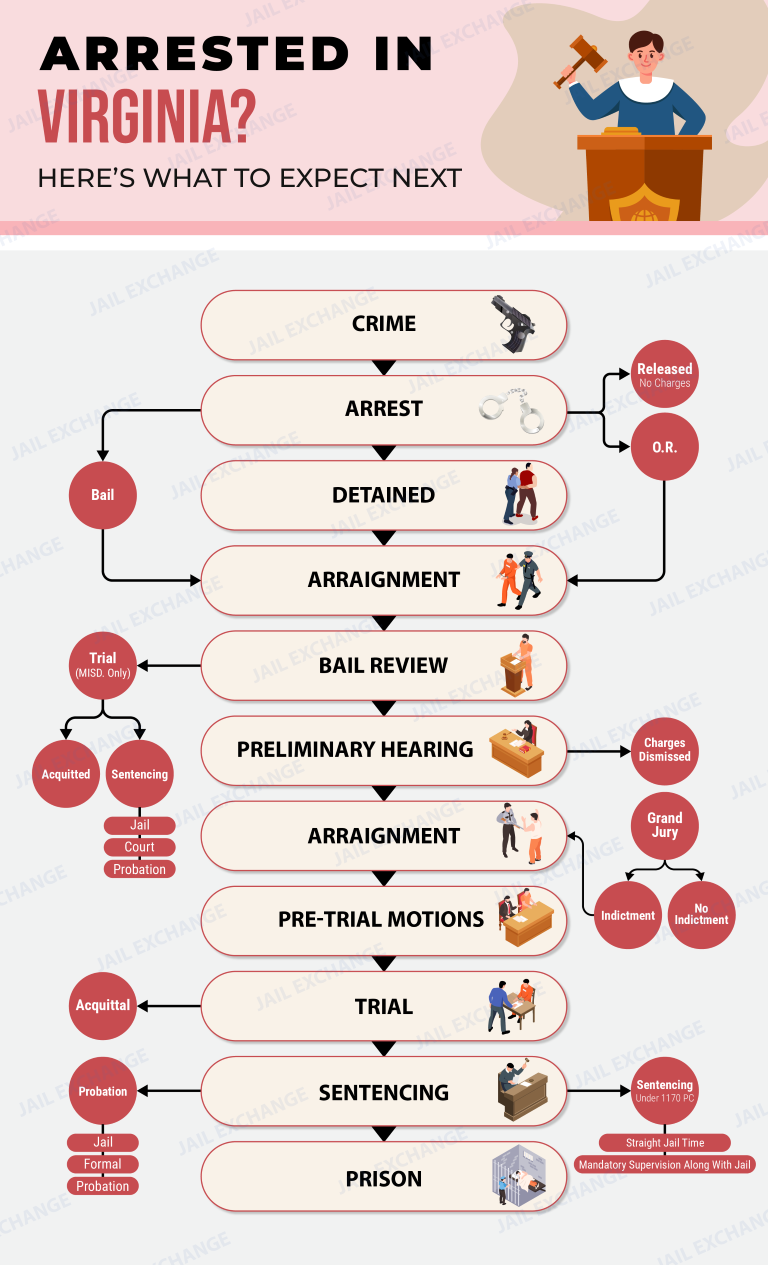
The City of Lynchburg, the "Hill City" of Central Virginia, is governed separately from the surrounding counties and handles its own criminal cases. Three state courts share a downtown block: the Lynchburg General District Court for adult misdemeanors and preliminary hearings, the Lynchburg Juvenile and Domestic Relations District Court for minors and family cases, and the Lynchburg Circuit Court for felonies and jury trials. These courts form part of Virginia's 24th Judicial Circuit and district along with Amherst, Bedford, Campbell and Nelson counties. Prosecutions are brought by the city's own elected Commonwealth's Attorney, and people who are held after arrest are kept at the Lynchburg Adult Detention Center, run by the Blue Ridge Regional Jail Authority.
- Lynchburg Adult Detention Center, 510 Ninth Street, Lynchburg, VA 24504 (Blue Ridge Regional Jail Authority); for help confirming custody call the Lynchburg Sheriff's Office, (434) 847-1301
- Magistrate, 524 Ninth Street, Lynchburg, VA 24504, (434) 847-1329
- Lynchburg General District Court, 905 Court Street, Lynchburg, VA 24504, criminal/traffic clerk (434) 455-2630
- Lynchburg Juvenile and Domestic Relations District Court, 909 Court Street, 1st Level, Lynchburg, VA 24504, (434) 455-2670
- Lynchburg Circuit Court (Clerk of the Circuit Court), 900 Court Street, P.O. Box 4, Lynchburg, VA 24505, (434) 455-2620
- Office of the Commonwealth's Attorney for the City of Lynchburg, 901 Church Street, Lynchburg, VA 24504, (434) 455-3760
- Public defender: Lynchburg Public Defender Office, 828 Main Street, Suite 1002, Lynchburg, VA 24504, (434) 947-2244
- Sheriff: Lynchburg Sheriff's Office, 905 Court Street, Lynchburg, VA 24504, (434) 847-1301
- Police: Lynchburg Police Department, general information (434) 455-6050, non-emergency line (434) 847-1602
Which court hears your case. In the City of Lynchburg, the Lynchburg General District Court decides traffic offenses and adult misdemeanors without a jury, and either side's dissatisfaction with a conviction can be addressed by an appeal, filed within 10 days, that sends the case to the Lynchburg Circuit Court for a fresh trial where a jury is available. Offenses committed by minors, and crimes such as assault in which the person harmed is a relative or member of the same household, are assigned to the Lynchburg Juvenile and Domestic Relations District Court. Felony charges get a probable-cause hearing first, ordinarily in the General District Court and in the JDR court when the case involves a family victim, and the Lynchburg Circuit Court takes over once a grand jury hands up an indictment.
Where pretrial inmates are held. Adults arrested in the City of Lynchburg who are not released by the magistrate are kept at the Lynchburg Adult Detention Center, 510 Ninth Street. The building is one of five facilities of the Blue Ridge Regional Jail Authority, a jail system the city shares with Amherst, Appomattox, Bedford, Campbell and Halifax counties, and the Authority may transfer someone to another of its jails to balance space. A person waiting there either posts the bond the magistrate or a judge set or remains in custody until the case ends. The Lynchburg Sheriff's Office, (434) 847-1301, can help families locate an inmate.
Virginia has no municipal, town or mayor's courts, so even a parking-lot shoplifting charge or a noise-ordinance arrest from a Lynchburg neighborhood such as Rivermont, Fort Hill or Boonsboro is filed in the city's state-run General District Court. Everything below is within a few blocks of Court Street and Ninth Street downtown.
Courthouses on Court Street
- Lynchburg General District Court, 905 Court Street, Lynchburg, VA 24504. Clerk: Amy Leftwich. Criminal and traffic: (434) 455-2630; civil: (434) 455-2640. This is where adults are arraigned, where misdemeanor trials and felony preliminary hearings take place, and where judges review a magistrate's bail decision.
- Lynchburg Juvenile and Domestic Relations District Court, 909 Court Street, 1st Level, Lynchburg, VA 24504. Clerk: Victoria Baez, (434) 455-2670. Juvenile delinquency, family-violence charges against adults, and protective orders.
- Lynchburg Circuit Court, 900 Court Street, Lynchburg, VA 24505 (P.O. Box 4). Clerk: Kenneth T. Swisher, (434) 455-2620. Grand jury, felony arraignments and trials, and new trials on appeal from the district courts.
Ninth Street
- Magistrate's office, 524 Ninth Street, Lynchburg, VA 24504, (434) 847-1329; open around the clock for warrants, summonses, emergency protective orders and release decisions
- Lynchburg Adult Detention Center, 510 Ninth Street, Lynchburg, VA 24504, operated by the Blue Ridge Regional Jail Authority; booking takes place here after the magistrate's decision
Lawyers and juvenile intake
- Commonwealth's Attorney for the City of Lynchburg, 901 Church Street, Lynchburg, VA 24504, (434) 455-3760; the Victim/Witness Program is housed in the same office.
- Lynchburg Public Defender Office (Virginia Indigent Defense Commission), 828 Main Street, Suite 1002, Lynchburg, VA 24504, (434) 947-2244. The office's assigned territory is the City of Lynchburg only. Defendants who qualify are referred to it by the judge; if it has a conflict, the court names a private attorney instead.
- 24th District Court Service Unit, 909 Court Street, Level B1, Lynchburg, VA 24504, (434) 455-2660
Police and sheriff
- Lynchburg Police Department: (434) 455-6050 (information) and (434) 847-1602 (non-emergency dispatch). City officers make most arrests in Lynchburg.
- Lynchburg Sheriff's Office, 905 Court Street, (434) 847-1301: court security, prisoner transport, and service of warrants and civil process.
2. Misdemeanor (for example, petit larceny, a first DUI, assault and battery, trespassing)
What the four misdemeanor classes mean
Virginia sorts misdemeanors into four levels. Class 1, the most serious, allows up to a year behind bars plus a fine reaching $2,500; Class 2 allows six months and $1,000; Classes 3 and 4 are fine-only offenses capped at $500 and $250. Shoplifting goods worth under $1,000 (petit larceny), trespassing and simple assault and battery all fall in Class 1.
Arrest, the magistrate and release
For many low-level offenses a Lynchburg officer writes a summons and lets the person go. A custodial arrest leads to the magistrate's office at 524 Ninth Street, where the magistrate decides whether a release on recognizance is enough or whether money must be put up. A secured bond may be posted in cash or through a commercial bondsman; an unsecured bond requires no payment unless the person later fails to appear. The magistrate can also require supervision by a pretrial services officer, a ban on contact with a complaining witness, or other conditions. If the person cannot meet the terms and is taken to the Lynchburg Adult Detention Center, a defense lawyer can ask the General District Court for a bond hearing, with a further appeal to the Circuit Court.
Arraignment and appointed counsel
Jailed defendants are normally arraigned, frequently over a video link, the next day the district court is in session; others are arraigned on their summons date. The judge reviews the charge and the possible penalty and addresses the right to a lawyer. In a jailable case a defendant without money for an attorney fills out a sworn financial statement, and a qualifying defendant is usually represented by the Lynchburg Public Defender Office, (434) 947-2244.
A first DUI in the city
In Lynchburg, a DUI is charged as a Class 1 misdemeanor even on a first offense. The court must impose at least a $250 fine, and a breath or blood result of 0.15 to 0.20 adds a mandatory five days in jail, while a result above 0.20 adds ten. Expect a one-year license revocation (judges may grant a restricted license that requires an ignition interlock), enrollment in VASAP, and an immediate seven-day administrative suspension at the time of arrest.
Family assault
An assault and battery charge involving a spouse, partner, parent, child or other household member is heard in the JDR court on Court Street rather than the General District Court. A first offender may be eligible for a deferred disposition that ends in dismissal after counseling and good behavior, but a third family-assault conviction can become a felony.
How the case ends
Possible results range from dismissal or a deferred disposition to a fine, a suspended jail sentence with probation, or time to serve. The judge alone decides guilt in the General District Court. Within 10 days of a conviction, a defendant may appeal to the Lynchburg Circuit Court and be retried from the start, with a seven-member jury if requested. A typical misdemeanor runs one to three months from arrest to result; an appeal adds time. Some records may later be sealed under state law.
↑ Back to the question list3. Felony (for example, burglary, grand larceny, drug possession or distribution, malicious wounding)
Felonies in Virginia carry possible prison terms, and in the City of Lynchburg every one of them eventually lands in the Circuit Court at 900 Court Street. The case does not start there, though.
The first 48 hours
A person charged with a felony is booked at the Lynchburg Adult Detention Center and brought before the magistrate down the street. The magistrate weighs flight risk and danger to the public, then sets release on recognizance, an unsecured or secured bond, or no release at all; the 2021 repeal of Virginia's presumptions against release means each case is judged on its facts. The next weekday the General District Court sits, the defendant is arraigned, told the charge, and assigned a lawyer if eligible (in most city cases, the public defender). A judge can reconsider release at a bond hearing, and that decision can be appealed to the Circuit Court.
Probable cause, then indictment
At a preliminary hearing, normally held within a few weeks in the General District Court, a judge hears evidence and decides only whether probable cause exists. A finding of probable cause certifies the charge to the Circuit Court grand jury. The Commonwealth's Attorney may also bypass the hearing by seeking a direct indictment. Once indicted, the defendant is arraigned in Circuit Court, the case is scheduled, and plea talks usually continue.
Resolving the charge
Most city felony cases close with a negotiated plea. A defendant who wants a trial can have one before a judge or before 12 jurors who must agree unanimously. Unless the defendant requests jury sentencing, the judge has imposed the sentence since July 2021, with Virginia's discretionary sentencing guidelines as a reference point. Under the speedy trial statute, Code §19.2-243, trial generally must begin within five months after probable cause is found if the defendant is held, or nine months if released, though continuances and other exceptions extend those limits. Four to twelve months from arrest is typical.
What common felony charges carry
- Burglary: entering a dwelling at night to commit a felony or larceny is a Class 3 felony (5 to 20 years), and a Class 2 felony when the person is armed with a deadly weapon; most other burglary-type offenses carry a maximum of 20 years.
- Grand larceny, theft of $1,000 or more: a sentence between 1 and 20 years, or as an alternative, a jail term not over 12 months.
- Drugs: possessing a Schedule I or II substance is Class 5 (1 to 10 years, with a jail option of 12 months or less); distributing or holding drugs for sale exposes a first offender to 5 to 40 years, and large quantities trigger mandatory minimums. Selling marijuana is still a crime, even though adults 21 and over may lawfully possess an ounce or less.
- Malicious wounding: a Class 3 felony that carries 5 to 20 years for a Lynchburg defendant. Unlawful wounding (without malice): Class 6, from 1 to 5 years, or a jail sentence capped at one year.
Serving the sentence
No parole is available for felonies committed on or after January 1, 1995; earned sentence credits may shorten the term somewhat. A sentence above 12 months is typically served in a Virginia Department of Corrections prison, and a shorter term is served in the regional jail.
↑ Back to the question list4. Violent felony (for example, murder, rape, robbery)
Penalties
- Aggravated murder, which replaced capital murder when Virginia ended the death penalty in 2021, is a Class 1 felony punished by life in prison.
- First-degree murder is Class 2, with a range of 20 years to life; the range for second-degree murder in the city's Circuit Court, as anywhere in Virginia, runs from 5 to 40 years.
- Rape and robbery each carry from 5 years up to life in prison.
- Aggravated malicious wounding, which involves permanent and significant injury, is Class 2: 20 years to life.
Custody while the case is pending
People charged with these crimes in the City of Lynchburg are seldom released by the magistrate, so most spend at least the first weeks at the Lynchburg Adult Detention Center. Defense counsel can ask a General District Court judge to set bail, and the judge considers the strength of the evidence, prior record, community ties and the safety of the alleged victim and witnesses. Release, when granted, often comes with strict conditions such as GPS monitoring or home confinement.
A longer road to trial
Violent-felony prosecutions follow the ordinary felony route, from a preliminary hearing to grand jury indictment and then a trial or plea in the Lynchburg Circuit Court, but they tend to take one to two years. Lab analysis, autopsy and medical records, expert testimony and mental-health evaluations all need time, and defendants commonly agree to extend the speedy-trial deadline. Eligible defendants are represented by the Lynchburg Public Defender Office or, in a conflict, by private appointed counsel. Convictions bring prison terms in the Department of Corrections with no parole.
Support for victims
Under Virginia's Crime Victim and Witness Rights Act, victims and their families may ask to be notified of court dates and of any release, to submit a victim impact statement, and to seek restitution. The Victim/Witness Program at the Commonwealth's Attorney's office, (434) 455-3760, can explain each stage.
↑ Back to the question list5. Juveniles (under 18) arrested in the City of Lynchburg
Who decides what happens first
A complaint against a Lynchburg teenager goes to an intake officer of the 24th District Court Service Unit, located on Level B1 of 909 Court Street, (434) 455-2660. The officer, an employee of the state Department of Juvenile Justice, may resolve a minor first offense informally through diversion, approve a petition so the case goes before a judge, or, if the charge is serious or the youth poses a risk, approve placement in secure detention. This Court Service Unit also handles intake for Amherst, Bedford, Campbell and Nelson counties.
Detention and the 72-hour hearing
Youths held from the city usually go to the Lynchburg Regional Juvenile Detention Center, 1400 Florida Avenue, Lynchburg, VA 24501, (434) 847-1303, a regional facility for the city and Amherst, Appomattox, Bedford and Campbell counties. Within 72 hours (in practice, the next day court sits) a judge of the Lynchburg Juvenile and Domestic Relations District Court holds a detention hearing and decides whether the child stays in detention or goes home under supervision, sometimes with electronic monitoring.
In court
A prosecutor from the Commonwealth's Attorney's office presents the case, and the child has a right to a lawyer; a family that cannot pay can request the public defender. No jury sits in the JDR court; the judge alone weighs the evidence. If the petition is proved, the court chooses a disposition focused on rehabilitation, such as probation, restitution, community service, counseling, or a local community program. For serious or repeated offenses the judge can commit the youth to the Department of Juvenile Justice, which places committed youth either at Bon Air Juvenile Correctional Center or in a community placement program.
Adult prosecution
Some cases leave the juvenile court. For a youth age 14 or older facing certain serious felonies, the Commonwealth's Attorney can request a transfer hearing, after which the JDR judge may send the case to the Lynchburg Circuit Court for adult trial. For the most serious charges, including murder and aggravated malicious wounding, a 16- or 17-year-old can generally be certified for adult prosecution by the Commonwealth's Attorney once probable cause is found at a preliminary hearing. In most other cases, juvenile records stay confidential.
↑ Back to the question list6. Federal cases (U.S. District Court) from the City of Lynchburg
The federal court in the city
Federal crimes committed in the City of Lynchburg are prosecuted in the U.S. District Court for the Western District of Virginia, Lynchburg Division, whose clerk's office is at 1101 Court Street, Suite A66, (434) 847-5722, up the street from the state courthouses. The division now also covers Charlotte, Halifax and Pittsylvania counties and Danville, which moved to Lynchburg when the Danville federal courthouse stopped taking new cases in 2025.
- Prosecutor: U.S. Attorney for the Western District of Virginia, main office at 310 1st Street SW, Room 906, Roanoke, VA 24011, (540) 857-2250
- Defense for those who cannot pay: Office of the Federal Public Defender, Western District, Roanoke office at 210 First Street SW, Suite 400, Roanoke, VA 24011, (540) 777-0880, or Charlottesville office at 401 E. Market Street, Suite 106, (434) 220-3380; a private Criminal Justice Act lawyer is appointed if the office has a conflict
Which cases go federal
A case usually becomes federal when a federal agency leads the investigation or the conduct crosses state lines. In Lynchburg that often means drug-distribution rings, guns possessed by convicted felons or other prohibited people, bank robberies, child-pornography and online enticement cases, and wire, mail, tax or benefits fraud.
Steps in federal court
- Initial appearance before a U.S. magistrate judge, who reviews the charges with the defendant and, when the person qualifies, appoints a lawyer.
- Detention or release: the Bail Reform Act lets the magistrate judge release a defendant subject to conditions, which U.S. Pretrial Services officers supervise, or hold the person in custody; the detention hearing is usually held within three court days. Commercial bondsmen play no role.
- Indictment: when charges begin with a criminal complaint, a grand jury must indict within 30 days.
- Trial clock: the Speedy Trial Act sets 70 days to trial, although excludable delays often extend it. Most defendants plead guilty; a trial verdict needs all 12 jurors to agree.
- Sentencing: once a probation officer completes the presentence report, the judge calculates the advisory Sentencing Guidelines range and applies any mandatory minimum the statute requires. Federal prisoners get no parole and serve roughly 85 percent of their time in the Bureau of Prisons, followed by supervised release.
- Appeal to the U.S. Court of Appeals for the Fourth Circuit.
The Federal Bureau of Prisons inmate locator lets families search for a federal inmate using a name or BOP register number. A person awaiting a federal trial may also be held at a local or regional jail under a U.S. Marshals contract, and in that case shows up on that jail's own roster. Cases against defendants younger than 18 rarely end up in the Lynchburg federal court.
↑ Back to the question listThe information on this page about criminal courts in the City of Lynchburg is a general summary, not legal advice, and details such as procedures, jail assignments and telephone numbers are subject to change. Anyone facing a charge in the city should consult a Virginia criminal defense attorney about it. Defendants who cannot afford counsel may ask the magistrate or the judge for a court-appointed lawyer, or contact the Lynchburg Public Defender Office at (434) 947-2244; for questions about an inmate, call the Lynchburg Sheriff's Office at (434) 847-1301.
Oasis Commissary (operated online at jailcanteen.com) allows families and friends to purchase pre-approved snack boxes, food packages, confectionery goods, hygiene products, and apparel kits sent directly to an incarcerated loved one. Each package is packed to comply with local facility security rules, ensuring items clear intake smoothly without being rejected at the loading dock.
Important: Package Deadlines and Delivery Windows Vary
Detention centers do not manage care package deliveries under identical schedules. While some facilities allow weekly orders, others restrict deliveries to bi-weekly or monthly distribution windows, and spending limits vary from jail to jail. You should verify the facility's active cutoff schedule and order allowances by calling them directly. If an order is submitted after the weekly processing deadline, delivery will be held until the following cycle, leaving your loved one waiting an extra cycle for fresh snacks, thermal wear, or personal care supplies.
Step-by-Step Instructions to Place a Commissary Package Order
- Confirm the inmate's legal first and last name, date of birth, and assigned booking or inmate ID number.
- Navigate to www.jailcanteen.com on your computer or mobile device.
- Select your state and detention center to open the jail's authorized product catalog.
- Search for the inmate to link the order to their active housing record.
- Browse available snack boxes, meats, hygiene kits, and clothing options, adding items up to the facility's allowed spending limit.
- Proceed to checkout, enter your debit or credit card billing details, and submit payment.
- Save your digital receipt and confirmation tracking number for your records.
What the Inmate Needs to Do
The inmate does not need an internet account to receive care packages. Oasis Commissary fulfills the order in tamper-evident security containers and delivers it directly to the facility commissary department. Jail staff inspect the shipment and deliver the items during regular housing unit commissary distribution, where the inmate signs for receipt.
Official Provider: Oasis Commissary (jailcanteen.com)
Customer Service Telephone: 1-800-956-2747 or 1-618-548-6034
Support Hours: Monday – Friday, 8:00 AM – 5:00 PM CST
Supported Languages: English and Spanish
Other Services Provided by Oasis Commissary
In addition to Care Packages, Oasis Commissary provides trust deposit services at participating facilities:
- Inmate Trust Money Deposits: Send money directly into an inmate's jail trust account for independent canteen shopping.
• Learn more on our website: Inmate Trust Deposits Guide | • Visit official vendor page: Oasis Trust Deposits
Buy Commissary for an Inmate in the Lynchburg Adult Detention Center
Lynchburg Adult Detention Center Inmate Commissary - Sending Money or Purchasing Commissary for an Inmate
Lynchburg Adult Detention Center allows inmates to purchase commissary. This can be snacks, hygiene products, stamps, stationary, clothing and even electronics.
You can buy commissary for an inmate using an online service called Oasis Commissary / jailcanteen.com.

There is a monthly limit of $200-300 on how much inmates can spend on commissary items.
This amount is subject to change so call the facility at 434-847-1300 in order to confirm the amount that cannot be exceeded.
Inmates have access to both an in-house commissary store, and commissary packages that can be purchased and shipped to the inmate by friends and family.
Scroll down for information on the Lynchburg Adult Detention Center's service they use for you being able to purchase commissary items online and have them shipped directly to the inmate.
You can also go to our Inmate Money page for information on how to send money to an inmate.

JailATM provides a secure electronic payment portal that allows friends and family members to deposit funds directly into an incarcerated person's jail trust and commissary account. Deposited money provides the financial balance needed for your loved one to purchase personal hygiene items, snacks, over-the-counter medical sundries, and correspondence supplies from the facility commissary.
Important: Facility Deposit Rules and Window Intake Vary
Once a person is booked and moved to a housing unit, facilities do not always allow cash drop-offs or phone payments directly to the jail window. Some might and you should confirm this by calling the facility and asking. But if you do not register online and fund your loved one's trust account immediately, they may be forced to wait days or weeks for standard paper processing, leaving them without essential soap, clean undergarments, basic medical sundries or snacks.
Step-by-Step Instructions to Register and Deposit Funds
- Obtain the inmate's legal first and last name, date of birth, and assigned facility booking ID number.
- Navigate to deposits.jailatm.com/webdeposits/ on your computer or mobile device.
- Click Sign In or Register to set up your verified user account using your email address and password.
- Select the state and the detention facility where the inmate is currently housed.
- Search for the inmate using their ID number or legal last name to confirm an exact roster match.
- Enter your desired deposit dollar amount and review the calculated transaction and convenience fees.
- Input your debit or credit card billing details, complete payment authorization, and save your digital receipt.
What the Inmate Needs to Do
The inmate does not need an internet account to receive funds. Once the electronic transaction clears, the balance posts directly to their jail trust ledger according to facility accounting schedules. The inmate can review their updated balance at a dayroom pod kiosk or on their weekly trust statement and place orders on their regular commissary day.
Official Provider: JailATM Official Website
Customer Service Telephone: 1-877-810-0914
Support Hours: Monday – Friday, 8:00 AM – 5:00 PM CST
Supported Languages: English and Spanish
Other Services Provided by JailATM
In addition to Trust & Commissary Money Deposits, JailATM provides several other communication, store, and visitation services at participating facilities:
- Commissary Gift Packs & Store Ordering: Order pre-approved snack boxes, food packages, and hygiene bundles sent directly to the jail.
• Learn more on our website: Commissary Gift Packs Guide | • Visit official vendor page: JailATM Store Orders - Digital Messaging & Picture Sharing: Send electronic messages and photos directly to an inmate's housing unit kiosk.
• Learn more on our website: Digital Messaging Guide | • Visit official vendor page: JailATM Messaging - Remote Video Visitation: Schedule and join live video visits from home using your computer or smartphone.
• Learn more on our website: Video Visitation Guide | • Visit official vendor page: JailATM Video Visits
Deposit Money for an Inmate in the Lynchburg Adult Detention Center
An envelope holding a money order and nothing more is what the Lynchburg Adult Detention Center wants by mail. Tuck a letter in with it and the whole thing comes back.
- Make the money order payable to BRRJA, the Blue Ridge Regional Jail Authority, which runs the jail at 510 9th Street.
- Fill in your own name as the buyer, then write the person's name after it.
- Mail it to Lynchburg Adult Detention Center, P.O. Box 6018, Lynchburg, VA 24505. The Phoenix, MD box takes letters only, so money never goes there.
- Prefer to pay online? BRRJA uses one company for inmate accounts: JailATM.
Cash, certified checks and personal checks are all refused. BRRJA doesn't share whether a lobby kiosk exists, or what the limits and fees are. For those, phone 434-847-1300 and be ready with the person's legal name and birthdate.
The Lynchburg Adult Detention Center on 9th Street is one of the jails run by the Blue Ridge Regional Jail Authority. Paper letters no longer go to Lynchburg: all personal mail is sent to a mail-scanning service, which scans it and delivers it to the inmate's tablet. This stops drugs that are soaked into paper from getting into the jail. Only legal mail and money orders go to the jail's own box, and personal letters sent there are returned.
Personal letters and photos:
Inmate's Full Name & Inmate ID#
Lynchburg Adult Detention Center - VA
P.O. Box 247
Phoenix, MD 21131
Legal mail and money orders only:
Inmate's Full Name & Inmate ID#
Lynchburg Adult Detention Center
P.O. Box 6018
Lynchburg, VA 24505
- Envelope: Write the full facility name, the inmate's full name and their inmate number, the same number you've used before. Your full name and street address go in the top left corner.
- Books and magazines: For now the jail accepts no books, magazines or newspaper subscriptions, even from a publisher.
- Photos: 4 x 6 inches or smaller. A person may hold no more than 10 at a time. Polaroids, picture frames and nude or revealing shots are turned away.
- Money orders: Make them payable to BRRJA, write the inmate's name after your own name as the buyer, and mail them alone. If you tuck a money order into a letter, both come back to you. Cash, certified checks and personal checks are not taken, but online deposits work any day.
- Legal mail: The jail copies it and destroys the original while the inmate watches, then gives them the copy.
- Don't include: Stickers, glitter, crayon, plastic, string or anything glued on. No bookmarks, phone cards, blank envelopes, paper or stamps, since those are sold through commissary.
- Cards: Greeting cards with music or recording chips are not allowed.
Make sure the person is still held here with the inmate lookup, or call 434-847-1300.
ViaPath AdvancePay Phone Calling Accounts
Provider: ViaPath Technologies • Formerly ConnectNetwork / Global Tel*Link (GTL)
AdvancePay is the primary prepaid telecommunications service operated by Global Tel*Link (GTL) and ConnectNetwork, which have unified under the corporate identity of ViaPath Technologies (and the myViaPath platform). By funding an AdvancePay account, telephone charges are deducted per minute whenever an incarcerated loved one calls your specific telephone number, preventing calls from being rejected by cellular carriers.
Important: Cell Carriers Automatically Block Jail Collect Calls
Inmate telephone networks do not permit incoming calls, and wireless cell providers automatically block traditional collect billing by default. While select traditional landlines may support operator billing, cell phones and internet-based lines require an active AdvancePay balance, which you can verify with your carrier. If you do not register your number online and add funds immediately, your loved one will hear an automated operator announcement stating your line is blocked from receiving correctional calls.
Step-by-Step Instructions to Open and Fund AdvancePay
- Visit web.connectnetwork.com or the updated my.viapath.com portal, or launch the ConnectNetwork / ViaPath mobile application.
- Click Sign Up and register using your primary 10-digit cellphone number and email address.
- Select Add Facility, pick your state, and choose the detention center or state prison where the inmate is held.
- Search for the inmate using their full legal name or facility booking ID number and link them to your contact directory.
- Select AdvancePay Phone and choose your deposit amount ($25, $50, or custom).
- Enter your debit or credit card billing details, accept the administrative transaction fee, and complete the payment.
- Check your phone settings to confirm that automated or unknown correctional numbers are not routed straight to spam.
What the Inmate Needs to Do
The inmate approaches any housing pod telephone, enters their assigned PIN and voice biometric recognition phrase, and dials your 10-digit number. ViaPath's automated operator confirms your active prepaid balance and connects the call. All personal telephone calls are subject to recording and monitoring by facility investigators.
Official Providers: ConnectNetwork Portal | myViaPath Portal
Customer Service Telephone: 1-877-650-4249 (Automated & Live Support)
Support Hours: Automated Service 24/7; Live Operators Monday – Friday, 8:00 AM – 10:00 PM EST
Supported Languages: English and Spanish
Other Services Provided by ViaPath Technologies (ConnectNetwork)
In addition to AdvancePay Phone Calling, ViaPath / ConnectNetwork provides several other communication, financial, and visitation services:
- ConnectNetwork Trust Fund Deposits: Transfer money directly into an inmate's jail trust account for commissary store purchases.
• Learn more on our website: Inmate Trust Deposits Guide | • Visit official vendor page: ConnectNetwork Trust Deposits - ViaPath PIN Debit Phone Calling: Give the inmate their own calling funds to contact any approved phone number independently.
• Learn more on our website: PIN Debit Phone Calling Guide | • Visit official vendor page: ViaPath PIN Debit Calling - ViaPath Messaging & Photo Sharing: Send digital messages, photos, and video attachments directly to their terminal.
• Learn more on our website: Digital Messaging Guide | • Visit official vendor page: ViaPath Messaging Services - GettingOut Video Visitation & Tablets: Schedule face-to-face remote video visits and manage handheld tablet communications.
• Learn more on our website: Remote Video Visitation Guide | • Visit official vendor page: GettingOut Video Visits
ViaPath PIN Debit Phone Calling Accounts
Provider: ViaPath Technologies • Formerly ConnectNetwork / Global Tel*Link (GTL)ViaPath PIN Debit (hosted on ConnectNetwork and myViaPath) provides incarcerated individuals with their own calling funds. Unlike AdvancePay (which only funds calls placed to your specific phone number), PIN Debit funds belong directly to the inmate, allowing them to call attorneys, bondsmen, employers, or extended family members across multiple approved telephone numbers.
Important: AdvancePay Only Funds a Single Phone Number
When someone is arrested, they often need to contact multiple people—including legal defense counsel, bail agents, employers, and relatives. If you only fund an AdvancePay account, your loved one will have no calling balance to dial anyone else, as rules and call authorizations vary by facility. Adding funds directly to ViaPath PIN Debit grants them the calling flexibility needed to handle critical legal and family arrangements without delay.
Step-by-Step Instructions to Fund a PIN Debit Account
- Sign into your account at web.connectnetwork.com or my.viapath.com.
- Click on PIN Debit under the communications menu.
- Select the state and facility, and link the inmate's booking identification number.
- Enter the deposit dollar amount and review the payment transaction fee.
- Enter your debit or credit card details and submit the payment.
- Notify your loved one that their personal PIN calling balance has been credited.
What the Inmate Needs to Do
The calling balance appears under the inmate's personal identification PIN. When they pick up any dayroom telephone or tablet, they select the 'PIN Debit' prompt from the automated menu to place calls to any approved number on their personal contact list.
Official Providers: ConnectNetwork Portal | myViaPath Portal
Customer Service Telephone: 1-877-650-4249
Support Hours: Automated Deposits 24/7/365; Live Agents Monday – Friday, 8:00 AM – 10:00 PM EST
Supported Languages: English and Spanish
Other Services Provided by ViaPath Technologies (ConnectNetwork)
In addition to PIN Debit Calling, ViaPath / ConnectNetwork provides several other communication, financial, and visitation services:
- AdvancePay Dedicated Phone Calling: Fund calls placed specifically to your personal phone number.
• Learn more on our website: AdvancePay Calling Guide | • Visit official vendor page: ConnectNetwork AdvancePay - ConnectNetwork Trust Fund Deposits: Deposit money for commissary food, hygiene supplies, and stationery.
• Learn more on our website: Inmate Trust Deposits Guide | • Visit official vendor page: ConnectNetwork Trust Deposits - ViaPath Messaging & Photo Sharing: Send digital messages and photos directly to their kiosk or tablet.
• Learn more on our website: Digital Messaging Guide | • Visit official vendor page: ViaPath Messaging Services - GettingOut Video Visitation & Tablets: Schedule face-to-face remote video visits from home.
• Learn more on our website: Remote Video Visitation Guide | • Visit official vendor page: GettingOut Video Visits
GettingOut / ViaPath Inmate Messaging
Provider: GettingOut (Telmate) • Rebranding as ViaPath Technologies (myViaPath)GettingOut (a service of Global Tel*Link / Telmate) provides an instant two-way digital messaging and photo-sharing platform connecting families with incarcerated individuals via housing-unit kiosks and handheld tablets. The provider is actively rebranding as ViaPath Technologies (under the myViaPath platform); depending on the facility contract, local booking sheets and tablets may still refer to the service as GettingOut, GTL, or ViaPath, but both brand portals grant access to the same centralized messaging balance.
Important: Contact Authorization and Digital Mail Rules Vary
Inmate digital messaging rules are not uniform across all county detention centers. While some jails allow immediate two-way messaging upon registration, others require initial contact invitations or administrative ID verification, which you should verify directly with the facility. If you delay setting up an online profile and funding your Friends & Family messaging account, your loved one may face lengthy periods without direct family communication.
Step-by-Step Instructions to Register and Message an Inmate
- Visit www.gettingout.com or the newly branded my.viapath.com portal, or install the GettingOut / myViaPath mobile app.
- Create a user profile using your primary email address and 10-digit mobile phone number.
- Complete identity verification by uploading a clear photo of your government-issued driver's license or state ID and taking a verification selfie if requested.
- Search for the inmate by selecting the state, correctional facility, and their legal name or booking ID.
- Send an outside contact connection request to link your account to their tablet profile.
- Deposit funds into your 'Friends & Family Account' using a debit or credit card to cover message and photo-sharing costs.
- Compose your text message in the chat box, attach approved photos, and submit it for jail screening.
What the Inmate Needs to Do
The inmate powers on their assigned pod tablet or approaches a housing-unit kiosk and logs into the messaging application with their PIN. They accept your incoming contact invitation on the screen. Once approved by institutional monitors, incoming messages appear in their inbox, and the inmate types a reply directly on the screen.
Official Providers: GettingOut Website | myViaPath Portal
Customer Service Telephone: 1-866-516-0115 (GettingOut Support) • 1-877-650-4249 (ViaPath Support)
Support Hours: Monday – Friday, 7:00 AM – 11:00 PM CST; Saturday – Sunday, 8:00 AM – 7:00 PM CST
Supported Languages: English and Spanish
Other Services Provided by GettingOut / ViaPath
In addition to Two-Way Text Messaging, GettingOut and ViaPath provide several other communications and visitation options:
- Remote Video Visits: Schedule and join live web-based video visits from your computer or smartphone.
• Learn more on our website: Video Visitation Guide | • Visit official vendor page: GettingOut Video Visits - Inmate Tablet Rentals & Media: Fund tablet entertainment, music streaming, games, and news modules.
• Learn more on our website: Tablet Rentals & Content Guide | • Visit official vendor page: GettingOut Tablets - AdvancePay Phone Calling: Prepay for telephone calls so your loved one can dial your mobile phone directly.
• Learn more on our website: AdvancePay Phone Calling Guide | • Visit official vendor page: ViaPath ConnectNetwork Calling - Inmate Trust Deposits: Transfer funds directly into their jail trust account for commissary store purchases.
• Learn more on our website: Inmate Trust Deposits Guide | • Visit official vendor page: ViaPath Trust Deposits
GettingOut / ViaPath Inmate Tablets & Media
Provider: GettingOut (Telmate) • Rebranding as ViaPath Technologies (myViaPath)GettingOut provides specialized, secure handheld tablets for county jail inmates, offering access to messaging apps, telephone calling, legal research tools, eBooks, vocational training, and premium entertainment rentals. As part of GTL and Telmate's transition to ViaPath Technologies, tablet firmware and management platforms are moving to the myViaPath system.
Important: Tablet Feature Availability Varies by Facility
Jails manage tablet distribution according to individual facility contracts. While basic educational and legal materials are often provided without cost, access to music streaming, games, podcasts, and premium movies requires an active funded account. You should confirm the tablet rules with the facility directly. Registering and funding their media balance right away ensures your loved one has productive resources and recreation during their stay.
Step-by-Step Instructions to Fund Inmate Tablet Services
- Confirm that GettingOut / ViaPath handheld tablets are active at your loved one's specific detention facility.
- Navigate to www.gettingout.com or my.viapath.com.
- Sign into your verified user profile and link the inmate's legal name and booking ID number.
- Select Make a Deposit and choose either your Friends & Family Account (for messaging) or the inmate's personal Inmate Account (for entertainment and song rentals).
- Choose your deposit amount, review convenience fees, and complete payment with a credit or debit card.
- Notify your loved one that their tablet account balance has been funded.
What the Inmate Needs to Do
The inmate unlocks their assigned tablet or signs one out from the pod charging station using their biometric verification or PIN. Once logged in, their available balance appears on the screen, allowing them to download songs, stream educational content, and communicate with approved family members.
Official Providers: GettingOut Website | myViaPath Portal
Customer Service Telephone: 1-866-516-0115 (GettingOut) • 1-877-650-4249 (ViaPath)
Support Hours: Monday – Friday, 7:00 AM – 11:00 PM CST; Saturday – Sunday, 8:00 AM – 7:00 PM CST
Supported Languages: English and Spanish
Other Services Provided by GettingOut / ViaPath
In addition to Tablet Media & Rentals, GettingOut and ViaPath provide several other communication and account services:
- Two-Way Text Messaging: Send electronic letters and photos straight to the inmate's screen.
• Learn more on our website: Two-Way Text Messaging Guide | • Visit official vendor page: GettingOut Messaging - Remote Video Visits: Meet face-to-face over secure live video from home.
• Learn more on our website: Video Visitation Guide | • Visit official vendor page: GettingOut Video Visits - AdvancePay Phone Calling: Prepay for phone calling credits so your loved one can call your telephone directly.
• Learn more on our website: AdvancePay Phone Calling Guide | • Visit official vendor page: ViaPath ConnectNetwork Calling - Inmate Trust Deposits: Transfer cash directly into an inmate's jail ledger for commissary purchases.
• Learn more on our website: Inmate Trust Deposits Guide | • Visit official vendor page: ViaPath Trust Deposits
Lynchburg city Juvenile Facilities
- Jail (Main): 434-847-1300
- Lynchburg Police: 434-455-6050
- Lynchburg Sheriff: 434-847-1301
At times this facility may also house inmates arrested in the following counties: Pittsylvania County and Lynchburg.