
Perry County Jail
Perry County Jail
Jail Phone Number
334-683-6534Arrested in Marion or Uniontown: a Perry County family guide
Perry County is a small Black Belt county whose two towns are Marion, the county seat, and Uniontown. These answers help you locate someone after an arrest, stay in touch and plan the next step. Grown-ups picked up from Sprott to Uniontown end up at the Perry County Jail, a 46-bed jail at 202 Pickens Street, Marion, AL 36756.
Due to an escape that happened recently and subsequent damage, the jail has been closed while they undergo repairs. It could open at any time but in the meantime offenders from Perry County are sent to neighboring jails. Call 334-683-6534 to find which jail is holding someone that has been arrested and kept in custody.
Open the sheriff's jail lookup first; a surname alone usually works, and the birthday on each hit tells you if it is your person. Statewide custody alerts come through VINELink as well. A small jail can take a while to post a new booking, since prints, photos and a warrant check come first.
When the search leaves you unsure, phone the jail at 334-683-6534, the same line that reaches the Sheriff's Office. Have the birthday handy, because deputies match records by it, and ask for each charge on the record plus the bond on it. Paying to bring a relative home from Pickens Street is explained dollar by dollar on our bail page, and the court guide maps out judges and hearing days.
Read inmate search answers
 Read inmate search answers
1. Where is the Perry County Jail?
The Perry County Jail stands at 202 Pickens Street, Marion, AL 36756, in the county seat. It is a 46-bed lockup run by the Sheriff's Office, which works out of the same building and answers the same phone, 334-683-6534. Mail for the sheriff and for prisoners goes to a post office box instead of the street address: P.O. Box 157, Marion, AL 36756.
The jail holds adults arrested by deputies, state troopers and the Marion and Uniontown police. Some stay only a few hours before bonding out, while others wait months for trial. More about the office is on the county's sheriff page.
↑ Back to the question list2. How do I search the Marion jail list?
Open the sheriff's jail lookup and type the last name first. Fewer letters often find more, since one wrong letter in a given name can bury the record you want. Line up the birthday, age and booking date on any hit before trusting it.
Copy the booking number onto paper. Deputies ask for it on bond calls, letters, phone accounts and deposits. Fresh bookings often lag, so give it an hour and search once more. You can also call the jail at 334-683-6534 and spell the name for the deputy on duty.
↑ Back to the question list3. What if a recent arrest does not show up?
Plenty of harmless things keep a name off the screen. Deputies may still be fingerprinting. The person may already have bonded out, been taken to a hospital, or been moved to another county such as Dallas or Hale. For minor city offenses, Marion or Uniontown officers may simply issue a ticket naming the day to appear, and nobody rides to Pickens Street.
Dial 334-683-6534, give the legal name and birthday, and put these questions to the deputy:
- Whether booking is finished.
- Whether the person left on bond and when.
- Whether another agency picked them up.
- Which county or city filed the charge.
If the jail has no record, check VINELink for other Alabama jails and the state prison search.
↑ Back to the question list4. Can I see a mugshot from a Perry County booking?
Requests for local mugshots are handled by the Sheriff's Office. Reporters and members of the public can call 334-683-6534 and ask how to request one. Have the person's full name and the date of the arrest ready.
Federal booking photos work differently. Federal agencies generally do not hand mugshots to families or the press. The U.S. Marshals Service shares one only when a fugitive or escapee is on the loose, when the public faces an immediate danger, or when releasing it would help with a capture or warning. Immigration booking pictures need a FOIA request to ICE, and ICE alone decides whether to grant it.
↑ Back to the question list5. How do VINE alerts work for a Marion inmate?
VINE is a free statewide system that sends a message when a prisoner's custody status changes. Crime victims lean on it for safety, while relatives use it to hear about a release, a transfer or a trip to state prison. Registering is quick:
- On VINELink, choose Alabama from the state menu.
- Type the name, or the Pickens Street booking number.
- Pick the record whose age or birthday fits.
- Register to hear by voice call, text message or email.
Alerts sometimes arrive after the change has already happened. If timing matters, call the jail at 334-683-6534 to confirm.
↑ Back to the question list6. Where do I get the charge list and the case number?
A deputy at 334-683-6534 can list the booking charges. The circuit clerk, 300 Washington Street, Suite 110, Marion, AL 36756, 334-683-6106, can give the case number and tell you which court has the file.
The clerk's office has public computers where you can read case records for free during business hours. Online, Alacourt Access shows Alabama cases for a fee. Booking charges are not final; the 4th Circuit prosecutor makes the filing decision later. A misdemeanor carries less than a year in jail, while a felony can lead to state prison. Your relative's lawyer is the best person to walk through the meaning of every count.
↑ Back to the question list7. How soon does a Marion judge review the arrest?
After a deputy arrests someone without a warrant, a judge must review whether the arrest was proper within two days. If that review does not happen, the person is entitled to release on the lowest bond. Someone arrested on a warrant who cannot meet the bond should go before a judge within three days.
Domestic violence charges have a separate rule. On those, bail may sit unset for as long as a day, until a judge or magistrate acts. To learn when the first hearing will be, call the circuit clerk at 334-683-6106. The jail at 334-683-6534 can tell you whether the person will appear in a courtroom or by video.
↑ Back to the question list8. What decides bail for someone held on Pickens Street?
A judge sets bail, and deputies on Pickens Street just follow the order. Amounts usually follow Alabama's bond schedule. A record marked "no bond" means a judge must act first, perhaps on an Aniah's Law request in a violent case. Starting May 19, 2026, judges may also refuse bail in attempted murder cases and for shots fired into an occupied building, car or home.
Bond can be posted as cash, through a bail company, with land or on a signature. On top of the bond, Alabama collects a 3.5% fee and another $35. To pay in cash, start with the clerk at 300 Washington Street, Suite 110, Marion, AL 36756, 334-683-6106. Our bail guide walks through each choice.
↑ Back to the question list9. Which courtroom will take the case?
The two state trial courts, District and Circuit, both meet at 300 Washington Street, Suite 110, Marion, AL 36756. District Court takes misdemeanors charged by deputies and the early hearings in felony cases. Circuit Court handles felony trials after a grand jury acts. City charges stay with the town that wrote them:
- Marion Municipal Court, 123 East Jefferson Street, Marion, AL 36756, 334-683-8969
- Uniontown Municipal Court, Uniontown City Hall, Uniontown, AL 36786, 334-628-2011
State charges are argued by the 4th Circuit District Attorney's office out of Selma, phone 334-874-2540. Our county court guide follows a case through every stage after booking.
↑ Back to the question list10. Can a defendant here get a lawyer without paying?
Yes. A judge can appoint a lawyer when the person cannot afford one and jail is possible. Most people raise it when first brought before the judge, who then asks about income and bills. Ask the circuit clerk at 334-683-6106 how to start.
Counsel may also file for a bail cut, pointing to a job, relatives in the area and a fixed address. Since jail lines are recorded, your relative should keep details of the case off every call and save them for the lawyer. Alabama runs appointed defense through Montgomery's Office of Indigent Defense Services, 100 North Union Street, Suite 680, Montgomery, AL 36104, 334-242-7059.
↑ Back to the question list11. How do visits work at the Pickens Street jail?
Visiting times in Marion change from time to time, so call 334-683-6534 for the current schedule before driving over. While on the line, check the ID rules and any dress code, since those can shift too.
The jail uses one company for both calls and video visits. You make an account online, add the person by name or booking number, and book a time. Find out from deputies if a home computer or phone works for video, or if you must come to Marion. Our visitation page and video visit page walk through setup and rules.
↑ Back to the question list12. How do phone calls and messages reach a Marion inmate?
Families set up a prepaid phone account through the jail's provider so calls can go through. Calls from Pickens Street are recorded, so the person should keep case talk for the lawyer. Messages and tablet time run through accounts too.
The phone account and the commissary account are paid separately, so money in one cannot move to the other. Our guides explain each piece:
If a call drops or an account will not load, call the jail at 334-683-6534 and give the booking number.
↑ Back to the question list13. How do I add funds for a Perry County inmate?
A spending account lets the person buy snacks, soap, stamps and similar store items. That balance has nothing to do with the phone account and will never count toward bail. Double-check the booking number and spelling before each deposit so the cash reaches the right prisoner.
Our inmate deposits page lists ways to send funds, and the commissary page explains the store side. Keep every receipt. When the person is released, ask the jail at 334-683-6534 how leftover money comes back.
↑ Back to the question list14. What address goes on a letter to the Marion jail?
Letters go to the post office box, not to Pickens Street. Address each envelope in three lines:
- First: the prisoner's full name and inmate ID number
- Second: Perry County Jail
- Third: P.O. Box 157, Marion, AL 36756
Print your name and address at the upper left so staff can return anything refused. Cash in an envelope is never allowed. Staff check incoming letters, and mail that breaks a rule may be returned. Belongings left at booking come back when the person is released. Our jail mail page covers the details, and the jail at 334-683-6534 can answer questions.
↑ Back to the question list15. Who should hear about a medical need?
Phone 334-683-6534 and ask to speak to whoever is supervising that shift. Explain the condition, list each medicine and dose, and name the drugstore where prescriptions are filled. Give the doctor's name if there is one. Jail staff decide on treatment, and serious emergencies go to an outside hospital.
If the person has talked about suicide or self-harm, tell the jail right away, even if you are not sure how serious it is. Do the same for heart problems, diabetes, seizures, pregnancy or recent drug or alcohol use, since withdrawal can be dangerous. Serious health problems are also worth raising through the defense lawyer at any bond hearing.
↑ Back to the question list16. How fast is release, and how is property returned?
Once bond is accepted, a small jail still needs time to check holds, finish paperwork and give back belongings. That can take a few hours, especially at night or during a shift change. Call before you drive to Marion so you are not left waiting in the parking lot.
The person gets back the clothes, wallet, phone and keys taken at booking. Things seized as evidence are not returned at the jail desk. When a friend or relative will collect the items instead, phone 334-683-6534 to learn the ID needed and whether the prisoner must give written permission. Leftover account money is handled separately, so ask about it at the same time.
↑ Back to the question list17. Is there a Perry County warrant out for someone?
Deputies answer county warrant questions at 334-683-6534. City warrants come from Marion or Uniontown, so call the town court in question. Online, the circuit clerk's website lists court contacts, and Alacourt Access finds state cases for a fee.
To surrender on a warrant, go to the jail at 202 Pickens Street, Marion, AL 36756. Call first to ask about bail, and arrive with a lawyer and the bond money ready if possible. A planned surrender keeps the jail stay short. Our bail page explains how to pay once booked.
↑ Back to the question list18. How long until a sentenced prisoner leaves Marion for ADOC?
Anyone sentenced to more than twelve months becomes the responsibility of the Alabama Department of Corrections, or ADOC. Until the state opens a bed, the prisoner waits on Pickens Street. Transport then brings them to an intake prison, where staff screen for medical and mental health needs, gang links and how much supervision they need. After that review, ADOC picks the prison that fits.
The move can take weeks, and families often get little warning. Use the ADOC online search to follow it by name or AIS number. Our state prison guide covers rules for each prison once you know where the person went.
↑ Back to the question list19. What happens to a Perry County juvenile?
Kids under 18 stay out of the Pickens Street building, and their names stay off its search. Call Perry County Juvenile Probation at 300 Washington Street, Marion, AL 36756, 334-683-7120. Probation staff know where the child is and when the first hearing will be.
A child who must be locked up is taken to a regional center, often the Dallas County Juvenile Detention Center, 800 Selfield Road, Selma, AL 36703, 334-876-4809. A judge should hold a detention hearing within 72 hours. Youth files are kept private, and a family without money for counsel gets a lawyer at state expense. A child does not post bond the way an adult does, but a Marion judge can send the child home to a parent under set rules.
↑ Back to the question list20. Who handles federal charges from Perry County?
Federal cases often start with the DEA, the FBI or the U.S. Marshals, sometimes working with deputies. Charges go to the Southern District's Northern Division, which meets at the Federal Building and U.S. Courthouse, 908 Alabama Avenue, Selma, AL 36701. Staff are not there every day, so call the clerk in Mobile at 251-690-2371.
Soon after the arrest, a magistrate judge holds the opening hearing and studies a pretrial officer's risk report. Dollar charts play no part. Under the 1984 Bail Reform Act, the judge weighs whether to free the defendant on conditions or keep them locked up. During the case, the Marshals keep prisoners in contract jails. Ask them where at 155 St. Joseph Street, Suite 201, Mobile, AL 36602, 251-499-6620. After sentencing, search the BOP inmate locator by name.
↑ Back to the question list21. What does an ICE hold on Pickens Street mean?
- Fingerprints taken at booking go to federal databases. An agent who suspects the prisoner can be deported may file an I-247A detainer.
- The detainer asks the Marion jail to keep the inmate up to 48 hours past release time, and weekend days count.
- Posting bail leaves the detainer in place and simply starts the 48-hour count.
- Should agents fail to show by the deadline, the jail should let the person go.
- ICE picks the detention center and may move people more than once.
Try the ICE locator, entering an A-number with the birth country, or when the number is unknown, the legal name, country and date of birth. ICE's field office for Alabama sits in Louisiana, 181 James Drive W, St. Rose, LA 70087, 504-318-2360, and handles questions about people in its custody.
↑ Back to the question list22. Should I pay a caller who demands bond money?
Do not pay a stranger who calls, texts or messages you about bond. Crooks pose as deputies, lawyers or bondsmen and push for gift cards, wires or a quick app transfer. Real bond in this county is handled by the jail, the circuit clerk or a licensed bail agent, and none of them take gift cards.
Hang up and look up the official numbers yourself. Call the jail at 334-683-6534 or the clerk at 334-683-6106 to confirm the bond amount and where to pay. If the caller claims to be a bail agent, check their license before sending anything, and get every agreement in writing.
↑ Back to the question list23. Whose officers made the arrest, and what jails border the county?
Deputies cover the county roads and small places like Heiberger and Sprott. Marion and Uniontown have their own police, and state troopers patrol the highways. Call the arresting agency first:
- Sheriff's Office and county jail: 202 Pickens Street, Marion, AL 36756, 334-683-6534
- Marion police cases: Marion Municipal Court, 123 East Jefferson Street, Marion, AL 36756, 334-683-8969
- Uniontown Police Department, reached through Uniontown City Hall, Uniontown, AL 36786: 334-628-2011
A person wanted elsewhere may be held in a nearby county jail:
- Dallas County Jail, temporary site, 4805 US Highway 80, Uniontown, AL 36786, 334-690-1200
- Hale County Jail, 1001 Main Street, Greensboro, AL 36744, 334-624-3081
- Bibb County Jail, 94 Bibb Lane, Brent, AL 35034, 205-926-9581
- Marengo County Detention Center, 101 Dunn Street, Linden, AL 36748, 334-295-2257
Perry County bail and bond: start in Marion
Here a Perry County family can learn how bail works, starting with that first scary phone call and ending with a cash refund once the case closes. Adults picked up in Marion, in Uniontown or out on a county road are booked into the Perry County Jail, 202 Pickens Street, Marion, AL 36756. The Sheriff's Office runs the jail from that same Pickens Street building.
The Perry County Jail is an operating facility but has been closed in 2026 due to damage to the jail during an escape. Offenders in custody are housed at other jails surrounding this county. Check with the sheriff at 334-683-6534 if you have any questions about someone who has been held.
Open the sheriff's jail lookup and enter the legal name to learn if a loved one is inside. Our Perry County Inmate Search page adds more: today's custody list, fresh bookings, open warrants, filed charges, mugshots, and how to collect belongings at release time.
Right now, phone the Marion jail at 334-683-6534. Get the bond figure for each charge, any hold another agency placed, and the office that accepts money today. Then use our Perry County court guide to see which judge controls the file and when the first hearing lands.
1. Who puts a dollar figure on bail in Marion?
A judge or court magistrate decides. Deputies at the Pickens Street jail simply follow the signed order, so they can neither raise nor cut the figure. For many charges, Alabama Rule 4.3 lets the person leave on fixed terms before any full hearing takes place.
After a warrantless arrest, a judge should look over the reason for it within 48 hours. When deputies held a warrant and the terms cannot be met, the court appearance should come within 72 hours. Both clocks carry exceptions, so two days passing does not mean an automatic walkout. For the current bond status, call the Perry County Jail at 202 Pickens Street, Marion, AL 36756, 334-683-6534.
↑ Back to the question list2. Which bond types can a Marion judge approve?
Read the order to see which types are on the table. Alabama gives judges these choices:
- Signature bond: the defendant signs and pays nothing at the window.
- Cash bond: the family pays the full figure at the clerk's window.
- Surety bond: a licensed bondsman covers it in exchange for a fee.
- Property bond: family land backs the defendant's word.
Judges tack rules onto every bond, for instance a ban on calling the accuser, and a broken rule can send someone back to Pickens Street. For the statewide picture, from Mobile to Huntsville, read our Alabama bail laws page. For a copy of the order itself, ring the circuit clerk at 300 Washington Street, Suite 110, Marion, AL 36756, 334-683-6106.
↑ Back to the question list3. What bond ranges does Alabama suggest for each charge?
Alabama Rule 7.2 hands judges a range for each class of charge. Think of it as a starting point rather than a fixed price. A Marion judge may set more or less after weighing safety, past record, money and local ties. Here are the main bands:
- Class C misdemeanor: $300 to $1,000
- Class B misdemeanor: $300 to $3,000
- Class A misdemeanor: $300 to $6,000
- DUI: $1,000 to $7,500
- Class D felony: $1,000 to $10,000
- Class C felony: $2,500 to $15,000
- Class B felony: $5,000 to $30,000
- Class A felony: $10,000 to $60,000
- Making or trafficking drugs: $5,000 to $1,500,000
The full Rule 7.2 bail schedule covers every listed charge.
↑ Back to the question list4. What is the step-by-step for bonding out on Pickens Street?
Phone first so the drive to Marion is not wasted. Keep the person's full name, birthday and any booking number close by. Then work through this list:
- Get the bond figure on each open charge from the jail.
- Find out where that bond type gets paid and which payment forms work.
- Carry a government photo ID for the adult who pays.
- Take home a receipt, the case number and copies of anything signed.
- Check whether a separate hold could still keep the person locked up.
The Perry County Jail sits at 202 Pickens Street, Marion, AL 36756, and its line is 334-683-6534. Cash loaded onto a phone or snack account never counts toward bail, so skip jail apps when paying bond.
↑ Back to the question list5. Where does a family pay cash bail in Perry County?
Cash bail belongs to the court, so on weekdays the circuit clerk usually takes it. That office is inside the Perry County Courthouse, 300 Washington Street, Suite 110, Marion, AL 36756. Hours run 8:00 a.m. to 4:30 p.m., Monday through Friday, and the number is 334-683-6106.
After hours or over a weekend, call the jail at 334-683-6534 and ask if deputies can accept the bond there. Carry a photo ID, the precise amount and your relative's legal name. Cashier's checks, certified checks and money orders beat personal checks. Never give cash to an arresting officer, and save a receipt for every dollar.
↑ Back to the question list6. What extra charges ride along with a bond?
Picture three separate piles of money. The first pile is the bond a judge ordered. The second is Alabama's add-on, 3.5% of the bond plus $35. The third shows up only with a bondsman, whose service fee stays with that business no matter how the case ends.
Ask whoever takes the bond to list each charge before you hand anything over, and keep the receipt. Deposits made through a jail website fill a spending account for calls and snacks, and the court treats none of that as bail. Our inmate money page explains how those deposits work. For the exact total owed, call the Washington Street clerk at 334-683-6106.
↑ Back to the question list7. How do bondsmen work for Marion cases?
When the judge okays a surety bond, any bondsman licensed in Alabama may post it. That business promises the judge the defendant will appear. Your family pays a fee that the bondsman keeps, even if prosecutors drop every charge. Some bondsmen also want collateral, like a truck title, plus a relative who co-signs.
Before signing, get the fee, the collateral deal and the penalty for a skipped hearing on paper. Before trusting anyone, run their name through the state licensing agency, the Professional Bail Bonding Board. A caller who knows your relative's name has not proved anything. When the order says cash only, bondsmen cannot step in, so confirm with the clerk at 334-683-6106 first.
↑ Back to the question list8. Can land secure a Perry County bond?
Yes, though a Marion judge must approve it first. Property bonds move slowly and need paperwork, so begin early. Courts generally look for:
- A clear title, free of liens or other claims.
- Equity in the land equal to or above the bond.
- Signatures from all owners named on the deed.
- Proof of worth, like a tax bill or appraisal.
Phone the circuit clerk at 300 Washington Street, Suite 110, Marion, AL 36756, 334-683-6106, before pulling records together. Ask if the judge accepts land outside the county lines and what proof of value to carry. Should the defendant skip court, the family risks losing that land.
↑ Back to the question list9. What if the bond figure changed?
Judges can move bond up or down at any hearing, and each new charge brings its own figure. Sometimes a relative is still quoting the number from arrest night. Before paying, ask the Marion clerk for the latest signed order, and pay that amount only.
When the jail quotes one figure and the clerk another, trust the clerk's written order. Write down who answered at each office and what time you called. The clerk's office is 300 Washington Street, Suite 110, Marion, AL 36756, phone 334-683-6106. Hold on to every receipt marked with its case number in case questions come up months later.
↑ Back to the question list10. Why is someone still on Pickens Street after paying bond?
Getting out takes two stages. The court first accepts the bond. Then jail staff check records and finish release forms, which can eat up a few hours at a small county lockup.
Other holds may keep the person inside, too:
- Another open case with a separate bond.
- A warrant out of another city or county.
- A probation officer's hold.
- A federal order or immigration detainer.
Each one must be cleared separately. Before paying, call the jail at 202 Pickens Street, Marion, AL 36756, 334-683-6534, and have a deputy go over each hold listed. A defense lawyer can explain which court controls which hold.
↑ Back to the question list11. When may a judge refuse bail entirely?
Bail is a right for most defendants, with some exceptions. In a capital case, a judge may deny it. Aniah's Law also lets prosecutors request a no-bail hold for certain violent charges, murder and first-degree rape among them. The judge rules after a hearing where the defense gets to push back.
Amendment 1, passed by voters May 19, 2026, stretched that rule to attempted murder and to shots fired into a house, building or car with someone in it. Those requests come from the 4th Judicial Circuit District Attorney in Selma, 334-874-2540. A jail record showing "no bond" might instead reflect another agency's hold, so ask deputies what it means.
↑ Back to the question list12. Who can shrink a bond set too high?
Only a judge can cut it. A defense lawyer files a motion explaining why the figure is too steep. Helpful facts include a steady job, nearby family, a settled home and a solid plan for reaching court. Alabama Rule 7.4 allows changes for good cause. Circuit judges also revisit terms for anyone jailed longer than 90 days before trial.
A defendant short on money can request a court-appointed lawyer, and under Rule 6.3 making bond does not wipe out that right. Alabama's Office of Indigent Defense Services has its office at 100 North Union Street, Suite 680, Montgomery, AL 36104, 334-242-7059. For the local file, ring the Washington Street clerk at 334-683-6106.
↑ Back to the question list13. What follows a missed Marion court date?
Skipping court is a big problem. The judge may order a new arrest and move to keep the bond money, which lawyers call forfeiture. Alabama Rule 7.6 requires the court to mail notice and allow a chance to respond, so pass any such letter to the lawyer that day.
Once you learn a hearing was missed, call the lawyer and the circuit clerk at 334-683-6106 without waiting. Ask how to get back on the calendar. Quick action keeps more options open. Dates appear on the county circuit clerk's website. If a bondsman wrote the bond, call that office as well, since bondsmen may go searching for the defendant.
↑ Back to the question list14. Does Perry County return cash bond money?
Usually it does, after the case wraps up. Under Rule 7.6(e), a judge frees the bond and sends cash back once the court no longer needs it. Fines, court costs or restitution to a victim may be subtracted first. Any fee paid to a bondsman stays with that business.
Save the first receipt in a safe spot, and update the clerk whenever the payer changes address. Ask how many weeks a refund usually takes. The clerk's office is 300 Washington Street, Suite 110, Marion, AL 36756, 334-683-6106. Items taken during booking and leftover account money are handled by the jail instead, so call 334-683-6534 about picking those up.
↑ Back to the question list15. Who handles bond after a Marion or Uniontown city arrest?
Town officers bring their prisoners to the county jail, yet a city charge stays with that town's judge. The town may set its own bond, separate from any county case. Call the city court first:
- Marion Municipal Court, 123 East Jefferson Street, Marion, AL 36756, 334-683-8969
- Uniontown Municipal Court, Uniontown City Hall, Uniontown, AL 36786, 334-628-2011
After that, ask the jail at 334-683-6534 whether the person was booked on Pickens Street and whether another bond applies. Someone held for a different county answers to that county's court, so ask deputies which county filed the charge.
↑ Back to the question list16. Where is a Perry teen taken after an arrest?
Teens stay apart from adult prisoners and do not post bond like grown-ups. A juvenile judge in Marion can release a child to a parent with rules to follow. Begin with Perry County Juvenile Probation at 300 Washington Street, Marion, AL 36756, 334-683-7120. Its officers know the child's location and the hearing date.
Youths a judge orders held are often driven to the Dallas County Juvenile Detention Center, 800 Selfield Road, Selma, AL 36703, 334-876-4809. Alabama expects a detention hearing within 72 hours. When parents cannot pay for a lawyer, a Marion judge appoints one and Alabama covers the bill. Youth files stay sealed, and you will find none of them on the adult jail search.
↑ Back to the question list17. What replaces bail on a federal charge from Perry County?
The state bond chart drops out. Federal crimes from Marion, Uniontown and the countryside are heard by Alabama's Southern District federal court. Hearings sometimes happen in the Selma federal courthouse, 908 Alabama Avenue, Selma, AL 36701, while clerk work runs through Mobile at 155 St. Joseph Street, Mobile, AL 36602, 251-690-2371. A federal magistrate judge rules on release using the Bail Reform Act.
- A pretrial officer checks the defendant's job, home and record.
- Federal prosecutors may argue to keep the defendant jailed.
- Anyone released follows court rules rather than paying a dollar figure.
Before sentencing, the U.S. Marshals pick which contract jail holds the defendant: 155 St. Joseph Street, Suite 201, Mobile, AL 36602, 251-499-6620. After sentencing, check the federal inmate locator.
↑ Back to the question list18. Does a paid bond clear an ICE detainer in Marion?
No. A county bond and an ICE detainer are two unrelated holds, so paying the first leaves the second in force. With Form I-247A, ICE can request that deputies keep a prisoner for as many as 48 extra hours so agents can come for them. An immigration lawyer should read the actual form and any other custody papers.
The ICE New Orleans Field Office, 181 James Drive W, St. Rose, LA 70087, 504-318-2360, covers this county. For brief stays, ICE often uses these Alabama jails:
- Baldwin County Corrections Center, 200 Hand Avenue, Bay Minette, AL 36507
- Etowah County Detention Center, 827 Forrest Avenue, Gadsden, AL 35901
- Pickens County Detention Facility, 188 Cemetery Street, Carrollton, AL 35447
Once agents have moved the person, try the ICE detainee locator, typing the A-number and the nation where they were born.
↑ Back to the question list19. How can I spot a bail scam call?
Scammers read arrest news and target frightened relatives. Be wary of any call, text or Facebook message promising a speedy release in exchange for gift cards, a cash app transfer or a wire. Neither the Marion courthouse nor the county jail takes gift cards for bail.
If a stranger calls about bond money, end the call. Find the official number yourself, and dial the jail at 334-683-6534 or the circuit clerk at 334-683-6106. Ask them for the bond figure and the right place to pay. Never dial a callback number a stranger hands you. If a bondsman is involved, check that license before paying a cent.
↑ Back to the question listPerry County Criminal Court Guide
Step by step, these answers trace a Perry County criminal case from that nervous first court visit to a verdict. They cover the town courts, the courthouse in Marion, youth cases and federal charges. Grown-ups arrested anywhere from Uniontown to the Bibb line wait at the Perry County Jail, 202 Pickens Street, Marion, AL 36756, until a bond is posted or a judge orders them out.
Before hunting for a court date, open the sheriff's jail lookup and confirm your relative has not already gone home. For more, our Perry County Inmates in Custody page lists recent bookings, warrants, charge details, mugshots and property pickup.
Start by ringing the Washington Street clerk at 334-683-6106. Read off the defendant's full name and birthday so the clerk can give the case number, tell you whether a town, District or Circuit judge has it, and name the coming hearing day. In case money is still needed to get out, our Perry County bail page explains where and how to pay.
1. Which court takes a Perry County criminal case?
Two things decide it: what the charge is, and which agency filed it.
- Marion Municipal Court or Uniontown Municipal Court: city ordinance breaks and in-town misdemeanors written by town police.
- District Court: misdemeanors that deputies or troopers file, plus every felony's early hearings.
- Circuit Court: trials once the grand jury indicts, plus appeals coming up from District Court and the towns.
- Juvenile court: anyone younger than 18.
Convicted in a town court or in District Court? Filing an appeal within 14 days earns a fresh start in Circuit Court, and jurors from the county can hear it if the defendant wants. District and Circuit Court both sit in the courthouse at 300 Washington Street, Suite 110, Marion, AL 36756, phone 334-683-6106.
↑ Back to the question list2. Where is the courthouse in Marion?
State criminal cases meet in the Perry County Courthouse, 300 Washington Street, Suite 110, Marion, AL 36756. A single clerk's office keeps records for the two state courts under that roof. The office is open weekdays from 8:00 a.m. to 4:30 p.m., and the number is 334-683-6106.
At the counter, staff can look up court dates, explain filing steps and make copies. Public computer terminals in the office let anyone read case records free of charge. Bring the defendant's full name, birthday and case number if you have one. On hearing days, show up early, go through security and give yourself time to find the courtroom.
↑ Back to the question list3. Which city courts serve Marion and Uniontown?
Each of the county's two towns keeps its own judge for local charges:
- Marion Municipal Court, 123 East Jefferson Street, Marion, AL 36756, 334-683-8969
- Uniontown Municipal Court, Uniontown City Hall, Uniontown, AL 36786, 334-628-2011
These courts meet on set days, so call ahead for the calendar. A town magistrate sets bail on a city warrant, and city prisoners wait at the county jail on Pickens Street. When a city charge could mean jail and money is short, either town judge may appoint defense counsel. Charges from Heiberger, Hamburg, Sprott and other unincorporated spots skip the towns and go to District Court in Marion.
↑ Back to the question list4. What happens at a defendant's first hearing in Marion?
The first hearing is short. A judge reads the charges, reviews bond and asks whether the defendant needs a lawyer. A person still locked up after a warrantless arrest should get a judge's review of the arrest within 48 hours. On a warrant, someone unable to make bail should be brought in within 72 hours.
For family violence arrests, Alabama adds a wrinkle: no release until a judge or magistrate sees the person or 24 hours go by. Families may sit in the courtroom but should stay quiet. To confirm the hearing time, call the clerk at 334-683-6106, or ask the jail at 334-683-6534 whether the defendant will appear by video.
↑ Back to the question list5. How do misdemeanors like trespass or marijuana play out?
Typical misdemeanor arrests here involve marijuana, trespass, driving on a revoked license and lower-level domestic violence. Once booked, a person may get out through cash, a bondsman, land or a signature bond. Arraignment then happens in the Marion or Uniontown town court or in District Court. Alabama sorts these offenses by class:
- Class A: up to 12 months and $6,000, such as second-degree marijuana or third-degree domestic violence.
- Class B: up to six months and $3,000.
- Class C: up to three months and $500, such as second-degree criminal trespass.
- Violation: up to 30 days and $200, such as third-degree trespass.
Results range from fines and costs to probation, classes, community service, deferred prosecution or a suspended jail term.
↑ Back to the question list6. How does a felony reach trial in Marion?
A felony suspect is booked at the Perry County Jail and taken before a District Court judge. That judge reviews bond and decides on an appointed lawyer. From there, expect these stages:
- District Court holds a preliminary hearing when the defense demands it inside 30 days after arrest.
- Marion grand jurors hear the evidence that 4th Circuit prosecutors present.
- Arraignment in Circuit Court, followed by evidence sharing and pretrial motions.
- A plea deal, a trial in front of local jurors, or a dismissal, then sentencing if there is a conviction.
Felony cases often take months. Ask the clerk at 334-683-6106 for each new date as it gets set.
↑ Back to the question list7. What sentences do common felonies carry here?
Alabama ranks felonies from Class D, the lightest, up to Class A. A few charges often filed in Marion:
- Third-degree theft, $500 to $1,499 in value: Class D, from 366 days up to 5 years.
- Drug possession: Class D, from 366 days up to 5 years.
- Breaking into a vehicle: Class C, as long as 10 years.
For nonviolent C and D felonies, the state's presumptive guidelines often point toward probation or a community corrections program. Old felony convictions on a record make each new sentence heavier, under Alabama's repeat offender law. Any defendant who had not turned 21 when the offense took place, may, through the lawyer, ask for youthful offender handling, which seals the record and holds the punishment to three years or less. A defense lawyer can say how each rule plays out.
↑ Back to the question list8. How do Marion courts treat assault or murder charges?
For murder, first-degree domestic violence, first-degree rape and other listed crimes, Aniah's Law lets the 4th Circuit prosecutor ask a Marion judge to keep the defendant jailed with no bail. The judge decides only after hearing evidence from both sides. Statewide ballots cast May 19, 2026 approved Amendment 1, so the law now reaches attempted murder and gunshots into an occupied dwelling or vehicle. A defendant held without bond waits for trial on Pickens Street.
Penalties climb fast. First-degree assault counts as a Class B felony carrying 2 to 20 years, and a deadly weapon brings a floor of 10 years. Murder and first-degree domestic violence sit in Class A, where a judge can give 10 to 99 years or life. A capital murder conviction leads to either the death penalty or life without any chance of parole.
↑ Back to the question list9. Who prosecutes Perry County cases?
A prosecutor from the Selma-based 4th Judicial Circuit District Attorney's office handles state charges here, 334-874-2540. The same office covers Bibb, Dallas, Hale and Wilcox counties along with this one. Its lawyers choose which charges to file, present felonies to the grand jury, argue at no-bail hearings and make plea offers.
Remember that prosecutors represent Alabama's people as a whole, never the accused. Crime victims and subpoenaed witnesses may phone the DA's staff with questions about hearings or their rights. Defendants and their families should send questions about the evidence or a plea deal through the defense lawyer instead of calling a prosecutor directly.
↑ Back to the question list10. Can a Marion judge appoint a lawyer for free?
Yes. When the charges are read, a defendant short on cash may say so and request appointed counsel. Expect a sworn form that lists wages, belongings, bills and the people they support. Under Alabama Rule 6.3, a fresh look is allowed when income rises or falls. A family that scraped together bond has not canceled that right.
Raise the request with the judge, or phone the Washington Street clerk at 334-683-6106 for the paperwork. Alabama's public defense program is overseen out of Montgomery, at the Office of Indigent Defense Services, 100 North Union Street, Suite 680, Montgomery, AL 36104, 334-242-7059. Ask for a lawyer before pleading guilty or giving up any hearing.
↑ Back to the question list11. Is a Perry County warrant waiting for someone?
Deputies handle county warrant checks at 334-683-6534, or in person at 202 Pickens Street, Marion, AL 36756. Marion and Uniontown city warrants go through the town courts, 334-683-8969 and 334-628-2011. Online, you can search:
- The circuit clerk's website for hearings and court contacts.
- Alacourt Access, which charges $9.99 for each case it opens.
Seeing a case online does nothing to clear the warrant. Turning yourself in on Pickens Street with a lawyer beside you tends to go better than handcuffs in the driveway. For a missed date, the clerk at 334-683-6106 can help.
↑ Back to the question list12. When is the defendant due back before a Marion judge?
Hearing dates live in the court file rather than on the jail screen. Phone the clerk's office at 300 Washington Street, Suite 110, Marion, AL 36756, 334-683-6106, with the name, birthday and any case number you hold. Request the day, the time, the courtroom number and whether it is a plea date, a motion hearing or a trial.
Alacourt Access shows state dockets for a charge, and you can read them free on the public terminals in the clerk's office. Town cases keep their own calendars, so call Marion Municipal Court at 334-683-8969 for those dates. If the defendant is held in another county, ask the defense lawyer whether they will be driven to Marion or joined by video.
↑ Back to the question list13. How are Perry County juvenile cases handled?
A judge sitting as the juvenile court in Marion hears cases for children under 18. Perry County Juvenile Probation, 300 Washington Street, Marion, AL 36756, 334-683-7120, handles intake and can settle small matters without a hearing.
A child the judge orders held may go to the Dallas County Juvenile Detention Center, 800 Selfield Road, Selma, AL 36703, 334-876-4809. State law calls for a detention hearing within 72 hours. Children do not post bond, and the state pays for a lawyer when the family cannot. A youth case may end in probation, a program, or placement with the Alabama Department of Youth Services. Some older teens bypass the youth docket entirely. Sixteen- and seventeen-year-olds facing capital murder, Class A felonies, trafficking, or deadly-weapon felonies are filed as adults from day one. For younger teens of 14 or 15, a Marion judge may also order an adult trial after a transfer hearing.
↑ Back to the question list14. Which federal court hears Perry County cases?
Selma is home to the Northern Division of Alabama's Southern District federal court, which takes U.S. charges from this county. That division holds hearings at the federal building, 908 Alabama Avenue, Selma, AL 36701, but its clerk works out of Mobile at 155 St. Joseph Street, Mobile, AL 36602, 251-690-2371.
Typical federal cases include drug conspiracies, felons caught with guns, benefits fraud and crimes on U.S. forest land, like the Oakmulgee district of the Talladega National Forest in the northern part of the county. At a first appearance, a U.S. magistrate judge either sets conditions or schedules a Bail Reform Act detention hearing. Federal sentences follow guidelines and carry no parole. A defendant without money gets a federal defender or a CJA lawyer.
↑ Back to the question list15. Who decides where a federal prisoner waits for trial?
Ahead of sentencing, a federal defendant's jail is the Marshals Service's call. They often rent beds in county jails, so the person might turn up on a local jail search. To ask about the location, contact the Marshals at 155 St. Joseph Street, Suite 201, Mobile, AL 36602, 251-499-6620.
A federal judge, not a bond chart, rules on release. A pretrial officer collects facts about work, family and record, and prosecutors can argue for detention. Release comes with conditions instead of a price. Once a sentence is handed down, the defendant moves to a Bureau of Prisons site, which you can find with the federal inmate locator and a register number.
↑ Back to the question list16. Can an ICE hold change how a Marion case goes?
An ICE detainer does not end the state case. The paper requests that Pickens Street deputies keep the prisoner up to 48 hours beyond county release, so federal officers can drive over. Bond on the county charges starts that window running, yet the detainer stays put.
Detainers lodged here come from ICE's New Orleans Field Office, 181 James Drive W, St. Rose, LA 70087, 504-318-2360. ICE often uses Baldwin County Corrections Center, 200 Hand Avenue, Bay Minette, AL 36507, for short stays in Alabama. Track a person in ICE custody through the ICE detainee locator. The agency picks the detention center, and it can move people more than once, so check the locator again if a search comes up empty.
↑ Back to the question list17. How can I follow a move to state prison?
Sentences topping twelve months go to the Alabama Department of Corrections, though many prisoners sit on Pickens Street for weeks until a state bed opens. The first stop in prison is a reception center, where staff check health, security needs and gang ties before choosing a permanent prison.
Families can watch the transfer on the ADOC inmate search; enter a name, or better, the AIS number of six digits. Youthful offender records stay hidden there. Once you know the assigned prison, look it up in our guide to Alabama prisons. For transport timing, call the jail at 334-683-6534.
↑ Back to the question list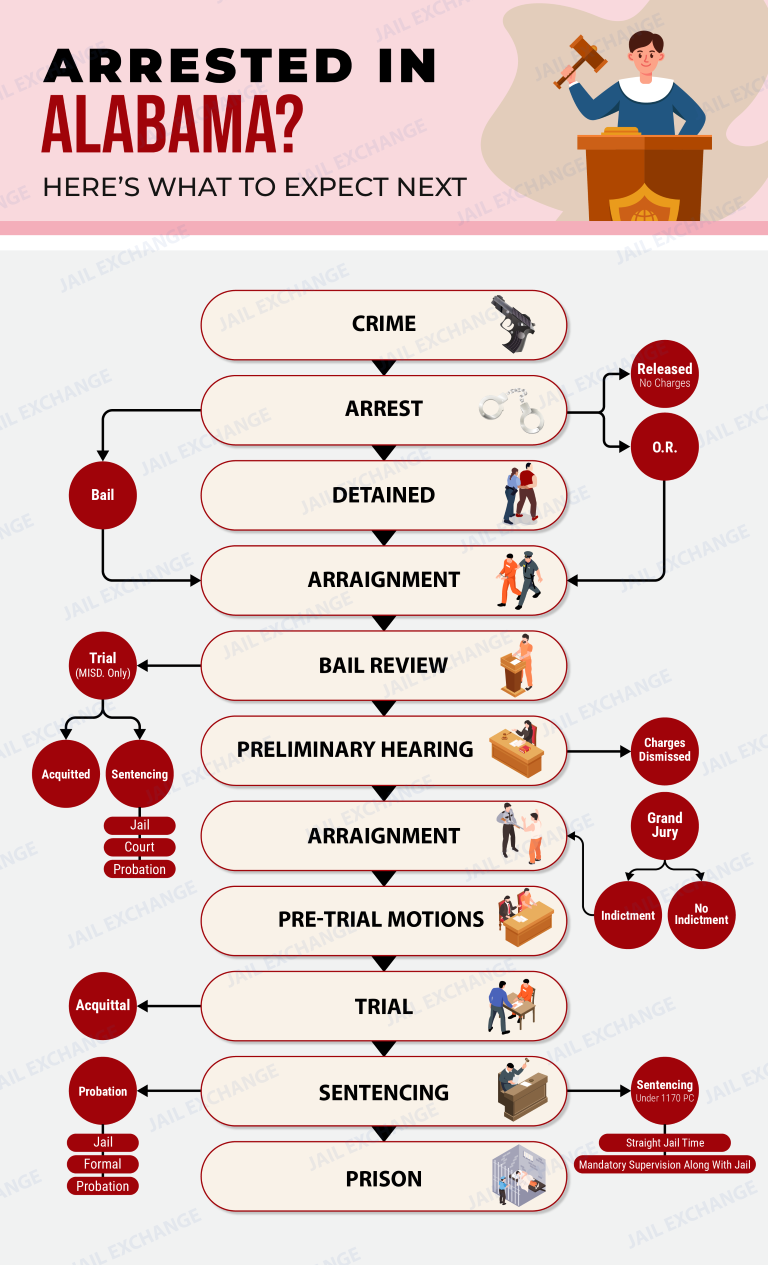
Information for this service is currently unavailable.
The Perry County Jail in Marion has not put its deposit rules in writing for families, so the jail itself is the place to get them before you send anything.
- Ask the jail first: Call 334-683-6534 and ask how to add money to a person's commissary account. Have their full name and booking number ready.
- If a money order is allowed: Make it out to the person's full name and write their inmate ID on the memo line. Mail it to Perry County Jail, P.O. Box 157, Marion, AL 36756.
Never mail cash. Commissary money is kept apart from bail, so it cannot be used to pay a bond.
Families write to the Perry County Jail in Marion on paper, using regular letters or postcards sent through the U.S. Mail to the sheriff's post office box. Before anything reaches the inmate, staff open it, look for drugs and other contraband, and may read every word. There is no cap on how much mail a person can receive, and it is passed out on weekdays, Monday through Friday.
Letters, legal mail, publications and money orders:
Inmate's Full Name & Inmate ID#
Perry County Jail
P.O. Box 157
Marion, AL 36756
- Who may write: Family and friends can write freely. The inmate may not send mail to or get mail from a co-defendant, another inmate, or anyone covered by a no-contact order.
- Sending money: Never tuck cash into an envelope. Buy a postal money order made out to either the inmate's full name or the Perry County Sheriff's Office, put the inmate's name and ID number on the memo line, and send it in an envelope with nothing else inside. If you are unsure, call 334-683-6534 to confirm.
- Pen color: Letters must be written in blue or black ink, and colored ink, crayons and felt markers are not accepted.
- Books and reading material: Books, newspapers and magazines have to be new and mailed directly by a publisher or a store. Spiral-bound and hardcover books are turned down, and anything dealing with sex, violence, drugs, gangs or escape gets returned.
- Your address: Print your full name and mailing address in the upper left corner of the envelope. Mail missing it will most likely be destroyed.
- Stamps: Stamps cannot be sent in the mail. The inmate can buy them through commissary, and anyone with no money is given a few each week.
- Cards: Send only plain greeting cards, never the musical kind.
- Packages: The jail's commissary service is the only way to get a package in. No other packages can be mailed.
- Plain envelopes: Leave the envelope free of drawings, and keep glitter, confetti, perfume, lipstick and any extra items out of it.
Mailing drugs or anything else illegal can lead to criminal charges against the sender and the inmate alike.

Securus AdvanceConnect is a prepaid calling account that links directly to your mobile phone or landline number, allowing you to receive outbound calls from an incarcerated individual. Because correctional phone systems never allow incoming calls, funding an AdvanceConnect balance ensures calls are accepted immediately without being blocked by cell carriers.
Important: Mobile Networks Block Inmate Calls Without Prepaid Funds
Correctional facilities do not allow collect billing to cell phones, and mobile carriers automatically block incoming collect calls from detention centers. While some residential landlines may allow direct billing, mobile phones and VoIP services require an active prepaid AdvanceConnect balance, which you can verify with your phone provider. If you do not register online and fund your account right away, your loved one will hear an automated error message stating that your number cannot accept calls.
Step-by-Step Instructions to Register and Fund AdvanceConnect
- Go to securustech.online or open the Securus mobile app.
- Select Sign Up and create your account using your 10-digit telephone number and email address.
- Search for your facility by state and agency name, then add the inmate using their full legal name or booking ID.
- Select AdvanceConnect under calling accounts.
- Choose your deposit amount, review convenience and transaction fees, and enter your credit or debit card billing details.
- Authorize payment and confirm that your mobile phone allows calls from automated or unknown correctional numbers.
What the Inmate Needs to Do
The inmate picks up any dayroom phone or logs onto their handheld tablet, dials your 10-digit number, and enters their assigned PIN. The automated system verifies that your AdvanceConnect account has an active balance and connects the call. All calls are subject to recording and monitoring by facility staff.
Official Provider: Securus Technologies Official Website
Customer Service Telephone: 1-800-844-6591
Support Hours: 24 hours a day, 7 days a week, 365 days a year
Supported Languages: English and Spanish
Other Services Provided by Securus Technologies
In addition to AdvanceConnect Prepaid Calling, Securus Technologies and its subsidiary JPay provide several other communication, financial, and visitation services:
- Direct Bill Phone Calling: Establish a monthly billed calling account for verified landline numbers.
• Learn more on our website: Direct Bill Phone Calling Guide | • Visit official vendor page: Securus Direct Bill - Securus Video Connect: Schedule and join live video visits from home using your computer or smartphone.
• Learn more on our website: Video Visitation Guide | • Visit official vendor page: Securus Video Connect - JPay Money Deposits (Trust & Canteen): Send money directly into an inmate's jail trust account for commissary store purchases.
• Learn more on our website: Money Deposits Guide | • Visit official vendor page: JPay Money Transfers - JPay Email Messaging & Photos: Send electronic messages, photo attachments, and VideoGrams directly to their tablet or kiosk.
• Learn more on our website: Email Messaging Guide | • Visit official vendor page: JPay Email Services
Securus Direct Bill is an invoiced telephone calling service designed for approved residential landlines, law offices, and commercial businesses. Instead of prepaying funds in advance, calls received from an incarcerated individual are billed directly to your account on a monthly itemized billing invoice.
Important: Direct Bill Requires Credit Approval and Qualifying Lines
Direct Bill is not available for mobile cell phones, internet VoIP numbers, or customers with poor or unestablished telephone credit history. Correctional facilities enforce strict telecommunications billing rules, which you can verify by calling Securus customer care. If your line does not meet credit approval standards, you must open an AdvanceConnect prepaid account instead to receive incoming calls from your loved one.
Step-by-Step Instructions to Set Up a Direct Bill Account
- Contact Securus customer service at 1-800-844-6591 or submit an application via securustech.net.
- Provide your billing name, service address, and qualifying residential or business landline telephone number.
- Submit to a standard credit evaluation performed by Securus to determine billing eligibility.
- Establish your authorized monthly credit limit upon approval.
- When your phone rings with a call from the detention center, follow the recorded operator instructions and press the requested key to accept charges.
- Pay your monthly billing invoice online, by phone, or through the mail.
What the Inmate Needs to Do
The inmate dials your phone number from any dayroom telephone and keys in their assigned PIN. The automated system verifies that your account is in good standing and has not exceeded its monthly spending ceiling before connecting the call. All non-privileged conversations are recorded and monitored.
Official Provider: Securus Technologies Official Website
Customer Service Telephone: 1-800-844-6591
Support Hours: 24 hours a day, 7 days a week, 365 days a year
Supported Languages: English and Spanish
Other Services Provided by Securus Technologies
In addition to Direct Bill Calling, Securus and its subsidiary JPay offer several other communication, financial, and visitation services:
- AdvanceConnect Prepaid Calling: Fund a prepaid calling account tied to your mobile phone number.
• Learn more on our website: AdvanceConnect Calling Guide | • Visit official vendor page: Securus AdvanceConnect - Securus Video Connect: Schedule and join live video visits from home using your computer or smartphone.
• Learn more on our website: Video Visitation Guide | • Visit official vendor page: Securus Video Connect - JPay Money Deposits (Trust & Canteen): Send money directly into an inmate's jail trust account for commissary store purchases.
• Learn more on our website: Money Deposits Guide | • Visit official vendor page: JPay Money Transfers - JPay Email Messaging & Photos: Send electronic letters, photos, and VideoGrams directly to their tablet or kiosk.
• Learn more on our website: Email Messaging Guide | • Visit official vendor page: JPay Email Services
Information for this service is currently unavailable.
Information for this service is currently unavailable.
Nearby counties
- Jail (Main): 334-683-6534
- Court: 334-683-6106
- Juvenile Probation: 334-683-7120
- Sheriff: 334-683-6534
The Perry County Jail serves the following cities and towns of Perry County: Burnsville, Greensboro, Marion and Perry. At times this facility may also house inmates arrested in the following counties: Dallas County.