
Wright County Jail
Wright County Jail
Physical Address
3800 Braddock Ave. NE.Buffalo, MN 55313
Jail Phone Number
763-684-2381Wright County Inmate Search: Locating Someone Held in Buffalo
If police in this county arrest an adult and hold onto them, the person lands at the Wright County Jail, 3800 Braddock Avenue NE, Buffalo, MN 55313. It makes no difference if a trooper, a deputy or a town officer did the arresting. The Sheriff's Office runs this 288-bed jail, built in 2009, and it houses men and women. This page walks you through finding your person, release, lawyers, visits, money, mail, warrants and court.
The jail census comes first. It is the county's list of every adult held behind bars in Buffalo. It gets rebuilt each weekday, with holidays skipped. So a Saturday booking often waits for Monday's list. Scan it for the last name and copy down the exact spelling it uses.
Next, dial the jail at 763-684-2381 with the legal name and birthdate handy. Staff can usually tell you the charge and the bail amount. To leave a short note for someone newly booked, use the new-inmate voicemail at 763-515-4160. For the road ahead, read our bail guide, then the court guide.
Read inmate search answers
 Read inmate search answers
1. How do I search the Wright County jail census?
The jail publishes several weekday reports. The census is the one to start with:
- Tap the jail census link. It shows each adult now held in Buffalo.
- Glance at the date printed on it. Fresh copies come Monday through Friday, never on holidays.
- Hunt down the surname using Ctrl+F on a laptop. Phones usually hide a find-on-page option in the browser menu.
- Still nothing? Search again by first name, or by a past last name.
- Write down what the list shows for that person. Those notes help staff find the right record fast.
The Sheriff's jail page lists other reports as well: a Media Report of new bookings, Weekly Booking Data and a Court Calendar. The free MobilePatrol phone app (also listed under Appriss) gives real-time jail details. Staff at 763-684-2381 can sort out anything that looks wrong.
↑ Back to the question list2. No match on the census yet?
Plenty of people don't show up right away. Here is why that tends to happen:
- Timing. The census is rebuilt only on weekdays. A Friday evening or Sunday booking can be absent until the next copy.
- Booking delays. Officers from Buffalo, Annandale and Howard Lake bring arrests to this same jail, and fingerprints, photos and paperwork take time.
- A ticket. On most misdemeanors, officers can hand over a citation and let the person walk away. They hold the person instead when that seems needed to prevent harm or more crime, or when the person may not come back to court. A domestic assault arrest can't end with just a ticket.
- Out after court. A judge may have let them go with a signed promise or rules to follow.
- Across the line. An arrest in Sherburne, Hennepin or another neighbor goes to that county's jail. Federal prisoners also get moved.
- Age. Minors never show on adult lists.
Jail staff at 763-684-2381 can say for sure. Tell them the legal name, the date of birth and which agency you believe made the stop.
↑ Back to the question list3. Is the Buffalo jail the only place to check?
For adults, Wright relies on one building: the Wright County Jail, 3800 Braddock Avenue NE, Buffalo, MN 55313, 763-684-2381. It is a secure jail for both men and women. Its state license lets it keep people waiting on court and people doing local time of up to a year.
Was the arrest near a border? Then the person may sit in that county's jail instead:
- Sherburne County Jail, 13880 Business Center Drive, Elk River, MN 55330, 763-765-3800. It also houses a large number of federal and immigration detainees.
- Hennepin County Adult Detention Center, 401 South Fourth Avenue, Suite 100, Minneapolis, MN 55415 (the Public Safety Facility), 612-348-5112
- Carver County Jail, Sheriff's Office, 606 East 4th Street, Chaska, MN 55318, 952-361-1145
- McLeod County Jail, 801 10th Street East, Glencoe, MN 55336, 320-864-5191
- Meeker County jail, Justice Center, 325 North Sibley Avenue, Litchfield, MN 55355, 320-693-5415
4. Are Wright County mugshots available to families?
Under state data law, Minnesota booking photos are public. The agency that took the picture can delay its release if that would hamper an investigation that is still going (Minn. Stat. 13.82, subd. 26). Arrest records such as the offense, the custody status and the release time are open too (Minn. Stat. 13.82, subd. 2).
Want to see mugshots? Ask whichever agency did the arrest. Deputy arrests belong to the Sheriff's Office, 3800 Braddock Avenue NE, Buffalo, MN 55313, 763-682-1162. City arrests belong to the local police.
- For photos taken by immigration agents, send ICE a records request.
- Federal mugshots, by contrast, are generally kept private. The U.S. Marshals Service is the exception and sometimes puts out a photo of a wanted fugitive.
5. How can I be alerted to a release?
Behind Minnesota VINE is the state's Department of Public Safety. Once you sign up, VINE alerts you if a Minnesota county jail lets the person out or ships them elsewhere.
- Enroll on VINELink or by phone at 877-664-8463.
- You must register; alerts never start by themselves.
- People in state prison are tracked by the DOC's own system, Minnesota Haven, rather than VINE.
MobilePatrol carries jail updates too. Want today's status? The jail line is 763-684-2381.
↑ Back to the question list6. How does bail get decided after a Wright County booking?
Release is a judge's call in District Court. The courtrooms are in the Justice Center, 3700 Braddock Avenue NE, Buffalo, MN 55313, 763-760-6300, and some in-custody first hearings run over video. Key Minnesota rules:
- The clock. A person held after an arrest without a warrant has a right to reach a judge within 36 hours. The count ignores Sundays, legal holidays and whatever day the arrest happened (Minn. R. Crim. P. 4.02, subd. 5). Different timing applies when officers arrest on a warrant, since the warrant controls.
- Default. Release on a signed promise is presumed. The judge may add the lightest conditions that protect people and get the defendant back to court (Rule 6.02).
- Two numbers. State rules also make the judge set a cash amount free of conditions (Rule 6.02, subd. 1). That is why Buffalo release papers often carry two amounts, a smaller one with conditions and a larger one without.
- Bondsmen. Licensed bondsmen can cover the whole bond. Expect a premium of at least $100 that you won't see again (Minn. Stat. 60M.02).
- Cash. Cash goes to the court administrator. Even if relatives paid, Minnesota law says that money is the defendant's (Minn. Stat. 629.53). For a refund to you, the defendant signs court form CRM602.
Phone the jail at 763-684-2381 to learn where bail is taken and in what form. Our bail guide breaks down each step, and the Minnesota bail laws page sums up state rules.
↑ Back to the question list7. What crime is listed against them?
Jail staff at 763-684-2381 can read you the booking charge. After charges are filed, the case shows on Minnesota Court Records Online, the free statewide case lookup. A few juvenile files are kept off it.
Here is what each level of charge can bring:
- Petty misdemeanor: fine only, $300 tops.
- Misdemeanor: 90 days in jail and a $1,000 fine at most.
- Gross misdemeanor: 364 days and a $3,000 fine at most.
- Felony: prison is possible, for one year or more, as defined in Minn. Stat. 609.02, subd. 2.
Is the case missing from the lookup? Court administration, Justice Center, 3700 Braddock Avenue NE, Buffalo, MN 55313, 763-760-6300, can search for it.
↑ Back to the question list8. Is a free lawyer possible for a Wright County case?
Short on money for a defense? Ask the judge to name a public defender. That right reaches felonies and gross misdemeanors. Misdemeanors count too, when jail time is possible. The judge looks at a form about income and bills before deciding (Minn. Stat. 611.17). Someone who already gets benefits based on low income is presumed to qualify. Speak up at the very first hearing.
- Tenth District Public Defender, Buffalo office, 105 Center Drive, Buffalo, MN 55313, 763-682-4306
- Self-Help Center for court forms, Justice Center, 3700 Braddock Avenue NE, Buffalo, MN 55313, 763-760-6699
Some families hire their own defense attorney instead.
↑ Back to the question list9. When can family visit in Buffalo?
The jail sets its own visiting days, and they shift from time to time. Before making the trip, phone 763-684-2381 and go over these points:
- Which days are open, the hours, and whether you book ahead.
- In-person visits, video visits, or both.
- ID rules for grown-ups, and what kids need.
- The dress code, and what to leave in the car.
Visitors check in at 3800 Braddock Avenue NE, Buffalo, MN 55313. Look over our visiting guide before the first trip.
↑ Back to the question list10. Which deposit options reach their account?
Ask staff at 763-684-2381 what money on the person's account can pay for, how deposits can be made right now (in person, by phone, or on the web), plus fees and limits.
Our money guide weighs each deposit choice, and the commissary guide covers snack and supply orders. Keep cash out of the mail.
↑ Back to the question list11. Does the Buffalo jail allow calls, tablets or video?
Calls, and tablets if the jail has them, run through a service the jail chooses. To set up an account, phone 763-684-2381 and ask about rates, messaging and video visits.
For someone newly booked, the jail keeps a voicemail at 763-515-4160 where you can leave a message. Assume anyone could be listening on a jail call, and leave case details to the defense lawyer. See the phone guide for calls and the email and text guide for messages.
↑ Back to the question list12. Where do letters and cards go?
Before writing, ring the jail at 763-684-2381. Get the correct address, the name format, and any number they want written on the envelope. Find out, too, which items pass: photos, cards, books or magazines.
Address it with their full legal name. Your name and address go in the upper left. Plain paper in a plain envelope avoids trouble. Our mail guide goes over common rules.
↑ Back to the question list13. Who gets the belongings held at booking?
Anything taken from the person during booking, like a phone or car keys, goes into storage. Call 763-684-2381 before driving over. Ask whether the person in custody has to sign off first, where and when pickup happens, and what ID you need.
When someone transfers to prison or another jail, ask how long stored items will be kept and how to claim them.
↑ Back to the question list14. Sick, hurt or out of medicine in jail?
Let the jail know about any health problem right away at 763-684-2381. Ask for medical staff, or have the officer write down your message. Have ready the diagnosis, every medicine and its dose, and the name and phone of their doctor.
Inside, the person should tell staff about any health need, so urge them to speak up. For a life-threatening emergency, dial 911. Anyone can report sexual abuse of a person in custody on the Sheriff's Office line, 800-362-3667.
↑ Back to the question list15. Does someone have a Wright County warrant?
Worried a warrant is out there? Dial the Sheriff's Office at 763-682-1162. Court administration at the Justice Center, 3700 Braddock Avenue NE, Buffalo, MN 55313, 763-760-6300, can also check. The Department of Corrections keeps a list of supervised release violators on its Wanted Fugitives page. Minnesota Court Records Online lists court cases but not warrants. To clear one, start by calling a lawyer. Next, contact court administration for the court that issued it. Surrendering at the jail, 3800 Braddock Avenue NE, Buffalo, MN 55313, is the other route.
↑ Back to the question list16. Next hearing: where is it listed?
The District Court schedules every hearing at the Justice Center, 3700 Braddock Avenue NE, Buffalo, MN 55313. Court administration answers at 763-760-6300, so have the case number ready if you know it.
- Search names for future dates on the state's free hearing lookup.
- On weekdays, the jail's Court Calendar names adults due in court that day.
- Expect the omnibus hearing, where evidence can be challenged, about six weeks in. The usual limit under Rule 11.01 is 42 days from the first hearing.
- If the defense demands it, Rule 11.09 requires a speedy trial, started within 60 days.
For the hearings ahead in Buffalo, open our court guide.
↑ Back to the question list17. A federal charge: where does the person go?
Federal cases belong to the U.S. District Court for the District of Minnesota. Its nearest courthouse to Buffalo is the Diana E. Murphy U.S. Courthouse, 300 South Fourth Street, Minneapolis, MN 55415. The clerk's office number is 612-664-5000.
- A federal judge runs the detention hearing that settles whether the defendant stays jailed before trial (18 U.S.C. 3142).
- The U.S. Marshals Service is responsible for federal defendants and places many in county jails. The Sherburne County Jail, 13880 Business Center Drive, Elk River, MN 55330, 763-765-3800, takes a large share.
- The Marshals' office at 300 South 4th Street, Suite 402, Minneapolis, MN 55415, 612-664-5900, can say where someone is housed.
- Once sentenced, the person appears on the BOP inmate locator.
18. Immigration hold: what are the steps?
When ICE wants a person from the Buffalo jail, the process usually runs in this order:
- Buffalo gets an immigration detainer. Its paperwork is Form I-247A.
- It asks Buffalo staff to keep the person up to 48 hours after they would otherwise be released (8 CFR 287.7(d)).
- A February 6, 2025 opinion by Minnesota's Attorney General matters here too. That opinion says Minnesota law keeps a jail from adding holding time on the strength of a detainer alone.
- After ICE takes the person, the case moves to ICE's ERO St. Paul Field Office, 1 Federal Drive, Suite 1601, Fort Snelling, MN 55111, 612-843-8600. ICE keeps detainees in a few Minnesota county jails.
- Use the ICE Online Detainee Locator. Typing in the person's A-number, the alien registration number, gives the surest hit. Searching by name? Add the birth country as well.
19. How can I track a person sent to prison?
In Minnesota, the Department of Corrections (DOC) runs state prisons. After a prison sentence, the person remains at the Buffalo jail until deputies bring them to DOC intake. The DOC then sizes up each newcomer and picks the prison.
- Plug the name into the DOC Offender Locator. A brand-new prisoner can lag a few business days behind.
- Read our Minnesota state prisons guide for visiting and mail.
- For most, the final third happens outside the walls on supervised release, still under the DOC.
20. What if a minor is picked up?
Until age 18, Minnesota law calls a young person a child (Minn. Stat. 260B.007), so a teen's case is heard by a juvenile judge of the District Court at the Justice Center, 3700 Braddock Avenue NE, Buffalo, MN 55313.
- Most often an officer sends the youth home with a mom, dad or guardian. Holding is allowed when the youth is a danger or may not return for court (Minn. Stat. 260B.176).
- In Buffalo, the adult jail's state approval lets it hold a youth six hours at the most. Wright youth who need secure custody are generally placed at the East Central Regional Juvenile Center in Lino Lakes.
- Past 36 hours, secure detention needs a petition on file plus a judge's okay. Weekends and holidays pause that clock.
- Prosecutors can ask to certify a youth aged 14 to 17 for adult court when the charge is serious. Another path, extended jurisdiction juvenile (EJJ), blends the two systems.
Court administration at 763-760-6300 can give the hearing time and help you learn where a youth is held.
↑ Back to the question list21. Which Wright County agency did the arresting?
These agencies make arrests in the county. Adults they hold are booked into the Buffalo jail:
- Sheriff's Office, 3800 Braddock Avenue NE, Buffalo, MN 55313, 763-682-1162. Deputies cover the countryside and know which agency serves each town.
- Buffalo Police Department, 763-682-5976
- Annandale Police Department, 320-274-3278
- Howard Lake Police Department, 320-543-3670
- Minnesota State Patrol, headquarters at 445 Minnesota Street, Suite 130, St. Paul, MN 55101, 651-201-7100. Troopers patrol the highways. The State Patrol contact page lets you select Wright and see which district office covers it.
Arrested in Monticello, St. Michael, Delano, Otsego or a town missing from this list? Call the Sheriff's Office and ask who polices that town.
↑ Back to the question listWright County bail and bond: the Buffalo jail, the daily census, and the courthouse
When a deputy or city officer in Wright County jails an adult, booking takes place at the Wright County Jail, 3800 Braddock Avenue NE, Buffalo, MN 55313, which the Sheriff's corrections division runs. The state licenses it for 288 inmates. Below are answers on bail amounts, payment spots, bondsmen and refunds.
Use the Sheriff's in-custody search to check the charge and any bail amount. Weekday jail reports also show new bookings and a full census. Our Jail Roster page for Buffalo pulls together recent arrests, warrants and mugshots.
Then call the jail at 763-684-2381 and ask what the judge decided about release money. A message line for new inmates, 763-515-4160, lets you leave word. Hearing details live on our Wright court page.
1. Is my relative at the Wright County Jail in Buffalo?
Type the name into Wright County Inmate Search. A person booked a few minutes ago may not show yet. The county also posts daily jail reports on its website on weekdays, except holidays: a media report of recent bookings, a census of everyone in custody, and a list of adults who have court that day. If the name is on none of them, call 763-684-2381.
↑ Back to the question list2. Is there a Wright County app for the jail?
Yes. The Sheriff's Office offers a free app for Android and iPhone. The county says to search for "MobilePatrol" or "Appriss" in your app store. It shows detention center information as it changes. Use it as a first check, then confirm any bail amount with the jail at 763-684-2381.
↑ Back to the question list3. How large is the Wright County Jail, and when was it built?
The county says the present jail was built in 2009. It is licensed by the Minnesota Department of Corrections to keep prisoners up to one year and has a licensed capacity of 288. A jail this size serves a county with many cities, so calls get busy. Keep the full name and birth date handy when you phone.
↑ Back to the question list4. Where do I take bail money in Buffalo?
Call the jail at 763-684-2381 and ask which counter handles your case, what hours it keeps, and what payment it accepts. Court administration at 3700 Braddock Avenue Northeast, 763-760-6300, can also tell you about weekday payments. Bring photo ID and the case number, and get a receipt that shows the amount and date.
↑ Back to the question list5. Is there a message line for someone who was just booked?
The jail has a new inmate voice mail line at 763-515-4160. That line is for messages to a newly booked person. It is not the number for bail or custody questions.
↑ Back to the question list6. What does a Wright County judge decide in the first 36 hours?
Without a warrant, an arrest must lead to a judge's review in 36 hours or as soon as a judge can see the person. The day of arrest, Sundays and legal holidays are not counted, but Saturdays are. At the hearing the judge sets conditions or bail, and a misdemeanor defendant who is not seen in time must be released on a citation.
↑ Back to the question list7. Can I see the bail amounts for each charge in advance?
No statewide list exists, and Judicial Council policy tells judges not to depend on preset schedules. The judge will compare the charge, the evidence, family ties, work, past court record and safety. The amount is in Wright County Inmate Search or you can ask the jail.
For cases that involve violence, certain domestic assault or harassment charges, the local corrections staff should complete a pretrial form before the first hearing. It carries no recommended dollar amount.
↑ Back to the question list8. What if the charge is a domestic assault or a violation of a no-contact order?
The person must be brought before a judge without unnecessary delay, and the judge decides whether release threatens the victim. Conditions often include no contact, staying away from the home, and limits on guns or alcohol. Ask the court at 763-760-6300 for the hearing time.
↑ Back to the question list9. Can a judge release my relative on a signature alone?
Yes, and Rule 6.02 makes that the starting point at the first appearance. The judge may add the least restrictive condition that reasonably assures a return to court, such as supervision, travel limits or reporting. Money is ordered only if lighter steps are not enough.
↑ Back to the question list10. How much does a Minnesota bondsman charge?
The agent must use the surety's filed premium rate, with a $100 minimum, and cannot discount or rebate. The chapter sets no flat percentage. Bonds of $10,000 or less require half the premium before posting, and bonds over $10,000 require at least 30 percent. Interest on a payment note cannot exceed 6 percent a year.
The agent is licensed by the Commerce Department and approved by the State Court Administrator. Agents may not solicit inside the jail.
↑ Back to the question list11. Can my house or lake lot be used as security?
The judge may accept "other security," so property is possible. Ask the court at 763-760-6300 what the judge will accept, how equity is measured, and whether land in another county counts. Be careful with a bondsman. State law bars a quitclaim deed as collateral and sets a 21-day deadline to return collateral after proof of discharge.
↑ Back to the question list12. Who can lower the bail, and how?
Only a judge. The jail cannot change it. Any party can ask the court to review conditions, and a lawyer should bring proof of a job, family, and a steady address. Court administration can confirm if a hearing is already set.
↑ Back to the question list13. How do I get a public defender in Wright County?
If you cannot afford a lawyer, say that to the judge at the first hearing or file the Judicial Branch's online request. The court decides eligibility and appoints the lawyer. For the office that covers Wright County, call court administration at 763-760-6300.
↑ Back to the question list14. Where does Wright County hold a teenager after an arrest?
Ask the Sheriff's Office through the jail at 763-684-2381 where a minor was taken, and ask the court at 763-760-6300 for the detention hearing. Juvenile records are private, and the adult search will not show a child.
↑ Back to the question list15. What happens if the defendant fails to appear?
A no-show lets the judge forfeit the bond and issue a warrant. The court must notify the bail agent within 30 days of the missed date and send notice of the forfeiture within seven days, or the bond is discharged without penalty. Do not rely on that. Call a lawyer and the agent the same day.
↑ Back to the question list16. Does cash bail get refunded, and how do I spot a fake bail call?
Cash bail is the defendant's money. The court holds it until the case ends, and a judge may apply it to fines or restitution. A bondsman's premium is not refunded. No real office wants gift cards. Hang up and dial 763-684-2381 yourself.
↑ Back to the question listWright County bail contacts
- Jail: Wright County Jail, Braddock Avenue Northeast, Buffalo, MN 55313; 763-684-2381
- Bond guide: Wright County bail and bond help
- Custody lookup: Wright County Inmate Search
- New inmate message line: 763-515-4160
- District court: Wright County Courthouse, 3700 Braddock Avenue Northeast, Buffalo, MN 55313; 763-760-6300
- Public defender: Ask court administration, 763-760-6300
This is a plain-language overview, and the rules in a single case can differ. Check hours, amounts and phone lines with the jail or the court, and talk to a lawyer before you sign a bond.
Wright County Jail VISITATION HOURS
3800 Braddock Ave. NE.
Buffalo, MN 55313
763-684-2381
Monday - Friday:
9:00 AM - 11:25 AM and 2:30 PM - 4:05 PM
Tuesday and Wednesday:
6:00 PM - 8:00 PM
Saturday:
9:00 AM - 11:25 AM
** No visitation on major holidays, the day after Thanksgiving, and Christmas Eve.

Inmate Canteen Video Visitation allows family members and approved contacts to hold scheduled, face-to-face video visits with incarcerated loved ones from home. Using a computer with a webcam or a mobile device, visitors can connect directly through housing-unit video kiosks without traveling to the correctional facility.
Important: Advance Visitor Clearance Required
Detention centers do not permit unscheduled or unverified video sessions. Correctional facilities require prospective visitors to submit government-issued photo identification and receive administrative clearance before booking an appointment, an approval process that can take up to 48 hours depending on facility staffing. You should verify your visitor approval status with the facility prior to scheduling. If you do not register well in advance, you will miss your loved one's scheduled visiting window for the week.
Step-by-Step Instructions to Register and Schedule a Video Visit
- Visit www.inmatecanteen.com and sign into your account.
- Register your visitor profile and upload a clear photograph of your government-issued ID (driver's license or passport) for facility background review.
- Wait for email notification confirming facility visitor approval.
- Select Video Visitation, choose the detention facility, and select the inmate.
- Browse the available schedule calendar, select an open time slot, and pay the visitation fee using a credit or debit card.
- Log into the website or app 10 minutes prior to the start time on a device with a functioning camera, microphone, and reliable high-speed internet connection.
What the Inmate Needs to Do
The inmate receives a visitation notification on their housing unit video kiosk. At the appointed time, they log in with their PIN and sit before the terminal. Inmates and visitors must strictly observe jail dress and conduct rules; sessions are monitored by staff and will terminate immediately upon any violation.
Official Provider: Inmate Canteen Official Website
Customer Service Telephone: 1-715-690-2965
Support Hours: Monday – Friday, 8:00 AM – 5:00 PM CST
Supported Languages: English and Spanish
Other Services Provided by Inmate Canteen (TurnKey Corrections)
In addition to Remote Video Visitation, Inmate Canteen provides several other communication, financial, and commissary services at participating correctional facilities:
- Commissary & Snack Packs: Order pre-approved snack boxes, food packages, and clothing directly to the jail.
• Learn more on our website: Commissary Orders Guide | • Visit official vendor page: Inmate Canteen Commissary - Digital Messaging & Chirp Texts: Send electronic messages and photos directly to housing pod kiosks and handheld devices.
• Learn more on our website: Digital Messaging Guide | • Visit official vendor page: Inmate Canteen Messaging - Trust & Phone Deposits: Deposit money directly into an inmate's jail trust account or phone calling balance.
• Learn more on our website: Trust & Phone Deposits Guide | • Visit official vendor page: Inmate Canteen Deposits
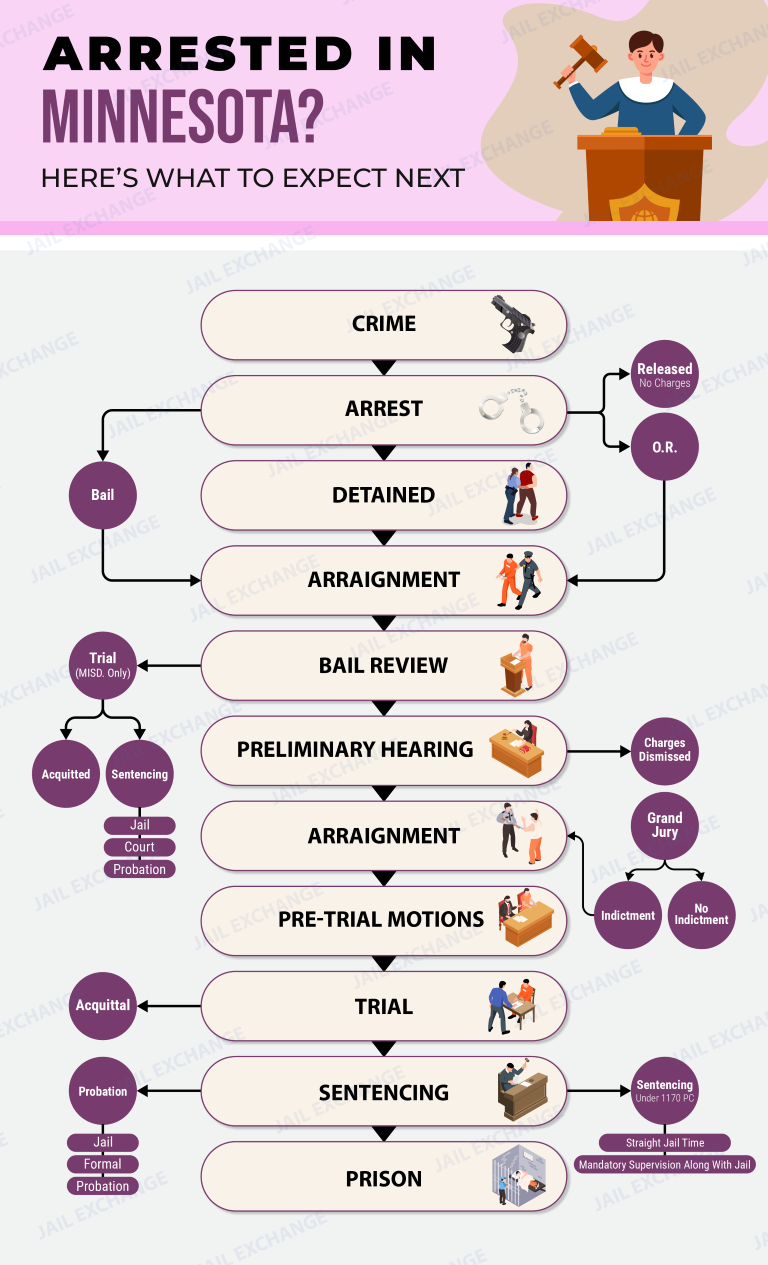
Wright County Criminal Court Process: From Arrest to Sentencing in Buffalo
Buffalo's Justice Center, 3700 Braddock Avenue NE, Buffalo, MN 55313, is where the Tenth Judicial District hears every criminal case from Wright County. Court administration answers at 763-760-6300. Anyone held goes to the county jail on the same campus, 3800 Braddock Avenue NE, Buffalo, MN 55313.
Search the official inmate finder by name. Our Inmate Lists page adds daily bookings, charges and how a public defender is assigned.
Call court administration at 763-760-6300 to confirm the first appearance date and the courtroom. Jail custody questions go to 763-682-7610. If bail is part of the order, our Buffalo bail help explains how to pay.
1. The Wright County courthouse in Buffalo
Buffalo is the county seat of Wright County, and the Wright County Courthouse on Braddock Avenue Northeast, also known as the Justice Center, is where the Wright County District Court hears every criminal case in the county. Wright County is part of Minnesota's Tenth Judicial District. Felonies, juvenile cases and offenses from the townships are prosecuted by the elected Wright County Attorney; misdemeanors and gross misdemeanors from fast-growing cities such as Monticello, St. Michael, Otsego, Albertville, Delano and Buffalo are generally handled by each city's prosecutor. Adults who are arrested and held go to the Wright County Jail, run by the Sheriff a short distance from the courthouse.
Wright County is one of Minnesota's larger court systems, so this guide adds sections on the courthouse, the hours after an arrest, the jail, public defense, prosecutors and diversion, and treatment courts before covering each level of charge.
- Wright County District Court (Court Administration, Tenth Judicial District), Wright County Courthouse / Justice Center, 3700 Braddock Avenue NE, Buffalo, MN 55313, (763) 760-6300
- Wright County Attorney's Office, Buffalo, (763) 682-7340
- Tenth District Public Defender (State Board of Public Defense), the appointed-counsel office for Wright County; Wright County clients can contact the district's Buffalo office at 105 Center Drive, Buffalo, MN 55313, (763) 682-4306
- Wright County Jail (Wright County Sheriff's Office), 3800 Braddock Avenue NE, Buffalo, MN 55313, jail (763) 682-7610; Sheriff's Office main line (763) 682-1162
Which court hears your case. Wright County has a single criminal trial court. A petty misdemeanor from Delano, a DWI on Interstate 94 near Monticello and a felony burglary in Cokato all go to the District Court at 3700 Braddock Avenue NE in Buffalo, because Minnesota does not have separate city or municipal courts. What depends on the charge level is the prosecuting office and the hearings involved. Lower-level crimes committed inside a city are typically prosecuted by that city's attorney, which is often a private attorney under contract with the city. The same offenses in a township are prosecuted by the Wright County Attorney, and every felony in the county is too.
Where pretrial detainees are held. Anyone arrested in Wright County who is not released, whether by a deputy, a city officer or a state trooper, is booked into the Wright County Jail at 3800 Braddock Avenue NE in Buffalo. The jail is operated by the elected Sheriff and stands on the same county campus as the courthouse. Detainees remain in Buffalo until they make bail, win release from a judge, or reach the end of the case. For custody information call (763) 682-7610.
Wright County's courtrooms and Court Administration are in the courthouse at 3700 Braddock Avenue NE, Buffalo, MN 55313, a building the county also calls the Justice Center. It sits on the county campus on the northeast side of Buffalo next to the Sheriff's Office and jail at 3800 Braddock. Free surface parking and street parking are available. Court Administration keeps weekday business hours, 8:00 to 4:30, and can be called at (763) 760-6300.
Older paperwork may show the former downtown Buffalo courthouse address; hearings are now held on Braddock Avenue. Some short hearings, including certain in-custody first appearances, can be conducted by video. Check your notice, ask your lawyer, or call Court Administration if you are unsure where or how to appear, and arrive early to allow time for security screening.
↑ Back to the question list2. What happens after an arrest in Wright County
Booking
Unless the officer issues a citation and releases the person at the scene, an arrest in Wright County ends with a trip to the jail in Buffalo for booking: fingerprints, photographs, a property inventory and a check for warrants and holds. Many people booked on misdemeanors can post bail from the Tenth District's schedule and leave the same day.
The time limits
Those who are held have two protections. If the arrest was made without a warrant, a judge must review the facts and find probable cause within 48 hours. And anyone still in custody must be brought before a Wright County judge within 36 hours, a deadline that does not count the day of arrest, Sundays or legal holidays. In practice, a weekend arrest is usually followed by a Monday hearing.
The first appearance and release
Felony and gross misdemeanor defendants have a Rule 5 hearing; misdemeanor defendants are arraigned. The judge reads the charge, considers any request for a public defender, and decides on release. Choices include release on recognizance; conditional release with terms such as no contact with the alleged victim, no alcohol or drugs, alcohol monitoring or regular check-ins; and money bail. When bail is used, Minnesota judges typically set a higher amount with no conditions and a lower amount with conditions. A pretrial evaluation by probation staff may be prepared for the judge. Commercial bail bonds are legal in Minnesota, and bondsmen serve the Buffalo jail.
↑ Back to the question list3. The Wright County Jail
The Wright County Sheriff's Office runs the county jail at 3800 Braddock Avenue NE, Buffalo, MN 55313. It holds adults waiting for a first appearance, people who have yet to post bail or meet release conditions while their cases are pending, and people serving local sentences. Sheriff's Office business hours are 8:00 a.m. to 4:30 p.m. on weekdays; the jail operates continuously.
- Jail: (763) 682-7610
- Jail intake: (763) 684-2381
- Sheriff's Office main line: (763) 682-1162
Jail staff can confirm whether someone is in custody and what bail has been set. Questions about hearing dates, case files and fines go to Court Administration at (763) 760-6300.
↑ Back to the question list4. Public defenders in Wright County
Appointed lawyers in Wright County come from the Tenth District Public Defender, part of the State Board of Public Defense. A defendant charged with any offense that can bring jail (a misdemeanor, gross misdemeanor or felony) may ask for one. The defendant fills out a financial statement, and the judge decides at the first appearance whether income and assets are low enough to qualify. Petty misdemeanors are excluded because jail is not a possible penalty.
The appointed attorney usually stays with the case to the end, including trial and sentencing. Public defenders also represent youth in juvenile delinquency cases. When the office has a conflict, the court appoints outside counsel. Anyone unsure whether a lawyer has been appointed can check with Court Administration.
↑ Back to the question list5. Who prosecutes, and diversion options
The Wright County Attorney's Office, (763) 682-7340, is responsible for all felony prosecutions in the county, all juvenile delinquency petitions, and misdemeanors and gross misdemeanors from townships. City prosecutors handle the misdemeanor-level offenses that happen inside their cities; in Wright County most cities hire a private attorney for this work. The complaint or citation identifies which office is prosecuting.
Prosecutors in Wright County can resolve some cases without a conviction, particularly for first-time defendants and low-level offenses. Options include pretrial diversion, in which the defendant completes programming, restitution or community service and the charge is dismissed; a continuance for dismissal; and a stay of adjudication, which keeps a conviction off the record if probation is completed. For felonies, a stay of imposition can reduce the conviction to a misdemeanor after successful probation. Victim input and restitution are typically part of these agreements.
↑ Back to the question list6. Treatment courts for Wright County cases
Treatment courts are intensive probation programs for defendants whose criminal behavior is tied to substance use, mental illness or military service. In Minnesota they include drug courts, DWI courts, veterans treatment courts and mental health courts. Participants see a dedicated judge frequently, are tested often, follow a treatment plan and move through phases, with incentives for progress and sanctions for violations. Graduation can mean a dismissed or reduced charge or a shorter sentence, depending on the agreement.
The Tenth Judicial District operates treatment court programs serving its counties, and repeat DWI and drug cases are the most common referrals. Admission is not automatic. The defendant generally must be referred by the defense, the prosecutor or probation, must meet the program's eligibility criteria (which often exclude certain violent offenses), and usually must enter a guilty plea. A defendant interested in a treatment court in Wright County should raise it with the defense attorney as early as possible.
↑ Back to the question list7. Misdemeanor (for example, theft, a first DWI, fifth-degree assault, trespassing)
Wright County's lower-level criminal calendar covers petty misdemeanors (fine-only violations that are not crimes), misdemeanors and gross misdemeanors. With so much highway mileage in the county, DWI and traffic-related crimes make up a large share of these cases.
Arraignment and first appearance
A misdemeanor begins with an arraignment; a gross misdemeanor begins with a Rule 5 hearing. Defendants released on a citation appear on the date shown, and those in custody appear within 36 hours. The judge explains the charge and the maximum penalty, considers a public defender request, and sets or reviews release conditions.
Pretrial conference, plea or trial
Most Wright County misdemeanors settle at a pretrial conference with the city prosecutor or the County Attorney, through an amended charge, a continuance for dismissal or a stay of adjudication. Defendants who go to trial can choose a judge or a six-person jury that must reach a unanimous verdict. A speedy-trial demand requires trial to begin within 60 days.
Penalties in Wright County District Court
- Petty misdemeanor in Buffalo court: a fine of up to $300, no jail and no appointed lawyer.
- Misdemeanor: up to 90 days in the Wright County Jail and up to $1,000. Theft of $500 or less, trespass and ordinary fifth-degree assault fall into this level.
- Gross misdemeanor: up to 364 days and $3,000 from a Wright County judge. This includes theft from $500 to $1,000 and fifth-degree assault after a recent qualifying conviction.
- First DWI in Wright County: fourth-degree DWI (a misdemeanor in Wright County courtrooms) if no aggravating factor is present. One factor, such as a test result of 0.16 or more, a child under 16 in the vehicle, or a refusal to test, raises it to a third-degree gross misdemeanor. The license is revoked in a separate administrative proceeding, a chemical use assessment is required, and aggravated cases can bring ignition interlock, license plate impoundment and forfeiture of the vehicle.
Sentences range from fines and probation to local jail time, sometimes served on electronic home monitoring or work release when the court allows it. A typical Wright County misdemeanor takes one to four months.
↑ Back to the question list8. Felony (for example, burglary, felony theft, drug sale, second-degree assault)
The Wright County Attorney's Office prosecutes every felony in the county by filing a complaint. A grand jury is convened only for crimes that carry a possible life sentence.
Felony hearings in Buffalo
- Rule 5 hearing within 36 hours for a jailed defendant: the judge reviews the complaint, appoints the Tenth District Public Defender when the defendant qualifies, and sets bail and conditions.
- Rule 8 hearing, the second appearance, usually a few weeks later: evidence is exchanged and the County Attorney often makes an offer.
- Omnibus hearing: the defense may challenge probable cause and seek to suppress evidence obtained through an unlawful stop, search or interrogation.
- Pretrial or settlement conference, the last scheduled chance to resolve the case before trial.
- Trial to a jury of 12, whose verdict must be unanimous, or to the judge if the defendant waives a jury.
- Sentencing, after probation completes a presentence investigation.
Sentencing guidelines and penalties
Wright County felony sentences are set using the Minnesota Sentencing Guidelines grid, which pairs the severity of the offense with the defendant's criminal history score. The intersection gives a presumptive sentence, either stayed (probation, frequently with some local jail time) or executed (prison). A judge can depart only for substantial and compelling reasons.
- Felony theft in Wright County: property over $1,000 carries up to 5 years, over $5,000 up to 10, and over $35,000 up to 20.
- Burglary charged in Wright County: up to 20 years in the first degree, 10 in the second and 5 in the third.
- First-degree sale of a controlled substance: as many as 30 years in the Tenth District.
- Second-degree assault with a dangerous weapon: up to 7 years, with a mandatory minimum prison term if a firearm was used in the Wright case.
Under a stay of imposition, a defendant who completes probation ends up with a misdemeanor rather than a felony on the record. An executed prison sentence is usually served two-thirds in custody and one-third on supervised release. Expect a Wright County felony to take four to twelve months.
↑ Back to the question list9. Violent felony (for example, murder, criminal sexual conduct, aggravated robbery)
Violent felony cases in Wright County follow the felony hearing sequence above, but with higher stakes throughout. Bail is often set very high, release conditions are strict, and many defendants spend the entire case in the jail in Buffalo. First-degree murder must be charged by a grand jury indictment rather than a complaint.
Possible sentences
- First-degree murder in Wright County District Court: life imprisonment. Premeditated murder and certain other first-degree offenses mean life without parole; other first-degree murder convictions allow parole consideration after 30 years. Minnesota ended capital punishment in 1911.
- Second-degree murder: up to 40 years. Third-degree murder: up to 25 years in a Buffalo prosecution.
- First-degree criminal sexual conduct: a Wright County judge can impose up to 30 years; for someone with no prior offense of this kind, the presumptive term is 144 months.
- First-degree aggravated robbery: a Wright County conviction can bring up to 20 years.
Victims, representation and how long it takes
Minnesota Statutes chapter 611A gives victims in Wright County cases the right to notice of hearings and proposed plea agreements, to be present, and to give a statement before sentencing. Defendants who cannot afford counsel are represented by the Tenth District Public Defender, which typically assigns senior trial lawyers to homicide and serious sexual assault cases. Forensic analysis, expert witnesses and extensive motions mean these cases commonly run one to two years, and some last longer.
↑ Back to the question list10. Juveniles (under 18) arrested in Wright County
A Wright County youth under 18 who is accused of an offense is handled by the juvenile division of the District Court at the Buffalo courthouse. The Wright County Attorney decides whether to file a delinquency petition. First offenses, especially minor property, alcohol or drug offenses, are frequently referred to diversion, and finishing the program means no petition is filed.
Youth are kept out of the adult jail. A juvenile who cannot safely be released to a parent is generally taken to the East Central Regional Juvenile Center in Lino Lakes, which Wright County uses as one of its joint powers member counties. Within 36 hours of being taken into custody, weekends and holidays excluded, the youth must have a detention hearing, where a judge decides whether continued detention is needed or whether the youth can go home under conditions. Qualifying juveniles are represented by the Tenth District Public Defender.
Serious cases can move toward the adult system. Extended Jurisdiction Juvenile prosecution, an option for some 14- to 17-year-olds, combines a juvenile disposition with a stayed adult sentence that can be imposed if the youth fails on probation. The County Attorney may also seek certification of a youth 14 or older to adult court; for 16- and 17-year-olds charged with an offense carrying presumptive prison or committed with a firearm, certification is presumed. When a Wright County 16- or 17-year-old is charged with first-degree murder, the case is tried in adult court. Juvenile records are generally confidential, though certain felony records for youth 16 and older can be accessed by the public.
↑ Back to the question list11. Federal cases (U.S. District Court) from Wright County
Which federal court covers Wright County
Buffalo's Justice Center handles state charges, but crimes against federal law committed in Wright County are prosecuted in the United States District Court for the District of Minnesota. The county is assigned to Division 4, the Minneapolis division, at the Diana E. Murphy U.S. Courthouse, 300 S. 4th Street, Minneapolis, MN 55415, about 40 miles east of Buffalo. Federal trial jurors for Division 4 cases report to that Minneapolis courthouse. For a person arrested in Monticello, St. Michael, Otsego, Delano or elsewhere in the county, the initial appearance and detention hearing are often in Minneapolis, though some are scheduled in St. Paul. Reach the Clerk of Court at (612) 664-5000.
Why some Wright County arrests become federal cases
Federal court has jurisdiction when a federal statute is violated. These cases are usually built by federal agencies, such as the FBI, DEA, ATF, Homeland Security Investigations, U.S. Postal Inspectors and IRS Criminal Investigation, sometimes working with local officers. For a fast-growing county on the Interstate 94 corridor between the Twin Cities and St. Cloud, the familiar categories are:
- distribution of methamphetamine, fentanyl and other drugs, especially in large amounts or across state lines;
- possession of a firearm or ammunition by a person with a felony record, and other gun crimes;
- wire, mail, bank, identity and benefits fraud;
- child exploitation cases;
- bank robbery; and
- immigration offenses.
Federal prosecutors may adopt an arrest that began with a Wright County deputy or a city officer, and since the state and federal governments are separate sovereigns, the same conduct can lead to charges in both court systems.
The offices on each side
Federal prosecutions are brought by the U.S. Attorney's Office for the District of Minnesota, located in the U.S. Courthouse, 300 S. 4th Street, Suite 600, Minneapolis, MN 55415, (612) 664-5600, with a second office at 316 N. Robert Street, Suite 404, St. Paul, MN 55101, (651) 848-1950. Defendants who qualify for appointed counsel are represented by the Office of the Federal Defender for the District of Minnesota, 107 U.S. Courthouse, 300 S. 4th Street, Minneapolis, MN 55415, (612) 664-5858; a private CJA panel attorney is assigned when the Federal Defender has a conflict. Custody and transport of federal defendants fall to the U.S. Marshals Service, Minneapolis office, (612) 664-5900.
What happens after a federal arrest
The arrest is made by federal agents or on a federal warrant or indictment. The defendant is then brought before a U.S. magistrate judge for an initial appearance, where the charges are read and counsel is appointed for anyone unable to pay. When prosecutors seek to keep the person in custody, a detention hearing usually takes place within three court days. The Bail Reform Act gives the judge two options: release on conditions monitored by U.S. Probation and Pretrial Services, or detention when no conditions will reasonably assure appearance and the safety of the community. Federal court does not rely on bail bondsmen the way state court in Buffalo does, and money bail is rare.
A complaint-based case requires a grand jury indictment within 30 days of the arrest, and a preliminary hearing may occur in the interim. After arraignment, the Speedy Trial Act sets a 70-day deadline for trial, yet continuances are common, and plea agreements resolve most cases. A federal trial uses 12 jurors whose verdict must be unanimous. Sentencing generally comes about three months after the plea or verdict and after a presentence report; the judge considers the advisory U.S. Sentencing Guidelines and is bound by any mandatory minimum. Parole does not exist federally, so a person serves at least about 85% of the sentence, accounting for good-conduct time, in a Bureau of Prisons facility, and then begins supervised release. Appeals are taken to the Eighth Circuit.
Where federal detainees are housed
Pretrial detainees in federal cases are in Marshals custody, and the Marshals Service places them in county jails it contracts with around Minnesota and sometimes in other states. A person first booked on Braddock Avenue may be transferred to another county's jail once federal charges are filed. Relatives can call the Minneapolis Marshals office to learn where the person is. After sentencing, the Bureau of Prisons inmate locator shows the assigned facility. Prosecution of people under 18 in federal court is rare.
↑ Back to the question listThis page explains, in general terms, how criminal cases move through the Wright County District Court and is not legal advice. Anyone charged should consult a defense attorney or ask the judge to appoint the Tenth District Public Defender at the first hearing; Wright County Court Administration in Buffalo can be reached at (763) 760-6300, and the jail at (763) 682-7610.
Inmate Canteen (operated by TurnKey Corrections) allows friends and family members to purchase pre-approved commissary packages, including brand-name snacks, confectionery goods, personal hygiene products, stationery, and apparel kits sent directly to an incarcerated loved one. Every package is packed to adhere strictly to facility security regulations, ensuring items pass institutional intake without being rejected at the loading dock.
Important: Package Deadlines and Delivery Windows Vary
Detention centers do not manage care package deliveries under identical schedules. While some facilities allow weekly orders, others restrict deliveries to bi-weekly or monthly distribution windows, and spending limits vary from jail to jail. You should verify the facility's active cutoff schedule and order allowances by calling them directly. If an order is submitted after the weekly processing deadline, delivery will be held until the following cycle, leaving your loved one waiting an extra cycle for fresh snacks, thermal wear, or personal care supplies.
Step-by-Step Instructions to Place a Commissary Package Order
- Confirm the inmate's legal first and last name, date of birth, and assigned booking or inmate ID number.
- Navigate to www.inmatecanteen.com and sign in or create a user profile.
- Select Commissary / Store and choose your state and detention center.
- Search for the inmate to unlock the facility's approved product catalog.
- Select allowable snack foods, candies, personal care goods, and clothing items up to the facility's allowed spending limit.
- Proceed to checkout, enter your debit or credit card billing details, and submit payment.
- Save your digital receipt and confirmation tracking number for your records.
What the Inmate Needs to Do
The inmate does not need an internet account to receive care packages. TurnKey Corrections prepares the order in secure, tamper-evident packaging and delivers it directly to the jail commissary department. Facility staff inspect the shipment and deliver the items during regular housing unit commissary rounds, where the inmate signs for receipt.
Official Provider: Inmate Canteen Official Website
Customer Service Telephone: 1-715-690-2965
Support Hours: Monday – Friday, 8:00 AM – 5:00 PM CST
Supported Languages: English and Spanish
Other Services Provided by Inmate Canteen (TurnKey Corrections)
In addition to Commissary Care Packages, Inmate Canteen provides several other communication, financial, and visitation services:
- Tablets & Chirp Units: Learn how secure handheld devices allow inmates to communicate, read, and message.
• Learn more on our website: Tablet Programs Guide | • Visit official vendor page: Inmate Canteen Devices - Remote Video Visitation: Schedule and join live face-to-face video visits from your computer or smartphone.
• Learn more on our website: Video Visitation Guide | • Visit official vendor page: Inmate Canteen Video Visits - Digital Messaging: Send electronic messages and photos directly to housing pod kiosks and handheld devices.
• Learn more on our website: Digital Messaging Guide | • Visit official vendor page: Inmate Canteen Messaging - Trust & Phone Deposits: Deposit money directly into an inmate's jail trust account or phone calling balance.
• Learn more on our website: Trust & Phone Deposits Guide | • Visit official vendor page: Inmate Canteen Deposits
Buy Commissary for an Inmate in the Wright County Jail
Wright County Jail Inmate Commissary - Sending Money or Purchasing Commissary for an Inmate
Wright County Jail allows inmates to purchase commissary. This can be snacks, hygiene products, stamps, stationary, clothing and even electronics.
You can buy commissary for an inmate using an online service called Inmate Canteen.
Inmate Canteen Customer Service can be reached at 715-690-2965, or by email at support@inmatecanteen.com.

There is a monthly limit of $200-300 on how much inmates can spend on commissary items.
This amount is subject to change so call the facility at 763-684-2381 in order to confirm the amount that cannot be exceeded.
Inmates have access to both an in-house commissary store, and commissary packages that can be purchased and shipped to the inmate by friends and family.
Scroll down for information on the Wright County Jail's service they use for you being able to purchase commissary items online and have them shipped directly to the inmate.
You can also go to our Inmate Money page for information on how to send money to an inmate.
Inmate Canteen Trust & Phone Deposits allow friends and family members to transfer money directly into an incarcerated person's jail trust account or telephone calling balance using a credit or debit card. Deposited funds give your loved one the financial balance needed to buy personal care goods, over-the-counter medication, snacks, and phone talk time from the facility canteen.
Important: Facility Banking Policies Vary Across Jails
Once a person is booked and moved to a cell, facilities do not always allow cash drop-offs or phone payments directly to the jail window. Some might and you should confirm this by calling the facility and asking. But if you do not register online and fund your loved one's trust account immediately, they may be forced to wait days or weeks for standard paper processing, leaving them without essential soap, clean undergarments, basic medical sundries or snacks.
Step-by-Step Instructions to Register and Deposit Funds
- Confirm the inmate's legal first and last name, date of birth, and assigned booking or inmate ID number.
- Navigate to www.inmatecanteen.com on your computer or mobile device.
- Click on Deposit Funds and select whether to fund the Trust Account (for commissary) or Phone Account (for talk time).
- Select the state and facility where the inmate is currently housed.
- Search for the inmate to confirm their active housing record matches the facility roster.
- Enter your deposit dollar amount, review convenience fees, and enter your debit or credit card billing details.
- Submit payment and save the digital confirmation receipt for your financial records.
What the Inmate Needs to Do
The inmate does not need an internet connection to receive trust funds. Once payment clears, the balance posts directly to their accounting profile in the jail's internal system. The inmate can review their updated balance at the pod kiosk terminal and place their regular weekly commissary order or make outbound phone calls.
Official Provider: Inmate Canteen Official Website
Customer Service Telephone: 1-715-690-2965
Support Hours: Monday – Friday, 8:00 AM – 5:00 PM CST
Supported Languages: English and Spanish
Other Services Provided by Inmate Canteen (TurnKey Corrections)
In addition to Trust & Phone Deposits, Inmate Canteen provides several other communication, financial, and commissary services at participating correctional facilities:
- Commissary & Snack Packs: Order pre-approved snack boxes, food packages, and clothing directly to the jail.
• Learn more on our website: Commissary Orders Guide | • Visit official vendor page: Inmate Canteen Commissary - Remote Video Visitation: Schedule and join live face-to-face video visits from your computer or smartphone.
• Learn more on our website: Video Visitation Guide | • Visit official vendor page: Inmate Canteen Video Visits - Digital Messaging & Chirp Texts: Send electronic messages and photos directly to housing pod kiosks and handheld devices.
• Learn more on our website: Digital Messaging Guide | • Visit official vendor page: Inmate Canteen Messaging
Deposit Money for an Inmate in the Wright County Jail
The Easiest and Securest Way of Depositing Money for an Inmate
There are several methods for depositing money on an inmate's account:
1. To send money online to an inmate in the Wright County Jail use Inmate Canteen.
2. If you prefer to use your credit or debit card and deposit money over the phone, unfortunately Inmate Canteen does not accept phone calls, but you can ask questions using the chat box on their home page.
3. Deposit cash or use a debit or credit card using a dedicated kiosk for this purpose. The machine is located in the lobby or visitation area of the Wright County Jail.
4. The Wright County Jail may also allow you to *mail an inmate a money order or cashier’s check from a trusted source such as the Post Office, a local bank, or Western Union. The money order should be be made out to either the inmate or the Wright County Sheriff's Office, with the inmate’s name and ID# on the memo line of the check. To confirm this option call the facility at 763-684-2381.
Inmate Canteen Customer Service can be reached at 715-690-2965, or by email at support@inmatecanteen.com.
*When mailing a money order or cashier’s check, send it an envelope by itself. Never send it with a letter or photos for your inmate, unless the facility allows it. Never send personal checks or cash.
5. The Wright County Jail has a reception desk that may accept cash, money orders or cashier checks. Call 763-684-2381 to find out the specific hours for drop off times.
Send an Inmate Mail in the Wright County Jail
Since July 6, 2026, personal letters and photos for the Wright County Jail in Buffalo, Minnesota, no longer go to the jail. They go to a mail-scanning service, which opens and scans them and sends the pages to the inmate's tablet. Jails have moved to scanning because people were mailing paper soaked in drugs such as meth, heroin or cocaine and letting it dry. The originals are destroyed after scanning and are never returned to you or given to the inmate.
Personal letters and photos (scanned):
Inmate's Full Name & Inmate ID #
Wright County Jail – Buffalo, MN
1533 S. 42nd Street, Suite 200
Grand Forks, ND 58201
Legal mail, medical mail and publications:
Inmate's Full Name & Inmate ID #
Wright County Jail
3800 NE Braddock Ave.
Buffalo, MN 55313
- Wrong address: A personal letter mailed straight to the jail on Braddock Avenue is sent back to you.
- Name and return address: Write the inmate's first and last name clearly, and give your own full name and complete return address.
- Photos: Prints for a Wright County inmate are scanned too, so they reach the tablet as pictures. Send nothing sexually explicit or otherwise inappropriate.
- Legal and medical mail: Mail from a lawyer, a doctor or anyone else sending private or confidential papers still goes directly to the jail in Buffalo.
- Books, newspapers and magazines: The scanning service will not take them, or any bulk mail. Have new copies sent by the publisher to the jail address.
- Scan-friendly writing: Use blue or black ink and skip felt markers, crayons, colored ink and drawings. Glitter, confetti, lipstick and perfume don't belong on any letter.
- Cards: Buffalo accepts only plain greeting cards, never musical ones.
- Money: Wright County takes deposits two ways: cash at the kiosk in the jail lobby, or online with a credit card.
- Who can't write: Co-defendants, other people behind bars and anyone a no-contact order protects.
The jail census lists everyone in custody, and the jail's new voicemail line for inmates is 763-515-4160. The Wright County Jail itself answers at 763-684-2381.

Reliance Telephone provides telecommunications systems, inmate texting devices, and prepaid calling accounts for county jails across the upper Midwest. Opening a Reliance account allows families to purchase talk time or fund SMS text messaging credits so incarcerated individuals can maintain regular contact from housing unit kiosks and wireless devices.
Important: Mobile Calling Blocks and Messaging Approvals Vary
Inmates cannot receive incoming phone calls, and wireless providers automatically block collect calls from jail systems. While some facilities provide direct text messaging units, device availability and call permissions vary depending on facility housing rules, which you can confirm with the facility directly. If you do not register online and fund your account in advance, your loved one will not be able to connect calls or send text updates to your phone.
Step-by-Step Instructions to Register and Fund Reliance Services
- Visit www.reliancetelephone.com or call 1-800-896-3201.
- Select Create Account and register your 10-digit telephone number and email address.
- Choose your state and the detention facility where the inmate is housed.
- Link the inmate using their full legal name or facility booking ID.
- Select whether to purchase a Phone Card, fund an Inmate Texting Account, or set up Prepaid Collect Calling.
- Enter your debit or credit card billing details, complete payment, and save your receipt.
What the Inmate Needs to Do
The inmate dials your number from a dayroom wall phone or accesses their texting device using their PIN. The system verifies that calling or messaging units are funded and allows the conversation to proceed. All non-privileged communications are subject to recording and monitoring.
Official Provider: Reliance Telephone Official Website
Customer Service Telephone: 1-800-896-3201
Support Hours: Monday – Friday, 8:00 AM – 5:00 PM CST
Supported Languages: English and Spanish
Other Services Provided by Reliance Telephone
In addition to Prepaid Calling Accounts, Reliance offers texting and voice mail features at participating facilities:
- Inmate Texting & Messaging: Send two-way digital text messages to dedicated inmate handheld devices.
• Learn more on our website: Inmate Texting Guide | • Visit official vendor page: Reliance Texting Services
Reliance Telephone provides secure, corrections-grade handheld tablets designed for county jails and regional detention centers across the upper Midwest. Through these portable units, incarcerated individuals can exchange text messages with family, place voice phone calls, conduct scheduled video visits, stream approved entertainment, read eBooks, and access self-help materials directly from their living areas.
Important: Tablet Hardware Deployment and Rental Rules Vary
Detention centers do not manage tablet distribution identically. While some agencies issue individual personal tablets to every detainee at booking, others utilize shared pod docking stations or restrict tablet use to specific dayroom hours, which you should confirm with the facility directly. Although core educational and legal resources are generally provided free of charge, sending messages, listening to music, or making phone calls from the tablet requires an active balance funded by outside contacts.
Step-by-Step Instructions to Fund Reliance Tablet Services
- Verify that Reliance Telephone handheld tablets are active at your loved one's specific detention facility.
- Navigate to www.reliancetelephone.com on your computer or mobile device.
- Sign into your verified user profile or select Create Account using your primary 10-digit telephone number.
- Select your state, detention center, and link the inmate using their full legal name or facility booking ID.
- Select Inmate Texting / Media Funds or Inmate Wallet to add funds to their available balance.
- Specify your deposit dollar amount, review convenience fees, and enter your credit or debit card billing details.
- Submit payment, save your confirmation receipt, and notify your loved one that their device balance is ready for use.
What the Inmate Needs to Do
The inmate unlocks their assigned tablet using their facility PIN. Their active wallet balance appears on the home screen, allowing them to download songs, read digital books, write messages, and communicate with approved family members. Devices are returned to charging racks during facility count times and for overnight storage.
Official Provider: Reliance Telephone Official Website
Customer Service Telephone: 1-800-896-3201
Support Hours: Monday – Friday, 8:00 AM – 5:00 PM CST
Supported Languages: English and Spanish
Other Services Provided by Reliance Telephone
In addition to Tablet Services, Reliance Telephone provides calling, messaging, and visitation channels:
- Prepaid Phone Calling Accounts: Prepay for phone calling credits so your loved one can call your telephone directly.
• Learn more on our website: Prepaid Calling Accounts Guide | • Visit official vendor page: Reliance Phone Services - Inmate Texting & Messaging: Send two-way digital text messages to dedicated inmate handheld devices.
• Learn more on our website: Inmate Texting Guide | • Visit official vendor page: Reliance Texting Services - Remote Video Visitation: Schedule and join live video visits from home using your computer or smartphone.
• Learn more on our website: Video Visitation Guide | • Visit official vendor page: Reliance Video Visits
Wright County Juvenile Facilities
Nearby counties
- Jail (day hours): 763-684-2381
- Jail (24 hours): 763-682-7653
- Sheriff: 763-682-7622
The Wright County Jail serves the following cities and towns of Wright County: Albertville, Annandale, Atwater, Bertram, Buffalo, Clearwater, Cokato, Corinna, Delano, French Lake, Hanover, Hasty, Howard Lake, Maple Lake, Marysville, Middleville, Monticello, Montrose, Otsego, Rockford, Saint Michael, Silver Creek, Stockholm, Waverly and Woodland.