
Rikers Island - Rose M. Singer Center
Rikers Island - Rose M. Singer Center
Jail - Rose M. Singer Center
718-546-7420Rose M. Singer Center Inmate Search: Locating a Woman Held on Rikers Island
Women in New York City jail custody are housed at the Rose M. Singer Center, 19-19 Hazen Street, East Elmhurst, NY 11370, apart from those in hospital care. She may be waiting for trial or serving a city sentence. A woman arrested in Queens, Brooklyn, Staten Island, Manhattan or the Bronx can end up here once a judge holds her. This page shows how to find her and what to do next.
DOC's Person in Custody Lookup is the official search. Her record lists her charges, next court date, Book and Case number, NYSID, jail and bail. Most changes appear within 15 minutes, and some take up to 4 hours.
Not in the lookup yet? 311 can tell you if the NYPD still has her and where she'll be arraigned. From outside the city, dial 212-639-9675. Then read our bail guide for paying it in person and our court guide for her case.
Read inmate search answers
 Read inmate search answers
1. Step by step: searching DOC's lookup for a woman at RMSC
- Open the Person in Custody Lookup.
- Search with the details the form asks for. If you already know her NYSID or Book and Case number, use it.
- Open her record and find her holding location, which names her jail.
- Write down her Book and Case number. You need it for mail, money, visits and bail.
- Note the next court date and courthouse. Some charges are cut short, so ask her lawyer for the full wording.
Records go back to September 2005. The same facts are available by phone from 311.
↑ Back to the question list2. She was arrested, but the lookup has no record. Why?
Most often, she hasn't reached DOC yet. DOC says 48 hours or more can pass between an arrest and the moment her data is entered. If the arrest was less than 72 hours ago, she may still be with police. You can phone booking in the arrest borough too. Numbers for all five appear in the next answer.
Other reasons she may be missing:
- She went home after arraignment, on bail, on her own word, or with a desk appearance ticket. DOC has no record of these.
- She is in state prison or federal custody. The lookup covers city jails only.
- Her name is spelled another way, or she gave a different name.
Call 311 at any hour. Police will say only whether she is in custody and where she will be arraigned.
↑ Back to the question list3. From precinct to Rikers: what happens after an arrest in each borough?
The steps are the same everywhere. Police take her to the precinct where the arrest happened. Legal Aid says she is usually moved to central booking within 4 to 6 hours. Family members can't visit her in police custody. After arraignment, Correction officers take over in the court pens. If she isn't released, a bus carries her to Rikers and the women's intake.
Manhattan. Manhattan Central Booking is part of the criminal courthouse at 100 Centre Street, New York, NY 10013, 212-347-2801. Arraignments run daily from 9:00 a.m. to 1:00 a.m. The court answers questions at 646-386-4511.
Brooklyn. People wait for a judge at Brooklyn Central Booking inside 120 Schermerhorn Street, Brooklyn, NY 11201. Its phone is 718-875-6319. Arraignments there also run daily, 9:00 a.m. to 1:00 a.m. Court information: 347-404-9400.
The Bronx. Bronx Central Booking sits in the Bronx Criminal Court, 215 East 161st Street, Bronx, NY 10451, 718-618-2400. That line also gives arraignment news. In 2024, DOC planned its largest court-pen staff for the Bronx. Call the clerk at 718-618-2460.
Queens. Queens Central Booking is in the courthouse at 125-01 Queens Boulevard, Kew Gardens, NY 11415 (718-268-4523). Custody arraignments stop at 11:00 p.m. each night. Call 718-298-0792.
Staten Island. Women arrested here wait at Staten Island Central Booking, inside the Criminal Court at 26 Central Avenue, Staten Island, NY 10301. Booking: 718-876-8493. Court: 718-675-8558. Arraignments run weekdays 9:00 a.m. to 5:00 p.m. and weekends 9:30 a.m. to 1:00 p.m.
Two calls usually get you answers. First, ring booking in the borough where she was arrested and ask for her arrest number. Second, give that number to the borough's arraignment clerk to learn her courtroom and the likely time.
↑ Back to the question list4. What happens to her during intake at RMSC?
New women are processed at the women's jail itself. A 2023 federal monitor's report lays out the steps for new admissions:
- She arrives by bus and waits in an intake pen.
- Staff search her and scan her in a body-scan chair.
- She changes into jail clothes, and her own things are bagged.
- Officers take her fingerprints and photo and read her court papers. Those papers can flag a suicide risk or a need for protection.
- She answers questions meant to prevent sexual abuse.
- Correctional Health Services checks her body and mind. A nurse or doctor may send her to a clinic or hospital.
- She is assigned a housing unit and given supplies.
A federal court order says the whole process should take no more than 24 hours. A city rule keeps women 22 and older apart from those 18 to 21, and sentenced women apart from those awaiting trial. Her housing is reviewed every 60 days.
↑ Back to the question list5. Which jail is she in, if not RMSC?
Her lookup record names her jail. Here is what each city jail does:
- Rose M. Singer Center, 19-19 Hazen Street, East Elmhurst, NY 11370: the women's jail and the intake point for every newly jailed woman. It holds women awaiting trial and women serving city time.
- Eric M. Taylor Center, 10-10 Hazen Street, East Elmhurst, NY 11370: where each man starts. It has mental observation housing.
- George R. Vierno Center, 09-09 Hazen Street, East Elmhurst, NY 11370: men held before trial or after sentencing. It has mental observation housing. PACE, a unit for serious mental illness, is also here.
- Otis Bantum Correctional Center, 16-00 Hazen Street, East Elmhurst, NY 11370: men in dormitories and cells, plus a Special Management Unit.
- Robert N. Davoren Complex, 11-11 Hazen Street, East Elmhurst, NY 11370: men, including the 18-to-21 age group.
- RESH (Enhanced Supervised Housing), 19-19 Hazen Street, East Elmhurst, NY 11370: restrictive housing for men after a discipline ruling. It sits on the women's grounds with separate intake, clinic and visiting.
- West Facility, 16-06 Hazen Street, East Elmhurst, NY 11370: single cells, including the Communicable Disease Unit.
- Bellevue Hospital Prison Ward, 462 1st Avenue, New York, NY 10016, and Elmhurst Hospital Prison Ward, 79-01 Broadway, Queens, NY 11370: locked units inside public hospitals for patients in hospital care.
- Bellevue Outposted Therapeutic Housing Unit, 462 1st Avenue, New York, NY 10016: a 104-bed unit added in April 2026. It cares for very sick patients who can manage outside a hospital ward.
Some people here are transgender, intersex, gender non-conforming or non-binary. DOC goes by the gender a person reports. They can apply for the Special Considerations Unit or women's general housing, or ask for a men's jail. DOC decides each request one by one, and a person can ask it to reconsider.
Older names may confuse you. The North Infirmary Command closed in June 2026. The Anna M. Kross Center closed in 2023, and so did the Bronx jail barge. The borough jails in Manhattan, Brooklyn and Queens emptied in 2022.
↑ Back to the question list6. Is her mugshot available to the family?
Police take booking photos at the precinct or at central booking. State law calls releasing them an unwarranted invasion of privacy, except when that serves a law enforcement goal (Public Officers Law § 89(2)(b)(viii)). So photos are seldom given to families.
If you need one for a legal reason, contact the arresting precinct or her lawyer. 311 can give you the precinct's number. The U.S. Marshals sometimes release a photo of a wanted fugitive, but federal booking photos are generally kept private.
↑ Back to the question list7. Can VINE warn us when she leaves custody?
Yes. Register with VINE, a free line that tracks city jail custody. Call 888-846-3469 any hour, or sign up at VINELink for a text or email.
- Have her NYSID ready. If you don't have it, VINE needs three facts out of four: her birth date, arrest date, first name or last name.
- Choose a four-digit PIN. VINE asks for it when it calls you.
- Roughly four times an hour, VINE checks DOC data. When she is released or moved, it phones you for as long as four days.
VINE covers DOC jails only. Police lockups, state prisons, federal custody and youth centers are outside it.
↑ Back to the question list8. Is there bail to pay, and who set her release terms?
The judge at arraignment chose her release terms. Release without money is the rule under New York law for most misdemeanors and plenty of non-violent felonies. Bail is mostly for more serious charges.
If bail was set, her record shows the amount. Anyone can pay it in person. DOC takes it around the clock at its cashier on Rikers Island and at the Manhattan Detention Complex, 125 White Street, New York, NY 10013. Some borough courthouses have windows too. Bring photo ID and her Book and Case number or NYSID.
Read our bail guide for the hours, the forms of payment and the refund rules.
↑ Back to the question list9. Where can we read the exact charges against her?
The lookup lists her charges, though some are in short form. For the full wording, you have three choices:
- Ask her lawyer, who has the complaint or indictment.
- Call the Criminal Court Information Line, 646-386-4900, on a weekday.
- Search WebCrims, which covers city criminal cases with a coming court date.
Charges often shift after arraignment or at the grand jury, as prosecutors add, drop or reduce counts.
↑ Back to the question list10. Who will be her lawyer, and how do we reach that person?
She gets one at arraignment, free if she can't afford one. Being in jail counts toward that. A defender office in her borough usually takes the case. When that office has a conflict, a private lawyer from the Assigned Counsel Plan steps in.
To find her lawyer, look at the paperwork from court or call the defender office in the borough of arrest. Our court guide lists each office with its address and phone.
Want to hire your own lawyer? The City Bar's Legal Referral Service takes calls at 212-626-7373 in English and 212-626-7374 in Spanish.
↑ Back to the question list11. Visiting her on Rikers: days, ID and bringing her kids
In-person visits happen Wednesday, Thursday, Saturday and Sunday. Visitors check in at Central Visits on Rikers Island. Registration runs 1:00 to 6:00 p.m. on Wednesdays and Thursdays, and 7:00 a.m. to noon on weekends. Her last name sets which days she can be seen.
- Anyone 16 or older needs a current photo ID with a signature.
- Kids are welcome. A group may be one adult with two kids (at least one young enough to be a lap child), or two adults with one lap child.
- A 16- or 17-year-old can bring a child under 16 only if they and the woman they visit are that child's parents. Bring the child's birth certificate.
- Dogs trained to sniff for drugs may check visitors.
Video visits from home run on Fridays, 8:00 a.m. to 1:30 p.m., by request. For dress rules and the request form, see our visitation page.
↑ Back to the question list12. Which ways can we send her money?
By mail, DOC accepts money orders and cashier's checks. It no longer takes cash by mail. Include her full name and Book and Case number, and address it the way the mail answer below shows.
DOC's constituent services office can explain other deposit choices and limits: 718-546-1500, weekdays 8:00 a.m. to 5:00 p.m. Deposit steps are on our money page, and what the account can buy is on our commissary page.
↑ Back to the question list13. Calls and tablets: how does she stay in touch?
Every call from a city jail costs nothing, whether she uses a tablet or a unit phone. Women at the women's jail began getting free tablets in December 2022. The tablets also carry calls, education programs, legal research, e-books and radio.
Our phone page covers setup. For messages, see our email page.
↑ Back to the question list14. How do I address a letter to her at RMSC?
Use stamps and write the address like this:
Her full name
Her Book and Case number
Rose M. Singer Center
19-19 Hazen Street
East Elmhurst, NY 11370
A package has a 15-pound limit, and its box can't top 24 x 12 x 24 inches. Every package gets searched. Clothing can't have pockets, hoods, strings, metal or logos. Photos can be no larger than 4x6, and never Polaroids. During visiting hours, packages can also be handed in at the Bail and Package Reception spot beside Central Visits. Our mail page has the full list.
↑ Back to the question list15. How is her property picked up after she leaves RMSC?
DOC keeps two kinds of property:
- Valuables are stored by the Samuel L. Perry Center on Rikers Island, East Elmhurst, NY 11370. Walk in at any hour.
- Bulk items need an appointment through 311 within 30 days after she gets out. Have her NYSID or Book and Case number when you call. You then get three days to collect, beginning at midday on the third business day after the appointment is made.
A relative or friend may pick things up. If she is still inside, she signs a DOC form called the Person in Custody Property Release Form, naming that person. Once she is out, a notarized letter from her does the job. The Property Pick-up Area answers questions at 718-546-8811.
↑ Back to the question list16. She is sick, hurt or pregnant at RMSC. Who do we call?
Care inside city jails comes from Correctional Health Services (CHS). In an emergency, call CHS at any hour, 347-774-7000. Give her name, Book and Case number and the jail.
- CHS screens her at intake and can send her to a clinic, mental health care or a hospital.
- Patients needing a hospital stay go to a prison ward at Bellevue or Elmhurst hospital.
- State law limits segregated confinement. It can't be used on a woman who is pregnant or gave birth in the last eight weeks. It also can't be used on a mother caring for her child in the jail. Narrow exceptions exist.
Other worries? 311 takes complaints 24 hours a day. On weekdays, DOC's constituent office answers at 718-546-1500.
↑ Back to the question list17. Could a warrant be out for her, and how do we check?
A warrant from any city criminal court can be served anywhere in the state, usually by NYPD officers. Check the NYPD wanted list and the New York State Police wanted page. Federal fugitives are posted by the FBI (wanted list) and by the Marshals Service (top 15 fugitives list).
For a city case, phone 646-386-4900 on a weekday. WebCrims leaves out cases with no coming date, so call even if it shows nothing. A warrant stays active until a judge clears it. She should appear, lawyer at her side, before the court that issued it, or surrender at any precinct.
↑ Back to the question list18. Where are her court dates listed?
Her next date and courthouse are on the lookup. WebCrims and the Criminal Court clerk can confirm it. DOC buses people from Rikers to court each day, and most arrive before 10:00 a.m., so come early.
Docket numbers show the borough: NY, KN, BX, QN or RI. Our court guide explains each courthouse and every stage of the case.
↑ Back to the question list19. Federal charges: where is she held and how do we find her?
Federal arrests go to federal court. Manhattan and Bronx cases are heard at 500 Pearl Street, New York, NY 10007, 212-805-0136. Brooklyn, Queens and Staten Island cases are heard at 225 Cadman Plaza East, Brooklyn, NY 11201, 718-613-2600.
A judge decides at a detention hearing whether she stays locked up. U.S. Marshals keep custody of her while the case runs. The federal lockup in the city is MDC Brooklyn, 80 29th Street, Brooklyn, NY 11232, 718-840-4200. Call the Marshals at 212-331-7200 on weekdays. After sentencing, search the BOP inmate locator or call 202-307-3198.
↑ Back to the question list20. Immigration hold: how do we locate her if ICE takes her?
If ICE wants her, it can file Form I-247A with DOC. That form asks the jail to hold a person up to 48 hours after they would otherwise be released (8 CFR 287.7(d)). If agents take her, look for her on the ICE Online Detainee Locator.
State law draws lines. A 2018 state appeals ruling, People ex rel. Wells v. DeMarco, says civil immigration arrests are beyond the power of local officers. Civil Rights Law § 28 covers people heading to, inside or leaving a courthouse: arresting them over a civil immigration matter takes a court order or a judge's warrant. Executive Law § 170-k ended local 287(g) deals in 2026.
The city's detainer laws, in Administrative Code § 9-131, let DOC cooperate in limited cases only. Local Laws 58 and 59 of 2014 spell out which violent or serious convictions allow it; a possible terrorist screening database match also counts. Local Law 228 of 2017 says no city money or staff time may go to immigration enforcement, and each request must be recorded.
The ICE New York City Field Office: 26 Federal Plaza, Suite 9-110, New York, NY 10278, 9th floor, 212-436-9315.
↑ Back to the question list21. Sentenced to state prison: how do we track her down?
Time beyond a year is done in a state prison, not on Rikers. The state Department of Corrections and Community Supervision (DOCCS) first takes her to a reception center for classification. Then it assigns her to a prison.
Search the DOCCS Incarcerated Lookup with her DIN, or her name and birth year. Or call DOCCS at 518-457-8126 on weekdays. Our state prisons page lists each New York prison.
↑ Back to the question list22. Her child or teenager was arrested. Where are kids taken?
Nobody under 18 is held on Rikers. The arresting officer has a duty to alert a parent at once. A youth who isn't released is placed in secure detention by ACS, the city's Administration for Children's Services, at one of two centers:
- Crossroads Juvenile Center, 17 Bristol Street, Brooklyn, NY 11212, 718-240-3800. Case managers schedule visits at 718-688-8264.
- Horizon Juvenile Center, 560 Brook Avenue, Bronx, NY 10455, 718-292-0065. Case managers: 718-742-8496.
A felony case involving a 16- or 17-year-old is heard first in a Supreme Court Youth Part. Younger children usually go to Family Court, where there is no bail. VINE and the DOC lookup leave out youth centers.
↑ Back to the question list23. Who made the arrest, and how can I contact that police force?
Most arrests in the city are made by the NYPD. Call 311, or 212-639-9675 from outside the city, for any precinct. Not sure which precinct covers an address? Type it into the NYPD precinct finder.
The 77 precincts sit in nine patrol boroughs:
- The Bronx: Bronx South plus Bronx North.
- Manhattan: Manhattan South plus Manhattan North. The North command is at 151 West 100th Street, New York, NY 10025, 212-678-1851.
- Queens: Queens South plus Queens North.
- Staten Island: its four precincts, the 120th through 123rd, form one patrol borough. The 120th Precinct is at 78 Richmond Terrace, Staten Island, NY 10301, 718-876-8500.
- Brooklyn: Brooklyn South plus Brooklyn North.
The NYPD's Transit and Housing Bureaus police the subway and public housing. Other agencies, like the Port Authority Police or court officers, may also arrest someone. Ask 311 how to reach them. The NYPD Missing Persons Squad is at 212-694-7781. For a federal arrest, call the U.S. Marshals in Manhattan at 646-563-9800 or Brooklyn at 718-473-3000.
↑ Back to the question listRose M. Singer Center Bail: Bringing Her Home From Any Borough
The Rose M. Singer Center, 19-19 Hazen Street, East Elmhurst, NY 11370, is the women's jail on Rikers Island. A woman held after arraignment in Manhattan, Brooklyn, the Bronx, Queens or Staten Island is brought here first. Many are mothers with children waiting at home. This page shows who sets bail in each borough, what it costs and where to pay it.
Start with DOC's Person in Custody Lookup. Her record there lists the bail amount, her NYSID and her Book and Case number, which every bail window asks for. Our Inmate Search page covers finding where she is held, who was booked lately, her charges, warrants, mugshots, free defenders and getting her belongings back.
If she isn't in the lookup yet, dial 311 (from outside the city, 212-639-9675). Ask whether she is still with police and which courthouse will arraign her. For what each later hearing means, open our court guide.
1. Who sets her bail in each of the five boroughs?
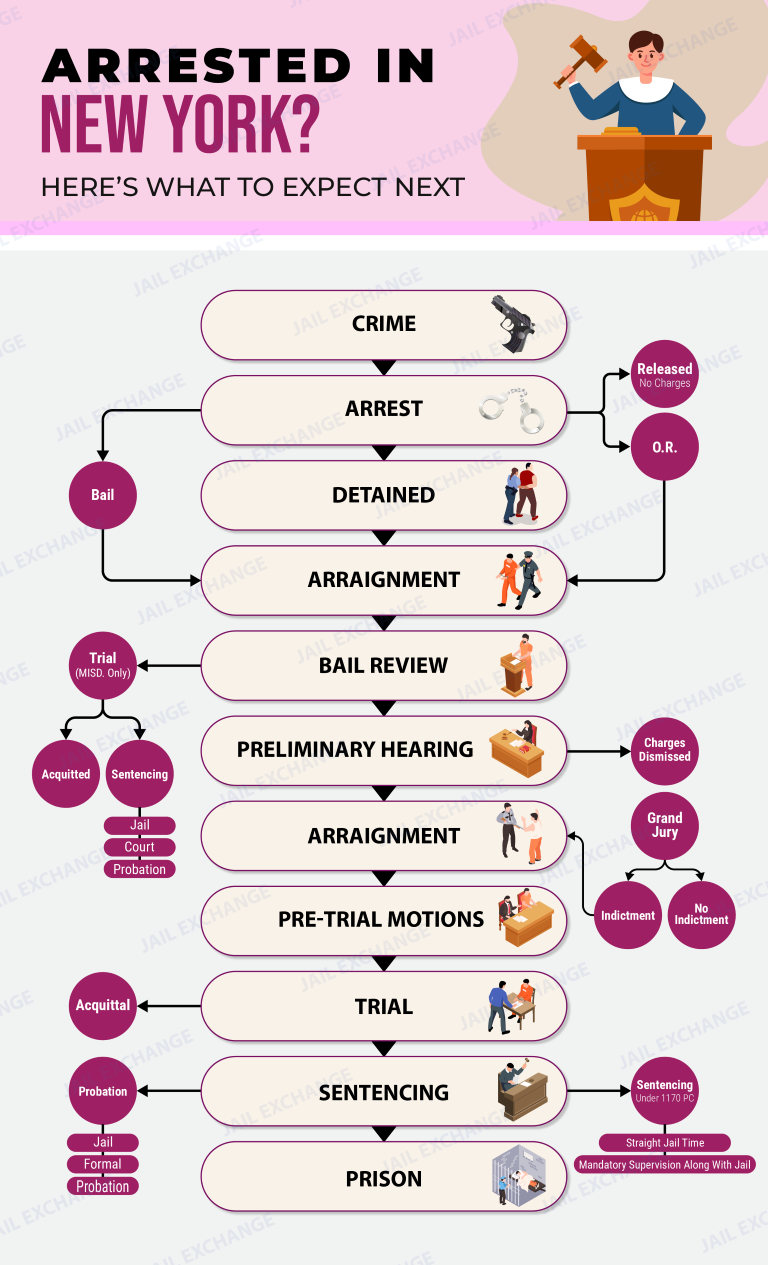
A Criminal Court judge decides at arraignment, which is her first time in front of a judge. It usually happens about a day after the arrest. Before that hearing, a Criminal Justice Agency worker may interview her so the judge knows about her home, job and family. Each borough holds custody arraignments in one building:
- Manhattan (New York County): 100 Centre Street, New York, NY 10013, 646-386-4511. Arraignments run every day from 9:00 a.m. to 1:00 a.m.
- Brooklyn (Kings County): 120 Schermerhorn Street, Brooklyn, NY 11201, 347-404-9400. Every day, 9:00 a.m. to 1:00 a.m.
- The Bronx (Bronx County): 215 East 161st Street, Bronx, NY 10451, 718-618-2400. Every day, 9:00 a.m. to 1:00 a.m.
- Queens (Queens County): 125-01 Queens Boulevard, Kew Gardens, NY 11415, 718-298-0792. Every day, 9:00 a.m. to 11:00 p.m., closing two hours before Manhattan, Brooklyn and the Bronx.
- Staten Island (Richmond County): 26 Central Avenue, Staten Island, NY 10301, 718-675-8558. Weekdays 9:00 a.m. to 5:00 p.m., and weekends 9:30 a.m. to 1:00 p.m.
Hours earlier, police bring her to central booking, an NYPD holding area in that same courthouse. Legal Aid puts her arrival there at roughly 4 to 6 hours past the arrest. Family members can't go in to see her. Each borough has one:
- The Bronx: Bronx Central Booking, 215 East 161st Street, Bronx, NY 10451. Dial the Bronx court number above; that line serves booking too.
- Manhattan: Manhattan Central Booking, 100 Centre Street, New York, NY 10013, 212-347-2801.
- Queens: Queens Central Booking, 125-01 Queens Boulevard, Kew Gardens, NY 11415, 718-268-4523.
- Staten Island: Staten Island Central Booking, inside the Staten Island Criminal Court, 26 Central Avenue, Staten Island, NY 10301, 718-876-8493.
- Brooklyn: Brooklyn Central Booking, 120 Schermerhorn Street, Brooklyn, NY 11201, 718-875-6319.
Phone the borough where she was picked up and ask for her arrest number. Next, call that borough's arraignment clerk with the number to get her court time and room.
When bail goes unpaid at the end of court, Correction officers take her from the court pens onto a bus to Rikers. Women go through intake at the women's jail and are usually housed there.
↑ Back to the question list2. Which city jails hold people, and what is RMSC for?
The city's Department of Correction (DOC) runs every adult jail in the five boroughs. Each one has a job:
- Rose M. Singer Center, 19-19 Hazen Street, East Elmhurst, NY 11370: the jail for women, whether they are still fighting a case or doing city time. Every newly admitted woman is processed here. Its Special Considerations Unit is for people who are transgender, gender non-conforming, non-binary or intersex.
- RESH (Enhanced Supervised Housing), 19-19 Hazen Street, East Elmhurst, NY 11370: a men's unit on the same grounds. Men are sent there for breaking jail rules. Intake, a clinic and visiting are separate from the women's side.
- Eric M. Taylor Center, 10-10 Hazen Street, East Elmhurst, NY 11370: the intake jail for every man newly sent to DOC. It also has mental observation housing.
- George R. Vierno Center, 09-09 Hazen Street, East Elmhurst, NY 11370: men before trial and after sentencing. It has mental observation housing and PACE, a unit for serious mental illness.
- Otis Bantum Correctional Center, 16-00 Hazen Street, East Elmhurst, NY 11370: men in dorms or cells, plus a Special Management Unit.
- Robert N. Davoren Complex, 11-11 Hazen Street, East Elmhurst, NY 11370: men, including young men 18 to 21.
- West Facility, 16-06 Hazen Street, East Elmhurst, NY 11370: single cells, some forming the Communicable Disease Unit.
- Bellevue Hospital Prison Ward, 462 1st Avenue, New York, NY 10016, and Elmhurst Hospital Prison Ward, 79-01 Broadway, Queens, NY 11370: locked units inside city hospitals for patients who need hospital care.
- Bellevue Outposted Therapeutic Housing Unit, 462 1st Avenue, New York, NY 10016: 104 beds since April 2026. It serves patients too sick for regular housing who still don't need a hospital stay, such as some with cancer.
Anyone under 18 goes to the Administration for Children's Services instead, at Crossroads Juvenile Center or Horizon Juvenile Center.
↑ Back to the question list3. What kinds of release can a New York judge choose?
At arraignment the judge chooses from four "securing orders" and gives the reason, spoken or written (CPL 500.10, 510.10):
- Release on her own recognizance (ROR): she promises to come back and pays nothing.
- Release with conditions: rules without money, like check-ins or court reminders. The city's Supervised Release Program, run by the Mayor's Office of Criminal Justice, adds case management and help with mental health, drug treatment or housing. Electronic monitoring needs its own hearing. Each order lasts up to 60 days and is used only if nothing milder will do (CPL 510.40(4)).
- Bail: money that comes back if she makes every court date.
- Remand: held with no bail, allowed only for certain serious felonies.
For most misdemeanors and non-violent felonies, the law says she must be released, either on her word or with conditions (CPL 510.10(3)). Money bail is mainly for "qualifying offenses." In 2024, city Criminal Court judges let 62% of people go on a promise to return. Another 22% walked out under conditions. Only 15% faced money bail, and just 1% were held without it.
Our page on New York's bail laws explains the newest rules a judge must follow before setting any amount.
↑ Back to the question list4. What might the judge set for her charge?
New York has no price list. The judge picks a figure after looking at the charge, her record and whether she can pay "without posing undue hardship" (CPL 510.10(1)). The type of charge decides whether bail is even possible:
- Violations (up to 15 days in jail): release, never money bail.
- Class B misdemeanors (up to 3 months): release in nearly every case.
- Class A misdemeanors (up to 364 days): release, with a few listed exceptions. One example is violating a court order of protection for a family or household member.
- Non-violent felonies: release in most cases, unless a listed exception fits, like a new felony while on probation.
- Third-degree weapon possession: bail or remand is allowed.
- Violent felonies such as second-degree assault, robbery or burglary: bail or remand.
- Strangling or unlawfully holding a family member: bail is allowed.
- Class A felonies, or a charge claiming someone died because of the crime: bail or remand.
The judge can't name just one way to pay. The order has to offer at least three forms. One of them is a surety bond, either unsecured or only part secured, chosen by the judge (CPL 520.10(2)(b)). With the partly secured kind, the family puts down no more than 10% in cash. So $10,000 bail means a deposit of $1,000 or less. Her exact figure sits on the lookup, or call the Criminal Court information line at 646-386-4900.
↑ Back to the question list5. Step by step: posting bail on Rikers for a woman at RMSC
DOC takes bail in person, and you may pay at any of its sites no matter where she is housed. On the island, the Central Cashier never closes. Here is how a visit goes:
- Look her up on the Person in Custody Lookup. Write down the bail amount and her NYSID or Book and Case number.
- Put together payment that equals the bail to the penny. The cashier gives no change.
- Bring your own photo ID.
- Go to Rikers Island, East Elmhurst, NY 11370. DOC's pages place its bail and package counter beside Central Visits.
- Pay, sign the bail form and keep every receipt. Once the deposit is proved, the law says she must be released right away (CPL 520.15).
- Expect some wait while release paperwork is done. The lookup usually shows a release within 15 minutes of entry.
Got questions before the trip? Call 311 any hour. On weekdays from 8:00 a.m. to 5:00 p.m., DOC's constituent office also answers at 718-546-1500.
↑ Back to the question list6. Can bail be paid at White Street or a borough courthouse?
Yes. DOC runs four more bail windows besides Rikers, and each takes the same payment types:
- The Bronx: Bronx Criminal Court, 215 East 161st Street, Bronx, NY 10451, lower level, Room M-05C. Monday and Tuesday 9:00 a.m. to 5:00 p.m.; Wednesday to Friday 9:00 a.m. to 8:00 p.m.; closed weekends.
- Queens: Queens Courts, 126-01 Queens Boulevard, Kew Gardens, NY 11415, ground floor. Weekdays, 9:00 a.m. to 5:00 p.m.
- Manhattan: Manhattan Detention Complex, 125 White Street, New York, NY 10013. Open around the clock, seven days. The old jail there no longer houses anyone, but the bail window stays open.
- Brooklyn: Brooklyn Courts, 120 Schermerhorn Street, Room 101C, Brooklyn, NY 11201, first floor. Every day, 8:30 a.m. to 1:00 a.m.
- Staten Island: DOC lists no bail window in the borough. Staten Island families pay at White Street or on Rikers, which are both open all night.
At any window, bring photo ID, her NYSID or Book and Case number, and the exact amount. If she is sitting in a courthouse pen for a scheduled hearing, the court system says to ask that courtroom's clerk about paying there. Call 311 to check hours before a holiday.
↑ Back to the question list7. What does DOC accept, and what will it turn away?
DOC's bail rules allow these, alone or mixed, as long as they add up to the exact bail:
- U.S. cash for the full amount
- A credit or debit card
- Money orders, $1,000 or less each, from a private bank, the U.S. Postal Service, Western Union, FedEx or Travelers Express
- A cashier's or teller's check, as long as it doesn't exceed the bail
Make checks and money orders payable to "New York City Department of Correction." The window turns away personal checks, certified or not, plus checks and money orders above $1,000, any payment that needs change back, and every other form. Two $1,000 money orders plus $500 in cash would cover $2,500 bail. Bail can be forfeited if she misses a court date.
↑ Back to the question list8. Using a bondsman: fees and rules in New York
An agent posts a bond for her, and you pay the agent a fee called a premium. Agents work under licenses that the state's Department of Financial Services (DFS) issues. State law caps the premium (Insurance Law § 6804):
- 10% of a bond up to $3,000
- 8% of the part between $3,000 and $10,000
- 6% of anything over $10,000
On a $5,000 bond, that means $300 plus $160, so $460 at most. The premium is usually kept. You get it all back within 14 days if she is not released, or if she is let go without money bail. Collateral, the cash or property you pledge, should stay small; DFS says about a tenth of the bond is fair. After the court ends the bond, she or you should get the pledge back within 45 days. Ask for signed receipts for everything. Before signing, confirm the agent on the DFS bail agent search. Problems go to DFS through its online complaint form. Charitable bail groups, nonprofits that pay bail in cash, must give you their legal name and DFS certificate number in writing if you ask.
↑ Back to the question list9. Bail is paid. Why is she still at RMSC?
One payment covers one case. She can stay inside after you pay if:
- Another case is open against her, in any borough, and has bail set too.
- Another court issued a warrant for her.
- State parole lodged a warrant.
- The U.S. Marshals want her on a federal matter.
- She is already serving a sentence on another case.
- Immigration officials asked DOC to hold her. City law limits when DOC will cooperate.
- Release paperwork is still moving.
Before you pay, read every case on the lookup and ask about other holds. DOC's Office of Constituent and Grievance Services takes calls on weekdays at 718-546-1500. At night, call 311, or 212-639-9675 from outside the city.
↑ Back to the question list10. She has children at home. What can the family do?
Tell her lawyer about the children right away, ideally before arraignment ends. The judge must look at her own life, money and ability to pay before choosing bail (CPL 510.10(1)). Being a parent who cares for kids every day is part of that picture. Hand the lawyer proof like a school letter, a lease or a note from the babysitter.
If nobody can care for the children, raise it through the lawyer at arraignment so the court and her defender can plan with you. A few more facts help:
- When the court weighs her for a free lawyer, child support she receives is not counted as her asset.
- Children can visit. DOC allows up to two adults with one lap child, or a single adult bringing two kids, one of them a lap child. See our visiting page.
- Under the state's HALT law, a pregnant woman can't be put in segregated confinement. Neither can a new mother in her first eight weeks, or a mother caring for a child in the jail. Narrow exceptions apply.
11. When can a judge refuse bail entirely?
A judge may hold her with no bail only for certain felonies listed in CPL 510.10(4). Those include violent felonies, class A felonies, crimes said to cause a death, and some repeat or domestic charges. The prosecutor argues for it, and the judge must give reasons. Each borough's District Attorney handles bail at arraignment:
- Queens: 125-01 Queens Boulevard, Kew Gardens, NY 11415, 718-286-6000
- The Bronx: 198 East 161st Street, Bronx, NY 10451, 718-590-2000
- Staten Island: 130 Stuyvesant Place, Staten Island, NY 10301, 718-876-6300
- Manhattan: 1 Hogan Place, New York, NY 10013, 212-335-9000
- Brooklyn: 350 Jay Street, Brooklyn, NY 11201, Action Center 718-250-2340
A remand is not always the end. On a felony complaint, the clock runs 120 hours, stretched to 144 when it crosses a Saturday, Sunday or holiday. If no grand jury acts by then, she must usually be released (CPL 180.80).
↑ Back to the question list12. Can her lawyer get the bail cut or reviewed?
Her lawyer makes the request. New York gives her a few routes:
- A bail review before a borough Supreme Court judge, who can lower bail or release her (CPL 530.30). She gets only one of these.
- A supervised release plan. The lawyer can ask the judge to swap money bail for the Supervised Release Program.
- Speedy-trial release. If prosecutors aren't ready within 90 days on a felony, she must be freed on bail or her own word (CPL 30.30(2)). For misdemeanors the limit is 30 or 15 days.
The family can help. Tell the lawyer the most you can really pay. Bring proof of her ties, such as children in school, a job or a lease. Then sit in the courtroom so the judge sees people standing behind her.
↑ Back to the question list13. Who gets a free lawyer, and where are the defenders?
Anyone being held is presumed to qualify for an assigned lawyer at no cost. So is anyone earning under 250% of the federal poverty level. The judge decides, often after the defender screens her. State law requires a plan so eligible people have a lawyer at arraignment (Executive Law § 832(4)). These offices take most cases, usually starting at arraignment:
- Brooklyn: Legal Aid Society, 111 Livingston Street, Brooklyn, NY 11201, 718-237-2000; Brooklyn Defender Services, 177 Livingston Street, Brooklyn, NY 11201, 718-254-0700
- Staten Island: Legal Aid Society, 60 Bay Street, Staten Island, NY 10301, 347-422-5333
- Manhattan: Legal Aid Society, 49 Thomas Street, New York, NY 10013, 212-732-5000; New York County Defender Services, 100 William Street, New York, NY 10038, 212-803-5100; Neighborhood Defender Service, 317 Lenox Avenue, New York, NY 10027, 212-876-5500
- Queens: Legal Aid Society, 120-46 Queens Boulevard, Kew Gardens, NY 11415, 718-286-2000; Queens Defenders, 118-21 Queens Boulevard, Suite 212, Forest Hills, NY 11375, 844-783-3673
- The Bronx: Legal Aid Society, 260 East 161st Street, Bronx, NY 10451, 718-579-3000; The Bronx Defenders, 360 East 161st Street, Bronx, NY 10451, 718-838-7878
If a conflict rules those offices out, a private lawyer comes from the Assigned Counsel Plan: 253 Broadway, Room 200, New York, NY 10007, 212-676-0066.
↑ Back to the question list14. Which courthouses take a case after arraignment?
Misdemeanors stay in each borough's Criminal Court. A felony goes to Supreme Court after a grand jury indictment. These are the felony courthouses and the two community courts:
- Staten Island: Richmond County Supreme Court, 26 Central Avenue, Staten Island, NY 10301, Criminal Term office 718-675-8760
- Manhattan: Supreme Court, Criminal Term, 100 Centre Street, New York, NY 10013, Central Clerk 646-386-4000, with more courtrooms at 111 Centre Street, New York, NY 10013
- Manhattan: Midtown Community Justice Center, 314 West 54th Street, New York, NY 10019, clerk 646-264-1330
- Queens: Supreme Court, Criminal Term, 125-01 Queens Boulevard, Kew Gardens, NY 11415, Record Room 718-298-1400
- Brooklyn: Supreme Court, Criminal Term, 320 Jay Street, Brooklyn, NY 11201, clerk 347-296-1076
- Brooklyn: Red Hook Community Justice Center, 88-94 Visitation Place, Brooklyn, NY 11231, 718-923-8200
- The Bronx: Supreme Court, Criminal, 265 East 161st Street, Bronx, NY 10451, 718-618-3100
Supreme Court clerks work weekdays, from about 9:00 a.m. to 4:30 or 5:00 p.m.
↑ Back to the question list15. Getting her bail money refunded, or losing it
Cash bail belongs to whoever posted it (CPL 520.15). The city's Department of Finance (DOF) mails the refund to that person after the case ends. You don't need to file anything. Expect about six weeks for the court's refund order once the case closes, then up to two more for the DOF check. Eight weeks in all is normal.
The city keeps 3% unless the case is dismissed or she is acquitted (General Municipal Law § 99-m). On $2,000 bail after a guilty plea, $60 is kept.
If no check comes, call the DOF Cash Bail Unit at 212-908-7619, weekdays 9:00 a.m. to 4:00 p.m. You can also visit 66 John Street, New York, NY 10038, on the second floor, weekdays 9:00 a.m. to 4:30 p.m., with photo ID. Bring her name, the docket or indictment number, the payment date, how much you paid and in which borough. Only the person who paid, or someone with a notarized letter from them, can ask.
Bail is forfeited if she misses court without a good excuse (CPL 540.10). If she comes back and explains, the judge can undo that. You have one year after a forfeiture to ask a Supreme Court judge to return the money (CPL 540.30).
↑ Back to the question list16. How does she get her property and money back after leaving RMSC?
After release, her valuables wait at the Samuel L. Perry Center on Rikers Island, East Elmhurst, NY 11370. It never closes, and you can walk in without an appointment.
Bulk property, like bags and clothes, works by appointment. Within 30 days of her release, call 311 and give her NYSID or Book and Case number. Pickup runs three days and starts at 12 noon on the third business day after you schedule it. A friend or relative can collect for her. While she is held, she signs the form DOC calls the Person in Custody Property Release Form. After release, a notarized letter from her works. For questions, the Property Pick-up Area is at 718-546-8811.
For money left in her jail account, phone 718-546-1500, DOC's constituent services line, and ask how the balance is paid out.
↑ Back to the question list17. If the arrest was federal, who rules on her release?
A federal judge, not a city judge. Arrests in Manhattan or the Bronx become cases in the Southern District of New York, 500 Pearl Street, New York, NY 10007, clerk 212-805-0136. The Eastern District of New York takes Brooklyn, Queens and Staten Island arrests: 225 Cadman Plaza East, Brooklyn, NY 11201, 718-613-2600.
The detention hearing is held at her first appearance unless a short delay is asked for (18 U.S.C. 3142(f)). The judge can release her on her word, on conditions, or hold her. While held, she is in U.S. Marshals custody: Southern District office 646-563-9800, Eastern District office 718-473-3000. The federal jail in the city is MDC Brooklyn, 80 29th Street, Brooklyn, NY 11232, 718-840-4200. After a federal sentence, find her on the Federal Bureau of Prisons inmate locator.
↑ Back to the question list18. Once bail is posted, can ICE still hold her?
It can ask to. A detainer on Form I-247A asks a jail to hold someone up to 48 hours after they would otherwise be released, so ICE can take custody (8 CFR 287.7(d)). If ICE picks her up, look for her on the ICE Online Detainee Locator.
New York limits this. A state appeals court ruled in People ex rel. Wells v. DeMarco (2018) that local officers can't make arrests for civil immigration matters. Civil Rights Law § 28 bars civil immigration arrests at courthouses without a judge's warrant. Since 2026, Executive Law § 170-k bars local 287(g) agreements. City law, Administrative Code § 9-131, keeps DOC out of most immigration work. Cooperation is allowed for someone with a conviction that Local Laws 58 and 59 of 2014 count as violent or serious, or who may match a terrorist screening database. Separately, Local Law 228 of 2017 keeps city workers' hours and funds out of immigration enforcement and makes the city log each federal request.
ICE's New York City Field Office sits at 26 Federal Plaza, Suite 9-110, New York, NY 10278, on the 9th floor, 212-436-9315. An immigration lawyer can explain her options.
↑ Back to the question list19. Does a long sentence keep her at RMSC?
Not always. The women's jail holds sentenced women as well as those awaiting trial. A city jail sentence tops out at 364 days for a class A misdemeanor (Penal Law § 70.15). Some class D and E felonies can also bring 12 months or less behind bars instead of prison.
A longer felony term is served in state prison. The Department of Corrections and Community Supervision (DOCCS) first sends her to a reception center to be classified, then to a prison that fits. Search the DOCCS Incarcerated Lookup by her DIN, the number she keeps for that whole term, or by last name and birth year. For details on each prison, visit our state prisons page for New York.
↑ Back to the question list20. Where is someone younger than 18 held instead?
Under the state's Raise the Age law, nobody aged 16 or 17 is held on Rikers anymore. A teen that age charged with a felony goes before the Supreme Court's Youth Part, and most misdemeanors go to Family Court probation intake. Family Court cases for juvenile delinquents carry no bail.
When a youth court sets bail, it is paid to the Administration for Children's Services (ACS). Each center accepts bail 24 hours a day:
- Crossroads Juvenile Center, 17 Bristol Street, Brooklyn, NY 11212, 718-240-3800
- Horizon Juvenile Center, 560 Brook Avenue, Bronx, NY 10455, 718-292-0065
Police must notify a parent right after a child is taken into custody (Family Court Act § 305.2).
↑ Back to the question listRikers Island - Rose M. Singer Center Visitation Schedule - In-Person and Televisiting
TELEVISITING AT Rikers Island - Rose M. Singer Center
Instructions for televisiting can be found on this page: TELEVISITING PAGE
- Televisiting will take place from 8:00am to 1:30pm on Friday.
- Refer to the Visit Schedule in order to determine your time slot.
Scheduling a Televisit:
- If you would like to schedule a televisit, you must fill out the Online Televisit Web Form.
ONLINE TELEVISIT WEB FORM
- In order to make sure equal access is afforded to everyone, you are only able to fill out a request form for the upcoming week. Requests for dates beyond the following week will not be fulfilled.
- IMPORTANT: A visit is not confirmed until you receive a confirmation email at the email address you provided on the televisit request webform. The confirmation email will provide you with the date and time for your visit as well as an access link.
If you do not receive a confirmation email within 24 hours of the last requested visit date this means that none of the dates and/or times you requested were available.
In that case, you must resubmit another web form with different dates and times. - Online Televisit Web Forms will not be processed on Mondays and Tuesdays, and no confirmation emails will be sent out on those days.
VISITATION HOURS - ALL FACILITIES
-
Wednesday and Thursday: In-Person Visits: 1:00 p.m. - 6:00 p.m.
-
If you do not arrive during visitation hours your walk-in visit may not be honored if you arrive after 4pm.
-
Saturday and Sunday: In-Person Visits: 7:00 a.m. - 12:00 p.m.
-
If you do not arrive during visitation hours your walk-in visit may not be honored if you arrive after 10am.
-
Friday: Televisits: 8:00 a.m. - 1:30 p.m.
Visitors who want an In-Person Visit MUST arrive at Rikers Island Central Visits during the registration hours. If the visitor arrives late to register will NOT get a visit.
Registration Hours:
Wednesday and Thursday: 1:00 PM - 6:00 PM
Saturday and Sunday: 7:00 AM - 12:00 PM
All Televisits must be scheduled in advance. Click here to schedule a Televisit.
-
Read this carefully! Instructions on how to prepare for a Televisit.
-
NOTE: the start of visiting hours can be delayed due to unforeseen circumstances.
-
Facility lockdowns may affect regularly scheduled visit hours.
-
There are no visits on Mondays and Tuesdays.
How the New York City Area Criminal Court System Works
Rose M. Singer Center Court Guide: Following Her Case in All Five Boroughs
The Rose M. Singer Center, 19-19 Hazen Street, East Elmhurst, NY 11370, holds women for the city's Department of Correction. Her criminal case stays in the borough where she was arrested: Staten Island, Queens, the Bronx, Brooklyn or Manhattan. Correction officers bring her from Rikers to that courthouse for each date. This guide names the courts, prosecutors and free defense offices, and walks through each step.
Her next court date and courthouse appear on DOC's Person in Custody Lookup. For the arrest and custody side, use our Inmate Search page. It helps you see who is being held right now, recent bookings, open warrants and charges, free defense lawyers, mugshot requests and how to pick up property.
Your first call: the Criminal Court Information Line, 646-386-4900, weekdays from 9:00 a.m. to 5:00 p.m. Get her docket number and next date, and write both down. The lawyer, the clerk and DOC all use that number. If a judge set bail, our bail guide shows where to pay it in person.
1. Will a Criminal Court or a Supreme Court judge hear her case?
Every adult case in the city starts in the borough's Criminal Court. The type of charge decides where it goes from there:
- Misdemeanors and violations never leave Criminal Court.
- Felonies open in Criminal Court on a felony complaint. Once a grand jury indicts, the borough's Supreme Court, Criminal Term, takes over.
- Federal crimes skip city courts. They go to a federal courthouse, explained further down.
The paperwork tells you which kind she faces. A docket number from Criminal Court means the case is still there. An indictment number means it reached Supreme Court.
↑ Back to the question list2. Besides RMSC, which jails does the city run, and who stays in each?
Women are housed at one Rikers jail, but the city's Department of Correction (DOC) runs several. Knowing them helps when you read the lookup or hear names in court:
- Rose M. Singer Center, 19-19 Hazen Street, East Elmhurst, NY 11370: women, before trial and after sentencing. Every woman new to DOC is admitted here. Its Special Considerations Unit is a choice, if DOC approves, for people who identify as transgender or intersex, gender non-conforming or non-binary.
- RESH (Enhanced Supervised Housing), 19-19 Hazen Street, East Elmhurst, NY 11370: men in restrictive housing after a rule violation. It shares the women's site but keeps intake, a clinic and visits separate.
- Eric M. Taylor Center, 10-10 Hazen Street, East Elmhurst, NY 11370: the admission point for every man, plus mental observation units.
- George R. Vierno Center, 09-09 Hazen Street, East Elmhurst, NY 11370: men awaiting trial or doing city time. It also runs mental observation units and PACE, which serves men with serious mental illness.
- Otis Bantum Correctional Center, 16-00 Hazen Street, East Elmhurst, NY 11370: men housed in dormitories or cells, along with a Special Management Unit.
- Robert N. Davoren Complex, 11-11 Hazen Street, East Elmhurst, NY 11370: men, with young adults aged 18 to 21.
- West Facility, 16-06 Hazen Street, East Elmhurst, NY 11370: single cells. Some make up the Communicable Disease Unit.
- Bellevue Hospital Prison Ward, 462 1st Avenue, New York, NY 10016, and Elmhurst Hospital Prison Ward, 79-01 Broadway, Queens, NY 11370: secure hospital floors for patients who need a hospital stay.
- Bellevue Outposted Therapeutic Housing Unit, 462 1st Avenue, New York, NY 10016: opened April 2026 with 104 beds. Its patients have serious health problems but can stay out of the hospital itself.
Youths under 18 never come to these jails. The city's Administration for Children's Services keeps them in its own two centers, Horizon Juvenile Center in the Bronx and Crossroads Juvenile Center in Brooklyn.
↑ Back to the question list3. Her case is in Manhattan. Where will she go to court?
Manhattan is New York County. Its courts and offices sit mostly near Foley Square:
- Criminal Court: 100 Centre Street, New York, NY 10013, 646-386-4511. People held after arrest are arraigned daily, 9:00 a.m. to 1:00 a.m.
- Midtown Community Court: a neighborhood branch of Criminal Court at 314 West 54th Street, New York, NY 10019. Its clerk answers case and date questions at 646-264-1330, weekdays 9:00 a.m. to 4:30 p.m.
- Supreme Court, Criminal Term: 100 Centre Street, New York, NY 10013, Central Clerk 646-386-4000, plus courtrooms at 111 Centre Street, New York, NY 10013. Clerks work 9:00 a.m. to 4:30 p.m.
- Treatment courts: 111 Centre Street, New York, NY 10013, 646-386-4626.
- Family Court: 60 Lafayette Street, New York, NY 10013, 646-386-5223. Ask the clerk where the Youth Part sits.
- District Attorney: 1 Hogan Place, New York, NY 10013, 212-335-9000.
- Free defense: Legal Aid Society, 49 Thomas Street, New York, NY 10013, 212-732-5000; New York County Defender Services, 100 William Street, New York, NY 10038, 212-803-5100; Neighborhood Defender Service, 317 Lenox Avenue, New York, NY 10027, 212-876-5500.
4. If police arrested her in Brooklyn, who handles the case?
Brooklyn is Kings County. Most of its court buildings are downtown, a short walk apart:
- Criminal Court: 120 Schermerhorn Street, Brooklyn, NY 11201, 347-404-9400. Custody arraignments run every day from 9:00 a.m. until 1:00 a.m.
- Red Hook Community Justice Center: a community branch of Criminal Court, at 88-94 Visitation Place, Brooklyn, NY 11231, 718-923-8200, weekdays 9:00 a.m. to 5:00 p.m.
- Supreme Court, Criminal Term: 320 Jay Street, Brooklyn, NY 11201, clerk 347-296-1076, open 9:00 a.m. to 5:00 p.m.
- Family Court: 330 Jay Street, Brooklyn, NY 11201, 347-401-9610. The court system lists a Children's Center on the first floor of this building.
- District Attorney: 350 Jay Street, Brooklyn, NY 11201. The DA's Action Center takes calls at 718-250-2340.
- Free defense: Brooklyn Defender Services, 177 Livingston Street, Brooklyn, NY 11201, 718-254-0700; Legal Aid Society, 111 Livingston Street, Brooklyn, NY 11201, 718-237-2000.
5. A Bronx arrest: who hears it, who prosecutes and who defends?
The Bronx is Bronx County. Nearly every office lines East 161st Street:
- Criminal Court: 215 East 161st Street, Bronx, NY 10451. Arraignments run daily from 9:00 a.m. to 1:00 a.m. For arraignment news, call 718-618-2400. The clerk is at 718-618-2460.
- Supreme Court, Criminal: the Hall of Justice, 265 East 161st Street, Bronx, NY 10451, 718-618-3100. Its treatment court for felonies takes calls at 718-618-3172.
- Family Court: 900 Sheridan Avenue, Bronx, NY 10451, 718-618-2098, doors open at 8:00 a.m.
- District Attorney: 198 East 161st Street, Bronx, NY 10451, 718-590-2000. It has a bureau just for crimes charged on Rikers Island.
- Free defense: The Bronx Defenders, 360 East 161st Street, Bronx, NY 10451, 718-838-7878; Legal Aid Society, 260 East 161st Street, Bronx, NY 10451, 718-579-3000.
6. Where do Queens cases go, from arraignment to trial?
Queens is Queens County. Most criminal business happens in one Kew Gardens complex:
- Criminal Court: 125-01 Queens Boulevard, Kew Gardens, NY 11415, 718-298-0792. Custody arraignments run daily from 9:00 a.m. to 11:00 p.m.
- Supreme Court, Criminal Term: the same building, 125-01 Queens Boulevard, Kew Gardens, NY 11415. Its Record Room in Room 710 answers case questions at 718-298-1400.
- Treatment courts: misdemeanor part 718-298-0911; felony part 718-298-1303, both at the Kew Gardens courthouse.
- Family Court: 151-20 Jamaica Avenue, Jamaica, NY 11432, 718-298-0197.
- District Attorney: 125-01 Queens Boulevard, Kew Gardens, NY 11415, 718-286-6000.
- Free defense: Queens Defenders, 118-21 Queens Boulevard, Suite 212, Forest Hills, NY 11375, 844-783-3673; Legal Aid Society, 120-46 Queens Boulevard, Kew Gardens, NY 11415, 718-286-2000.
7. For a Staten Island case, where are the court, the DA and Legal Aid?
Staten Island is Richmond County, the smallest system of the five. Its main courthouse handles both kinds of criminal case:
- Criminal Court: 26 Central Avenue, Staten Island, NY 10301, 718-675-8558. Arraignments run weekdays 9:00 a.m. to 5:00 p.m. and weekends 9:30 a.m. to 1:00 p.m.
- Supreme Court, Criminal Term: 26 Central Avenue, Staten Island, NY 10301, Room 240, 718-675-8760.
- Treatment court: 26 Central Avenue, Staten Island, NY 10301, 718-675-8530.
- Family Court: 100 Richmond Terrace, Staten Island, NY 10301, 718-675-8800.
- District Attorney: 130 Stuyvesant Place, Staten Island, NY 10301, 718-876-6300.
- Free defense: Legal Aid Society, 60 Bay Street, Staten Island, NY 10301, 347-422-5333.
8. Are there town or village courts inside the city?
No. The five boroughs have no town, village or city courts like the rest of the state. Small tickets called summonses go to a Summons Part. Manhattan's is at 1 Centre Street, 16th Floor, New York, NY 10007, 646-386-4869. The one in Queens sits inside the Criminal Court. In other boroughs, ask the Criminal Court clerk.
A desk appearance ticket is different. It orders her to show up at the borough's Criminal Court on a set weekday, so she is not held in the meantime.
↑ Back to the question list9. What happens at arraignment, before the bus to RMSC?
Arraignment is her first hearing with a judge. It usually comes roughly a day after police make the arrest. Police hand her to Correction officers, who keep her in the court pens until her case is called.
Before the court pens, she is held at central booking. The NYPD runs these sites, one inside each borough's criminal courthouse. The move there usually comes 4 to 6 hours into the arrest. Family members can't visit her at booking.
- Arrested in Manhattan: call Manhattan Central Booking, 100 Centre Street, New York, NY 10013, 212-347-2801.
- Arrested on Staten Island: Staten Island Central Booking is in the Criminal Court, 26 Central Avenue, Staten Island, NY 10301, 718-876-8493.
- Arrested in the Bronx: Bronx Central Booking, 215 East 161st Street, Bronx, NY 10451, 718-618-2400. The court's arraignment desk shares this number.
- Arrested in Brooklyn: Brooklyn Central Booking, 120 Schermerhorn Street, Brooklyn, NY 11201, 718-875-6319.
- Arrested in Queens: Queens Central Booking, 125-01 Queens Boulevard, Kew Gardens, NY 11415, 718-268-4523.
When you call, ask for her arrest number. Then phone the Criminal Court in that same borough and give it. Staff there can tell you her arraignment time and courtroom.
- She gets a lawyer, free if she can't afford one.
- The judge reads the charges and explains her rights.
- Once she has a lawyer, she can enter a plea.
- The judge decides on release. If bail is set and unpaid, or she is held without bail, officers bus her to the women's jail.
Go to the courthouse if you can. Bring proof of her home and family, like a lease or a child's school letter, and hand it to her lawyer. The judge can't weigh what nobody says out loud.
↑ Back to the question list10. How can a mother at RMSC keep her children in the picture?
Tell her lawyer about the children on day one, and say who is caring for them now. Name any child with special needs. Is nobody able to take them? Say so to the lawyer before or at arraignment. The court and the defense team can then work on a plan with the family.
Other ways to help:
- Bring a list of the children's names, ages and schools to court. It helps her lawyer argue for release.
- Ask the lawyer whether any court order, like an order of protection, limits contact with a child or a parent.
- Children can visit her on Rikers with an adult. Check the rules on our visiting page before the trip.
- Courtrooms are long, slow places for kids. Plan for a sitter on court days if you can.
11. Where does a misdemeanor case go from arraignment, and how much jail can it bring?
A misdemeanor stays in Criminal Court. After arraignment, prosecutors must share their evidence. That is 20 days after arraignment if she is held, or 35 days if she is free (CPL 245.10). Then come more court dates, plea talks, and sometimes a trial.
The state also sets a clock. If prosecutors aren't ready in time, a held woman must be let out. The limit is 30 days of custody for the more serious misdemeanors and 15 for the lighter ones (CPL 30.30(2)).
Penal Law § 70.15 caps the jail time. The cap for class A misdemeanors is 364 days. Class B misdemeanors max out at three months, and a violation at 15 days.
Many cases end with a plea, a dismissal, or a program instead of jail. A treatment court may fit if drugs or mental health played a part.
↑ Back to the question list12. How does a felony move from complaint to verdict, and what prison time is possible?
A felony moves in stages:
- Felony complaint. She is arraigned in Criminal Court. Prosecutors then have 120 hours (144 if a weekend or holiday is in the span) to win an indictment or begin a preliminary hearing. Otherwise she usually must be released from custody (CPL 180.80).
- Grand jury. Jurors hear the prosecutor's evidence in private. She may testify for herself if her lawyer serves written notice first (CPL 190.50(5)).
- Indictment. The case moves to Supreme Court, where she is arraigned again.
- Evidence and trial. Prosecutors share their evidence, then the case ends in a plea, a dismissal or a trial. If they aren't ready within 90 days, she must be let out while held (CPL 30.30(2)).
Penal Law § 70.00 sets the longest terms for felonies that are not violent. Class E, the lowest felony, can bring up to 4 years. Class D can bring 7, class C 15 and class B 25. Class A can mean life. A judge may choose a year or less for some D and E felonies when a longer term would be too harsh.
↑ Back to the question list13. Her charge is a violent felony. What changes?
The law lists certain charges as violent felony offenses (Penal Law § 70.02). Second-degree assault counts, and so do first- or second-degree robbery and burglary.
They change her case in two big ways:
- Release. A judge can set money bail, or in some cases hold her with none.
- Sentencing. The judge picks a single term of years instead of a range. Supervision after release comes next. For class E, the term is 1.5 to 4 years; class B reaches 5 to 25.
A plea offer may lower the charge. Her lawyer can explain what each offer means for the time she would serve.
↑ Back to the question list14. Is there a court for women who may have been trafficked?
Yes. The court system lists a Human Trafficking Intervention Court in every borough. Its list is dated January 2021, so confirm with the court:
- Manhattan: Midtown Community Court, 314 West 54th Street, New York, NY 10019
- Brooklyn: Brooklyn Criminal Court, 120 Schermerhorn Street, Brooklyn, NY 11201
- Queens: Queens Criminal Court, 125-01 Queens Boulevard, Kew Gardens, NY 11415
- The Bronx: Bronx Criminal Court, 215 East 161st Street, Bronx, NY 10451
- Staten Island: the list gives an older address. The Criminal Court now sits at 26 Central Avenue, Staten Island, NY 10301.
If trafficking may be part of her story, tell her lawyer in private and ask whether one of these courts fits her case.
↑ Back to the question list15. Who prosecutes, and who defends a woman at RMSC who can't pay?
Each borough's District Attorney brings the charges. The office addresses and phones are in the borough answers above.
Being in jail counts as a strong sign she qualifies for a state-paid lawyer. A low income counts as well: below 250% of federal poverty guidelines. The decision is the judge's, often after defenders screen her. Child support she receives does not count as her money, and a spouse's income isn't counted either.
The city contracts with nonprofit defender offices, listed under each borough. If none can take her case because of a conflict, a private lawyer is assigned through the Assigned Counsel Plan: 253 Broadway, Room 200, New York, NY 10007, 212-676-0066.
You can call her lawyer too. The lawyer may keep some things private, but you can pass on facts that help her, like work, school or caregiving.
↑ Back to the question list16. How can family members track her court dates while she is at RMSC?
Use more than one of these:
- DOC's lookup. Her Person in Custody Lookup record shows her next court date, the court and her charges.
- WebCrims. The state court system's WebCrims search reaches all of the city's criminal courts. It finds pending cases that still have a date ahead. Type at least two letters of her first and last name.
- By phone. Call the Criminal Court Information Line at 646-386-4900, weekdays 9:00 a.m. to 5:00 p.m.
- Her lawyer. The defender's office can confirm the date and the courtroom.
Docket numbers carry a borough code. RI means Staten Island, BX the Bronx, KN Brooklyn, QN Queens and NY Manhattan. Closed cases are handled by the borough clerk's office.
↑ Back to the question list17. Is a warrant out for her, and how does she clear it?
City warrants are mostly carried out by the NYPD. State Police and U.S. Marshals handle some others. Check the FBI's wanted list, the NYPD's wanted page, the State Police page for wanted and missing people and the Marshals' 15 Most Wanted.
Want to know if one exists? Ring the Criminal Court Information Line, 646-386-4900, weekdays 9:00 a.m. to 5:00 p.m. A warrant doesn't expire. To clear it, she returns, with her lawyer, to the issuing court and stands before a judge. She can also turn herself in at any NYPD precinct. Courthouse addresses are in the borough answers above.
↑ Back to the question list18. Federal agents arrested her. Which court takes over?
Federal court, not a borough court, takes the case:
- Manhattan and Bronx arrests: Southern District of New York, 500 Pearl Street, New York, NY 10007, clerk 212-805-0136.
- Brooklyn, Queens and Staten Island arrests: Eastern District of New York, 225 Cadman Plaza East, Brooklyn, NY 11201, 718-613-2600.
At her first appearance, the prosecutor can ask to keep her locked up. The hearing is held then, or after a brief delay if the prosecutor or her lawyer requests one (18 U.S.C. 3142(f)). Free federal lawyers come from Federal Defenders: 52 Duane Street, New York, NY 10007, 212-417-8700, or in Brooklyn at 300 Cadman Plaza West, 16th Floor, Brooklyn, NY 11201, 718-330-1200.
The U.S. Marshals hold federal prisoners. The city's federal jail is MDC Brooklyn, 80 29th Street, Brooklyn, NY 11232, 718-840-4200. Federal case files can be searched on PACER. Once she is sentenced, look her up with the Bureau of Prisons locator.
↑ Back to the question list19. Could an immigration hold keep her at RMSC after her case?
ICE may lodge a detainer with DOC on Form I-247A. The request is that the jail keep a person up to 48 hours after they would otherwise be released, so agents can pick her up (8 CFR 287.7(d)). If ICE takes custody, search the ICE Online Detainee Locator.
State law sets limits:
- In People ex rel. Wells v. DeMarco (2018), judges found that local officers lack the power to arrest people for civil immigration violations.
- Civil Rights Law § 28 shields anyone going to, attending or returning from court from civil immigration arrest. The exception is an arrest a judge has approved by warrant or order.
- Executive Law § 170-k, passed in May 2026, ends local 287(g) agreements with ICE.
The city has detainer rules of its own, in Administrative Code § 9-131. Under Local Law 228 of 2017, city funds and staff time can't support federal immigration enforcement, and requests must be recorded. DOC may work with ICE in only two narrow situations. One is a conviction for a listed violent or serious crime (Local Laws 58 and 59 of 2014). Then there is a name that might match a terrorist screening database.
You can reach ICE's New York City Field Office at 26 Federal Plaza, Suite 9-110, New York, NY 10278, on the 9th floor, 212-436-9315. Tell her criminal lawyer about her immigration status early.
↑ Back to the question list20. Where would she serve time if the sentence is too long for RMSC?
City jail is for sentences of one year or less. Anything longer is a state prison term.
After sentencing, the state Department of Corrections and Community Supervision (DOCCS) takes her from Rikers to a reception center. Staff there review her and pick a prison that fits. She gets a DIN, her ID number for the whole term.
Find her with the DOCCS Incarcerated Lookup, or call DOCCS at 518-457-8126, weekdays 9:00 a.m. to 5:00 p.m. For each prison's address and visiting details, open our New York state prisons page.
↑ Back to the question list21. What if her teenage son or daughter is the one arrested?
Under Raise the Age, the state no longer jails 16- and 17-year-olds with adults. The last of them left Rikers in 2018.
- Felony, age 16 or 17: the case starts in the Youth Part of the borough's Supreme Court. Many non-violent felony cases then move to Family Court within 30 days (CPL 722.23).
- Misdemeanor, age 16 or 17: adult court is skipped, and the case goes to probation intake.
- Ages 13 to 15: certain serious or violent felonies start in the Youth Part too. Otherwise, Family Court usually hears the case as juvenile delinquency, with no bail and no criminal record.
The law requires officers who take a child into custody to notify a parent at once (Family Court Act § 305.2). A teen who is held waits at Horizon Juvenile Center, 560 Brook Avenue, Bronx, NY 10455, 718-292-0065, or Crossroads Juvenile Center, 17 Bristol Street, Brooklyn, NY 11212, 718-240-3800. The Legal Aid Society's Juvenile Rights offices defend children in Family Court.
↑ Back to the question list22. What help can crime victims and their families get?
Victims have rights too, even in cases tied to the women's jail:
- The state Office of Victim Services, 800-247-8035, may repay a victim's medical, counseling or funeral bills.
- VINE sends alerts when someone leaves custody. Call 888-846-3469 or sign up at VINELink.
- In family violence cases, the criminal court may order the accused to stay away or stop contact, using a temporary order of protection (CPL 530.12). If the DA turns down the case, drops it, or makes a plea deal, the office should try to explain the victim's right to go to Family Court.
- Each DA has a victim team. In Queens, the hotline is 718-286-6812. In the Bronx, call 718-590-2115. In Brooklyn, call 718-250-3820. Staten Island runs a Family Justice Center at 126 Stuyvesant Place, Staten Island, NY 10301, 718-697-4300. In Manhattan, the intimate partner and sexual violence line is 212-335-9373.

Access Securepak is an authorized correctional commissary care-package program that allows families to purchase customized food, snack, hygiene, apparel, and electronics packages sent directly to an incarcerated loved one. Every package is custom-packed to meet the strict security regulations of the specific jail or state prison.
Important: Delivery Schedules and Package Quotas
Jail package guidelines are not uniform across detention centers. Some facilities permit orders year-round, while others restrict deliveries to quarterly cycles or strict weekly deadlines that you should confirm with the facility directly. If you delay setting up your account, you risk missing the upcoming delivery cutoff, leaving your loved one waiting an extra cycle for fresh food, warm thermals, or personal toiletries.
Step-by-Step Instructions to Register and Access Service
- Visit the official Access Securepak online store at www.accesscatalog.com.
- Select the state and the specific jail or correctional institution from the dropdown menu.
- Enter the inmate's legal last name and inmate ID to verify their active housing and package eligibility.
- Browse the catalog of approved meats, cheeses, ramen soups, cookies, toiletries, and clothing.
- Add items to your cart up to the facility's maximum weight or dollar limit (usually $50 to $125 per order).
- Check out using your debit or credit card and save the order confirmation tracking number.
What the Inmate Needs to Do
The inmate does not need to order anything themselves. Securepak ships the sealed package directly to the correctional facility's commissary warehouse. Jail staff inspect the box and deliver it to the inmate during regular pod commissary distribution, where the inmate signs for the package.
Official Provider: Access Corrections / Keefe Group Official Website
Customer Service Telephone: 1-800-546-6283
Support Hours: Monday – Friday, 8:30 AM – 11:30 PM EST; Saturday, 11:00 AM – 5:00 PM EST
Supported Languages: English and Spanish
Other Services Provided by Access Corrections / Keefe Group
In addition to Access Securepak (Commissary & Gift Packages), Access Corrections / Keefe Group provides several other communication, financial, and visitation services at participating correctional facilities:
- Inmate Trust Money Deposits: Send cash directly to their personal account so they can buy items independently.
• Learn more on our website: Inmate Trust Money Deposits Guide | • Visit official vendor page: Access Corrections / Keefe Group Inmate Trust Money Deposits - Digital Messaging & Photos: Send fast electronic letters and digital pictures to their tablet.
• Learn more on our website: Digital Messaging & Photos Guide | • Visit official vendor page: Access Corrections / Keefe Group Digital Messaging & Photos
Buy Commissary for an Inmate in the Rikers Island - Rose M. Singer Center
Rikers Island - Rose M. Singer Center Inmate Commissary - Sending Money or Purchasing Commissary for an Inmate
Rikers Island - Rose M. Singer Center allows inmates to purchase commissary. Ask the jail what its commissary sells; snacks and hygiene items are common.
You can buy commissary for an inmate using an online service called Access Securepak.

Call the facility at 718-546-7420 to ask whether there is a limit on how much an inmate can spend on commissary.
Access Securepak's site shows whether friends and family can order commissary for an inmate at this jail.
Scroll down for information on the Rikers Island - Rose M. Singer Center's service they use for you being able to purchase commissary items online and have them shipped directly to the inmate.
You can also go to our Inmate Money page for information on how to send money to an inmate.

JPay provides electronic payment solutions allowing family and friends to send funds directly into an incarcerated person's institutional trust or commissary account using a credit or debit card. Deposited money provides the financial balance needed for your loved one to purchase personal hygiene items, food, over-the-counter medication, and stationery from the facility store.
Important: Facility Banking Rules Differ Across Agencies
Once an individual is booked and transferred into a housing unit, facilities do not always allow cash drop-offs or phone payments directly to the jail lobby. Some might and you should confirm this by calling the facility and asking. But if you do not register online and fund your loved one's trust account immediately, they may be forced to wait days or weeks for standard paper processing, leaving them without essential soap, clean undergarments, basic medical sundries or snacks.
Step-by-Step Instructions to Register and Deposit Funds
- Obtain the inmate's legal first and last name, date of birth, and assigned DOC or facility booking ID number.
- Navigate to www.jpay.com or launch the JPay mobile application.
- Create a user profile or sign into your existing account.
- Select Send Money and select the state and agency where the inmate is held.
- Search for the inmate to link them to your contact directory.
- Enter your desired deposit amount, review the calculated convenience fees, and enter your credit or debit card billing information.
- Authorize payment and record your confirmation tracking number for your financial records.
What the Inmate Needs to Do
The inmate does not need an outside account to receive funds. Once the electronic payment clears, the money posts directly to their facility trust ledger according to the institution's processing schedule. The inmate verifies their updated balance at a dayroom kiosk terminal or on their trust statement and uses the funds on their scheduled commissary order day.
Official Provider: JPay Official Website
Customer Service Telephone: 1-800-574-5729
Support Hours: 24 hours a day, 7 days a week, 365 days a year
Supported Languages: English and Spanish
Other Services Provided by JPay (Securus Technologies)
In addition to Money Deposits, JPay provides several digital communication, entertainment, and visitation services:
- Email Messaging & Photos: Send electronic letters, photo attachments, and eCards directly to an inmate's tablet or kiosk.
• Learn more on our website: Email Messaging Guide | • Visit official vendor page: JPay Email Services - Tablets & Media Downloads: Fund music downloads, educational courses, and games on personal inmate tablets.
• Learn more on our website: Tablets & Media Guide | • Visit official vendor page: JPay Tablet Content - Securus Video Connect (Partner Visits): Join scheduled video sessions from home via Securus partner platforms.
• Learn more on our website: Video Visitation Guide | • Visit official vendor page: Securus Video Connect
Deposit Money for an Inmate in the Rikers Island - Rose M. Singer Center
Commissary money for someone at the Rose M. Singer Center (RMSC) on Rikers Island sits in a New York City Department of Correction (DOC) account under that person's book and case number.
- Fastest way: Pay with a card through JPay (online or 800-574-5729) or Western Union (online, phone or walk-in, with City Code NYCITYDOC and State Code NY). These companies charge a fee.
- Cheapest way: Deposit at a DOC cashier's window, where there is no fee. The Rikers Island Central Cashier's Office inside the Central Visit House has a deposit kiosk open all day and night. Cash deposited during a visit is ready the next day.
- By mail: Send a money order or cashier's check made out to the person, with the book and case number on it, to their full name and book and case number, Rose M. Singer Center, 19-19 Hazen Street, East Elmhurst, NY 11370. Each money order can be up to $1,000. Allow about five business days for it to post.
DOC does not accept cash, personal checks or certified checks in the mail, and handing cash to someone in custody can get a visitor arrested. At release the person can take up to $200 in cash from the Rikers Island Central Cashier window; the rest is mailed as a check.
Rikers Island - Rose M. Singer Center Inmate Mail - What's Allowed and What's Forbidden
Rose M. Singer Center (RMSC) is the women's jail on Rikers Island, with about 800 beds for women awaiting trial and women serving city sentences. It opened in 1988 and has a nursery. The New York City Department of Correction runs it, and letters must name the woman, show her Book and Case number and carry the full name and address of the center.
Where to send letters, books, legal papers, packages and money orders:
Inmate's Full Name & Book and Case#
Rikers Island - Rose M. Singer Center
19-19 Hazen Street
East Elmhurst, NY 11370
- Book and Case number: Get it from the inmate lookup, which also shows if she has been moved.
- Underwear: Up to two white bras with no lace, no metal and no openings for padding, and two pairs of white panties. Two pairs of white socks and two white T-shirts are also allowed.
- Sleepwear: Two nightgowns and one housecoat in white or light gray, two pairs of light gray pajamas, and one light gray or white bathrobe.
- Hair ties: Two fabric scrunchies in solid white, light gray or black.
- General clothing rule: No pockets, hoods, belts, logos, strings, buttons or metal on any item.
- Box size and weight: 15 pounds or less, under 24 x 12 x 24 inches. Label the outside with your name and address and her name and Book and Case number. Food, toiletries and medicine are refused.
- Pictures: 15 prints at most, 4 x 6 inches or smaller, no Polaroids. Photos of her or of anyone else in custody are not allowed.
- Books and papers: Up to 10 books. Magazines and newspapers are checked by a media review.
- Money orders: Make them out to her by name; cashier's checks are also taken. No cash in the mail. Her account can also be funded through online deposits.
- Return address: Always put yours on the envelope.
Free Calls from the Rose M. Singer Center (Women's Jail on Rikers)
Provider: Securus Technologies (Aventiv)
Women held at the Rose M. Singer Center (RMSC), 19-19 Hazen Street, call family for free. New York City was the first big U.S. city to end jail phone charges: Local Law 144 of 2018 requires domestic calls at no cost to the caller or receiver and took full effect on May 1, 2019. Securus Technologies operates the system under a city contract.
Calls from RMSC Are Already Paid For
There is no deposit to make and no bill coming. If someone tells you to set up a Securus account before a woman at Rikers can call you, that advice is out of date for city jails.
Getting Calls from RMSC
- She places every call; RMSC cannot connect incoming calls.
- Accept the call after the recording identifies the city jail.
- Children's caregivers, partners and friends can all be called as long as the number is in the U.S. or a U.S. territory.
- Keep your voicemail cleared and your ringer on for unknown callers.
The Department's Limits
- Allowance: 21 minutes of calls in each three-hour period out of cell.
- Per call: up to 15 minutes.
- Monitoring: calls are recorded, except registered legal calls.
- Outside the U.S.: not covered by the free-call law; DOC does not publish a rate.
Phones and Tablets
Housing areas have wall phones, and DOC-issued tablets can place the same free calls. Emergency calls can be requested at any reasonable hour under the DOC handbook.
Phone Vendor: Securus Technologies, 1-800-844-6591
Support Hours: Securus customer service is open around the clock.
Questions About Someone at RMSC: The city does not publish a direct RMSC number. Call 311 (212-639-9675 outside the city) with her full name and date of birth.
Address: 19-19 Hazen Street, East Elmhurst, NY 11370
More Ways to Stay in Touch with RMSC
What else is available, and what is not covered by the free-call law:
- Free Calls: Phones and tablets, domestic numbers.
• Our page: RMSC Phone Calls | • Securus: Securus - Video Televisits: Booked through DOC, with no fee listed.
• Our page: RMSC Video Visits - Commissary Money: Not a communication service; regular deposit rules.
• Our page: Money to RMSC
Information for this service is currently unavailable.
Securus Technologies (Aventiv) deploys secure, corrections-grade community tablets to incarcerated individuals across state prison systems and county jails. Operating over a private, encrypted facility network, these devices provide access to digital messaging (eMessaging), phone calls, educational courses, job search tools, eBooks, podcasts, and streaming music directly from housing units.
Important: Tablet Hardware Deployment and Rental Rules Vary
Detention centers do not manage tablet distribution identically. While some agencies issue individual personal tablets to every detainee at booking, others utilize shared pod docking stations or restrict tablet use to specific dayroom hours, which you should confirm with the facility directly. Although core educational and legal resources are generally provided free of charge, sending messages, listening to music, or making phone calls from the tablet requires an active balance funded by outside contacts.
Step-by-Step Instructions to Support and Fund Securus Tablets
- Verify that Securus handheld tablets are deployed at your loved one's specific facility.
- Log into your account at securustech.online or launch the Securus mobile app.
- Ensure the inmate is linked to your contact list using their legal name and booking ID number.
- Purchase eMessaging Stamps for digital messaging, fund an AdvanceConnect account for phone calls, or deposit funds into their Inmate Debit account for music and media.
- Review all transaction charges, complete payment with a credit or debit card, and save your confirmation receipt.
- Notify your loved one that funds have posted so they can access their media and communication apps.
What the Inmate Needs to Do
The inmate unlocks their assigned tablet using their facility PIN or biometric verification. They can access free rehabilitative and educational materials at no charge, or open communication and media applications to draft messages, place phone calls, or stream music using available balances. Devices are docked during quiet hours and shift changes for secure recharging and data synchronization.
Official Provider: Securus Technologies Official Website
Customer Service Telephone: 1-800-844-6591
Support Hours: 24 hours a day, 7 days a week, 365 days a year
Supported Languages: English and Spanish
Other Services Provided by Securus Technologies
In addition to Tablet Services, Securus provides calling, messaging, video visitation, and trust money transfers:
- eMessaging & Digital Mail: Send electronic messages, photo attachments, and eCards directly to an inmate's tablet.
• Learn more on our website: eMessaging Guide | • Visit official vendor page: Securus eMessaging - AdvanceConnect Prepaid Calling: Prepay for phone calling credits so your loved one can call your telephone directly.
• Learn more on our website: AdvanceConnect Calling Guide | • Visit official vendor page: Securus AdvanceConnect - Securus Video Connect: Schedule and join live video visits from home using your computer or smartphone.
• Learn more on our website: Video Visitation Guide | • Visit official vendor page: Securus Video Connect - JPay Money Deposits (Partner Trust Transfers): Send money directly into an inmate's jail trust account for commissary shopping.
• Learn more on our website: Money Deposits Guide | • Visit official vendor page: JPay Money Transfers
New York County County Jails
New York County Juvenile Facilities
- JAILS - DOC Main Number: 212-266-1500
- Bail: 212-291-4899
- Bellevue Hospital Prison Ward: 212-562-4331
- Crime Victims Help: 212-577-7777
- District Attorney: 212-335-9000
- Drug Court: 646-386-4700
- Eric M. Taylor Center (Males & Juveniles): 718-546-5720
- George Motchan Detention Center (Males): 718-546-4520
- Juvenile: 212-341-0900
- Juvenile Probation: 212-361-8969
- NYC Criminal Court Information: 646-386-4500
- NYC DOC Main Number - Inmate Information: 718-546-0700
- NYPD Crime Tips: 800-577-8477
- NYPD Emergency: 911
- NYPD Non-Emergency: 311
- Probation - Bronx: 718-537-5197
- Probation - Brooklyn: 718-802-4320
- Probation - Manhattan: 212-442-9562
- Probation - Queens: 718-286-3045
- Probation - Staten Island: 718-876-8660
- Public Defender: 212-803-5100
- RIKERS MAIN NUMBER: 718-546-1500
- Robert N. Davoren Complex (Juveniles 16-18): 718-546-6920
- West Facility (Contagious Diseases): 718-546-4120
The Rikers Island - Rose M. Singer Center serves the following cities and towns of New York County: Manhattan. At times this facility may also house inmates arrested in the following counties: New York City, Bronx County, Kings County, New York County, Queens County, Richmond County, Manhattan, Queens, Brooklyn, Staten Island and Bronx.