
Orange County Female Detention Center
Orange County Female Detention Center
Jail Phone Number
407-836-3400Orange County Jail, Orlando
Orlando, Winter Park, Apopka, Ocoee and the tourist corridor book adults at the Orange County Booking and Release Center on South John Young Parkway.
The Orange County Corrections Department, not the sheriff, runs the jail. Search Orange County Inmate Search or call 407-836-3400.
Our criminal court page has more.
Read inmate search answers
 Read inmate search answers
1. Orange jail address
Booking is at 3855 South John Young Parkway, Orlando, FL 32839. After booking, people are moved to housing on the same jail campus. Jail: 407-836-3400. Orange County Sheriff's Office: 407-836-4357.
↑ Back to the question list2. Orange inmate search
Orange County Inmate Search shows charges, bond and housing. Theme-park visitors arrested in Orange also show up here. VINELink sends alerts.
↑ Back to the question list3. Bond in Orlando
Orange is in the Ninth Judicial Circuit with Osceola. First appearance happens within 24 hours:
- ROR, released on a promise.
- Cash: the full bond, refunded after the case minus costs.
- Bondsman: a 10 percent premium, $100 minimum per charge, kept.
Osceola, Seminole or probation holds stop release. Missed court brings a warrant. See our Orange bail page.
↑ Back to the question list4. Did a Winter Park or Apopka warrant arrest go to John Young Parkway?
Very likely. On John Young Parkway, the booking center processes warrant pickups from Winter Park, Apopka, Ocoee and the theme-park corridor. The Sheriff's Office warrants desk, 407-836-4357, can tell you whether a local warrant is active, while corrections officers at the center handle custody questions. myeClerk would display a capias, and FDLE's statewide wanted-person list reaches other agencies. With a warrant of your own, defense counsel can line a surrender up with the jail, and the clerk downtown will put you back on the calendar.
↑ Back to the question list5. Public defender
The Ninth Circuit Public Defender represents Orange clients found indigent. The $50 fee can be waived.
↑ Back to the question list6. Visiting the Orange jail
Visits are scheduled ahead and often happen by video. Call 407-836-3400. See visits and remote visits.
↑ Back to the question list7. Phones
Orange inmates can only call out, on prepaid accounts. See phones, messages and tablets.
↑ Back to the question list8. Money
John Young Parkway commissary runs on deposits. Ask which services Corrections uses. See money and commissary.
↑ Back to the question list9. Mail
Include name and booking number. Check the jail's current mailing address before sending. See mail rules.
↑ Back to the question list10. Orange juveniles
Orlando-area youth under 18 go to juvenile court. A teen ordered held goes to the Orange Regional Juvenile Detention Center, 407-897-2800, and sees a judge within 24 hours. Parents can call 407-836-4357.
↑ Back to the question list11. Medical
Call 407-836-3400 about HIV drugs, insulin, seizures, mental illness or suicide risk.
↑ Back to the question list12. Orlando federal cases
The U.S. District Court, Middle District of Florida, hears Orange federal cases in Orlando at 401 W. Central Blvd., Orlando, FL 32801.
Orlando magistrates handle first appearances; a hearing later settles detention. The U.S. Marshals (407-861-5700) may board defendants in local jails. Use the BOP finder after sentencing.
↑ Back to the question list13. ICE detainers in Orange
- Prints taken at the Booking and Release Center reach DHS.
- ICE can lodge an I-247A detainer.
- Orange may hold someone at ICE's request up to 48 hours after they would otherwise be released (8 CFR 287.7(d)).
- F.S. 908.105: Orlando's bond judge and the state attorney get notice, and the hold is put in the case file.
- F.S. 907.041: a forcible-felony arrestee in Orange without lawful status stays in through first appearance; detention is then presumed, though the defense can rebut it.
- F.S. 908.11: 287(g) is required; the Orange sheriff takes part under the Task Force Model.
- Orlando families can try locator.ice.gov as well as contacting the Miami field office, 2805 SW 145th Ave., Miramar, FL 33027, 954-843-5800.
14. State prison
Orange inmates sentenced to prison stay at the jail until FDC transport to reception. Search FDC; see Florida prisons.
↑ Back to the question list15. Orange mugshots online
Yes. Orange mugshots appear in the county's Corrections inmate search for people booked there. For older photos, ask Orange County Corrections. F.S. 119.071 exempts some records.
ICE photos need an ICE FOIA. Federal booking photos from Orlando are not released unless the Marshals post a wanted notice.
↑ Back to the question list16. Orange police numbers
- Orlando Police Department: 321-235-5300
- Orange County Sheriff's Office: 407-836-4357
Emergencies: 911.
↑ Back to the question listOrange County contacts
- Inmate search
- Orange County Inmate Search
- Jail
- Orange County Booking and Release Center, 3855 South John Young Parkway, Orlando, FL 32839, 407-836-3400
- Sheriff
- 407-836-4357
- Clerk
- 407-836-2000
Orange County bail and bond: the Orlando Booking and Release Center
Adults arrested in Orange County go through the Booking and Release Center at 3855 South John Young Parkway, Orlando, part of the county's Orange County jail system.
The Orange County Corrections Department runs it, not the Sheriff. Search by name in Orange County Inmate Search for a booking and bond. Corrections lists 407-836-3400 for bond questions, with a Spanish-speaking representative on request.
The county also posts bail there at any hour, every day. The bond instructions for the county's jails give the usual steps.
1. Which building do I go to in Orlando?
Go to the Booking and Release Center, 3855 South John Young Parkway, Orlando, for bond. The Ninth Circuit's order places weekend and holiday first appearances there, in Courtroom 1. The county also runs a main jail, a female detention center, and four other units, but the county's jail site lists bond posting only at the Center. Mail does not go to the street address; it goes to a P.O. box. Call 407-836-3400 if you are unsure.
2. How can I tell whether he has been booked?
Use Orange County Inmate Search. New Orange County arrests may not appear right away. If the search still shows nothing, call Corrections at 407-836-3400. For a warrant question, the arresting agency is the right place to ask.
3. Is a bonding window open at night?
Yes. The county's jail site says you can post bail at the Center any time, 24 hours a day, 7 days a week. Release itself can take up to 12 hours, and the site says no one is released from 5:00 to 7:30 a.m. or from 5:00 to 7:30 p.m. Call 407-836-3400 if timing matters.
4. What forms of payment does the Center take?
At the Center, the county takes money orders, traveler's checks, and certified or cashier's checks made out to the Clerk of the Courts. It does not take cash or personal checks. Every payment needs photo identification. The jail's page says nothing about cards, so ask before you count on one. A bonding company, which you visit in person, may add fees and ask for a promissory note.
5. Can I wire the bond money?
Yes, through the cash wire service named on the county's jail site, using the code the county gives. The transfer must equal the bond exactly, and the county says processing can take 24 to 50 hours after payment is confirmed. The jail will not phone you to arrange a payment, so never send money to someone who called first.
6. What do common Orange County charges cost?
The Ninth Circuit's Administrative Order 2022-03-04, amended March 27, 2025, has a schedule. Third-degree felony with force: $5,000. Third-degree felony without force: $2,500. Battery that is not domestic violence, as a misdemeanor: $1,000. Concealed weapon: $500. Assault that is not domestic violence: $250. Disorderly intoxication: $150. Second-offense petit theft: $500.
Judges are not bound by it and may set any reasonable amount at first appearance. A new order can change the numbers, so ask the Center what applies today.
7. I live out of state. Does that change the bond?
Yes. The same order says people who do not live in Florida pay double the stated amount. A separate bond is also needed for each crime of arrest, so two charges can mean two payments.
8. When is the first court hearing on a weekend?
On weekends and holidays, the order sets video hearings for Osceola inmates at 11:00 a.m., then in-person hearings for Orange inmates at 11:30 a.m., in Courtroom 1 at the Center. The cut-off for that morning's list is 3:00 a.m. Someone arrested after that waits for the next list. Juvenile cases that morning begin at the Thomas S. Kirk Justice Center.
9. Why does the record say first appearance is required?
Capital, life, and certain other offenses are not eligible for release before the hearing. The order also lists domestic violence and violation of probation. Under section 903.011(6), the list also includes anyone on pretrial release, probation, or community control at a felony arrest. A judge must decide.
10. A charge changed while he was inside. Which bond counts?
The order says the original bond generally stays unless a judge changes it. If the new charge is upgraded to a first-degree felony, the bond becomes none until a judge looks at it. Ask the Center to read you every charge, bond, and hold.
11. How do we get the Public Defender?
Sign the affidavit of insolvency. In jail, you get it before first appearance. The office is at 435 North Orange Avenue, Suite 400, Orlando, 407-836-4800. The office says there is a $50 application fee due within 10 days of appointment, paid at the Clerk, not to the Public Defender. A lawyer is usually assigned within 24 hours.
12. Where would a minor go?
The Orange Regional Juvenile Detention Center, 2800 South Bumby Avenue, Orlando, 407-897-2800, is a 95-bed state facility serving Orange, Osceola, and Seminole counties. Screening is done by BAYS Florida at 823 West Central Avenue, 407-836-8800. The Public Defender's children's division is at 407-836-7580.
13. Can we put up a house?
Only the state rules are posted, not local ones. Under sections 903.05 and 903.08, a non-agent surety needs Florida residence or Florida real estate and net worth at least equal to the bond. The Clerk's Criminal Division, 425 North Orange Avenue, Suite 210, 407-836-2000, is open 7:30 a.m. to 4:00 p.m. and can say which forms apply.
14. What if the defendant misses court?
The judge declares the bond forfeited and the clerk sends notice. Section 903.26 gives 60 days after notice to pay or have it discharged. An Orange County bondsman can return the client to the jail to get off the bond. Call a lawyer right away.
15. What will an Orange County bondsman charge, and what money comes back?
Bail agents set the price by state rule. Florida's Department of Financial Services sets the state-bond premium at 10 percent of bail. At $2,500 bail, that means $250. In Orange County, the premium is earned and kept once the person leaves jail. A premium paid for a person who never gets out is refunded. Collateral should be back in your hands within 21 days after the court's discharge. The Clerk says it discharges bonds 2 business days after it receives the court's paperwork.
Under section 903.105, a 10 percent court deposit comes back at 75 percent, with 25 percent kept as bail costs. Cash from a payer who is not an agent can be reduced for unpaid fines (section 903.286).
16. How do I avoid being scammed?
An Orange County caller seeking gift cards, crypto, or private wires isn't from the Center. Call 407-836-3400 yourself and ask what they actually accept.
17. Can ICE keep someone in the Orange jail after bond is posted?
- With Form I-247A, ICE can ask the Orange jail to keep a person.
- That extra hold in Orange lasts up to 48 hours.
- Saturdays, Sundays and holidays all count in Orange.
- Posting bond in Orange does not end an ICE hold.
- The Orange judge who sets bond learns of it (F.S. 908.105).
- Notice also goes to the Orange state attorney.
- Florida law (F.S. 908.11) puts the Orange sheriff in the 287(g) program.
- ICE's official 287(g) list shows these models for Orange:
- Task Force Model
- To find a person ICE took from Orange, try the ICE locator.
Orange County bond contacts
- Jail system
- Orange County jails and bond help: Orange County Corrections, Booking and Release Center, 3855 South John Young Parkway, Orlando, FL 32839; 407-836-3400
- Bond guide
- Orange County bail and bond pages
- Custody lookup
- Orange County Inmate Search
- Clerk, Criminal
- 425 North Orange Avenue, Suite 210, Orlando, FL 32801; 407-836-2000
- Bond order
- Ninth Circuit Administrative Order 2022-03-04
- Public Defender
- 435 North Orange Avenue, Suite 400, Orlando, FL 32801; 407-836-4800; children's division, 2000 East Michigan Street, 407-836-7580
- Juvenile
- Orange Regional Juvenile Detention Center, 2800 South Bumby Avenue, Orlando, FL 32806; 407-897-2800; screening 407-836-8800
The Orange County Center or Clerk confirms amounts, hours, and payment types, and judges may order other bonds. Verify first, then pay. This overview informs, but a lawyer gives legal advice.
Posting Bond for an Inmate in Orange County Jail
- You may post bond in person at the Booking and Release Center.
- Pay in person with either a money order, travelers check, or certified/cashier’s check.
- Make the money order, travelers or cashier’s check payable to “CLERK OF THE COURTS”.
- No personal checks or cash accepted.
- All payments require personal identification
- You may also post bond by using a bonding company of your choice.
- You may post bond by sending a cash transfer through Western Union.
You will need the inmate's full name, jail # (booking #) and cell #
Use the city code ORLFLJAILCLERK.
For instructions, call 800-634-3422 (Spanish 800-325-4176)
To be accepted, transfer MUST be the exact amount of the bond.
What are the Visitation Schedules for Inmates at the Orange County Female Detention Center?
Orange County Female Detention Center Visiting Arrangements
Social visits with women housed at the Female Detention Center are arranged through the county video system. If children will attend, settle their identification and guardian requirements with the scheduling desk before traveling.
Visit at the county video center
Report to 3000 39th Street, Orlando, FL 32839, not the inmate’s housing building. The center operates daily, 9 a.m.–10 p.m. Eastern; the final session begins at 9 p.m. The county allows three video visits per inmate each week.
For your first appointment, call 407-836-8061 at least a day ahead. Scheduling calls are accepted 9:30 a.m.–8:30 p.m. Keep your assigned visitor ID. Once registered, use the Orange County ViaPath scheduling portal for later appointments. Ask staff to confirm the session length and any charge.
- Reserve one day to one week ahead and arrive 15 minutes early. Late arrivals cannot visit.
- Bring government-issued photo identification showing your birth date. Each session allows three visitors total, no more than two adults.
- Under-18 visitors need a parent/legal guardian or a valid marriage license. Confirm children’s identification requirements when booking and supervise them throughout.
- Bring only your identification and keys. Staff allow one baby bottle and blanket per small child; arrange other essential accommodations beforehand. Phones, purses, backpacks and diaper bags cannot enter.
- No re-entry after leaving. Social visits are monitored and may be recorded.
Clothing and safety
Wear non-revealing clothing, appropriate underwear, and closed-toe shoes with a secured heel. Avoid torn, transparent, tight-fitting or spandex garments, tank tops, and exposed chest or stomach. Shorts and skirts must reach within three inches of the knee. Do not bring weapons, drugs or other contraband onto jail property, including in parked vehicles.
Remote visits and professional access
Home video uses the same ViaPath portal. Select the correct inmate and available remote session, then review current price, duration, allowance and device requirements before paying. Use a strong internet connection. Do not assume the county’s old introductory free-visit offer is a continuing entitlement.
Attorneys and law-enforcement officers needing face-to-face professional visits should coordinate with the housing facility and report to the North Perimeter Building, 3722 Vision Blvd., Orlando, FL 32839. Ask about credentials and confidential access; ordinary social video is not a substitute for a privileged legal meeting.
County visitation information · Visitor rules · Dress requirements


ConnectNetwork Video Visitation (powered by GTL and ViaPath Technologies) allows friends and family members to schedule and conduct live, face-to-face video visits with incarcerated loved ones from home. Using an internet-connected smartphone, tablet, or PC equipped with a webcam, visitors connect directly through housing-unit video stations or assigned tablets, eliminating the need to travel to the correctional facility.
Important: Advance Registration and Visitor Clearance Required
Detention centers do not permit unscheduled or unverified video sessions. Correctional facilities require prospective visitors to submit government-issued photo identification and receive administrative clearance before booking an appointment, an approval process that can take up to 48 hours depending on facility staffing. You should verify your visitor approval status with the facility prior to scheduling. If you do not register well in advance, you will miss your loved one's scheduled visiting window for the week.
Step-by-Step Instructions to Register and Schedule a Video Visit
- Visit web.connectnetwork.com or download the ConnectNetwork mobile application.
- Register your account and upload a clear photograph of your valid government ID for institutional review.
- Search for your facility by state and agency name, then link your loved one using their legal name or booking ID.
- Wait for email notification confirming that facility administration has approved your visitor status.
- Select Video Visits, view the facility's open calendar schedule, and select an available time slot.
- Pay any required session fees using a debit or credit card and save your appointment confirmation.
- Log into the portal 10 to 15 minutes before your scheduled start time with a working camera, microphone, and stable high-speed internet connection.
What the Inmate Needs to Do
The inmate receives an on-screen prompt on their pod kiosk terminal or handheld tablet alerting them to the upcoming visit. At the scheduled time, they log into the terminal with their assigned PIN, position themselves in front of the screen, and conduct the session. Visitors and inmates must follow all facility dress codes and behavior rules; sessions are monitored and will be disconnected immediately if rules are broken.
Official Providers: ConnectNetwork Portal | myViaPath
Customer Service Telephone: 1-877-650-4249
Support Hours: Monday – Friday, 7:00 AM – 11:00 PM CST; Saturday – Sunday, 8:00 AM – 7:00 PM CST
Supported Languages: English and Spanish
Other Services Provided by ConnectNetwork / ViaPath
In addition to Video Visitation, ConnectNetwork and ViaPath operate several financial and communication tools:
- Inmate Messaging: Send electronic messages and photos directly to an inmate's tablet or kiosk.
• Learn more on our website: Digital Messaging Guide | • Visit official vendor page: ConnectNetwork Messaging - Inmate Tablets: Discover educational programs, phone access, and entertainment offered on facility tablets.
• Learn more on our website: Tablet Programs Guide | • Visit official vendor page: ViaPath Tablet Programs - AdvancePay Phone Calling: Prepay for phone calling credits so your loved one can call your mobile device directly.
• Learn more on our website: AdvancePay Phone Guide | • Visit official vendor page: ConnectNetwork Phone Services - Online Bail Payments: Post court appearance bonds securely online to avoid in-person lobby visits.
• Learn more on our website: Bail & Bond Guide | • Visit official vendor page: TouchPay Bail Services
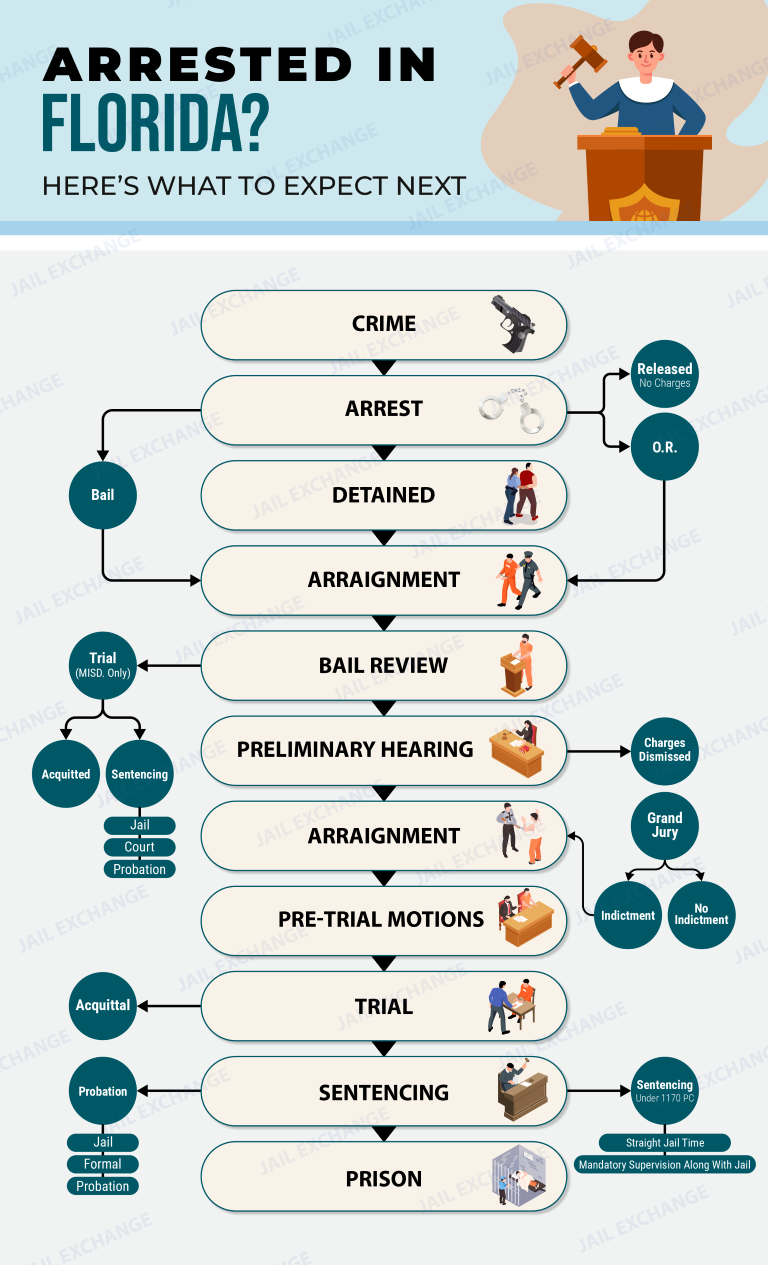
Orange County, Florida: How a Criminal Case Works
Orlando’s home county runs its criminal cases through two state trial courts. Orange County Court deals with lower-level matters: misdemeanors, traffic crimes like racing on the highway, and broken local ordinances (city or county rules). Orange Circuit Court takes felonies and juvenile cases. Orange belongs to Florida’s Ninth Judicial Circuit, which it shares with just one neighbor, Osceola County. Most criminal hearings happen at the Orange County Courthouse, 425 N. Orange Ave., Orlando, FL 32801. The Clerk of Courts’ main line there is (407) 836-2000. After an arrest, adults usually land in the Orange County Jail, run by the county’s Corrections Department. Families often use our bail guide and inmate search next.
Look up a case for free: The Orange County Clerk runs myeClerk, a free website with millions of court records. Searching by name or case number pulls up charges, court dates and scanned filings, most from 2009 on. Sealed cases, juvenile files and confidential details stay hidden.
When it’s a federal case: Federal charges from Orange County are heard in Orlando by the Middle District of Florida’s federal trial court (the U.S. District Court’s Orlando Division). That court meets at the George C. Young U.S. Courthouse, 401 W. Central Blvd., Orlando, FL 32801. State cases are about breaking Florida law. Federal cases are about breaking United States law, or about crimes on federal property or across state lines. Around Orlando, that can mean a crime at Orlando International Airport security, at the VA medical center in Lake Nona, or on Navy and Army offices in the Central Florida Research Park. Big drug rings using the interstates, bank robbery, mailing threats, and large frauds also tend to go federal. No Seminole Tribe reservation lies in Orange County; the tribe’s lands are farther south. Pick a topic below.
1. Lesser crimes in Orange County Court: shoplifting, a first DUI, simple battery, trespass
Misdemeanors are the lower-level crimes, the kind that can mean county jail but never state prison. On a minor charge, you might simply get a notice to appear with a court date and be allowed to leave. If you are taken to the Orange County Jail instead, a judge has to look at your case within 24 hours, at a quick hearing Florida calls first appearance. Until then, jail staff can only release you on bond amounts that meet the floor in a uniform schedule the Florida Supreme Court set for the whole state (order AOSC25-69). Some arrests, such as domestic violence, mean you wait to see the judge before going home.
The judge then decides on bond. Bond is cash or a signed promise meant to make sure you return. Many people hire a licensed bail bond agent. The agent keeps a premium, normally a tenth of the bond with a $100 minimum, and it isn’t refunded.
Your plea is entered at a hearing called the arraignment. You may say guilty or not guilty, or pick “no contest,” meaning you won’t fight the charge but don’t admit it. Florida has two misdemeanor levels. First-degree misdemeanors top out at 12 months behind bars and a $1,000 fine. Second-degree ones carry up to 60 days and $500. Stealing something worth under $750 is petit theft. A first DUI can mean up to six months in jail, plus fines and a license suspension.
The State Attorney for the Ninth Circuit, chosen by voters, prosecutes every state crime in Orange County. Orange County defendants without money for counsel may get the circuit's elected Public Defender. When that office can’t take the case, for example because it is defending someone else in the same case, the judge turns to Criminal Conflict and Civil Regional Counsel attorneys from the state. Florida law lets a judge order people to repay some lawyer costs later, and unpaid amounts can become a lien. Many first-time cases qualify for pretrial diversion, a program of classes or community work that can end in dropped charges. Florida’s speedy trial clock for misdemeanors runs 90 days from formal charging; many defendants waive it to prepare. The jury has six people.
Under 18: Kids accused of a misdemeanor are handled by Circuit Court’s juvenile division, not County Court. For a first slip-up, police frequently choose a civil citation over handcuffs. With a citation, the young person finishes tasks like volunteer hours or counseling, and no arrest record follows them. If a teen is locked up, a judge holds a detention hearing no later than 24 hours after they are taken into custody. The state Department of Juvenile Justice runs the Orange Regional Juvenile Detention Center in Orlando.
2. Circuit Court felonies: grand theft, burglary, drug selling, felony DUI
Felonies are the serious charges, the ones that can land a person in a Florida prison for over a year. Orange County felony cases start at first appearance too, often by video from the jail. After that, prosecutors review the police reports. To push ahead, they file a paper called an information, which formally lists the charges. Then the case moves to a Circuit Court judge at 425 N. Orange Ave.
Felony levels in Florida are called degrees. The lowest, third-degree, allows a prison term of 5 years at most. The second-degree limit is 15 years. First-degree means up to 30 years, and some first-degree crimes allow life. Stealing $750 or more is grand theft, at least a third-degree felony. Burglary of a house where people live is generally a second-degree felony. A third DUI within ten years becomes a felony.
To guide the sentence, the prosecutor prepares a scoresheet, a points worksheet required by Florida’s Criminal Punishment Code. Points pile up for the main charge, harm to victims and old convictions, and the final number marks the shortest prison term a judge normally may order. Florida inmates have to complete at least 85% of their prison terms. If the person is accused of having a gun during certain felonies, Florida’s 10-20-Life statute sets a 10-year minimum just for carrying it, a 20-year minimum when the gun is fired, and 25 years to life when a bullet hurts or kills someone.
The speedy trial clock for a felony runs 175 days from formal charging. Most end with a plea deal.
Under 18: A teen’s felony usually stays in the juvenile system, which focuses on turning a young person around through programs, probation or a youth commitment program. Prosecutors can choose to direct file, moving the case straight into adult court, for many felonies when the teen is 16 or 17. For 14- and 15-year-olds, that is allowed only for a list of serious felonies set out in state law.
3. Serious violent charges: murder, gun robbery, sexual battery, aggravated battery
Violent crimes follow the felony path, but the stakes are higher. Orange County bonds are often very high, or denied after a special hearing. Robbery with a gun is a first-degree felony that can bring life in prison. Aggravated battery, meaning hurting someone badly or using a weapon, is second-degree. Florida calls rape sexual battery, and some forms carry life.
The top charge, first-degree murder, counts as a capital felony. Only two punishments are possible: death, or life in prison without parole. Before a capital charge can go forward, a grand jury, a panel of 15 to 21 Orange County residents who meet behind closed doors, must approve it. Capital trials use 12 jurors. A 2023 law lowered the bar: 8 of those 12 jurors voting for death is now enough for a death recommendation. Condemned men are mostly held at Union Correctional Institution, women at Lowell Correctional Institution.
Victims in Florida are protected by Marsy’s Law, which voters added to the state constitution in 2018. They can be told about hearings, be heard at sentencing, and ask for protection from the accused. The State Attorney’s victim advocates walk families through the process.
Under 18: When a youth is accused of a crime that could bring a life sentence or death, grand jurors are allowed to indict a child of any age, which moves the case to adult court. Death is off-limits as punishment for teenage crimes, and Florida lets a judge take a second look at very long sentences given for teenage crimes. Until trial, a youth charged as an adult may be held apart from adult inmates.
4. How do I check an Orlando court warrant?
Ninth Circuit warrants are tracked by the Sheriff's Office, where deputies at (407) 836-4357 search by full name and birth date. On the clerk's myeClerk portal, a capias appears on the docket of the case it belongs to. An attorney can set your surrender at the Booking and Release Center on South John Young Parkway, then argue release at first appearance. The criminal division downtown resets dates, and Apopka, Winter Park and Ocoee files sit in that same courthouse. Warrants from other agencies statewide are searchable through FDLE's wanted persons portal.
Immigration holds. If ICE lodges an Orange detainer on someone:
- F.S. 908.105 requires telling the Orange bond judge
- the Orange prosecutor gets notice
- bond is still possible in Orange
- ICE may keep the person up to 48 hours past release
- those hours in Orange include weekends and holidays
- for Orange forcible felony cases, unlawful status blocks Orange release before first appearance (F.S. 907.041)
- at that point an Orange judge presumes detention, but the Orange defense can rebut it
Town courts. Orange has no city or town courts. The 1972 Article V reform phased them out. In Orange, a city ordinance case goes to Orange County Court, which also hears misdemeanors.
Orange County readers: this is general information written in everyday words, not legal advice. Your situation may differ, so get help from a defense attorney or phone the Clerk of Courts at (407) 836-2000.

icare (operated by Aramark Correctional Services) is a specialized gift package and commissary program that allows family members to order brand-name snack bundles, confectioneries, hygiene kits, and freshly prepared hot meals sent directly to an incarcerated loved one. Every package is packed to adhere strictly to facility security regulations.
Important: Order Cutoffs and Delivery Windows Vary by Jail
Detention centers do not manage care package deliveries under identical schedules. While some facilities allow weekly orders, others restrict deliveries to bi-weekly or monthly distribution windows, and spending limits vary from jail to jail. You should verify the facility's active cutoff schedule and order allowances by calling them directly. If an order is submitted after the weekly processing deadline, delivery will be held until the following cycle, leaving your loved one waiting an extra cycle for fresh meals or personal snacks.
Step-by-Step Instructions to Place an icare Package Order
- Obtain the inmate's legal first and last name, date of birth, and assigned booking or inmate ID number.
- Visit www.icaregifts.com on your computer or mobile device.
- Select Find a Loved One and choose the state and detention facility.
- Search for the inmate using their ID number or legal last name to unlock the facility-specific catalog.
- Browse available fresh food items, snack packs, candy selections, and hygiene kits, adding items up to the facility's spending cap.
- Proceed to checkout, enter your debit or credit card billing details, and submit your order.
- Save your digital receipt and confirmation tracking number for your records.
What the Inmate Needs to Do
The inmate does not need an internet account to receive care packages. Aramark prepares the shipment in tamper-evident security packaging and delivers it directly to the facility commissary department. Staff inspect the delivery and distribute it during scheduled housing unit delivery rounds, where the inmate signs the delivery manifest.
Official Provider: icare Gifts Official Website
Customer Service Telephone: 1-888-439-5020
Support Hours: Monday – Friday, 8:00 AM – 9:00 PM EST; Saturday – Sunday, 9:00 AM – 5:00 PM EST
Supported Languages: English and Spanish
Other Services Associated with Aramark Corrections
Depending on individual facility agreements, additional trust funding and commissary services may be available:
- Inmate Trust Fund Deposits: Transfer funds directly to an inmate's jail trust account for independent commissary spending.
• Learn more on our website: Inmate Trust Deposits Guide | • Visit official vendor page: icare Inmate Services
Buy Commissary for an Inmate in the Orange County Female Detention Center
Orange County Female Detention Center Inmate Commissary - Sending Money or Purchasing Commissary for an Inmate
Orange County Female Detention Center allows inmates to purchase commissary. This can be snacks, hygiene products, stamps, stationary, clothing and even electronics.
You can buy commissary for an inmate using an online service called icare gifts.

There is a monthly limit of $200-300 on how much inmates can spend on commissary items.
This amount is subject to change so call the facility at 407-836-3400 in order to confirm the amount that cannot be exceeded.
Inmates have access to both an in-house commissary store, and commissary packages that can be purchased and shipped to the inmate by friends and family.
Scroll down for information on the Orange County Female Detention Center's service they use for you being able to purchase commissary items online and have them shipped directly to the inmate.
You can also go to our Inmate Money page for information on how to send money to an inmate.
ViaPath / ConnectNetwork Trust Fund Deposits
Provider: ViaPath Technologies • Formerly ConnectNetwork / GTL Financial
ViaPath Technologies (formerly GTL / ConnectNetwork) operates secure banking software enabling family members to deposit cash or card funds directly into an incarcerated person's jail trust account. Deposited funds allow the inmate to purchase commissary food items, clothing, personal hygiene goods, and medical copays, or transfer balances to phone time.
Important: Jail Trust Account Policies Differ by Agency
Once a person is booked and moved to a cell, facilities do not always allow cash drop-offs or phone payments directly to the jail window. Some might and you should confirm this by calling the facility and asking. But if you do not register online and fund your loved one's trust account immediately, they may be forced to wait days or weeks for standard paper processing, leaving them without essential soap, clean undergarments, basic medical sundries or snacks.
Step-by-Step Instructions to Deposit Trust Funds
- Confirm the inmate's legal name, date of birth, and assigned booking or institutional ID number.
- Log into your account at web.connectnetwork.com or my.viapath.com.
- Select Trust Fund from the available services dashboard.
- Select the facility and confirm your loved one's profile matches the active housing roster.
- Specify the deposit dollar amount and enter your debit or credit card billing details.
- Authorize the transaction and record the confirmation tracking number for your financial records.
What the Inmate Needs to Do
The inmate does not need an internet connection to receive trust funds. Once payment clears, the balance posts directly to their accounting profile in the jail's internal system. The inmate can review their updated balance at the pod kiosk or on their tablet and place their regular weekly store order.
Official Providers: ConnectNetwork Portal | myViaPath Portal
Customer Service Telephone: 1-877-650-4249
Support Hours: Automated Deposits 24/7/365; Live Agents Monday – Friday, 8:00 AM – 10:00 PM EST
Supported Languages: English and Spanish
Other Services Provided by ViaPath Technologies (ConnectNetwork)
In addition to Trust Fund Deposits, ViaPath / ConnectNetwork provides several other communication and calling options:
- AdvancePay Phone Calling Accounts: Keep a dedicated balance to receive telephone calls directly on your cell phone.
• Learn more on our website: AdvancePay Calling Guide | • Visit official vendor page: ConnectNetwork AdvancePay - ViaPath PIN Debit Phone Calling: Give the inmate calling funds to contact any approved phone number independently.
• Learn more on our website: PIN Debit Calling Guide | • Visit official vendor page: ViaPath PIN Debit - ViaPath Messaging & Photo Sharing: Send digital messages and photos directly to their kiosk or tablet.
• Learn more on our website: Digital Messaging Guide | • Visit official vendor page: ViaPath Messaging - GettingOut Video Visitation & Tablets: Schedule face-to-face remote video visits from home.
• Learn more on our website: Video Visitation Guide | • Visit official vendor page: GettingOut Video Visits
Deposit Money for an Inmate in the Orange County Female Detention Center
Women held at the Orange County Female Detention Center have an account run by Orange County Corrections. Money put on it pays for commissary, medical services and jail fees.
- Mail a money order: Make it payable to her, with her jail number on it, and include your name and address. Mail to: Her Name, Jail Number and Housing Area, P.O. Box 4970, Orlando, FL 32802-4970.
- Pay online: Visit ConnectNetwork with a Visa or MasterCard. Choose Orange County FL (Site ID 196) and use her booking number, last name and first name as the account number.
- Pay by phone: Call 888-428-1845, 24 hours a day, 7 days a week.
- Pay in person: Deposits are taken in the Booking & Release Center public lobby, 3855 John Young Parkway, Orlando, 7 a.m. to 10 p.m. daily. Cash, debit, Visa and MasterCard are accepted.
Money is normally on her account within 48 hours. Western Union is no longer an option. Letters go to a scanning address in Seminole, which never takes money. If she wants money released to you, she fills out a release form and mails it to you, and you bring a valid ID when you pick it up. Inmate Fiscal Operations: 407-254-8315. Jail: 407-836-3400.
Women held by Orange County Corrections in Orlando stay at the Female Detention Center, a direct-supervision jail with about 650 beds. It was the first Orange County jail to move to tablets, in November 2023, and today all personal mail for the women there is scanned off site. Scanning protects the jail from letters soaked in drugs such as heroin or meth. A woman sees her mail on a tablet once staff have checked it.
Personal mail (goes to the scanning service):
Inmate's Full Name & Booking #
Smart Communications/Orange County Corrections Department
P.O. Box 9101
Seminole, FL 33775-9174
Legal mail, books, magazines and money orders:
Inmate's Full Name & Booking #
Orange County Corrections Department
P.O. Box 4970
Orlando, FL 32802-4970
- Before you write: Look her up on the inmate search and use the full name and booking number shown there.
- Postcards and greeting cards: These are scanned along with letters. Keep cards plain, with no music, glitter or perfume.
- Ink: Blue or black only. No markers, crayons or drawings on the envelope.
- Reading material: Up to four new paperbacks, magazines or newspapers per box, mailed by a publisher or a bookstore to the Orlando P.O. box. Put her cell location under her booking number. Duplicate titles and spiral-bound books are sent back.
- Money: A money order goes to the Inmate Fiscal Department at the Orlando P.O. box, made out to her, with her name and booking number on it and on the envelope. Card and cash deposits can also be made in the lobby of the Booking & Release Center from 7 a.m. to 10 p.m., or online.
- Your return address: It is required on everything you send.
- Lawyer mail: Lawyers send it to the Orlando P.O. box. Legal ads are not legal mail and go to the scanning service like any other letter.
- Stamps: She buys her own, so don't put any in the envelope.
Women at the center can also get electronic messages and photos on their tablets.
ViaPath AdvancePay Phone Calling Accounts
Provider: ViaPath Technologies • Formerly ConnectNetwork / Global Tel*Link (GTL)AdvancePay is the primary prepaid telecommunications service operated by Global Tel*Link (GTL) and ConnectNetwork, which have unified under the corporate identity of ViaPath Technologies (and the myViaPath platform). By funding an AdvancePay account, telephone charges are deducted per minute whenever an incarcerated loved one calls your specific telephone number, preventing calls from being rejected by cellular carriers.
Important: Cell Carriers Automatically Block Jail Collect Calls
Inmate telephone networks do not permit incoming calls, and wireless cell providers automatically block traditional collect billing by default. While select traditional landlines may support operator billing, cell phones and internet-based lines require an active AdvancePay balance, which you can verify with your carrier. If you do not register your number online and add funds immediately, your loved one will hear an automated operator announcement stating your line is blocked from receiving correctional calls.
Step-by-Step Instructions to Open and Fund AdvancePay
- Visit web.connectnetwork.com or the updated my.viapath.com portal, or launch the ConnectNetwork / ViaPath mobile application.
- Click Sign Up and register using your primary 10-digit cellphone number and email address.
- Select Add Facility, pick your state, and choose the detention center or state prison where the inmate is held.
- Search for the inmate using their full legal name or facility booking ID number and link them to your contact directory.
- Select AdvancePay Phone and choose your deposit amount ($25, $50, or custom).
- Enter your debit or credit card billing details, accept the administrative transaction fee, and complete the payment.
- Check your phone settings to confirm that automated or unknown correctional numbers are not routed straight to spam.
What the Inmate Needs to Do
The inmate approaches any housing pod telephone, enters their assigned PIN and voice biometric recognition phrase, and dials your 10-digit number. ViaPath's automated operator confirms your active prepaid balance and connects the call. All personal telephone calls are subject to recording and monitoring by facility investigators.
Official Providers: ConnectNetwork Portal | myViaPath Portal
Customer Service Telephone: 1-877-650-4249 (Automated & Live Support)
Support Hours: Automated Service 24/7; Live Operators Monday – Friday, 8:00 AM – 10:00 PM EST
Supported Languages: English and Spanish
Other Services Provided by ViaPath Technologies (ConnectNetwork)
In addition to AdvancePay Phone Calling, ViaPath / ConnectNetwork provides several other communication, financial, and visitation services:
- ConnectNetwork Trust Fund Deposits: Transfer money directly into an inmate's jail trust account for commissary store purchases.
• Learn more on our website: Inmate Trust Deposits Guide | • Visit official vendor page: ConnectNetwork Trust Deposits - ViaPath PIN Debit Phone Calling: Give the inmate their own calling funds to contact any approved phone number independently.
• Learn more on our website: PIN Debit Phone Calling Guide | • Visit official vendor page: ViaPath PIN Debit Calling - ViaPath Messaging & Photo Sharing: Send digital messages, photos, and video attachments directly to their terminal.
• Learn more on our website: Digital Messaging Guide | • Visit official vendor page: ViaPath Messaging Services - GettingOut Video Visitation & Tablets: Schedule face-to-face remote video visits and manage handheld tablet communications.
• Learn more on our website: Remote Video Visitation Guide | • Visit official vendor page: GettingOut Video Visits
ViaPath PIN Debit Phone Calling Accounts
Provider: ViaPath Technologies • Formerly ConnectNetwork / Global Tel*Link (GTL)ViaPath PIN Debit (hosted on ConnectNetwork and myViaPath) provides incarcerated individuals with their own calling funds. Unlike AdvancePay (which only funds calls placed to your specific phone number), PIN Debit funds belong directly to the inmate, allowing them to call attorneys, bondsmen, employers, or extended family members across multiple approved telephone numbers.
Important: AdvancePay Only Funds a Single Phone Number
When someone is arrested, they often need to contact multiple people—including legal defense counsel, bail agents, employers, and relatives. If you only fund an AdvancePay account, your loved one will have no calling balance to dial anyone else, as rules and call authorizations vary by facility. Adding funds directly to ViaPath PIN Debit grants them the calling flexibility needed to handle critical legal and family arrangements without delay.
Step-by-Step Instructions to Fund a PIN Debit Account
- Sign into your account at web.connectnetwork.com or my.viapath.com.
- Click on PIN Debit under the communications menu.
- Select the state and facility, and link the inmate's booking identification number.
- Enter the deposit dollar amount and review the payment transaction fee.
- Enter your debit or credit card details and submit the payment.
- Notify your loved one that their personal PIN calling balance has been credited.
What the Inmate Needs to Do
The calling balance appears under the inmate's personal identification PIN. When they pick up any dayroom telephone or tablet, they select the 'PIN Debit' prompt from the automated menu to place calls to any approved number on their personal contact list.
Official Providers: ConnectNetwork Portal | myViaPath Portal
Customer Service Telephone: 1-877-650-4249
Support Hours: Automated Deposits 24/7/365; Live Agents Monday – Friday, 8:00 AM – 10:00 PM EST
Supported Languages: English and Spanish
Other Services Provided by ViaPath Technologies (ConnectNetwork)
In addition to PIN Debit Calling, ViaPath / ConnectNetwork provides several other communication, financial, and visitation services:
- AdvancePay Dedicated Phone Calling: Fund calls placed specifically to your personal phone number.
• Learn more on our website: AdvancePay Calling Guide | • Visit official vendor page: ConnectNetwork AdvancePay - ConnectNetwork Trust Fund Deposits: Deposit money for commissary food, hygiene supplies, and stationery.
• Learn more on our website: Inmate Trust Deposits Guide | • Visit official vendor page: ConnectNetwork Trust Deposits - ViaPath Messaging & Photo Sharing: Send digital messages and photos directly to their kiosk or tablet.
• Learn more on our website: Digital Messaging Guide | • Visit official vendor page: ViaPath Messaging Services - GettingOut Video Visitation & Tablets: Schedule face-to-face remote video visits from home.
• Learn more on our website: Remote Video Visitation Guide | • Visit official vendor page: GettingOut Video Visits

Smart Communications provides the SmartJailMail digital communications system, enabling two-way electronic messaging, photo sharing, and digital mail delivery for county jails and correctional facilities across the United States. Messages and approved digital photos clear electronic screening in hours, eliminating postal delays.
Important: Postal Mail Transition and Digital Message Credits Vary
Inmates cannot receive incoming phone calls, and traditional postal mail rules differ across correctional agencies. While some facilities still allow regular handwritten letters, many facilities utilizing Smart Communications have completely eliminated physical mail delivery, redirecting postal letters to a central scanning hub or mandating direct digital messaging, which you can verify by checking facility rules. If you do not register online and purchase message credits immediately, your loved one may face lengthy communication delays while waiting for updates from home.
Step-by-Step Instructions to Register and Send Messages
- Visit www.smartjailmail.com and click Sign Up to create a free user profile.
- Verify your email address and primary telephone number.
- Search for the inmate by selecting the state, detention facility, and entering their legal name or booking ID.
- Send an electronic contact connection request to link your account to the inmate's profile.
- Purchase a messaging credit bundle using a debit or credit card.
- Compose your message in the text editor and attach approved JPEG photos if permitted by facility guidelines.
- Submit your message to the facility's screening queue.
What the Inmate Needs to Do
All electronic correspondence is screened by facility staff before delivery. Once approved, messages appear in the inmate's inbox on their housing unit Smart Communications kiosk or tablet. The inmate opens the message, views attached photos, and types an electronic reply using their available credits.
Official Provider: SmartJailMail Official Website
Customer Service Telephone: 1-888-253-5178
Support Hours: Monday – Friday, 7:00 AM – 7:00 PM EST
Supported Languages: English and Spanish
Other Services Provided by Smart Communications
In addition to Two-Way Messaging, Smart Communications operates video visitation and phone services at participating facilities:
- Remote Video Visitation: Schedule and join live face-to-face video visits from your computer or smartphone.
• Learn more on our website: Video Visitation Guide | • Visit official vendor page: SmartJailMail Video Visits - Smart Inmate Phone Services: Prepay for phone calling credits so your loved one can call your mobile phone directly.
• Learn more on our website: Inmate Phone Time Guide | • Visit official vendor page: Smart Inmate Calling
ViaPath Technologies (formerly GTL / ConnectNetwork) deploys secure, correctional-grade handheld tablets to incarcerated individuals across state prison systems and county jails. Operating over private, secure internal networks, these tablets provide access to educational courses, legal research materials, job readiness resources, streaming music, podcasts, eBooks, and direct messaging with approved family contacts.
Important: Tablet Hardware Deployment and Rental Rules Vary
Detention centers do not manage tablet distribution identically. While some agencies issue individual personal tablets to every detainee at booking, others utilize shared pod docking stations or restrict tablet use to specific dayroom hours, which you should confirm with the facility directly. Although core educational and legal resources are generally provided free of charge, sending messages, listening to music, or making phone calls from the tablet requires an active balance funded by outside contacts.
Step-by-Step Instructions to Support and Fund Tablet Use
- Confirm that ViaPath or ConnectNetwork handheld tablets are deployed at your loved one's specific facility.
- Log into your account at web.connectnetwork.com or my.viapath.com.
- Ensure the inmate is linked to your contact list using their legal name and booking ID number.
- Deposit funds into their Inmate Account (for independent media, games, and music purchases) or your Messaging/Phone Account.
- Review all transaction charges, complete payment with a credit or debit card, and save your receipt.
- Notify your loved one that funds are available so they can download media or purchase subscriptions on their device.
What the Inmate Needs to Do
The inmate unlocks their assigned tablet by entering their unique facility PIN or using biometric verification. They can access free rehabilitative and legal content at no charge, or open communication and media applications to draft messages, place phone calls, or stream music using available balances. Devices are docked during quiet hours and shift changes for secure recharging and data synchronization.
Official Providers: ConnectNetwork Portal | myViaPath
Customer Service Telephone: 1-877-650-4249
Support Hours: Monday – Friday, 7:00 AM – 11:00 PM CST; Saturday – Sunday, 8:00 AM – 7:00 PM CST
Supported Languages: English and Spanish
Other Services Provided by ConnectNetwork / ViaPath
In addition to Tablet Programs, ConnectNetwork and ViaPath provide several other core communication and financial channels:
- Inmate Messaging: Exchange digital text messages and photographs directly with an inmate's tablet.
• Learn more on our website: Digital Messaging Guide | • Visit official vendor page: ConnectNetwork Messaging - Video Visitation: Conduct scheduled live video calls with your loved one from your home computer or smartphone.
• Learn more on our website: Video Visitation Guide | • Visit official vendor page: ConnectNetwork Video Visits - AdvancePay Phone Calling: Prepay for phone calling credits so your loved one can call your mobile device directly.
• Learn more on our website: AdvancePay Phone Guide | • Visit official vendor page: ConnectNetwork Phone Services - Trust Money Deposits: Send canteen funds directly into an incarcerated person's jail trust account.
• Learn more on our website: Trust Deposits Guide | • Visit official vendor page: ViaPath Trust Deposits
Orange County County Jails
Orange County Juvenile Facilities
Nearby counties
- Jail (Main): 407-836-3400
- Administration: 407-836-3560
- Bail: 407-836-3400
- Booking: 407-836-3400
- Comissary: 407-448-8320
- Inmate Release: 407-836-3400
- Public Defender: 407-836-4800
- Sheriff: 407-254-7000
- Visitation: 407-836-8061
The Orange County Female Detention Center serves the following cities and towns of Orange County: Apopka, Bay Lake, Belle Isle, Eatonville, Edgewood, Lake Buena Vista, Maitland, Oakland, Ocoee, Orlando, Windermere, Winter Garden and Winter Park.