
Bridgeport Correctional Center
Bridgeport Correctional Center
Physical Address
Bridgeport Correctional Center1106 North Avenue
Bridgeport, CT 06604 Inmate mailing address
Jail Phone Number
475-225-8000Bridgeport Correctional Center inmate search
Bridgeport Correctional Center is a Level 4 state jail at 1106 North Avenue, Bridgeport, CT 06604, phone 475-225-8000.
Connecticut has no county jails, so the Department of Correction (DOC) holds people both before trial and after sentencing. To find someone here, use the state’s DOC inmate search and search by last name or inmate number. The result names the facility where the person is now housed, and it changes when the DOC moves them.
Someone arrested today may sit in a police cell first and appear in the search only after the DOC takes custody. Court dates and pending charges are on the Judicial Branch case look-up.
Read inmate search answers
 Read inmate search answers
1. How do I find someone at Bridgeport Correctional Center online?
Open the Connecticut DOC inmate search, the state’s official lookup. Type a last name (a first name helps) or the DOC inmate number, then press search. Click the name to see the facility where the person is housed right now.
As a backup, VINELink lets you look up the same person and sign up for a free call, text or email when they move or go home. Our Bridgeport Correctional Center Inmate Search page links both tools.
↑ Back to the question list2. Which Connecticut facilities hold people awaiting trial?
The DOC daily count for October 25, 2026 (state open data) shows these sites holding accused people. The first number is everyone inside; the second is people not yet sentenced.
- Bridgeport Correctional Center, Bridgeport – Level 4 – 693 total / 533 unsentenced
- Hartford Correctional Center, Hartford – Level 4 – 952 total / 711 unsentenced
- New Haven Correctional Center, New Haven – Level 4 – 512 total / 418 unsentenced
- Corrigan Correctional Center, Uncasville – Level 3/4 – 663 total / 275 unsentenced
- York Correctional Institution, Niantic – Level 2-5 – 889 total / 368 unsentenced
- Garner Correctional Institution, Newtown – Level 4 – 562 total / 245 unsentenced
- Cheshire Correctional Institution, Cheshire – Level 4 – 1205 total / 190 unsentenced
- MacDougall-Walker Correctional Institution, Suffield – Level 4/5 – 1819 total / 432 unsentenced
Manson Youth Institution in Cheshire also holds accused young men under 22.
↑ Back to the question list3. Which prisons only take people after sentencing?
Four sites hold sentenced men: Robinson Correctional Institution in Enfield, Osborn Correctional Institution and Cybulski Community Reintegration Center in Somers, and Brooklyn Correctional Institution. A Bridgeport arrest will not start at any of them.
↑ Back to the question list4. How does bail work for a Bridgeport arrest?
- The arresting police department sets the first bond.
- Judicial Branch bail staff can then raise or lower it.
- A judge looks at it again at arraignment, usually the next court day.
- For bonds of $20,000 or less, 10 percent cash is allowed unless the judge says no.
- You may post at the police station, the court, or the DOC jail.
- A bondsman’s fee is not refunded.
Read every step on our bail page.
↑ Back to the question list5. Which court will hear the case?
This jail serves the superior courts in Ansonia, Derby, Milford, Bridgeport, Danbury, Norwalk and Stamford. A Bridgeport city arrest goes to GA 2, 172 Golden Hill Street, Bridgeport, CT 06604 (203-579-6568).
↑ Back to the question list6. Can I check for open cases or a warrant?
Connecticut keeps no public warrant list. Pending criminal cases show on the Judicial Branch case look-up. For a warrant question, phone the town police where the charge came from.
↑ Back to the question list7. How do visits, calls, money and mail work here?
- Visitors must be approved; see the DOC visiting rules and our visiting guide.
- Calls go out only; families fund an account (phone guide).
- Deposits pay for canteen items (money guide).
- Letters need the full name and inmate number (mail guide).
The main jail line is 475-225-8000. The warden named by the DOC is Jesus Guadarrama.
↑ Back to the question list8. What if the person is under 18?
Children are not held in this jail. Juvenile court handles them, and the Judicial Branch runs the Juvenile Residential Center at Bridgeport for those kept before a hearing.
↑ Back to the question list9. What happens if the charge is federal?
A federal arrest goes before a U.S. magistrate judge, often at 915 Lafayette Boulevard, Bridgeport, CT 06604 (203-579-5861). No bail chart applies; a detention hearing decides release.
The U.S. Marshals choose where the person waits for trial, which can be a jail they contract with. Call the Bridgeport Marshals office at 203-579-5897. After a federal sentence, look the person up on the Bureau of Prisons inmate locator.
↑ Back to the question list10. How does an ICE detainer play out at Bridgeport?
- Booking fingerprints go to federal systems that ICE checks.
- ICE may file Form I-247A asking the DOC to notify it or to hold the person.
- That form seeks up to 48 hours beyond the normal release time, and the clock does not pause for weekends or holidays.
- Connecticut’s Trust Act, C.G.S. 54-192h, lets staff hold someone only with a judge-signed warrant, certain listed serious convictions, or a terrorism watchlist match. The person must get a copy of the detainer and be told if the DOC will comply.
- If none of those apply, release happens on schedule.
- If ICE does take custody, search the ICE detainee locator or call 617-565-4946. The ICE Boston field office covers Connecticut.
11. Where will they serve a prison sentence?
The same DOC runs jails and prisons. Sentenced people are classified by risk and needs, then sent to a prison that fits. Watch the move on the DOC inmate search and read about each site on our Connecticut state prisons page.
↑ Back to the question list12. Can I see a mugshot from Bridgeport Correctional Center?
No. The DOC search does not show booking photos. Members of the press can contact the DOC press office at 860-692-7780 or the town police that made the arrest.
Photos taken by ICE are requested through an ICE FOIA request.
Federal booking photos stay private, but the U.S. Marshals may release one to catch a fugitive.
↑ Back to the question list13. Bridgeport-area police non-emergency numbers
- Bridgeport Police Department: 203-581-5100
- State Police Troop G, Bridgeport: 203-696-2500
Dial 911 in an emergency.
↑ Back to the question listBridgeport Correctional Center contacts
- Search
- Bridgeport Correctional Center Inmate Search
- Jail
- 475-225-8000
- Alerts
- VINELink
Call ahead before a visit; schedules can shift.
Bridgeport Correctional Center bail and bond: a family guide
A person who cannot make bond after an arrest tied to the Bridgeport, Stamford, Norwalk, Danbury, Milford, Derby or Ansonia courts is usually held at Bridgeport Correctional Center, 1106 North Avenue, Bridgeport.
Connecticut has no county jails, so the state Department of Correction runs it. Begin with the Bridgeport Correctional Center Inmate Search to see whether your person is inside.
Use the facility line, (475) 225-8000, only for what the search cannot say. Money for bail is separate from money you send for a prison account.
1. Is my relative inside Bridgeport Correctional Center?
Run the name through the Bridgeport Correctional Center Inmate Search. The state refreshes it daily and labels each person sentenced or accused. People held for federal immigration agents, and those under the Youthful Offender law, do not appear. Someone arrested only hours ago may still sit in a police cell. For help reading the search, the Department of Correction information office answers at (860) 692-7780, 8:00 a.m. to 4:30 p.m., Monday to Friday.
2. Which courts send people to North Avenue?
The Department of Correction names the Superior Courts at Ansonia, Derby, Milford, Bridgeport, Danbury, Norwalk and Stamford. Judicial Branch listings give these clerk lines. Bridgeport: 172 Golden Hill Street, (203) 579-6560; the district court is at 1061 Main Street, (203) 579-6527. Stamford and Norwalk: 123 Hoyt Street, Stamford, (203) 965-5208. Danbury: 146 White Street, (203) 207-8600. Milford: 14 West River Street, (203) 874-1116. Derby, which also covers Ansonia: 106 Elizabeth Street, (203) 735-7438. The listings are undated, so phone first. Women go to York Correctional Institution in Niantic, which holds pretrial women from every court. A man whose case sits in Hartford or New Haven goes to a different state facility.
3. Can anyone here still be bailed out?
Yes, but only those still awaiting trial. On August 1, 2026 the state counted 451 accused men, 147 sentenced men and 14 federal prisoners here, 612 in all. A bond opens the door for the accused group. After a sentence, paying money no longer frees the person. The search shows which group yours is in.
4. What ways of release does a judge have?
The judge must try four choices in order and stop at the first that is enough: a written promise to appear, a promise with conditions such as no contact, a bond with no surety, and a bond with a surety. The first two cost nothing. Judges cannot ban a surety bond. The defense lawyer, or the clerk at the court that heard the case, can tell you which choice your person received.
5. Who picks the dollar amount, and when?
Police may set a bond at the station. A Judicial Branch bail commissioner, on duty from 6 p.m. to 4:30 a.m. every day, interviews whoever police are holding. The Judicial Branch posts no direct commissioner phone, but its Court Support Services Division answers at (860) 368-3800 (ask for pretrial services). Intake specialists cover weekday court hours. At arraignment a Superior Court judge decides, and the law says no greater amount than necessary. Connecticut has no statewide price list. These are individual cases from police blotters that the news site Patch printed, not a schedule, and they do not say who set each amount: $2,500 for drunk driving with a suspended license (Wallingford, September 2026, released after posting); $15,000 for larceny and drug counts (Wallingford, August 2026, released after posting); $50,000 for firearm and ammunition counts plus protective-order violations (Wallingford, September 2026, held); and $100 on a drunk-driving arrest (Bethel, February 2024, held).
6. Can bail be denied completely?
Only a capital offense with strong proof can lead to that, says the state constitution (article I, section 8). Far more often a person stays inside because the bond is high and the family has not met it. Phone the court clerk to confirm what is posted. If a hold is mentioned, read the hold question below.
7. How much can a bondsman take off the top?
Under section 29-151, a professional bondsman may take no more than $50 on bail up to $500, 10 percent of bail from $500 to $5,000, and 7 percent of bail over $5,000. Surety bail bond agents are licensed by the Insurance Department, which approves their rates, and a 2009 bulletin from that office called discounts from the filed rate unlawful. Check a license with the Insurance Department at (860) 297-3800 or the State Police licensing unit at (860) 685-8160.
8. Where do I hand over the bail money?
State law names three routes. Cash bail goes to the clerk of the court, at the addresses above. A police chief or a named officer can take a bond set at the station; Bridgeport police are at 300 Congress Street, (203) 581-5100. Or a bondsman signs for you. For a person already inside North Avenue, Department of Correction Administrative Directive 4.3, section 8.A, covers release to a bond. Staff run a criminal record check and review the inmate file first, and tell any agency with a detainer. Bond money received goes to the court the next business day. The directive names no bail desk, hours or payment types, so phone (475) 225-8000 and the court clerk before driving.
9. Can a house or land replace cash?
Yes. The owner pledges real estate whose equity equals the bond, and a notice of lien is filed with the clerk of the town where the property sits. After a forfeiture the Attorney General may foreclose, and the lien lapses six years after the order unless that suit starts. Whether land outside Connecticut qualifies is not spelled out in the statute, so phone the clerk of the court holding the case first.
10. We cannot raise that much. Can the amount change?
Someone still held on an unpaid bond can ask the court for a new amount at any point. Courts also review people still held: every 45 days for most charges, every 30 for class D or E felonies, unless waived. In misdemeanor-only cases a 14-day review applies, and money conditions must go unless the judge makes the findings the law lists.
11. Who is the free lawyer for these courts?
Public defenders work from local offices. Bridgeport: (203) 579-6551 (172 Golden Hill Street) or (203) 579-6501 (1061 Main Street). Stamford and Norwalk: (203) 965-5241. Danbury: (203) 207-8650. Milford: (203) 874-8857. Derby: (203) 735-8616. If nobody has called you back, ask the judge for a public defender at the next court date.
12. What does a hold on the record mean?
Sometimes a second agency has claimed the person, so a paid bond does not open the gate. Typical ones are a probation violation, a warrant from another town or state, or federal immigration. Under the Connecticut Trust Act, local agencies may honor a civil immigration detainer only in narrow cases, such as a judicial warrant. Talk to a public defender before paying a bondsman.
13. What if the person misses court after release?
For a surety bond of $500 or more, the court orders a rearrest warrant, notifies the surety in writing, and allows a six-month stay before collecting. If the person is back in custody inside that time, the bond ends and the court sets new terms. A voluntary return within five business days lets a judge reinstate the bond if the miss was not willful. Phone the lawyer the same day.
14. When does bail money come back?
Cash stays with the court until a judge orders it returned after the bond ends. A bond ends on dismissal, acquittal, a prosecutor dropping the case, sentencing, or entry into certain diversion programs. The law gives no refund deadline. Guard the receipt. A bondsman fee usually stays with the bondsman.
15. Where is a teenager from these courts held?
Youth cases go through the Judicial Branch, which runs two detention centers: the Juvenile Residential Center at Bridgeport, 60 Housatonic Avenue, control unit (203) 579-6548, and the one at Hartford, 920 Broad Street, (860) 244-7961. Court listings leave open which center takes a child from which court. For the Bridgeport juvenile court, the clerk, (203) 579-6544, can confirm placement.
16. How do I avoid a bail scam?
The Department of Correction has warned that calls saying a loved one needs bail money did not come from the department, and it asks people not to send money. Public defender offices warn of callers who borrow their name. Hang up, then dial the numbers printed here yourself.
17. Is a visit or a deposit the same as bail?
No. Visits are booked ahead through the Department of Correction request form. Prison account deposits go to the Inmate Trust Fund, P.O. Box 290800, Wethersfield, CT 06129-0800, questions at (860) 692-7670. None of that releases a person; only a bond, a court order or a finished sentence does.
Key contacts for Bridgeport Correctional Center bond questions
- Facility
- Bridgeport Correctional Center, 1106 North Avenue, Bridgeport, CT 06604; (475) 225-8000; Warden Jesus Guadarrama
- Bond guide
- Facility bail and bond guide
- Custody lookup
- Bridgeport Correctional Center Inmate Search
- Courts served
- Ansonia, Derby, Milford, Bridgeport, Danbury, Norwalk and Stamford Superior Courts (clerk lines in the courts answer)
- Police
- Bridgeport Police Department, 300 Congress Street, Bridgeport; (203) 581-5100
- Bail hours
- Bail commissioners 6 p.m. to 4:30 a.m. daily; intake specialists on weekdays during court hours; Court Support Services Division (860) 368-3800
- Public defender
- Bridgeport (203) 579-6551; Fairfield district office (203) 579-6501
- Juvenile
- Bridgeport center, 60 Housatonic Avenue, (203) 579-6548; Hartford center, 920 Broad Street, (860) 244-7961
- Bondsman checks
- Insurance Department (860) 297-3800; State Police licensing (860) 685-8160
- State information
- Department of Correction information office (860) 692-7780
Bond terms and office details change, and a judge's order in your relative's case controls. Phone the court clerk to confirm before you pay anyone. Nothing here replaces a lawyer.
Bridgeport Correctional Center Inmate Visitation Schedule
Bridgeport Correctional Center
1106 North Avenue
Bridgeport, CT 06604
475-225-8000
- All potential visitors must complete the State of Connecticut - Department of Correction Visiting Request Form
- Video Visits must be pre-scheduled and a Visiting Request Form must be completed.
- In-Person Visits are not pre-scheduled at this time are on a first come, first serve basis.
- Visitors must be on the approved, active visiting list.
- You will receive a notification when your video visit is scheduled.
(SCROLL DOWN FOR VISITATION SCHEDULE)
RULES & GUIDELINES FOR VISITING AN INMATE
- Confirm the facility location of the inmate you would like to visit by using the inmate search tool.
- Valid, government issued photo ID is required.
- No cellphones or other electronic devices allowed into the visiting area.
- No more than two (2) visitors are allowed per visit to include children.
- On-site visits are at least 30 minutes, and up to 60 minutes.
- Visitors are required to arrive at least 15 minutes prior to your scheduled on-site visit to check in.
- Video visits are 30-60 minutes.
- There are NO VISITS on major holidays.
- Clothing & Appearance must be reasonably modest. Revealing, seductive, or offensive clothing is not allowed.
- Video visits are free.
A maximum of (3) authorized adult visitors may participate in the video visit and must be included on the Visit Request Form. Children don't count toward the number of visitors. - NOTE: ACTUAL VISITATION DAYS AND TIMES VARY FOR EACH INMATE - See Schedule for Bridgeport Correctional Center
VISITATION SCHEDULE - Go to this page to see times for Specific Inmates and Units for Bridgeport Correctional Center
| DAY | TIMES |
| MONDAY | 8:45AM - 9:00PM |
| TUESDAY | 8:45AM - 9:00PM |
| WEDNESDAY | 8:45AM - 9:00PM |
| THURSDAY | 8:45AM - 9:00PM |
| FRIDAY | 8:45AM - 9:00PM |
| SATURDAY | 8:45AM - 9:00PM |
| SUNDAY | 8:45AM - 9:00PM |
Connecticut State Department of Correction - Remote Inmate Video Visitation
Video Visitation is done using Microsoft Teams Group Chat Software.

- In order to use Microsoft Teams you need to be registered and prepaid. While you can sign up for free, you get more benefits and it's easier to use with a paid version.
- Family and friends wishing to participate and receive a Video Visit may consult with their loved one.
- Next, your detained friend or family member will need to add your name to the visitation list and you will be contacted by a Department of Correction staff member to schedule a day and time for your visit.
- The following are the instructions and steps to have a video visit with your inmate after you have been added by your inmate, and you have opened your account with Microsoft Teams.
1. Type www.skype.com in the search bar.
2. Click 'sign in' in the upper right hand corner.
3. Click 'New to Skype' Sign up - then 'NEXT'.
4. Under 'Create Account', add your email address. - then 'NEXT'.
5. Create a password, then click 'NEXT'.
6. Enter your first and last name, then click 'NEXT'.
7. Enter your Country/region, then your birthday, then click 'NEXT'.
8. Download the SKYPE app to your chosen device, then ...
9. Sign into SKYPE using your email and password you just registered under.
Bridgeport Correctional Center Criminal Court Guide
Court cases involving someone held at Bridgeport Correctional Center are handled by the court listed on that person’s case. Connecticut’s Superior Court handles state criminal matters, with local geographical area courts and judicial district courtrooms serving different stages.
Use the Judicial Branch case look-up to find the docket number and hearing information. Bridgeport, Stamford, Danbury, Milford and Derby court contacts are included below, along with the distinction between state and federal cases.
The facility holds men awaiting trial as well as men serving sentences. The existing court information below explains the process for misdemeanors, felonies and the most serious charges.
1. Misdemeanors: shoplifting, a first DUI, breach of peace, small fights
Connecticut does things a little differently. There are no county governments here, so there are no county jails either. Every lockup belongs to the state, and the Bridgeport Correctional Center at 1106 North Avenue, Bridgeport, CT 06604, phone (475) 225-8000, works as the main jail for men arrested in the southwest corner of the state. It holds people waiting for their court dates (called pretrial detainees) plus some people already serving sentences. The Department of Correction says it takes in men from the Superior Court locations in Bridgeport, Milford, Derby, Ansonia, Danbury, Norwalk and Stamford.
There is just one trial court for crimes in Connecticut: the Superior Court. It is split two ways. Geographical areas (GAs) are local courthouses. They take every case at the start, and they keep misdemeanors, motor vehicle crimes and the bulk of felonies. Judicial districts (JDs) are bigger regions, and their main courthouse (called “Part A”) takes the most serious felony cases. The courthouses that send the most people to North Avenue are:
- Bridgeport GA 2, 172 Golden Hill Street, Bridgeport, CT 06604: everyday criminal cases from Bridgeport, Easton, Fairfield, Monroe, Stratford and Trumbull. Public defender: (203) 579-6551
- Fairfield Judicial District courthouse, 1061 Main Street, Bridgeport, CT 06604: the big felony cases from those same towns. Public defender: (203) 579-6501; State’s Attorney: (203) 579-6506
- Norwalk GA 20, 17 Belden Avenue, Norwalk, CT 06850. Public defender: (203) 840-8463
- Stamford-Norwalk Judicial District, 123 Hoyt Street, Stamford, CT 06905. Public defender: (203) 965-5245
- Milford GA 22, 14 West River Street, Milford, CT 06460, and Derby GA 5, 106 Elizabeth Street, Derby, CT 06418, for the lower Naugatuck Valley and shoreline towns
- Danbury GA 3 and Judicial District, 146 White Street, Danbury, CT 06810. Public defender: (203) 207-8650
Looking up a case for free: The Connecticut Judicial Branch has a free case look-up. Type in a person’s name or a docket number (the case number) to see open criminal and motor vehicle cases, the daily court list, or convictions from about the last ten years. Juvenile cases are not shown.
State or federal? Most cases break a Connecticut law and stay in Superior Court. Some crimes break a national law instead, and those go to federal court. Bridgeport is one of three cities where the U.S. District Court for the District of Connecticut sits; its building here is the Brien McMahon Federal Building, 915 Lafayette Boulevard, Bridgeport, clerk’s office (203) 579-5861. Drug rings that move product up and down I-95 from New York, bank robbery, gun cases involving people with felony records, and crimes inside federal buildings can all become federal cases. Pick a topic below.
A misdemeanor is a lower-level crime. After an arrest in Bridgeport or Stratford, police first decide whether to release the person once they sign a pledge to appear, or to set a bond (money or a promise that guarantees you show up). If the person can’t post it, a bail staffer looks at the case before court. That staffer works for the Court Support Services Division, part of the Judicial Branch. State law says anyone still locked up must be brought to the Superior Court at its next session, which usually means the next weekday at Golden Hill Street.
At the arraignment, the first hearing, a judge explains the charge, you answer “guilty” or “not guilty,” and release terms are set. Since a 2017 law, judges usually can’t require money bail for a misdemeanor. The exceptions are family violence cases, or when the judge finds a real risk that the person will skip court, scare a witness, or hurt someone. A person still held on a misdemeanor gets a new bail hearing within 14 days.
Connecticut sorts misdemeanors into four groups:
- Class A: the most serious kind, with a jail limit of 364 days and a fine as high as $2,000
- Class B: as long as six months, with fines to $1,000
- Class C: as long as three months, with fines to $500
- Class D: no more than 30 days, with fines to $250
Public defense lawyers, employed by the Division of Public Defender Services, are posted at each courthouse. Staff ask about your income to see whether you qualify. Many first-time cases end in a diversion program; after the person finishes classes or volunteer work, the charge is dropped. If there is a trial, six jurors decide.
Kids and teens: Because of Connecticut’s “Raise the Age” law, anyone under 18 goes to Superior Court for Juvenile Matters, not adult court. For Bridgeport-area towns that court sits at 60 Housatonic Avenue, Bridgeport. Many small cases go to a local Juvenile Review Board instead, where a youth can make up for a mistake and keep a clean record.
↑ Back to the question list2. Felony charges: break-ins, drug dealing, stealing big-ticket items
A felony is a crime serious enough that the punishment can top one year behind bars. Felony cases also start at the GA courthouse with an arraignment. Prosecutors from the state’s Division of Criminal Justice, called state’s attorneys, bring the charges. Most class C, D and E felonies stay at the GA from start to finish. Bigger cases move over to the judicial district courthouse on Main Street.
Here is how Connecticut ranks felonies:
- Class B: a minimum of 1 year, a maximum of 20, and fines reaching $15,000
- Class C: a minimum of 1 year, a maximum of 10, and fines reaching $10,000
- Class D: no more than 5 years, with fines reaching $5,000
- Class E: no more than 3 years, with fines reaching $3,500
Usually a felony case is settled by a plea bargain: the person pleads guilty, and in return the charge or the sentence is made lighter. Judges can also suspend part or all of a sentence and order probation. If someone wants a trial and is held at the jail the whole time, court rules generally expect the trial to start within 8 months; for someone out on bond, it is 12 months. Some delays don’t count toward those limits.
Kids and teens: Felonies by young people usually stay in juvenile court. A youth who must be held goes to the Bridgeport Juvenile Detention Center. The courts, not the prison system, run that center. With lower felonies, a prosecutor may request a transfer to adult court for a youth aged 15 to 17. A judge holds a hearing first and makes the choice.
↑ Back to the question list3. Top-level crimes: murder, robbery with a weapon, sexual assault
The worst crimes from Bridgeport and its neighbors are tried at the Fairfield Judicial District courthouse, 1061 Main Street. Bonds in these cases are often very high, so many people charged stay at the North Avenue jail until their case ends. That can take two years or more.
- Class A felony: 10 to 25 years
- Murder: 25 to 60 years
- Murder with special circumstances (like killing a police officer or more than one person): life with no chance of release
Connecticut no longer has the death penalty. Lawmakers ended it for new crimes in 2012, and the state Supreme Court ended it for everyone in 2015 in a case called State v. Santiago. When the charge could mean life in prison, the jury has 12 people instead of 6, unless the defendant agrees to fewer. When lawyers have a conflict, such as two people charged in the same case, the court brings in a special public defender, a private lawyer paid by the state. Victims of crime have their own rights in the state constitution, such as being told about hearings and speaking at sentencing.
Kids and teens: A youth who was 15 or older and is charged with a class A felony or most class B felonies is moved to adult court automatically. Young men held in the adult system are usually placed at Manson Youth Institution in Cheshire, the state’s prison for males ages 15 to 21.
Please note: nothing here is legal advice; it only describes how a case usually moves along. For your own situation, call a defense attorney or the Bridgeport GA 2 public defender office at (203) 579-6551.
↑ Back to the question list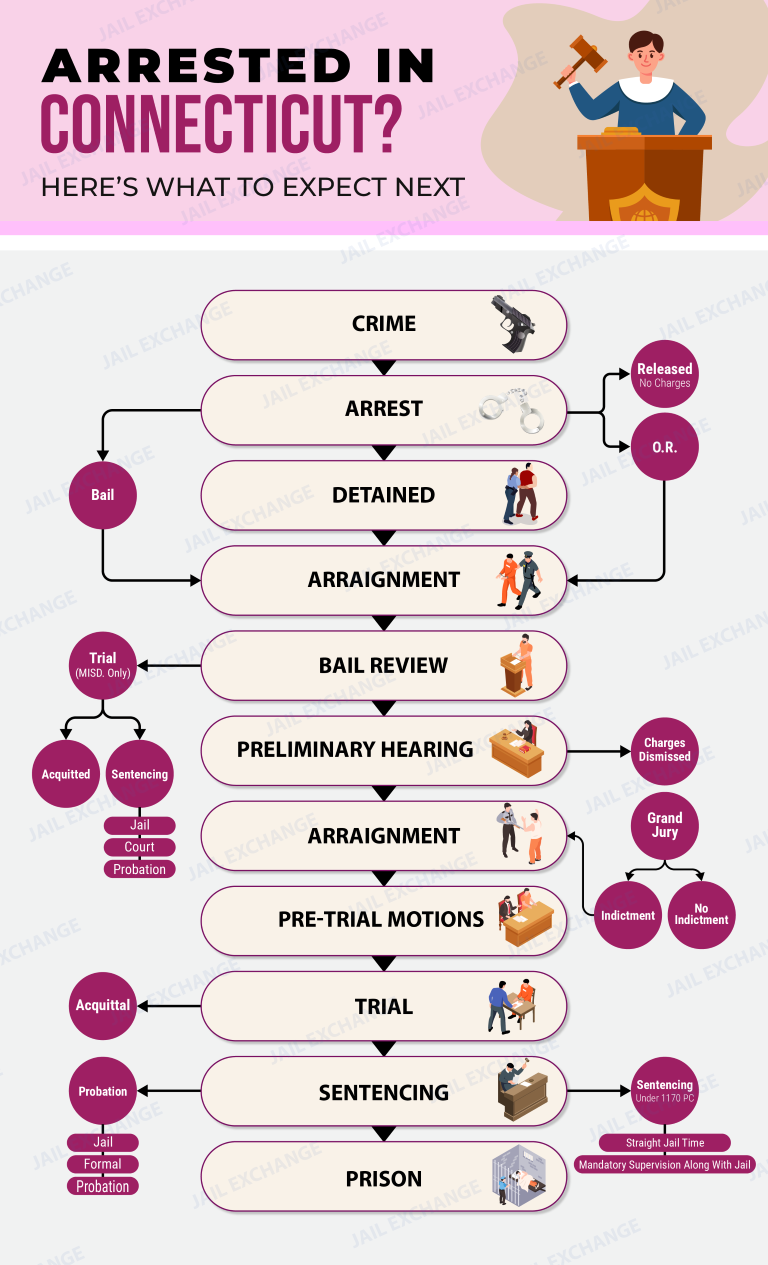
Information for this service is currently unavailable.

JPay provides electronic payment solutions allowing family and friends to send funds directly into an incarcerated person's institutional trust or commissary account using a credit or debit card. Deposited money provides the financial balance needed for your loved one to purchase personal hygiene items, food, over-the-counter medication, and stationery from the facility store.
Important: Facility Banking Rules Differ Across Agencies
Once an individual is booked and transferred into a housing unit, facilities do not always allow cash drop-offs or phone payments directly to the jail lobby. Some might and you should confirm this by calling the facility and asking. But if you do not register online and fund your loved one's trust account immediately, they may be forced to wait days or weeks for standard paper processing, leaving them without essential soap, clean undergarments, basic medical sundries or snacks.
Step-by-Step Instructions to Register and Deposit Funds
- Obtain the inmate's legal first and last name, date of birth, and assigned DOC or facility booking ID number.
- Navigate to www.jpay.com or launch the JPay mobile application.
- Create a user profile or sign into your existing account.
- Select Send Money and select the state and agency where the inmate is held.
- Search for the inmate to link them to your contact directory.
- Enter your desired deposit amount, review the calculated convenience fees, and enter your credit or debit card billing information.
- Authorize payment and record your confirmation tracking number for your financial records.
What the Inmate Needs to Do
The inmate does not need an outside account to receive funds. Once the electronic payment clears, the money posts directly to their facility trust ledger according to the institution's processing schedule. The inmate verifies their updated balance at a dayroom kiosk terminal or on their trust statement and uses the funds on their scheduled commissary order day.
Official Provider: JPay Official Website
Customer Service Telephone: 1-800-574-5729
Support Hours: 24 hours a day, 7 days a week, 365 days a year
Supported Languages: English and Spanish
Other Services Provided by JPay (Securus Technologies)
In addition to Money Deposits, JPay provides several digital communication, entertainment, and visitation services:
- Email Messaging & Photos: Send electronic letters, photo attachments, and eCards directly to an inmate's tablet or kiosk.
• Learn more on our website: Email Messaging Guide | • Visit official vendor page: JPay Email Services - Tablets & Media Downloads: Fund music downloads, educational courses, and games on personal inmate tablets.
• Learn more on our website: Tablets & Media Guide | • Visit official vendor page: JPay Tablet Content - Securus Video Connect (Partner Visits): Join scheduled video sessions from home via Securus partner platforms.
• Learn more on our website: Video Visitation Guide | • Visit official vendor page: Securus Video Connect
Deposit Money for an Inmate in the Bridgeport Correctional Center
Bridgeport Correctional Center is run by the Connecticut Department of Correction, so money for someone held there goes into a state inmate account, not a county jail account. You need the person's full name as the state has it and their inmate number.
- Online with JPay: Pay with a debit or credit card at JPay or in its app. JPay also takes card payments by phone at 800-574-5729.
- Online with TouchPay: The state also takes card deposits through TouchPay.
- Western Union: Send online through Western Union or at a Western Union location.
- Money order by mail: Make it out to the person, not the facility. Mail it to Inmate Trust Fund, P.O. Box 290800, Wethersfield, CT 06129-0800. Fill out the state's Inmate Trust Fund Remitter Form with the person's full name, middle initial, inmate number and date of birth, plus your own name and full address, and put it in the envelope.
Do not mail money to the Bridgeport building on North Avenue, and do not send cash or personal checks. Put nothing else in the envelope, because cards, letters and photos sent with money are not passed on. You do not have to be on the person's visitor list to send money. Account questions go to the Inmate Trust Fund at 860-692-7670 (have the person's full name and date of birth ready); for anything else, call 475-225-8000.
Bridgeport Correctional Center on North Avenue is the state-run jail for the Fairfield County courts, so most people here are waiting on a court date. The Connecticut Department of Correction runs it, and every letter goes straight to the building as paper mail. Staff run each envelope through a mail scanner and open it to check for drugs, because some people soak paper in liquid drugs and let it dry before mailing it.
Letters, legal mail, books and magazines:
Inmate's Full Name & Inmate #
Bridgeport Correctional Center
1106 North Avenue
Bridgeport, CT 06604
- Top line: Write the person's full name and their inmate number above the address. The Connecticut inmate search shows the number and confirms they are still at Bridgeport.
- Your return address: Put your full name and address on the outside of the envelope. A letter with no return address can be thrown away.
- Ink and paper: Blue or black ink only. Skip felt markers, crayon, lipstick and perfume.
- No extras: Leave out glitter, confetti, stamps and blank envelopes, and don't draw on the envelope.
- Greeting cards: Plain paper cards are fine. Musical cards are not.
- Books, magazines and newspapers: They must be new and shipped by the publisher, a book club or a bookstore. You can order them for the person. Hardcovers are not allowed at Bridgeport.
- Legal mail: Letters from a lawyer or a court must say so clearly on the outside. They are opened in front of the inmate and not read.
- Money orders: Do not mail money to the jail. Make the money order payable to the inmate, write their inmate number on it, fill out the DOC remitter form, and mail both to the Inmate Trust Fund, P.O. Box 290800, Wethersfield, CT 06129-0800. People also send money to Bridgeport inmates online.
Mail can take days to arrive, and electronic messages usually get there faster. Questions go to 475-225-8000.

Securus AdvanceConnect is a prepaid calling account that links directly to your mobile phone or landline number, allowing you to receive outbound calls from an incarcerated individual. Because correctional phone systems never allow incoming calls, funding an AdvanceConnect balance ensures calls are accepted immediately without being blocked by cell carriers.
Important: Mobile Networks Block Inmate Calls Without Prepaid Funds
Correctional facilities do not allow collect billing to cell phones, and mobile carriers automatically block incoming collect calls from detention centers. While some residential landlines may allow direct billing, mobile phones and VoIP services require an active prepaid AdvanceConnect balance, which you can verify with your phone provider. If you do not register online and fund your account right away, your loved one will hear an automated error message stating that your number cannot accept calls.
Step-by-Step Instructions to Register and Fund AdvanceConnect
- Go to securustech.online or open the Securus mobile app.
- Select Sign Up and create your account using your 10-digit telephone number and email address.
- Search for your facility by state and agency name, then add the inmate using their full legal name or booking ID.
- Select AdvanceConnect under calling accounts.
- Choose your deposit amount, review convenience and transaction fees, and enter your credit or debit card billing details.
- Authorize payment and confirm that your mobile phone allows calls from automated or unknown correctional numbers.
What the Inmate Needs to Do
The inmate picks up any dayroom phone or logs onto their handheld tablet, dials your 10-digit number, and enters their assigned PIN. The automated system verifies that your AdvanceConnect account has an active balance and connects the call. All calls are subject to recording and monitoring by facility staff.
Official Provider: Securus Technologies Official Website
Customer Service Telephone: 1-800-844-6591
Support Hours: 24 hours a day, 7 days a week, 365 days a year
Supported Languages: English and Spanish
Other Services Provided by Securus Technologies
In addition to AdvanceConnect Prepaid Calling, Securus Technologies and its subsidiary JPay provide several other communication, financial, and visitation services:
- Direct Bill Phone Calling: Establish a monthly billed calling account for verified landline numbers.
• Learn more on our website: Direct Bill Phone Calling Guide | • Visit official vendor page: Securus Direct Bill - Securus Video Connect: Schedule and join live video visits from home using your computer or smartphone.
• Learn more on our website: Video Visitation Guide | • Visit official vendor page: Securus Video Connect - JPay Money Deposits (Trust & Canteen): Send money directly into an inmate's jail trust account for commissary store purchases.
• Learn more on our website: Money Deposits Guide | • Visit official vendor page: JPay Money Transfers - JPay Email Messaging & Photos: Send electronic messages, photo attachments, and VideoGrams directly to their tablet or kiosk.
• Learn more on our website: Email Messaging Guide | • Visit official vendor page: JPay Email Services
Securus Direct Bill is an invoiced telephone calling service designed for approved residential landlines, law offices, and commercial businesses. Instead of prepaying funds in advance, calls received from an incarcerated individual are billed directly to your account on a monthly itemized billing invoice.
Important: Direct Bill Requires Credit Approval and Qualifying Lines
Direct Bill is not available for mobile cell phones, internet VoIP numbers, or customers with poor or unestablished telephone credit history. Correctional facilities enforce strict telecommunications billing rules, which you can verify by calling Securus customer care. If your line does not meet credit approval standards, you must open an AdvanceConnect prepaid account instead to receive incoming calls from your loved one.
Step-by-Step Instructions to Set Up a Direct Bill Account
- Contact Securus customer service at 1-800-844-6591 or submit an application via securustech.net.
- Provide your billing name, service address, and qualifying residential or business landline telephone number.
- Submit to a standard credit evaluation performed by Securus to determine billing eligibility.
- Establish your authorized monthly credit limit upon approval.
- When your phone rings with a call from the detention center, follow the recorded operator instructions and press the requested key to accept charges.
- Pay your monthly billing invoice online, by phone, or through the mail.
What the Inmate Needs to Do
The inmate dials your phone number from any dayroom telephone and keys in their assigned PIN. The automated system verifies that your account is in good standing and has not exceeded its monthly spending ceiling before connecting the call. All non-privileged conversations are recorded and monitored.
Official Provider: Securus Technologies Official Website
Customer Service Telephone: 1-800-844-6591
Support Hours: 24 hours a day, 7 days a week, 365 days a year
Supported Languages: English and Spanish
Other Services Provided by Securus Technologies
In addition to Direct Bill Calling, Securus and its subsidiary JPay offer several other communication, financial, and visitation services:
- AdvanceConnect Prepaid Calling: Fund a prepaid calling account tied to your mobile phone number.
• Learn more on our website: AdvanceConnect Calling Guide | • Visit official vendor page: Securus AdvanceConnect - Securus Video Connect: Schedule and join live video visits from home using your computer or smartphone.
• Learn more on our website: Video Visitation Guide | • Visit official vendor page: Securus Video Connect - JPay Money Deposits (Trust & Canteen): Send money directly into an inmate's jail trust account for commissary store purchases.
• Learn more on our website: Money Deposits Guide | • Visit official vendor page: JPay Money Transfers - JPay Email Messaging & Photos: Send electronic letters, photos, and VideoGrams directly to their tablet or kiosk.
• Learn more on our website: Email Messaging Guide | • Visit official vendor page: JPay Email Services
Securus eMessaging provides a digital messaging service that allows family members to send electronic letters, digital photos, and eCards directly to an incarcerated loved one via handheld tablets and housing unit kiosks. Messages are screened electronically, delivering communication within hours instead of waiting days for postal mail delivery.
Important: Physical Mail Bans and Stamp Requirements Vary
Inmates cannot receive incoming phone calls, and traditional postal mail rules differ across correctional systems. While some jails continue to accept handwritten letters, many facilities have transitioned entirely to electronic messaging or digital mail scanning, which you can verify by checking facility rules. If you do not register online and purchase eMessaging stamps right away, your loved one may face lengthy periods without direct written contact from family.
Step-by-Step Instructions to Register and Send eMessages
- Go to securustech.online or open the Securus mobile app.
- Sign into your verified profile or create an account with your email and phone number.
- Select eMessaging from your service dashboard.
- Link the inmate to your account by selecting the facility and entering their legal name or booking ID.
- Purchase an eMessaging stamp book using a debit or credit card.
- Type your message in the editor, attach photos or eCards if permitted, and optionally include a prepaid reply stamp.
- Submit your message to the facility's screening queue.
What the Inmate Needs to Do
All electronic correspondence is screened by correctional staff before delivery. Once approved, the message arrives in the inmate's inbox on their assigned Securus tablet or housing unit kiosk. The inmate opens the message, views attached photos, and drafts an electronic reply using their available stamp balance.
Official Provider: Securus Technologies Official Website
Customer Service Telephone: 1-800-844-6591
Support Hours: 24 hours a day, 7 days a week, 365 days a year
Supported Languages: English and Spanish
Other Services Provided by Securus Technologies
In addition to eMessaging, Securus provides calling, video visitation, and trust money services:
- AdvanceConnect Prepaid Calling: Prepay for phone calling credits so your loved one can call your mobile phone directly.
• Learn more on our website: AdvanceConnect Calling Guide | • Visit official vendor page: Securus AdvanceConnect - Securus Video Connect: Schedule and join live video visits from home using your computer or smartphone.
• Learn more on our website: Video Visitation Guide | • Visit official vendor page: Securus Video Connect - JPay Money Deposits (Partner Trust Transfers): Send money directly into an inmate's jail trust account for commissary shopping.
• Learn more on our website: Money Deposits Guide | • Visit official vendor page: JPay Money Transfers
Securus Technologies (Aventiv) deploys secure, corrections-grade community tablets to incarcerated individuals across state prison systems and county jails. Operating over a private, encrypted facility network, these devices provide access to digital messaging (eMessaging), phone calls, educational courses, job search tools, eBooks, podcasts, and streaming music directly from housing units.
Important: Tablet Hardware Deployment and Rental Rules Vary
Detention centers do not manage tablet distribution identically. While some agencies issue individual personal tablets to every detainee at booking, others utilize shared pod docking stations or restrict tablet use to specific dayroom hours, which you should confirm with the facility directly. Although core educational and legal resources are generally provided free of charge, sending messages, listening to music, or making phone calls from the tablet requires an active balance funded by outside contacts.
Step-by-Step Instructions to Support and Fund Securus Tablets
- Verify that Securus handheld tablets are deployed at your loved one's specific facility.
- Log into your account at securustech.online or launch the Securus mobile app.
- Ensure the inmate is linked to your contact list using their legal name and booking ID number.
- Purchase eMessaging Stamps for digital messaging, fund an AdvanceConnect account for phone calls, or deposit funds into their Inmate Debit account for music and media.
- Review all transaction charges, complete payment with a credit or debit card, and save your confirmation receipt.
- Notify your loved one that funds have posted so they can access their media and communication apps.
What the Inmate Needs to Do
The inmate unlocks their assigned tablet using their facility PIN or biometric verification. They can access free rehabilitative and educational materials at no charge, or open communication and media applications to draft messages, place phone calls, or stream music using available balances. Devices are docked during quiet hours and shift changes for secure recharging and data synchronization.
Official Provider: Securus Technologies Official Website
Customer Service Telephone: 1-800-844-6591
Support Hours: 24 hours a day, 7 days a week, 365 days a year
Supported Languages: English and Spanish
Other Services Provided by Securus Technologies
In addition to Tablet Services, Securus provides calling, messaging, video visitation, and trust money transfers:
- eMessaging & Digital Mail: Send electronic messages, photo attachments, and eCards directly to an inmate's tablet.
• Learn more on our website: eMessaging Guide | • Visit official vendor page: Securus eMessaging - AdvanceConnect Prepaid Calling: Prepay for phone calling credits so your loved one can call your telephone directly.
• Learn more on our website: AdvanceConnect Calling Guide | • Visit official vendor page: Securus AdvanceConnect - Securus Video Connect: Schedule and join live video visits from home using your computer or smartphone.
• Learn more on our website: Video Visitation Guide | • Visit official vendor page: Securus Video Connect - JPay Money Deposits (Partner Trust Transfers): Send money directly into an inmate's jail trust account for commissary shopping.
• Learn more on our website: Money Deposits Guide | • Visit official vendor page: JPay Money Transfers
Fairfield County County Jails
Fairfield County Juvenile Facilities
- Jail (Main): 475-225-8000
The Bridgeport Correctional Center serves the following cities and towns of Fairfield County: Bethel, Bridgeport, Brookfield, Danbury, Darien, Easton, Fairfield, Greenwich, Monroe, New Canaan, New Fairfield, Newtown, Norwalk, Redding, Ridgefield, Shelton, Sherman, Stamford, Stratford, Trumbull, Weston, Westport and Wilton. At times this facility may also house inmates arrested in the following counties: New London County, Hartford County, Litchfield County, Middlesex County, New Haven County and Tolland County.